

Exploring the Effectiveness of Different Methods for Rug Repairs: Tape, Glue, and Patch Kits
Rugs enhance our living spaces with warmth, style, and comfort. Yet, over time, these beloved pieces may face damage such as tears, fraying, stains, or worn-out areas. As a homeowner, you might wonder if repairing or replacing your rug is the better choice. Opting for repair can often prove to be more cost-effective, eco-friendly, and emotionally satisfying, especially for high-quality or antique rugs. This article examines three popular rug repair methods—tape, glue, and patch kits—discussing their advantages, drawbacks, and suitability for various scenarios to aid in your decision-making process.
Cost and Value Considerations in Rug Repairs
Understanding the value of repairs over replacement is crucial. Professional rug repair can save up to 60% compared to purchasing a new rug of similar quality, particularly when dealing with handmade or premium materials like wool or silk. For instance, small tears or fraying may range from $50 to $200 to fix, whereas replacing could cost $500 to $3,000+ [3]. More complex repairs, such as reweaving, can be thousands of dollars cheaper than replacement costs that might reach $10,000+ for rare rugs. This financial prudence and the preservation of cherished items make effective repair methods vital.
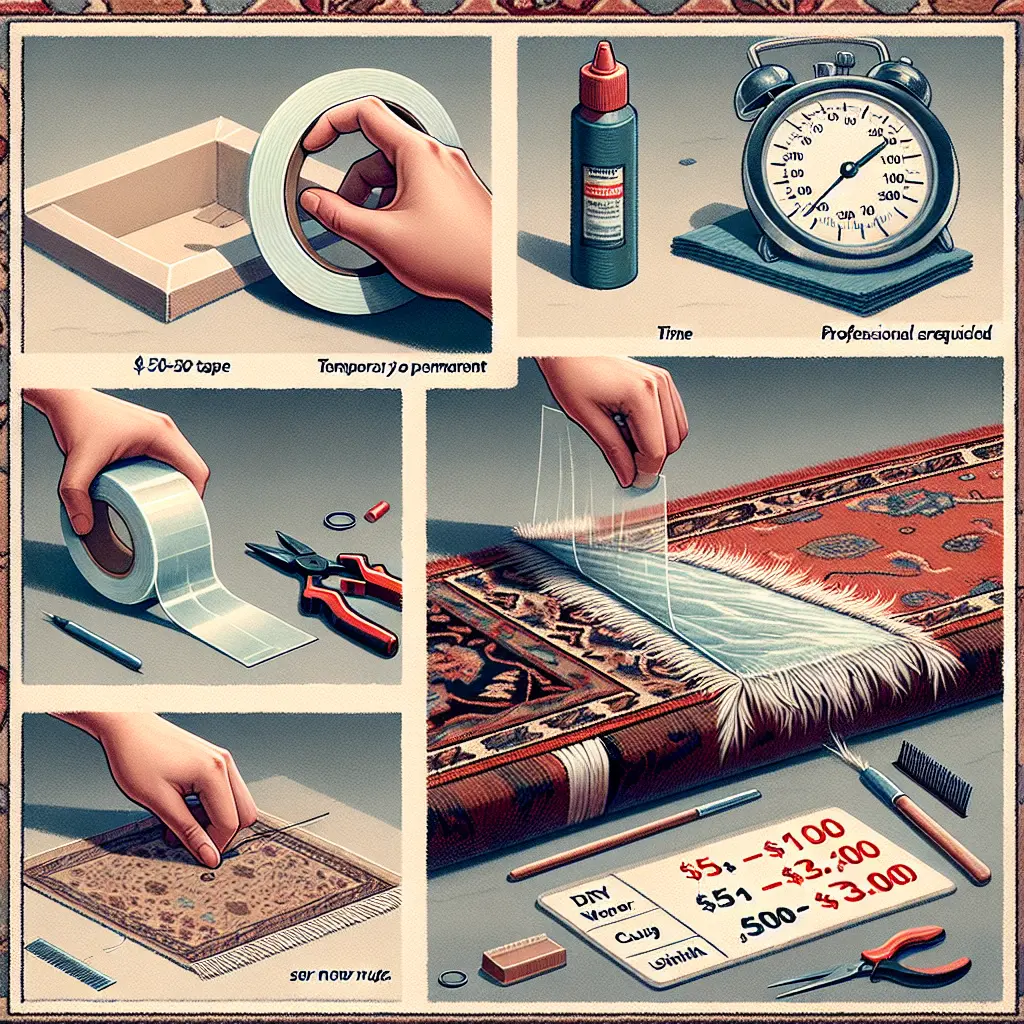
Overview of Common Rug Repair Methods
1. Tape for Rug Repairs
Use and Application
Rug tape, typically a double-sided adhesive, is used to bond rug edges or anchor them to the floor, preventing undesirable movement. It's user-friendly, quick to apply, and requires no drying time.
Effectiveness
Offering a quick, temporary solution, tape repairs are especially handy for securing frayed edges or reattaching loose rug backing. However, tape is generally inadequate for structural repairs involving tears or holes, and its durability under foot traffic or cleaning efforts is limited [5].
Pros
- Easy and fast application
- No mess, no drying time
- Affordable
Cons
- Temporary, not for heavy use areas
- Adhesion may diminish over time, especially on textured or dirty surfaces
Tape is suitable for minor fixes and rug stabilization, yet less effective for standalone repairs involving substantial damage like large tears.
2. Glue for Rug Repairs
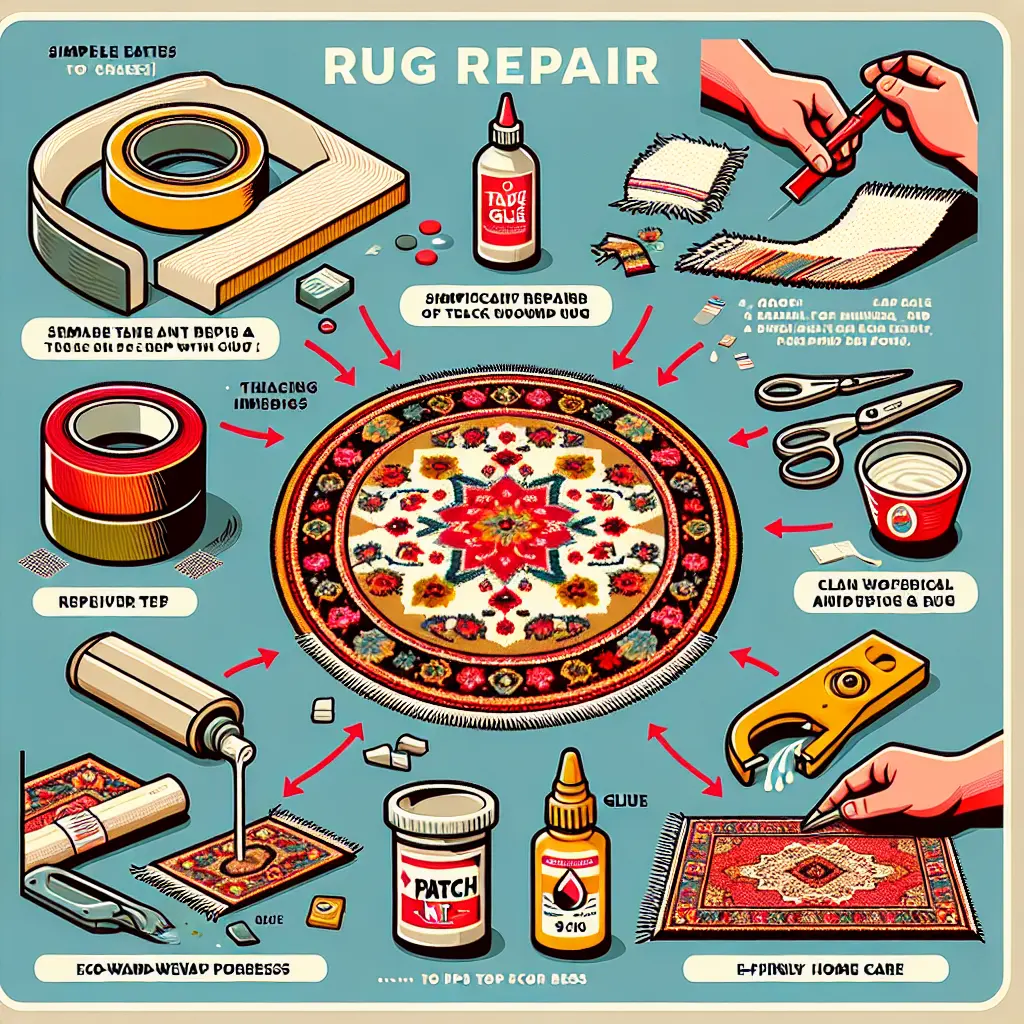
Use and Application
Rug glue or adhesive bonds fibers or patches, often employed to repair tears, secure loose backing, or reattach fringe. Proper application entails cleaning the targeted area, applying adhesive to both surfaces, and firmly pressing them together [5].
Effectiveness
Providing a robust, reliable bond, glue is effective for moderate damage such as tears or backing issues. Opting for specialized carpet adhesives is crucial, given their flexibility and durability, which don't compromise rug fibers.
Pros
- Strong hold for tears and backing repair
- More enduring compared to tape
- Can be nearly invisible with careful application
Cons
- Requires drying time, often several hours
- Risk of damage if inappropriate adhesive is used
- Not suitable for all rug types, especially delicate antique rugs
Glue repairs strike a balance between strength and cost-effectiveness, catering to many prevalent rug repair needs.
3. Patch Kits for Rug Repairs
Use and Application
Patch kits entail cutting out the damaged area and substituting it with a matching rug piece. This replacement is secured either with adhesive or stitching. Patch kits frequently include necessary tools and instructions.
Effectiveness
Patching emerges as one of the most successful methods for localized damage, such as burns, holes, or extensively worn spots. When aligned seamlessly with the original rug, patches effectively restore visual appeal and structural integrity.

Pros
- Can restore extensive damage areas
- Durable and structurally sound
- Preserves appearance with matching patches
Cons
- Requires skill and patience
- Challenges in matching rug material
- More expensive and time-consuming than tape or glue alone
Patch kits are advocated for severe damages when simple adhesives are inadequate, particularly for valued or heavily utilized rugs [2][5].
Factors Influencing the Choice of Repair Method
- Type of Rug: Delicate antiques necessitate gentle approaches and professional intervention, whereas synthetic rugs might better accommodate glue or patches [4].
- Size and Location of Damage: Small edge frays may find resolution with tape or glue, while holes and large tears typically require patching.
- Desired Longevity: Temporary fixes favor tape; for lasting solutions, glue or patching are preferred.
- Skill Level and Tools: Tape and glue repairs lean toward DIY, with patching potentially needing professional expertise.
- Cost Considerations: Tape is the most economical yet least durable option, whereas patching costs more but offers the most effective repair for significant damage.
Additional Expert Tips for Maximizing Repair Success
Preparation: Ensure the rug is thoroughly cleaned and dried before applying any tape or glue, which enhances adhesive effectiveness [5].
Adhesives: Use rug-specific adhesives that offer flexibility and protect fibers.
Patch Matching: When patching, prioritize matching the rug’s material, color, and pile height to retain its aesthetic integrity [2].
Professional Repairs: Consider utilizing professional repair services for valuable or antique rugs. Experts can apply specialized techniques, such as hand reweaving or color restoration [1][3].
Conclusion
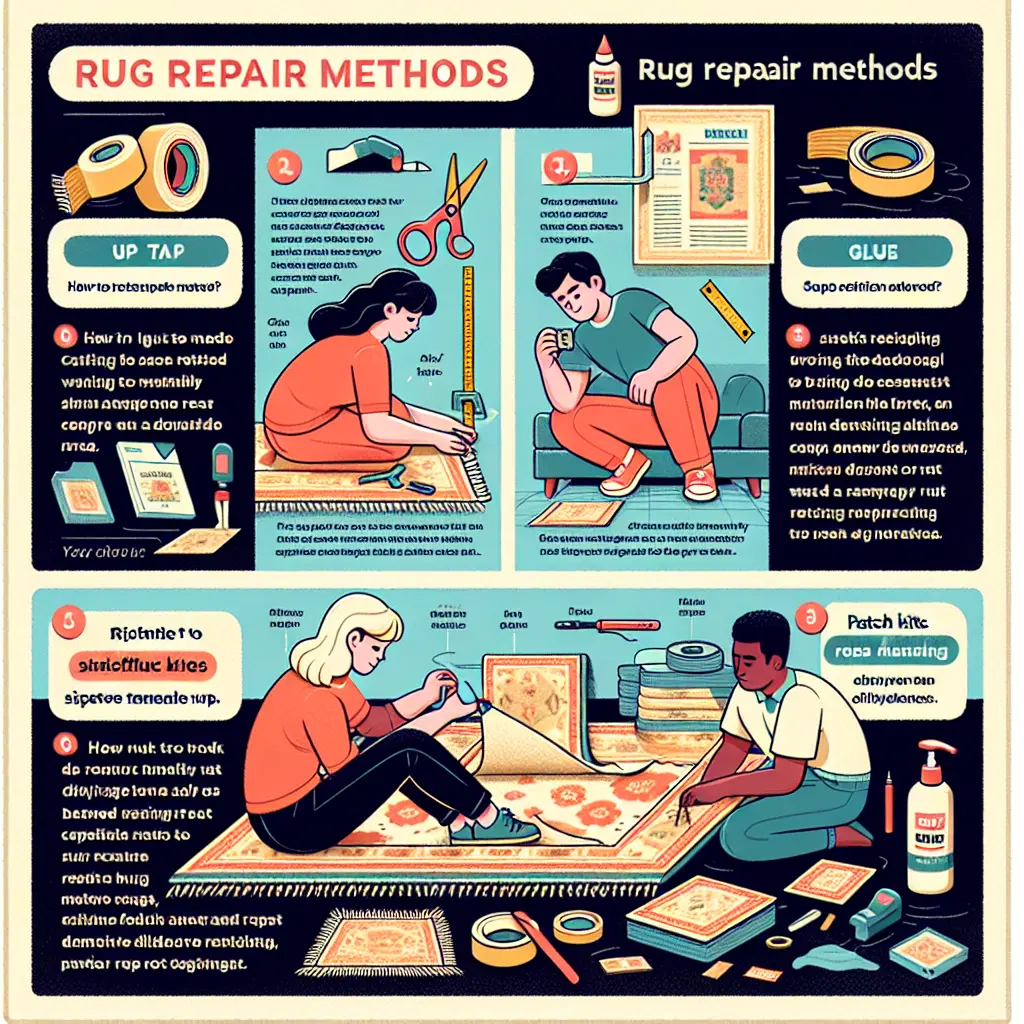
Each rug repair method—tape, glue, and patch kits—accommodates different types and extents of damage, considering factors such as rug material, cost, and desired durability. Tape offers a quick and inexpensive fix for minor issues, glue provides a more robust bond for moderate repairs, and patch kits facilitate comprehensive restoration for substantial damage. By choosing the right method tailored to your rug's needs, you can not only save money but also extend the lifespan and beauty of your cherished rugs—contributing to eco-friendly and cost-effective home care.
For those seeking to preserve valuable rugs or unsure about the best approach, a consultation with a professional rug restorer is advisable, ensuring optimal results. Employing the appropriate method will keep your floor coverings looking splendid for the years to come.
This comprehensive guide draws from contemporary expert insights on carpet and rug restoration to help you make astute repair choices, serving both your rug’s longevity and your budget [1][2][3][4][5].