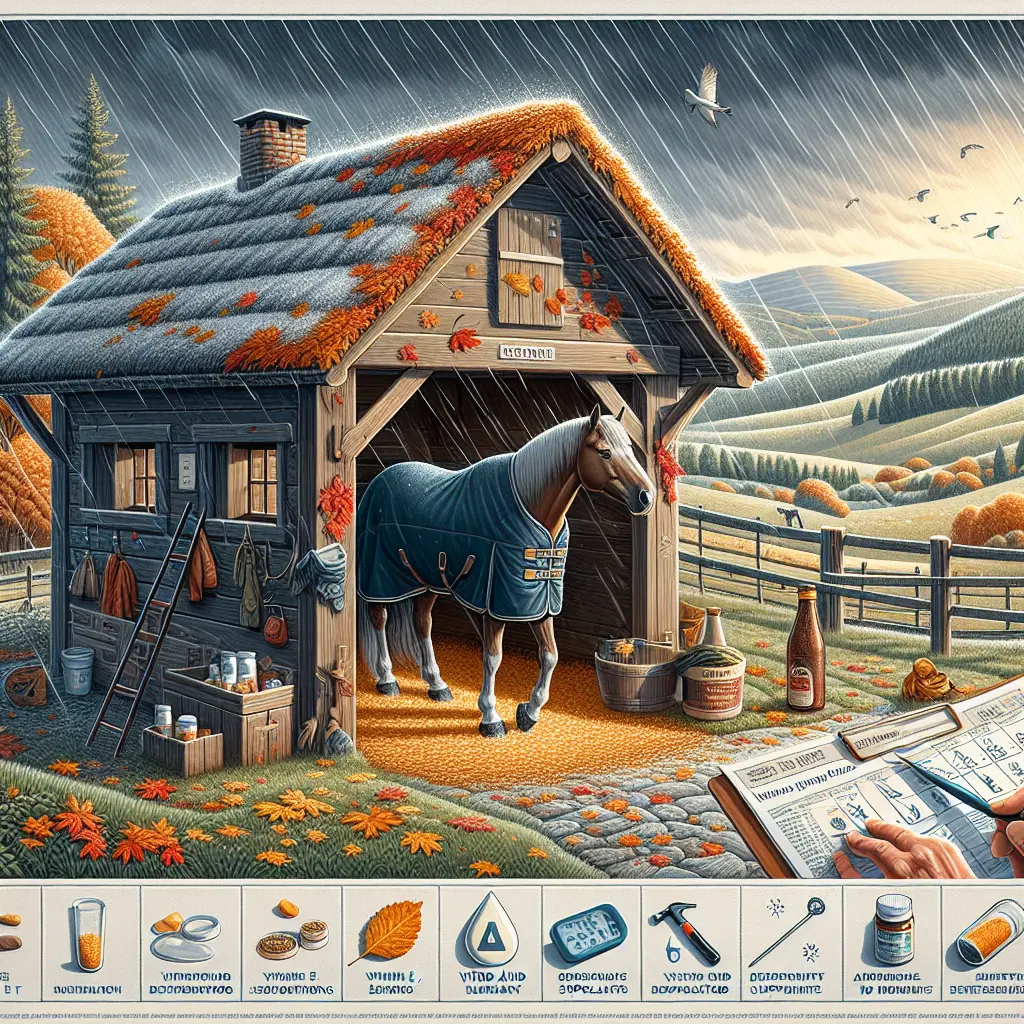
Coping with Unpredictable Autumn Weather: Tips for Horse Owners
Autumn is a splendid season, but its unpredictability can be challenging for horse owners. As the colors of leaves transform and temperatures begin to drop, you must be prepared to adapt your horse care routines. From temperature fluctuations to changes in daylight, here are practical tips to ensure your equine companions stay comfortable and healthy.
Understanding Autumn Weather Challenges for Horses
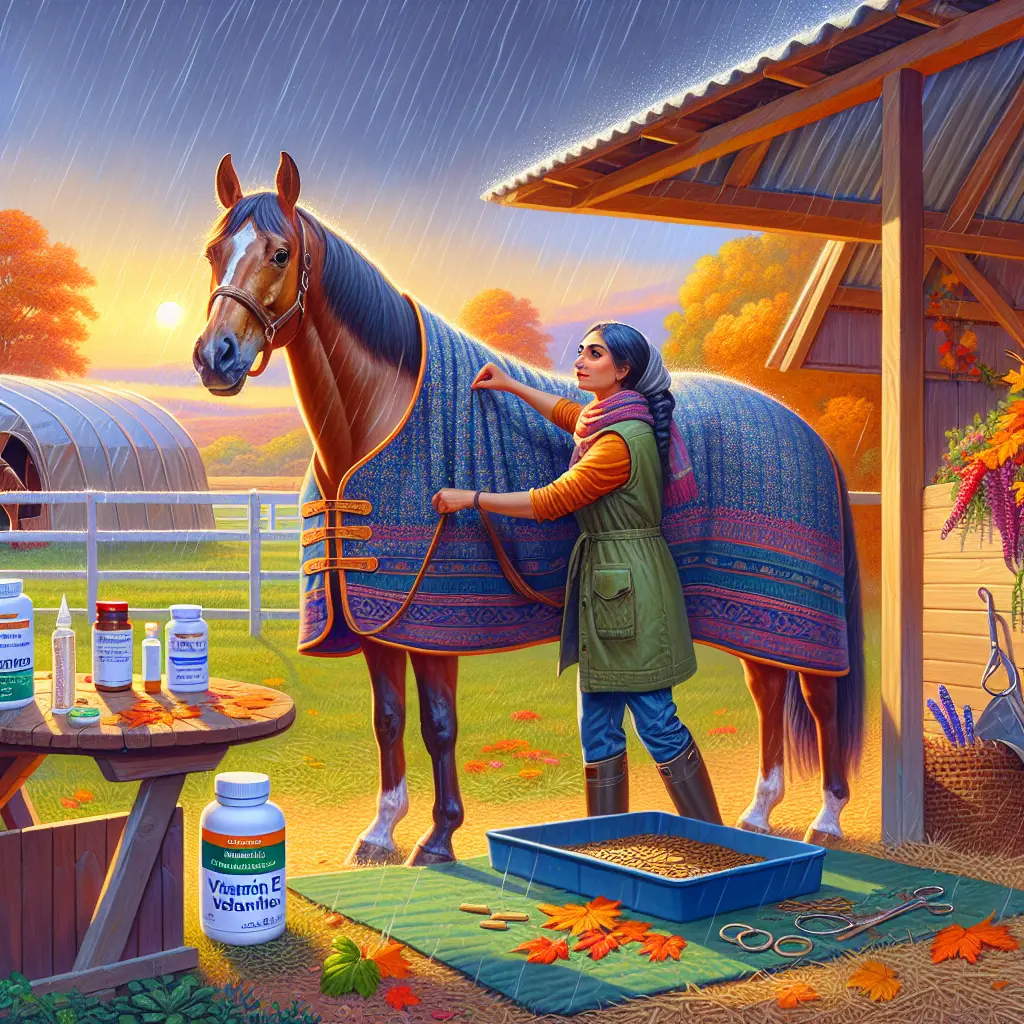 Autumn is a season of variation. Temperatures may dip and rise rapidly, and weather can switch from sunny skies to unexpected rains. Such variability calls for careful adjustments in nutrition, shelter, and exercise plans to safeguard your horse's health and well-being.
Temperature Fluctuations
As days grow colder, horses expend more energy to maintain body warmth, especially when temperatures fall below their critical temperature threshold. For instance, horses with thicker coats might be comfortable until 32°F (0°C), while those with clipped coats may need extra warmth below 59°F (15°C)[4].
Variable Forage Quality
Green pasture quality declines in autumn, leading to reduced nutrient availability like vitamin E. This highlights the need for carefully calibrated dietary adjustments or supplements[2].
Shorter Daylight and Wet Conditions
As daylight hours reduce, so does available riding time and visibility, posing safety challenges. Additionally, increased wet conditions can risk respiratory issues. Appropriate shelter and timely adaptations in care routine are critical during these seasonal changes[5][1].
Essential Tips for Managing Autumn Weather
1. Provide Adequate and Flexible Shelter
Shelters, whether stable rugs or barns, protect horses from wind, rain, and sudden temperature spikes. Proper shelter is indispensable for preventing respiratory issues and maintaining reasonable body warmth during chilly nights[2][1].
2. Monitor and Adjust Feeding Regimens
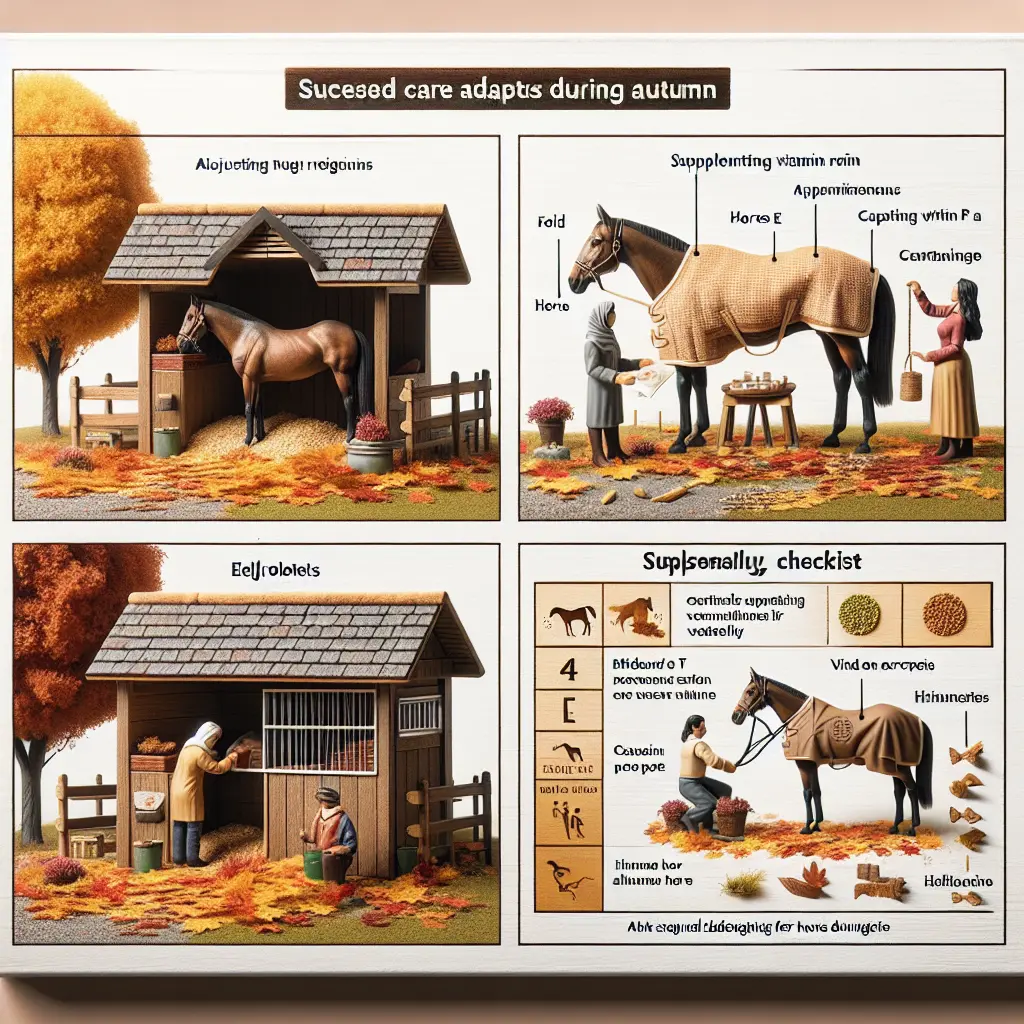 Ensuring a balanced diet is crucial as pasture quality ebbs:
- Forage: Amp up quality hay to make up for deficient pasture nutrition.
- Supplements: Think about vitamin E supplements to boost immunity when green feed is limited.
- Electrolytes and Hydration: Cooler weather might deter drinking, prompting dehydration risks. Encourage water intake by ensuring freshwater supply and consider electrolytes in their regimen[2].
3. Use Blanketing Wisely
The choice of blanket depends on your horse's coat thickness and the local climate. Older or clipped horses may demand blankets as the chill kicks in. Ensure blankets fit perfectly to prevent discomforts like rubbing[1][4].
4. Gradually Adjust Exercise and Training
Autumn often heralds changes in activity levels. Whether tapering down competitions or gearing up for winter, gradually adjust diet to prevent sudden weight shifts and maintain consistent exercise routines[4].
5. Stay Ahead with Seasonal Checklists and Weather Awareness
Draft a comprehensive horse care checklist encompassing vaccinations, deworming, feeding adjustments, and farrier visits. Keep an eye on weather forecasts to ensure safe planning of turnout sessions and riding activities.
6. Prepare for Fall Trail Hazards
Autumn trails can be tricky with conditions like slippery footings due to rains or morning dews. Dwindling daylight increases visibility woes. Equip yourself and your horse with reflective gear, especially if venturing at dusk. Always check weather conditions before heading out to mitigate risk of sudden downpours[5].
7. Watch Your Horse’s Body Condition
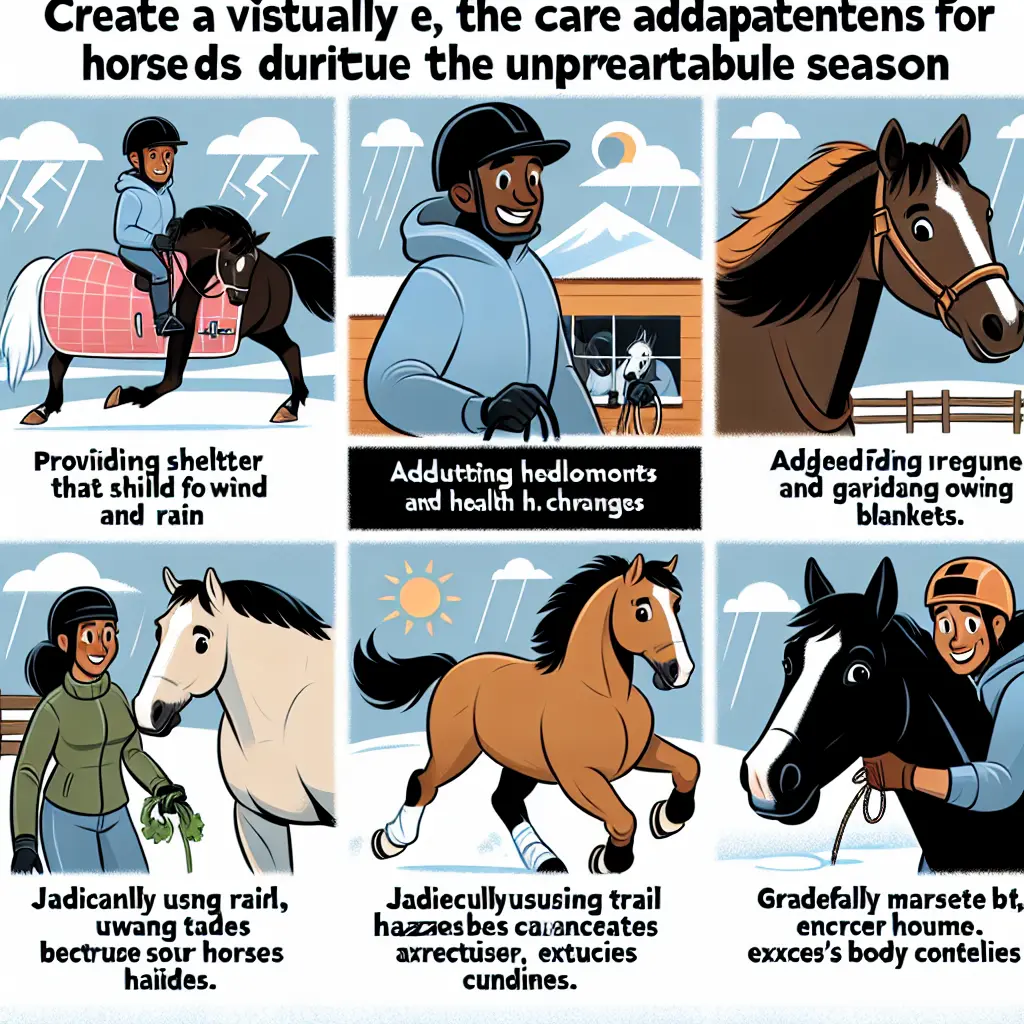 Keep a regular tab on your horse's weight and coat condition to detect early warning signs of inadequate nutrition or health problems. Long haircoats can obscure weight loss, making physical checks important[1][4].
Conclusion
Tackling the nuances of autumn weather involves staying vigilant and proactive. By offering adequate shelter, modifying diets, managing workouts, and staying aware of weather and trail conditions, you ensure your horse's prosperity and delight. Craft your adaptation gradually, tapping into veterinary or nutritional consultations if needed. With meticulous planning, unfalteringly cherish the season's allure while averting adversities.
Riders can also consider exploring our Jodhpur Collection, Horse Riding Boots, Riding Gloves, Horse Riding Socks, or even treat their steeds with our Horse Treats And Gifts, ensuring them happiness alongside health.