

When Horses Snack on Unusual Treats: A Look into the Strange Eating Habits of Equines
Horses are generally known for their love of hay and grass; however, these majestic creatures sometimes surprise us with their peculiar eating choices. This article explores the unique snacking habits of horses and delves into the reasons behind these unexpected behaviors. Understanding these habits is crucial for maintaining equine health and well-being. So, let's saddle up and gallop into the fascinating world of equine dietary quirks.
The Curious Case of Sweet Treats
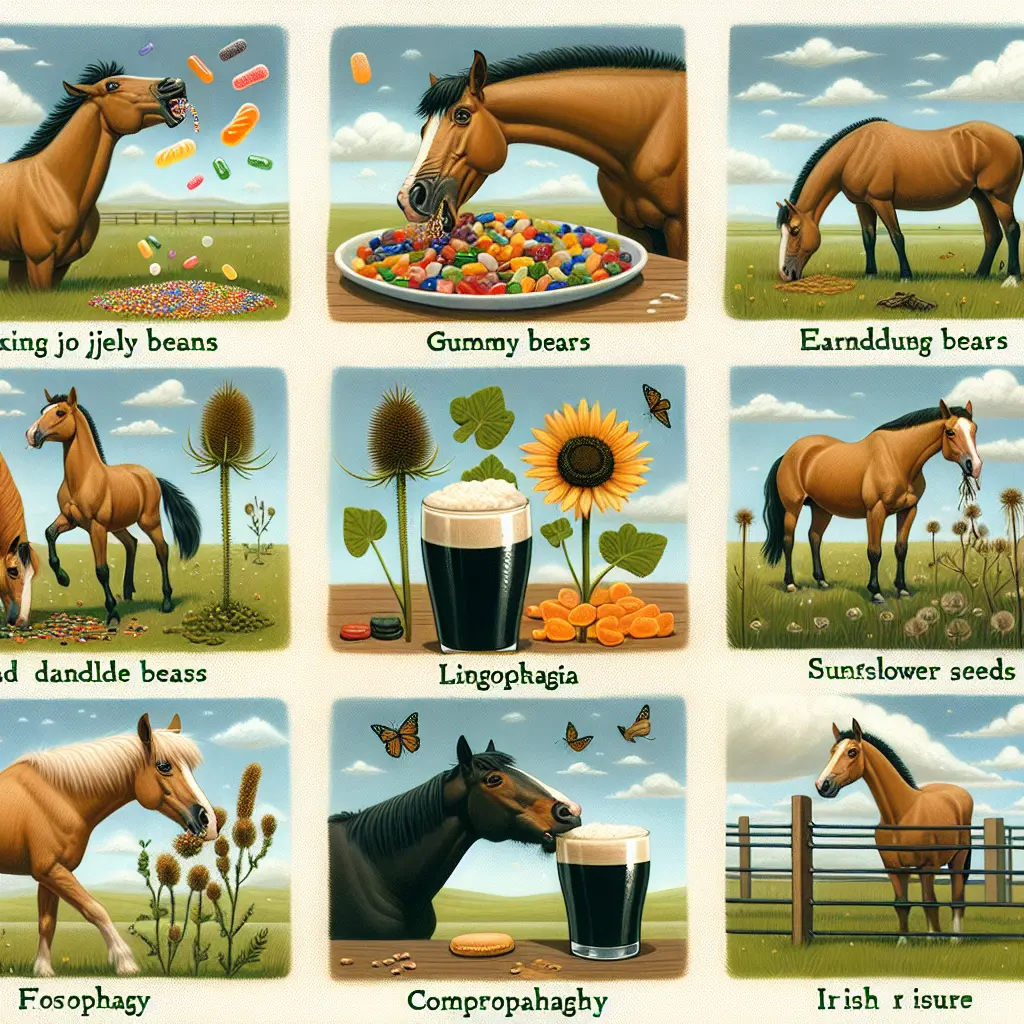
It might come as a surprise, but horses can have a sweet tooth. Some equines have been observed enjoying sugar candies such as jelly beans and gummy bears. While these delectable sweets are enjoyed by humans and horses alike, they should be offered in moderation to prevent dietary imbalances or positive drug tests (source).
Uncommon Vegetation Loves
While most horses stick to grass, some have been known to enjoy specific plants like dandelions, thistles (with the exception of Russian knapweed or yellow star thistle), as well as sunflower seeds and plants. These selections might seem odd but are actually safe in moderation (source).
Cultural Equestrian Diets
In various parts of the world, unusual diet components are sometimes a standard part of a horse's diet. European equines, for instance, might be offered silage, while those in Saudi Arabia might enjoy dried fava beans. On the more unusual end, some horses in Ireland may even receive a weekly pint of ale or stout (source). Cheers!
The Attraction to Non-Food Items
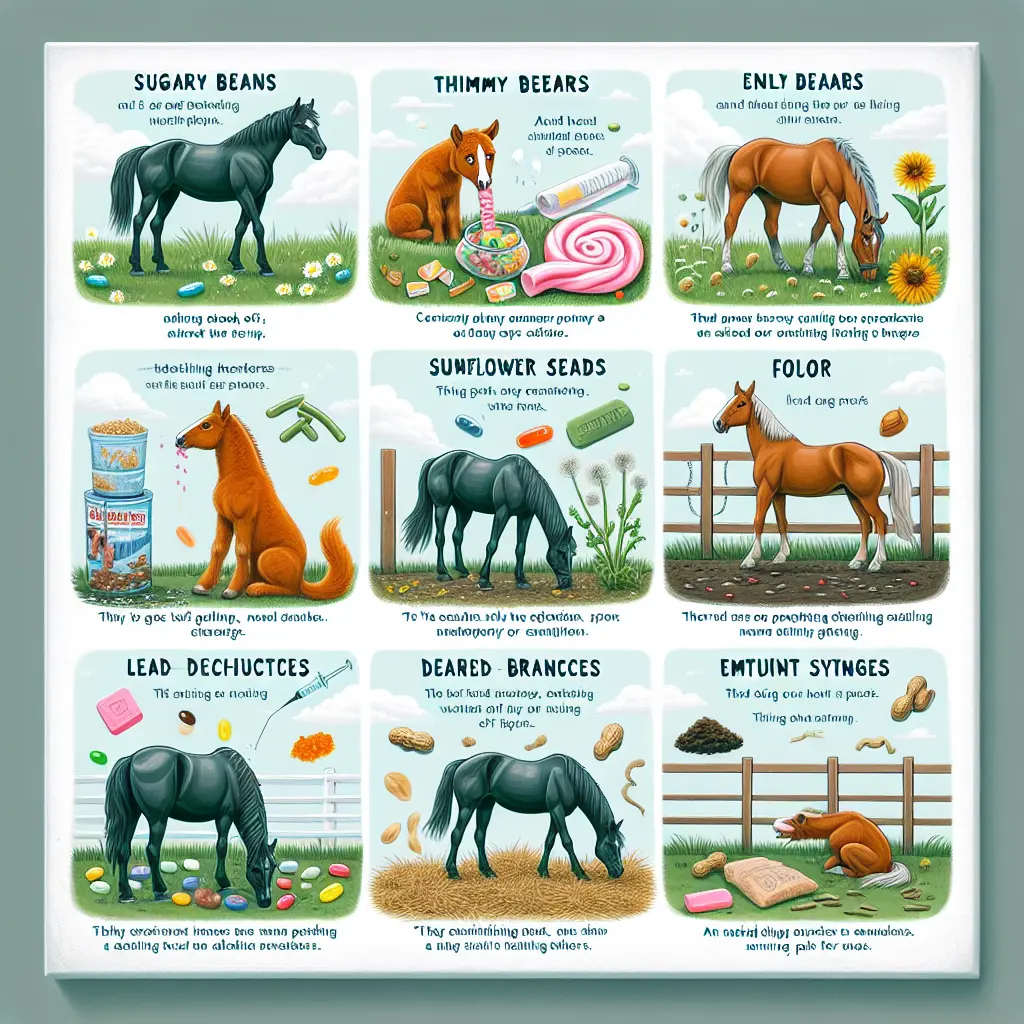
Beyond their culinary escapades, horses can sometimes display a penchant for non-food items. This behavior might stem from a need for additional fiber or simply boredom.
Lignophagia: The Wood-Eating Habit
Horses have occasionally been seen munching on wood from fences or trees. Known as lignophagia, this behavior might indicate a need for extra fiber or stimulation (source).
Coprophagy: Eating Feces
While it might sound unpleasant, eating feces, or coprophagy, is common among foals as they learn about their environment. However, adult horses doing so might signal dietary deficiencies or boredom (source).
Odd Non-Food Objects
On more bewildering fronts, direct reports detail horses nibbling on lead ropes, empty dewormer syringes, and even hoof picks (source). As amusing (and worrisome) as these anecdotes are, they underscore the importance of monitoring them for potential health risks.
Why Do Horses Engage in Unusual Eating? Exploring the Reasons
Behind these quirky eating habits lie several possible explanations:
Curiosity and Boredom
Horses are naturally curious creatures, and their desire to explore their environment can sometimes lead to unusual consumptions. Boredom, particularly among stabled horses, can exacerbate this curiosity, leading to potential dietary anomalies (source).
Dietary Deficiencies
In some cases, unusual eating behaviors might serve as indicators of nutritional deficits, such as a lack of essential nutrients, fiber, or minerals in their diet. Addressing these deficiencies can often alleviate such behaviors (source).

Implications for Equine Health
Being vigilant about a horse's unusual eating behaviors is essential for their health. For instance, employing feeding methods like slow feeders and automatic boxes can help regulate food intake, thus curbing overeating and the risk of obesity (source).
Steps to Mitigate Risks and Ensuring Balanced Diets
To maintain a horse's well-being:
- Regularly monitor diet consistency and address any deficiencies promptly through appropriate supplements like those from the Everyday Horse Vitamins & Supplements.
- Introduce various Horse Treats and Gifts in moderation, catering to their unique preferences while ensuring overall health.
- Utilize Fly Protection and stable management to reduce potential irritants that might trigger odd behaviors.
Conclusion: Celebrating the Quirky Nature of Our Equine Friends
While the unusual eating habits of horses may sometimes stoke our curiosity or amusement, they also emphasize the need for awareness regarding their nutrition and behavioral wellness. By understanding and addressing these behaviors, horse owners and enthusiasts can ensure their companions' long-term health and happiness. Saddle up and explore a balanced Jodhpur Collection, sturdy Riding Boots, or snack on some healthy equine treats for a galore of adventures with our equine friends!