

How to Strategize Training and Rest for Horses Leading Up to Their First Competition
Introducing your horse to competition can be a huge milestone for both you and your equine partner. Achieving success goes beyond training hard; it's about striking the right balance between conditioning and recovery to ensure your horse remains healthy, energetic, and confident. In this guide, backed by expert advice and reliable sources, we delve into the strategies to help you prepare your horse effectively as the first event approaches.
Why Training and Rest Matter
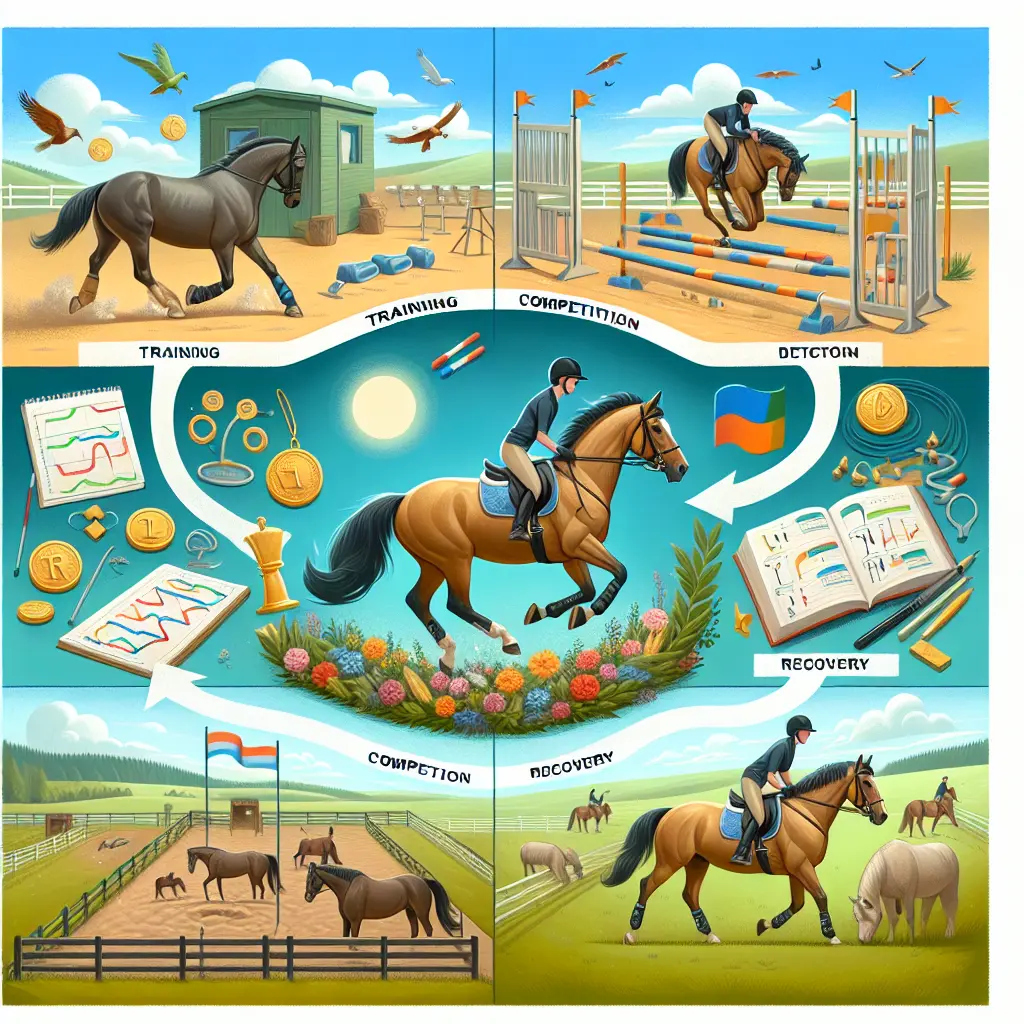
The preparation process for competition doesn’t happen overnight. Horses that are less experienced or involved in lower-level events can build a strong foundation within months, whereas more complex competitions may require up to a year of preparation. The ultimate goal is to ensure your horse is both physically and mentally prepared, minimizing injury risks and enhancing the chances of a successful outing.
A schedule that integrates training days with adequate rest is crucial. Over-exerting your horse could result in injuries or burnout, while insufficient training may leave your horse unprepared for the challenges ahead.
Building a Training Plan: Key Questions to Ask
- What is my horse’s current training level?
- What is our goal for this competition?
- Which specific skills or tasks need work?
- How much training and rest can my horse safely handle?
- Is sufficient time set aside for new exercises to become routine?
These questions are essential in tailoring a plan that targets both your horse’s strengths and areas that need improvement.
Structuring the Preparation Phases
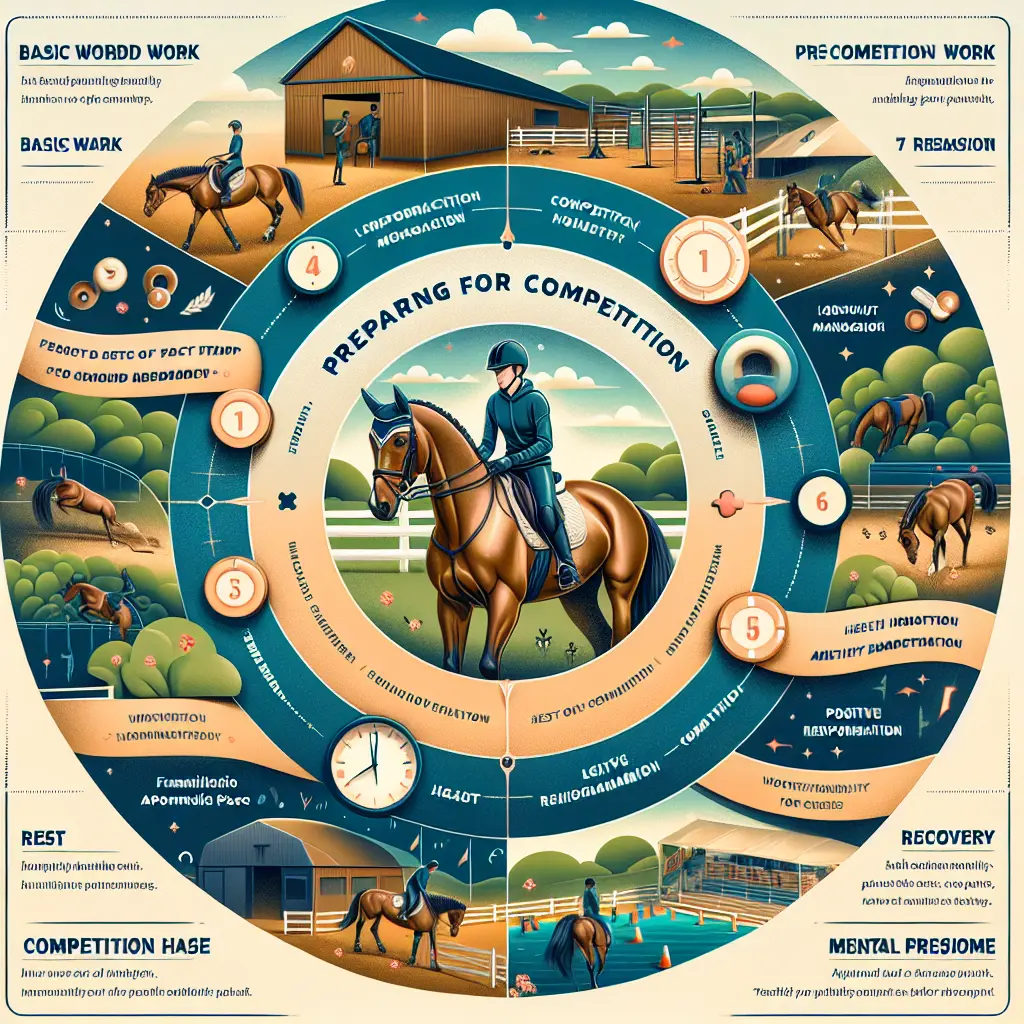
Divide your preparation into distinct phases to ensure focused progress:
- Basic Work: Establish a foundation through general conditioning, flatwork, and light jumping.
- Pre-Competition Work: Focus on event-specific exercises, such as dressage patterns or show jumps.
- Competition Phase: Hone skills while maintaining fitness without overwhelming your horse.
- Recovery: Ensure time for rest and relaxation, crucial after training and competition.
As the event nears, training should be more targeted yet less intense to avoid overstimulation or fatigue.
Example Training and Rest Schedule
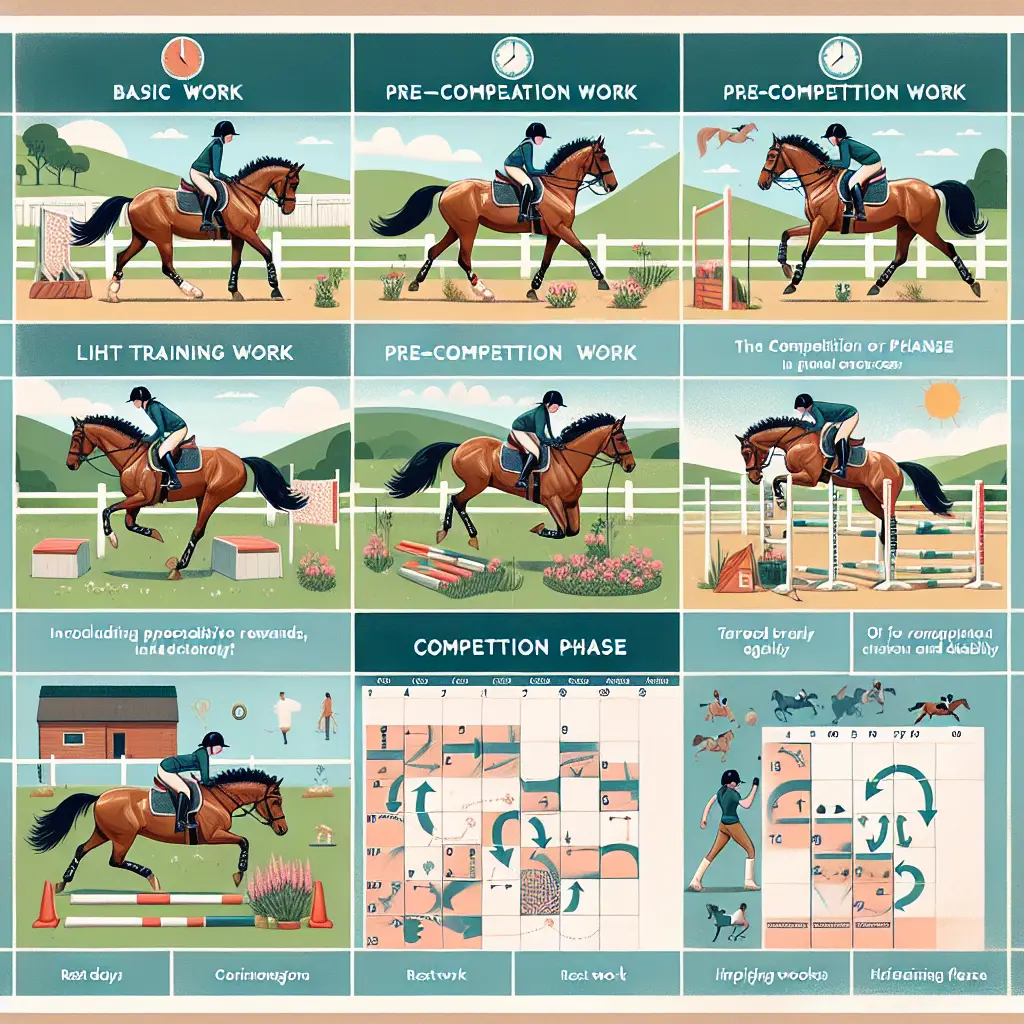
Here’s an example week to consider as the competition draws near:
- Sunday: Complete rest day in the pasture.
- Monday: Flatwork for 20 minutes followed by a 30-minute hack.
- Tuesday: Jump lesson, including warm-up and short gallop.
- Wednesday: Light hack or trail ride for recovery.
- Thursday: More intensive flatwork school for 30 minutes followed by a 20-minute hack.
- Friday: Easy hack or potential rest day based on horse’s needs.
- Saturday: Competition day.
This schedule is adjustable to your horse’s specific needs. Monitor closely and adapt if necessary.
The Power of Positive Reinforcement
Incorporating positive reinforcement in training sessions, such as clicks and treats for good performance, builds confidence and reduces anxiety. This approach is crucial for competition readiness, making training sessions enjoyable and more effective.
Training Variety and Workload Management

- Mix up workouts: Combining dressage, jumping, galloping, and trail riding enhances your horse’s strength and challenge.
- Gradually increase intensity: Avoid immediate heavy workloads, gradually build up to them.
- Listen to your horse: If they show signs of fatigue or soreness, consider additional rest days.
Recognize that every horse is unique, and adjust your schedule accordingly to suit their
age, health, and previous workload.
The Importance of Rest and Recovery
Rest days are non-negotiable, giving your horse’s muscles and mind time to recover and rebuild. A recommended practice is at least one full day of rest per week, preferably in a pasture setting to promote natural movement and socialization.
Nutrition and Mental Readiness
While training and rest focus is essential, don’t overlook a balanced diet and mental preparation. Ensure a nutrient-rich diet and create a calm environment to enhance your horse’s physical and mental readiness for competition. Explore our [Everyday Horse Vitamins & Supplements](https://www.justhorseriders.co.uk/collections/horse-everyday-supplements) for balanced nutrition options.
Checklist for the Week Before Competition
- Assess your horse’s health and fitness.
- Focus on event-specific skills.
- Stick to familiar exercises and routines.
- Plan a light workout the day before the show.
- Ensure a complete rest day each week.
- Watch for signs of fatigue or injury and adjust accordingly.
Final Tips
Preparing for a competition is no small feat, but with the right strategy, it can become a rewarding experience:
- Start preparations early—months ahead of the event.
- Stay flexible—adjust plans based on your horse's condition.
- Maintain positive reinforcement for effective training.
- Monitor progress—document and track what works best for your horse.
By adhering to these strategies, you can provide your horse with the best possible chance for a safe, successful, and positive first competition experience. For further resources and expert advice, consult reputable equestrian sources: