

How to Protect Your Horse Rugs from Tail Chewing: Tips and Solutions
Introduction
Tail chewing is a troublesome behavior among horses that perplexes many owners. It's not only about protecting their horse rugs but also about understanding the root cause of the behavior. This detailed guide delves into the reasons behind tail chewing and explores solutions to help safeguard your horse rugs.

Understanding Tail Chewing
Tail chewing is often observed in young horses, primarily due to boredom, nutritional deficiencies, or an unsatisfactory environment. Comprehending these factors can aid in effectively addressing the problem.
Boredom
Horses are social creatures that require ample mental and physical exercise. A lack of engagement can drive them to develop unwanted behaviors, such as tail chewing.
Nutritional Deficiencies
Lack of essential minerals or poor forage quality can lead to abnormal chewing patterns. Ensuring a balanced diet is crucial for preventing this issue.
Stress and Environment
Changes in living conditions and stress are potential contributors to tail chewing. Monitoring and adapting their environment accordingly can be beneficial.
Solutions to Prevent Tail Chewing and Protect Horse Rugs
Implementing the below strategies may help in preventing tail chewing and reducing damage to your turnout rugs.
Environmental Enrichment
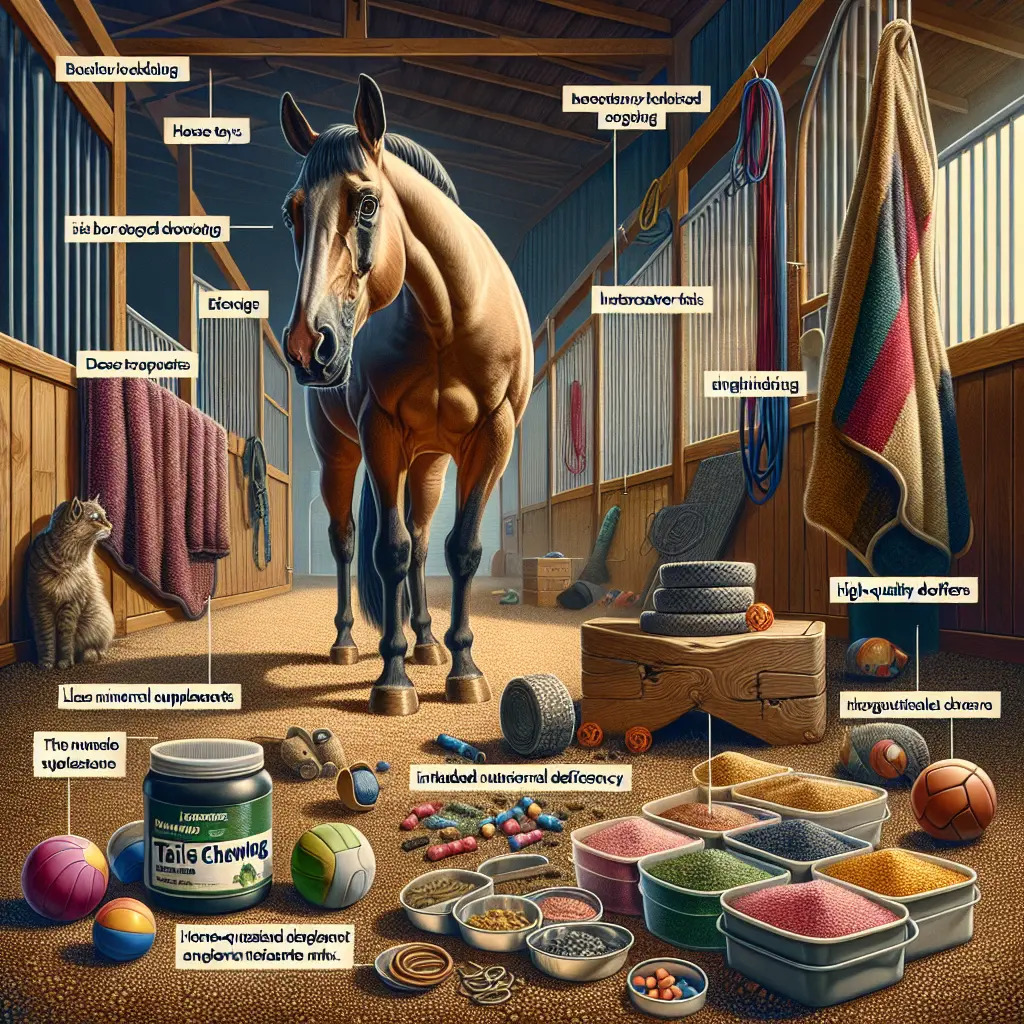
Add Toys: Introducing toys such as small balls with handles or large balls that can be rolled around enhances engagement, lessening boredom [1].
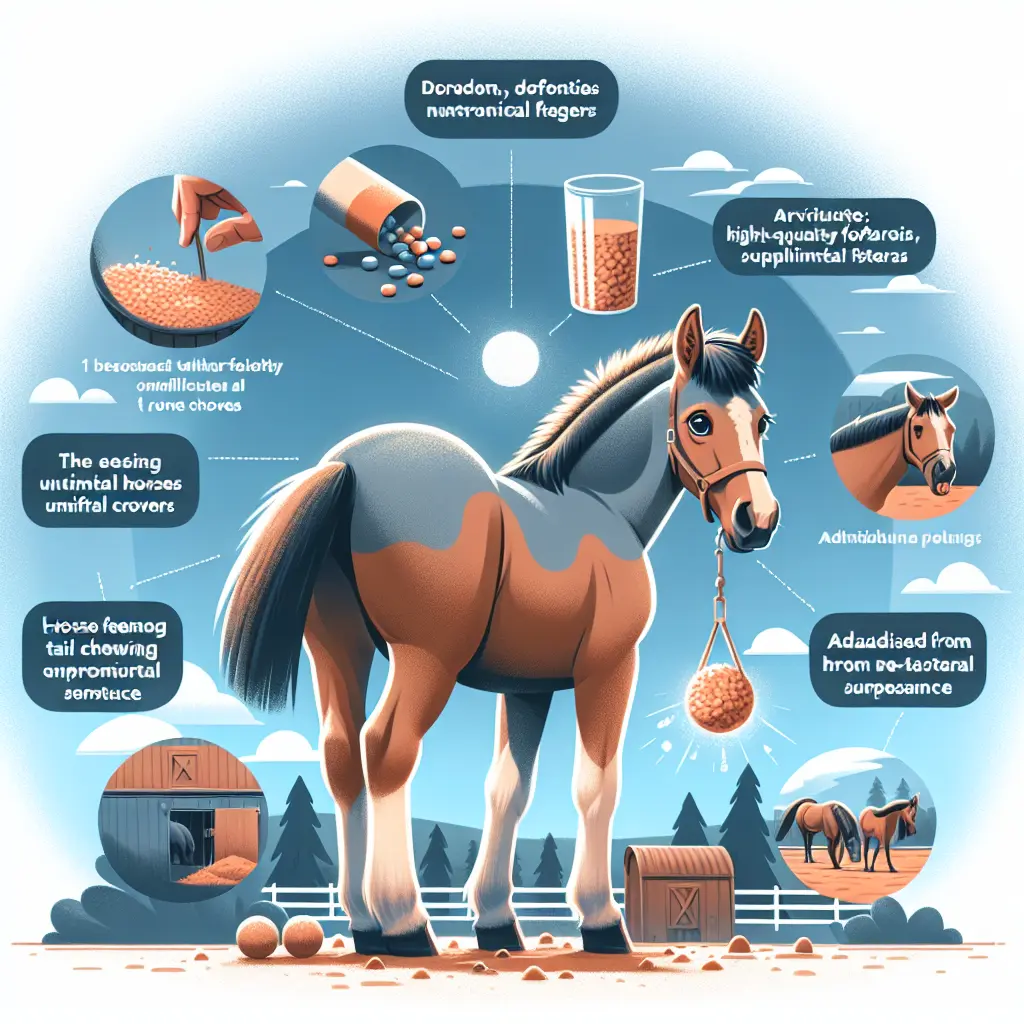
Interactive Feeders: Utilizing slow hay feeders challenges horses both mentally and physically, keeping them occupied for longer durations [1].
Nutritional Balance
Mineral Supplements: Ensuring your horses receive enough minerals is crucial. Consider everyday supplements that provide loose minerals instead of only relying on mineral blocks [2].
High-Quality Forage: Providing top-quality hay prevents gastrointestinal issues, thereby averting chewing problems.
Deterrents for Tail Chewing
Nasty Tasting Substances: A concoction of petroleum jelly mixed with cayenne pepper or Tabasco sauce on vulnerable areas effectively deters chewing [2][3].
Shampoo or Conditioner: Use specially designed horse shampoos or conditioners on tails or rug areas as a more gentle deterrent [1].
Protecting the Rugs
Rug Covers: Employing extra covers over the main rugs can prevent chewing.
Regular Supervision: Observing your horse while it wears rugs aids in early intervention if chewing begins.
Conclusion
Tackling tail chewing and preserving your horse rugs involves a multi-pronged approach: reducing boredom, ensuring dietary adequacy, and employing deterrents. Implementing these methods not only extends the lifespan of your rugs but also fosters a healthier and more joyful equine environment.
Resources for Further Reading:
- SmartPak Equine: Offers insights into tail chewing and informative content related to dietary adjustments.
- Barrel Horse World Forum: Practical advice on deterrent mixtures like cayenne pepper.
- Mountain Valley Country Store: Methods to halt tail chewing, including cayenne pepper applications.
For additional gear and equipment, explore our Jodhpur Collection, Horse Riding Boot Collection, and Horse Fly Protection. Discover Horse Treats And Gifts to reward your equine companion.