
Sprenger
Contact the horse trusts.
Sprenger bits, spurs and stirrups - German precision engineering since 1872.
Sprenger Bits, Stirrups & Spurs


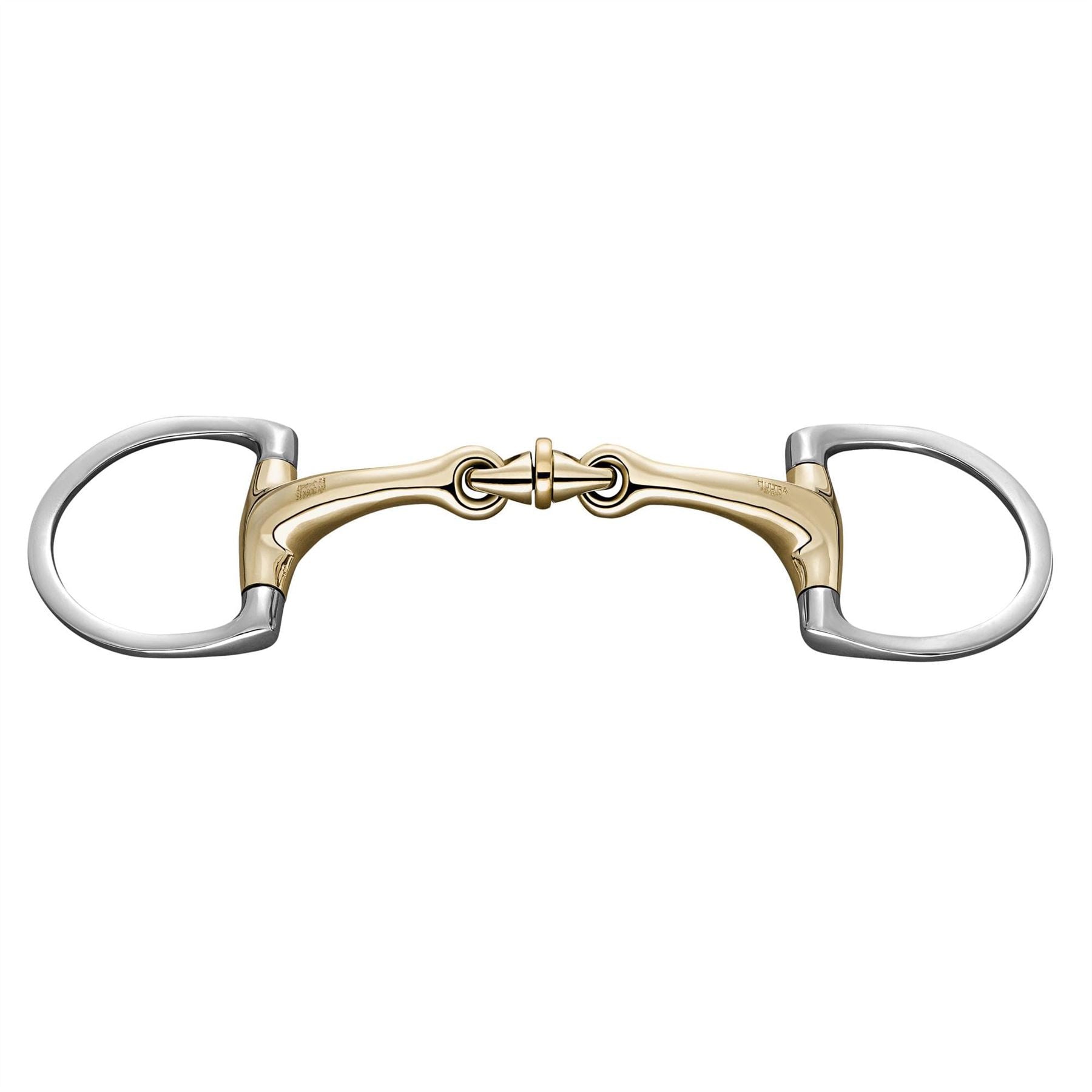


Short answer: for most riders the Sprenger range comes down to three decisions — which mouthpiece your horse goes best in, which metal you want it in, and whether you also need stirrups, pads or spurs to finish the setup. If you school in a plain snaffle, the Satinox Loose Ring Snaffle 14mm Single Jointed (in stock from £47.00) is the straightforward starting point. If you want the softer, more mobile feel of a double joint, the Satinox Loose Ring Snaffle 12mm Double Jointed is in stock at £52.50. Riders who want a Sensogan mouthpiece step up to bits such as the Novocontact Eggbutt with D Rings 14mm Double Jointed at £174.90.
In a hurry?
- Everyday snaffle: Satinox Loose Ring Snaffle 14mm Single Jointed — in stock from £47.00 (125mm, 135mm, 145mm).
- Double bridle pair: Satinox Eggbutt Bradoon 14mm Double Jointed from £67.00, plus Satinox Weymouth 14mm at £145.00 (135mm).
- Sensogan option: Novocontact Eggbutt with D Rings 14mm Double Jointed at £174.90 (115mm, 125mm, 135mm).
- Stirrups: HS System4 Stirrups at £193.90; Aero Safety Stirrups at £290.90.
- Cheapest quick win: HS Black Stirrup Pads System 4 at £12.00 (120mm) for grip underfoot.
- Spurs: short blunt necks from £26.90; grip-coated Ultra Fit Extra Grip Spur 35mm No Rowel at £56.90.
- Not sure on size? Measure the horse's mouth width first, then get in touch and our team will help you match it to a bit size.
Which Sprenger product should I choose?
Use the table below as a shortcut. Every item listed is in stock at the price shown at the time of writing; sizes sell out and come back in, so check the product page for the exact size you need.
| What you're doing | Sensible pick | In stock from |
|---|---|---|
| Everyday schooling and hacking in a snaffle | Satinox Loose Ring Snaffle 14mm Single Jointed | £47.00 |
| You want a softer, more mobile double joint | Satinox Loose Ring Snaffle 12mm Double Jointed | £52.50 |
| Horse fusses with a sliding loose ring | Satinox Eggbutt Bit 14mm Single Jointed | £61.50 |
| Horse prefers a straight, one-piece mouthpiece | Satinox CM Mullen Mouth 14mm | £77.50 |
| Building a double bridle — bradoon half | Satinox Eggbutt Bradoon 14mm Double Jointed | £67.00 |
| Building a double bridle — curb half | Satinox Weymouth 14mm (135mm) | £145.00 |
| You want a Sensogan mouthpiece | Novocontact Eggbutt with D Rings 14mm Double Jointed | £174.90 |
| Jumping and you want more stopping power | Danger Pelham (135mm) | £91.50 |
| Everyday jointed stirrup | HS System4 Stirrups (122mm, 132mm) | £193.90 |
| Stirrup that releases the foot in a fall | Aero Safety Stirrups (122mm) | £290.90 |
| More grip under the boot for under £15 | HS Black Stirrup Pads System 4 (120mm) | £12.00 |
| First spurs, or a very short neck | Pony Spur No Rowel / Ladies Spur No Rowel | £26.90 |
| Spur that stays put on a smooth boot | Ultra Fit Extra Grip Spur 35mm No Rowel | £56.90 |
How do I pick the right Sprenger bit?
Start with the size, not the model
A bit that is the wrong width will never feel right, whatever the mouthpiece. Measure the width of your horse's mouth where the bit sits, then match that measurement to the millimetre size on the product page. Too narrow and the bit presses on the lips; too wide and it slides side to side, so your rein aids arrive unevenly. Sizes across this range typically run from around 105mm for ponies up to 155mm for bigger horses, though not every size is in stock at once.
Then choose the mouthpiece action
A single joint is the classic option and folds in a simple nutcracker action. A double joint adds a central link, which spreads the pressure and lies flatter over the tongue — many horses that fuss in a single joint settle better in one. A mullen mouth, like the Satinox CM Mullen Mouth 14mm at £77.50, is a single curved bar with no joint at all, which suits horses that prefer a quiet, predictable feel.
Finally, choose the metal
Stainless steel — the Satinox line here — is hard-wearing, easy to clean and the least expensive route into the Satinox line, from £47.00 in stock. Sensogan is Sprenger's copper-bearing alloy, used on models such as the Novocontact and WH Ultra bits; riders choose it because many horses mouth the bit more readily on it. Thermoplastic options such as the Duo D Ring Snaffle (£101.90) give a warmer, more flexible feel again. None of these materials fixes a training or dental problem — if your horse is genuinely resistant in the mouth, have their teeth and bit fit checked by your vet or a qualified equine dental technician before changing kit.
What is the difference between a bradoon and a snaffle?
A bradoon is simply a snaffle made for the double bridle. It has smaller rings and a slimmer mouthpiece so it sits comfortably alongside the Weymouth curb, and riders commonly use a bradoon the same width as their usual snaffle or a touch narrower. In this range you can pair the Satinox Eggbutt Bradoon 14mm Double Jointed (£67.00) with the Satinox Weymouth 14mm (£145.00), or the Turnado Bradoon 14mm at £42.00 if you want the lightest-cost route into a double. If you are new to riding in a double bridle, work through it with your trainer first — the two reins ask for different things, and the curb is only useful once the horse is established in the snaffle.
Which stirrups and pads make the biggest difference?
Three things are worth spending on: grip, joint comfort and release in a fall. Grip is the cheapest fix — the HS Black Stirrup Pads System 4 are £12.00 for the 120mm and give an immediate, knobbed surface underfoot; a Stainless Steel Stirrup Pad is £26.50 if you prefer metal treads.
For joint comfort, the HS System4 Stirrups (£193.90, 122mm and 132mm) and the Flexcite Grip Stirrups (£232.90) use a flexing design that lets the stirrup move with your ankle rather than against it, which many riders find helps on long schooling sessions. For release, the Aero Safety Stirrups at £290.90 come in black or silver at 122mm, and the Bow Balance Safety Stirrups are £193.90 in stainless steel at 122mm and 132mm.
How do I choose spurs without over-doing it?
Spurs sharpen the leg aid; they are not a way to add force. Pick the shortest neck that lets you make contact without twisting your ankle, and keep the end blunt unless your trainer has specifically asked for a rowel. Blunt, short-neck options here start at £26.90 — the Pony Spur No Rowel, Ladies Spur No Rowel and Children's Blunt Spurs all sit at that price. The Ultra Fit Extra Grip Spur 35mm No Rowel (£56.90) adds a coated body that grips the boot and helps stop the spur sliding down onto the heel, and the Ultra Fit Extra Grip Spurs With Comfort Roller (£82.90) swap the fixed end for a rolling one. Check your affiliation's rules before competing, as permitted spur lengths and ends vary by discipline.
Common questions about Sprenger bits and tack
What size Sprenger bit does my horse need?
Measure the width of your horse's mouth at the point where the bit rests, using a bit measurer or a clean, smooth dowel marked at each corner of the lips. Match that figure to the millimetre size on the product page. As a rough guide, ponies commonly take 105mm to 115mm, most horses 125mm to 145mm, and larger horses up to 155mm. A correctly sized bit sits level without pinching the lips and without sliding through the mouth. If you are between sizes, or the horse has changed shape with fitness work, get in touch and our team will help.
What is Sensogan and is it worth paying more for?
Sensogan is Sprenger's copper-bearing alloy, used on lines such as Novocontact, WH Ultra, KK Ultra and Dynamic RS. Riders choose it because horses often mouth and accept a warm copper-bearing mouthpiece more readily than cold stainless steel. It does cost more: stainless Satinox snaffles start at £47.00 in stock, while a Sensogan Novocontact Eggbutt with D Rings 14mm Double Jointed is £174.90. If your horse is already settled and quiet in a stainless bit, there is no need to change. If they are tense in the mouth, it is one option worth trying alongside a dental and bit-fit check with your vet.
Which way round does a Sprenger bit go?
Shaped and double-jointed mouthpieces are designed to sit one way. The central link or lozenge should lie flat across the tongue, and any curve in the mouthpiece should follow the natural shape of the mouth rather than working against it. If the mouthpiece is curved, or the central link is shaped rather than symmetrical, hold the bit up and check which way it hangs before you bridle up. Fitted the right way round, the bit sits still and the horse can close its mouth comfortably around it; fitted upside down it will feel sharp and unstable. If you are unsure, a trainer or bit fitter can confirm it in seconds.
Do I need a bradoon and a Weymouth, or just one bit?
You need both to ride in a double bridle — the bradoon is the snaffle half and the Weymouth is the curb half, and they are used with two reins. A workable in-stock pairing here is the Satinox Eggbutt Bradoon 14mm Double Jointed at £67.00 with the Satinox Weymouth 14mm at £145.00 in the 135mm size. If you ride in a single bridle, one bit is all you need. Doubles are generally introduced once a horse is confirmed in the snaffle and the rider has an independent, steady hand, so take advice from your trainer before switching.
Are safety stirrups worth the extra cost?
A safety stirrup is designed to let the foot come free rather than trap it if you part company with the horse, which is why many riders now treat it as standard kit rather than an upgrade. The Aero Safety Stirrups here are £290.90 in black or silver at 122mm, and the Bow Balance Safety Stirrups are £193.90 in stainless steel at 122mm and 132mm. If a jointed everyday stirrup is closer to what you want, the HS System4 Stirrups are £193.90 and the Flexcite Grip Stirrups £232.90. Whichever you choose, ride in correctly fitting boots with a defined heel and leave roughly a thumb's width of clearance on each side of the widest part of your boot.
How should I clean and store Sprenger bits and stirrups?
Rinse the mouthpiece in clean water after every ride and dry it before it goes back on the rack — dried-on feed and saliva are what make a bit taste stale and feel rough. Avoid harsh detergents and never put a bit through a dishwasher. Copper-bearing alloys such as Sensogan and Aurigan darken naturally over time, and that patina is normal rather than a fault. Check joints, rings and stirrup treads for wear at the same time; a Sprenger Stainless Steel Stirrup Pad is £26.50 and HS Black Stirrup Pads System 4 are £12.00 if the treads have gone smooth. Retire any bit or stirrup with a cracked, bent or visibly worn part.
Free UK delivery over £50 · 90-day returns · Expert help
Last reviewed 2026-07-26 by the Just Horse Riders team.