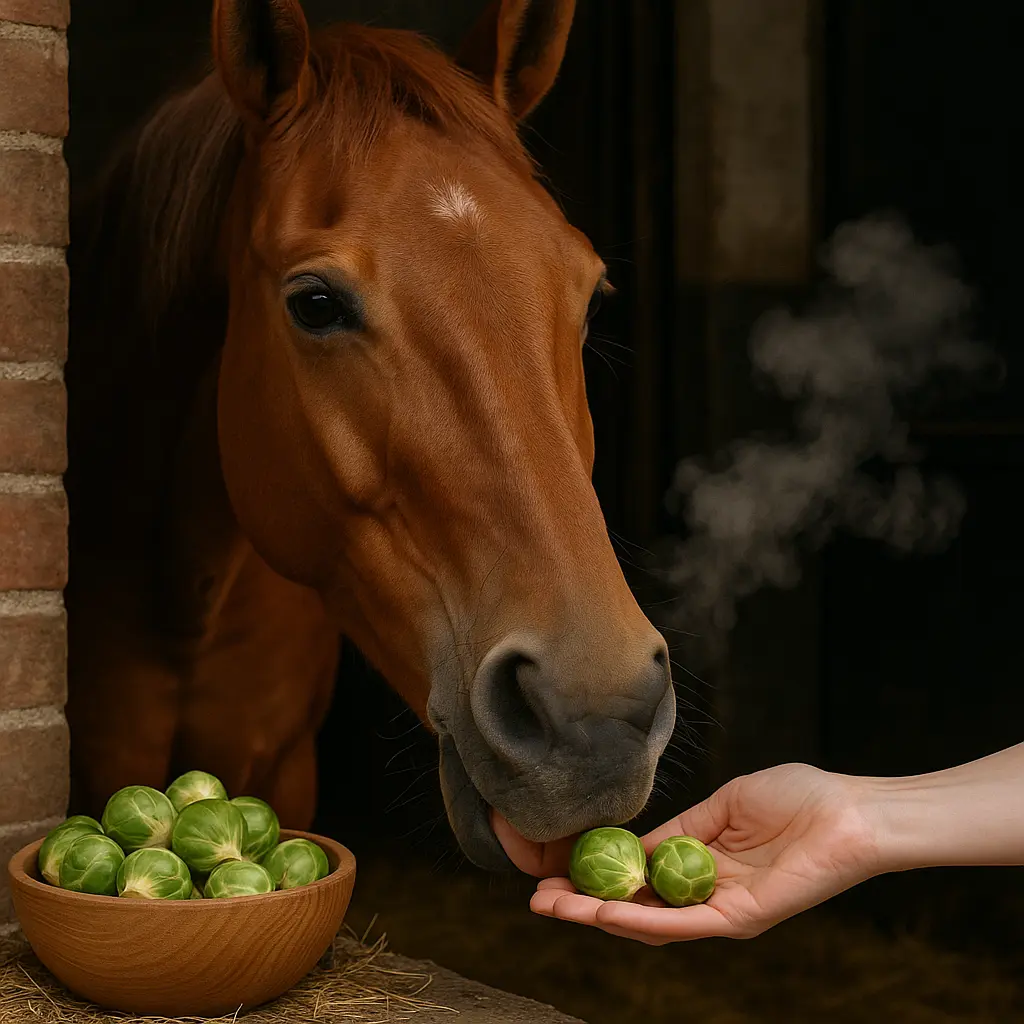
Sprouts on your plate, sprouts on the yard — when winter rolls in, this question always crops up: can your horse have a Brussels sprout or two? Here’s the straight-talking, UK-focused guidance you need to keep your horse comfortable and colic-free this season.
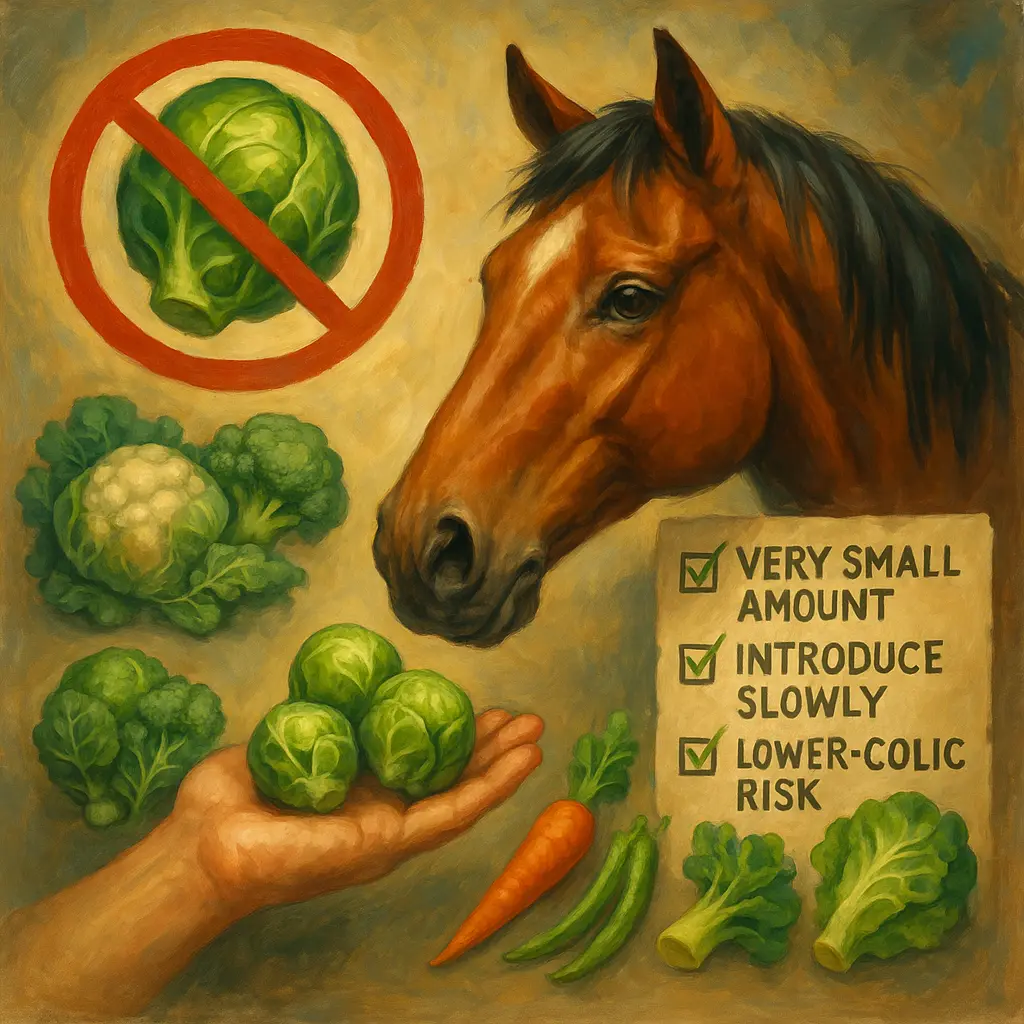
Key takeaway: Treat Brussels sprouts as a rare, tiny treat (if at all) — cruciferous veg can cause excess gas and may contribute to colic. Safer alternatives like carrots, celery, green beans and lettuce are a better bet.
Can horses eat Brussels sprouts?
Yes — but only in very small amounts as an occasional treat, and many UK advice sources recommend avoiding them altogether because cruciferous vegetables can cause gas and colic. Several practical references allow a “couple” infrequently, while veterinary-facing guidance is more conservative.
In UK resources, you’ll see two consistent themes. First, Brussels sprouts sit in the cabbage family (cruciferous veg), which are regularly flagged as problematic for horses because they increase intestinal gas. Animal Friends advises that cabbage-family vegetables “should not be fed to horses due to the gas production associated with ingesting these foods” (source). Second, some equine nutrition articles acknowledge owners may still want to offer the odd sprout as a novelty — but only sparingly and never as a regular feed (source). That balance reflects real-world yard practice paired with sensible risk management.
“Yes, you can feed sprouts to horses, but as a rare treat and in moderation.” — Just Horse Riders article guidance
Why sprouts can cause trouble in horses
Brussels sprouts are cruciferous; in horses these vegetables can ferment in the hindgut and produce excess gas, which may lead to discomfort or gas colic. The concern is about gas production, not a unique “sprout toxin”.
Multiple equine references connect cabbage-family veg (sprouts, broccoli, cauliflower, kale) with gas build-up in the equine gut, and the resulting pressure can trigger abdominal pain or colic signs in some horses. That’s why many UK lists place these foods in the “do not feed” or “only with caution” category (Animal Friends; Horsix). It’s also why forum contributors who’ve dabbled with sprouts typically advise keeping it to a couple at most, and closely watching the horse afterwards (Horse & Hound forum).
“Cruciferous vegetables such as cabbage, broccoli, cauliflower, kale and Brussels sprouts should not be fed to horses due to the gas production associated with ingesting these foods.” — Animal Friends equine advice page
How much and how often? A safe approach
Treat sprouts as a non-essential, optional treat only; if you choose to feed any, offer a very small amount infrequently and never add them to the daily ration. Introduce slowly and monitor for any digestive changes.
Across sources, there’s no evidence-based “safe number”, so the most responsible stance is conservative:
- Offer a tiny piece first — think a single thin slice or a small chunk — and wait 24 hours before considering any more.
- Do not give large handfuls, mixed kitchen scraps, or cooked leftovers. Cooking doesn’t remove the gas-related concern (source).
- Never make sprouts part of the routine. They shouldn’t replace forage or a balanced feed.
- Chop or slice to reduce any choking risk, and feed in-hand so you can control the portion.
- Skip entirely for horses with a sensitive gut (more on that below).
“Vegetables from the cabbage family can be fed in small quantities… Be careful not to give too much at once and try it out first.” — Ask Heltie
“Generally cruciferous vegetables are best avoided with horses, but a couple sprouts usually won’t cause any problems.” — Horse & Hound forum contributor
Quick tip: If you want the fun without the fuss, purpose-made, low-sugar treats are easier to portion and far safer than kitchen veg. Browse our low-sugar horse treats for simple, yard-safe rewards.
When to avoid sprouts altogether
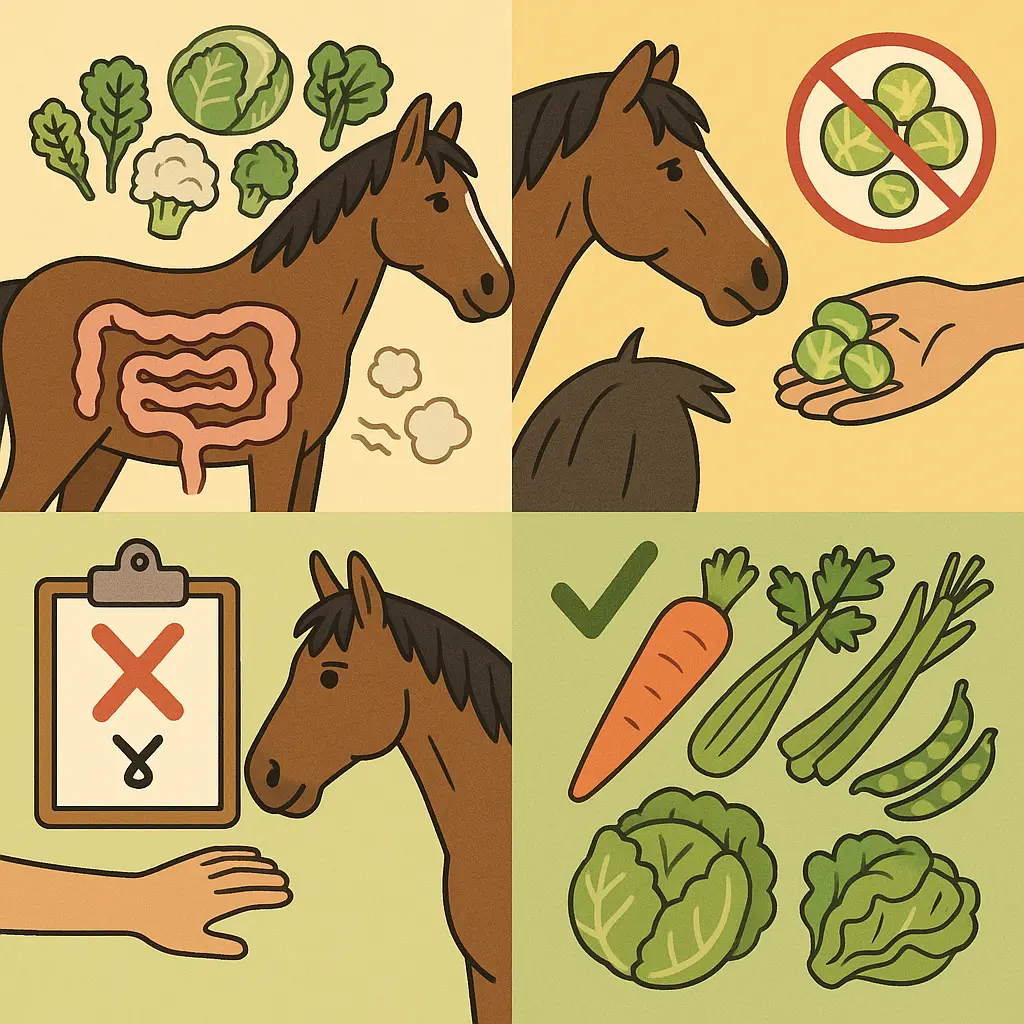
Avoid Brussels sprouts for any horse prone to colic or gas, or if your horse has a history of digestive sensitivity. Also avoid during periods of significant routine change, box rest, or winter stabling when gut upsets are more likely.
In colder UK months, horses are often stabled more and may move less. Sudden diet changes — even “just a few” unusual veg — can tip a delicate gut into discomfort. If your horse is on a careful management plan for ulcers, diarrhoea, or recurrent colic, stick to a predictable diet and skip sprouts entirely. The same goes if your yard has recently changed forage, turnout time, or workload.
Pro tip: Support steady gut function in winter by keeping movement up and forage consistent. If your horse is spending more nights in, ensure they’re comfortable and settled with appropriate stable rugs for the season, and consider forage-based enrichment rather than novel veg. If you’re actively managing a sensitive gut, talk to your vet and explore targeted digestive support supplements.
Safer winter treat ideas for UK horses
Choose carrots, celery, green beans and lettuce as safer “food” treats, and pair them with purpose-made low-sugar treats and enrichment toys. These options are generally easier on the equine gut than cabbage-family vegetables.
Veterinary and practical sources frequently list carrots, celery, green beans and lettuce as sensible alternatives to crucifers (source). Alongside these simple veg, consider:
- Commercial low-sugar treats for predictable calories and simple portion control — see our treats collection.
- Treat balls and stable toys to slow intake and add enrichment — browse ideas in our gifts for horses and seasonal Christmas gifts for horses.
- Forage-based boredom busters: double-netted or slow-feed hay nets, small-holed haylage nets, or scatter-feeding chaff in a treat ball for mentally engaging nibbling.
- More movement: a leg-stretch hack, in-hand walk, or groundwork session can all help gut motility. If you’re heading out on grey afternoons, kit up with hi-vis for riders so you stay seen.
Remember, even “safe” treats should be fed in moderation and introduced gradually. If your horse is on a specific diet or weight plan, check with your vet or nutritionist before adding extras.
How to introduce any new treat — and what to watch for
Introduce any new food slowly, in tiny amounts, and monitor for signs of digestive upset such as reduced appetite, pawing, looking at the flank, restlessness, bloating, or other colic signs. If you’re concerned, stop the treat and call your vet promptly.
A sensible step-by-step for any novel treat (sprouts included):
- Offer a pea-sized piece first time and observe for 24 hours.
- Check droppings, appetite, and demeanour. Any change? Stop and speak to your vet.
- If no issues, you can occasionally repeat a small piece — but don’t escalate quantity or frequency.
- Never give a large portion “because they liked it last time” — that’s when gas-related issues can bite.
The colic indicators to know include reduced appetite, pawing, flank-watching, bloating, restlessness, or lying down and getting up repeatedly. These are highlighted across UK advice pages warning against gas-producing foods (source). Trust your instincts: if something looks “off”, remove feed, keep the horse calm, and ring your vet.
At Just Horse Riders, we recommend keeping a simple “new treat log” in winter so you can quickly correlate any tummy grumbles with changes to the snack menu. It’s a small habit that can save a lot of second-guessing.
Christmas leftovers and yard etiquette
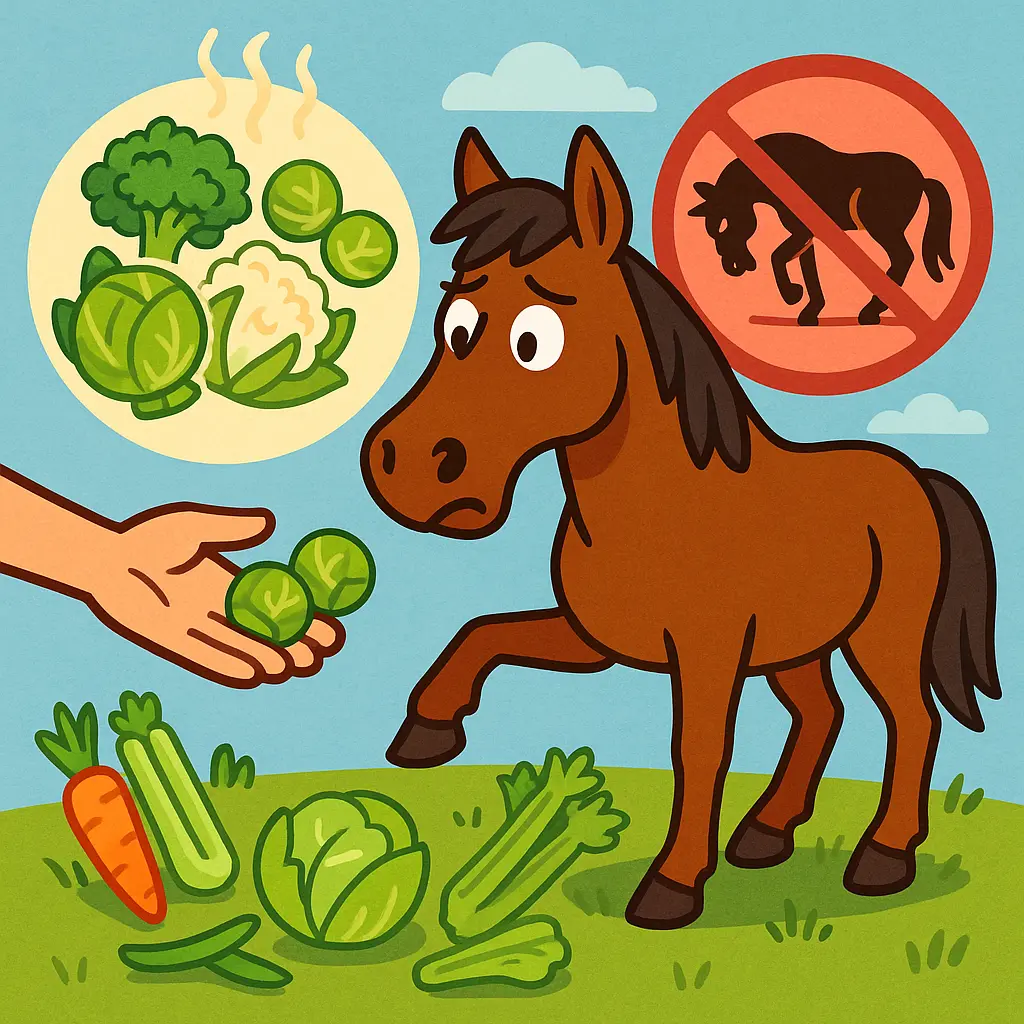
Do not bring cooked Brussels sprouts, mixed vegetable scraps, or handfuls of leftovers down to the yard; sharing human food ad hoc is a common cause of upset tummies and yard disagreements. Stick to horse-safe treats and always get the yard owner’s permission before offering food to anyone else’s horse.
UK yards get especially festive, but “kitchen sharing” shouldn’t become normal practice. Cooked sprouts are still cruciferous and remain a gassy choice for horses; adding butter, seasoning, bacon, or gravy only makes them less suitable. If you want to spread cheer, brighten the stable with a toy or stock up a friend’s grooming kit instead. Our Christmas gifts for horses and gifts for equestrians collections have yard-safe ideas that won’t upset equine stomachs.
Quick tip: Put a friendly sign on your stable door during the holidays: “Please do not feed me — I’m on a special diet.” It’s a polite, effective way to keep surprise snacks out of your horse’s feed intake.
Bottom line: If in doubt, don’t feed it. Choose proven, horse-friendly treats and enrichment, and keep your horse’s gut routine steady through the winter.
FAQs
Can horses eat Brussels sprouts?
Some equine sources say yes, but only in very small amounts and very occasionally; others recommend avoiding them entirely because cruciferous vegetables can cause gas and increase colic risk. See our overview and the balanced position in our earlier guide (source).
Do Brussels sprouts cause colic?
They can contribute to gas build-up, which may lead to abdominal discomfort or gas colic, especially if a horse eats too many at once. That’s why many UK lists put cabbage-family veg in the “avoid” category (source).
Are raw Brussels sprouts safer than cooked?
No. The main concern is the cruciferous veg gas effect, and cooking doesn’t remove that reason for caution (source). Avoid cooked leftovers and mixed kitchen scraps entirely.
How many Brussels sprouts can a horse have?
There’s no evidence-based “safe number”. The practical consensus is “very small amounts only, very occasionally” — or avoid them altogether to minimise risk (source).
What signs should I watch for after feeding sprouts?
Watch for reduced appetite, pawing, looking at the flank, restlessness, bloating, or other signs of colic. If you see any of these, stop the treat and call your vet (source).
What are safer alternatives to Brussels sprouts?
Carrots, celery, green beans and lettuce are widely listed as safer options than cruciferous veg (source). For simplicity and consistency, choose purpose-made, low-sugar treats from our treats collection.
What else can I do to beat stable boredom without risky snacks?
Try treat balls, forage-based slow feeding, in-hand walks, and short hacks to keep your horse occupied and gut motility ticking over. Browse yard-safe ideas in our gifts for horses, keep festive and practical with Christmas gifts for horses, and if your horse is stabled more, check they’re comfortable in the right stable rug. For sensitive tummies, consider targeted digestive support supplements and discuss options with your vet.