Charlotte Dujardin is winning again. After serving an FEI suspension prompted by a training video, she returned to competition in July 2025 and has since gone nine-for-nine across domestic and international tests with scores up to 78.67%.
Key takeaway: Dujardin’s measured comeback — starting quietly at home, building depth with multiple horses, and keeping training impeccably welfare‑focused — is the playbook UK riders should follow when returning to the centre line under scrutiny.
When did Charlotte Dujardin return, and what did she win first?
Dujardin made her competitive return on 27 July 2025 at Hunters Equestrian, winning Advanced Medium 3 on 74.46% and Advanced Medium 4 on 76.71% with Special Effekt. This came after a provisional suspension began on 23 July 2024 and a one‑year FEI ban and fine were imposed, with the suspension completed in December 2025.
Gloucestershire’s Hunters Equestrian provided a low‑key, domestic springboard under British Dressage rules. Returning at Advanced Medium allowed her to re-establish accuracy, relaxation and ring craft without the pressure of immediate Grand Prix starts. Choosing a contained indoor-style environment in the UK summer-to-autumn window also reduced weather variables and travel stress for a horse resuming mileage.
Within weeks she broadened the plan: at Hartpury University she put big medium marks on the board with Secret Agent — to 78.67% — and stepped Special Effekt up to a Prix St Georges debut win on 73.97%. The pattern is clear: frequent class starts, calculated level progression, and consistently north of 73% to build form and confidence.
What are her international results since the comeback?
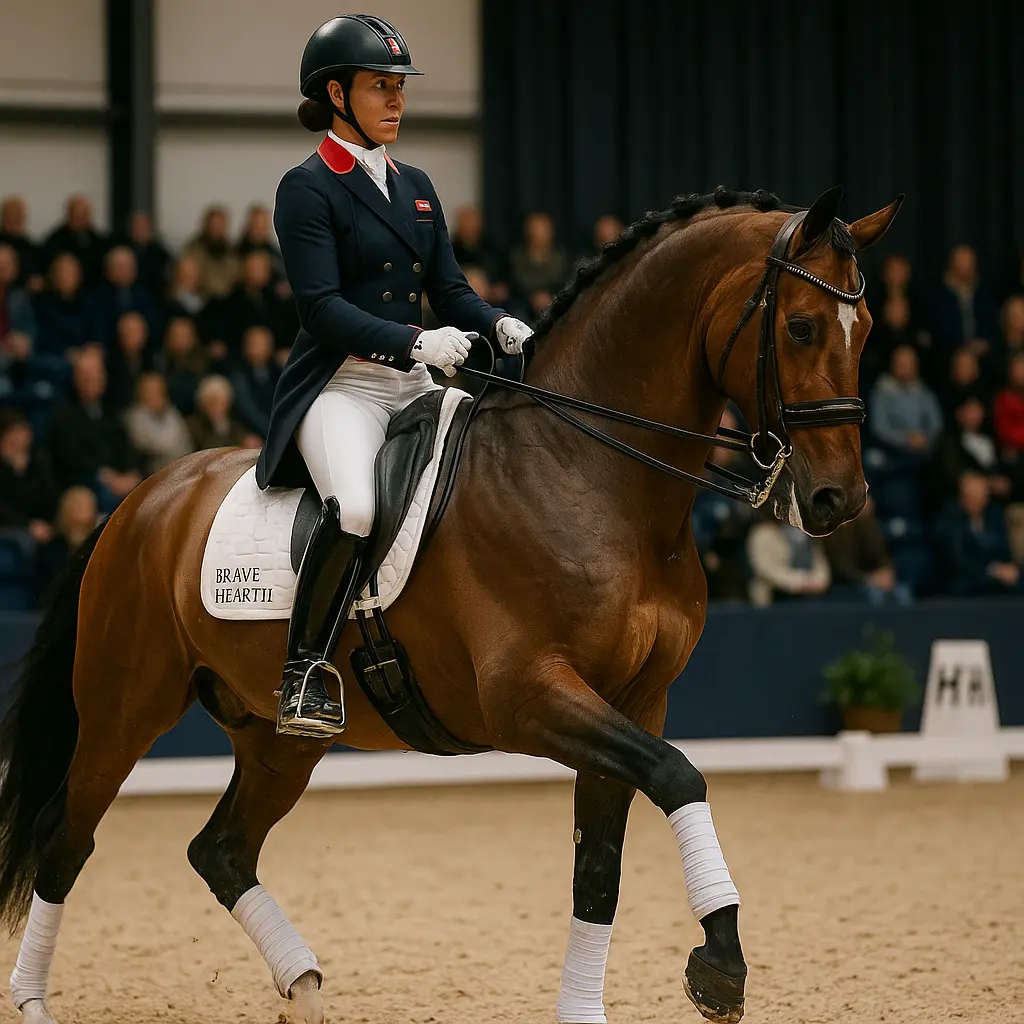
At Wellington International (11–12 October 2025), Dujardin won both the CDI3* Grand Prix (73.74%) and the Grand Prix Special (72.83%) on Brave Heart II. Her tests were broadly clean, with only a minor trot half‑pass issue noted.
This was her public international re‑entry: measured, tidy and emphatically competitive. Brave Heart II provided the horsepower to reassert her technical standard at CDI3* without leaping straight into championship-level pressure. Since then, she has maintained a 100% strike rate across nine tests on different horses — the hallmark of a rider managing a string intelligently as well as riding brilliantly.
Notably, Dujardin also chose to sell Alive And Kicking (All At Once x Fürst Piccolo), once an Olympic-hopeful mount. Moving horses on is a strategic decision top riders make to balance strings, rider time, and owners’ goals — and it often clears bandwidth to campaign the horses best suited to immediate targets.
Can she target LA 2028, and what entries require permission?
Yes — the British Olympic Association has indicated it would welcome Dujardin back for LA 2028 qualification; there are no BOA barriers once the FEI ban has run its course. For internationals, she requires British Dressage (under the British Equestrian Federation) selection approval; domestic UK competitions need no such permission.
In practice, that’s the pathway we’ve seen: domestic starts (e.g., Hunters, Hartpury) require standard entries and BD membership/registration rules only. Once you want to compete overseas or at FEI‑sanctioned events in Britain, you need selection approval from British Dressage — as evidenced by her Wellington entry. Riders planning a similar route should map their domestic calendar first, then apply for selection when test quality, horse fitness and recent scores are strong and consistent.
Quick tip: Keep your horse passports, vaccinations and registrations current early in the season; selection panels appreciate riders who have their admin immaculate alongside their scores.
How should you structure your own comeback season?
Start with domestic, confidence‑building classes at a slightly lower level than your previous peak, then step up once you’re reliably over 70% and the work feels repeatable at home and away. This is exactly how Dujardin moved from Advanced Medium to PSG domestically before reappearing at CDI3* Grand Prix.
Here’s a practical UK template you can adapt:
- Weeks 1–4: Enter quiet domestic shows (e.g., venues like Hunters Equestrian or Hartpury). Aim for 70–74% to show relaxation and accuracy before moving levels.
- Weeks 5–8: Increase frequency slightly. Mix mediums with first PSG starts if scores and way of going are stable.
- Weeks 9–12: Hold the level. Win or place consistently; target 73%+ averages as your selection case builds. Only then consider FEI classes.
Build a string with range. Dujardin’s comeback model used versatile 6‑ to 11‑year‑old horses (e.g., Secret Agent, Brave Heart II) so she could compete often without overloading any one horse. If you’re running a two‑ or three‑horse string, rotate starts to keep each horse fresh. A simple training diary—whether a notebook or an app—lets you track heart rates, recovery, and scores against conditions and venues.
At Just Horse Riders, we recommend setting your “return to form” checklist before the first start:
- Tack fit verified (especially girths and saddles) and comfort‑checked weekly.
- Gymnastic basics banked: transitions, straightness, and lateral work without tension.
- Travel routine rehearsed: load, travel, warm‑up, test, and cool‑down times rehearsed at home.
For kit, keep it practical and compliant:
- Choose FEI‑compliant dressage whips and keep aids light. Your “third leg” is precision, not punishment.
- For autumn travel and chilly collecting rings, pack breathable rugs; see our curated winter turnout rugs or consider performance options from LeMieux for smart show-day layering.
- Protect legs with supportive boots; our horse boots and bandages selection covers everyday schooling and competition needs.
- Refresh your show wardrobe to meet BD standards and look ring‑ready from day one — browse women’s competition clothing for jackets, shirts and breeches that perform under pressure.
Pro tip: Bank “double clean” runs at home. Ride a test start-to-finish twice in one schooling session, with a 10-minute walk break between. If both runs are accurate and relaxed, you’re ready to take it on the road.
How do you train hard without crossing welfare lines?
Record your schooling, audit your aids, and follow FEI‑aligned, horse‑friendly training principles that avoid tension and coercion. A single careless video can undo years of work, so your best protection is visible best practice every day.
Dujardin’s ban followed a video showing repeated whipping during training and carried a fine of nearly £99,000 alongside a year’s suspension. The lesson for every rider is straightforward: if it wouldn’t look right on camera, don’t do it — and if your horse can’t offer a movement without escalating pressure, the answer is to go back a step in training, not forward into stronger aids.
“Be careful what you wish for,” warned Carl Hester (Olympic gold medallist and British team rider) about FEI rules revisions as welfare debates intensify. His point: poorly considered changes can ripple through the sport in unintended ways.
Laura Tomlinson (Olympic medallist) has cautioned that dressage faces a turning point under public scrutiny on welfare and judging; if traditions don’t evolve, the sport risks being shut down.
Put welfare at the centre of your programme:
- Film two sessions a week. Review contact, leg and whip use, and the horse’s expression. Save clips that show your standard.
- Set “red lines”: no excessive rein pressure, no repeated whip strikes, no riding through clear signs of stress (tail swishing, grinding, irregular steps).
- Keep your tack fair. Check noseband tightness with a proper two‑finger gap, and ensure girths aren’t over‑tightened across the sternum.
- Prioritise recovery: cooling legs, walking off, and prompt grooming. Our grooming essentials help you spot heat, swellings, or rubs early.
- Fuel the work: discuss electrolyte and joint support with your vet or nutritionist and browse targeted supplements to support your horse’s workload.
Quick tip: Swap “add more leg” for “improve the balance.” Many resistance issues vanish if you ride a clearer line, rebalance the canter, and allow the neck. Correct biomechanics beat stronger aids every time.
How should you handle scrutiny and protect your reputation after a break?
Keep statements limited early on and let consistent, tidy tests do the talking; target low‑key wins before stepping into marquee arenas. Dujardin’s choice to start domestically, then pick a contained, quality CDI (Wellington) delivered exactly that.
In the social media age, you need a plan as robust as your daily warm‑up:
- Ring craft over razzle-dazzle: stability scores above 70% build your selection case and quieten noise.
- Publish your standards: occasional training clips that showcase quiet riding, generous pats, and stretchy work do more for your brand than any caption.
- Control the controllables: immaculate turnout and compliant kit signal professionalism. A correctly fitted hat is non‑negotiable — browse approved riding helmets to tick safety and style.
- Choose your venues: start where you and your horse feel relaxed. Indoor surfaces and familiar stewards can halve your risk of gremlins.
At Just Horse Riders, we’ve seen our customers rebuild smartly by focusing on routines: same warm-up structure, same saddle pad, same lorry parking habits. Predictability often outperforms perfection.

How should you plan your UK autumn/winter competition schedule?
Favour indoor venues like Hartpury and Wellington from September to November, manage mud and chill with breathable layers, and use regional finals to progress towards nationals. UK autumn conditions suit comebacks if you plan for surfaces, travel, and horse condition.
Here’s a season builder that mirrors the principles behind Dujardin’s return:
- September–October: Hartpury/Wellington/Gloucestershire fixtures for consistent footing and stewarding. Stack two starts per outing (e.g., Medium 73, PSG) to build ring stamina.
- November: Maintain frequency with one start most weekends. Track scores aiming to qualify for regional finals and, in time, national championships.
- December–January: Lighten the load. Cross-train, hack for wind and limb health, and school the basics. If fields are heavy, keep fitness with arena interval sets.
Gear that makes winter work:
- Layering for horses: breathable rugs that shed showers and wick sweat in the lorry; see our proven turnout rug range for winter weights and cuts that suit UK mud and chill.
- Leg protection: travel and schooling protection matter when you’re competing often; explore our horse boots and bandages to prevent knocks and overreaches.
- Rider comfort: wet or windy collecting rings test concentration; invest in grippy footwear and neat show kit — from coats to breeches — via our competition clothing picks.
- Head to toe safety: a snug, standards‑compliant hat is essential in winter winds; check fits across our riding helmets.
- Show-day polish: keep coats clean and skin healthy when bathing is limited; the right grooming tools and wipes go a long way in cold barns.
- Finishing touches: branded layers that wash well and look sharp; explore performance pieces from LeMieux that stand up to frequent travel.
Pro tip: Set a “weather window” policy. If winds or ice threaten safe travel or footing, push the entry. Protecting confidence and soundness beats chasing one more sheet of paper.
FAQs
When did Charlotte Dujardin’s suspension end, and could she aim for LA 2028?
Her FEI suspension followed a provisional ban from 23 July 2024 and was completed in December 2025. The British Olympic Association has signalled it would welcome her into LA 2028 qualification, so there’s no BOA barrier once the FEI process is done.
What were her first results back?
On 27 July 2025 at Hunters Equestrian (Gloucestershire) she won Advanced Medium 3 on 74.46% and Advanced Medium 4 on 76.71% with Special Effekt, then produced domestic wins at Hartpury up to 78.67% with Secret Agent and a 73.97% PSG debut for Special Effekt.
How did she perform at her international comeback?
At Wellington International CDI3* (11–12 October 2025), she won the Grand Prix on 73.74% and the Grand Prix Special on 72.83% with Brave Heart II, with no major errors beyond a small trot half‑pass mistake.
Does she need permission to compete now?
Not for domestic UK shows entered under British Dressage rules. Yes for FEI internationals — British Dressage (under the British Equestrian Federation) must approve selection and entries.
What welfare issue led to her ban?
A training video showing repeated whipping led the FEI to impose a one‑year suspension and a fine close to £99,000. The incident has intensified focus on horse‑friendly training and responsible use of the whip.
Is dressage at risk if welfare concerns aren’t addressed?
Olympic medallists Carl Hester and Laura Tomlinson have warned that public scrutiny of welfare and judging could threaten dressage’s future if traditions don’t evolve and rules aren’t implemented thoughtfully.
What can I copy from her comeback for my own season?
Start domestically at a slightly lower level, compete frequently for consistent 73%+ marks, rotate a small string of horses to avoid overuse, film and audit training for welfare, and seek BD selection for internationals only when your scores and horse fitness are rock solid.
Ready to plan your return? Build your checklist, book those local starts, and stock the lorry with the right kit — from breathable winter turnout rugs to protective boots and bandages and ring‑smart competition clothing. If you need help choosing, our team at Just Horse Riders is here to help you and your horse step back between the boards with confidence.