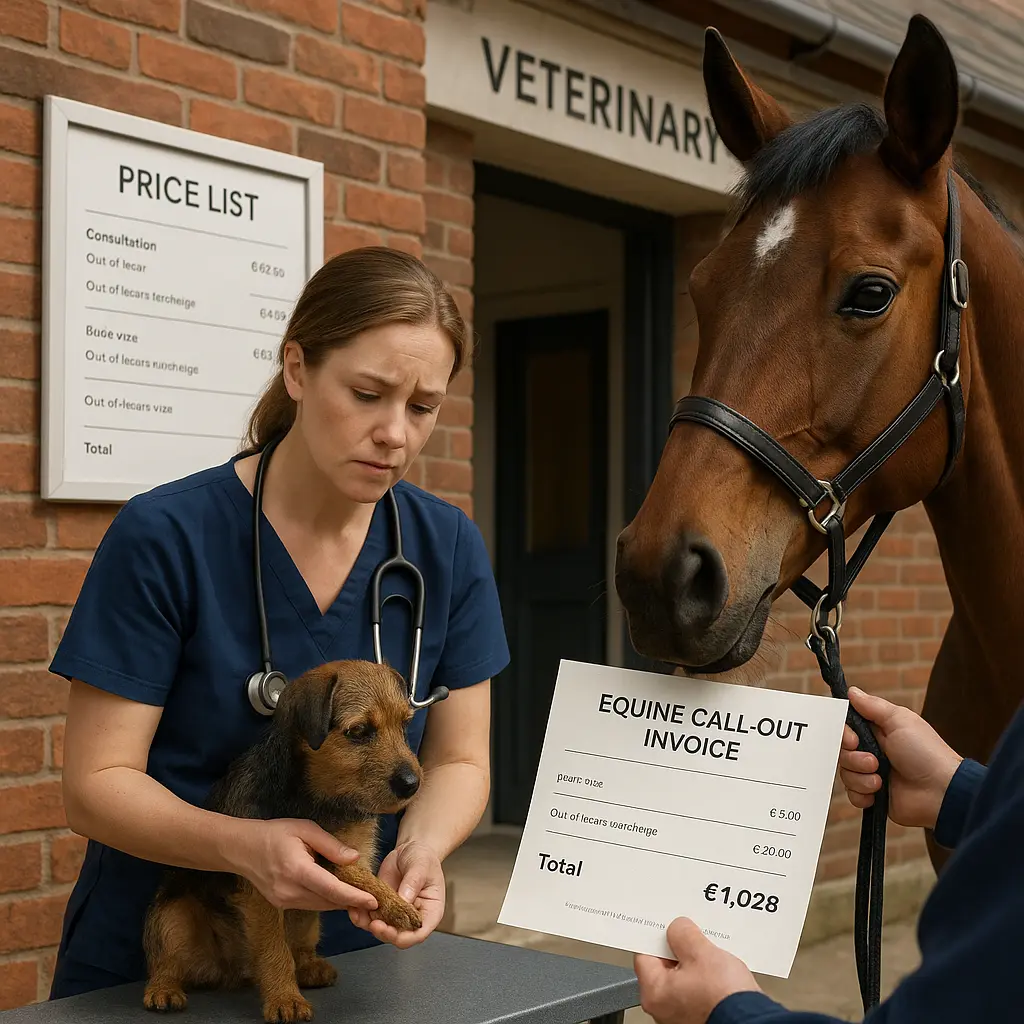
Vets’ bills are rising, and yard chat often turns to who paid what and why. If you understand how equine fees are built — and use a few smart booking tactics — you can keep standards high while spending less.
Bottom line: a weekday equine call-out typically costs £50–£60 before any exam or treatment, and out-of-hours adds around £150; you can slash this by sharing visits and planning ahead.
What does an equine vet visit really cost?
A typical weekday equine vet call-out in the UK costs about £50–£60 before any examination or treatment, and an out-of-hours visit usually adds £150 on top. For example, one practice lists an equine nurse call-out at £60, nursing time at £70/hour, and a £150 surcharge for 6pm–10pm visits (excludes usual fees) (Park Hall Vets).
It’s vital to separate “call-out” from “care.” The call-out is the travel and attendance; the exam, sedation, procedures, scans, dressings and medications are additional. This is different from small animal clinics, where the average UK consultation is £61.99 and usually includes the exam at the surgery (ManyPets UK Research, Jan 2026).
For emergencies, costs rise fast in both sectors. Small animal out-of-hours consults typically start at £200–£300 before medication (ManyPets). On the equine side, add the £150+ out-of-hours surcharge to the standard call-out and then the clinical fees. In wet, muddy UK winters when colic and lameness spikes are common, smart scheduling and prevention become even more valuable.
Why do small animal consultations look pricier than equine call-outs?
Small animal consults look pricier because they bundle the exam with no travel, while an equine call-out fee covers travel only and the exam is charged separately. The average small animal consult is £61.99, whereas a common equine call-out is ~£52 before examination (ManyPets; Horse & Hound Forum).
Equine practice has higher field-service overheads: time on the road, vehicles, kit, consumables and the reality that your vet brings the clinic to the yard. As the directors at independently owned Hambleton Equine Clinic note, corporate ownership also influences pricing structure.
“Equine care cannot be simplified into standard price lists.” — Hambleton Equine Clinic (Horse & Hound)
“Corporate-owned practices charge on average 16.6% more than independent clinics, reflecting wider changes in the profession.” — Hambleton Equine Clinic Directors (Your Horse)
Professional time is a major driver of fees. Activity-based pricing models used in equine practice convert all fixed and variable costs into a minimum hourly rate to remain viable:
“Activity-based pricing considers overhead as an hourly cost... e.g., minimum £245.21/hour for professional time after fixed/variable costs (admin, facilities, COPS).” — EquiManagement
Meanwhile, the UK Competition and Markets Authority (CMA) reports a 63% rise in small animal prices from 2016–2023 and confirms owners pay on average 16.6% more at corporate-owned practices (Horse & Hound citing CMA). This broader market pressure feeds into equine care too, especially where practices are part of larger groups.
How to halve your call-out fees at the yard
You can typically halve your per-horse call-out by sharing the per-yard fee on the same visit. Book on “Area Days” and coordinate early so your vet can group clients and reduce travel time (Bell Equine Veterinary Clinic).
Call-out fees are charged per yard, not per horse. If four owners share a £52 call-out, your share is just £13 — before any exam or treatment. Bell Equine advises:
- Share non-urgent visits with yard mates to split the per-yard fee.
- Book routine work on your practice’s Area Days.
- Be flexible with timing and book in advance so your vet can cluster visits.
- Phone for free advice for minor issues to avoid unnecessary — especially out-of-hours — visits.
Quick tip: Create a monthly “vet rota” on your yard noticeboard or WhatsApp group. List worming checks, vaccinations, microchips, dentistry checks, and saddle-fit rechecks you can cluster. Fewer vans, smaller bills.
At Just Horse Riders, we also see customers coordinate routine kit purchases together to hit free-delivery thresholds and keep essentials on-hand. Stocking a well-equipped first-aid kit and basic monitoring tools often prevents a late-night call-out for a minor scrape that simply needs cleaning, protecting and watching.
When to call now vs monitor
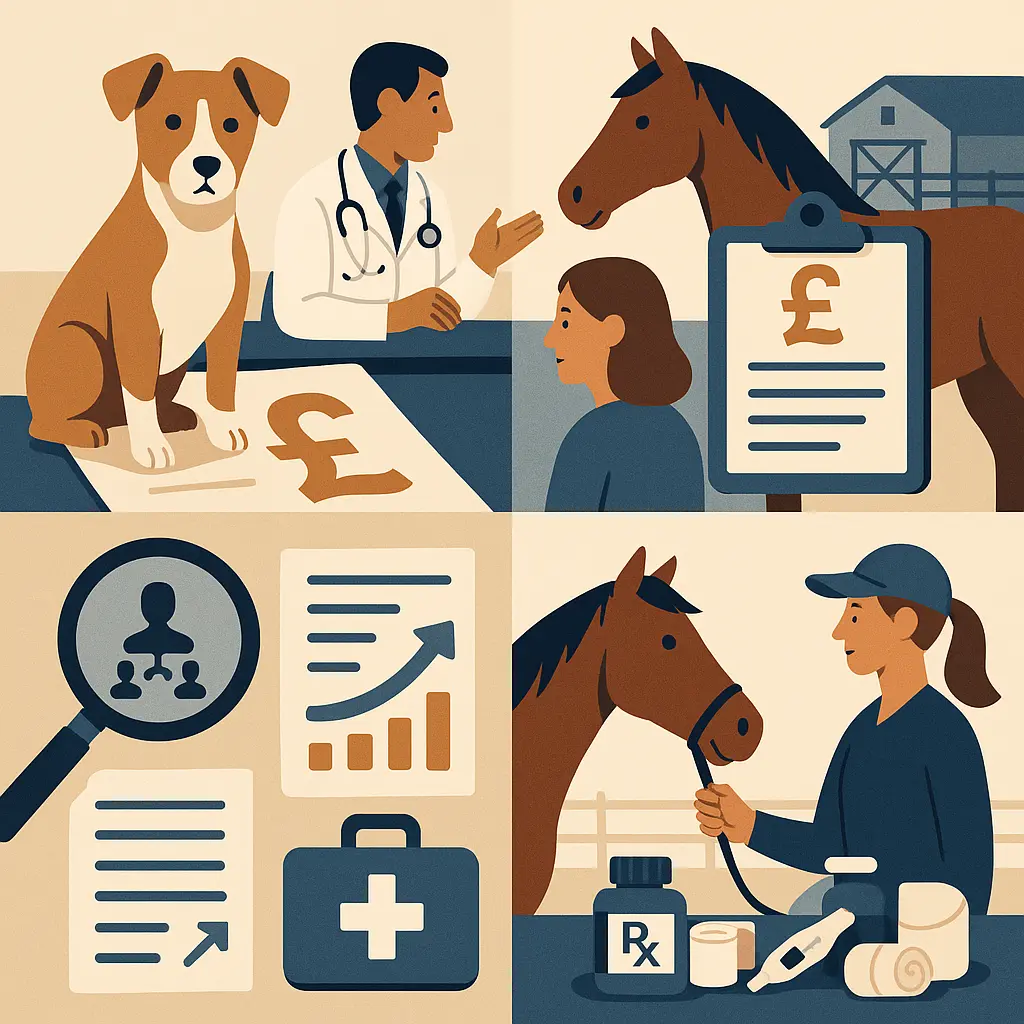
Call your vet immediately for severe pain, signs of colic, a horse that won’t bear weight, deep or contaminated wounds, or any eye injury; monitor minor issues under phone advice. Many practices offer free telephone triage for borderline cases (Bell Equine).
Out-of-hours surcharges of around £150 (e.g., 6pm–10pm) are significant (Park Hall Vets). If your vet advises safe overnight monitoring with checks every 2–3 hours — and you’re equipped to do so — you can often transition to a routine, shared yard visit the next morning instead.
What to keep ready on the yard so you can monitor properly:
- Digital thermometer and a notebook to record temperature, pulse, respiration and gut sounds at regular intervals.
- Clean saline, sterile dressings and cohesive bandage for minor wounds; clean, dry legs help you spot changes early.
- A soft headcollar and safe tie-up point for examinations or quick bandage changes.
Browse our practical yard staples in grooming and first-aid essentials so you can clean, protect and monitor minor issues with confidence before you phone the vet.
Pro tip: Learn your horse’s normal vitals (temperature, heart rate, respiration) when well. Having a baseline makes it obvious when something’s “off” — and helps your vet triage accurately over the phone.
Beat the winter spike in vet bills
Prevent mud fever, slips and cold stress to avoid many winter call-outs. Use fit-for-purpose turnout rugs, leg protection in muddy conditions, careful hoof management, and targeted joint support.
NEWC reports 80% of UK horse owners have seen fee increases, with welfare concerns rising in wet winters (Vet Times/NEWC). Reducing avoidable issues is the most reliable way to control your spend:
- Rug wisely: For UK winters, most horses need a medium-weight rug when temperatures drop and coats are clipped or horses are poor doers. Choose breathable, waterproof winter turnout rugs to keep skin dry and reduce mud scald and chills. Trusted brands like WeatherBeeta turnout rugs are popular with our customers for durability.
- Stable at night: A warm, dry bed and an appropriate stable rug help skin and hooves dry thoroughly, minimising skin infections that trigger vet visits.
- Protect legs: In deep mud or for horses prone to brushing, use horse boots and bandages for turnout or exercise and hose off promptly after work to prevent dermatitis.
- Support joints and soft tissue: Consistent use of targeted joint supplements can reduce flare-ups in older or harder-working horses — and with them, some exam call-outs.
Quick tip: Keep spare, fast-drying layers for wet spells so you’re never tempted to turn out in a damp rug. Damp equals cold skin, scald, and vet bills later.
Get value from your practice: ownership, prescriptions and transparency
Independent clinics are on average 16.6% cheaper than corporate groups, and you can ask for written prescriptions to buy some medicines online at lower prices. Expect clearer fee information as the CMA’s transparency reforms roll out.
The UK Government has announced major reforms for small animal practices — price lists, ownership disclosure and clearer advice on prescriptions/online pharmacies — as the biggest changes in 60 years (UK Government). While equine care resists “one-size” price lists due to the variety of field work, the profession (under RCVS standards) is moving towards better transparency.
Given the CMA’s finding that owners pay 16.6% more at large groups (Horse & Hound on CMA), it’s reasonable to:
- Ask who owns the practice — corporate or independent — and compare value on like-for-like services.
- Request a written prescription for long-term meds and buy them online when appropriate (your vet may charge a fair prescription fee).
- Ask for estimates before work begins, and keep communication open if the plan needs to change on the day.
Equine directors point out that full price lists can be misleading because complex field services can’t be standardised:
“Equine care cannot be simplified into standard price lists.” — Hambleton Equine Clinic (Horse & Hound)
Still, you can and should expect clarity on call-out, examination, sedation, diagnostics and medication pricing bands — and whether sharing a visit changes your per-horse fee.
What to budget for a typical year
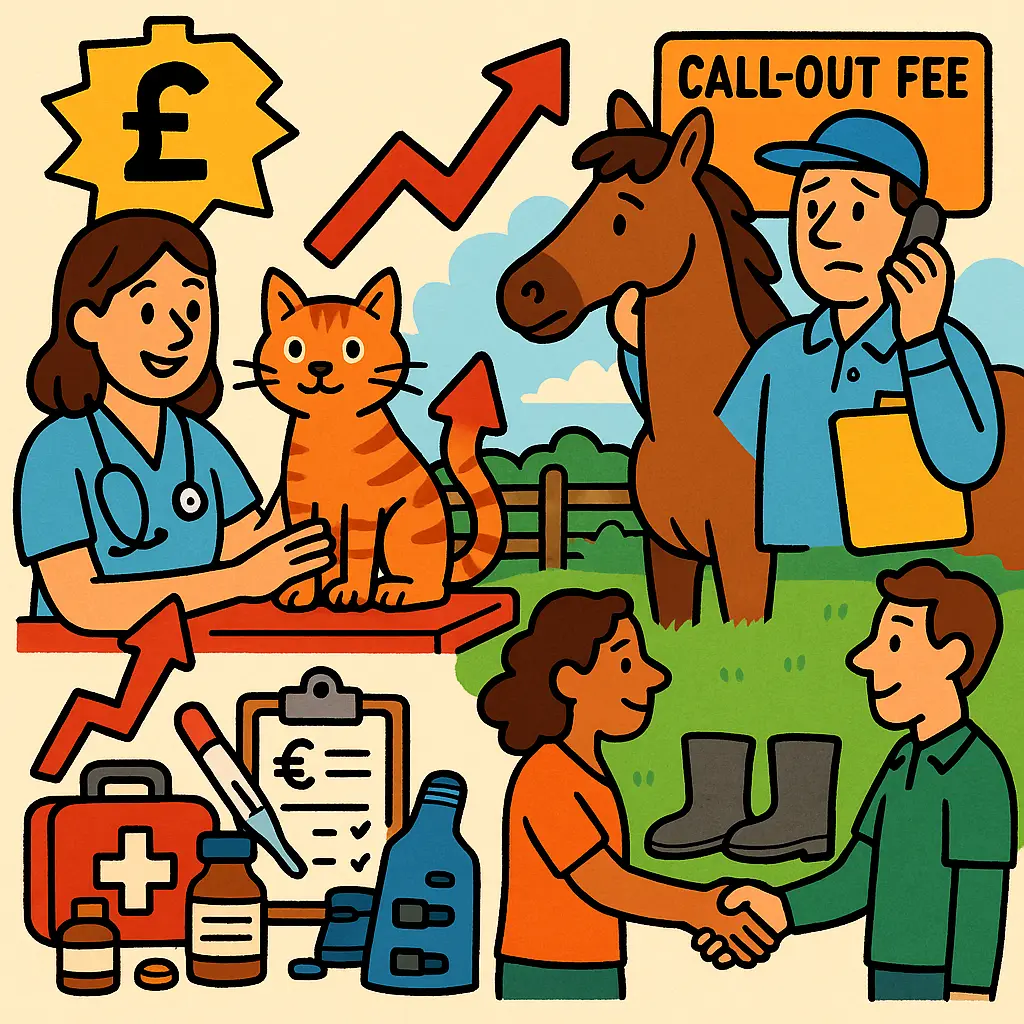
Plan for at least two routine yard visits and one unplanned call-out per year, plus a contingency for an out-of-hours emergency. Use shared visits wherever possible and ring for advice before booking a van for non-urgent issues.
Here’s a practical framework to build your budget:
- Routine yard visits: Two to four times yearly (e.g., vaccinations, dental, checks). Share the call-out (£50–£60 base) among all horses seen to bring your share down to £10–£20 per visit, then add exam/procedure fees.
- Unplanned daytime visit: Allow for one standard call-out at £50–£60, plus exam and any treatment.
- Emergency buffer: Ring-fence funds for an out-of-hours surcharge of around £150 (6pm–10pm example) in addition to the normal fees — hope not to use it, but plan for it.
- Prevention pot: Keep £100–£200 earmarked for consumables (dressings, antiseptics, hoof care, fly control) so you never delay early interventions that prevent bigger bills.
Quick tip: Track veterinary spend per quarter. If Q1 runs high, double down on prevention and shared bookings in Q2 to even the curve. For kit, check our rotating deals in the Secret Tack Room clearance to stay stocked without overspending.
How Just Horse Riders helps you spend less without cutting care
We keep essentials in stock that prevent problems and keep your horse comfortable between vet visits — with fast shipping and helpful sizing advice. Thoughtful, consistent care costs less than crisis management.
Start with prevention and monitoring:
- Keep skin dry and warm with reliable turnout rugs and breathable stable rugs for the British winter.
- Protect legs in mud and during schooling with boots and bandages.
- Support soundness and recovery with targeted supplements from leading brands.
- Top up your first-aid and grooming drawer so you can clean and dress small issues before they escalate.
- If you’re upgrading rugs this season, our customers rate WeatherBeeta for robust waterpoofing and fit in UK conditions.
At Just Horse Riders, we recommend building a seasonal plan: pre-winter rug check, hoof and skin routine through the wet months, and spring reassessment as temperatures rise. Steady, simple habits reduce the need for urgent call-outs — and they make every shared routine visit go further.
FAQs
Why are small animal consultations more expensive than an equine call-out?
Because small animal consultations (average £61.99) include the examination at the clinic with no travel, while equine call-outs (~£52) cover travel only and the exam/treatment are extra. Equine vets also absorb travel and field-service overheads (ManyPets; Horse & Hound Forum).
How can I cut equine vet call-out costs at my livery yard?
Share the per-yard call-out among owners, book routine work on your practice’s Area Days and be flexible so the vet can cluster visits. Phone for free advice first on minor issues to avoid unnecessary or out-of-hours attendance (Bell Equine).
Are corporate vets pricier for horses too?
Yes. UK data show corporate-owned practices charge on average 16.6% more than independents, a trend reflected across the profession (Your Horse; Horse & Hound on CMA).
What does an emergency equine visit cost out-of-hours?
Expect an additional out-of-hours surcharge of around £150 for early-evening visits (e.g., 6pm–10pm), on top of the normal call-out, exam and treatment fees (Park Hall Vets). Phone triage can help determine if safe monitoring until morning is appropriate.
Will the CMA’s new transparency rules apply to horse vets?
The reforms target small animal practices first (price lists, ownership disclosure, online prescription advice) (UK Government). Equine clinics argue services are too variable for simple lists, but RCVS standards still encourage clear, upfront communication on fees.
How can I prevent winter vet bills from spiralling?
Keep your horse warm and dry with appropriate turnout rugs, protect legs with boots and bandages, maintain consistent hoof care and consider joint supplements if needed. Stable at night to dry legs and skin, and address mud-related issues early.
What if rising costs are affecting my horse’s welfare?
You’re not alone — 80% of owners report higher fees, and 5% have considered euthanasia due to rising costs (Vet Times/NEWC). Speak to your vet about prioritising care, share visits, and invest in prevention. Budget-friendly essentials are often available in our Secret Tack Room clearance to help you keep standards high.