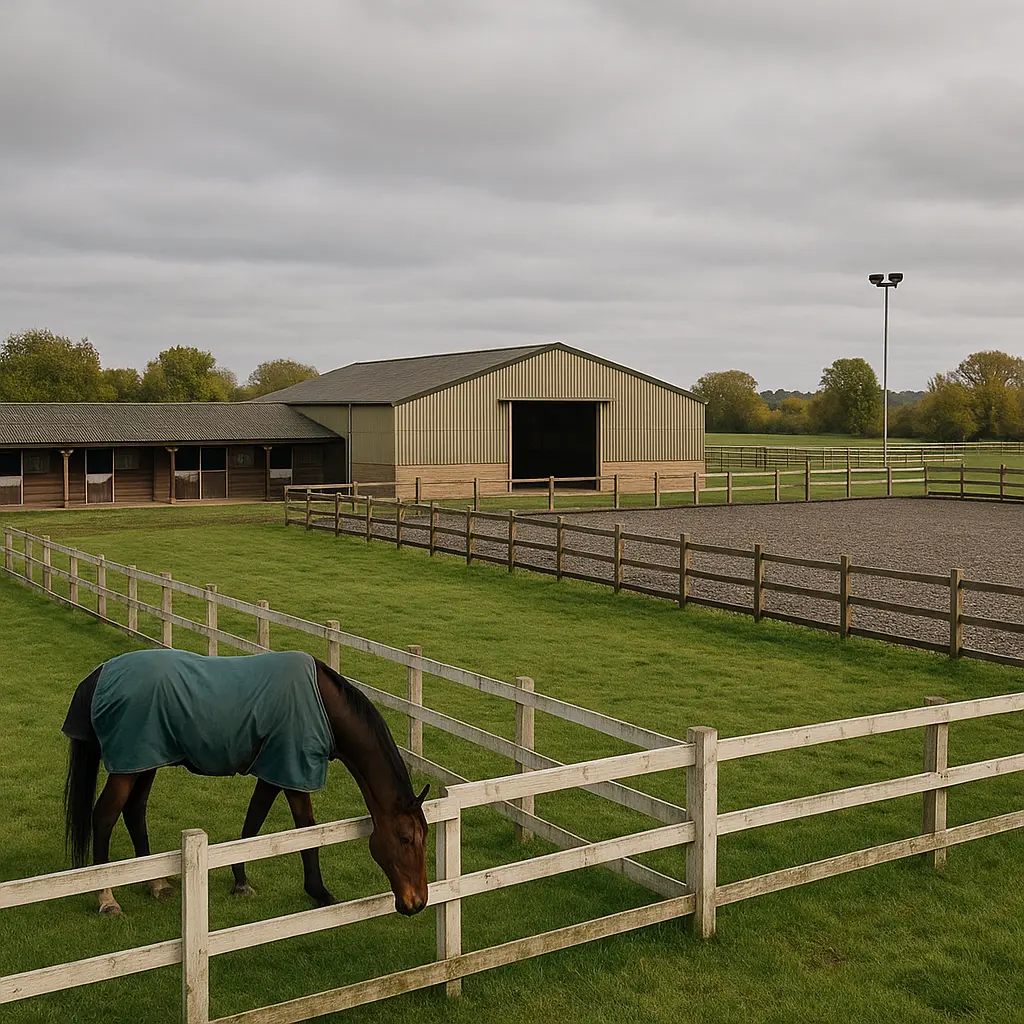
Searching for the right livery near Fladbury? With Pershore and Evesham on the doorstep and the Vale of Evesham’s farmland all around, this pocket of Worcestershire offers a strong mix of DIY, part and full options — plus the hacking to enjoy them.
Below, you’ll find a clear, practical guide to choosing a yard around Fladbury, what facilities really matter in Worcestershire’s climate, and the questions to ask before you move your horse.
Main takeaway: Near Fladbury you can find DIY, part and full livery with floodlit or all‑weather schools, daily turnout and good hacking — prioritise drainage, lighting, turnout and management standards to keep your horse comfortable through wet UK winters.
Where is Fladbury and why it works for livery
Fladbury sits in Worcestershire between Pershore and Evesham, making it a practical base for yards serving the Vale of Evesham and north Worcestershire. Local listings place livery options within a short drive of both towns, with daily turnout and “great hacking” commonly advertised (Hereford Equestrian).
This location gives leisure riders access to quieter lanes and bridleways along river-valley routes, while competitive riders benefit from reasonable journeys to major venues across the West Midlands and the Malverns. The county’s mix of arable and pasture also means turnout is a major selling point; acreage varies widely from compact 12-acre sites with a ménage and indoor barns to larger holdings with extensive grazing and all‑weather schools (Hereford Equestrian).
What types of livery are available near Fladbury?
DIY, part and full livery are all available near Fladbury; some Worcestershire yards also specialise in full-service care only and do not offer DIY. One local listing explicitly offers DIY, part or full livery with a floodlit ménage and daily turnout, while another notes “all owners needs catered for, no DIY sorry” (Hereford Equestrian), (county listings).
Match the livery type to your time and budget. DIY gives hands-on control and can be cost-effective if you’re local and available twice daily; part livery shares the routine and suits owners who work shifts; full livery delivers predictable management, ideal if you want your horse fully cared for during the week. Always ask exactly what is included: feed type and quantity, bedding and mucking out frequency, turnout schedule, rug changes, and whether exercise or schooling can be added on. Established Worcestershire providers like Alcott Farm (family-run for over 40 years) offer part and full livery, reflecting the county’s strong tradition of managed care options (Alcott Farm Livery Yard).
Quick tip: Request the yard’s written “what’s included” sheet and keep it alongside your contract to avoid any surprise extras later.
Which facilities matter most in Worcestershire’s climate?
Floodlit or all‑weather arenas, safe year‑round turnout and good drainage are the top priorities for Worcestershire’s wet winters and clay soils. Listings commonly advertise floodlit ménages and all‑weather schools to keep horses in work even when fields are heavy or daylight is short (county listings).
In practice, look for:
- Arena surface and lighting: Floodlights extend riding to before/after work from autumn to spring; ask about surface type and maintenance, and whether school use is rationed after rain or frost.
- Turnout and acreage: Options near Fladbury range from around 12 acres with indoor barns to 70 acres with an all-weather school, and even 120 acres at some facilities in the wider county. More land can mean better rotation, but management matters just as much as raw acreage.
- Stable environment: Indoor barns can be a bonus in driving rain, while airy American barns reduce condensation. Check ventilation, drainage channels, and skip-out policies.
- Hacking: Yards proudly advertise “great hacking,” but confirm how much is off-road and whether winter river-valley routes stay passable.
At Just Horse Riders, we recommend preparing for damp, windy spells with reliable layers. Browse weatherproof winter turnout rugs for field comfort and add stable layers from our stable rugs range for clipped or stabled horses on structured yard routines.
How to assess hacking around Fladbury
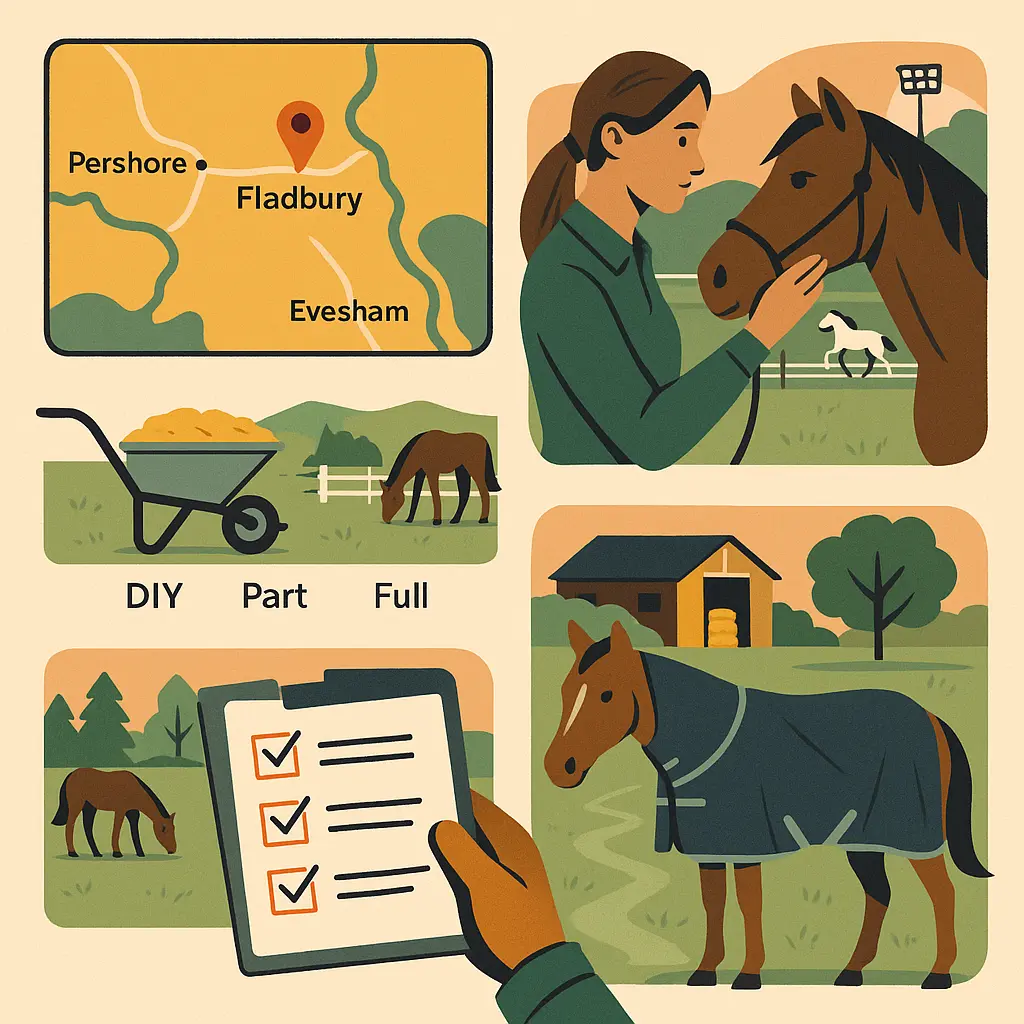
Choose yards with advertised off‑road or “great hacking” and verify the actual bridleway network, road speeds and winter usability on a map recce. Around Fladbury, river-valley paths and quieter lanes can offer scenic loops, but surface conditions and water levels matter in winter (Hereford Equestrian).
Walk or cycle prospective routes before you commit. Count road crossings, note verges, hedge visibility, and where you’d safely pass machinery at busy times. Ask other liveries what hacking is like after prolonged rain or frost. If you’re schooling towards competitions, location can be a strategic choice too: some Worcestershire yards highlight proximity to venues like Hartpury and Prestige, enabling regular outings without marathon drives (Hollow Farm Equestrian).
Safety first: invest in high-visibility kit for you and your horse, especially in low light and fog. Our hi‑vis collection pairs well with a snug helmet fit; check and replace yours if it’s older than 5 years or has had an impact by browsing our riding helmets.
What welfare and biosecurity standards should a yard meet?
Any yard you choose must meet the Animal Welfare Act 2006 requirements for a suitable environment, diet, normal behaviour, and protection from pain, suffering, injury and disease. Robust biosecurity — isolation for new arrivals, up‑to‑date vaccinations and a worming plan — is essential in shared environments.
“The law requires that horses must be provided with a suitable environment, a suitable diet, the ability to exhibit normal behaviour patterns, and protection from pain, suffering, injury and disease.” — UK Government Animal Welfare guidance
Check the yard’s vaccination policy (flu/tet often required before move‑in), yard rules for coughs or temperatures, and how they manage an infectious disease concern. Confirm farrier and vet access: there should be safe tie‑up areas and competent handlers for routine work. Industry guidance is clear that hoof care should be regular and tailored to workload — ensure the yard can support this safely (Farriers Registration Council). If your horse shows pain or illness, prompt veterinary advice is best practice:
“If your horse is sick, injured or in pain, seek veterinary advice promptly rather than waiting for the condition to worsen.” — RCVS professional guidance
Before moving, walk the fences and gateways for protrusions, test yard lighting after dark, and assess field drainage. BHS advice also recommends evaluating arena surfaces, turnout policies, fencing condition, hacking access and yard rules to ensure a good match (British Horse Society).
Pro tip: Keep your grooming and health routines consistent as your horse settles. A simple, daily check with kit from our grooming collection plus any agreed supplements will help you spot changes early.
How to compare costs and contracts fairly
Ask every yard for a fully itemised monthly total, including all likely extras, before you make a decision. Include forage and bedding, use of school and lights, rug changes, turnout/bring‑in, vet/farrier holding fees, holiday cover, and any minimum notice periods.
Transparent costs prevent surprises during winter when you may lean on the yard more often. Clarify what “daily turnout” means in hours and in severe weather. If the yard offers add‑on services like exercise or clipping, get the per‑session price and who does the work. Some yards have winter surcharges for haylage or lights; others include them in a fixed fee. If you plan to compete, ask about trailer or lorry parking, wash-down space, and whether training or clinics run on-site — Worcestershire has established training environments like Tyre Hill Stables in the lee of the Malvern Hills, underlining the value of experienced facilities in the county (Windsor Clive International).
Quick tip: Put two or three realistic weekly schedules on paper (e.g., winter work week, summer work week, holiday cover week) and ask each yard to cost them — that’s the fairest like‑for‑like comparison.
Checklist: visit and decide with confidence
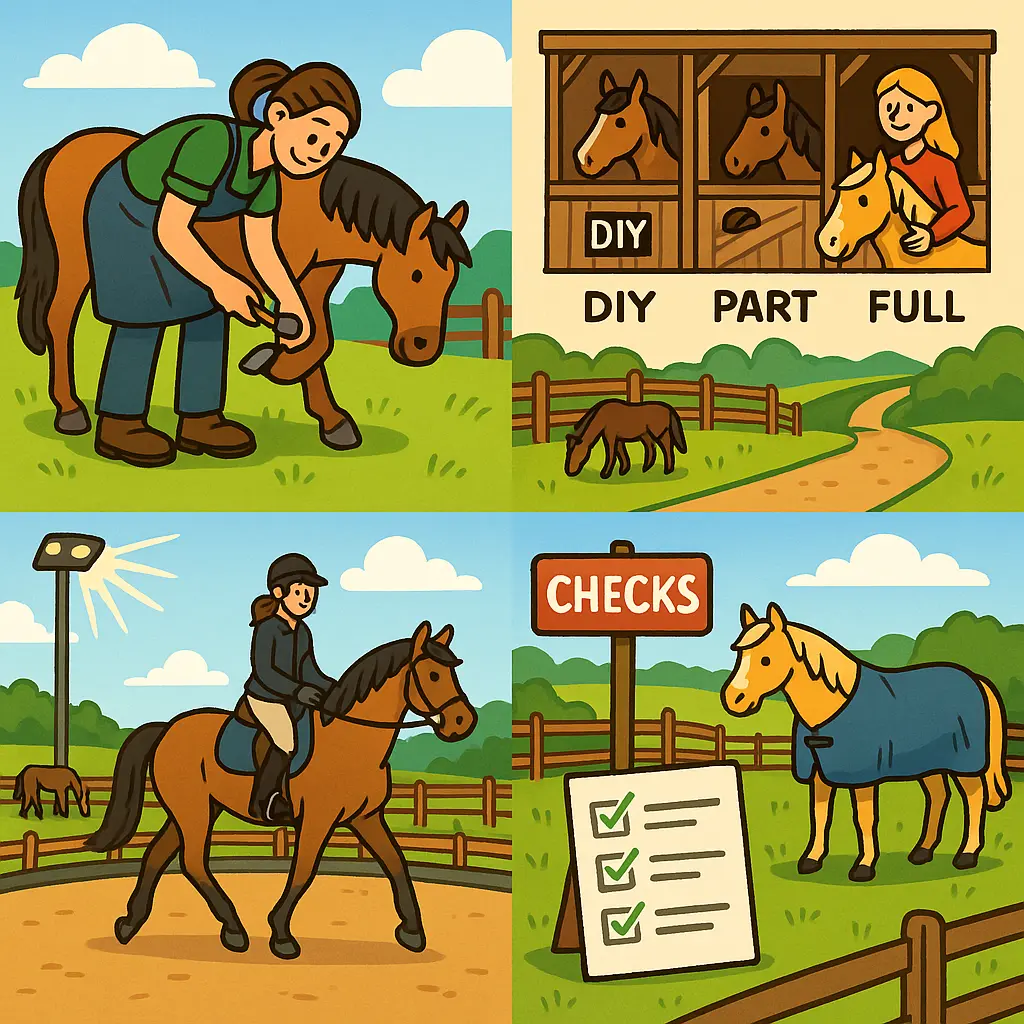
Visit at busy times, watch the routine, and pick the yard that matches your horse’s turnout, schooling and temperament needs. Use this concise checklist to stay focused:
- Turnout: Field size, rest rotation, winter policy, safe herd groupings. Ask who decides rugs and whether over‑rugging is avoided.
- Arena: Lighting, surface, drainage, booking system, jumps availability, lunging rules.
- Hacking: Off‑road access, road speeds, winter viability, clinic/event access.
- Biosecurity: New arrival isolation, vaccination policy (flu/tet), worming/poo‑picking routine.
- Safety: Fences, gateways, yard lighting, tie‑up points, fire procedures and first-aid kits.
- Care routine: Feed types/quantities, forage quality, bedding type and depth, rug change policy.
- Professionals: Farrier/vet scheduling, holding fees, emergency protocols, transport access.
- People: Yard culture, visiting hours, communication, and whether your horse will genuinely fit the herd and the routine.
Don’t forget yourself. Comfortable, grippy footwear and durable layers make those dark, muddy months easier. Our horse riding boots are built for yard chores and in-saddle stability, and our helmets keep safety standards front and centre on every hack or schooling session.
At Just Horse Riders, our customers often prepare for a new yard with field-to-stable layering (a weatherproof turnout rug plus an appropriate stable rug) so horses stay comfortable whatever the Worcestershire weather decides to do between breakfast and bedtime.
Local context: what yards around Fladbury typically offer
Yards in the Pershore–Evesham–Fladbury area commonly offer floodlit ménages, daily turnout and strong hacking, with management styles ranging from DIY through to full livery. Facilities vary: one county listing shows a 12‑acre site with a ménage and indoor barn stables, while another highlights 70 acres of grazing with an all‑weather school — and some operations sit on 120 acres, demonstrating the turnout capacity available in Worcestershire (county listings), (Hollow Farm Equestrian).
Heritage matters too. Alcott Farm Livery Yard has been a family‑run working livery for over 40 years, offering part and full livery, while established training yards like Tyre Hill Stables near the Malvern Hills indicate the depth of equestrian expertise within the county (Alcott Farm), (Tyre Hill Stables). This mix means you can prioritise either hands‑on involvement or proven professional routines depending on your goals.
Pro tip: If competition access is on your wishlist, shortlist yards that advertise proximity to venues such as Hartpury and the Malverns for easier logistics during the busy season.
Seasonal kit to make yard life easier
For a smooth move and a comfortable winter, line up a few staples:
- Field comfort: A breathable, waterproof turnout rug sized to your horse, with spare liners for quick turnarounds.
- Stable layering: A few weights from our stable rugs range for clipped horses or those on overnight stabling.
- Rider safety and visibility: update your helmet if out of date and add hi‑vis for dusk hacks or foggy mornings.
- Daily care: Keep a tidy kit from our grooming selection and consider supportive supplements if agreed with your vet.
- Footing and chores: Choose supportive riding and yard boots with good tread for wet yards.
Quick tip: Label rugs and buckets before you move; it speeds up settling in and avoids lost kit in busy communal spaces.
FAQs
What types of livery are most common near Fladbury?
DIY, part and full livery are all available within the Pershore/Evesham/Worcestershire area. Local listings specifically advertise DIY, part or full livery with floodlit ménages and daily turnout, while some yards offer full-service only with no DIY (Hereford Equestrian), (county listings).
What facilities should I prioritise for winter?
Look for a floodlit or all‑weather arena, safe turnout with good drainage, reliable lighting around the yard and secure fencing. These features keep horses exercised and comfortable through wet Worcestershire winters and short daylight hours (county listings).
Is full livery always better than DIY?
No. Full livery suits owners who want consistent, professional management and limited daily chores. DIY can be cheaper and offers more control if you live nearby and have time for twice-daily visits; part livery is a practical halfway house.
How important is grazing space?
Very. Worcestershire yards advertise anything from 12 to 70 to 120 acres, and turnout capacity directly affects rest rotation and herd management. Ask how acreage is allocated, stocking density and the winter turnout policy (county listings), (Hollow Farm Equestrian).
What should I ask about hacking?
Confirm how much is off‑road, the location and condition of bridleways, typical road speeds, and whether routes remain usable in winter. Several local listings highlight “great hacking,” but a pre‑move recce is the best reality check (Hereford Equestrian).
What welfare standards must the yard meet?
Under the Animal Welfare Act 2006, horses must have a suitable environment and diet, the ability to show normal behaviour, and protection from pain, suffering, injury and disease. Look for vaccination rules, worming plans, isolation for new arrivals, and clear protocols for illness or injury (UK Government), (RCVS).
How do I avoid hidden costs?
Request an itemised quote that includes forage, bedding, turnout/bring‑in, rug changes, school and light use, vet/farrier holding, holiday cover and any winter surcharges. Compare two or three realistic weekly routines across yards to see the true monthly total.