

How to Prepare for and Overcome Weather-Related Challenges in Horse Riding Competitions
Equestrian competitions are a thrilling experience, yet they do require considerable preparation and strategic thinking. Among the myriad of challenges, weather conditions prominently stand out as a factor that can significantly impact the performance and safety of both horse and rider. This article delves into the specifics of handling these weather-related challenges to ensure that every competition runs smoothly.
Understanding Weather Risks in Horse Riding Competitions
Weather can be a fickle force. Understanding the risks associated with it is the first step towards delivering a safe event. Here are key considerations:
- Hot Weather: This brings the risk of dehydration, heat exhaustion, and even heat stroke.
- Cold Weather: Hypothermia and frostbite are serious threats, along with increased injury risk due to changes in footing.
- Thunderstorms: Lightning and storms necessitate postponements or even cancellations.
- Air Quality: Smoke and pollution can compromise respiratory health.
For a successful event, 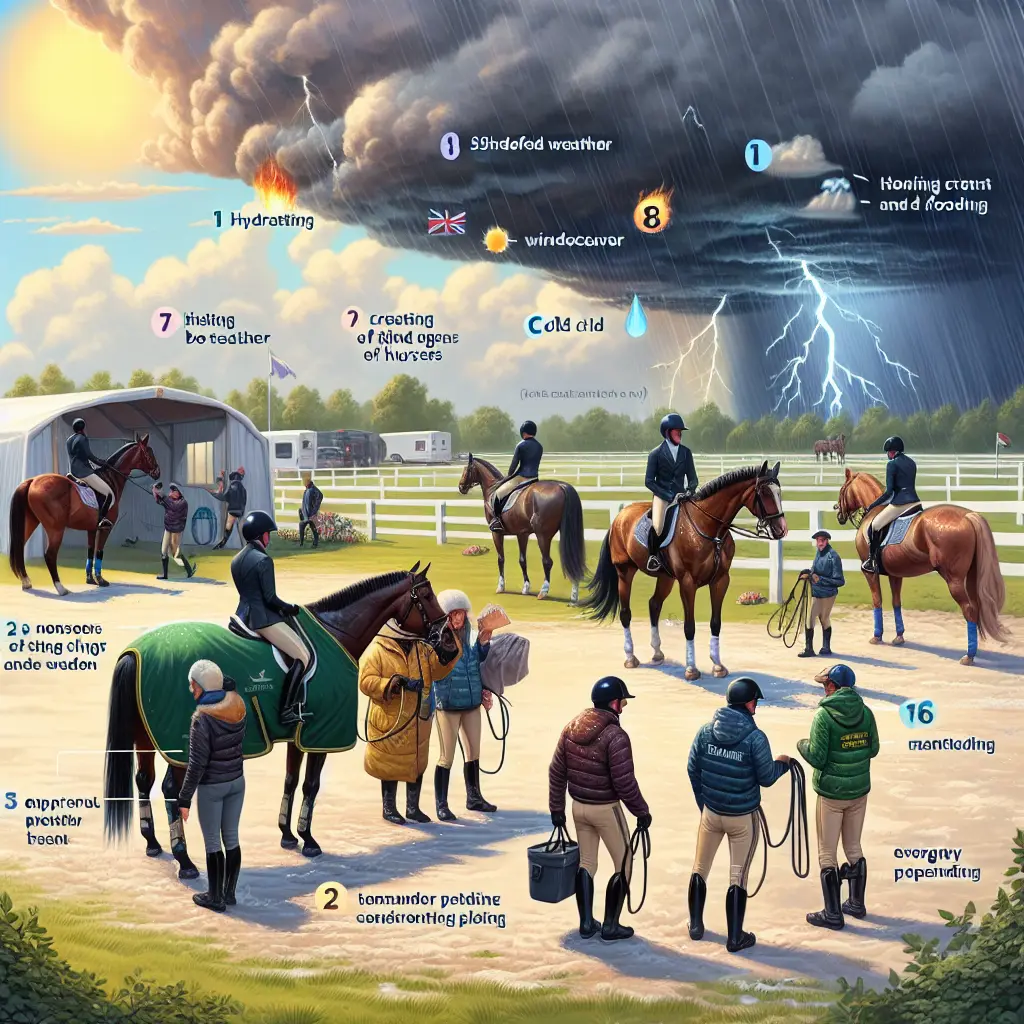 organizers and participants must be well-prepared with these points in mind. The insights from sources such as the Intercollegiate Equestrian Association (IEA) are invaluable [hyplinked to source ].
Preparing for Hot Weather Conditions
The heat can take a serious toll on both human and animal participants. Following these tips can help mitigate dangerous heat effects.
Hydration is Key
Both riders and horses must have uninterrupted access to fresh water. Hydration should be strongly encouraged before, during, and after the competition. See more details in the Everyday Horse Vitamins & Supplements.
Provide Shade and Cooling Areas
Sheltered spaces allow for respite from the harsh sun. Use fans and misting systems as additional cooling measures. Images such as 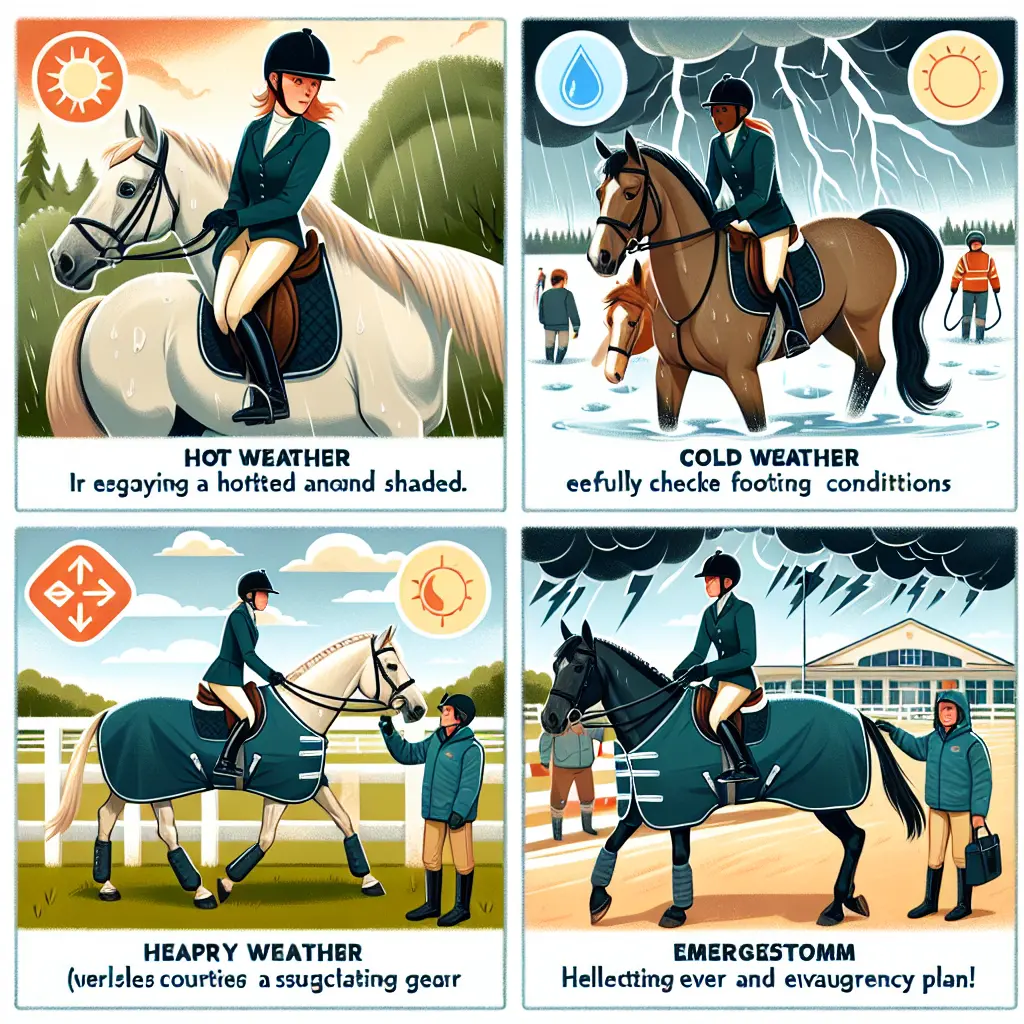 depict effective cooling strategies.
Adjust Competition Schedules
Plan events for cooler parts of the day. Early morning or late evening competitions help minimize heat exposure.
Monitor Signs of Heat Stress
Warning signs include elevated temperatures, rapid breathing, and lethargy. Quick response is critical [3].
Managing Cold Weather Challenges
Cold can be equally disruptive if precautions aren't observed. Here's what you need to know:
Give Horses and Riders the Chance to Stay Warm
It’s important to provide warm blankets for horses and shelter. Hot beverages could work wonders for riders.
Monitor Footing
Boating environments are vulnerable to freezing, making them hazardous. Frequent checks and maintenance are paramount.
Wind Chill Factor
If the combination of wind and temperature falls below 30°F (-1°C), the event should be reconsidered.
Dealing with Thunderstorms and Severe Weather
Severe weather conditions demand swift actions:
Immediate Halts for Safety
Cease all events upon detecting lightning to avoid dangers. Quick communication with participants is crucial for safety.
Emergency Plans
Implementing an efficient evacuation plan ensures everyone knows what to do during adverse weather.
Prompt Communication
Have a clear, straightforward plan for communication and rescheduling if needed, referencing the 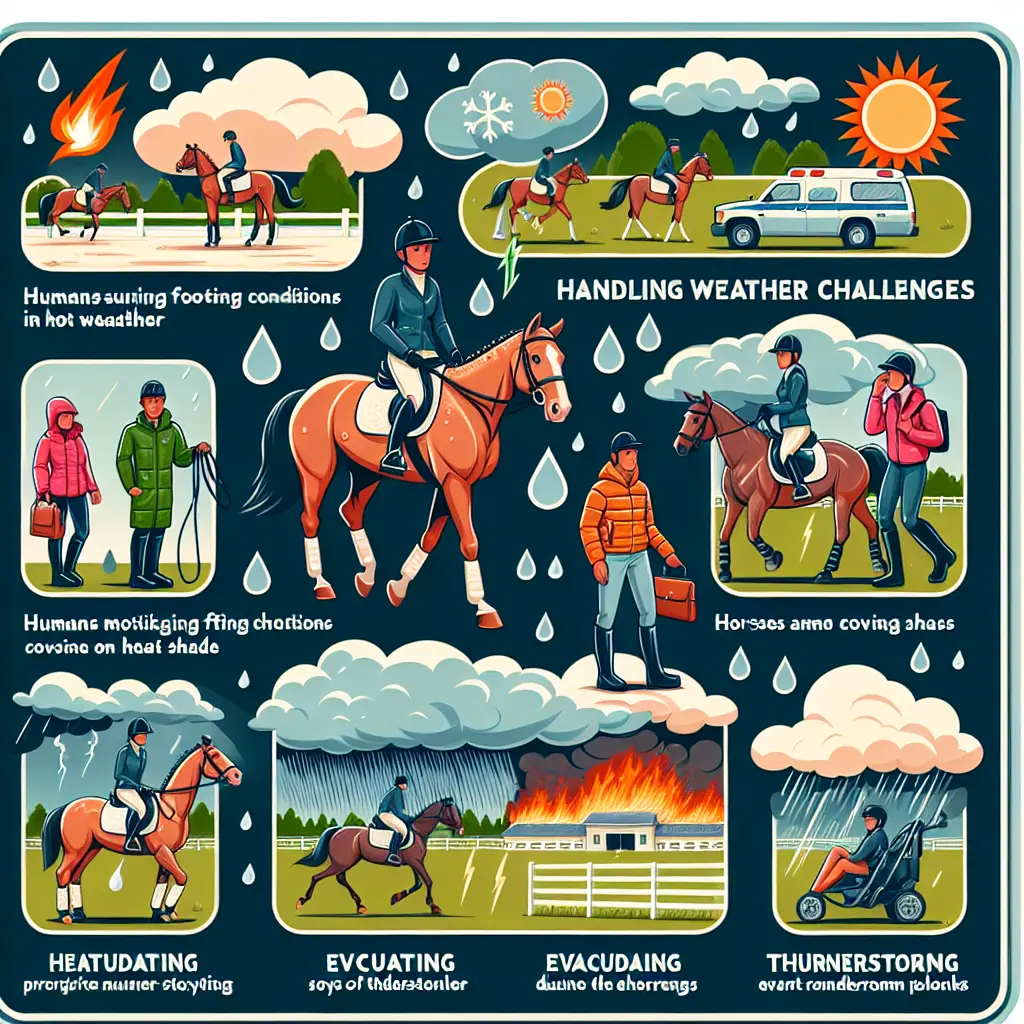 .
.
Further Tips for Weather-Related Preparedness
Preparation enhances safety for all involved:
- Bring Appropriate Gear: From lightweight clothing for hot events to insulated layers for colder climates.
- Educate Your Team: Equip them with knowledge to manage weather risks [1][2], using signage and meetings.
Proactive Footing Maintenance
Commit to regular checks of footing during the event, especially post-rain or freeze [3].
Credible References for Further Reading
Find additional insights on safety tips and specific weather guideline protocols from sources like the British Horse Society (BHS) for extreme weather protocols and US Equestrian's guidance documents.
For relevant images related to preparing for weather challenges in horse riding competitions, please explore 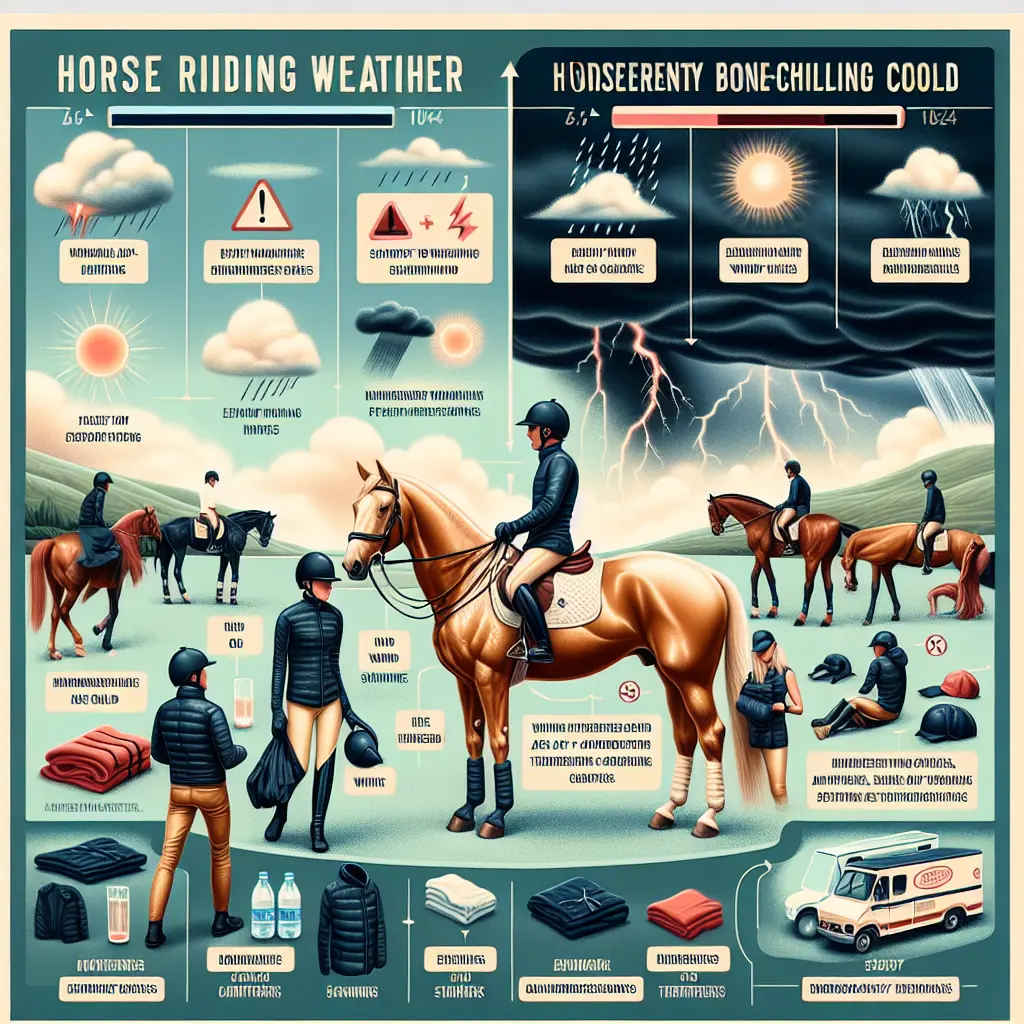 .
.