

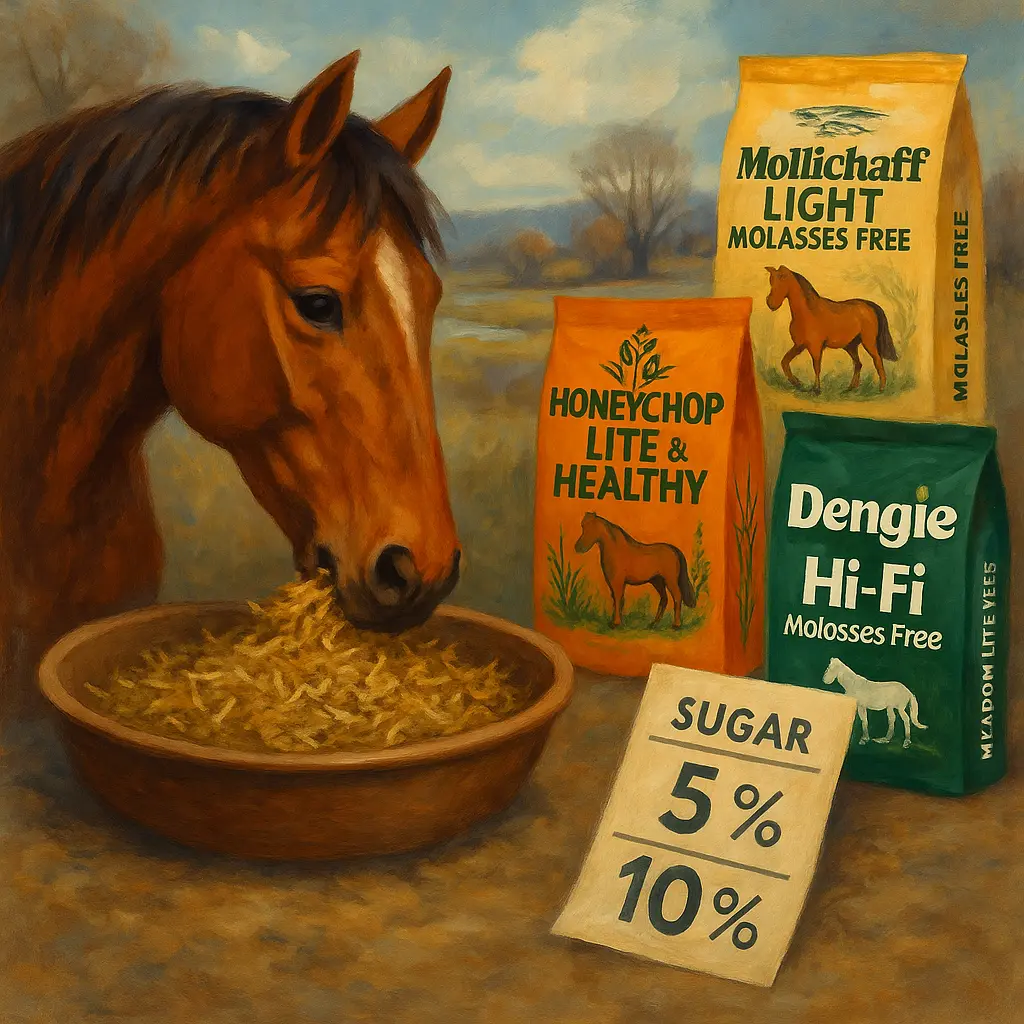
Choosing the right chaff is one of the simplest, most effective ways to support horses with EMS or laminitis — especially through the UK’s wet winters and short grazing seasons. Get the sugar and starch right, and you’ll stabilise insulin, control calories, and keep fibre intake spot on.
Key takeaway: For EMS or laminitis‑prone horses and ponies, feed a molasses‑free chaff with under 5% sugar and under 10% starch (ideally under 5% for chaff), introduced over 7–10 days, and keep total daily forage at 1.5–2% of bodyweight.
What EMS and laminitis-prone horses need from chaff
EMS and laminitis-prone horses need molasses-free chaff with sugar under 5% and starch under 10% (ideally under 5%) to limit insulin spikes and keep calories low. BETA guidance supports choosing low sugar/starch feeds with a combined value under 10% for laminitis control.
Chaff is your fibre-first foundation. For good doers and horses prone to insulin dysregulation, choose chaffs that are:
- Molasses-free and low in water-soluble carbohydrates (WSC)
- High in fibre (typically 30–35%) to extend chew time and slow intake
- Lower energy (5–8.5 MJ/kg) to help maintain or reduce weight
This is where the detail matters. Options like Mollichaff Light Molasses Free deliver just 1.8% sugar and 3.9% starch (7.5 MJ/kg), while Dengie Hi‑Fi Molasses Free provides 2.5% naturally occurring sugar with 3.5–5% WSC and 8.5 MJ/kg digestible energy. For very good doers, ultra‑low energy chaffs around 5 MJ/kg can be ideal to bulk out feeds without adding calories.
Quick tip: If you can, get a forage analysis for your hay/haylage — controlling the total diet WSC is more effective than tweaking the bucket alone.
The best low-sugar chaffs in the UK right now
The safest chaffs for EMS are molasses‑free mixes with sugar under 5% and starch under 10%, such as Mollichaff Light, Dengie Hi‑Fi Molasses Free, Honeychop Lite & Healthy, and Dengie Meadow Lite with Herbs.
- Mollichaff Light Molasses Free — 1.8% sugar, 3.9% starch, 7.5 MJ/kg, 32% fibre, 8% oil, 4.5% protein. RRP £8.79 for 12.5kg. Excellent for EMS/laminitis and overweight horses needing ultra‑low sugar/starch with plenty of fibre.
- Dengie Hi‑Fi Molasses Free — 2.5% naturally occurring sugar, 3.5–5% WSC, 8.5 MJ/kg digestible energy, 10% protein, 35% fibre, 6.5% oil. A highly digestible, palatable, low‑WSC option for controlled calories.
- Honeychop Lite & Healthy — 3.5% sugar, 0.5% starch, approx. 8 MJ/kg. RRP £16 for 15kg. Herbs, cinnamon and added oils make it a good choice for fussy eaters without piling on calories.
- Dengie Meadow Lite with Herbs — 3% sugar, 0.5% starch, 5 MJ/kg. RRP £14.99 for 15kg. Ideal for very good doers; ultra‑low energy to bulk out the bucket.
- Simple System HayCare (Timothy cubes) — Combined starch and sugar under 10%. Soaks to a soft mash; handy for fussy feeders and as a low‑calorie hay replacer alongside forage.
“SPILLERS Fibre Lite Molasses Free is a low-calorie fibre which is great for bulking out the bucket feed and extending eating time… recommend for good doers or those concerned about additional calories.” — SPILLERS nutrition team
“My top 3 chaffs that fit all the criteria for laminitic horses and ponies and those with EMS are: Dengie Hi‑Fi Molasses Free, Baileys Light Chaff, TopSpec…” — Riding Equine Vets
“Honeychop Lite & Healthy, free from molasses… is a non‑heating low sugar fibre feed suitable for those prone to laminitis.” — Honeychop
Value matters too. With prices typically £8–16 per 12–15kg bag, Mollichaff Light’s RRP of £8.79/12.5kg is a budget‑friendly staple many UK yards can stock year‑round.
How to feed and transition chaff safely
Introduce any new chaff gradually over 7–10 days, aim for total daily forage of 1.5–2% of bodyweight, and soak if dusty to support respiratory comfort.
Here’s a simple plan that works:
- Switch slowly: Start at 25% new chaff/75% current forage for 2–3 days, then 50/50, then 75/25, watching droppings and appetite.
- Portion right: Good doer ponies often do well on 2–3kg/day of low‑sugar chaff split between meals as a partial hay replacer, with ad‑lib low‑WSC hay if weight allows.
- Winter respiratory care: If your chaff is dusty or you’re feeding indoors, add a splash of water or soak suitable cubes to reduce airborne particles — useful in damp, enclosed UK stables.
- Complete the nutrition: Pair your low‑sugar chaff with a low‑calorie balancer so you don’t skimp on vitamins, minerals and amino acids.
- Know the limits: Chaff is a partial hay replacer. Products like SPILLERS Happy Hoof Molasses Free can be fed up to around 4kg/day, but always ensure total fibre (hay + chaff + mashes) hits 1.5–2% of bodyweight.
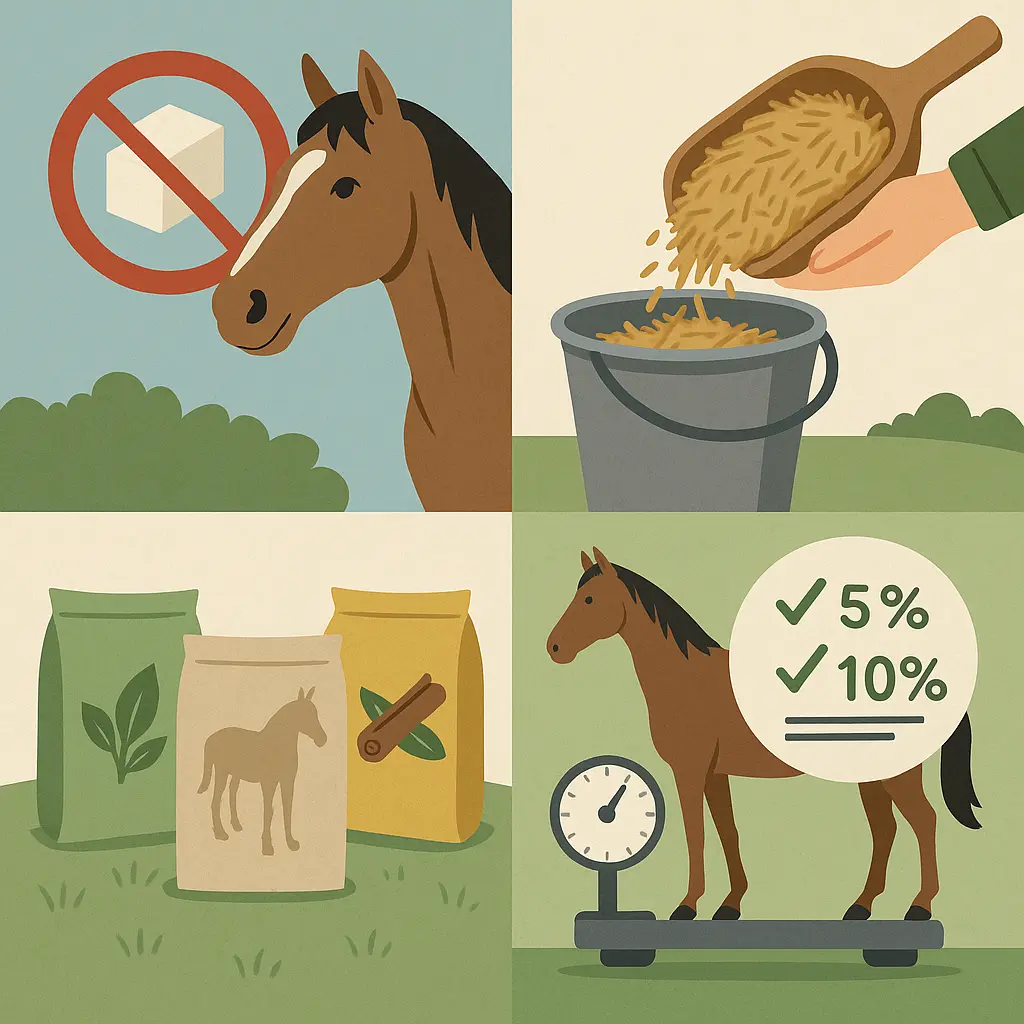
Pro tip: Use a weigh tape and a small hanging scale for your scoop — guessing leads to plateaus. Our customers often report the biggest breakthroughs once they start weighing every feed.
Seasonal management: making chaff work through UK winters
In UK winters with limited grass and wet weather, low‑calorie chaff maintains chew time and gut health without adding energy, helping prevent EMS flare‑ups when turnout is restricted.
From October to March many horses see shorter days, fewer hacks, and far less grass. That’s when a 5–8.5 MJ/kg, molasses‑free chaff helps you keep the bucket satisfying without overfeeding calories. Balance this with appropriate rugging to keep horses comfortable and moving; if you need to refresh kit, explore our range of winter turnout rugs for reliable, weatherproof options.
Exercise is essential for insulin sensitivity. Keep hacking safely on dull afternoons with a secure hat and high‑visibility gear: see our curated riding helmets and rider hi‑vis. Even 20–30 minutes of purposeful in‑hand walking most days supports metabolism; pair it with consistent, weighed forage to maintain momentum.
Quick tip: If haylage is your only option at livery, soak it and lean harder on very low‑WSC chaff (e.g., Dengie Meadow Lite with Herbs at 3% sugar/0.5% starch) to keep the day’s combined sugars under control.
Palatable choices for fussy feeders without extra calories
For fussy eaters, use palatable, low‑sugar options like Honeychop Lite & Healthy (3.5% sugar, herbs and cinnamon) or soak Timothy cubes (Simple System HayCare) to a soft mash.
Horses with a sweet tooth often reject plain straw or unflavoured chaffs. Honeychop Lite & Healthy adds herbs, cinnamon and a drizzle of oils without spiking sugar (3.5% sugar, 0.5% starch). For older mouths or picky ponies, Simple System HayCare soaks to a mash with combined starch + sugar under 10% — ideal when you need moisture, warmth, and palatability in winter.
Pro tip: Warm water transforms acceptance on cold days. Mix a warm mash and thread in your balancer so nothing is left in the bucket.
Build the full low-sugar bucket: balancers, mashes and extras
EMS horses need a low‑calorie balancer plus fibre mashes (not cereal mixes) alongside a low‑sugar chaff to complete nutrition without adding sugars.
Smart combinations that work:
- Low‑cal balancer: Options like SPILLERS Lite & Lean or TopSpec AntiLam provide vitamins, minerals and amino acids without glucose spikes. You’ll find a wide choice of balancers and hoof support under our supplements.
- Fibre mashes: Speedi‑Beet and Timothy‑based cubes such as Simple System HayCare add warm, soakable fibre to extend eating time and boost hydration.
- Hoof health: For laminitis recovery and hoof growth, consider a biotin‑rich supplement from trusted brands such as NAF, always alongside correct trimming and weight control.
- Treats (used wisely): Keep rewards tiny and label‑checked. Explore our selection of horse treats and pick low‑sugar options sparingly for training only.
- Budget savers: Watching costs? Keep an eye on our Secret Tack Room clearance for yard essentials that make weighing and feeding easier.
Quick tip: Slow‑feeder haynets, multiple small hay piles, and a chaff‑heavy bucket at night help stretch limited forage while protecting the gut and mind.
Common mistakes to avoid with low-sugar chaff
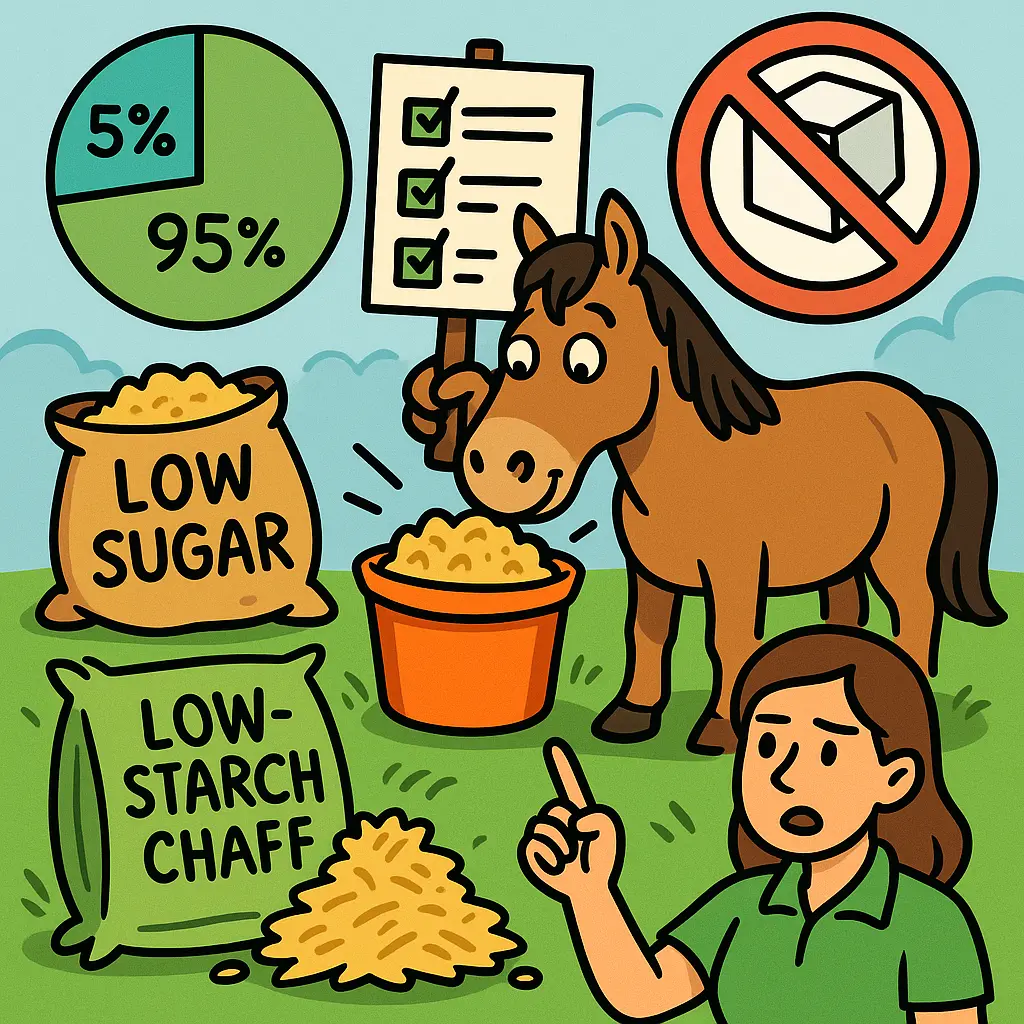
The biggest pitfalls are choosing by label claims alone, over‑restricting forage, and switching too fast.
- “Molasses‑free” ≠ low WSC: Always check actual sugar and starch. For EMS, target sugar under 5% and starch under 10% (ideally under 5% for chaff). Dengie Hi‑Fi Molasses Free and Mollichaff Light clearly list values.
- Over‑restricting forage: Going below 1% of bodyweight risks ulcers, stereotypies, and rebound binges. Stay at 1.5–2% and use very low‑energy chaff (5–8 MJ/kg) to bulk out meals.
- Ignoring weigh scales: Scoops vary wildly. Weigh a “level scoop” of your chaff and note it on the feed room wall.
- Rushing the change: New chaff needs 7–10 days to avoid digestive upsets, especially in winter when routines are tighter.
- Straw pitfalls: Avoid chemically treated straw chaffs; they can increase colic or respiratory risk. If you use straw, choose untreated/organic sources and mix with grass‑based or alfalfa‑free chaffs.
At Just Horse Riders, we recommend starting with one proven low‑WSC chaff, adding a balancer, and committing to weekly weight checks — simple, sustainable, effective.
FAQs
What chaff is safest for EMS horses?
The safest options are molasses‑free chaffs with sugar under 5% and starch under 10% (ideally under 5% for chaff). Vet‑approved choices include Dengie Hi‑Fi Molasses Free (2.5% sugar; 3.5–5% WSC) and Mollichaff Light Molasses Free (1.8% sugar; 3.9% starch), both designed to minimise insulin response. See guidance from Riding Equine Vets.
How do I tempt a fussy eater without adding calories?
Use flavour without sugar: Honeychop Lite & Healthy (3.5% sugar; 0.5% starch) adds herbs, cinnamon and oils, while Simple System HayCare (Timothy cubes; starch + sugar under 10%) soaks to a warm mash many horses love. Warm water and smaller, more frequent meals help.
Is “molasses‑free” chaff enough for laminitis‑prone ponies?
Yes — if sugar and starch are genuinely low. Aim for under 5–10% combined (for chaffs, under 5% sugar and under 5% starch is a gold standard). Dengie Meadow Lite with Herbs (3% sugar; 0.5% starch) is a strong example. Add a balancer and consider hoof support such as biotin from brands like NAF.
Can I use chaff as a full hay replacement in winter?
Use chaff as a partial replacer only. Some products (e.g., SPILLERS Happy Hoof Molasses Free) can be fed up to around 4kg/day, but your horse still needs total fibre of 1.5–2% bodyweight from hay, chaff, and suitable mashes combined.
What’s the cheapest low-sugar chaff option in the UK?
Mollichaff Light Molasses Free is a budget standout at RRP £8.79 for 12.5kg, with ultra‑low sugar (1.8%) and starch (3.9%) suitable for EMS and laminitis management.
Does UK weather affect which chaff I choose?
Yes. In wet, enclosed winter stables, a dust‑free or soakable option like Dengie Hi‑Fi Molasses Free supports respiratory comfort. Year‑round, choose low‑WSC chaffs to account for short grazing seasons and fluctuating turnout.
How should I monitor progress on a new chaff?
Weigh feeds, track bodyweight weekly with a tape, and assess fat pads (crest, shoulders, tailhead). Adjust total forage to 1.5–2% bodyweight and pair with daily movement — even short in‑hand walks — to keep insulin in check. For safe winter exercise, don’t forget a certified riding helmet and hi‑vis.
