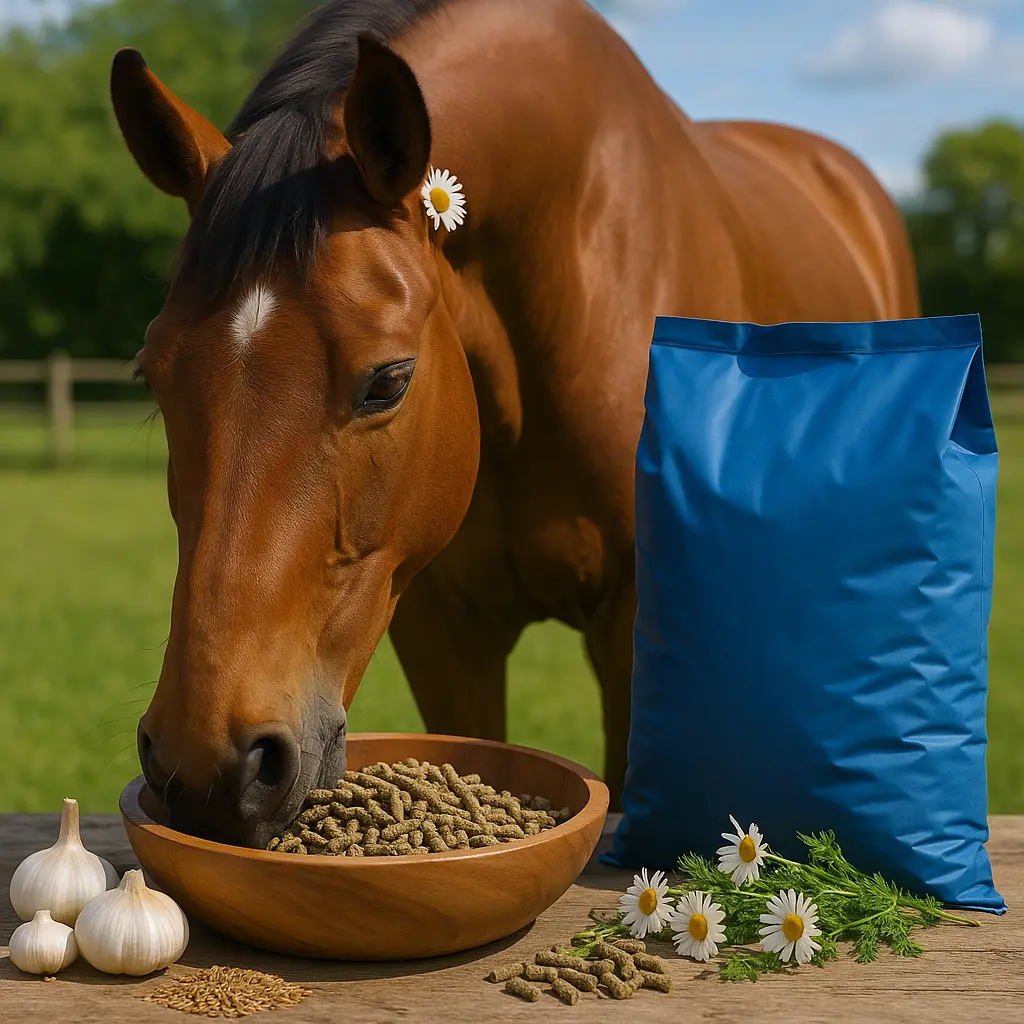
Sharp in the wind, bright on restricted turnout, or just needing nutrients without the fizz? Many UK owners look for a calmer that supports focus without making a horse feel sleepy.
Key takeaway: Blue Chip Super Concentrated Calming Balancer is a 100% natural, non-drowsy, pelleted feed balancer fed at 100g/day for a 500kg horse. It tops up daily vitamins and minerals while adding magnesium, L-tryptophan, chamomile and probiotics to support calmness without extra calories.
What is Blue Chip Super Concentrated Calming Balancer?
It’s a low-calorie, molasses-free feed balancer that combines core vitamins/minerals with calming-focused ingredients: magnesium, L-tryptophan, chamomile and probiotics. Blue Chip positions the formula as 100% natural, non-drowsy and free from whole cereal and molasses, designed to be fed in tiny daily amounts to balance a forage-based diet.
In Blue Chip’s own words:
“A feed balancer is a nutrient dense pellet that contains a carefully formulated blend of vital vitamins, minerals and protein that all horses and ponies need daily to balance their forage based diet.” Source: Blue Chip Feed
And critically for good-doers or sharp types:
“All Blue Chip balancers are low in calories and molasses free… containing extremely low levels of starch with no added sugar.” Source: Blue Chip Feed
Beyond the headline calming trio, independent ingredient listings also note supporting components such as calcium carbonate, linseed/flax, garlic and sodium alongside magnesium and L-tryptophan. That helps explain why this product functions as a complete balancer, not just a calmer in disguise. Source: Mad Barn
Blue Chip also highlights that its balancers bundle in multiple “extras” you might otherwise buy separately — hoof, respiratory, digestive, skin and coat support, plus immune support and nucleotides — to streamline the supplement cupboard. Source: Blue Chip Feed
Who is it for and when should you use it?
Use it for horses and ponies needing daily vitamins and minerals without extra energy, especially good-doers, sharp or stress-prone horses, and those on low-concentrate, forage-first diets. It’s particularly useful through UK autumn–winter when grass quality drops, stabling increases and routines change.
Because it’s a balancer first, the product suits horses who don’t need a bucketful of mix or cubes but still require micronutrients. For many UK yards, that’s native types, restricted-calorie horses, and those that get “too bright” on cereal feeds. The 100% natural, non-drowsy positioning also fits common welfare expectations for hacking, riding club and competition work where you want relaxation, not sedation. Source: Blue Chip Feed
Consider it when weather-related excitability creeps in: cold snaps, blustery days, clipped coats, or turnout reductions. Shore up management first (consistent turnout, ad-lib fibre, steady routines), then add a calming balancer to cover nutrient bases while supporting the gut–mind connection. For winter comfort that can also influence behaviour, review your horse’s rugging strategy, from lighter sheets to deeper fills and reliable, waterproof winter turnout rugs and cosy stable rugs.
How does it work? Calming ingredients and the gut–stress link
It combines magnesium, L-tryptophan and chamomile — plus probiotics — to support relaxation pathways and digestive comfort; it’s a nutritional calmer, not a sedative. Blue Chip frames the “calming” as coming from targeted nutrients within a balanced, low-calorie pellet.
Blue Chip’s own guidance is clear on the actives:
“Key calming ingredients: chamomile, L-tryptophan and magnesium.” Source: Blue Chip Feed
Retailers echo the digestive angle, noting probiotics restore the natural balance of gut flora and help maintain digestive well-being — a relevant link, as horses with gut discomfort can appear tense or excitable and vice versa.
“The probiotics in the balancer restore the natural balance of the gut flora and help to maintain the natural well-being of the digestive system.” Source: Equi-Box
Equi-Box also highlights the two-way street between stress and digestion — stress can upset the gut, and gut discomfort can heighten stress — so a balancer with probiotics plus fibre-first feeding can be a smart foundation. Source: Equi-Box
Blue Chip and retailers consistently describe the formula as “non-drowsy”, aiming for relaxation and focus rather than dullness — ideal for hacking on UK roads where reactivity and alertness must stay safe. Source: Blue Chip Feed

Feeding rate, bag life and budgeting
Feed 100g/day for a 500kg horse; a bag lasts around 30 days for an average horse and 60 days for a small pony. This low daily rate makes it straightforward to compare cost-per-day against stacking separate supplements. Source: Blue Chip Feed Source: Blue Chip Feed
Because it functions as a full balancer, you may be able to retire multiple pots (e.g., hoof, coat, digestive and general vits/mins) and run with one pellet. Blue Chip emphasises that balancers are designed as concentrated vitamin/mineral/protein support within a tiny ration, and specifically notes its products are low in calories, molasses free, and very low in starch with no added sugar — addressing common concerns for good-doers or horses sharp on cereals. Source: Blue Chip Feed
Quick tip: Measure the daily 100g with a small scoop or kitchen scale to be consistent across yard hands. Consistent dosing improves the fairness of any behavioural assessment over time.
While not a clinical trial, independent customer feedback for Blue Chip products on Feefo trends positive, with remarks such as “Good all-round balancer” and “My mare has never looked or felt better.” Treat this as anecdotal context when weighing up value and results for your horse. Source: Feefo
How to introduce it and what to monitor
Introduce any balancer gradually over several days and judge calmness and comfort over time, not after a single feed. Watch manure consistency, appetite, behaviour under saddle and on the ground, and overall body condition.
At Just Horse Riders, we recommend you start by stabilising the basics — ad-lib fibre, regular turnout, routine exercise — then add the balancer and keep notes. Is your horse less reactive to wind, more settled to tack up, or more focused in lessons? Is coat and hoof quality holding on winter rations? Pair with steady groundwork or long-reining if ridden work is limited; protective horse boots and bandages help for frequent lunge or polework sessions.
Pro tip: If behaviour seems linked to weather or environment, plan sessions around conditions (e.g., calmer days for schooling, breezier days for hacking with steady company). Keep you and your horse visible and safe with quality rider hi-vis and a correctly fitted riding helmet, especially during shorter UK daylight hours.
Common mistakes to avoid
Don’t expect sedation or an instant behavioural fix; a calming balancer supports nutrition and gut comfort but can’t replace training, turnout and good management. Avoid doubling up on similar supplements and check labels to prevent overlap.
- Skipping management first: Before adding a calmer, close forage gaps, maximise turnout where possible, and keep a consistent routine. UK horses often become buzzy with restricted turnout, sudden grass-to-hay transitions, or box rest.
- Overlooking digestive comfort: Tension and tummy go hand in hand. A balancer with probiotics helps, but keep fibre levels high and use a low-starch, molasses-free carrier if you feed a bucket. Retailers describe the Blue Chip formula as non-drowsy and very low in starch with no added sugar — ideal for good-doers. Source: Blue Chip Feed
- Stacking too many products: Blue Chip notes its balancers can include hoof, respiratory, digestive, skin and coat support plus immune support and nucleotides. Check whether you can simplify your cupboard and save.
- Inconsistent dosing: The feeding rate is 100g/day for a 500kg horse. If several people feed, weigh once, then mark a scoop that reliably delivers your horse’s allowance.
- Ignoring seasonal triggers: Cold, windy and wet days, rug changes and less turnout can all spike energy. Plan ahead with appropriate turnout rugs and regular grooming to keep skin and coat comfortable when clipped or rugged.
Remember: A calmer should support safe, attentive work, not make a horse sleepy — a point Blue Chip emphasises by calling the formula “non-drowsy.” Source: Blue Chip Feed

How it compares with other options
Compared to standard balancers, this is a low-calorie balancer with extra calming ingredients; compared to standalone calmers, it still covers your horse’s core vitamins, minerals and protein. That makes it efficient for horses needing nutrient support without extra energy.
Other routes you might consider depending on your horse and current ration:
- A regular low-calorie balancer if you want micronutrients only and prefer to test calmer ingredients separately.
- A standalone magnesium supplement or L-tryptophan product if you want to isolate one nutrient — but always check your existing ration first to avoid duplication. Explore options in our curated horse supplements and balancers range, including trusted brands such as NAF.
- A targeted digestive support (yeasts/probiotics) if behaviour seems closely tied to forage changes or gut sensitivity — again, check what your balancer already provides so you don’t double up.
- A molasses-free chaff or fibre feed as a low-starch carrier for small rations, especially in winter or with box rest. Keep sugar and starch low to support steady behaviour.
Blue Chip’s own guidance notes the calming balancer is fed at a low rate (100g/day for a 500kg horse) and positions it as non-drowsy, so it sits squarely as “balancer plus calming support”, not a sedative. Source: Blue Chip Feed Source: Blue Chip Feed
If your horse’s sharpness is driven by weather, routine or tack issues, pair nutrition with management: fit-check saddles, plan varied work, and ride out safely in quality competition layers or everyday kit. For heavy-weather hacks, consider the security of proper horse riding boots with grip and waterproofing.
Conclusion: Start simple. Balance the diet first, keep starch low, and run one product consistently before adding extras. If you later want to fine-tune magnesium or digestion further, you can — but you may find the balancer alone covers the bases you needed.
FAQs
Do calming balancers actually calm horses?
They can help some horses by supporting diet, gut function and key nutrients like magnesium and L-tryptophan, but they’re not sedatives and won’t fix management or training gaps by themselves. Blue Chip frames its product as a non-drowsy, natural formula supporting relaxation within a balanced ration. Source Source
Are calming balancers just regular balancers with a new label?
They’re balancers with added calming-oriented ingredients; in this case, magnesium, chamomile and L-tryptophan are the headline actives, with probiotics to support digestion. You still get the full vitamin/mineral/protein top-up of a balancer. Source
Will Blue Chip’s Calming Balancer make my horse sleepy?
No — Blue Chip and retailers describe it as non-drowsy. The aim is calm focus and comfort, not sedation, which aligns with UK owners’ needs for safe hacking, schooling and competition. Source
What’s the feeding rate and how long will a bag last?
Blue Chip advises 100g/day for a 500kg horse; a bag lasts around 30 days for an average horse and 60 days for a small pony. That low feeding rate makes budget comparisons straightforward. Source Source
Is it suitable for good-doers and restricted diets?
Yes. Blue Chip says its balancers are low in calories, molasses free, very low in starch and contain no added sugar — ideal where you want nutrients without extra energy. Source
Should I use it instead of training or turnout management?
No. Nutrition helps, but behaviour is also shaped by turnout, routine, exercise, tack fit and handling. Address management first, then add a balancer to support calmness nutritionally. Keep your plan safe and practical with the right seasonal gear, from turnout rugs to rider hi-vis for shorter days.
Can I feed it alongside other supplements?
Yes, but check labels to avoid duplication. Blue Chip states its balancers include multiple areas of support (hoof, digestive, skin/coat, immune), so you may be able to simplify. If you need to add a targeted product later, browse our supplements and balancers range for focused options.