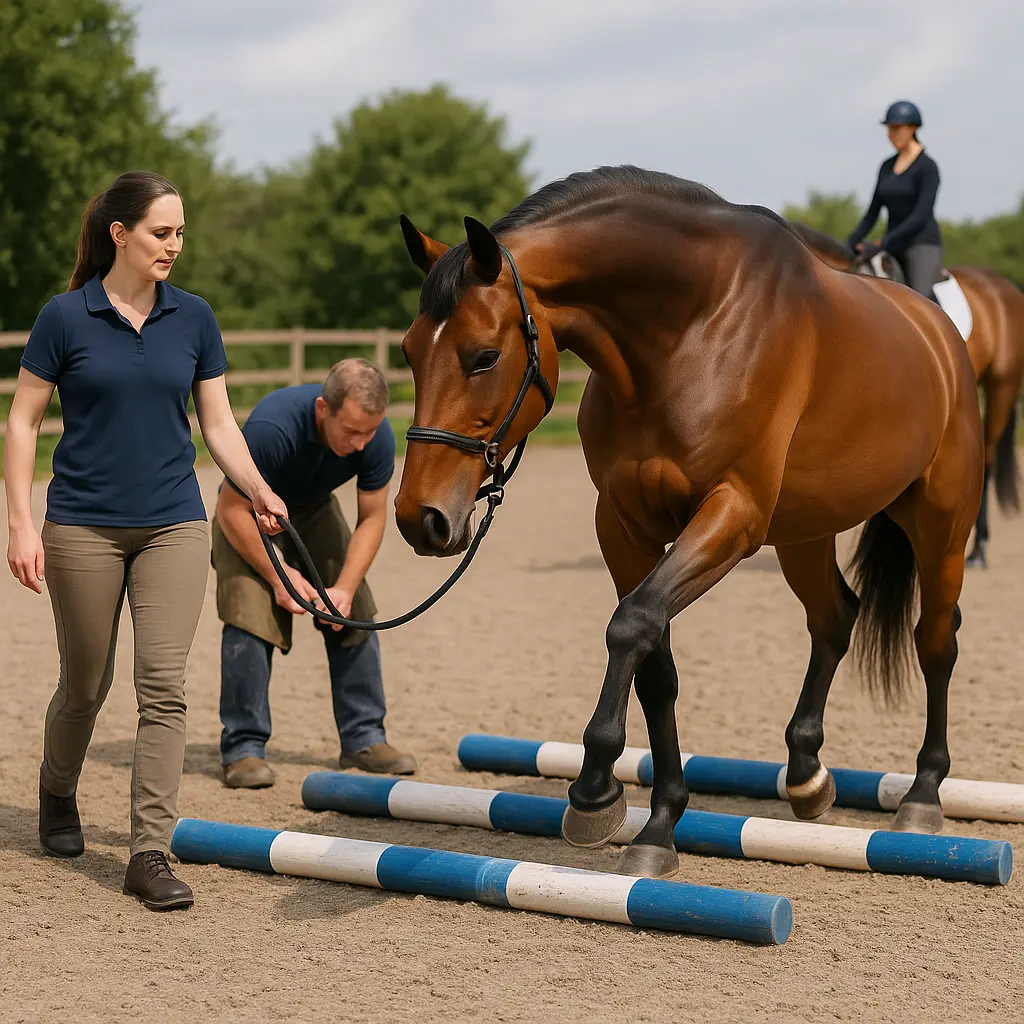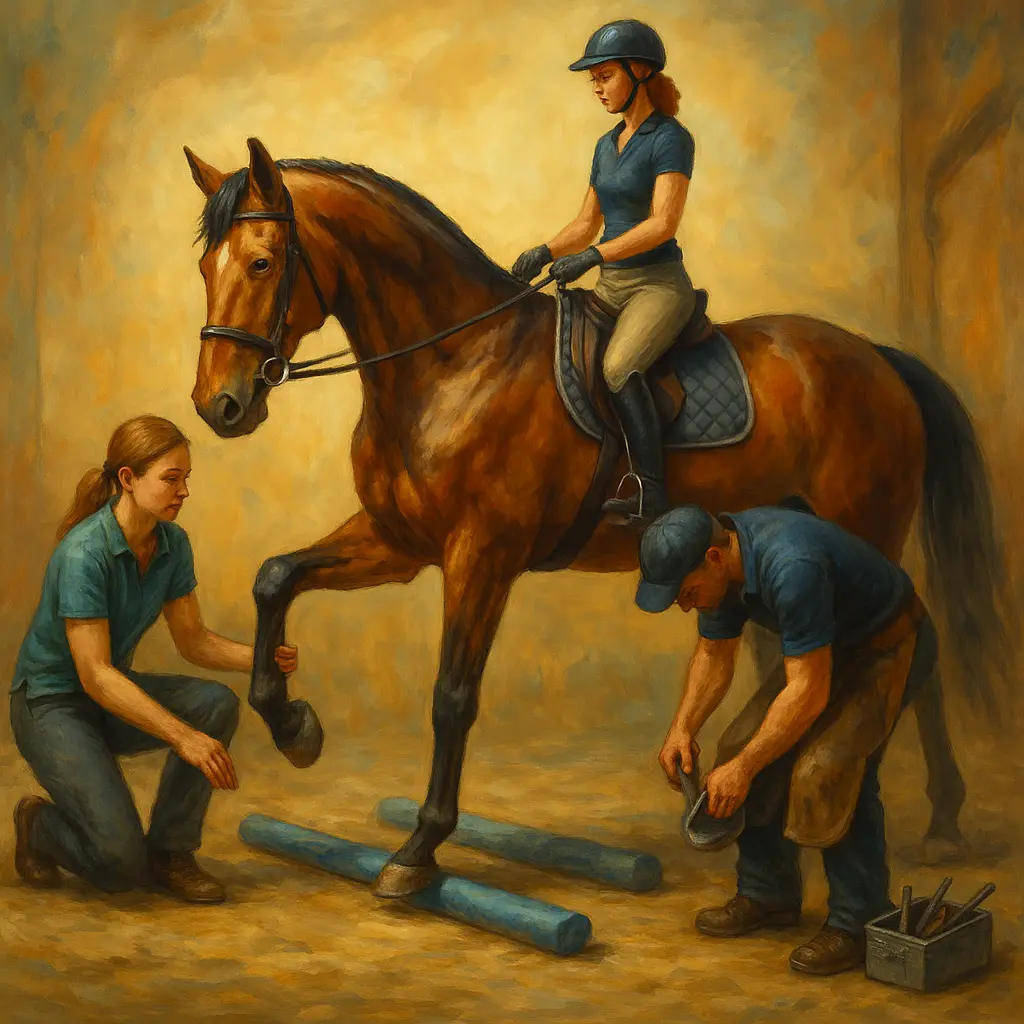
Kissing spines and navicular pain can feel like career-ending diagnoses — but with the right plan, many UK horses return to comfortable work and even competition. The key is smart rehab, skilled farriery, and rider fitness working together.
Key takeaway: With early diagnosis, a 10–12-week graded rehabilitation plan, and coordinated farrier–vet–physio care, many kissing spine cases ride again, while navicular-prone horses often stay comfortable at lower levels with strict management.
Can horses with kissing spines return to work?
Yes. With early diagnosis and a structured rehabilitation plan, many horses with kissing spines return to ridden work and even competition according to the British Horse Society (BHS).
Conservative management — meaning targeted physiotherapy, core activation, careful rider retraining, and adjunctive therapies — sees a substantial proportion of horses back in work when programmes are followed consistently. For surgical cases (e.g. interspinous ligament desmotomy/ISLD), UK and European caseloads commonly report return-to-training as early as 4–6 weeks post-op when strict protocols are observed (SmartPak Equine clinical commentary). The headline: kissing spines is manageable when you commit to rehab principles.
“Kissing spines is not automatically a death sentence. With early diagnosis, smart management and targeted rehabilitation, many horses with overriding dorsal spinous processes return to full, happy, and even high‑performance lives.” — Dr Barbara Parks, equine sports medicine and rehabilitation specialist (source)
Expect your vet and physiotherapist to emphasise posture, correct muscle activation, and a careful reintroduction of load. UK-based rehab centres frequently follow 6–8 weeks of progressive work, peaking around 10–12 weeks, before normal training volumes resume (Rehab.Vet).
Do kissing spines and navicular go hand in hand?
No. Kissing spines doesn’t directly cause navicular disease, but poor posture and compensation patterns can overload the forelimbs and raise stress on the navicular apparatus over time (Animal Osteopathy College).
When a horse avoids lifting through the core and thoracic sling, it tends to go “on the forehand,” shifting weight to the front feet — exactly where the navicular region lives. Chartered physiotherapists in the UK consistently report that weak core engagement increases distal limb loading, including the navicular area (Horses Inside Out).
Navicular pain is common: studies suggest it accounts for at least a third of chronic forelimb lameness in popular sport breeds like Thoroughbreds and Warmbloods (UK Veterinary Equine). Prognosis is guarded; retrospective analyses haven’t shown a clear advantage of medical versus surgical therapy overall, and only a minority of horses return fully to pre‑lameness capacity (Mad Barn summary of The Veterinary Record). That’s why whole-horse management — back, feet, rider, footing — matters from day one.
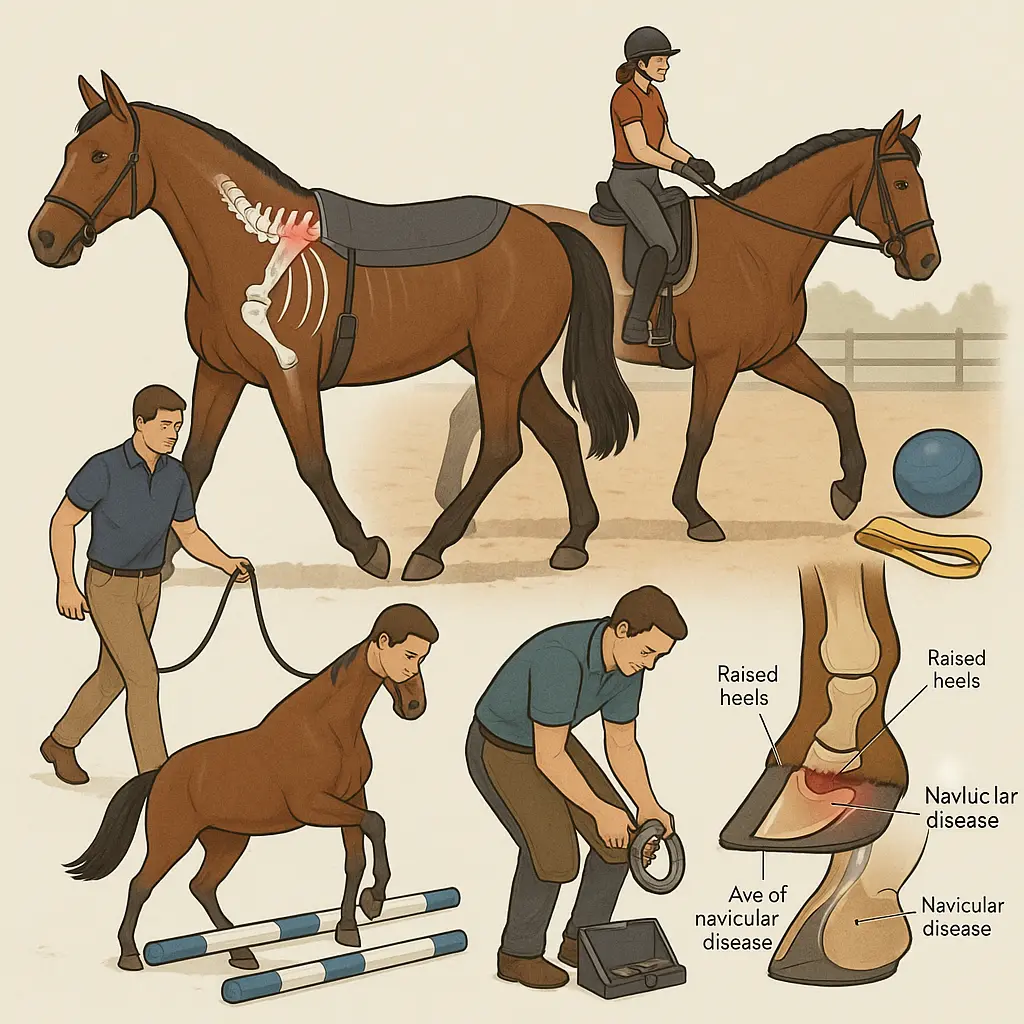
A 12‑week UK‑style rehab plan that actually works
The most successful programmes build gradually for 6–8 weeks and reach peak load by 10–12 weeks, prioritising core activation, posture, and consistency (Rehab.Vet; Horses Inside Out).
Use this evidence-aligned framework with your vet/physio’s sign-off and tweak for your horse’s stage (post-diagnosis or post-surgery) and the British weather underfoot:
- Weeks 0–2: Rest and reset. Hand-walk daily (10–20 minutes), introduce carrot stretches, wither lifts, belly lifts, and in-hand straight lines. If your physio agrees, add a few steps over slightly raised poles to encourage thoracic sling activation (Horses Inside Out).
- Weeks 3–4: Controlled mobilisation. Increase hand-walking to 25–30 minutes including raised pole lines; start large-circle lunging (no tight circles) 2–3 times/week focusing on a soft, round outline. Keep sessions short and symmetrical left/right.
- Weeks 5–6: Ridden return. With veterinary clearance, begin 15–20 minutes ridden at walk and short trot sets in a balanced, rounded frame — avoid “on the forehand.” Prioritise transitions, serpentines, shallow loops, and correct bend.
- Weeks 7–8: Strength and coordination. Build to 25–30 minutes; add more transitions, gentle lateral work (leg-yield at walk), raised pole lines in-hand or under saddle. Include in-hand hill work if ground is safe and not rutted or frozen.
- Weeks 9–12: Conditioning. Extend to 30–40 minutes; introduce canter when the horse maintains posture and core stability. Add small grids or low cross-poles only with professional clearance.
Pro tip: Consistency beats intensity. Aim for 5–6 low-intensity sessions per week, keeping the frame round and the back lifting, not hollow. If winter footing is hard or icy, swap to indoor work or well-prepared arenas to avoid concussion spikes.
At Just Horse Riders, we recommend using well-fitted protective boots during early schooling to support confidence and reduce knocks over poles — browse our curated horse boots and bandages for everyday rehab work.
“When we address kissing spines, we are not just dealing with the bone; we are dealing with how the horse uses its whole body. The key is to retrain movement patterns through rehab so the horse doesn’t overload other structures such as the forelimbs and joints.” — Gillian Higgins BSc, Chartered Equine Physiotherapist (source)
Farriery and footwear for navicular‑prone horses
Schedule corrective shoeing every 4–6 weeks and use heel support plus breakover adjustments to reduce deep digital flexor tendon and navicular strain (American Farriers Journal).
Common options your farrier may consider include raised heels, egg‑bar or heart‑bar shoes, and modifications to bring the breakover back. The right choice is individual to each hoof capsule; the principle is to unload the podotrochlear apparatus and even out forces. Coordinate shoeing with your vet and physio, and reassess after any work changes or if you notice subtle stride shortening on one forelimb.
Hoof support works best alongside pain management, soft footing, and correct back use. Supplements can support overall comfort and hoof quality as part of a complete plan — explore our targeted supplements range, including options from veterinary-trusted brands.
Quick tip: Keep a simple yard diary of shoeing dates, surfaces worked on, and any “not quite right” moments. It’s gold dust for your farrier–vet–physio team when fine-tuning the plan.
Rider fitness and saddle fit: non‑negotiables
A balanced rider and a pressure‑distributing, well‑fitted saddle reduce back strain and prevent forelimb overload that can aggravate navicular discomfort.
British Equestrian‑aligned coaches increasingly include rider core and symmetry work because rider posture directly influences the horse’s thoracolumbar loading and hindlimb engagement (British Equestrian). Simple off‑horse routines (Pilates‑style core, hip mobility, scapular control) pay off in straighter lines, softer hands, and less bracing through the seat.
Pair your fitness with thoughtful tack choices. Pressure‑relieving, anatomically contoured pads help spread load when your saddle fitter approves their use. Our riders love the technical designs in the LeMieux collection for everyday schooling comfort. And don’t overlook your own stability: a supportive lower half reduces gripping and hollowing. Try well‑fitting women’s jodhpurs and breeches with good waistband support and grippy knees, and invest in quality riding boots for consistent lower‑leg contact.
Have a qualified saddle fitter reassess regularly — especially after body changes during rehab. A saddle that was “fine” pre‑rehab can create focal pressure once your horse starts lifting through the back again.
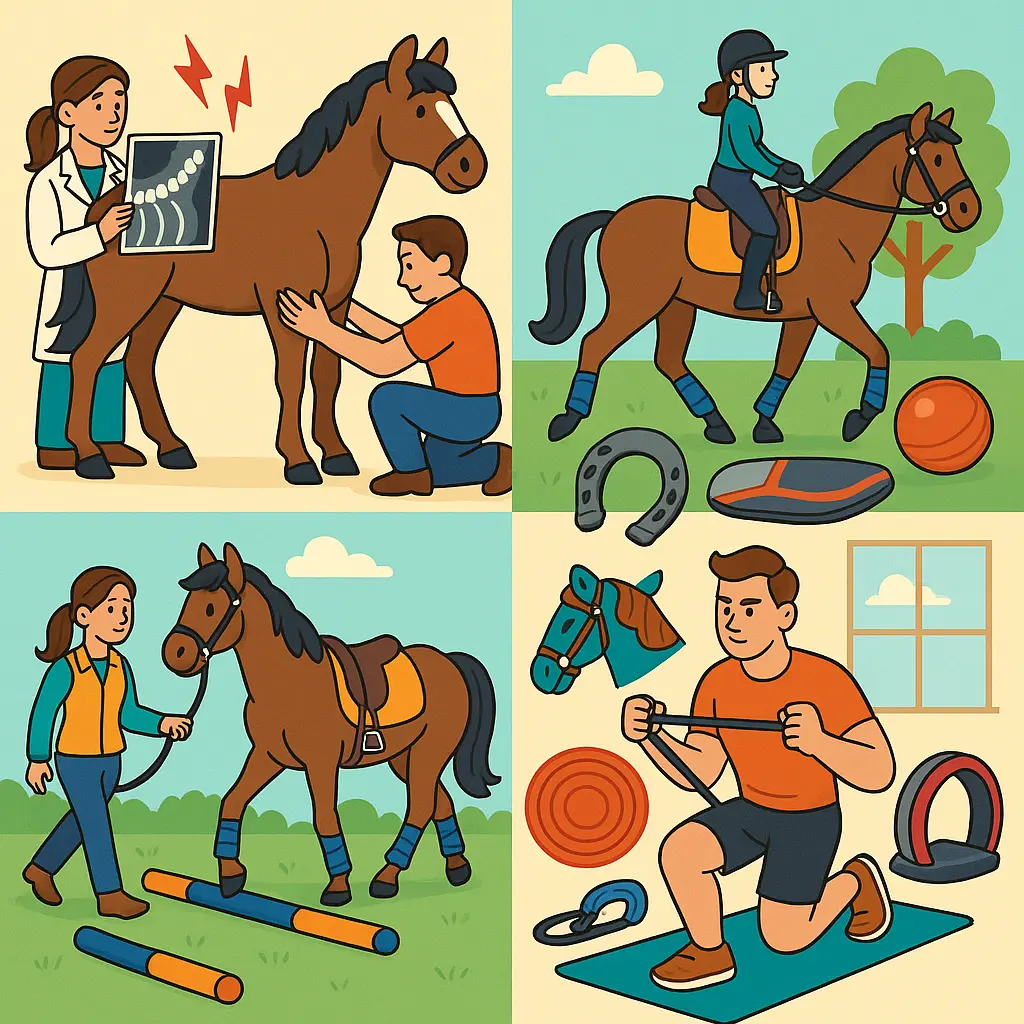
Day‑to‑day management in UK conditions
Prioritise softer footing, adjust turnout when ground is hard or frozen, and book seasonal vet checks around spring and late autumn to pre‑empt flare‑ups.
In the UK, winter brings freeze–thaw cycles and heavy rain. Many yards switch to indoor schools or well‑maintained arenas when the ground is concussive, which helps both navicular‑prone and back‑sore horses (Animal Osteopathy College). British Equine Veterinary Association (BEVA) practice summaries also highlight the value of pre‑season and post‑season lameness/back reviews because presentations tend to rise after training volume spikes (Horse & Hound coverage).
Comfortable rugging supports soft‑tissue suppleness in cold snaps when muscles are more prone to tightness. Choose breathable layers and adjust to temperature and coat. Browse our durable, weather‑ready turnout rugs for wet days and cosy stable rugs for recovery time on the yard.
Pro tip: Keep hacks controlled and on forgiving surfaces through late autumn and early spring. Add gentle hills for strength, but avoid long road trots that drive up concussion.
Warning signs and when to call the vet
Shorter stride on one forelimb, reluctance to bend or collect, back sensitivity under the saddle, or resistance to transitions all warrant early reassessment by your vet and physio.
These subtle changes often arrive before overt lameness. Other red flags include tail swishing during girthing, difficulty striking off on a particular canter lead, toe‑dragging on one side, head‑nodding in transitions, or tripping on familiar surfaces. Stop fast work, switch to softer footing, and call your BEVA‑associated vet to avoid a minor compensation pattern snowballing into a secondary injury.
Quick tip: Film a 60‑second trot-up and a short schooling clip monthly. Side‑by‑side comparisons reveal movement drift you won’t spot day-to-day.
Smart kit to support your plan (used wisely)
Therapy rugs, supportive pads, and rider-core tools can ease comfort and consistency, but they must sit behind a vet‑approved rehab programme — not replace it.
Use magnetic or far‑infrared therapy rugs for additional back comfort before and after work, alongside the groundwork and stretching your physio prescribes. Our customers rate the fit and durability of the WeatherBeeta range for everyday practicality. Under saddle, anatomically shaped pads from brands like LeMieux can help distribute pressure when used with a correctly fitted saddle.
For horses with navicular‑type pain, consider shock‑absorbing pads (as advised by your farrier) and keep lower‑limb protection consistent during rehab schooling. If your vet recommends nutritional support, explore joint and hoof comfort options from trusted names in our NAF and wider supplements collections.
As UK rehab‑centred trainers remind us, gadgets are adjuncts. Consistent core work and correct movement patterns make the lasting difference (Harry Hall rehab guidance).
FAQs
Can the X‑ray changes in kissing spines actually reverse with rehab?
Sometimes, yes. Individual cases have shown increased space between dorsal spinous processes after 8+ months of targeted rehab, suggesting bony remodelling can occur — but it’s not guaranteed and most horses are managed long‑term through movement retraining and pain control (case example).
How long should a horse with kissing spines be rested before starting rehab?
Many UK protocols start with 2–3 weeks of stall rest and hand‑walking, then move into a 6‑week graded programme; adjust for surgical vs non‑surgical cases and your vet’s guidance (Equus Magazine on ISLD protocols).
Can a horse with kissing spine safely carry a child or lighter rider?
Often yes, once the horse rebuilds core strength and posture and your vet/physio approves. A balanced, quiet rider and carefully monitored workload are essential (BHS).
Is navicular disease always a career‑ending condition?
No, but the prognosis is guarded. Many horses remain comfortable at lower levels with strict management, corrective shoeing, and reduced concussion; relatively few return fully to pre‑lameness performance (The Veterinary Record data via Mad Barn).
What shoeing interval is best for navicular‑type issues?
Every 4–6 weeks is typical in UK practices to maintain heel support and optimal breakover, reducing deep digital flexor tendon and navicular stress (American Farriers Journal).
When is it safe to canter or jump after kissing spine diagnosis or surgery?
Only when your horse can maintain a rounded, lifted posture through walk and trot, typically after 8–12 weeks of progressive rehab, and with explicit veterinary/physio clearance (SmartPak; Rehab.Vet).
Ready to map out your horse’s next 12 weeks? Build your plan with your vet, keep sessions short and consistent, and support comfort with thoughtful gear and surfaces. If you’d like help choosing practical kit for day‑to‑day rehab, the Just Horse Riders team is here to help.