Your horse’s poll is small but mighty: get bridle fit or handling wrong here and you’ll see instant resistance, from head-tossing and backing off the contact to outright bridling battles. The good news? A few precise checks and calm handling usually turn it around fast.
Key takeaway: Poll pressure from a poorly fitted bridle or rushed handling causes real pain, not “naughtiness” — fix the fit first, then retrain quietly.
How poor bridle fit causes poll pain
Poor bridle fit concentrates pressure over the poll and behind the ears, causing pain that makes horses evade the contact, raise the head, go behind the bit, or stop going forward. Correct headpiece positioning and even pressure distribution are essential for comfort, welfare, and performance.
The poll is a high-traffic area for nerves, ligaments and the upper nuchal region, so pressure here is intensely aversive. As equine fit expert Tracy explains for Your Horse, sustained poll pressure “has a big negative effect on your horse’s attitude and way of going… your horse will do anything to try and relieve the pressure,” from high head carriage to ducking behind the bit (Your Horse). The British Horse Society (BHS) confirms that bridle fit directly affects comfort, welfare and performance: the headpiece must sit comfortably over the poll and behind the ear bulbs, without tightness (BHS).
“Pressure on the poll area causes pain and discomfort and, unsurprisingly, has a big negative effect on your horse’s attitude and way of going.” — Tracy, equine fit expert, Your Horse
Horses quickly learn to avoid what hurts. If bridling or riding consistently compresses the poll, you’ll see behaviours that look like “resistance” but are really self-protection. Over time, that can spiral into head-shyness even after the original pain is addressed.
The fastest way to check bridle fit at the poll
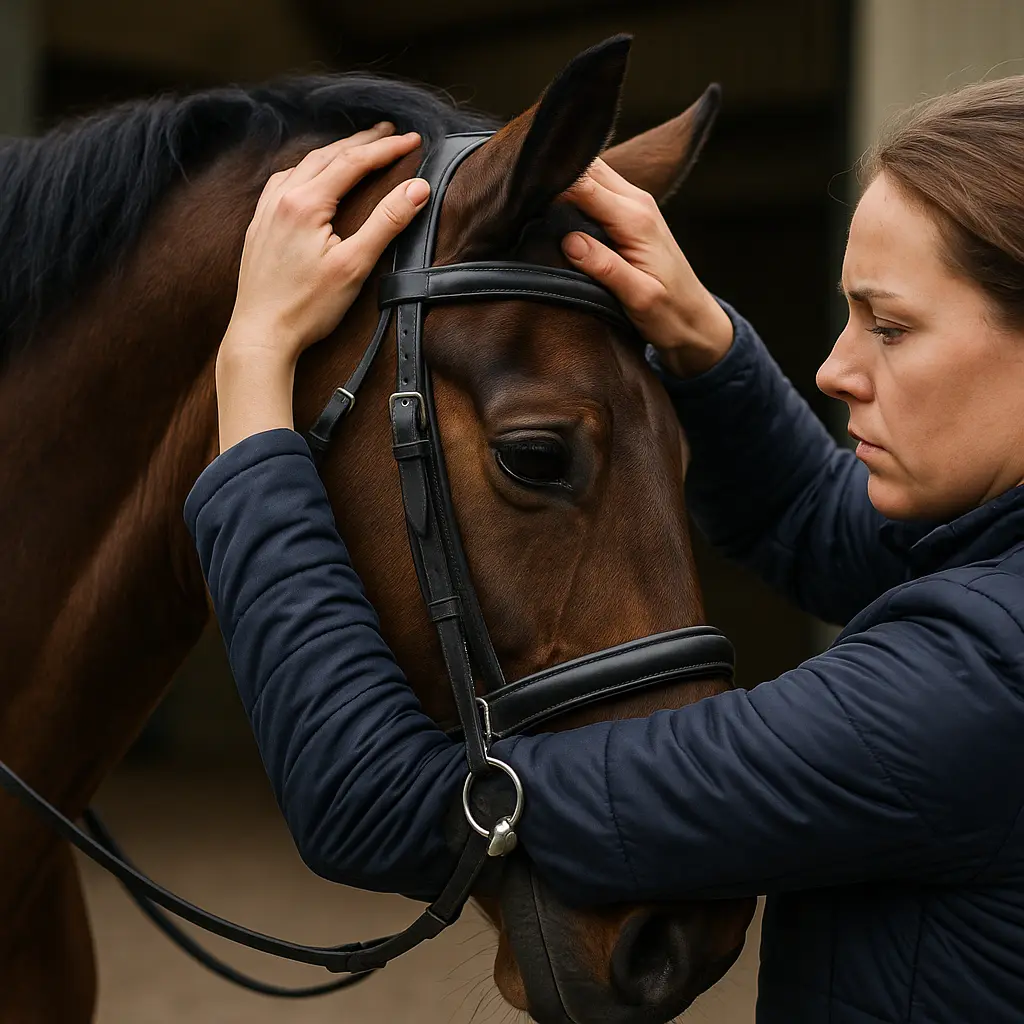
Slide a flat hand under the crown of the headpiece: it should sit evenly over the poll and behind the ear bulbs, with no pinching, ridges, or tightness. Anatomical headpieces still need individual adjustment — they can pinch if fitted too far forward or too low.
Use this BHS-aligned, 60-second check (BHS):
- Headpiece: Glide your hand under the crown; there must be space to move your fingers without forcing them. Ensure the widest part clears the top of the ear bulbs.
- Browband: It should prevent the headpiece sliding into the base of the ears. If the headpiece “crowds” the ears, upsize the browband.
- Throatlash: About a hand’s breadth from the cheek; you should fit four fingers between lash and jaw comfortably.
- Cheekpieces: Buckles should sit level, not jammed near the eye. Bit height should not wrinkle lips excessively.
- Noseband: Even if cavesson-only, ensure two fingers under the nasal bone and that the strap doesn’t pull the headpiece down.
Quick tip: Fit with the mane plaited aside so you can see the crown’s contact clearly. Re-check after 10 minutes of riding — heat and movement reveal pressure points you can’t feel in the stable.
Handling technique that prevents head-shyness
Bridle calmly with a prepared bridle, avoid clattering the bit on teeth, and never force the crownpiece over sensitive ears; careless techniques create lasting resistance even after pain has resolved. Let the horse lower the head and take the bit, and remove the bridle by allowing the bit to drop before easing the headpiece off.
Horses often become “difficult to bridle” because of discomfort and inconsiderate handling, not attitude (Horse & Hound). Set yourself up for success:
- Keep the halter around the neck before you start so you retain control if the horse moves away.
- Prepare the bridle correctly in your hands. Present the bit smoothly to the lips; do not lever it against incisors or clack it on molars (Horse & Rider).
- Invite the horse to open the mouth; a thumb at the bar of the mouth is a cue, not a pry. Reward a soft try.
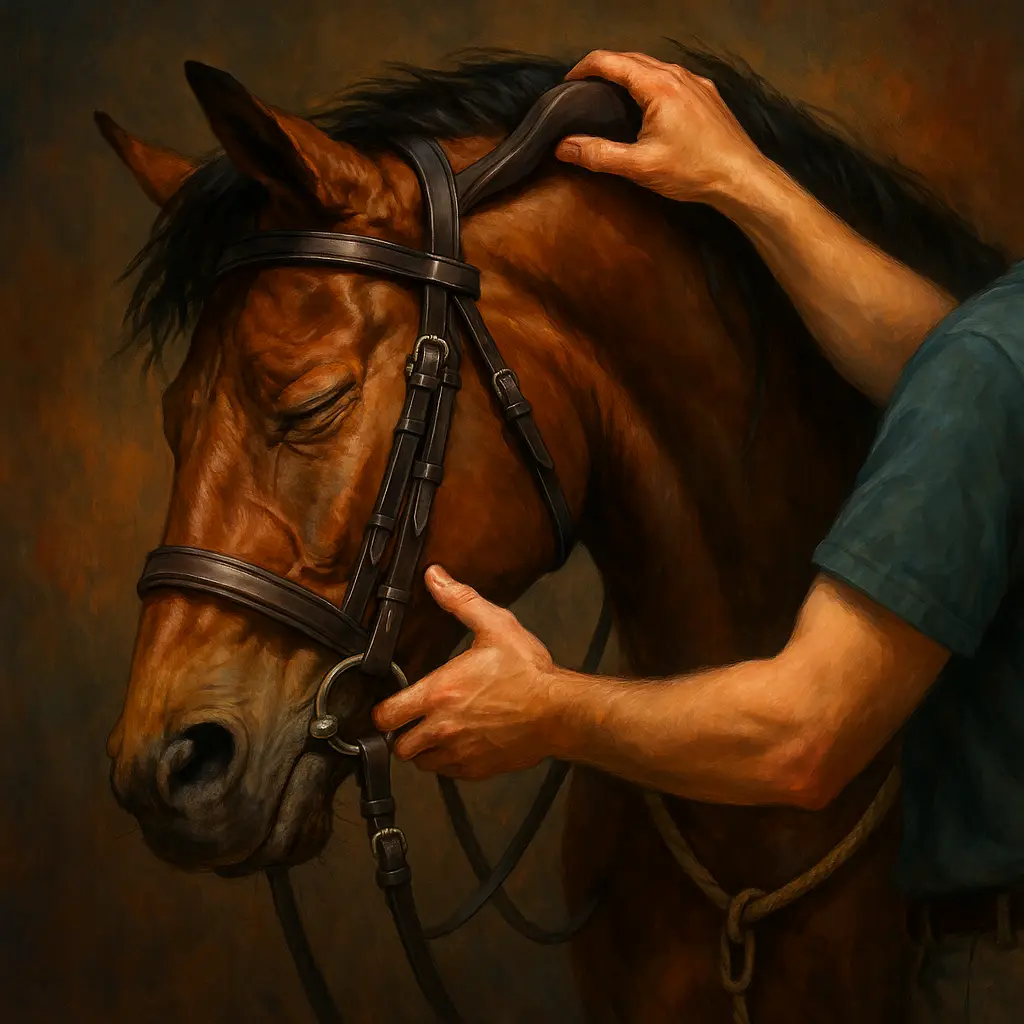
- Lift the crownpiece slowly and mind the ears. Either fold each ear forward gently or slide under the ear base — never yank.
- On removal, fully undo what you tightened. Support the bit with one hand and allow the horse to spit it out so it doesn’t bang the teeth (Horse & Rider).
Pro tip: Use small food rewards to reinforce a low head and steady mouth during bridling. Our riders rate a pocketable pouch and soft horse treats for positive reinforcement when rebuilding confidence.
When head-shy means pain: what to check and when to call the vet
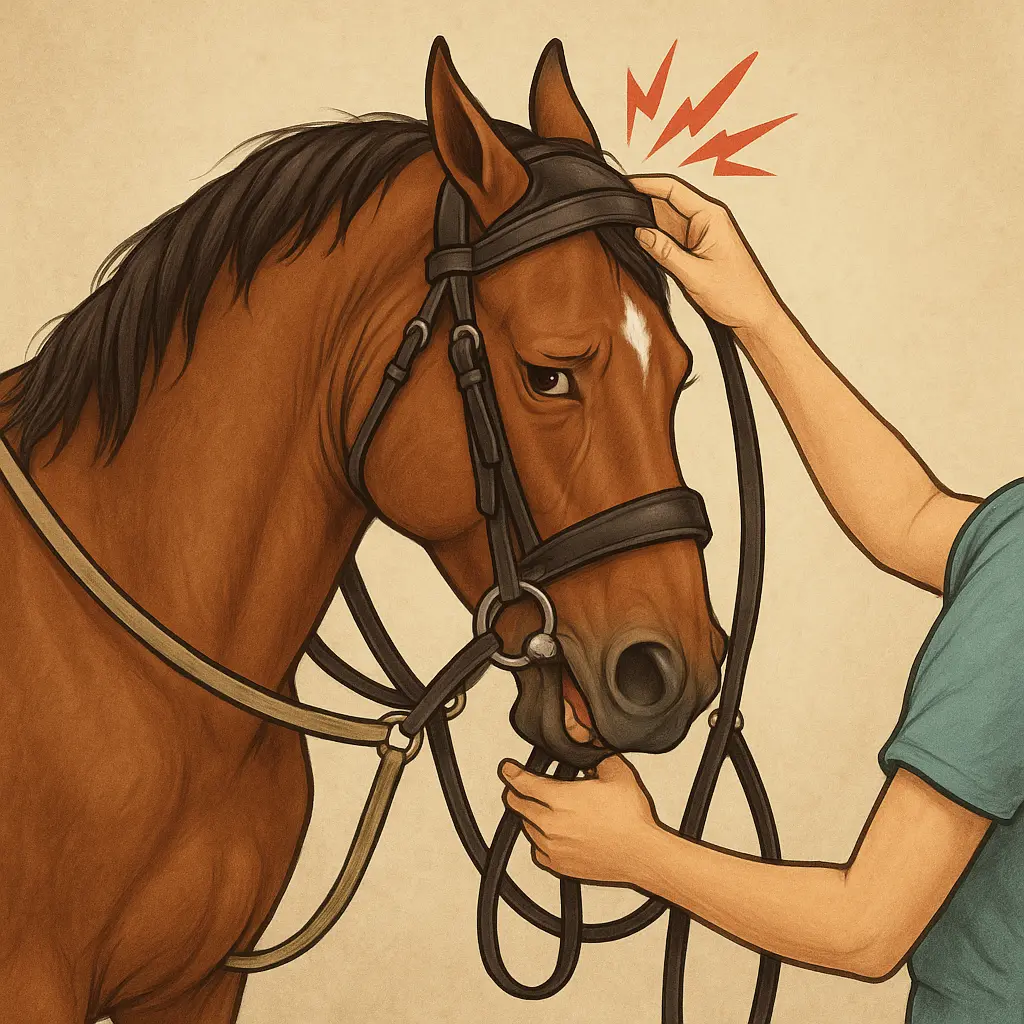
If head handling triggers flinching, teeth grinding, cheek muscle striations, or facial changes, assume pain until proven otherwise; slowly palpate the poll, ears, TMJ and neck, and switch tack to rule out equipment before you book a veterinary exam. Persistent sensitivity, swelling, heat, or discharge around the poll warrants prompt veterinary assessment.
The Horse outlines that head-shyness can arise from dental pain, TMJ dysfunction, or badly fitting tack; poll pain often radiates to the base of the ears and sides of the neck (The Horse). Differentiate true pain from anticipation by moving slowly and watching for involuntary signs: tightened muzzle, clenched masseter with visible striations, teeth grinding, or sudden blinking. If you suspect the ear canal, remember it’s deep — proper evaluation typically demands sedation and a specialised scope; a quick tack change (different bridle or soft headcollar) is a smart first step before the vet visit (The Horse).
Also be aware of poll evil — inflammation or infection at the poll that causes severe pain on contact with a halter or bridle and can spread to ligaments if neglected, requiring months or even years of treatment (Coastal Equine). Any swelling, heat, drainage, or guarding in this area is a red flag.
Quick tip: Keep a simple handling diary noting what you touched (left ear base, right TMJ, mid-poll), the horse’s response, and which tack was used. Patterns appear quickly and help your vet, physio, or dentist target the true source.
Safety first: If your horse is reactive, protect yourself with a snug, current-standard riding helmet for ground handling — many head-shy horses toss suddenly.
UK-specific risks around the poll
Wet British weather, mud, and damp tack increase the risk of skin irritation and rubs behind the ears, which can trigger or worsen poll pain. Autumn and winter are peak seasons for hidden irritation under rugs and headcollars — daily checks prevent small issues from becoming big problems.
Moisture softens skin so minor pressure becomes a rub; mud under headcollars or bridle crowns grits the area like sandpaper. In the UK, where drizzle and wind are routine from October to March, build these habits:
- Dry and wipe the poll and ear base after turnout; a quick curry and soft brush keep the crown area clean. Stock up on easy tools in our grooming collection for a fast daily once-over.
- Rotate or remove headcollars in the field when safe to do so; choose soft, breakaway styles for testing comfort on sensitive polls.
- Condition leather and check stitching more often in wet months; damp, stiff leather creates sharp edges that pinch.
- Check rug necklines and hoods for creep and rubs that can travel up to the ear base. When the forecast is set to cold and wet, choose well-fitted winter turnout rugs and monitor daily.
At competitions, combine comfort with visibility on dreary days; our rider hi-vis keeps you seen hacking to warm-up while you focus on keeping pressure off the poll.
Practical fixes: kit that reduces poll pressure
Choose a bridle with a wide, softly padded, anatomically shaped headpiece, a correctly sized browband, and supple leather; add poll relief pads or bit guards if needed, and use a soft, breakaway headcollar for trials. Equipment helps only when fitted individually to your horse’s head.
Smart choices that protect the poll and rebuild confidence:
- Anatomically shaped headpieces: Cut away from the ear bulbs and broadened over the poll to spread load. Still check that the widest part sits exactly over the poll, not too far forward.
- Soft padding at the crownpiece: Quality, even foam or gel reduces peak pressure. Avoid bulky padding that bunches at the ear base.
- Correct browband length: A tight browband pulls the crown into the ear base — a common, easily fixed source of “mystery” head-shyness.
- Poll relief pads or inserts: Useful as a short-term comfort aid while you fine-tune fit; monitor closely for heat build-up.
- Bit guards or rubber bit covers: Stop accidental tooth knocks during training; introduce gradually so you don’t alter bit action unexpectedly.
- Breakaway headcollars: Helpful for short field tests if you’re trying to differentiate bridle vs. general head sensitivity.
At Just Horse Riders, we see riders pair careful tack tweaks with confidence-building routines. Simple additions like a soft nose wipe and treats make sessions smoother; browse LeMieux favourites for quality comfort touches and reach for our reward treats when you get a calmer head-lower or an easy “take the bit.” For broader yard savings while you upgrade kit, check our Secret Tack Room clearance.
Step-by-step: a calm bridling routine
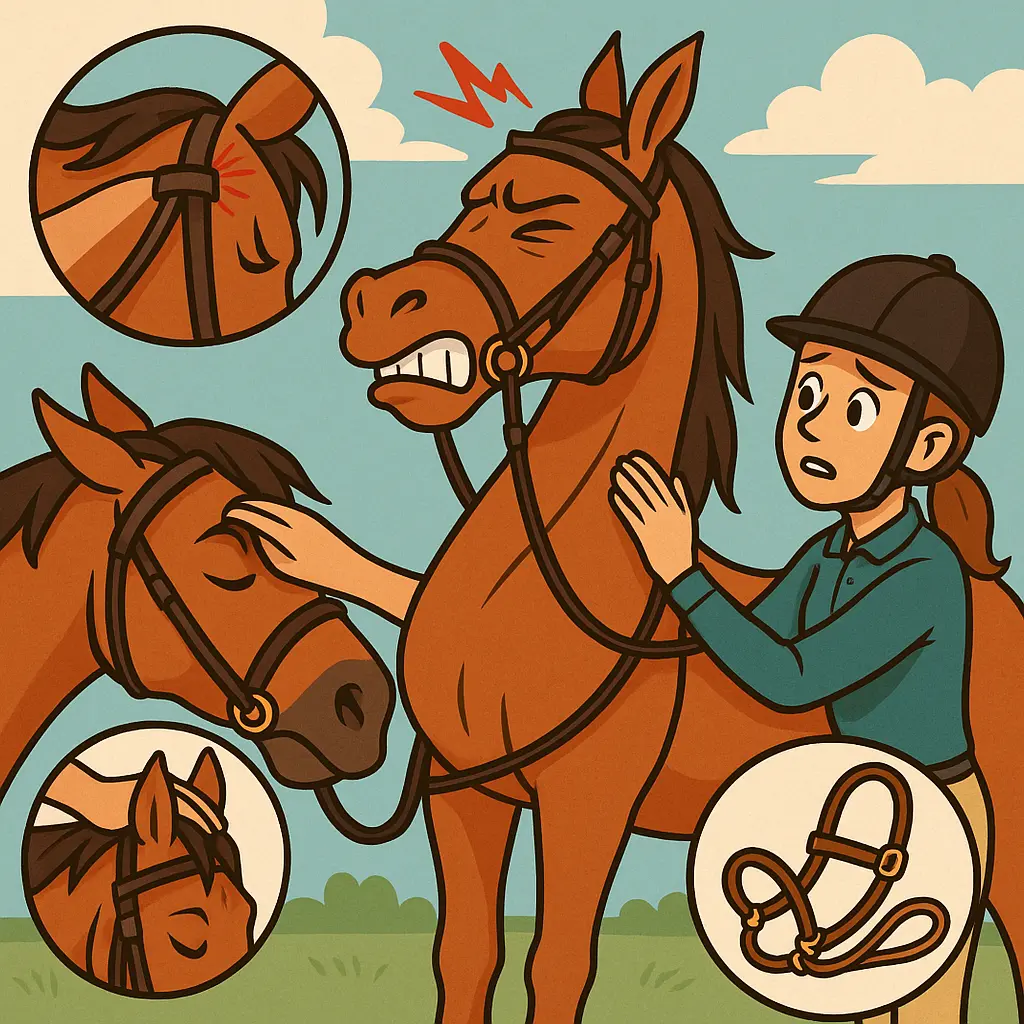
Prepare your bridle, keep the halter around the neck, invite the horse to lower the head, present the bit without touching the teeth, and place the headpiece without ear pressure; on removal, let the bit drop out before easing the crown off. Consistent, unhurried handling breaks the head-shy cycle.
- Prepare first: Check straps are unbuckled or loosened. Hold the crown in your right hand, the bit in your left (reverse if left-handed), with reins neatly over your arm.
- Control quietly: Slip the halter around the neck so you can pause without losing the horse.
- Ask for “head down”: Light poll pressure or a chin-target cue; reward any soft lowering with a stroke or a tiny treat.
- Present the bit: Touch the lips and let the horse open. Avoid levering the bit on incisors or bumping molars — a common cause of sudden refusals (Horse & Rider).
- Place the crown: Lift smoothly; ease each ear through without folding them sharply or yanking over the cartilage.
- Adjust quietly: Browband centred, cheekpieces even, noseband fitted to guidelines. Slide your hand under the crown to confirm comfort (BHS).
- Remove with care: Undo what you tightened, support the bit with your palm, and let the horse drop it before you guide the crown off. Never drag the headstall across the ears (Horse & Rider).
Quick tip: Practise the routine at neutral times — after a groom or hand-graze — not just before schooling. A few short, positive reps build trust faster than one long session.
Dress to focus. Stable yards can be slippery and busy; grippy women’s jodhpurs and breeches or children’s jodhpurs and supportive horse riding boots help you stay stable while you work patiently at the head.
Troubleshooting checklist before you ride
Run a 5-point check — poll comfort, ear base, TMJ, bridle fit, and riding feel — and don’t ride through resistance that starts with headgear. A short re-fit beats a long battle under saddle.
- Poll and ear base: No heat, swelling, or flinch on a slow fingertip pass.
- TMJ and cheeks: No grinding, masseter striations, or jaw clench when you touch.
- Headpiece and browband: Hand under crown slides freely; browband prevents crowding ears.
- Bit in/out: No tooth knocks on bridling or unbridling; add temporary bit guards if needed.
- Under saddle: If you feel sudden head elevation, behind-the-bit curling, or reluctance to step forward, stop and re-check fit (Your Horse).
If in doubt, pause, re-fit, or swap to a soft headcollar and lunge lightly to assess movement. Layer care with good routine support — many owners pair tack checks with a balanced diet and, where appropriate, vet-advised supplements to support overall comfort.
Conclusion: make the poll a comfort zone
Horses don’t forget poll pain — but they forgive quickly when fit is right and handling is kind. Start with the BHS hand-under-crown test, fix the browband, and slow your technique. Within a few rides, you should feel steadier contact and happier forward steps. For wet UK days, keep the poll clean and tack supple, and don’t hesitate to call your vet if you see heat, swelling, or guarded reactions.
Ready to reset your routine? Grab a soft brush and rewards from our grooming range, stay safe in a comfortable riding helmet, and keep an eye on seasonal yard essentials across our WeatherBeeta and clearance picks.
FAQs
Why has my mare suddenly become bridle-shy when she was fine before?
New pain is the most common reason — often poll pressure from a tight or poorly positioned headpiece, a too-short browband, dental pain, or a learned response after the bit hit the teeth. Check fit first using the BHS guide, then review handling (Your Horse, BHS, Horse & Rider).
How do I tell if it’s pain at the poll or just bad behaviour?
Move slowly and watch for pain markers when you touch: cheek muscle striations, teeth grinding, sudden facial tension, or flinching at a fingertip’s light pressure. True pain responses differ from rehearsed avoidance and are consistent across calm, slow palpation (The Horse).
Can poor bridle fit cause my horse to resist going forward?
Yes. Poll pressure makes many horses lift the head, hollow the back, duck behind the bit, or shut down forward effort to escape discomfort (Your Horse).
What if my horse pulls away when I touch around the ears or poll?
Stop and inspect for rubs, swelling, heat, or discharge. Persistent pain, especially with swelling, can indicate conditions like poll evil, which need veterinary attention because they can spread to surrounding ligaments (Coastal Equine).
Is there a quick fix for head-shy bridling?
No shortcut beats correct fit and calm handling. Address pain first, then rebuild with short, positive sessions: head-lower cue, quiet bit presentation, and careful ear handling. Rushing makes the problem stick (BHS, Horse & Rider).
Should I change anything in winter?
Yes — UK wet and mud increase rub risks. Clean and dry the poll daily, condition leather, and check rug necklines and hoods. Keep a soft brush handy from our grooming collection and choose well-fitted turnout rugs to minimise friction.
What does the BHS say is the single quickest bridle fit check?
Slide your hand under the crownpiece over the poll; it must sit comfortably without tightness and clear the ear bulbs. If you can’t move your fingers, it’s too tight (BHS).