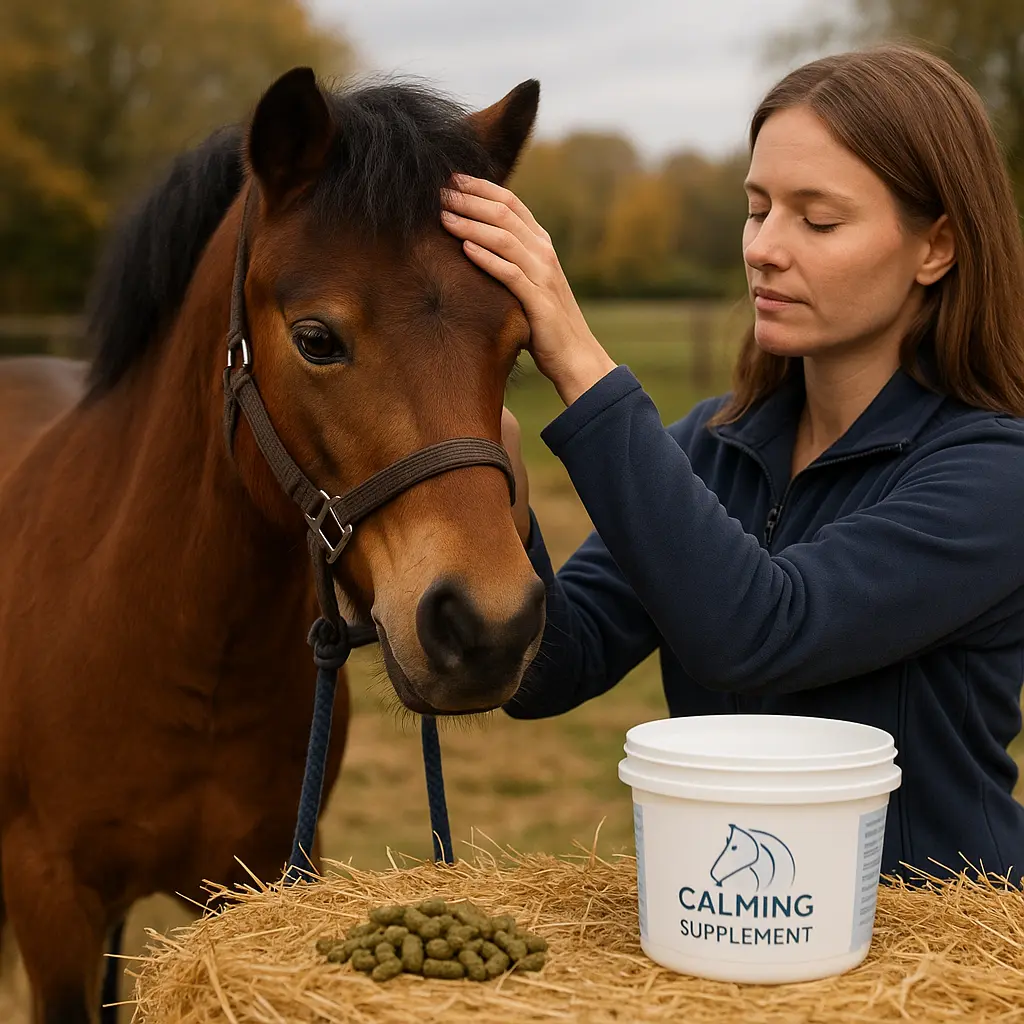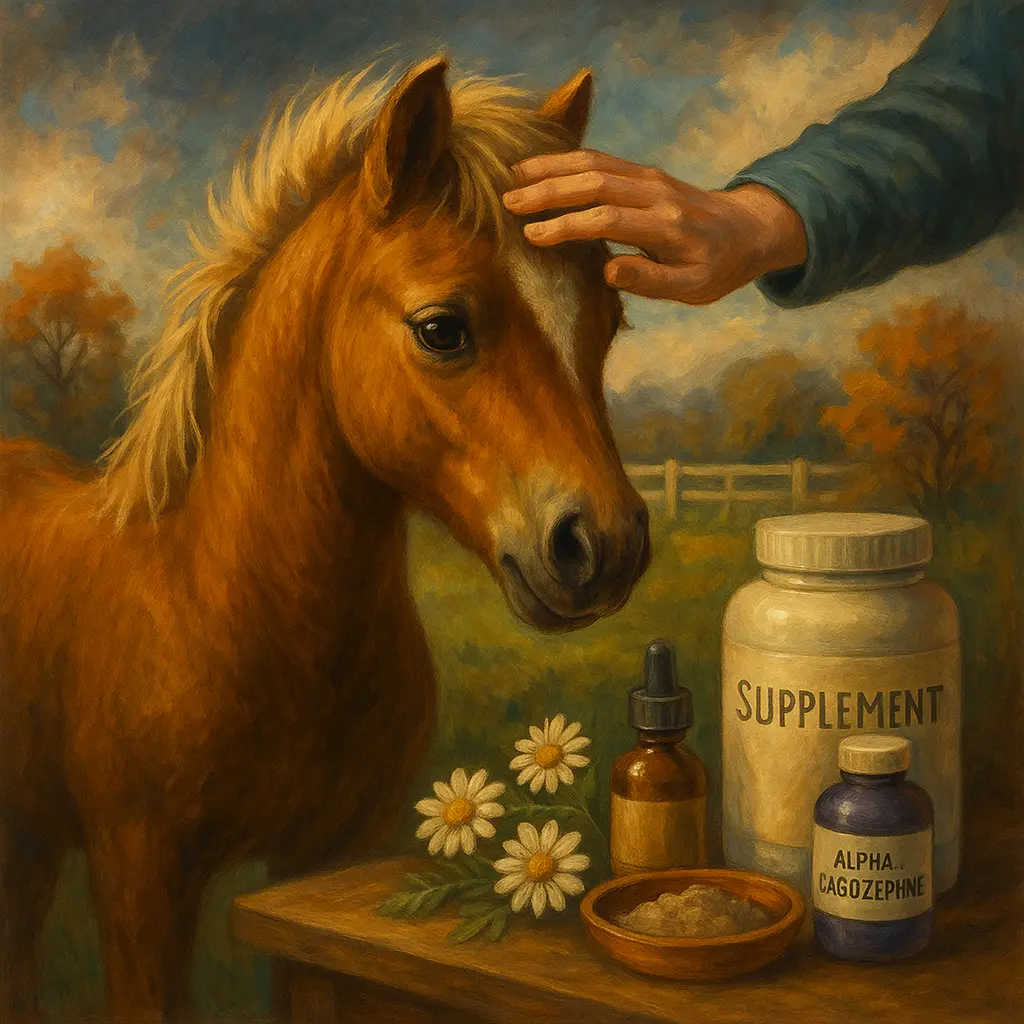
Your three-year-old Welsh Section B is bright, quick and sensitive — which is wonderful for the future, but often means big feelings in small ponies right now. If your youngster is tense in the indoor school or sharp to handle this winter, the right blend of management, non-sedative support and gentle bodywork can turn worry into workable focus.
Key takeaway: Start with turnout, forage and a pain check; add a short supplement trial if needed; and use Equine CranioSacral Therapy (CST) to reset a nervous system stuck in “fight or flight”.
What does a nervous young pony need first?
Begin with the basics: maximise turnout, feed mostly forage with minimal starch, ensure social contact, and ask your vet to rule out pain before adding supplements or therapy. For young ponies, this foundation solves most mild anxiety and prevents training setbacks.
For turnout, aim for 24/7 where possible or a consistent 8–12 hours daily. In UK autumn and winter, turnout can be tricky; use well-fitted winter turnout rugs and, on very wet or bitter days, rotate with cosy stable rugs so your pony stays warm and relaxed without excess energy. Keep the diet forage-first (ad lib hay/haylage) with low cereals; starch and sugar spikes amplify reactivity in sensitive Welsh ponies. Provide a stable buddy or at least visual contact; isolation is a major stressor for herd animals.
Quick tip: Use slow feeders or small-hole nets to mimic grazing and reduce box-walking, wood-chewing and stressy vices during shorter winter days.
Before you reach for a calmer, ask your vet to check teeth, saddle fit, feet, and musculoskeletal comfort. A sharp, “nappy” three-year-old is often a sore one — ruling out pain prevents masking a problem and protects long-term confidence. If you’re planning competition, remember British Equestrian Federation (BEF) and FEI Clean Sport rules apply to supplements as well as medicines.
When to choose Equine CranioSacral Therapy (CST)
Choose Equine CST when your pony is anxious, touch-sensitive or stuck in “fight or flight”; it uses light touch to increase parasympathetic (“rest and digest”) activity without force or sedation. CST is especially useful for young or reactive horses that don’t tolerate stronger massage or mobilisation.
Multiple UK practitioners note CST’s focus on the autonomic nervous system (ANS). The Chevington Clinic highlights that up to 80% of musculoskeletal restrictions may be influenced by the ANS — exactly the system that drives tension, startle responses and “shut down”. Sessions are calm and unhurried: initial appointments typically last about 1 hour 45 minutes (including assessment) and follow-ups around 1 hour, according to Vale Cranial.
“CST allows your horse to adjust and release at their own pace. This non-invasive, calming and relaxing approach is extremely gentle and subtle and works at a deeper level than... massage or physiotherapy.” — Vale Cranial
A typical CST visit includes viewing your pony in walk and trot (and sometimes on the lunge), gentle palpation of the head and body, and then very light holds along the craniosacral system — no manipulation, no force. As UK therapist Jessica Limpkin explains, the aim is simple:
“Increase the activity in the parasympathetic or ‘rest and digest’… and decrease activity in the sympathetic or ‘fight or flight’.” — Jessica Limpkin
Many owners notice visible relaxation immediately, with cumulative changes across 3–4 weekly sessions — a rhythm echoed by UK providers such as Vale Cranial. Expect UK pricing in the region of £50–£80 for an initial 1.75-hour session and £40–£60 for follow-ups. Remember, CST complements but never replaces veterinary diagnostics for a nappy, spooky or sore three-year-old.
“By addressing physical, emotional, and energetic imbalances, Equine CST can significantly improve a horse’s overall well-being.” — Di Letts
Do calming supplements work for young ponies?
Yes — non-herbal options like alpha‑casozepine, magnesium and thiamine (B1) can reduce anxiety without sedation or discoordination; trial them short-term and assess within 24–48 hours. For training‑age ponies, prioritise non‑sedative products to preserve learning and balance.
Alpha-casozepine (a milk-derived peptide) is one of the better-researched calmers for horses and other species, with no unwanted effects like ataxia reported in the literature reviewed by Mad Barn; it’s also recommended in current buyer’s guides such as Chewy Education. Expect a relatively quick onset (often within 24–48 hours). Thiamine (B1) is widely included for stress resilience, as noted by PetMD, while magnesium and B vitamins have mixed but longstanding practical support in equine management.
How to trial safely: choose one product, follow label directions, and monitor behaviour for two days. As a benchmark, PetMD cites short-term paste protocols such as 30 mL twice daily with a pre‑stress top-up three hours before the trigger; always check your chosen product’s specific dosing. For everyday use, pellets or powders are tidier and easier to taper.
Competition rules matter. UK riders should check BEF and FEI Clean Sport guidelines; many herbal calmers (notably valerian) are prohibited in competition. For a quick overview, see Heritage Equine’s guide to show-legal choices: What calming supplement should I use? When in doubt, ask your vet and verify ingredients against the FEI Prohibited Substances List.
At Just Horse Riders, we stock a broad range of daily and event-day calming supplements so you can match the formulation to your pony’s needs and your competition calendar.
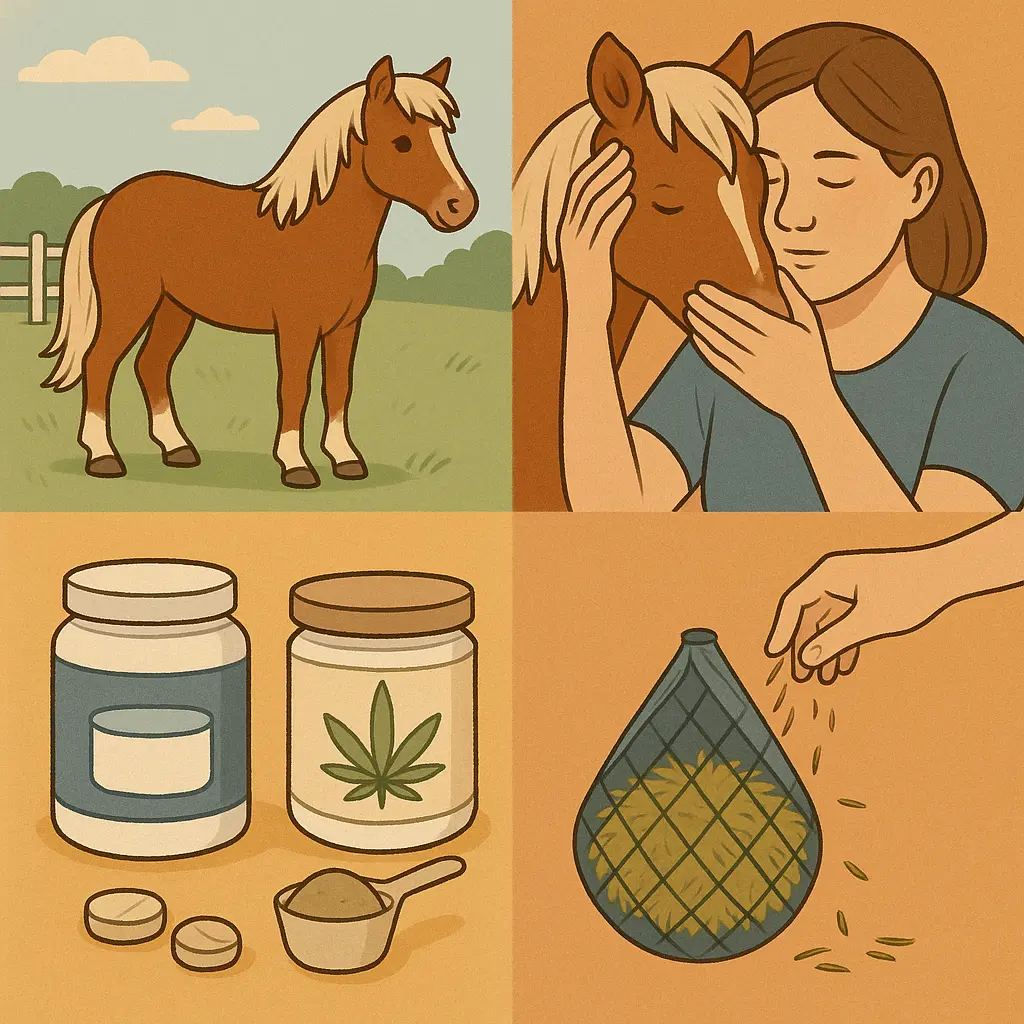
How to build a 4‑week calm plan
Use a simple 4‑week structure: spend 2 weeks tightening up management and trialling one calmer, then add 2–3 CST sessions if emotional/structural tension persists. Keep daily handling short, consistent and positive to consolidate new calm habits.
Week 1–2: Management + supplement trial
- Turnout: commit to 8–12 hours minimum; adjust rugs to keep warm-and-dry without overheating (sweat can spike irritability). Rotate turnout rugs and stable rugs to suit the weather front by front.
- Forage: feed ad lib hay/haylage; reduce or remove cereal mixes. Add a balancer so vitamins/minerals aren’t short-changed.
- Routine: introduce a predictable schedule — same times, same people. Nervous ponies thrive on sameness.
- Supplement: pick ONE non-sedative calmer (e.g., alpha‑casozepine, or a magnesium/B1 blend) and track changes for 24–48 hours, then across two weeks.
- Handling: 10–15 minutes of quiet groundwork daily — halt-walk transitions, yielding shoulders/hindquarters, head-lowering cue.
Week 3–4: Add CST if needed + progressive exposure
- Book Equine CST: schedule an initial 1 hour 45 minutes assessment with a UK practitioner; then 1–2 one-hour follow-ups spaced a week apart.
- Progressive exposure: introduce the indoor school or “scary corner” in micro-doses (2–5 minutes), ending before tension spikes.
- Comfort checks: groom with intention to relax — longer strokes, gentle curry on big muscles, finishing with soft brushing to the head/ears if tolerated. Our grooming range makes daily relaxation rituals easy and consistent.
Pro tip: Keep a calm diary. Note weather, turnout hours, feed, supplement dose, work done, and behaviour (0–10 scale). Patterns reveal triggers — and wins.
Choosing the right calmers for specific behaviours
Match the calmer to the behaviour: chamomile can soothe gut‑linked worry, hops can help head‑busy distraction, valerian targets muscular tension, and vervain can settle skin‑twitchy over‑arousal — but check show rules before using herbs. For competition pathways, prioritise alpha‑casozepine, magnesium and B‑vitamin blends.
Use this quick guide when narrowing options (adapted from SmartPak’s decision framework):
- Gut-led anxiety (loose droppings in new places, mild colicky worry): look to chamomile-based blends and robust digestive support.
- Head-focused distraction (high head carriage, scanning): hops-containing formulas can promote “quieter” attention.
- Muscle-tight, teeth-grindy tension: valerian is traditionally used — but it’s a banned substance for competition, so avoid if you’re riding under BEF/FEI rules.
- Skin-twitch, over-reactive startle: vervain may help moderate tactile over-arousal in sensitive coats.
- Show-legal baseline: alpha‑casozepine, magnesium and thiamine blends are typically permitted, but always verify ingredients close to competition.
Our customers often start with a permitted daily blend, then add event-day support only if needed. Browse permitted options from trusted names like NAF, and remember to phase in changes one at a time so you can tell what’s working.
Handling and training tips for a nervous Welsh Section B
Keep sessions short and consistent (10–20 minutes), use progressive exposure, and avoid sedative strategies that dull balance or learning. Reward seek-and-relax behaviours — head-lowering, breathing out, softer eyes — to replace tension with curiosity.
Practical pointers for sharp, clever ponies:
- Groundwork first: in-hand halt-walks, serpentines and soft “yield and release” build body awareness and reduce bracing. Protect delicate legs with well-fitted horse boots or bandages as you add poles or raised cavalletti.
- The two-minute win: introduce the indoor school at quiet times for ultra-short visits — walk a lap, breathe, leave. Stack successes before you ask for more.
- Energy bleed without fizz: long, low walking hacks on soft ground between schools, using clear visibility aids and a well-fitted riding helmet for safety.
- Boundaries = safety: clear, calm stop/go rules, consistent leading position and personal-space cues reduce anxiety by making you predictable.
- End on neutral: finish each session when your pony is listening but not tired. Overrunning into fatigue creates next-day dread.
Quick tip: The first five minutes decide the next twenty. If your pony arrives tight, reset with hand-walk and breathing rather than pushing on.
Cost and value in the UK
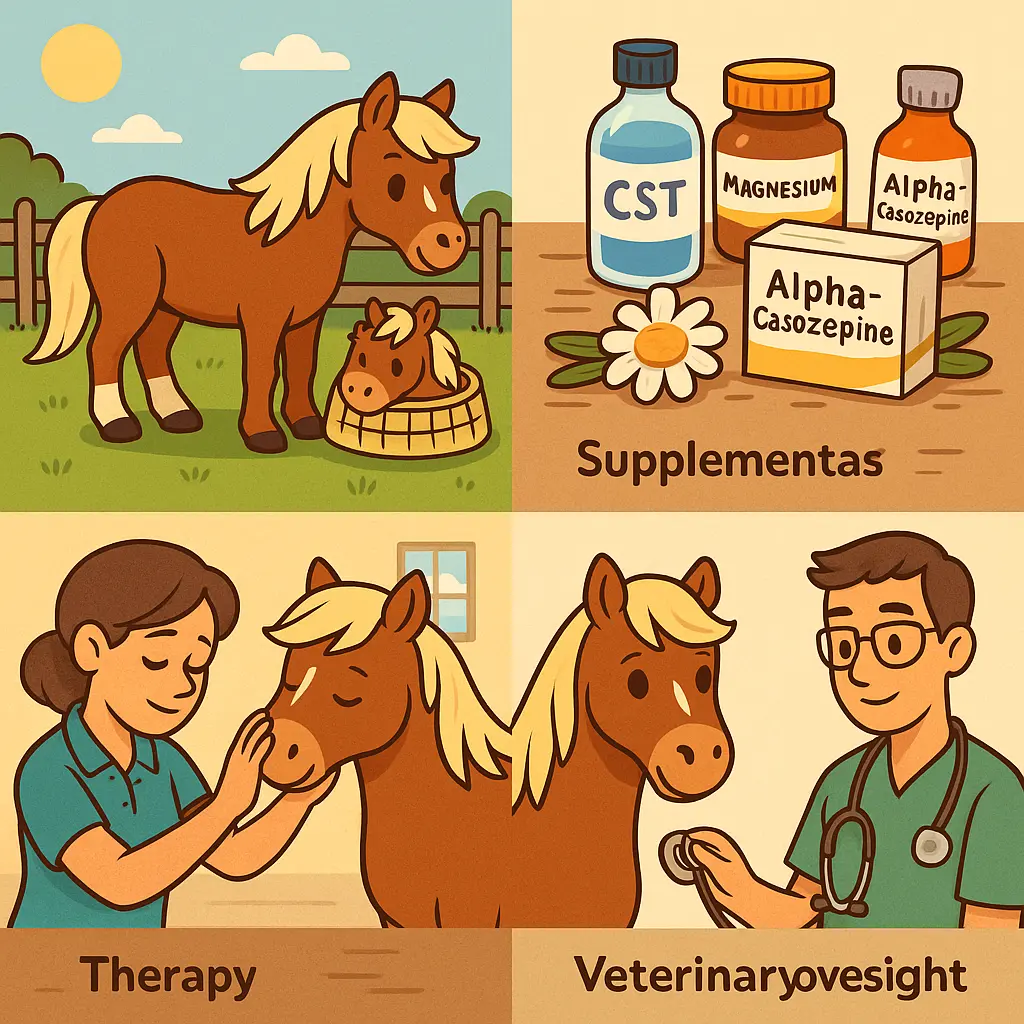
Budget £30–£50 per month for permitted daily calmers and £40–£80 per Equine CST session; many owners see immediate post-session relaxation with cumulative gains over 3–4 treatments. Over a season, that’s often cheaper than lost training days or confidence dips.
Typical annual outlay for a young pony in light training might be:
- Supplements: £360–£600 (if used year-round; many owners pulse around known stressors to reduce cost).
- CST: £160–£320 for 4–6 sessions across the year, with top-ups after growth spurts, saddle changes or winter confinement.
- Management extras: quality forage and suitable rugs keep your pony comfortable — reducing the need for “behaviour firefighting”. Explore our durable turnout options for wet weeks and warmer stable layers for cold snaps.
At Just Horse Riders, we help you build a plan that’s kinder to your pony and your pocket, directing spend to the highest-impact changes first.
What to avoid and common mistakes
Avoid masking pain, stacking multiple calmers at once, or using banned herbs before shows; always check BEF/FEI Clean Sport and confirm ingredients with your vet. Don’t rely on sedatives for training — ataxia risks learning and safety in young ponies.
Common pitfalls to sidestep:
- Skipping the pain check: sharpness, napping and “overreactive” spooks often start with back, dental or saddle issues.
- Over-supplementing: trial one product; if you add a second, you won’t know what worked (or what clashed).
- Banned substances: valerian and hemp/CBD may trigger positives; see Heritage Equine’s overview of show-legal choices here.
- Inconsistent routines: nervous ponies need sameness — same handler, same sequence, same expectations.
- Pushing past threshold: end while your pony is thinking, not fleeing or freezing. Tomorrow’s brain starts with today’s finish.
Pro tip: If you’re prepping for affiliated classes, organise your kit and attire in advance to reduce handler stress (horses read us). Our women’s competition clothing collection keeps show days smooth and professional.
FAQs
Are calming supplements safe for a young Welsh Section B in training?
Yes, when you choose non-herbal, non-sedative options such as alpha‑casozepine, magnesium and thiamine. Reviews summarised by Mad Barn, Chewy Education and PetMD support these ingredients. Avoid valerian near competition due to FEI bans.
How soon does Equine CST work for nervousness?
Many ponies show visible relaxation immediately after the first session, with deeper changes building over 3–4 weekly treatments, as outlined by UK practitioners like Vale Cranial. CST is gentle enough for sensitive youngsters.
Should I try supplements or therapy first for mild anxiety?
Start with management (turnout, forage, routine). For mild cases, add a short supplement trial and track results; if anxiety feels “whole body” or touch-sensitive, introduce CST to balance the nervous system.
Can CST replace a vet check for a nappy three-year-old?
No. Rule out pain or illness with your vet first; CST complements veterinary care by reducing sympathetic overdrive and helping the body release protective tension, as emphasised by Jessica Limpkin.
What’s a show‑legal calmer for affiliated classes?
Alpha‑casozepine, magnesium and B‑vitamins are generally permitted, but always confirm on the BEF/FEI databases and read labels carefully. Avoid valerian and hemp/CBD; for guidance, see Heritage Equine’s Clean Sport overview.
What does a typical CST session include and cost?
Expect an initial 1 hour 45 minutes appointment with assessment in walk/trot, gentle palpation and light-touch holds; follow-ups run ~1 hour. UK prices commonly range from £50–£80 initially and £40–£60 thereafter, per providers such as Vale Cranial and Di Letts.
How do I stay safe when handling a sharp youngster?
Use a well-fitted riding helmet, keep sessions short, set clear boundaries, and use protective boots/bandages for groundwork and poles. Consistency and calm body language are your best tools.