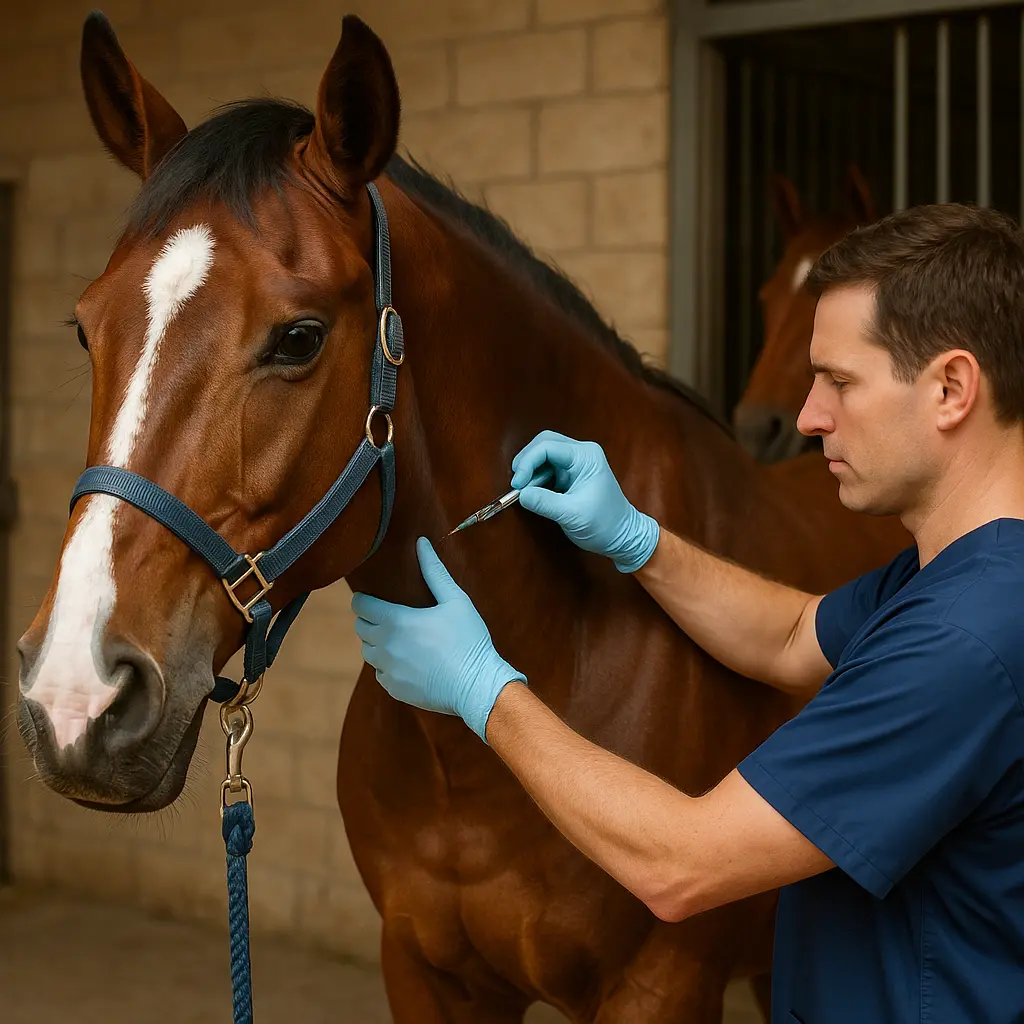
Strangles remains one of the most disruptive diseases in UK yards, and transport is a prime moment for it to spread. If you’re planning shows, clinics or a move to livery, the Strangvac vaccine can dramatically cut your horse’s risk — provided you time it right and layer it with sensible biosecurity.
Key takeaway: Start Strangvac at least six weeks before travel, boost at 6–12 months, and combine vaccination with tight isolation, hygiene and daily temperature checks for the best protection.
What is Strangvac and how well does it work?
Strangvac reduces the clinical signs and abscess formation associated with strangles and is up to 94% effective at preventing or reducing infection in vaccinated horses. In controlled trials published in the journal Vaccine, 94% protection (15/16 ponies) was observed two weeks after the third vaccination, with 58% protection two months after the second dose (Vaccine, 2020).
The University of Edinburgh’s Equine Clinical Team summarises its real-world value succinctly: fewer abscesses mean fewer carriers — and fewer carriers mean fewer outbreaks. As they put it:
“The vaccine is effective at reducing the clinical signs of strangles... Crucially, the rate of abscesses developing is vastly reduced, which in turn means that horses are much less likely to become carriers of disease. Vaccination should be used alongside other biosecurity measures.” (University of Edinburgh Equine Practice)
Strangvac is a protein-based vaccine (no live bacteria), so it cannot cause strangles. It’s licensed from five months of age, and importantly it has DIVA capability: blood tests can still differentiate naturally infected horses from vaccinated horses without interference (AAEP strangles vaccination guidance).
The UK saw a steep rise in strangles cases in 2023 and, tellingly, nearly half of owners (45%) were unaware Strangvac was even available, while 59% had not discussed it with their vet (VetTimes/Dechra survey). If you travel or have regular yard movements, vaccination is now a practical, mainstream prevention step.
When should you vaccinate before transporting a horse?
Start the primary Strangvac course at least six weeks before travel; immunity begins two weeks after the second dose given four weeks after the first. Plan a booster every 6–12 months depending on risk (Dechra UK; University of Edinburgh).
Here’s how to time it for shows, clinics and moves:
- Primary course: Dose 1, then Dose 2 four weeks later.
- Onset of immunity: Two weeks after Dose 2.
- Boosters: Every 6–12 months based on your horse’s exposure (frequent travellers benefit from the 6-month interval).
- Pre-travel top-up: If your horse was vaccinated but the last dose was more than two months ago and you’re heading into a high-risk situation, speak to your vet about boosting beforehand (Dechra UK).
Quick tip: Working back from a planned lorry date, set a calendar reminder for Dose 1 six weeks out, Dose 2 two weeks before departure, and a second reminder for your booster window (6–12 months).
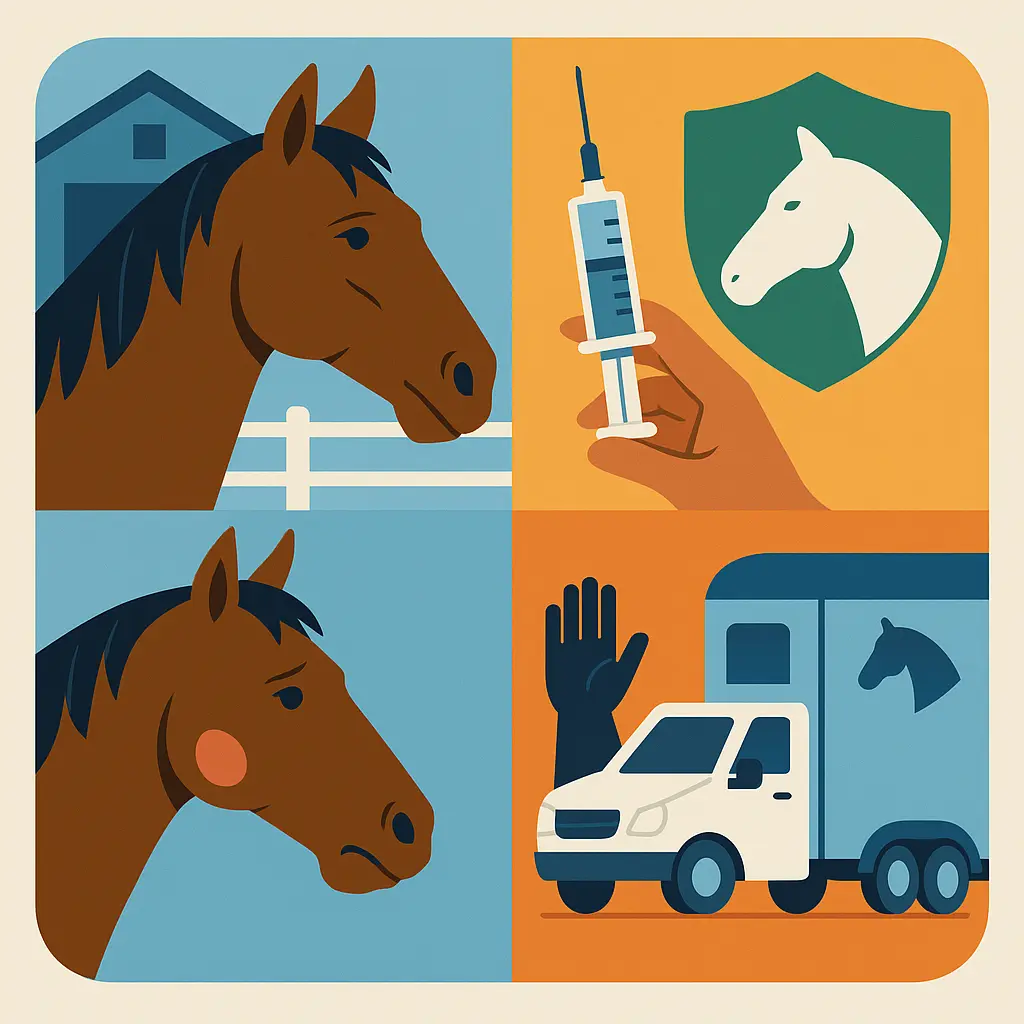
Who should prioritise strangles vaccination in the UK?
Horses on livery yards with frequent movements and those travelling to training, competitions or studs are high risk and should be vaccinated. That includes horses moving on or off dealer yards, attending camps, or sharing transport hubs (University of Edinburgh).
UK seasonality matters. Spring and summer are busy show periods (more mingling and shared stabling), while wet winters push horses into enclosed spaces with higher respiratory risk. Plan vaccination ahead of these peaks, especially if your horse will be stabled at events or transported alongside unfamiliar horses.
The AAEP Infectious Disease Committee, whose guidance is widely consulted in the UK, is clear:
“Vaccination against S. equi is recommended on premises where strangles is a persistent endemic problem or for horses that are expected to be at high risk of exposure.” (AAEP)
From a practical UK perspective, whole-yard vaccination is particularly useful where owners want to avoid the disruption and expense of repeated guttural pouch scoping to hunt down carriers. And remember, with Strangvac’s DIVA compatibility, you can still run blood tests to assess natural exposure when needed.
Can you vaccinate during an outbreak or after exposure?
Yes—healthy, unexposed horses can be vaccinated during outbreaks, but do not vaccinate clinical cases or recent close contacts; speak to your vet first. Studies from Sweden found vaccinated healthy horses exposed during outbreaks showed no clinical disease, despite over half showing serological evidence of exposure (VetClick 2024).
Dechra and independent summaries report that rapid onset of immunity from Strangvac, combined with rigorous biosecurity, likely reduced transmission during these outbreaks. As equine vet Bex Glasgow notes:
“Strangles vaccination, alongside good biosecurity measures, are essential tools in disease prevention and recent studies have also demonstrated its protective effect during outbreak situations.” (VetClick)
If your yard is affected:
- Unvaccinated, healthy horses: Start the primary course; partial protection begins two weeks after Dose 2.
- Previously vaccinated horses: If the last dose was more than two months ago, a booster can be considered to maximise protection (Dechra UK).
- Do not vaccinate: Horses with clinical signs (fever, nasal discharge, swollen lymph nodes) or known close contacts of confirmed cases until cleared by your vet.
Quote to remember from VetTimes’ review of the same Swedish data:
“New studies have demonstrated the effectiveness of vaccinating against equine strangles... The data suggest that rapid onset of immunity following vaccination, combined with biosecurity measures, likely reduced transmission.” (VetTimes)
What biosecurity steps should accompany vaccination for travel?
Vaccination must be paired with 2–3 weeks’ isolation for new arrivals, daily temperature checks, and strict hygiene in the yard and during transport. This two-layer approach protects your horse and everyone they meet.
Before transport:
- Isolate new horses for 2–3 weeks and monitor daily temperatures; a fever over 38.5°C is an early warning sign.
- Keep groups stable; avoid last-minute mixing or shared water sources.
- Clean and disinfect buckets, bits and travel partitions; don’t share equipment between yards.
- Use dedicated kit for isolation areas and handle isolated horses last.
During transport:
- Ventilation first: open vents and windows safely; avoid overcrowding boxes.
- Plan separate load/unload areas where possible; don’t tie nose-to-nose with unfamiliar horses.
- Use protective travel boots and bandages to prevent knocks that make horses reluctant to eat/drink on arrival.
On arrival and for 14 days after:
- Daily temperature checks and quick isolation if fever or nasal discharge appears.
- Separate buckets and tack; disinfect after each use when visiting shared facilities.
- Keep a written log of temperatures, coughs, and appetite changes.
Pro tip: A simple yard kit with a digital thermometer, disinfectant, and a health logbook makes monitoring effortless. Our first-aid and grooming essentials section is a good place to stock up before the season starts.
How to plan a yard-wide approach that’s practical and affordable
Whole-yard vaccination with Strangvac can reduce reliance on costly guttural pouch scoping while keeping screening effective via DIVA-friendly blood tests. For busy UK liveries, this is often the most realistic way to cut risk quickly.
A simple plan many yards follow:
- Risk mapping: List horses leaving the yard regularly (lessons, clinics, hunting, sales), recent arrivals, and any with a history of abscesses or abnormal serology.
- Vaccination schedule: Book a vet visit for Dose 1 (week 0) and Dose 2 (week 4), then set booster windows (6–12 months). Align with show calendars so most horses have strong immunity before spring/summer peaks.
- Testing strategy: Use DIVA-compatible blood tests to investigate suspicious signs or when clearing horses post-outbreak without confusing vaccine antibodies.
- Biosecurity SOP: Write a one-page protocol covering isolation (2–3 weeks), temperature logs, shared equipment rules, and visitor/transporter hygiene.
- Communication: Keep owners informed via a WhatsApp group; a quick reminder about temps and travel logs goes a long way.
At Just Horse Riders, we recommend choosing a booster interval that reflects real-world yard traffic rather than best intentions. If your yard is a travel hub, the 6-month booster rhythm keeps protection reliably “in the green”.
What to watch for after vaccination and travel
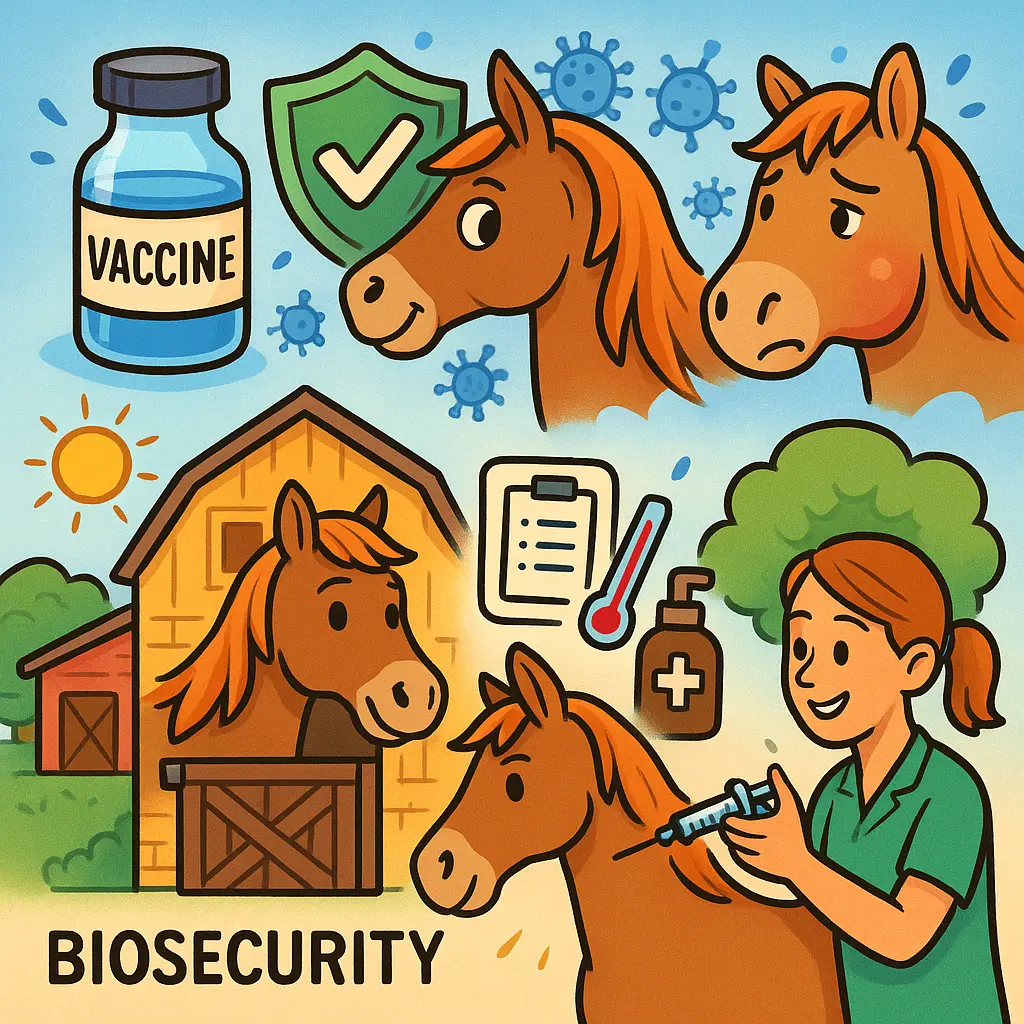
Monitor for fever above 38.5°C, nasal discharge and lymph node swelling for 14 days post-travel or any suspected exposure. Early detection and isolation are the difference between a contained blip and a yard-wide shutdown.
About the vaccine itself:
- Safety: Strangvac contains no live S. equi, cannot cause strangles, and is licensed from five months old (Vaccine, 2020; Dechra UK).
- Reactions: As with any vaccination, mild local soreness or transient temperature changes can occur; report anything unusual to your vet.
- Overdue? If you slip past your booster window by more than a month, speak to your vet about the best way to restart protection ahead of travel.
Quick tip: Keep a daily temperature log in the two weeks before and after a trip. It’s the simplest, most sensitive early-warning tool you own.
Travel checklist: simple kit to back up your biosecurity
Pack for comfort, hygiene and monitoring; your kit should make it easy to spot issues early and prevent cross-contamination.
- Protection in transit: Well-fitting travel boots and bandages to prevent knocks and boost confidence loading/unloading.
- Hygiene on the go: Disinfectant spray, disposable gloves, spare lead ropes and labelled water buckets; browse our grooming and yard essentials to top up before show season.
- Monitoring: Digital thermometer and a simple health logbook; check morning and evening temps (flag >38.5°C).
- Comfort rugs: For cool, damp UK days at events, pack breathable layers; see our range of lightweight stable rugs for stabling at venues.
- Nutrition support: Hydration and recovery electrolytes are essential; consider immune-support and respiratory supplements as part of your high-risk season plan.
- Trusted brands: Many riders favour LeMieux travel kit for soft, secure protection and Weatherbeeta yard and travel gear for durable, easy-clean options.
- Show-day readiness: If you’re stepping into the ring, double-check your hat standard and outfit; our curated competition clothing keeps you compliant and comfortable.
Quick tip: Pre-pack two clearly labelled kits — “Isolation” and “Show Day” — so you never mix equipment between travel horses and home stables.
At Just Horse Riders, our customers often tell us that a tidy, consistent routine (temps, tack cleaning, separate buckets) is what finally stopped the cycle of on–off coughs after busy weekends away. Simple works — especially when it’s consistent.
In summary, Strangvac won’t make your horse “bulletproof”, but it will significantly reduce clinical disease and the chance of becoming a carrier — and that’s exactly what breaks outbreak chains. Pair timely vaccination with tight biosecurity and smart travel habits, and you’ll stack the odds firmly in your favour this season.
FAQs
Is Strangvac 100% effective at preventing strangles before transport?
No. Strangvac is not 100% protective, but studies show up to 94% effectiveness at preventing or reducing infection and severity. That level of protection, combined with isolation, hygiene and temperature monitoring, is ideal for high-risk travel (University of Edinburgh).
When exactly should I vaccinate before transporting my horse?
Start at least six weeks before travel: Dose 1 at week 0, Dose 2 at week 4, and immunity building from week 6 (two weeks after the second dose). If your last dose was more than two months ago and you’re travelling, discuss a booster with your vet (Dechra UK).
Can I vaccinate during a strangles outbreak before a horse show?
Yes, if your horse is healthy and not a recent close contact of a confirmed case. Swedish outbreak studies showed vaccinated horses remained clinically healthy despite exposure. Do not vaccinate horses with clinical signs; consult your vet first (VetClick 2024).
How long does protection last for competition horses that travel often?
Antibodies persist for at least 12 months; in practice, frequent travellers benefit from boosters every 6–12 months, leaning to 6 months for high-risk yards. If you’re more than one month overdue, ask your vet about the best restart schedule (University of Edinburgh).
Does Strangvac affect strangles blood testing?
No. Strangvac is DIVA-compatible, meaning standard blood tests can still detect natural exposure in vaccinated horses without the vaccine “masking” infection (AAEP).
Is Strangvac safe for young horses going into a lorry for the first time?
Yes. It’s licensed from five months old and contains no live bacteria, so it cannot cause strangles. It’s a sensible choice for foals/yearlings entering busy UK show or sales environments (Dechra UK).
What are the top three biosecurity actions to pair with vaccination?
Isolate new arrivals for 2–3 weeks, take daily temperatures (flag >38.5°C), and prevent kit sharing by using labelled, disinfected equipment at home and away. These simple steps, plus Strangvac, drastically reduce outbreak risk.