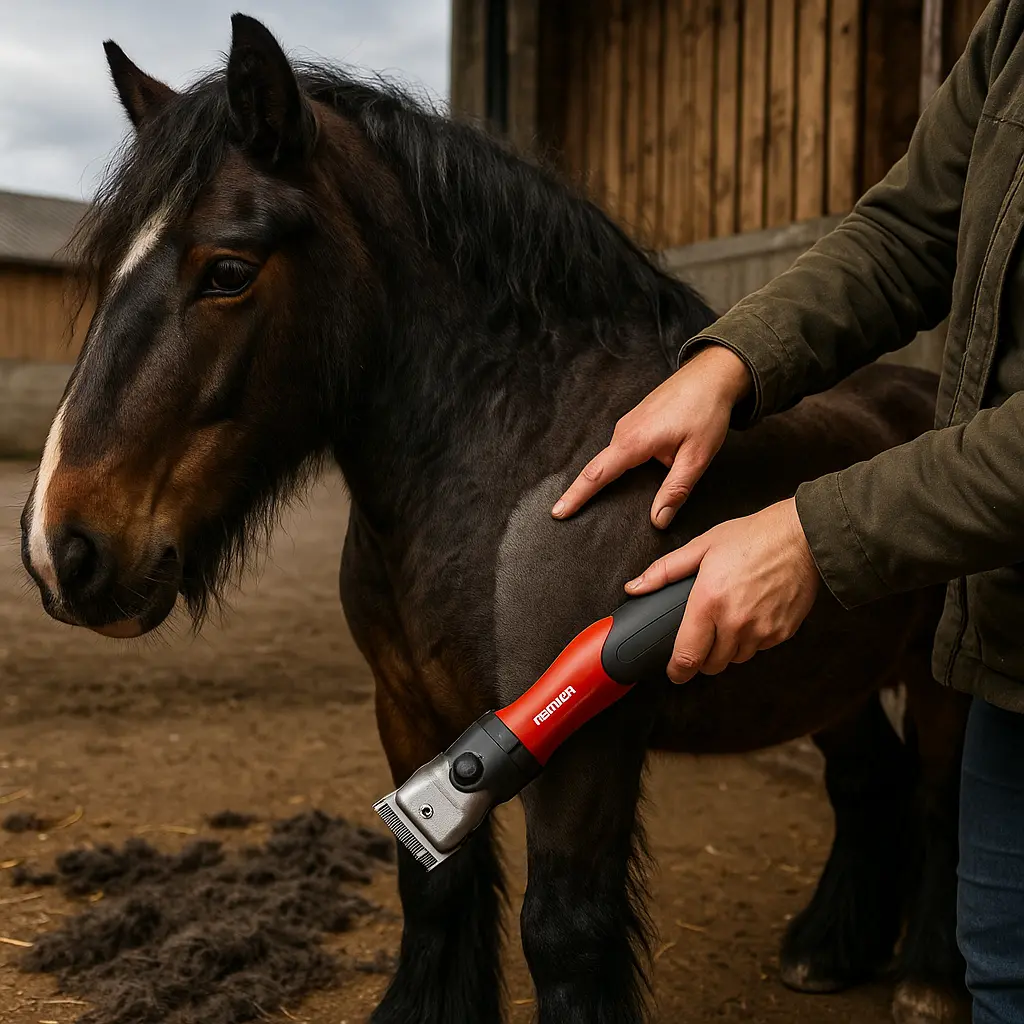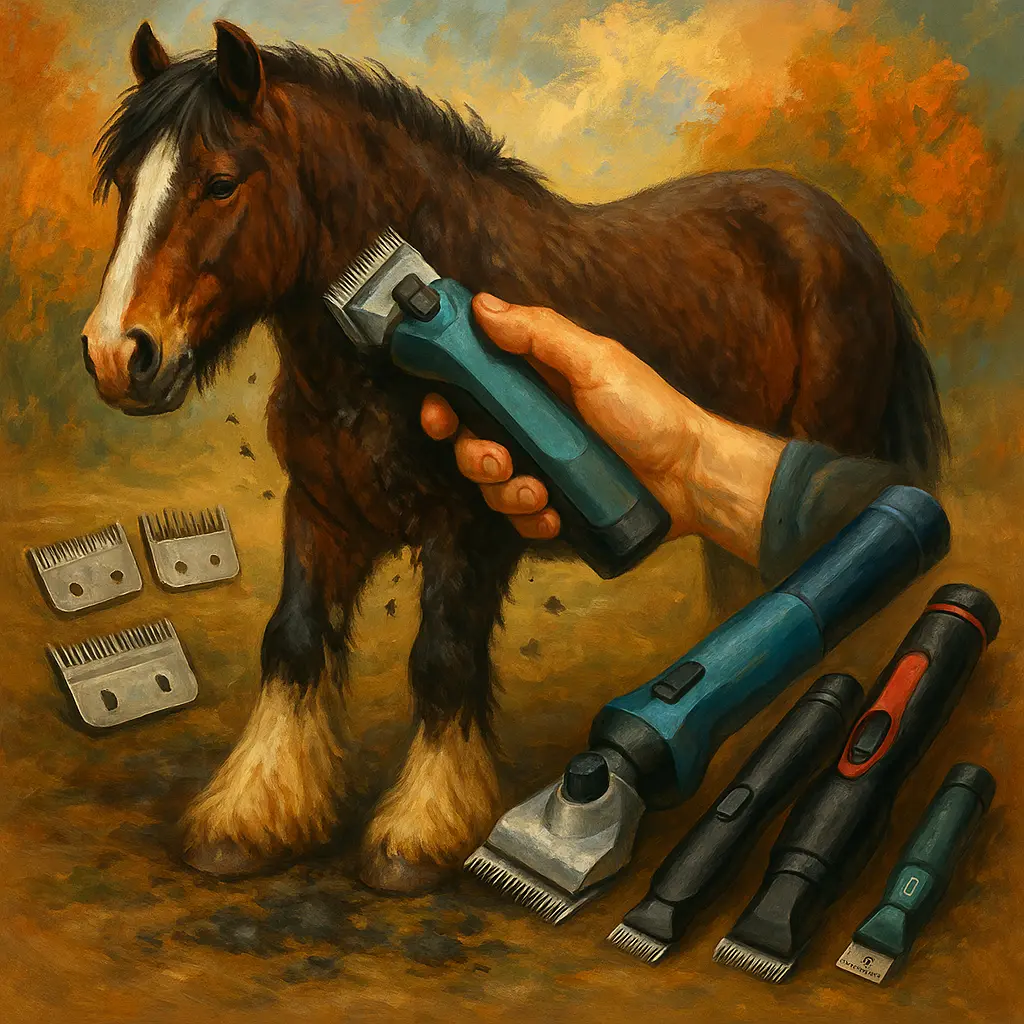
Got a hairy native who laughs at lightweight trimmers? If you own a cob, you need clippers that stay cool, keep cutting, and don’t bog down in woolly winter coats and heavy feathering.
Key takeaway: For UK cobs, choose a medium or heavy-duty cordless clipper with long battery life and the right A2 blade set (coarse to start, medium to finish) to power through thick coats cleanly and safely.
What clippers does a cob need?
Cobs need medium or heavy-duty clippers to cut through thick, woolly coats and heavy feathering without slowing or overheating. Cordless models with strong motors and long runtimes are ideal for UK yards where sockets are scarce.
Native cobs grow dense, rain-shedding coats for our damp autumn and winter, plus substantial manes and leg feather. That means you need more torque than an A5-style lightweight can offer for body clipping. As our buyer’s guide for native cobs states:
“The Ideal Clipper Should Be: Powerful enough to cut through thick, woolly coats and heavy feathering without bogging down or overheating.” — Just Horse Riders
Professional clipping experts mirror this. Niki Baxter, a recognised clipper specialist who works with Liveryman, describes her medium-heavy duty clippers as:
“The strongest of my clippers – able to get through the thickest of Cushing coats... I primarily use these to clip the body of the horse – neck, barrel and hind quarters.” — Niki Baxter, professional clipper expert
In short: pick medium/heavy duty for the body; keep lighter A5 units for heads and fiddly bits. Cordless makes sense for winter yard setups, but you must check runtime and cooling features.
The best cordless clippers for cobs
The top cordless choices for cobs are the Lister Eclipse (£419.99), Heiniger Xplorer (£406.20), Heiniger Opal (£359.99), Clipperman Dragon (£317.46), and the budget-friendly Masterclip HD Roamer.
Here’s how they stack up for thick coats, feather, and long UK winter sessions:
- Lister Eclipse (RRP £419.99) — Medium-duty cordless with a brushless DC motor for reliable torque. It includes a thermal shutdown to protect against overheating and comes with A2 blades (3mm cut). Ideal if you’ve had clippers get hot on cobs in the past.
-
Heiniger Xplorer (RRP £406.20) — Medium-duty, built for challenging coats with quieter operation and a sealed unit to keep hair and dirt out. A great pick for sensitive types and winter yard conditions where grit and damp are common. Forum feedback is strong:
“I love my Heineger x-plorers. They make an easy job of my cobs legs and mane.” — Horse & Hound Forum user
- Heiniger Opal (RRP £359.99) — Massive 240-minute runtime with a 60-minute charge and two batteries. Two speed settings help tackle thicker sections, and it includes a #10 blade out of the box for close work. If you clip multiple horses or do full clips on a time limit, this runtime is a standout.
- Clipperman Dragon (RRP £317.46) — Supplied with two rechargeable batteries, each around 2 hours of runtime (with longer options available). A strong value pick if you clip several horses in a day and want uninterrupted swapping between batteries.
-
Masterclip HD Roamer — A budget-conscious medium-duty option with 120 minutes per battery, about 1,200g weight, a 2-year warranty, and A2 1.5mm fine cut blades included. Users love the punch-for-price:
But note some report motor heat if tension and oiling aren’t spot-on; keep maintenance tight.“Masterclip. Considerably cheaper than other makes and I find them at least as good if not better. Mine make mincemeat of really thick, dense cob leg hair, and even went through his body hair when it was damp.” — “Horsekaren”, Well-Known Member, Horse & Hound Forum
All the above are proven performers on cobs’ thicker coats. Choose based on your priorities: maximum cooling and protection (Lister Eclipse), quieter sealed design (Xplorer), longest runtime (Opal), battery swapping (Dragon), or budget grunt (Masterclip).
Which blades do I need for a cob?
Start with A2 coarse on super thick or greasy coats, then finish with A2 medium (2.5mm) for a tidy, everyday clip; avoid fine A2 (1.5mm) on pink skin to reduce sunburn risk.
A2 blades suit most medium/heavy-duty clippers used for body work on cobs. The key is pairing cut length to coat density and skin sensitivity:
- A2 coarse — Best first pass on dense, greasy, or damp winter coats to avoid snagging and heat build-up.
- A2 medium (2.5mm) — Your go-to finishing blade for most horses, giving a neat, even coat without going too close.
- A2 fine (1.5mm) — Only for finer coats and clean, dry conditions; do not use on pink skin where sun exposure can irritate.
For legs and heavy feather, opt for a shorter handpiece for access around knees and fetlocks. Lightweight A5-style clippers are useful for heads and lower legs, but not for the thickest cob body coats. The Heiniger Xplorer and Opal combo is particularly versatile: Xplorer for body work and Opal’s supplied #10 blade for close, careful detail where needed.
Quick tip: Always clip a clean, dry horse where possible. Dirt blunts blades and creates friction – the fastest way to make even premium clippers run hot.
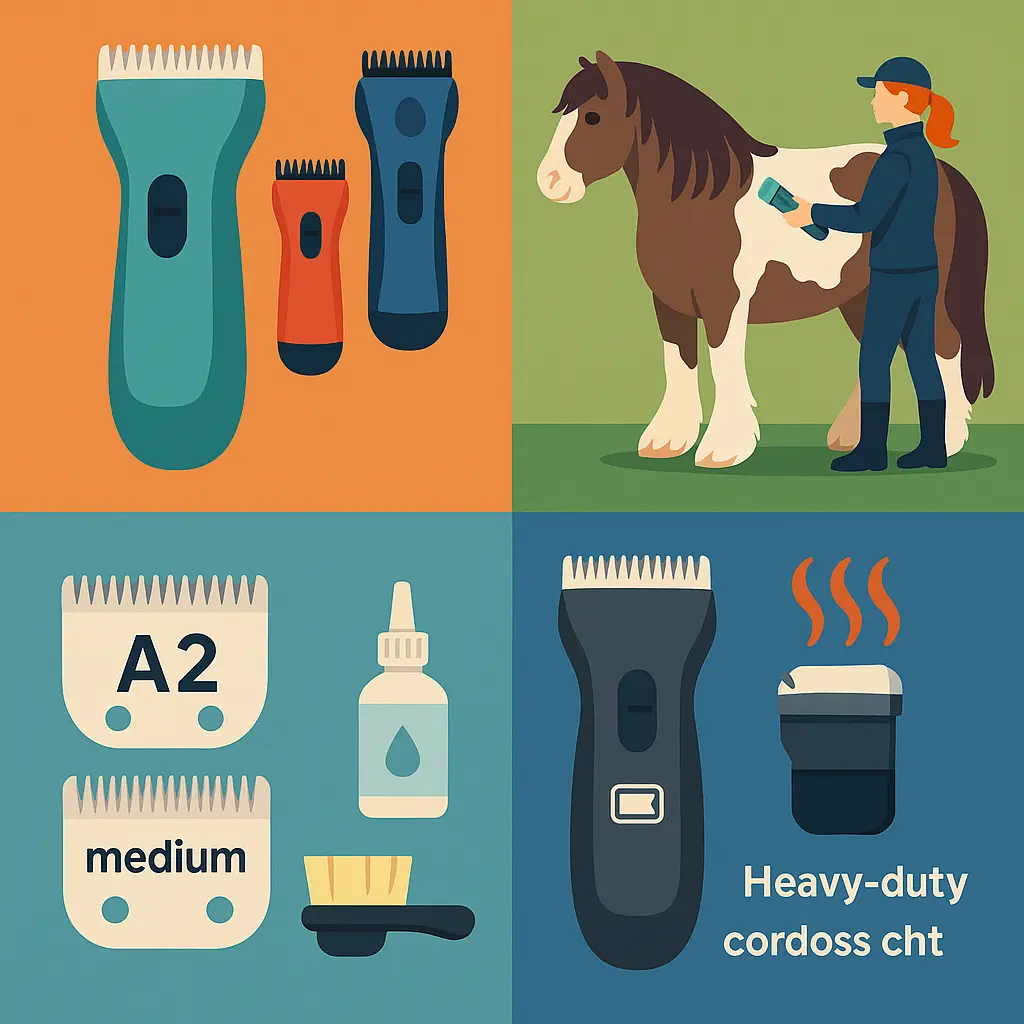
Cordless vs corded for UK yards
Cordless clippers give you freedom around stable blocks that lack mains sockets and reduce trip hazards; corded units can be cheaper and run indefinitely for heavy commercial use.
In UK livery yards, cordless makes life easier in winter when you’re working around wet floors, dark evenings, and limited plug access. The trade-off is planning your battery runtime. As a guide, premium cordless units now deliver 120–240 minutes per battery, easily covering a full cob clip with spares ready for back-to-back horses.
If you clip professionally all day, corded may still be cost-effective. For most cob owners, modern cordless models provide the right mix of power, runtime, and safety around fidgety horses in tight wash bays.
How do I stop clippers overheating on thick coats?
Oil and clean every few minutes, set the correct blade tension, and pick clippers with thermal protection or sealed bodies to manage heat and debris.
Overheating happens when friction and load climb: blades get dry, coat is greasy, or tension is overtight. Some users report heat over the motor housing on budget models even with care, so choose smart features where you can. The Lister Eclipse includes thermal shutdown to protect the motor, while the Heiniger Xplorer has a sealed unit that keeps hair and grime out, reducing wear and noise.
Routine maintenance is non-negotiable:
- Oil little and often — Every few minutes, and immediately if you notice pitch changing or blades warming.
- Brush out hair — Clear vents and blades frequently. Keep a proper cleaning brush in your grooming kit.
- Check tension — Too tight = heat and premature wear; too loose = poor cut and snagging.
- Swap hot blades — Rotate between two sets so one cools while the other cuts.
Pro tip: Build a dedicated cleaning and oiling station in your clipping area. A bottle of clipper oil, a small towel, a vent brush, and spare blades make all the difference. Stock up via your grooming essentials so you’re never caught short mid-clip.
What battery setup do I need for multiple cobs?
Plan for 120–240 minutes per battery, keep two on rotation, and choose models supplied with spares to clip back-to-back horses without waiting.
You’ve got excellent choices here. The Heiniger Opal delivers a class-leading 240 minutes on a 60-minute charge across two batteries, which is ample for full clips on cobs. The Clipperman Dragon ships with two batteries at roughly 2 hours each, and additional batteries are available if you’re running a yard day. The Masterclip HD Roamer offers about 120 minutes per battery, so plan two or three batteries if you’re doing several horses in one session.
Pro tip: Label batteries by number and cycle them evenly to maximise lifespan. Store them at room temperature and top up charge the night before a big clipping day.
When should I clip a cob in the UK, and what gear pairs best?
Clip cobs in October–November before heavy rugs go on, then maintain monthly through winter as coats regrow in the damp UK climate. Pair fresh clips with well-fitting turnout and stable rugs to avoid chills and rubs.
Our wetter autumns cue native types to lay down a dense, water-shedding coat. If your cob is in regular work, clipping early stops sweat-soaked sessions and rug rubs. Many UK cob owners re-clip every 4–6 weeks through winter for comfort and hygiene, especially where heavy feather traps mud.
Match your clip with sensible rugging:
- Turnout: After clipping, choose reliable, breathable winter turnout rugs for field time. Look for strong outers and smooth linings to minimise rubs.
- Stable: Use layered stable rugs and adjust with temperature swings to keep your cob warm without sweating.
- Brands to trust: Robust, weatherproof designs from WeatherBeeta cope brilliantly with British mud and rain.
Don’t forget winter visibility for late-afternoon hacks. A clipped coat can dry faster, but short daylight demands care: add hi‑vis for riders to keep you seen on lanes and bridleways.
Pro tip: After removing heavy feather, protect freshly clipped legs in muddy fields with suitable leg wear and monitor for irritation. If your cob is prone to knocking, consider horse boots and bandages for turnout or schooling until the skin settles.
A step-by-step clipping plan for cob owners
Here’s a proven, cob-focused sequence that keeps the job efficient and the finish clean.
- Wash and dry a day before (or this morning if sun and stables allow). Dirt and grease blunt blades quickly on cobs.
- Set up your station: clippers, spare blades (coarse and medium), oil, cleaning brush, towel, batteries charged and labelled, and a helper if needed. Check yard safety guidance and follow common-sense protocols endorsed by UK bodies like the BHS.
- Start with coarse A2 for the first pass on the body if the coat is heavy or greasy. Keep your strokes long and even, working with the coat.
- Switch to A2 medium (2.5mm) to finish the body for a cleaner line and more even result.
- Short handpiece for legs and detail: Work carefully around knees, heels, and armpits. Use the Heiniger Opal’s supplied #10 blade for precise, close areas if needed.
- Blade rotation and cooling: Swap blades the moment they warm; oil and brush every few minutes.
- Final tidy: Blend lines, check symmetry, and brush off loose hair. Pop on a breathable rug straight after if it’s chilly.
- Clean down: Brush vents, wipe the body, disinfect blades, lightly oil for storage, and put batteries on charge.
Quick tip: If you’re new to clipping, start with a trace or blanket clip before attempting a full clip on a very woolly cob. You can always take more off later as work increases and the weather closes in.
At Just Horse Riders, we recommend planning your clipping kit before the first big temperature drop. If you need to balance the budget, check the seasonal deals in our Secret Tack Room clearance for practical winter upgrades.
FAQs
Will cordless clippers overheat on thick cob coats?
They can if blades are dry, tension is too tight, or the motor is working against grease and dirt. Choose features that help manage heat (e.g., the Lister Eclipse has a thermal shutdown), keep the horse clean and dry, and oil/clean every few minutes. Rotating two blade sets is the simplest way to keep temperatures down.
What blades should I use for my cob’s legs and body?
Start with A2 coarse on heavy, greasy coats to remove bulk, then finish the body with A2 medium (2.5mm). Avoid fine (1.5mm) on pink skin. For intricate leg areas, a shorter handpiece and a close blade like a #10 can help tidy heels and pasterns carefully.
How long will the batteries last for a full cob clip?
Expect 120–240 minutes per battery. For example, the Masterclip HD Roamer delivers around 120 minutes per battery; Heiniger Opal runs up to 240 minutes with a 60-minute recharge; Clipperman Dragon offers about two hours per battery and includes two as standard.
Can I use lightweight clippers for a cob’s body?
No—keep lightweight A5 clippers for heads and lower legs. For a cob’s body, use medium or heavy-duty clippers designed to cut dense, coarse hair without bogging down or overheating.
When should I clip my cob in the UK?
Most owners start in October–November, then maintain every 4–6 weeks through winter. Clipping before heavy rugging helps prevent sweat and rubs, especially in the UK’s damp, changeable conditions.
Cordless or corded—which is better for me?
If you’re clipping on a typical UK yard with limited sockets and winter mud, go cordless and plan your battery rotation. If you’re clipping all day, every day, corded can be more economical—though many modern cordless kits now comfortably cover multiple full clips with spare batteries.
How do I keep a newly clipped cob comfortable?
Rug appropriately for the temperature with breathable turnout or stable rugs, avoid over-rugging, and check for rubs daily. Keep legs clean post-feather removal and use protective boots or bandages if your cob is prone to knocks while the skin acclimatises.