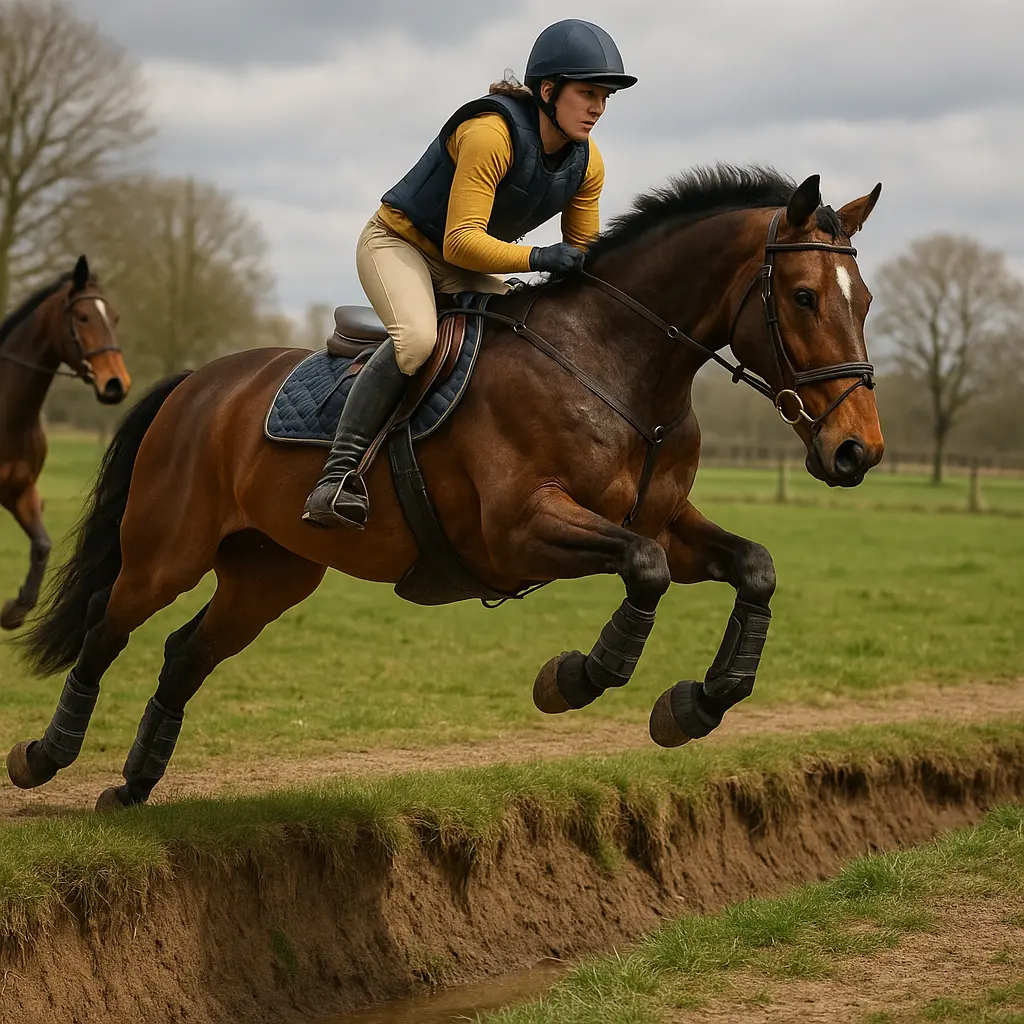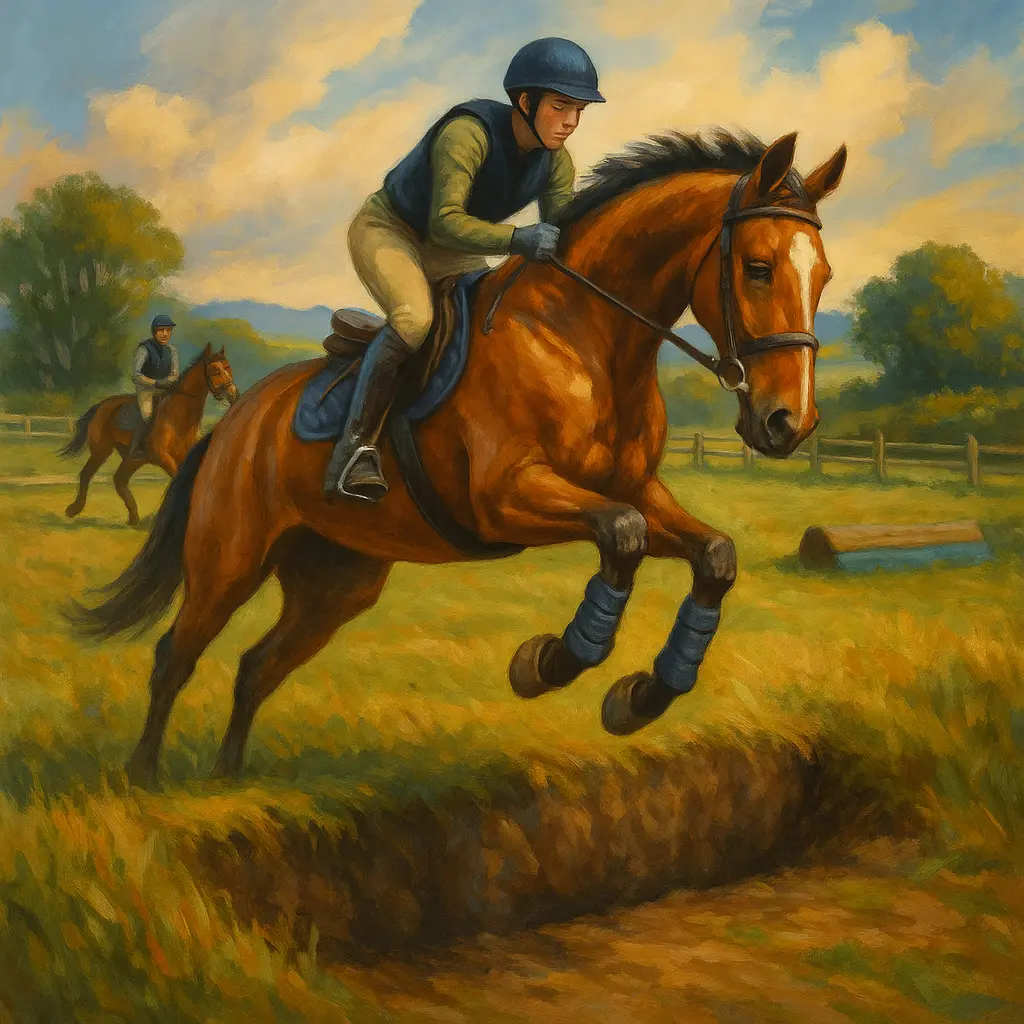
Ditches are where courage meets training in cross-country. Get them right, and you unlock smooth, confidence-building rounds that set you up for every other technical question on course.
Main takeaway: Lasting ditch confidence comes from positive, progressive exposure at the right frequency (once-weekly focused schooling), guided by calm riding and good coaching — not from speed, height or punishment.
What builds ditch confidence fastest?
Positive, progressive exposure to small ditches in trot — always finishing on a good experience — builds the fastest, most reliable confidence. That means starting tiny, removing pressure, and stacking easy wins so your horse learns ditches are safe, routine and rideable.
Olympic eventer Tina Cook is unequivocal that bravery is trained through good experiences:
“Cross-country is, at its heart, a test of your horse’s bravery. With this in mind, your main goal in training is to give him positive experiences all the time – this is key to instilling courage and acceptance.” — Tina Cook, Horse & Rider UK
Confidence is anchored in prior non-negative experiences. A major review on the psychology of equine performance confirms that too much pressure, too fast, can flip a training task from “interesting” to “aversive,” and that confidence is built on a history of non-threatening exposures to the same task. In ditch terms, that’s quiet trots over shallow trenches before you ever think about a coffin combination or speed on approach. See the review at the National Institutes of Health: PMC3514365.
Varied experience also matters. The British Horse Society (BHS) advises riders work with a range of suitable horses to build recognition of individual differences — a useful principle in cross-country schooling because some horses are naturally bold, while others need more repetitions to understand the question. Read the BHS Coach Handbook guidance: BHS Coach Handbook.
Quick tip: Fit protective leg gear for every schooling session so an honest knock never turns into a sore leg and a negative memory. Explore supportive, breathable options in our horse boots & bandages collection.
How often should you school ditches?
Once-weekly targeted sessions beat frequent drilling for building confidence and learning with negative reinforcement. More is not better — quality, calm exposures spaced out for processing delivers stronger results and better motivation.
The equine psychology review above reports that, for learning that relies on release of pressure (negative reinforcement), horses actually learn more effectively at a once-weekly rate than when trained twice weekly or daily. In practice, that means scheduling one ditch-specific school per week and resisting the urge to “fix it” by repeating the same exercise three days in a row. See the evidence: PMC3514365.
In the UK, plan around ground conditions and welfare. British Riding Clubs, under the BHS umbrella, emphasise that welfare comes first in training and competition — so skip sessions when the ditch is waterlogged, edges are crumbling, or frost makes footing unpredictable. Bank the win from last week and keep your horse mentally fresh.
At Just Horse Riders, we recommend a weekly ditch school supported by two to three flatwork and pole sessions that build rhythm and adjustability, plus hacking for balance and cardio. Keep your own safety front and centre with a snug, up-to-standard hat from our riding helmets collection.
Exactly how to introduce your horse to ditches
Begin with a shallow, narrow trench and trot over in a relaxed rhythm, using a lead horse if needed and removing height, speed and pressure from the question. Your goal is quiet acceptance, not power.
Follow this step-by-step progression, adapted from Tina Cook’s proven approach:
- Pick the smallest, best-presented ditch you can find — shallow sides, firm take-off and landing.
- Walk up calmly to look, then ride a steady rising trot with your hands soft and neck long. Allow a little look, keep straight, and ride forward.
- If confidence wobbles, use a reassuring lead from a seasoned horse. The point is a positive experience, not pride.
- In combinations, trot past the other elements first so your horse sees them and won’t spook away from the line, then pop the ditch on its own before linking anything together.
- Repeat a few easy, similar efforts and stop while it’s good. Always finish with a simple fence your horse knows well.
As Tina Cook puts it:
“If he’s confident, he’ll jump for you, if he’s not, then he won’t – it’s as simple as that. Always end your sessions on a positive note, even if this means going back to basics.” — Tina Cook, Horse & Rider UK
Safety first: even at tiny ditches, protect legs and give yourself the best chance with secure kit. Choose supportive fetlock/tendon boots or all-round XC boots from our horse boots & bandages and ride in grippy, comfortable bottoms from our women’s jodhpurs & breeches range to keep your lower leg stable over uneven ground.
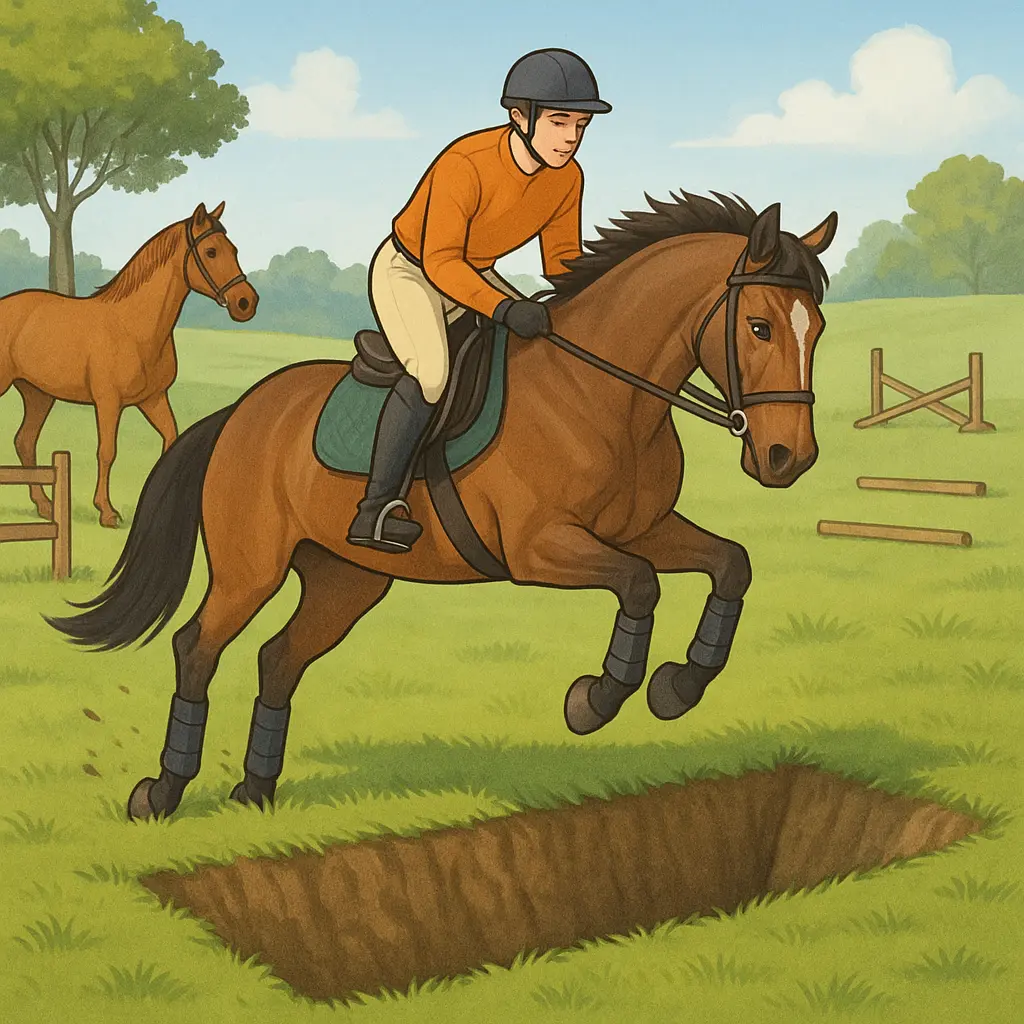
When to build the ‘coffin canter’
Develop a condensed, bouncy ‘coffin canter’ only after your horse steps over small ditches quietly in trot. Compression comes second; acceptance comes first.
The coffin canter teaches your horse to stay quick in the hindleg, shorten the step, and wait without anxiety. Build it away from ditches first:
- On the flat, ride frequent transitions within the pace — five to seven canter strides collected, then allow forward, repeat.
- Use pole lines set on slightly short distances to encourage sit and bounce without adding speed.
- Introduce small rails-on-the-ground before and after a tiny “ditch” (a ground line with a shallow tray) so the horse reads “down-up” in balance.
Only then, bring the feel to a real ditch. Approach in that condensed canter, stay straight, and keep the contact elastic. If the balance tips forward, go back to trot and re-establish the quiet step-over.
Comfort underpins confidence. An anatomical bridle that reduces facial pressure can help sensitive horses stay soft into the contact when you ask for shorter steps. For quality training aids and soft, horse-friendly kit, explore trusted brands like LeMieux, known for comfortable, performance-focused designs.
Matching horse, rider and coach for confidence
Pair novice riders with experienced horses and work with a BHS Accredited Professional Coach to pace progress and prevent setbacks. The right match and guidance protect confidence for both of you.
The BHS advises working with a variety of suitable horses to build judgment and adaptability, and its Stage 4 coaching materials emphasise improving ability and confidence with a clear understanding of how horses react to tasks. That directly applies to cross-country schooling — particularly with ditches, which are visual and can trigger cautious horses. See the BHS resources: Coach Handbook and Stage 4 Trainer Guide.
Working with an Accredited Professional Coach helps you set the right level: an experienced ‘nanny’ horse for your first ditch days, then a steady progression to slightly wider, then slightly deeper, before you ever meet a ditch in a combination. Keep yourself visible and safe en route to schooling venues with high-visibility essentials from our rider hi-vis collection.
Pro tip: Your position is part of the confidence equation. A balanced lower leg and soft, following hand make questions feel easy. If your kit is letting you slip, upgrade to supportive, grippy breeches in our women’s jodhpurs & breeches and make sure your hat is current from our riding helmets.
Seasonal UK plan: winter to event season
Use hacking, polework and groundwork through wet UK winters, then book cross-country schooling days as the ground improves in spring. This keeps confidence growing year-round without over-facing in poor footing.
In late autumn and winter, cross-country venues can be muddy or closed, but you can still prepare superbly:
- Hack with reliable company to build balance, proprioception and mental freshness — ideal for young or green horses.
- Bank weekly polework to groove rhythm and adjustability that will become your coffin canter later.
- Introduce ditch “ideas” on the ground — a shallow trench, water tray or safe tarpaulin gap — using a lungeing cavesson for clear, pressure-free communication before you ever sit on.
Keep your horse warm and comfortable so each session ends as a good memory. In damp, chilly weather, rug wisely after work: breathable turnout layers for cool-down outdoors and cosy stable layers inside. Browse our dependable turnout rugs and snug stable rugs, including weatherproof designs from trusted brands like WeatherBeeta.
As venues open in spring, plan one ditch-focused school per week, vary the sites (to avoid “pattern learning”), and keep each question a fraction easier than you think you can do — finishing on a lock-on, ears-pricked effort every time.

Rewards, corrections and what to do after a run-out
Reward every honest try, keep corrections minimal and unemotional, and immediately simplify the task after any run-out. Fear-based reactions erode confidence; calm clarity builds it.
The evidence base supports combining positive reinforcement (praise, wither rubs, a treat after the line) with fair, well-timed negative reinforcement (release of pressure at the right moment) for the most efficient learning and the least behavioural fallout during demanding tasks. See the review: PMC3514365.
If your horse runs out, widen your line, bring it back to trot, use a lead if available, and pop an easier version. Then finish with something your horse knows cold so the session ends on a win. Keep the tone like this for every schooling day, echoing Tina Cook’s advice to always end positively.
For positive reinforcement that counts, carry a pocket-friendly reward and make your timing precise. Our horse treats are handy for a pat-then-treat routine the moment you land from a good effort.
Kit that quietly boosts ditch confidence
Comfort, protection and clear communication reduce anxiety at ditches, so fit protective legwear, choose pressure-relieving tack, and use simple training tools to build adjustability.
- Protective legwear: Save legs from knocks and scrapes so a small mistake doesn’t sour confidence. Shop breathable, supportive options in our horse boots & bandages.
- Secure rider kit: A stable lower leg and steady upper body help your horse trust you. Choose grippy, supportive bottoms in our women’s jodhpurs & breeches.
- Head protection: Cross-country schooling is variable terrain; wear a current, well-fitted hat from our riding helmets.
- Groundwork aids: A well-fitted lungeing cavesson lets you introduce “gap” concepts safely on the ground before riding them.
- Comfort-first bridlework: Anatomical headpieces and soft nosebands minimise facial pressure, helping sensitive horses accept a shorter canter without worry.
- Seasonal care: Keep post-work routines warm and predictable with breathable layers from our turnout rugs and stable rugs to end each session comfortably.
- Visibility and safety: For winter hacks and schooling approaches in low light, add essentials from our hi-vis collection.
At Just Horse Riders, we stock trusted brands and rider favourites to keep horses comfortable and riders confident. If you’re upgrading on a budget, check what’s new in our Secret Tack Room clearance for seasonal savings.
Conclusion: your next steps
Build ditch confidence the proven way: one quiet trot step at a time, once a week, with a coach who keeps progress steady and your horse’s experience positive. Protect legs, ride in balance, and always finish on a win. Book a schooling slot this month, set your weekly plan, and kit up with safety and comfort in mind — your best cross-country rounds will follow.
FAQs
Can you train a horse to specifically “look” at ditches?
No — you can’t cue “look,” but you can create acceptance with progressive exposure: start with tiny ditches in a steady trot, use a lead if useful, and build up calmly. See Tina Cook’s practical approach in Horse & Rider UK.
Why does my horse refuse ditches but jumps other fences?
Usually low confidence from a negative or rushed introduction. The fix is to slow down, remove height and speed, use steady trots and simple versions, and end every session on a positive note. Evidence on confidence and training rate: PMC3514365.
How often should I school cross-country to build confidence?
Once a week for ditch-specific work, supported by flatwork, polework and hacking on other days. Research shows once-weekly sessions are more effective than multiple sessions per week for learning with negative reinforcement: PMC3514365.
Should I reprimand a horse for a run-out at a ditch?
Avoid punitive reactions. Reward tries, simplify immediately, and aim for a quiet success. Fear-based corrections reduce willingness to approach the question next time.
What’s key for young horses approaching ditches?
Rhythm and predictability first: use polework to build balance, hack with reliable company, and choose the smallest, best-presented ditch to introduce in trot.
When do I teach the coffin canter?
After your horse is comfortable stepping over small ditches quietly. Build the condensed, bouncy canter on the flat and with poles before bringing it to a real ditch.
Which kit helps most for ditch schooling?
Protective legwear for your horse, a current, well-fitted riding hat, and comfortable, grippy breeches. Start with our horse boots & bandages and riding helmets collections.