Winter can be brilliant for hacking on crisp mornings and productive schooling in quieter arenas — but it also piles on real management challenges. From frozen troughs and muddy gateways to stabling changes and skin flare-ups, a smart plan keeps your horse healthy and your yard running safely.
Key takeaway: In UK winters, prevent problems before they start — keep water flowing (20–70 litres/day), change routines gradually over 10–14 days, maintain daily turnout/exercise, grit icy surfaces, and check skin, hooves and rugs every day.
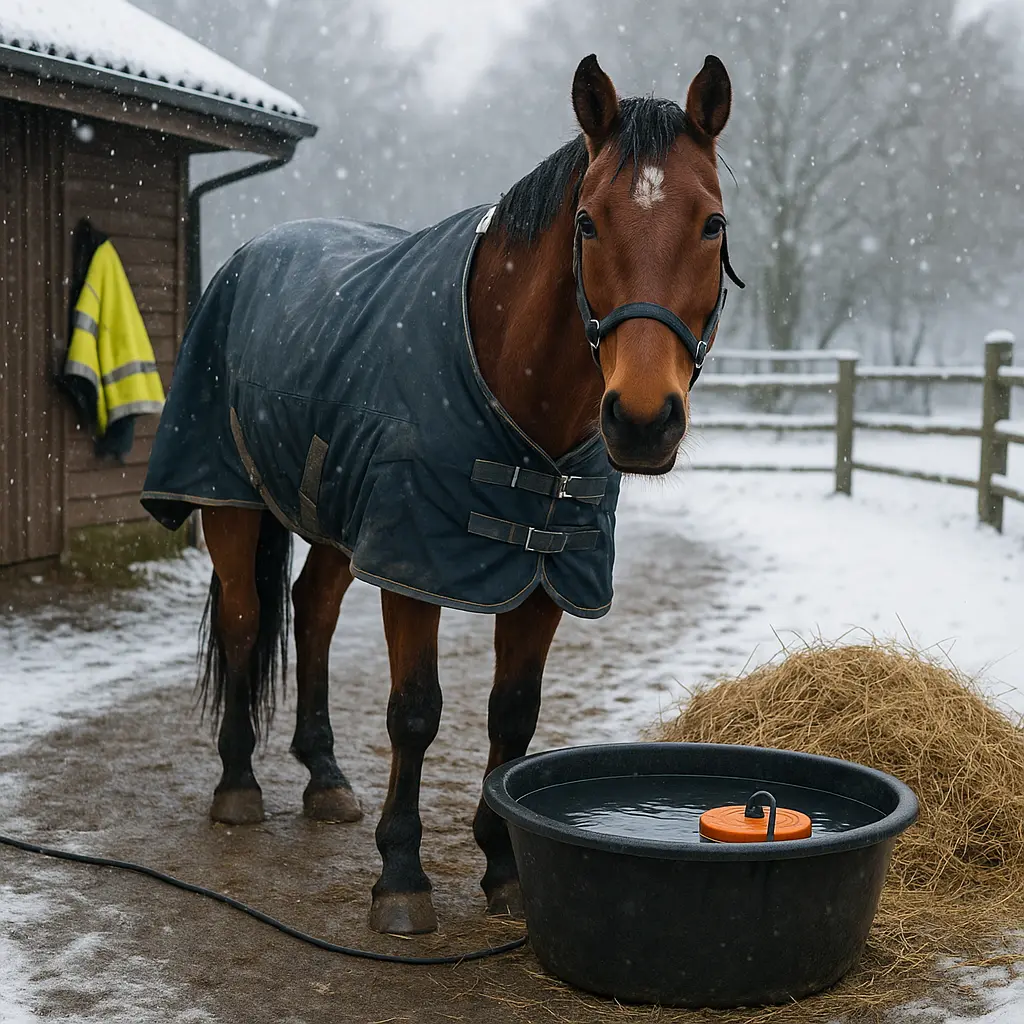
Keep your horse drinking in winter
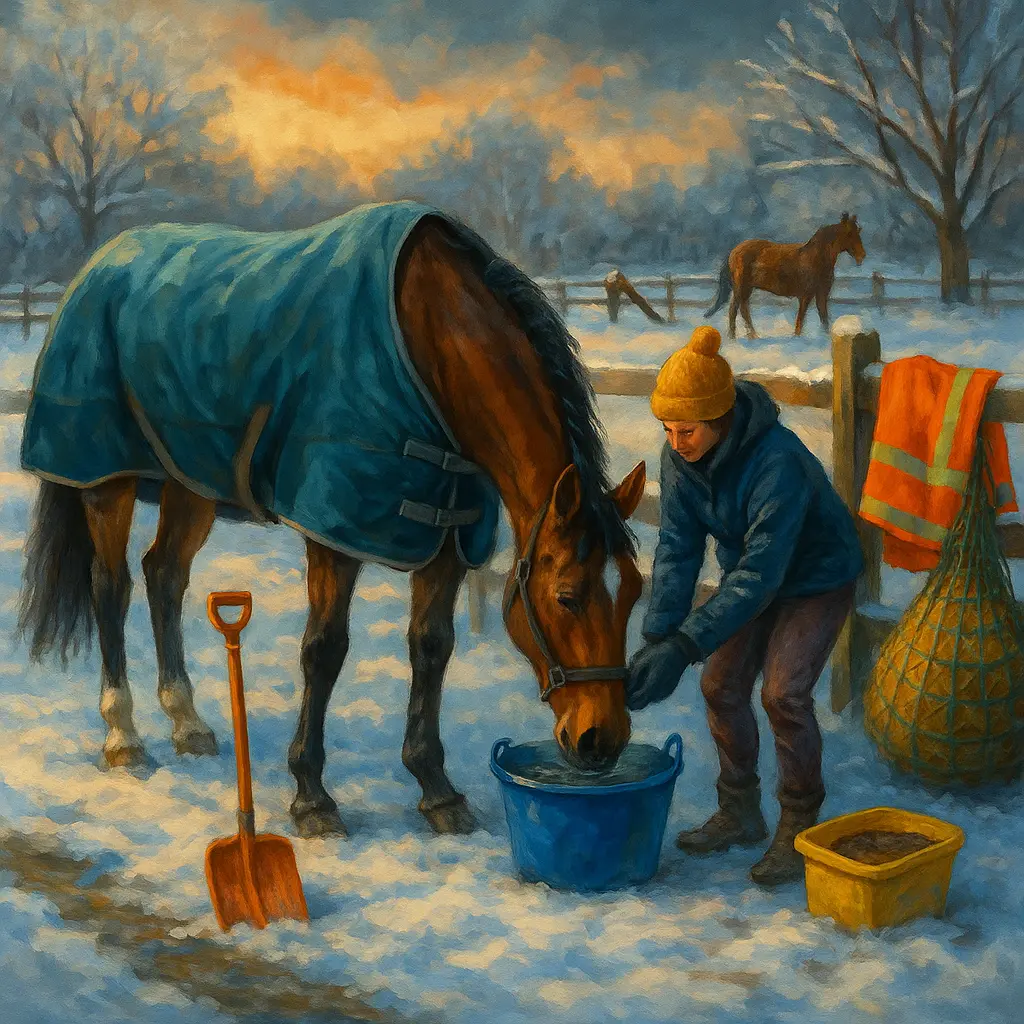
UK horses need 20–70 litres of fresh water a day in winter (about 10 litres per 100 kg bodyweight), and you must keep supplies unfrozen and appealing to offset cold-weather drinking dips and reduce colic risk. Check troughs and buckets at least twice daily, breaking ice and offering slightly warmed water.
The RSPCA highlights that horses often drink less in cold weather, increasing the risk of impaction colic if fibre intake rises and movement drops. Aim for water around 7–18°C (45–65°F) to encourage drinking; using insulated or heated buckets helps keep it in that sweet spot. If your horse is fussy, float a sliced apple to pique interest or add a small amount of salt if appropriate for your horse — both simple tricks can nudge intake upwards (RSPCA guidance).
Quick tips for winter hydration:
- Site troughs out of prevailing wind and sun-shade freeze-thaw cycles to reduce ice formation.
- Offer tepid water after exercise and before hay to support gut motility.
- Check automatic drinkers daily — blockages and frozen valves are common.
At Just Horse Riders, we recommend building “water checks” into your morning and evening routines, just like rug checks and hay nets. A few minutes twice a day pays back in gut health all winter.
Transition to winter stabling safely
Make the summer-to-winter change over 10–14 days, gradually increasing forage and reducing grazing so the hindgut adapts and colic risk drops. Keep some daily outdoor time throughout the transition to support gut motility and mental wellbeing.
The British Horse Society (BHS) is clear on the timeline for yard routines that move from summer turnout to winter stabling:
"Turning horses out all summer and then housing them at times during the winter is common practice at many yards. This adjustment... should be completed gradually over 10–14 days to help reduce the risk of colic."
Shift by swapping out a little grass time for hay each day until your target winter routine is reached, and avoid sudden jumps in forage type or quantity. Alongside, keep movement going (see next section) and maintain ready access to clean water. For stabled periods, plan your rug, forage and stable management in tandem — for example, pairing appropriate hay with the right rug weight and good ventilation to avoid sweating and equine asthma flare-ups (BHS winter care).
Keep turnout and exercise daily
Maintain daily turnout or purposeful exercise in winter because reduced movement and increased stabling are key risk factors for colic. When riding isn’t safe outdoors, swap in-hand walking, groundwork or indoor schooling to keep your horse moving.
Equine experts at Scotland’s Rural College underline the point:
"Lack of exercise and increased stabling are risk factors for colic. Maintain turnout/regular exercise daily wherever possible."
When the going is icy or the ground is hard-frozen, don’t ride — the BHS advises against it to avoid slips and concussion. Instead:
- Walk in hand around safe, gritted routes for 20–30 minutes.
- Do simple polework or long-reining in an indoor or suitable surface.
- Make the most of good weather windows for proper hacks, using hi-viz for low-visibility hacks on short UK days.
Comfort for you matters too on cold, damp mornings. Warm, grippy horse riding boots and weatherproof jodhpurs or breeches help you keep consistent, safe routines when the weather turns.
Make your yard winter-safe
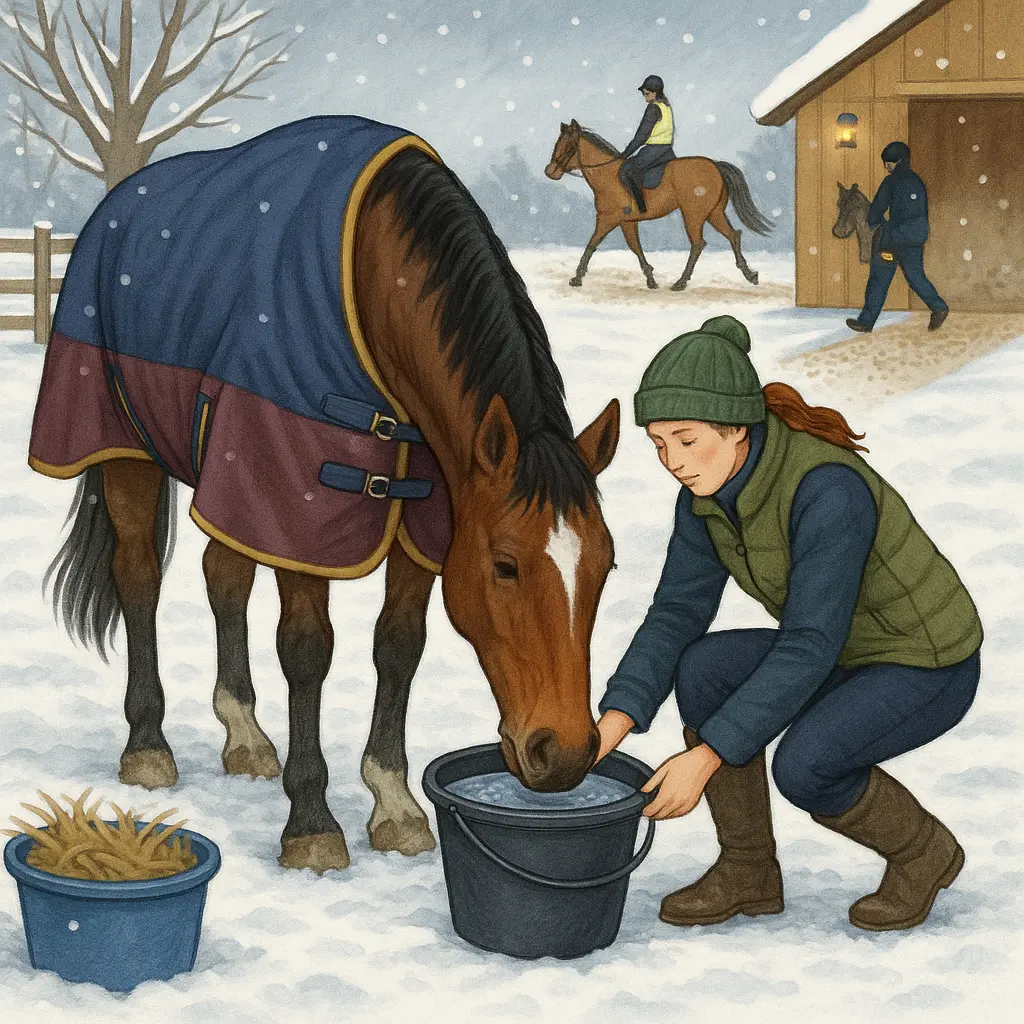
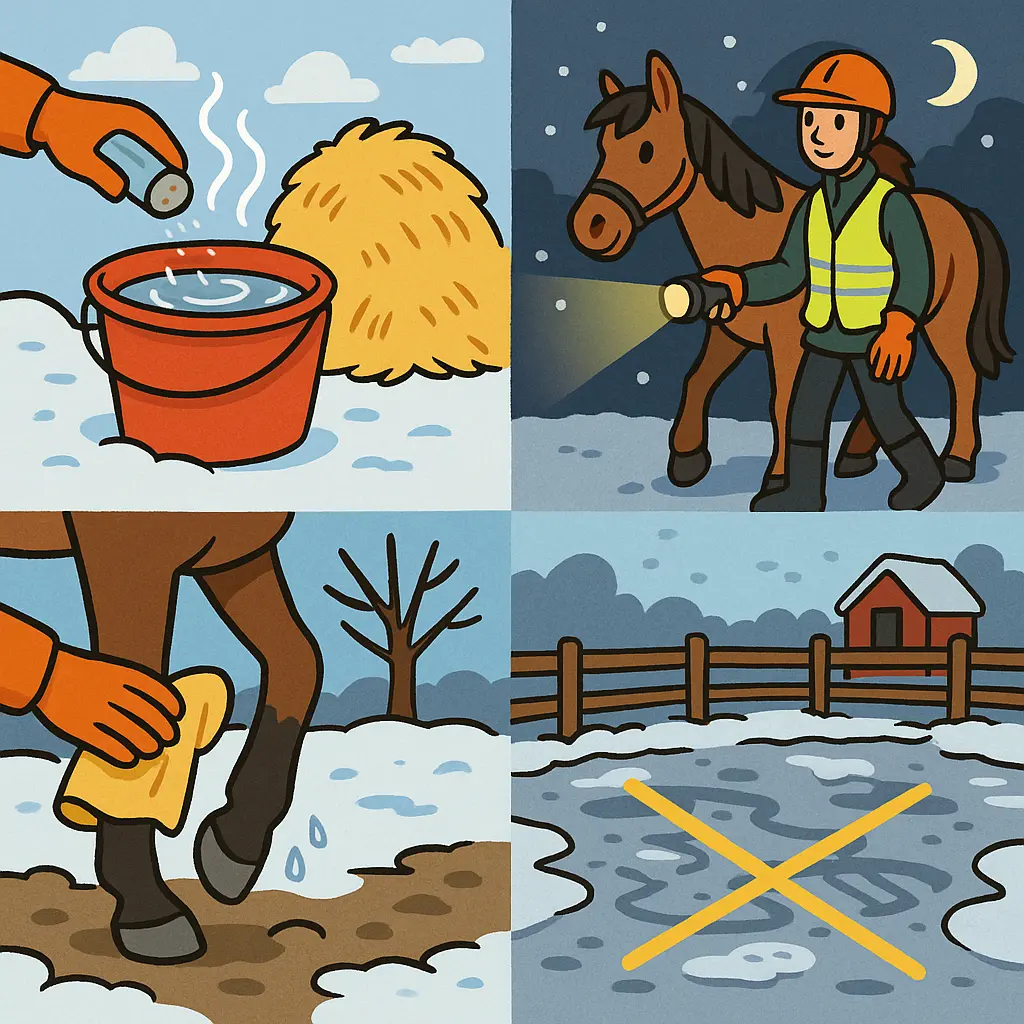
Grit concrete, gateways and walkways in frost, and do not ride on icy or hard-frozen ground to prevent slips and concussion. Plan safe routes and yard zones before the cold snap hits.
The BHS reminds owners to tackle slip risks proactively:
"Gritting concrete areas around your yard will prevent you and your horse from slipping. Don’t ride out in slippery conditions or when visibility is poor."
Practical yard safety wins:
- Grit or salt concrete aprons, stable fronts and field gateways before overnight frosts.
- Lay hardcore in high-traffic gateways to reduce mud-suction and abscess risk.
- Keep a head torch, spare lead ropes and a yard-first-aid kit ready by the door.
- Use lights and high-visibility gear if you must cross roads at dawn/dusk.
- Wear a secure, up-to-standard riding helmet for any mounted work and a sturdy pair of yard and riding boots with good grip.
If snow arrives, turnout can still be fine for sensible horses when it isn’t too deep, provided they have shelter and forage; avoid ice under snow and continue to prioritise water access (BHS advice).
Stay ahead of mud fever and rain scald
Check legs and skin daily for scabs, cracks, heat or tenderness, rotate turnout onto better-drained paddocks, and provide dry shelter to prevent mud fever and rain scald. Avoid over-rugging, and make sure rugs are dry, well-fitting and checked every day.
Wet, muddy conditions soften skin and invite bacteria into tiny cracks, causing mud fever (pastern dermatitis). Look for clinging mud, “greasy” skin, scabs and hair loss on lower limbs. For rain scald (on the back, neck and quarters), watch for those tell-tale “paintbrush” tufts with scabs beneath. Prevention basics:
- Rotate fields and use better-drained paddocks; add hardcore at gates to cut standing mud.
- Provide shelter so horses can choose to be out of driving rain and wind.
- Rinse off heavy mud, then dry legs thoroughly with clean towels; keep a tidy set of grooming tools just for winter legs and backs.
- Use turnout on appropriate ground and consider protective horse boots and bandages for brushing and overreach in deep going (remove and dry daily).
- Check rugs for fit and damp spots; swap out wet rugs promptly to prevent skin issues.
Remember, hydration and movement also protect the gut and skin by supporting circulation and overall resilience. As the RSPCA sums up colic prevention: ensure constant access to water, plenty of forage and regular pasture time (RSPCA winter horse care).
Monitor weight and feed forage first
Weigh your horse every two weeks and body condition score monthly in winter; slight weight loss now is normal and can be beneficial before spring grass returns. Avoid sudden ration changes and base the diet on ad-lib or well-matched forage to keep the hindgut happy.
Experts at Scotland’s Rural College recommend keeping a close eye on weight and condition throughout the cold months, particularly as energy needs rise with lower temperatures and wind chill. For good doers, a small, managed winter drop helps offset the inevitable spring rebound; for poor doers, increase forage quality and calorie density early enough to avoid a mid-winter slump (SRUC winter care).
Practical feeding pointers:
- Forage first: match hay or haylage type to your horse’s condition and workload.
- Split feeds into small, regular meals if concentrates are needed — but add them gradually over at least 7–10 days.
- Hydration drives digestion: offer tepid water and check intake when hay increases.
- Consider targeted additions for winter management, and explore our curated supplements to support coat, hooves and overall condition alongside veterinary guidance.
Our customers often pair routine weigh-taping with photo records each fortnight — it’s a simple way to spot creeping changes under a thick coat or rug.
Choose and check winter rugs
Only rug when your horse needs it (for example, if clipped, older, underweight or living out without enough natural shelter), and choose well-fitting turnout or stable rugs you can check daily for rubbing or overheating. In wet or snowy weather, the right rug weight and a dry spare make all the difference.
Horses are superbly adapted to the cold, but UK wind and rain change the game; use a rug to keep a horse dry and comfortable rather than hot. For clipped horses in work, the BHS also recommends an exercise sheet in wet/cold conditions to prevent chills after sweating (BHS winter care).
Build your winter rug wardrobe carefully:
- For turnout, browse breathable, waterproof winter turnout rugs with reliable seams and shoulder gussets.
- For stabled periods, pick cosy, well-cut stable rugs that won’t rub when your horse lies down.
- Have at least one dry spare to swap in after heavy rain; check fit weekly as condition changes.
- Shop trusted brands crafted for UK weather such as WeatherBeeta for performance-focused cuts and fabrics.
Pro tip: Run a hand under the rug at the shoulder and girthline — your horse should feel warm and dry, not hot or clammy. Adjust weight as temperatures and coat changes dictate.
Plan for costs and welfare
With around 850,000 horses in the UK and rising living costs, a clear winter plan for forage, bedding, hoof care and an emergency vet fund protects welfare. Prioritise the essentials — water, forage, shelter and safe footing — and budget for routine farriery and dentistry even when the weather is wild.
British Equestrian’s 2023 State of the Nation Report warns that economic pressure risks welfare declines over winter, especially for those on livery in the South East and South West (British Equestrian report). A few practical steps can ease the squeeze without compromising care:
- Bulk-buy forage early where storage allows; test and match hay to your horse’s needs.
- Share deliveries and gritting equipment with yard mates to cut costs.
- Protect gateways with mats or hardcore to save on lost shoes and abscess vet bills.
- Stretch your budget with quality value ranges such as Gallop Equestrian, and keep an eye on our Secret Tack Room clearance for seasonal savings.
At Just Horse Riders, we recommend listing your winter “non-negotiables” (water solutions, forage, safe turnout, farriery) and ringfencing that spend first. Nice-to-haves come after welfare-critical kit is covered.
FAQs
How much water does my horse need in UK winter?
Plan for 20–70 litres daily (about 10 litres per 100 kg bodyweight), and expect intake to drop in cold spells. Break ice at least twice daily and offer slightly warmed water to reduce colic risk (RSPCA).
When should I stable my horse if snow is forecast?
Don’t make sudden changes. Transition from summer turnout to any winter stabling over 10–14 days, and still allow outdoor time daily where safe; horses can go out in snow that isn’t too deep if they have shelter and forage (BHS, SRUC).
Is it safe to ride on frozen ground?
No. Avoid riding on icy routes or hard-frozen ground to prevent slips and concussion; grit yard walkways and gateways for safer handling (BHS guidance). Choose in-hand work or suitable surfaces instead.
How do I prevent mud fever in wet UK winters?
Check legs daily, rotate turnout onto better-drained fields, keep gateways firm, and dry legs after removing heavy mud. Use clean grooming tools and ensure rugs aren’t causing sweating that softens skin (BHS).
Should I rug my horse every time it snows?
Not necessarily. Rug based on the individual — clipped, older or poor-doing horses are more likely to need one. Choose appropriate turnout rugs or stable rugs and check daily for rubbing or overheating (SRUC).
What causes winter colic — and how do I avoid it?
Lower water intake, increased stabling and sudden diet changes are prime winter triggers. Prevent by keeping water flowing, maintaining daily turnout/exercise, feeding plenty of forage and making any changes gradually over 10–14 days (RSPCA, BHS, SRUC).
What kit helps me ride safely on dark winter days?
Use hi-viz gear for road visibility, a correctly fitted riding helmet, and warm, grippy riding boots. Swap to indoor schooling or groundwork when it’s icy or visibility is poor (BHS advice).
Winter is won on the basics: water, forage, movement and safe footing. Build these into your daily routine, and you’ll keep your horse hydrated, comfortable and working happily all season. If you need tailored kit advice — from waterproof turnout rugs to visibility essentials — our Just Horse Riders team is here to help.