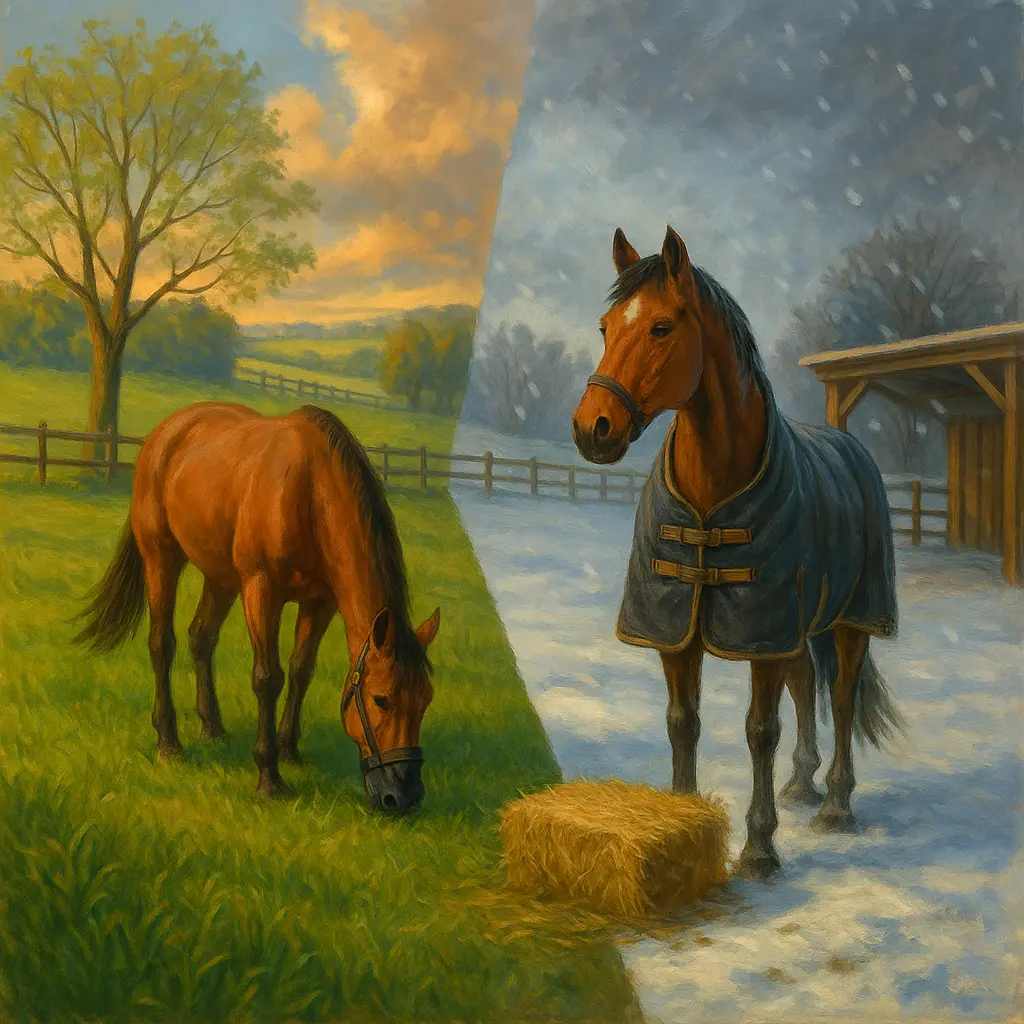
As the UK shifts from long summer evenings to crisp autumn mornings, your horse’s gut, waistline, and grazing land all feel the change. A smart, gradual plan protects digestion, prevents unwanted weight gain, and keeps your fields healthy right through winter.
Key takeaway: Make every seasonal change gradually — introduce or reduce grazing over 2–4 weeks, keep roughage available at least every 4 hours, and manage turnout to protect both your horse and your pasture.
Why slow transitions protect your horse’s gut
The equine hindgut takes weeks — even months — to adapt to dietary change, so any switch between hay, haylage, and grass must be done slowly. Fast changes can disrupt the microbiome, triggering colic, diarrhoea, and behavioural stress.
Through winter, most horses rely on conserved forage; in spring, rich grass is suddenly higher in sugars and starches. That contrast can shock the hindgut unless you introduce it progressively and maintain regular access to fibre. As a safety baseline, ensure your horse never goes longer than about 4 hours without forage, day or night. This keeps the gut moving, buffers acidity, and stabilises behaviour.
“Any dietary change that your horse experiences should be made slowly.” — Stephanie George, Nutritionist at Saracen Horse Feeds (Your Horse)
At Just Horse Riders, we see far fewer spring tummy upsets and autumn anxieties when owners plan changes over days and weeks, not hours. Slow and steady genuinely wins with digestion.
Your spring turnout timeline: day-by-day to 24/7 grazing
Allow 2–4 weeks to move from winter forage to full spring turnout; start with just 15–30 minutes of grazing on day one and build gradually. Keep the same hay available throughout this period so the hindgut always has familiar fibre.
Use this step-by-step as a backbone and adjust for your horse’s age, condition, and history of laminitis or colic:
- Days 1–3: 15–30 minutes of grass once daily, then back to hay/haylage. Offer a small hay feed immediately before turnout to take the edge off hunger.
- Days 4–7: Increase to 45–90 minutes daily. If calm and coping, split into two shorter sessions (e.g., 2 × 45 minutes) to spread sugar intake.
- Week 2: Add 30 minutes every day or two, moving towards 3–4 hours of turnout. Keep hay available in the field or on return to the stable.
- Weeks 3–4: Progress to half days, then full days. Many horses can be out 24/7 by the end of week 3 or 4, provided hay is still offered and field quality suits.
For good doers or horses with metabolic risk, slow the increases and consider capping at 2–4 hours for longer before extending. Use strip grazing so you’re only offering a narrow ribbon of fresh grass each day, which helps both gut and pasture adapt. Remember, it’s better to be slightly over-cautious than to deal with laminitis or digestive fallout mid-season.
“Allow at least 2 weeks for the transition to pasture grass, but preferably a little longer.” — Maartje Reitsma, Nutritionist at Hartog (Hartog)
Quick tip: Continue feeding the same hay you used all winter during the first few weeks of turnout. Depending on the grass, trim hay quantities slowly — but never remove roughage entirely.
Keep weight and laminitis risk in check all spring and summer
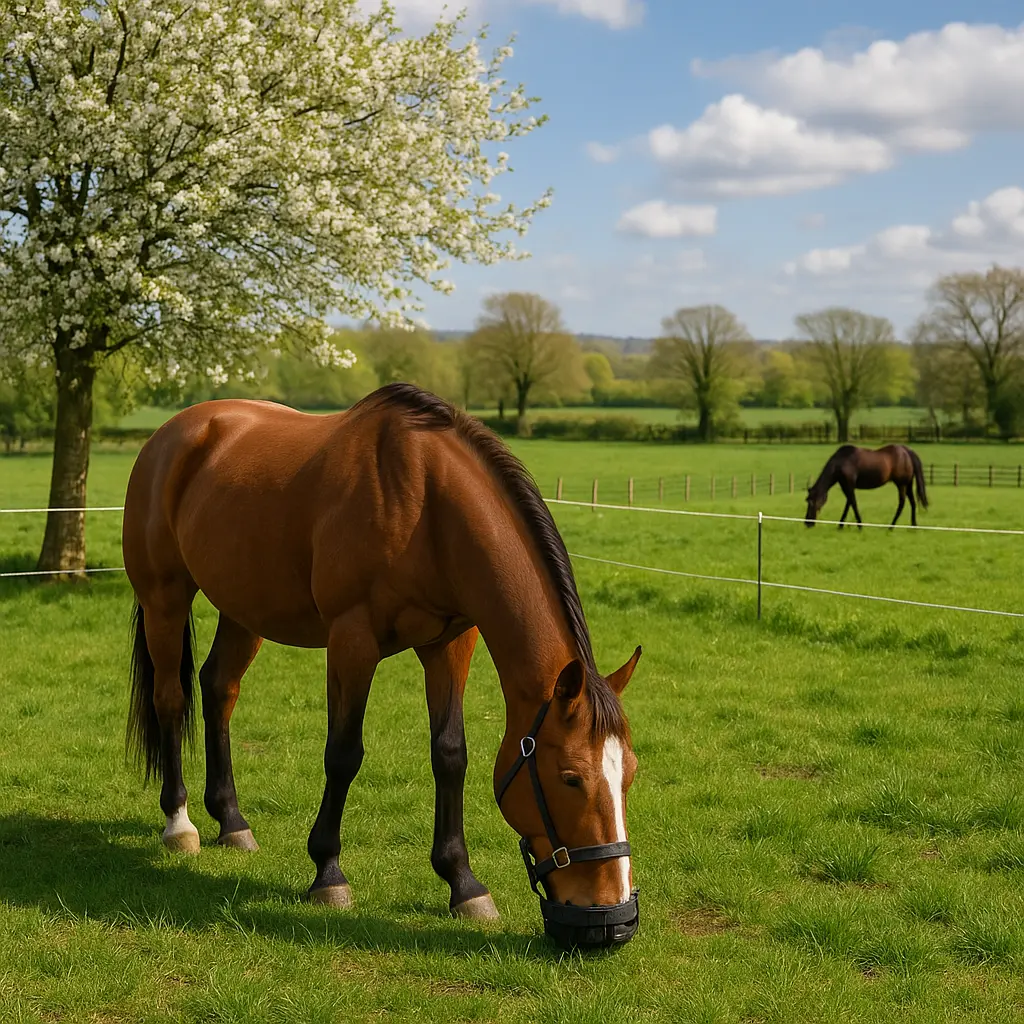
Prevent spring/summer weight gain with a grazing muzzle, strip grazing, and choosing longer, more fibrous “spent” grass where possible. The goal is to slow intake and flatten sugar spikes without restricting forage altogether.
Strategies that work:
- Grazing muzzles: Ideal for ponies and good doers, they reduce grass intake while still allowing natural movement and social turnout.
- Strip grazing: Move the fence forward a small step each day; never open a large new area at once. This protects your gut plan and your sward.
- Timing: In many UK regions, day turnout is kinder to fields than night turnout in early spring and autumn because moisture and frost are more damaging overnight. Daytime turnout also helps you monitor intake closely.
- Field selection: Opt for fields with longer, less palatable grass; it’s naturally slower eating than lush, short regrowth.
“It is better to be a little too cautious and prevent problems than to restrict grazing only when a horse starts showing symptoms.” — Maartje Reitsma, Nutritionist at Hartog (Hartog)
Pro tip: Pair restricted grazing with slow-feeding hay nets so your horse has fibre “on board” every 4 hours. For additional support, many owners use targeted digestive and hoof supplements during peak grass months; brands like NAF supplements are popular with our customers for gut and metabolic support.
Switching from summer to winter: make stabling gradual
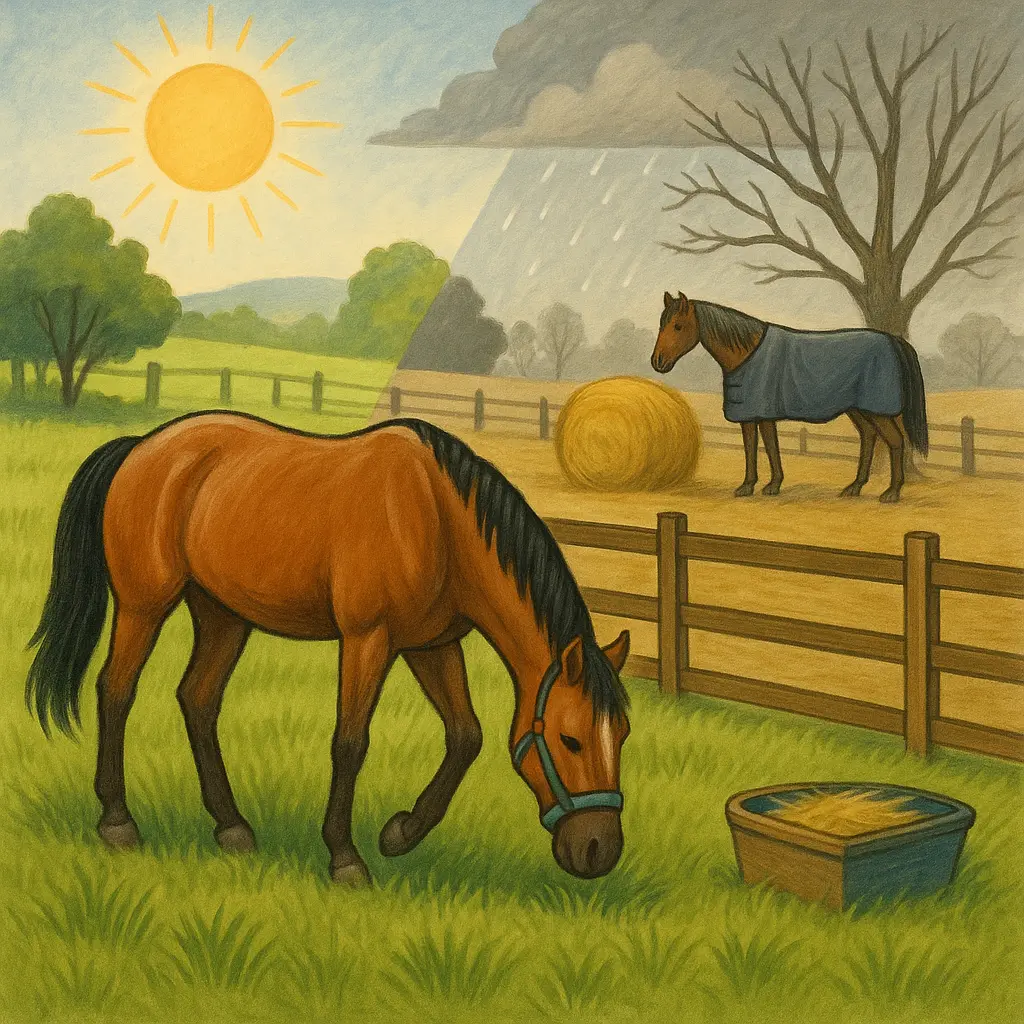
When moving from living out to a stabled routine, bring your horse in for an extra 10 minutes per day for the first couple of weeks. Build a predictable pattern of turnout, stable time, and feeding so the change feels calm and familiar.
Why this matters: routine changes can be as stressful as diet changes. A gradual stabling ramp-up reduces pacing, weaving, and fence-walking. Keep hay available in the stable immediately so there’s no forage gap, and enrich the environment with toys or small, frequent hay nets to extend chewing time. Maintain at least 4-hourly access to roughage overnight using paired small nets or slow feeders.
Practical winter switch checklist:
- Week 1: Stable 30–60 minutes earlier each day; maintain a short day turnout window to keep movement and social contact.
- Week 2: Continue adding 10–20 minutes to stable time daily until you reach your target routine (e.g., day turnout, night in).
- Match forage: If you’re moving from good summer grass to hay/haylage, introduce the conserved forage fully before stabling for long periods so the hindgut adapts while turnout is still generous.
- Protect pasture: In late autumn and winter, UK best practice is day turnout rather than night turnout to limit frost damage and poaching.
Quick tip: If your horse becomes “door-bound” at dusk, shift feeding times to just after stabling so the stable equals a meal, not the end of freedom.
Winter pasture management in the UK: pick the right field and protect it
Use your best-draining paddock for winter, check water daily for freezing, and provide natural or man‑made shelter. Rotate fields to allow recovery and support sward health through wet, frosty months.
The British Horse Society (BHS) recommends 1–1.5 acres (0.4–0.6 hectares) per horse on permanent grazing. Adequate space, sensible stocking density, and rotation limit mud, protect roots, and reduce the chance of mud fever and lost shoes. If you have multiple paddocks, rest the worst-draining ones through the wettest months and concentrate winter turnout where ground holds up best.
Essential UK winter field tasks:
- Water: Check troughs daily for ice; heated buckets or tank de-icers keep horses drinking, reducing impaction colic risk. Insulate exposed pipes.
- Shelter: Use hedges/trees where safe; add field shelters as leaves fall. Rug appropriately for comfort when wet, windy, or cold.
- Drainage: Keep ditches clear; repair gateways; use hardcore in high-traffic areas to protect turf and tendons.
- Hazards (autumn to early winter): Monitor for acorns and sycamore seeds (Sept–Nov), pull ragwort rosettes early, and check for burrow holes along boundaries.
- Weather-led turnout: In severe storms or freeze–thaw, stable or reduce turnout time to prevent slips and field damage.
Pro tip: Coordinate turnout with neighbours so horses aren’t left isolated; it reduces stress behaviours and pacing that chew up winter paddocks.
Feed for the season: from late‑summer hay top‑ups to winter rations
Increase hay from late summer as pasture quality declines, and maintain roughage access at least every 4 hours year‑round. Introduce any forage change gradually — including hay to haylage — to keep the hindgut settled.
From August onwards in many parts of the UK, grass loses nutrients and volume. Begin topping up with the same hay you plan to feed in winter so your horse maintains body condition before the cold sets in. It’s far easier to keep weight on through winter than to add it during prolonged wet and cold spells. Through spring, reduce hay only as the field reliably provides; for good doers, keep some hay in slow nets to maintain the chew time even if total calories are trimmed.
Hydration is non‑negotiable in winter. Warmer water and reliable de‑icers encourage steady drinking, supporting gut motility. If you use digestive support, choose reputable formulas and introduce them over several days. Many owners trust NAF supplements and other options within our supplements range — speak to your vet if your horse has a history of colic or metabolic issues.
Quick tip: Keep feeding routines boringly consistent. Same hay, similar meal timing, and small changes, spaced out — your horse’s microbiome thrives on predictability.
Rugs, water and safety kit that make transitions easier
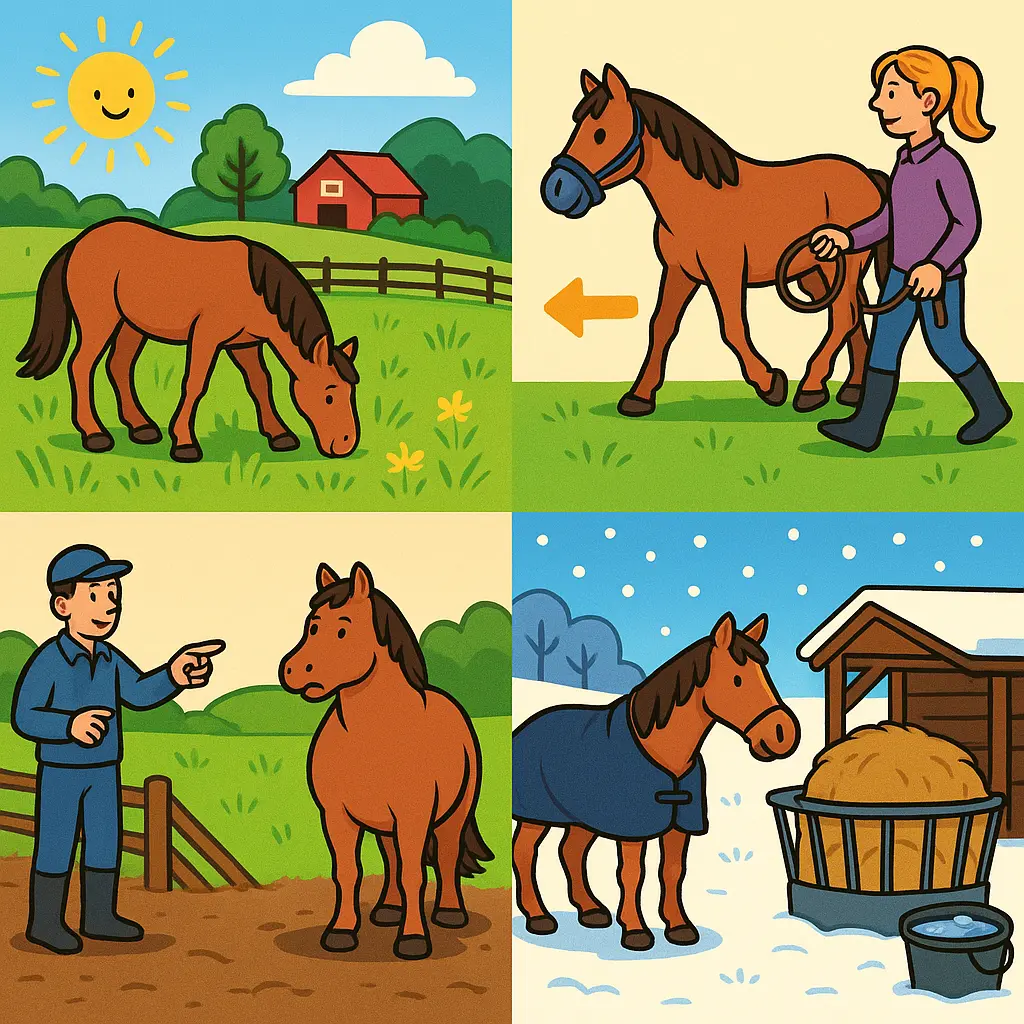
Most UK horses need lightweight to medium turnout rugs as temperatures fall, plus reliable water heating and visibility gear. Match rug weight to weather and your horse’s clip and condition, not the calendar.
Rugs and stable comfort:
- Turnout: As temperatures drop towards 5°C with wind and rain, many unclipped horses are comfortable in 0–150g rugs; finer types or clipped horses often need 200–300g. Explore our curated winter turnout rugs, including trusted WeatherBeeta turnout rugs designed for UK weather.
- Stabling: Overnight in unheated UK stables, rug for dryness and draughts. Our stable rugs range covers light to medium weights for changing conditions.
- Brands to rely on: Our customers rate the fit and durability of Shires rugs and yard essentials season after season.
Yard and rider essentials:
- Water systems: Heated buckets or safe de‑icers prevent freezing and support hydration.
- Visibility: Dark mornings and early dusks demand hi‑vis for riders and horses for hacking and yard safety.
- Footing: Waterproof, grippy riding and yard boots keep you sure‑footed on slime and frost.
Pro tip: If you’re refreshing kit for the season, check our rotating clearance deals in The Secret Tack Room for value on last season’s colours and lines.
FAQs
Why can’t I just turn my horse out on spring grass for several hours on day one?
Lush spring grass is high in sugars and starches, while winter guts are adapted to hay. A sudden change overwhelms the hindgut and can cause colic or diarrhoea. Start with 15–30 minutes and build over 2–4 weeks, keeping hay available during the transition (Your Horse, Hartog).
How long does it take to reach 24/7 turnout in spring?
Most horses adapt safely in 2–4 weeks. Sensitive horses, those with past laminitis, or those on very rich pasture may need longer and tighter control of intake, such as strip grazing and muzzles.
Should I stop giving hay once my horse has spring grass?
No. Keep offering the same hay through the first weeks of grazing and reduce slowly as field forage increases. Maintain access to fibre at least every 4 hours, including overnight.
What’s the best way to prevent weight gain in spring and summer?
Use a grazing muzzle, strip graze small daily areas, and pick fields with longer, less palatable grass. Combine with slow‑feeding hay nets and regular body condition scoring to keep laminitis risk low.
When should I increase hay for winter?
Begin topping up hay in late summer (often August onwards) as pasture quality dips. Enter winter at a healthy body condition so you’re maintaining, not trying to add weight in the cold.
How much land do I need per horse for healthy grazing?
The British Horse Society advises 1–1.5 acres (0.4–0.6 hectares) per horse on permanent grazing. Rotate fields and protect winter paddocks by choosing the best‑draining ground.
Is day or night turnout better in winter?
Day turnout typically protects UK pastures better, as frost and night moisture can worsen poaching and sward damage. Choose your best‑draining winter paddock and monitor ground conditions daily.
With a deliberate, week‑by‑week plan, you’ll keep the gut steady, the waistline sensible, and your fields thriving. If you need help tailoring rugs, forage, or kit for your yard, our team at Just Horse Riders is here to help — and our ranges of turnout rugs, stable rugs, and hi‑vis gear are ready for the season ahead.