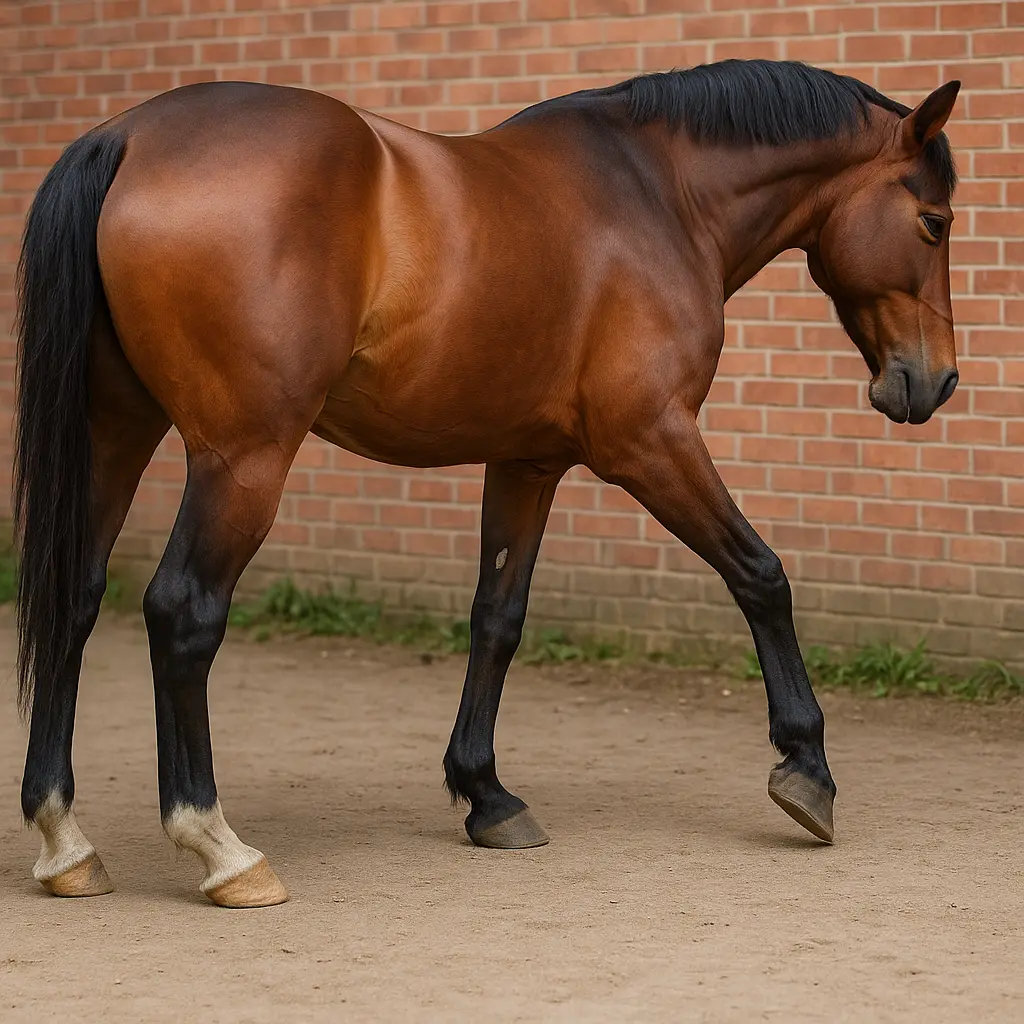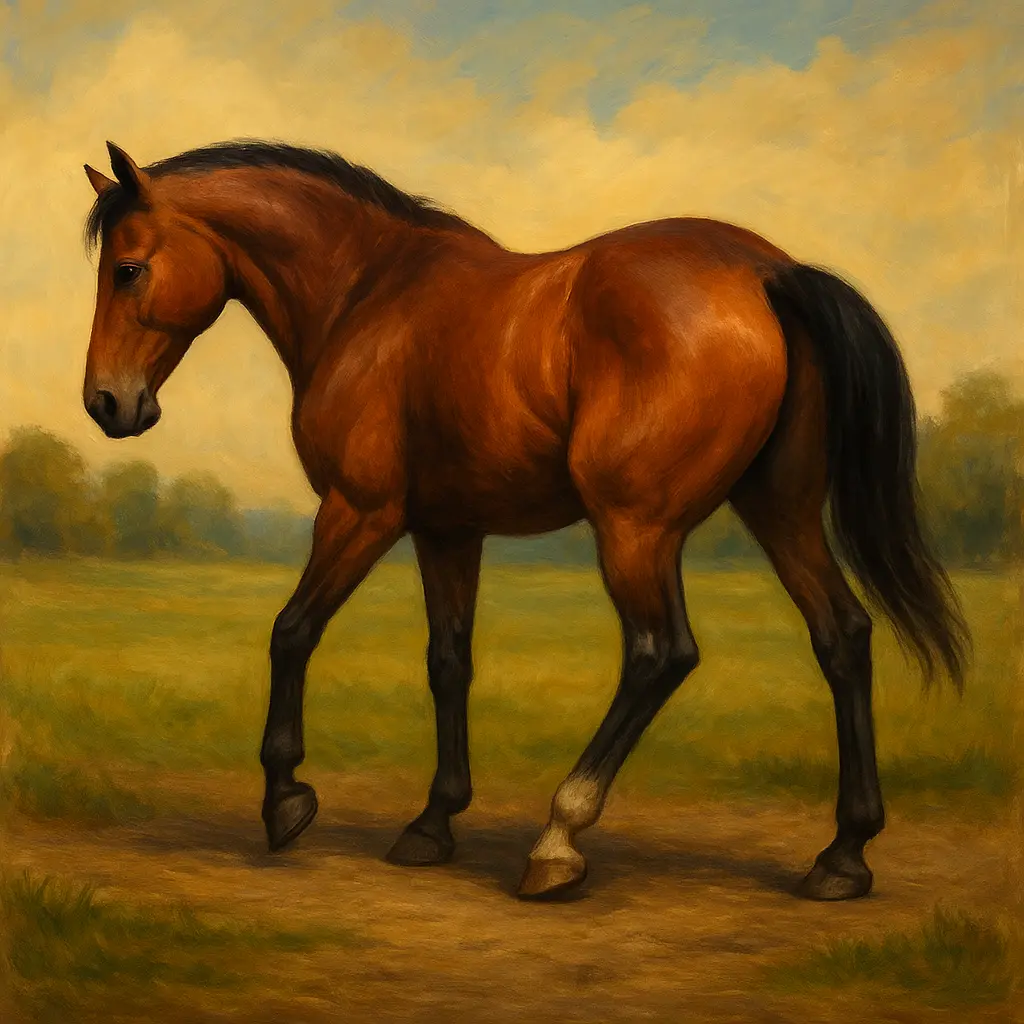
Your horse’s hind fetlocks say more than you think. If one drops lower or the opposite hind is kept flat and unloaded, you’re likely looking at early hindlimb pain that’s easy to miss—especially through a muddy UK winter.
Key takeaway: A single hind fetlock that “drops” more than the other often means your horse is loading that limb to avoid pain in the opposite hind, or that the supporting structures (suspensory/SDFT) are under strain. Confirm by watching the hips and assessing on a circle, then call your vet early.
What a “dropped fetlock” really means
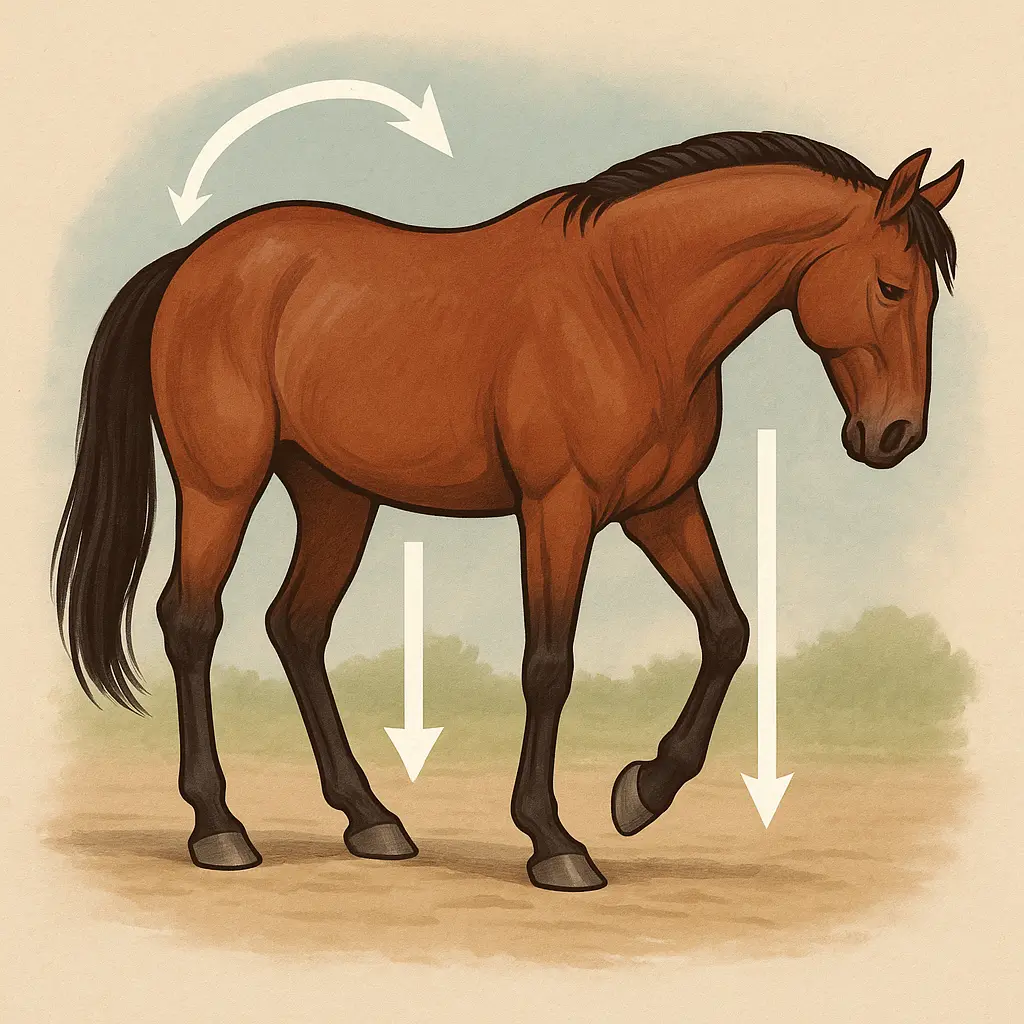
Unequal hind fetlock drop usually indicates weight-bearing lameness in the opposite limb or strain to the suspensory/flexor support on the dropped side. It’s a classic compensation pattern: more weight goes onto the “sound” side, making that fetlock compress further.
Veterinary clinician Barb Crabbe, DVM, explains the mechanism clearly:
“If you notice that one of your horse’s front or hind fetlocks drops more than the fetlock on the other side, it’s possible you’re seeing signs of low-grade weight-bearing lameness in the opposite limb. To avoid weighting the lame leg, your horse will put more weight on the other side—resulting in more fetlock drop on the sound side.” — Dressage Today
Also note: excessive fetlock drop can flag problems in the suspensory apparatus or superficial digital flexor tendon. Poor hindlimb conformation and hoof imbalance can magnify loading and make a low-grade problem more visible. Conversely, not all low fetlocks are lameness—some horses have naturally more spring—but a new or one-sided drop deserves attention.
Quick tip: Compare the hind fetlocks from behind on level ground after a straight-line trot-up. If one stands lower in stance or “bottoms out” more at trot, log it and investigate further.
The hip test: the quickest way to spot hindlimb pain
In hindlimb lameness, the affected hip often rises higher or moves more stiffly, while the horse drops its hip more on the sound side to avoid loading the sore leg. Watch the pelvis—your best early indicator.
Equine anatomy educators Horses Inside Out summarise it simply:
“Watch the horse’s hips. The affected side often rises more or is carried more stiffly. A horse may drop its hip more on the sound leg to avoid putting weight on the sore one.” — Horses Inside Out
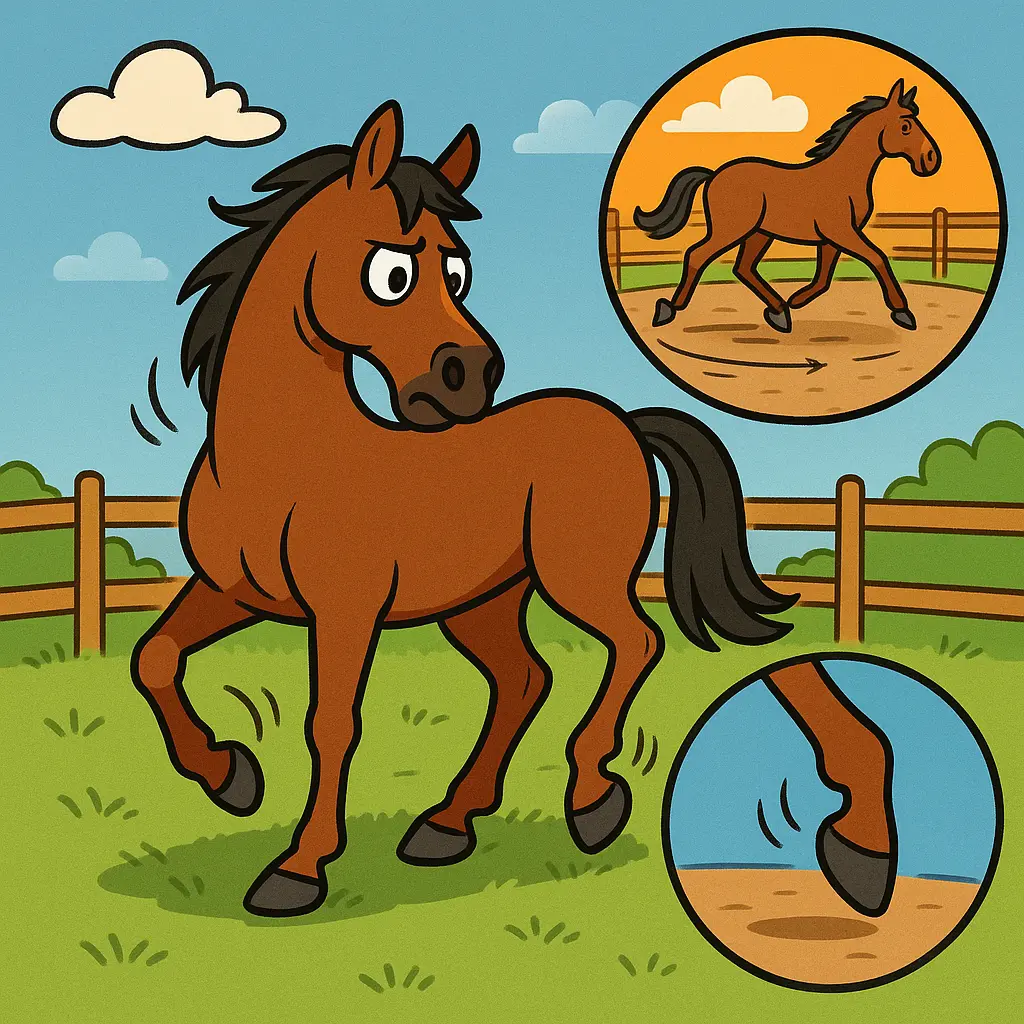
On a straight line, look for a pronounced “hip hike” as the lame leg pushes off, or a stilted carriage on that side. On a circle, asymmetry in stride length, cadence, toe drag, and—importantly—fetlock drop becomes clearer. Toe drag behind often accompanies subtle hind pain, so check for scuff marks in the surface.
Horse & Hound’s veterinary guidance also cautions how often we miss hind issues:
“Hindlimb lameness is more common than people realise, particularly when the onset is gradual, subtle and affects both hindlegs the same. Often a coexisting frontleg lameness detracts from an underlying problem behind.” — Horse & Hound
How to assess your horse today: straight lines, circles and video
Assess in-hand and on the lunge both ways, filming from multiple angles to spot hip hike, stride asymmetry, toe drag and unequal fetlock drop. Keep it safe, systematic and repeatable.
Use this at-yard checklist:
- Warm-up in-hand for 5–10 minutes so you’re assessing a consistent gait.
- Trot-up on a firm, level surface in a straight line: watch for a hip hike on push-off and a stiffer carriage on the affected side.
- Lunge on a 15–20 m circle both reins: look for shorter stride length behind, uneven cadence, toe drag, and more fetlock drop on the “sound-loading” side.
- Film from behind, side and front so you can slow-mo check pelvic movement, tracking-up and fetlock spring.
- Palpate both hind fetlocks and the suspensory branches for heat, swelling, or tenderness; compare sides.
- Don’t force aggressive flexion tests yourself; these are for your vet to perform safely.
In the stable or field, early behaviour changes can help you catch things sooner. The British Horse Society (BHS) scores several useful indicators: noticeably moving less in the stable or field scores 1/3, while ears back for 5+ seconds scores 3/3, both of which may accompany pain or discomfort. See the BHS guidance on lameness behaviours and assessment here: BHS lameness signs and assessment.
Quick tip: A “flat” hind foot in stance (unloaded or cocked ankle) in an adult often means reluctance to load due to pain, neurological issues, or a check ligament/suspensory problem—especially if the other hind fetlock is visibly dropping more under weight.
Common UK causes of hind fetlock strain
Overexertion, repetitive stress, poor conformation (e.g., hock angle over 150°), improper footing or shoeing, and direct trauma are the main culprits behind hind fetlock issues. Many UK yard conditions—and our weather—amplify those risks.
What drives problems here in Britain:
- Muddy, rutted fields in autumn/winter increase slip-and-grab forces that strain the suspensory apparatus and associated soft tissues.
- Heavy clay soils common on UK livery yards create deep, uneven going that overloads fetlocks and knees day after day.
- Subtle bilateral hind pain can build slowly under regular hacking and schooling—especially if the horse is also dealing with a front-end issue that distracts the eye.
- Conformation challenges such as a straighter hock (greater than about 150°), long pasterns, or weak hindquarter musculature increase fetlock compression and cumulative micro-trauma.
- Shoeing or trimming that leaves the hind feet imbalanced increases torque through the fetlock and suspensory branches.
Under the UK Farriers Registration Act (FRA), registered farriers are responsible for appropriate hoof balance; partnering with your farrier to maintain correct hind angles is critical—especially for cobs on heavy ground. And remember, conditions at many shared arenas and livery yards can hide a gradual onset that only becomes obvious once the ground turns soft; Horse & Hound notes that hind suspensory issues often worsen on soft, uneven pasture in autumn/winter.
Pro tip: Track surface matters. Avoid repetitive schooling in deep, loose footing and change direction regularly on the lunge to prevent asymmetric loading.
When to call the vet and what to expect
Call your vet promptly if a flat, unloaded hind foot (cocked ankle) coincides with heat, swelling, tenderness, or any gait change. Early assessment can prevent minor soft-tissue strains from escalating into chronic suspensory problems.
At examination, expect:
- Full palpation of fetlocks, suspensory branches and proximal suspensory region, with comparison between limbs.
- Straight-line trot-ups and circles, potentially on different surfaces to emphasise changes in fetlock drop and stride length.
- Targeted flexion tests performed by the vet where safe and indicated.
- Diagnostic analgesia (nerve blocks), typically starting in the hind limb with the small tarsal joints or proximal suspensory region, as hind foot pain is less common than more proximal issues.
- Ultrasound and, where indicated, radiography to assess support structures and joint integrity.
Don’t wait for overt lameness. Subtle compensations—like persistent toe drag or one-sided fetlock drop—are your cue to involve your vet before the problem becomes long-term. Continue to log changes daily so you and your clinician can track trends.
Management and prevention on British yards
Keep work on good footing, avoid deep, uneven mud, and build stabilising muscles on varied, controlled terrain to reduce fetlock and suspensory strain. Small changes in routine make a big difference through the UK winter.
Practical steps you can start now:
- Footing first: Fence off poached gateways, rotate turnout, and use grass mats where feasible. School on consistent surfaces and avoid repetitive work in deep, loose going.
- Strength over speed: Hill walking, raised pole work (in moderation), and balanced transitions build the hindquarter sling that supports the fetlocks.
- Mix surfaces and directions: Alternate rein frequently on the lunge and during hacking; vary arenas, tracks and firm verges to reduce repetitive strain.
- Hoof balance checks: Book regular farrier visits under the FRA framework and discuss hind angles, mediolateral balance and shoeing options to reduce fetlock torque.
- Warm-up, cool-down, and rest days: Add 10–15 minutes of walk warm-up in cold weather and schedule recovery days to let soft tissues adapt.
- Monitor and protect: If your vet advises, use supportive boots during exercise and manage box rest with stable bandaging as directed.
Helpful kit from our shelves:
- Support on uneven ground: Consider hoof and fetlock protection from our curated horse boots and bandages range for hacking on rutted bridleways and during controlled rehab.
- Weather-wise wear: A dry, warm back means looser muscles and easier, safer movement in cold snaps—our winter turnout rugs help keep horses comfortable outdoors when the going is soft.
- Supplement support: Many owners of cobs and heavier types choose joint formulas with glucosamine or MSM; browse proven options in horse supplements.
- Trusted brands: Robust, well-cut rugs such as those from WeatherBeeta cope brilliantly with British rain and wind while allowing free movement.
- Stay seen on dark days: If you’re lunging or leading on short, grey afternoons, our hi-vis essentials improve safety around the yard and lanes.
At Just Horse Riders, we recommend logging weekly “check-in” videos on the lunge through the winter. Consistent footage across both reins helps you catch a creeping asymmetry long before it becomes a lay-up.
Kit checklist for monitoring and support
A small, smart kit makes assessments safer and rehab smoother. Build your box now so you can act quickly when something looks “off”.
- In-hand control: A well-fitted headcollar and a lunging cavesson for reliable, repeatable circles (avoid pulling the head in with tight side reins during assessment).
- Video tools: Your phone, a stable tripod, and a helper for consistent angles (hind, side, front) at walk and trot.
- Touch thermometers and tape: A digital thermometer and a soft tape to measure and compare swelling around the fetlock and cannon region.
- Support and protection: Vet-approved support boots or stable bandages for box rest phases—see our horse boots and bandages collection for options vets and physios regularly recommend.
- Weather comfort: For box rest or limited turnout during long, wet weeks, choose breathable warmth from our stable rugs to reduce stiffness after standing in.
- Budget-friendly spares: Keep a back-up pair of exercise boots and extra bandages from our Secret Tack Room clearance so you’re never caught short on wash day.
Quick tip: Label left/right boots and rotate them weekly to avoid uneven wear that can mask or mimic a gait asymmetry.
FAQs
Why does my cob stand with a flat hind foot but a dropped fetlock on the other side, yet lunge sound?
This pattern suggests compensation: your horse unloads one hind (flat, cocked foot) to avoid pain, while the opposite “sound” hind takes more weight and drops further at the fetlock. Subtle hind lameness can look “sound” on a casual lunge, so film both reins, check for toe drag and hip asymmetry, and ask your vet for a targeted exam with flexion tests and possibly nerve blocks. A hind check-ligament, suspensory or proximal joint source is more likely than a simple foot bruise behind.
Is excessive hind fetlock drop always lameness?
No. Some horses have naturally more “spring” or softer pasterns. But a new, one-sided, or work-dependent increase in fetlock drop often indicates either opposite-limb weight-bearing lameness or strain to support structures on the dropped side. Confirm by watching for an associated hip hike, stride shortening, or toe drag, and palpate for heat/swelling. If in doubt, call your vet early.
How do I spot hindlimb issues on a circle versus a straight line?
On a straight line, look for a hip hike on push-off of the lame leg and stiffer carriage. On a circle, asymmetry is easier to see: shorter stride, uneven cadence, toe drag, and uneven fetlock drop between the two hinds. Film both reins at trot and compare side-by-side. More fetlock drop on one side often means the other hind is being protected.
Can poor conformation cause fetlock dropping without obvious lameness?
Yes. A straighter hock (over ~150°), long pasterns, or poor hoof balance increase fetlock load and can produce a lower stance and greater “spring” without overt pain—until micro-trauma builds. That’s why regular farrier checks under the UK FRA framework and strength-focused schooling matter, especially for cobs and heavier types on clay soils.
When should I call the vet for a flat foot/unloaded fetlock behind?
Immediately if you also find heat, swelling, tenderness, or any gait change. An adult horse that persistently unloads a hind foot (cocked ankle) may be avoiding pain, dealing with neurological issues, or have a check ligament/suspensory injury. Your vet will likely start with hind-focused flexion tests and diagnostic analgesia (often proximal suspensory/small tarsal joints), as hind foot lameness is less common.
Does UK weather make hind fetlock problems worse?
Yes. Wet, uneven winter fields increase slip, twist and deep-ground loading through the fetlocks and suspensories. Many hind issues—like suspensory desmitis—worsen on soft ground and may look subtler on firm summer surfaces. Manage turnout areas, vary footing in work, and consider protective exercise boots from our horse boots and bandages collection when hacking on rutted tracks. Keeping horses warm and dry with appropriate rugs such as our turnout rugs also helps reduce cold-weather stiffness.
For more on recognising and rating early signs, use the BHS lameness guidance: BHS lameness signs and assessment. And remember: on busy British livery yards, early video, consistent notes and prompt vet input save time, money and horse comfort.