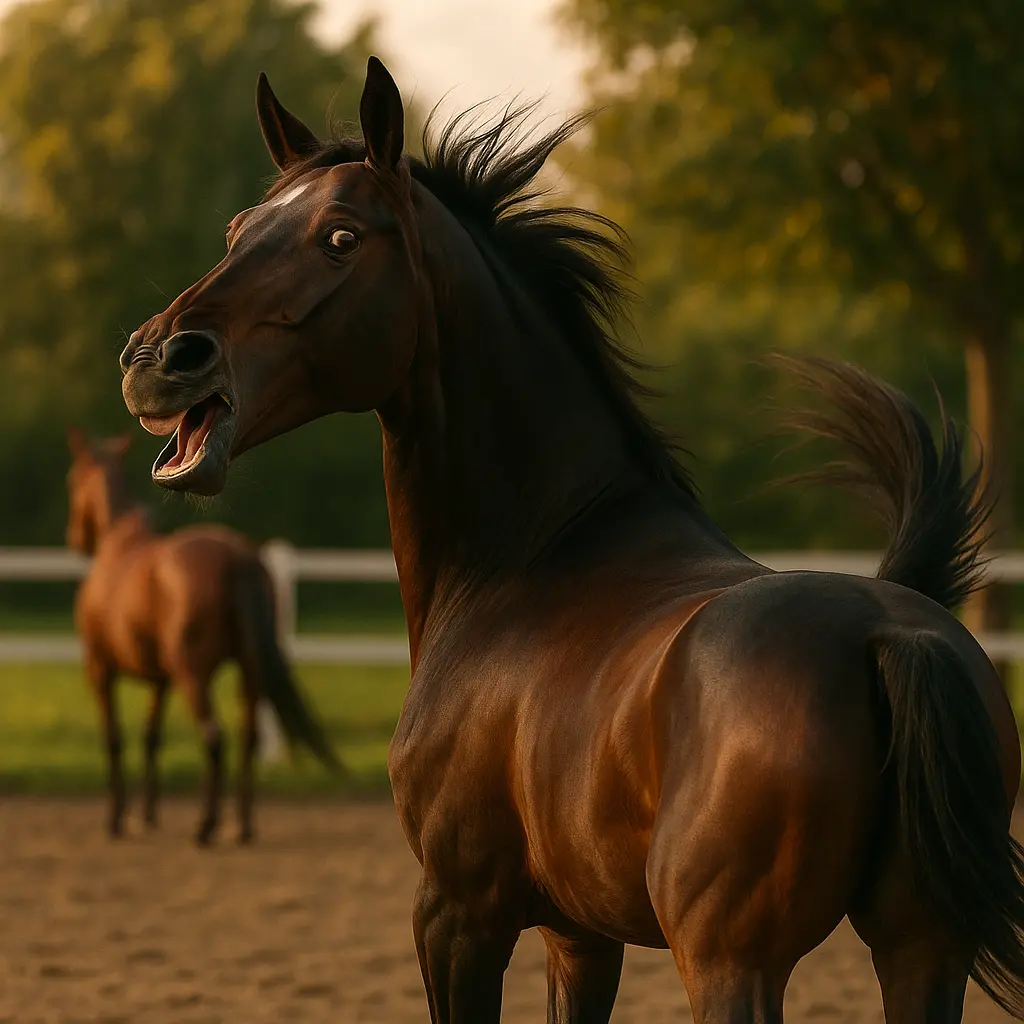
One day she’s your dependable partner; the next, she’s spinning at dandelions and snorting at shadows. If your mare’s summer spookiness spikes just as the days lengthen, you’re not imagining it — her hormones are working exactly as nature intended.
Key takeaway: UK mares cycle from spring through autumn, and the hormonal peaks that drive reproduction also heighten reactivity and spookiness — especially in late spring, high summer, and one last surge in early autumn.
Why mares spook more in summer and autumn
UK mares are seasonally polyoestrous, cycling from spring to autumn as daylight increases, with a typical 21‑day cycle including 4–5 days of oestrus. As autumn approaches and daylight fades, many mares show one final strong oestrus before winter anoestrus.
The driver is light. As day length increases, melatonin falls and the reproductive axis “switches on,” taking a mare from winter anoestrus into active cycling. Equine health specialists at Equell explain it succinctly:
Mares are seasonally polyoestrous animals, meaning their reproductive cycles are governed by light exposure. As daylight increases, melatonin production decreases, signalling the reproductive axis to transition from winter anoestrus into active cycling.
That hormonal re‑start can sharpen everything your mare already feels and does. Equell also note that rank, reproductive status and resource control intertwine in herd life; when hormones surge, behaviours linked to higher social status can intensify, which is why a generally confident mare may briefly look bossier, more reactive or more distractible.
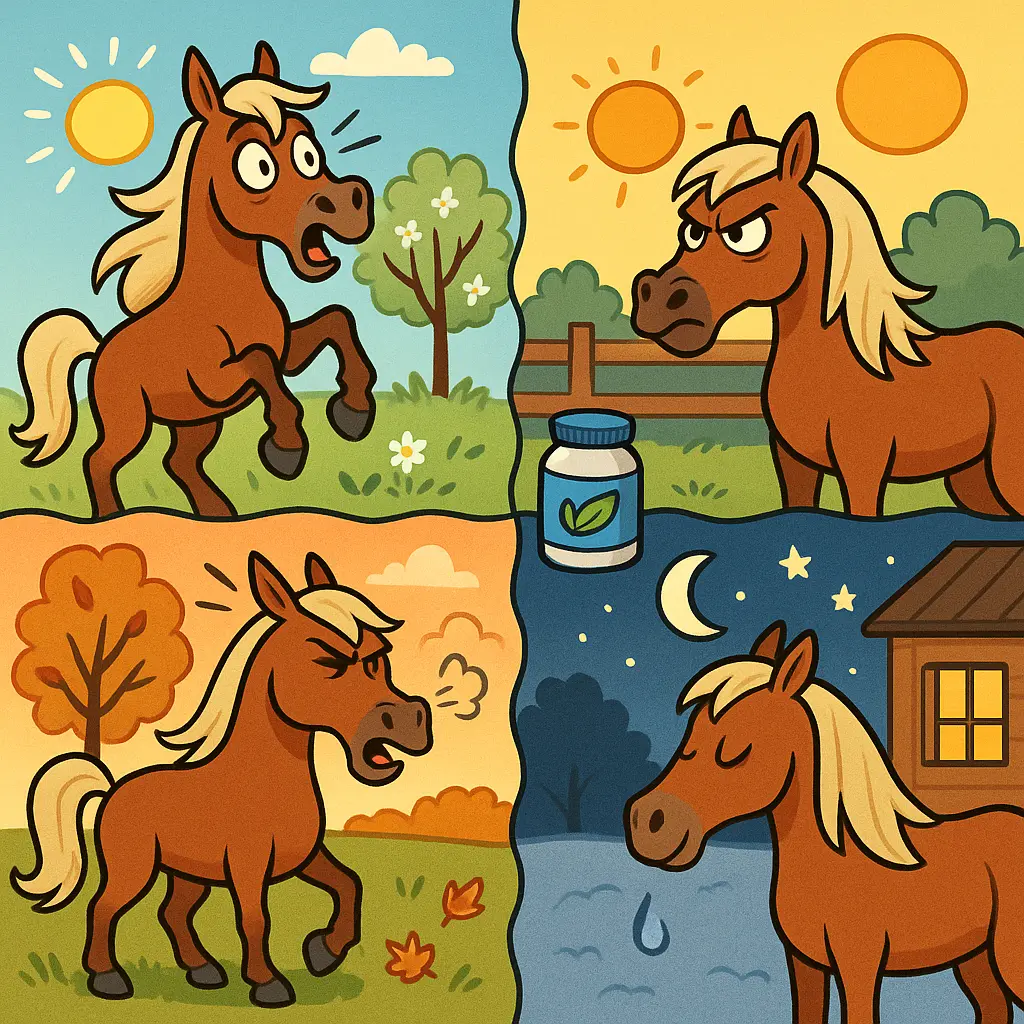
In the UK, this plays out most noticeably from late spring through August, then again as we hit shorter days and cooler nights: many owners see a final “last fling” of oestrogen- and progesterone-driven behaviours in early autumn before cycles stop for winter. EquiNatural describes this end-of-season surge as a cocktail of oestrogen, progesterone and adrenaline — exactly the trio that can turn a leaf-rustle into a genuine spook.
Quick tip: Recent milder UK winters and yard lighting can prolong seasons, so mares may stay hormonally “on” later than they used to. If your mare used to settle by October but now fizzes into November, light exposure is a likely factor.
Spot the signs of hormonal oestrus
Typical oestrus lasts 4–5 days within a 21‑day cycle, and behavioural signs include increased vocalisation, tail swishing, ear pinning, frequent urination, squatting and vulval winking, plus distraction around other horses.
You may notice patterns: softer through the back but easily startled; clingy to field mates; irritated by touch near the flanks; or flashing between affectionate and argumentative in the school. Behaviour often eases in dioestrus (the non-heat portion of the cycle), but some mares become short-tempered or defensive then as progesterone rises.
Classic red flags of a hormone-driven week include:
- Calling to horses, especially geldings, and difficulty settling when leaving the field or stable
- Tail lashing, tail carried high, and general agitation when tacked up
- Frequent, small urinations; squatting; vulval winking
- Sensitivity over the loins/flanks and a lower tolerance of leg aids
- Heightened startle response — spooking at familiar sights and sounds
Pro tip: Track it. A simple calendar of signs, work quality, and any supplements fed helps you predict the spicy days and plan training and competitions around them.
Easy stable and turnout wins
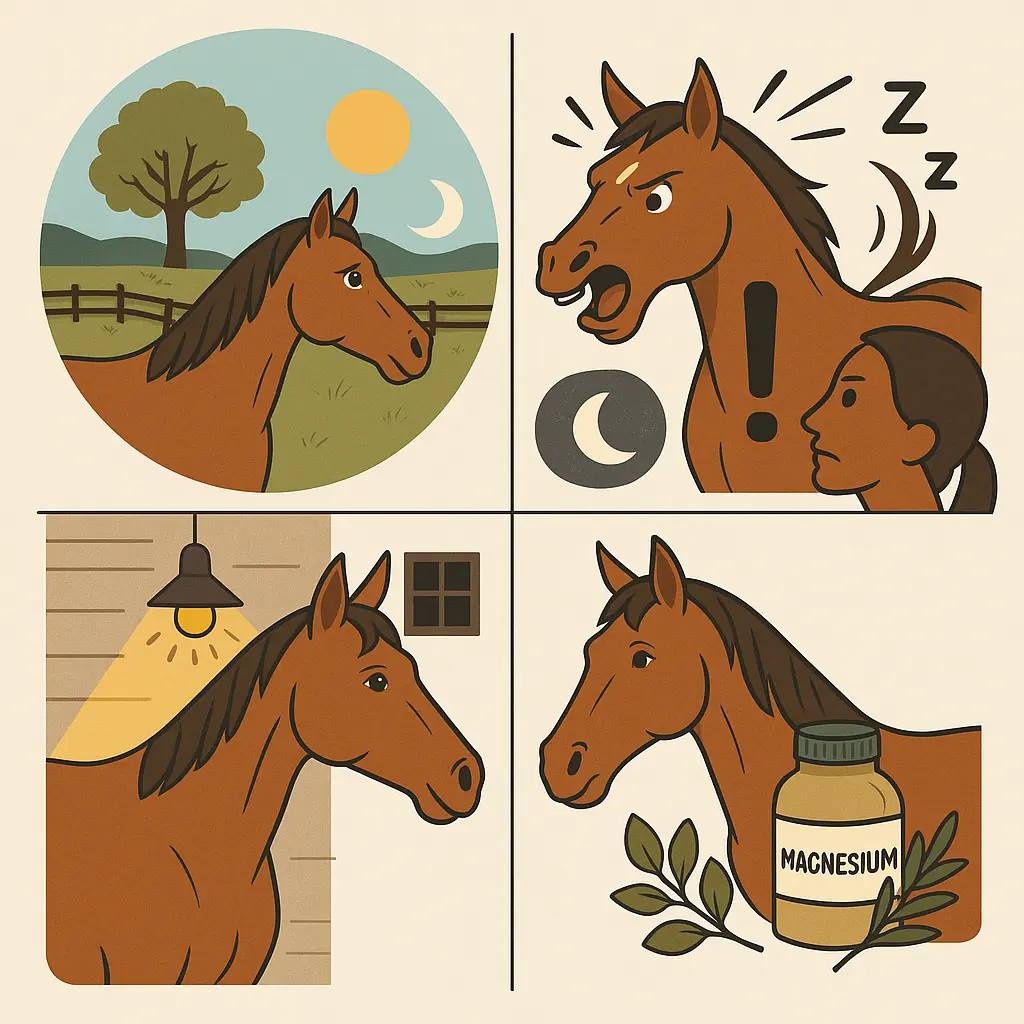
Provide 8+ hours of darkness in winter and limit artificial light to prevent out‑of‑season cycling; consistent turnout, a settled herd group, and good fly control further reduce reactivity.
Light management is the low-effort, high-impact fix for many yards. Keeping stables dark overnight through winter (at least eight hours) reduces melatonin suppression and helps mares remain in winter anoestrus. Conversely, long evenings with lights blazing can inadvertently “extend summer” and keep cycles active. Equell’s spring guide reiterates how strongly light regulates the mare’s reproductive axis; switch the light, and you often switch the cycle.
Turnout matters too. Mares are socially sensitive; stability in companions and routine reduces low-level stress that can tip into spookiness when hormones rise. Reduce competition at high-value resources (hay stations, gateways) and avoid reshuffling groups during peak cycling months where possible.
Flies and midges are the summer wildcard. Irritation raises baseline tension and can make an already alert mare intolerant of work. Robust fly management — including well-fitted breathable fly rugs and sheets, regular repellents, and schooling in cooler parts of the day — takes the edge off environmental stressors so hormones don’t have so much to amplify.
Quick tip: Keep grooming regular to spot heat-related skin soreness early, and hose sweat promptly after schooling; discomfort anywhere raises reactivity everywhere.
Feed for calm, not fire
Keep diets low in sugar and starch, add magnesium for muscle and nerve relaxation, and consider hormone-supportive herbs such as agnus castus during peak cycles.
What’s in the bucket can nudge a hormonal mare in the right direction. With rich summer grass and longer turnout, even a modest cereal-based feed can push energy and adrenaline higher. Simple System Horse Feeds note that UK mares generally stop cycling as days shorten and grass drops in autumn — a reminder of how closely nutrition and season interact. Through summer:
- Prioritise fibre and oil; avoid high-starch cubes/mixes during hot spells and show weeks
- Ensure adequate magnesium, which supports normal nerve and muscle function and can temper over-reactivity
- Consider agnus castus-containing blends tailored to mares to balance oestrogen-progesterone swings
At Just Horse Riders, we recommend starting any new support 10–14 days before a known trigger period (e.g., stay-away shows, backing off after a season break) so you can judge the effect on a “typical” hormonal week. Browse proven options in our horse supplements collection to tailor support to your mare’s pattern.
Quick tip: If your mare’s temperament changes overnight in late summer or early autumn, consider reducing lush grass intake (strip grazing, muzzle) for a fortnight — the combination of high sugar and a final hormonal surge often sits behind those cases.
Choosing a calmer that works
Competition-safe calmers like NAF Five Star Magic, TopSpec Calmer and ProKalm can reduce anxiety without sedation when used correctly, and costs range from about £0.49 to £2 per day.
The UK show season coincides with peak cycling — no coincidence that our customer helpline is busiest from May to August. Used strategically, calmers can lift rideability without dulling. Options with published guidance include:
- NAF Five Star Magic (powder): RRP £29.50 for 900g with a 15–30g daily measure from £0.49/day. Combines magnesium, B vitamins and herbs for anxiety and excitability (Horse & Hound). Widely used and BEF competition-safe; ideal as a daily baseline through summer. Find NAF support in our NAF collection.
- TopSpec Calmer (powder): RRP £35.50 for 3kg, fed at 100g/day for around £1.18/day. Designed for anxious behaviour in stressful situations such as showing or travelling, it’s a strong choice when the environment is the spark (Horse & Hound).
- ProKalm (Science Supplements): Notable for rapid onset — results in as little as 30 minutes — and flexible dosing: low for daily edge-taking, higher for demanding situations; formulated without valerian, magnesium or tryptophan (Science Supplements). Useful for ring-side top-ups where permitted.
- Freestep Calmer (powder): RRP £20 for 250g, 25–50g/day from £2/day, combining magnesium with marshmallow, slippery elm, dandelion, agnus castus and chamomile (Horse & Hound). A herb-forward choice for highly excitable horses.
Timing is everything. For predictable stressors, start 1–2 weeks ahead; for sharp, situational trigger days (new venue, long hack in wind), choose a product with rapid onset or plan a loading dose within label guidance. Under British Equestrian Federation rules, ensure any calmer you choose is competition-safe; the options above are marketed accordingly by their manufacturers and are commonly used in UK competition settings.
Pro tip: Trial one product for 7–14 days during a “normal” heat cycle and keep a diary. If you change two things at once, you won’t know what worked.
Training and riding strategies during peak cycles
Ride for relaxation and safety-first during peak cycles — shorten schooling, add a settle-on-the-lunge, and prioritise protective and visibility gear for hacking.
On spicy days, change the aim of the session from “progress” to “positive experience.” Begin with five minutes of loose rein walking to let her decompress, then add simple patterns (serpentines, poles in walk) to occupy the mind without pressure. If she arrives buzzing, ten minutes of easy lunging can safely vent energy before you get on; protect legs with well-fitted horse boots and bandages.
When hacking, route choice and kit matter. Pick quieter tracks, ride with a settled companion, and make yourself visible in dappled summer shade with hi‑vis rider gear. Above all, wear an up-to-standard hat from our riding helmets collection — hormones can turn a tiny spook into a big spin.
Keep sessions shorter but more frequent during a 4–5 day heat. Reward softness quickly, and don’t chase “that one more transition” if she’s beginning to bubble. For those heading to shows, lay the groundwork with at-home “show rehearsals” (box up, warm up near a friend, ride a test, cool down) so the only new variable on the day is the venue. If you need ring-appropriate attire, our women’s competition clothing is competition-smart without compromising comfort.
Quick tip: Teach a “reset” pattern you can ride anywhere — for example, free walk on a long rein to three cones, halt, breathe, scratch the wither, and repeat. A known routine lowers arousal fast when the environment spikes it.
When to call the vet
Contact your vet if behaviour is extreme, persistent or aggressive, if you see constant oestrus signs, or if your mare becomes unrideable — rare issues like granulosa cell tumours (GCTs) must be ruled out.
Most seasonal spookiness is normal physiology plus management. But if your mare is in “permanent season,” suddenly deeply aggressive, or cannot be handled safely, escalate. Veterinary assessment can include rectal ultrasound, ovarian scanning and bloods to check hormones.
Cinder Hill Equine Vets summarise the issue in affected mares:
It is the excessive production of these hormones [FSH and LH] that cause the abnormal behaviour patterns seen in affected mares. Mares with GCTs typically present with one of the hormone-driven oestrous behaviours.
Discuss medical options such as progesterone therapy only under veterinary guidance, and only after pain sources (saddle fit, ulcers, back/ovarian pain) are excluded. If your yard uses bright winter lighting, mention this; your vet may suggest light management as part of the plan.
At Just Horse Riders, we also encourage owners who compete to check any supplement against event rules. The British Equestrian Federation provides overarching guidance, and brands like NAF and TopSpec market specific products as competition-safe; however, always verify the current status before a big day.
FAQs
When do UK mares typically show hormone-driven spookiness?
From late spring through summer when days are longest, with a final strong cycle often occurring in early autumn as daylight declines. This aligns with UK patterns of increasing, then shortening, day length and grass availability, which influence cycling (Equell; Simple System Horse Feeds).
Can stable lighting affect my mare’s cycles?
Yes. Artificial light reduces melatonin and can trigger or extend cycling, particularly at livery yards with bright evening lighting. Aim for 8+ hours of true darkness in winter to mimic natural UK seasons (Equell).
Are over-the-counter calmers safe and effective for summer spookiness?
Yes, many are designed to support calm without sedation and are marketed as competition-safe under British Equestrian Federation rules. For example, NAF Five Star Magic starts from about £0.49/day, TopSpec Calmer about £1.18/day, and ProKalm can act within 30 minutes; trial for 1–2 weeks to assess response (Horse & Hound; Science Supplements).
What feed changes help a hormonal mare?
Keep sugar and starch low during peak grass months, ensure adequate magnesium, and consider agnus castus-containing mare support. This reduces the adrenaline “fuel” that hormones can amplify and supports steadier behaviour (EquiNatural).
Should I call the vet for seasonal spookiness?
Call if it’s extreme, persistent, or associated with constant winking/squatting, aggression, or sudden unrideability. Your vet may scan ovaries and check hormones to rule out granulosa cell tumours or other issues (Cinder Hill Equine Vets).
Do hormones cause more spookiness in summer or winter?
Mainly summer (active cycling) and early autumn (“last fling”). Winter anoestrus usually brings calmer behaviour unless other factors (pain, management, lighting) are at play (Equell; Simple System Horse Feeds).
What riding kit should I prioritise during spooky periods?
Always a current-standard hat from our riding helmets range, visibility for hacking from our hi‑vis collection, and leg protection from our horse boots and bandages. Comfort and safety make a visible difference when hormones lift arousal.
Bringing it together: manage light and turnout, feed for calm, use targeted calmers thoughtfully, and ride for relaxation. Most mares settle beautifully when their biology is understood and their management is aligned with UK seasons — and we’re here to help you pick the right support when the summer sillies strike.