Introduction
Ah, winter! The season of cozy blankets, warm beverages, and... muddy horses with their distinct winter coats. As horse owners, it's a time when our equine friends reimagine themselves as walking mud sculptures. Although this can be frustrating, it’s equally entertaining. In this article, we'll explore how to embrace your horse's mud-harnessing abilities, with handy tips and a touch of humor.
Why the Winter Coat Loves Mud
Horses develop thick winter coats that are nature's own ingenious insulation system. This warm layer traps air close to the skin, offering essential warmth during freezing weather [2]. Unfortunately, this makes them prime mud magnets.
Their diet also plays a role. Winter feeding enhances their ability to produce internal heat thanks to microbial fermentation within their digestive systems [2]. This natural furnace means horses stay warm, however, it does mean extra grooming is needed to maintain both coat and owner sanity.
Practical Grooming Tips for Contriving with Mud
Use Coat Sprays
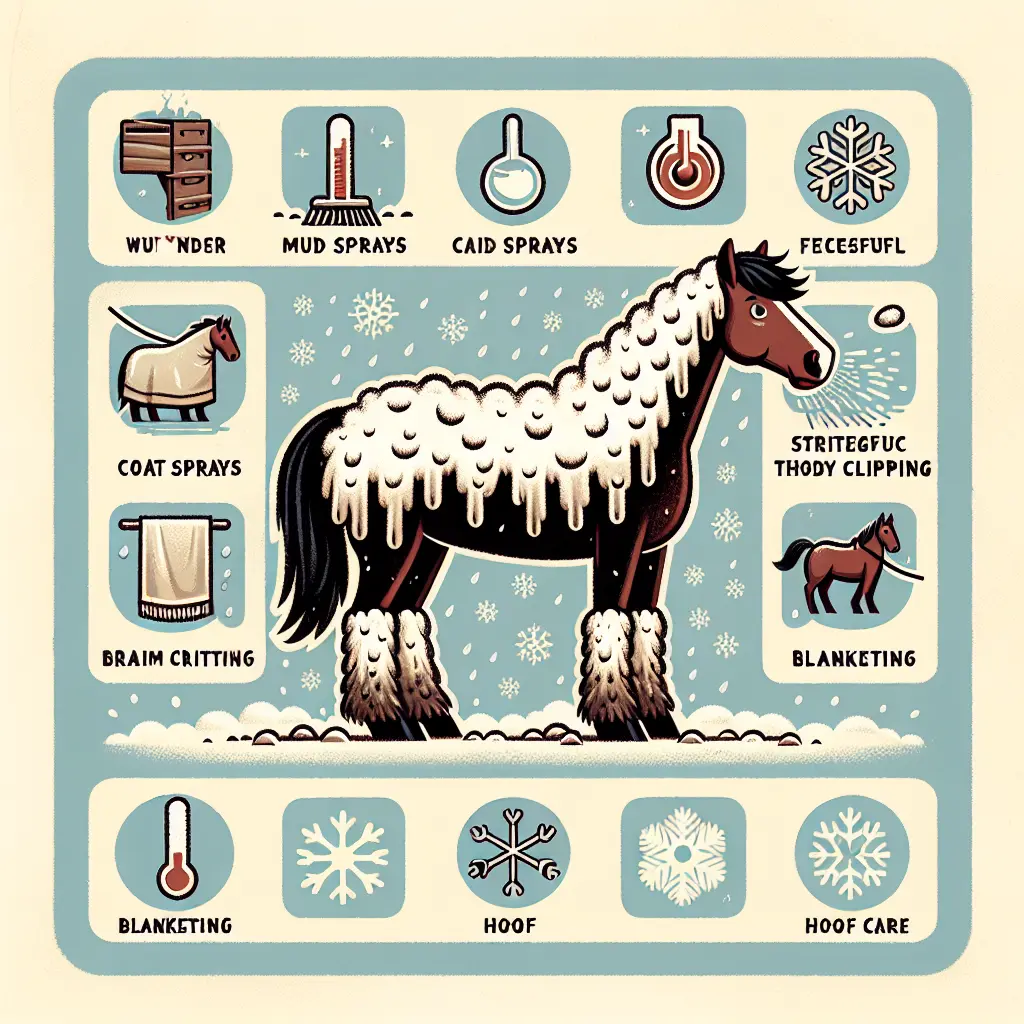
Coat sprays are crucial in winter when baths are nearly impossible. These sprays penetrate deep, loosening compacted mud for easier removal. They're a savior for both your horse’s hygiene and your patience, effectively cutting down grooming time [1].
Strategic Body Clipping
Some horse owners choose to clip their horses during winter. Clipping reduces sweating during exercise and speeds up drying times, which is vital for averting health issues like respiratory concerns [1], [2]. Just remember to blanket clipped horses to make up for the lost insulation [3].
Blanketing: A Practical Necessity
Certain horses—a little older, thinner, or generally less cold tolerant—require additional warmth through blankets. Once you start, don't stop, as inconsistency may interfere with their natural adaptation to temperature shifts [3]. Regular blanket inspections are necessary to prevent sores and skin issues.
Hoof Care in Muddy Conditions
Wet, muddy environments are perfect for fostering hoof issues like thrush. Regular cleaning and thorough inspections are critical steps to maintaining your horse's hoof health in the winter muck [3].
Embracing Humor in Mud-Plastered Situations
Your horse is likely thinking, "I'm natural and mud is perfect camouflage." Here are some ways to see the brighter side of this muddy coat business:
Mud as Sunscreen and Insect Repellent
During winter, mud forms an additional layer that acts both as sunscreen and insect deterrent, even protecting against the bitter wind chill.
It's Scratching Heaven!
For horses, rolling in mud is akin to spending a day at the spa—it helps them scratch those impossible-to-reach areas and slough off dead skin cells.
A Fashion Statement
Every horse out there sporting a muddy coat might simply be showing off the newest winter fashion trend. Let your horse lead the pack in style!
Understanding Winter Shedding
Shedding occurs mainly due to changes in daylight hours. With spring's sunny touch, expect to shed the fluffy jacket [4]. Factors like health or age might cause some horses to cling to their coat a bit longer [5], but adding vitamins or consulting a vet could ease the process.
Is Your Horse Clinging to Its Winter Coat?
Lingering coats may mean health concerns, so consult your vet if shedding doesn’t occur naturally [5]. Offering vitamin E supplements can also promote healthier skin and coat conditions.
Conclusion: Embrace the Winter Look
The winter season can be a magical time to engage in nurturing and loving your horse, fluffy coats and all. With understanding and practical grooming measures, winter will be a season of warm laughs rather than chilly struggles. This approach ensures both you and your horse remain happy and healthy together. Happy grooming!