Fundraising for horses and riders is under pressure — but it’s far from broken. The latest UK data shows equestrianism delivers huge social value, and the projects that prove and publicise that value are the ones still growing.
Whether you’re a riding school, a yard, or a local charity, this guide shows how to turn national insights into practical, money-raising action — with safer, better-kitted riders and happier, healthier horses at the heart of it.
Key takeaway: Fundraisers that quantify £2,000–£3,500 of social value per rider, double down on mass-participation rides, and mobilise volunteers are hitting targets despite the cost-of-living squeeze.
Equestrianism generates £1.2bn of social value annually in the UK.
British Equestrian’s research confirms that horses are more than a hobby: the sector creates £1.2 billion of social value each year, with riding schools responsible for 25% of that impact — an average of £292,000 per school. On a per-person basis, the maths is compelling: an adult riding twice monthly generates around £2,000 of social value annually, and a young person riding weekly generates around £3,500. Off-horse participation is valued at £2,000 per person per year, while regular volunteering delivers £2,100 per year (or £1,000 for monthly commitments). Sources: British Equestrian, Your Horse.
This is exactly the kind of evidence donors respond to. It connects the dots between “fun ride” and “measurable public good” — mental and physical health benefits, community connection, volunteering pathways, and access to nature. The national participation picture is resilient, too: federation memberships across British Equestrian’s 19 member bodies rose 11.7% from 2023 to 2024, and social followings grew 13% in the same period. Source: British Equestrian – Research & Insights.
“Collecting and analysing data builds a full picture [of the equestrian landscape].” — Abigail Bevan, Insight & Research Manager, British Equestrian (Horse & Hound)
For fundraisers, that “full picture” is your most persuasive story: how many riders you support, how often they ride, who benefits off the horse, and the local ripple effects — all linked to recognised values per participant.
Fundraising is tougher because 55% of equestrian centres are squeezed by rising insurance, feed and energy costs.
British Equestrian’s State of the Nation data shows the cost-of-living crisis is intensifying capacity issues at riding schools and yards, particularly in the south east and south west of England. Rising overheads make it harder to maintain horses, retain staff, and run affordable lessons — all of which can reduce the headspace and time available to fundraise.
“There is both resilience and challenges faced by riding schools, horse owners and equestrian businesses amid a backdrop of economic pressures… the increase in participation rates… signals a positive trend, yet the ongoing cost-of-living crisis and environmental impact poses significant threats to equine welfare and the sustainability of riding establishments.” — British Equestrian, State of the Nation (via Horse & Hound)
Despite these pressures, schools remain ambitious: 57% report interest and capacity to grow. The implication for fundraising is clear — people want to take part, but money and time are tight. The campaigns that succeed in 2026 will meet supporters where they already are (at the yard, online, on the bridleway), make participation safe and easy, and evidence impact from the first donation to the last hoofprint.
Mass-participation rides and charity race days are proven winners, raising £45,556 and £65,000 respectively in 2024.
The British Horse Society’s Ride Out and Rideathon efforts raised £45,556 in 2024, directly funding access schemes and improving 4km of equestrian routes. BHS charity race days generated a further £65,000 — much of it via jockey fundraising pages — and 36 regional Ride Out UK pleasure rides together raised around £250,000 for access and welfare hotspots. Source: BHS annual report (Charity Commission).
Why they work:
- They scale — dozens to hundreds of riders can participate safely with staggered starts.
- They’re inclusive — from lead-rein to experienced riders, with off-horse stewarding and volunteering roles.
- They’re photogenic and social-first — ideal for peer-to-peer fundraising and local sponsorship.
Safety and welfare underpin success. Make pre-event kit checklists non-negotiable: compliant riding helmets and hats, high-visibility wear for road sections (rider hi-vis), and protective event boots and bandages for horses. For UK weather, give clear guidance on layers for riders and appropriate horse rugs; if temperatures drop or rain is forecast, specify winter turnout rugs from trusted brands like WeatherBeeta to keep horses warm and dry on the move.
Pro tip: Build your route around bridleway improvements you’re fundraising for. Donors love a direct cause-and-effect: “Today we ride this track; your money will resurface it.”
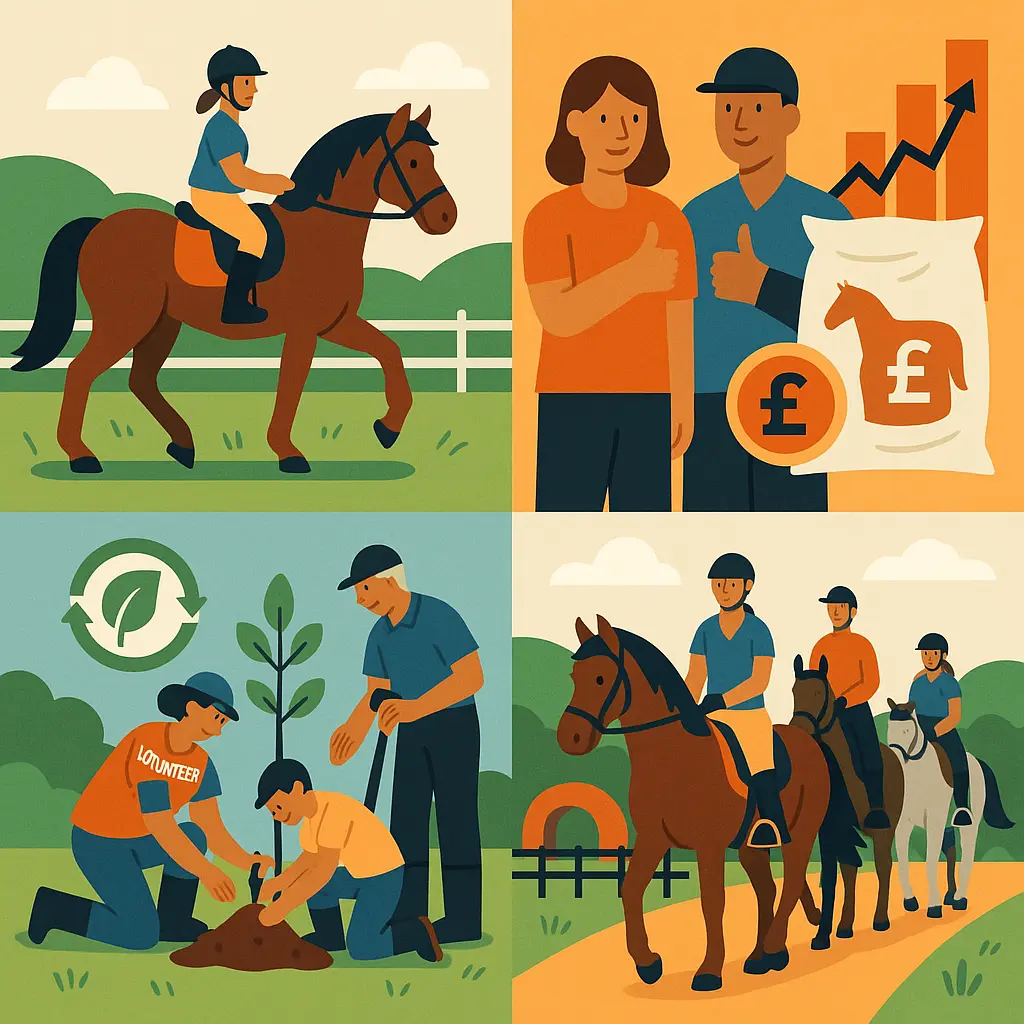
Use BEF social-value metrics (£2,000–£3,500 per on-horse participant; £2,000 off-horse) to prove ROI to donors.
Numbers convert interest into action. When you pitch, lead with the values donors can bank on: £2,000 per year for an adult who rides twice monthly; £3,500 per year for a young weekly rider; £2,000 per year for off-horse participation; and up to £2,100 per year for weekly volunteering. Source: British Equestrian.
How to put this to work:
- Set targets in “people value,” not just pounds. “Funding 30 new weekly youth places will unlock ~£105,000 in annual social value (£3,500 x 30).”
- Track participation frequency. Twice-monthly adults and weekly youth riders carry different values — measure both.
- Count off-horse roles. Yard helpers, committee members, and event stewards contribute £2,000 each per year, even before they mount up.
- Report quarterly with a one-page dashboard: riders, frequency, volunteer hours, and the calculated social value. Repeatable reporting builds credibility.
Quick tip: Anchor every “ask” to a tangible output. “A £50 donation kits one volunteer with hi-vis and a first-aid refresher,” or “£300 funds three helmets for learners.” See also our curated, safety-first horse riding boots and properly-fitted jods for riders building confidence (women’s jodhpurs & breeches).
At Just Horse Riders, we recommend you add one short human story to every metric. The BEF values provide the proof; your rider or volunteer provides the heart.
Riding schools create 25% of the sector’s social value and 57% want to grow, so they’re ideal fundraising partners.
Partnering directly with schools turns national need into local action. Many are feeling the cost crunch (insurance, feed, energy), yet they’re still open to growth and innovation. Offer to co-host a pleasure ride, sponsor a subsidised lesson block, or co-create a “learn to lead” volunteer programme — then split proceeds or ringfence funds for horses most at risk from rising costs.
Practical steps for partnership success:
- Co-brand your calendar. Alternate on-site events (taster sessions, yard tours) with off-site hacks where capacity allows.
- Share kit and safety guidelines. Publish a single, school-approved checklist for hats, body protectors, hi-vis and horse boots to reduce admin and risk.
- Fund the welfare basics first. Supplements and stable consumables are stretched in a crunch; topping these up has immediate impact. Explore targeted support via equine supplements and day-to-day essentials.
- Keep the ask simple. “£25 funds one lesson place; £100 funds farrier support this month; £300 equips four riders for a charity hack.”
Quick tip: When schools are at capacity, run “off-horse” days that still generate social value — stable management workshops, grooming and welfare clinics, and volunteer training. Equip attendees with essentials from our grooming collection so they leave ready to help.
Affordable digital channels outperform costly mail and big-ticket events for donor acquisition right now.
With income portfolios fragile, fundraisers are prioritising visibility on search, email and social — the places supporters already spend time. Keep it simple: a clear landing page for each campaign, a social-media toolkit for riders and volunteers, and a weekly update cadence with impact stats people can share. Source: Fundraising Everywhere.
Do this in the next 30 days:
- Create three “ready-to-post” tiles: one impact stat (e.g., “£3,500 social value per young weekly rider”), one rider story, one call-to-action.
- Publish a one-page “Join the Ride” hub with: date, route map, kit list (helmets, hi-vis, boots), donation links, safeguarding and welfare notes.
- Set up peer-to-peer pages for riders and team leaders; pre-fill the story with your social-value targets and what donations fund.
- Build a kit partner banner: “Riders are safer and comfier thanks to…” and list your sponsors and supporters.
Pro tip: Feature a safety-first kit list on every ride page and link to reputable options — for example, certified helmets, practical footwear, and weather-appropriate layers. Our most borrowed items by charity riders include compliant helmets, supportive riding boots, and UK-weather-ready layers from brands like LeMieux.
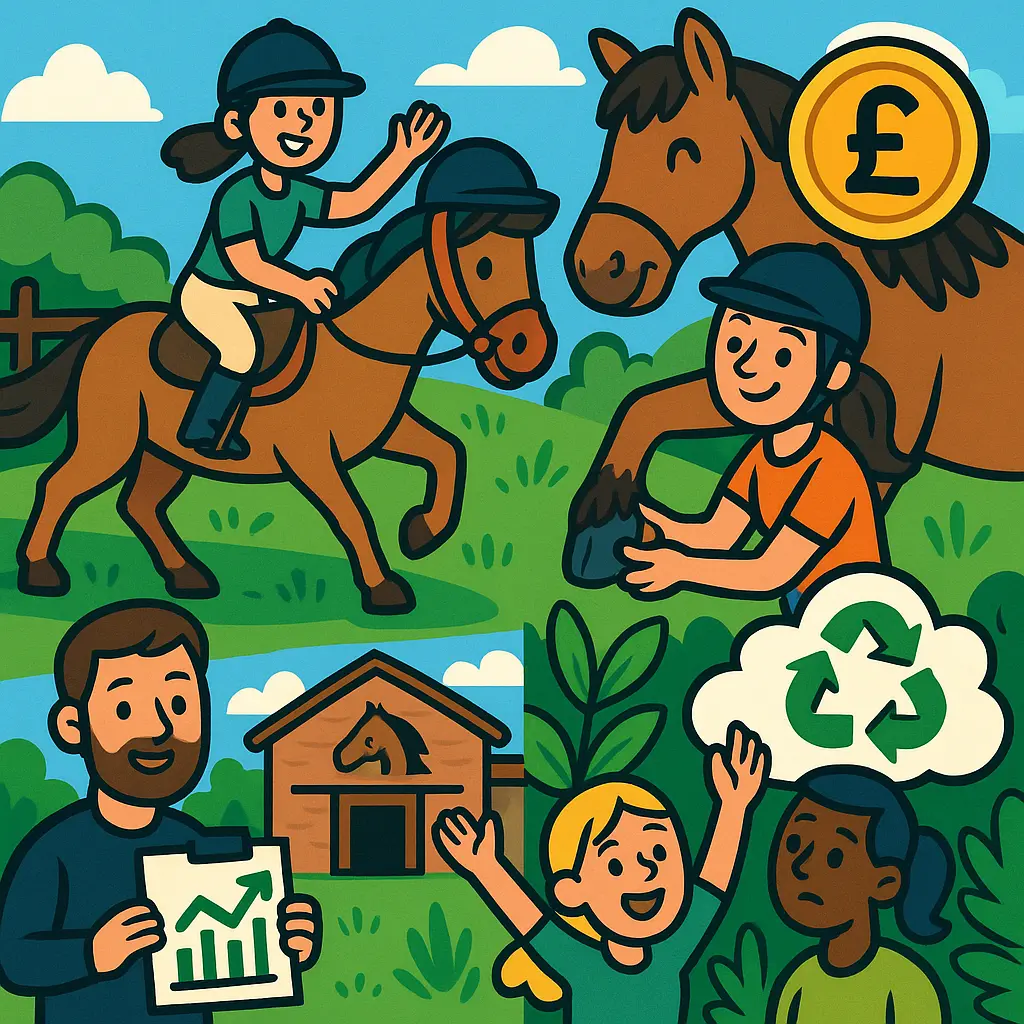
Volunteering is worth £1,000–£2,100 per person per year, so build pathways that scale your capacity fast.
Weekly volunteers deliver around £2,100 of social value each year; monthly volunteers around £1,000. Asking for time can be as powerful as asking for money, especially where budgets and staff hours are tight. Source: British Equestrian.
Volunteer roles that move the needle:
- Route stewards, signers and first-aiders for charity rides
- Stable support: mucking out, grooming, tack cleaning, turnout/bring-in
- Digital champions: page setup, short videos, weekly social posts
- Welfare check teams: off-horse yard walks, field checks, and feed prep
Equip volunteers properly to reduce risk and increase retention. A basic starter pack might include hi-vis, gloves, and a small kit from our grooming range. For horses on busy event weeks, plan ahead with supportive boots and bandages and keep top-up supplies for recovery days.
Quick tip: Publish a rolling rota with 2-hour micro-shifts. “Many hands, short stints” beats “no hands, all day” — and it keeps volunteers coming back.
Start with low-cost, high-impact sustainability tweaks — most orgs lack money (41%) and time (26%), yet 94% want practical training.
The BEF Environmental Sustainability report highlights appetite for change, but limited resources. Build sustainability into the fabric of your fundraising without adding cost: consolidate deliveries, share transport and kit, and design circular ride-day stores (loaned hi-vis, reusable markers, rechargeable lights). Source: British Equestrian – Environmental Sustainability.
Low-effort wins to embed this season:
- Pre-event horse care briefings to reduce waste (right rug, right time). In wet, windy spells, specify waterproof layers and appropriate turnout rugs to avoid last-minute emergency purchases.
- Set a “repair-first” culture for tack and equipment; publish loan lists so riders can borrow before they buy.
- Choose routes with minimal box miles or cluster start points to cut fuel and costs.
- Swap single-use signage for durable, stowable markers. Reuse every season.
At Just Horse Riders, our customers often tell us that simple, durable choices — a hard-wearing rug, a helmet that fits well, quality boots — save money and reduce waste across the season.
FAQs
Why are some UK equestrian fundraisers struggling to hit targets?
Because 55% of centres report cost-of-living impacts — rising insurance, feed and energy — which squeeze capacity and budgets for events and appeals. Source: British Equestrian – Research & Insights.
What’s the quantified value of equestrian participation for fundraising pitches?
£1.2 billion per year across the UK, with £2,000–£3,500 per on-horse participant, £2,000 per off-horse participant, and up to £2,100 per year for weekly volunteering. Source: British Equestrian.
Which fundraising formats are working best right now?
Mass-participation rides and charity race days. In 2024, BHS Ride Out and Rideathon raised £45,556; BHS charity race days added £65,000; and 36 regional rides raised around £250,000. Source: BHS annual report.
Are UK riding schools open to growth despite economic pressure?
Yes. While numbers remain under pressure, 57% of schools report interest and capacity to grow. Source: Horse & Hound.
How should we talk about impact to donors?
Lead with BEF social-value metrics, add a human story, and show a simple before/after: “30 weekly youth places = ~£105,000 in annual social value.” Keep reporting short and regular.
What barriers most often block progress on sustainability?
Lack of money (41%) and time (26%) — but 94% of respondents want training or information to help. Start with low-cost, high-impact changes. Source: British Equestrian – Environmental Sustainability.
What kit should riders bring to charity hacks?
Approved helmets, hi-vis layers, weather-appropriate clothing, suitable footwear, and horse protection. See our curated riding helmets, practical hi-vis, and supportive horse boots & bandages collections to build a safe, reliable kit list for your event.