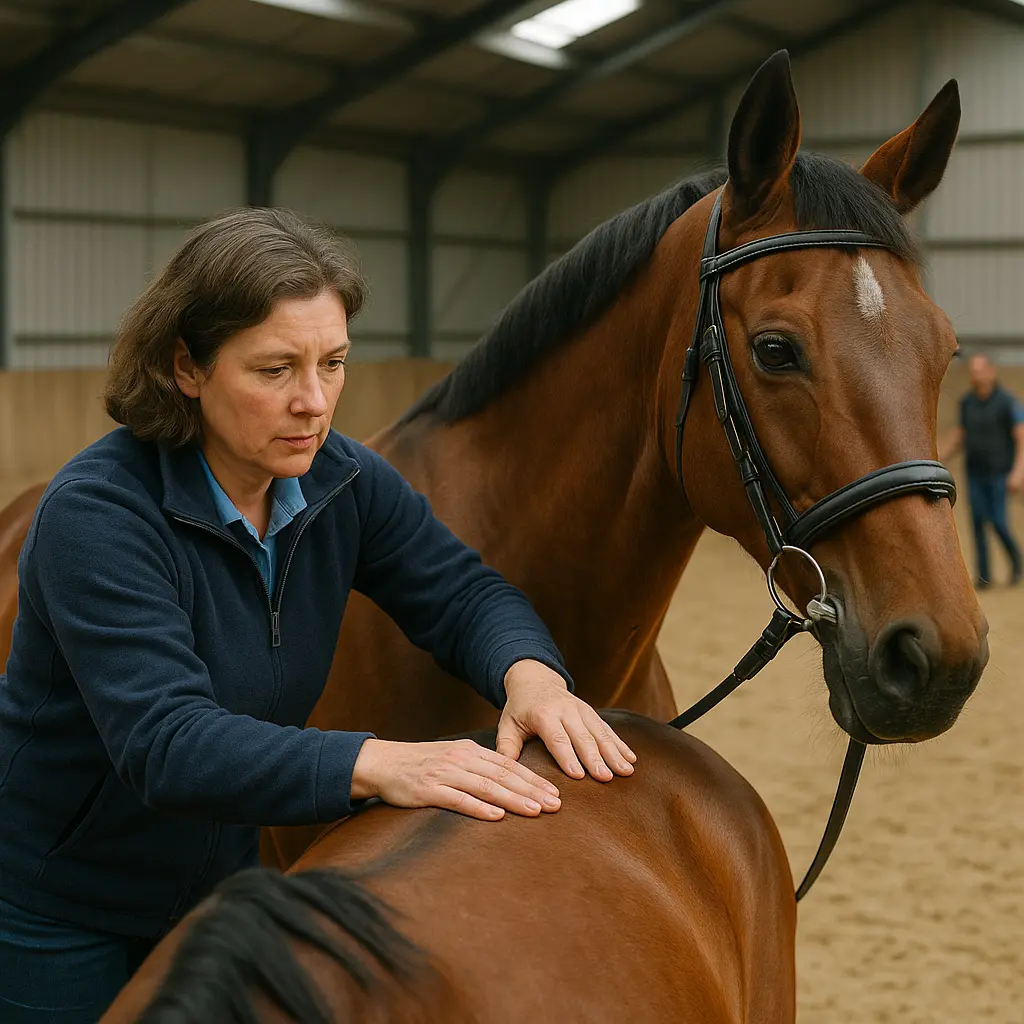
Your horse moves beautifully when everything is aligned — but spotting subtle biomechanical niggles early can save months of frustration. Here’s exactly what to expect from an equine osteopathic assessment in the UK, when to call your vet instead, and how to get the most from each session.
Key takeaway: In the UK, you must have your vet’s permission before any equine osteopathy. A thorough assessment includes a case history, dynamic gait observation, and hands-on palpation of the spine, pelvis, TMJ, shoulders, hips, muscles, fascia, joints and hoof balance — with red-flag signs requiring immediate veterinary referral.
What happens in an equine osteopathic assessment?
An equine osteopathic assessment covers a full case history, gait observation at walk and trot on both reins, and hands-on palpation of the spine, pelvis, jaw (TMJ), shoulders, hips, muscles, fascia, joints and hoof balance. This structured approach identifies functional restrictions before they become lameness or performance-limiting issues.
Your osteopath will start with a detailed history: training load, recent behaviour changes, previous injuries or surgeries, saddle fit notes, farriery cycle, dental work, and any veterinary diagnoses. Next comes dynamic observation — typically in-hand in a straight line on a hard surface and, where safe, on both reins on a circle or in a sand school — to compare symmetry, rhythm, stride length, limb loading and thoracolumbar movement. Finally, targeted palpation and range-of-motion testing help find stiffness, soft-tissue tension, fascial restrictions, spinal or pelvic asymmetry, TMJ/poll mobility issues, and hoof balance influences on limb loading. This reflects best practice outlined by East Sussex Osteopaths.
Expect clear findings and a tailored plan: manual therapy where appropriate (with prior vet consent), simple in-hand exercises or stretches, rest or work modifications, and collaboration with your vet, farrier, saddle fitter and dentist.
When you must call the vet first (UK law and emergencies)
In the UK, it’s illegal for any therapist to treat your horse without express veterinary permission under the Veterinary Surgeons Act 1966 and Veterinary Surgeons Order 2015; urgent clinical signs always require a vet first. Your vet remains the primary clinician and controls referral and consent for paraveterinary care like osteopathy.
Two essentials define “vet-first” moments:
-
Legal requirement: Your osteopath must obtain consent from your vet before treating your horse. As Astwood Equine Osteopaths summarise:
“The treatment of all animals including horses must be controlled by a qualified vet as stated in the Veterinary Surgeons Act 1966. It is illegal for any therapist to treat your horse without your vet’s permission.”
Nene Valley Osteo add that the Veterinary Surgeons Order 2015 requires express veterinary permission before any treatment.
- Clinical urgency: Call your vet immediately for acute colic, deep wounds or suspected fractures, inability to rise/stand/move, severe diarrhoea, respiratory distress, or prolonged sweating/high temperature. These are flagged by the MSD Animal Health HUB and the Horse Health Programme. Within 48 hours, consult your vet for marked lameness not settling with first aid, persistent injuries, suspected Strangles (nasal discharge, fever, cough), sustained appetite loss, or painful skin conditions like girth galls.
At Just Horse Riders, we recommend you keep your vet’s details and your horse’s consent form handy so your osteopath can liaise quickly and legally.
Red flags that stop manual therapy immediately
Stop and refer to a vet immediately if you see non-weight-bearing lameness, neurological signs, incontinence, rapid deterioration, unexplained pain not reproduced mechanically, or pain at rest/night pain. These red flags indicate that osteopathy is not appropriate until a vet has investigated.
The Animal Osteopathy College advises:
“Certain clinical signs should immediately prompt a pause in manual therapy and a referral to veterinary care: sudden non-weight-bearing lameness, incontinence or loss of anal tone, acute neurological signs (ataxia, head tilt, seizure), rapid deterioration or progressive weakness, unexplained pain not reproduced mechanically, pain at rest or night pain (suggests non-mechanical cause).”
This guidance dovetails with UK law: the Royal College of Veterinary Surgeons (RCVS) requires that vets oversee paraveterinary treatments, and osteopathy must not proceed when a medical cause is suspected without veterinary diagnosis.
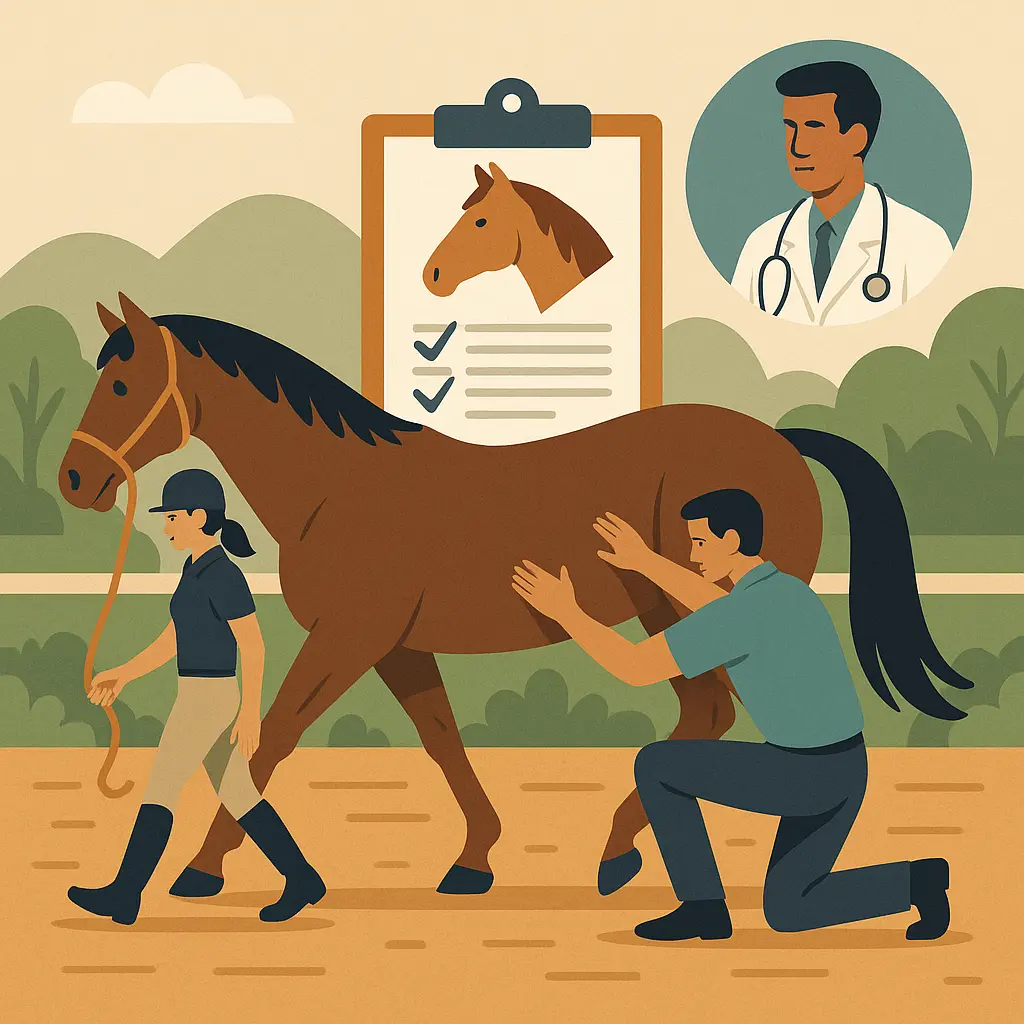
How many sessions and what to expect
Most straightforward cases respond within 1–2 osteopathy sessions, with complex histories requiring more; horses in light work often benefit from follow-ups roughly every six months. Many horses show easier movement after the first treatment, with mild post-session soreness for 1–2 days being common.
Astwood Equine Osteopaths and Nene Valley Osteo report that simple biomechanical restrictions typically improve significantly in 1–2 visits, while long-standing compensations, multiple injuries or concurrent dental/saddle/hoof issues may need a structured block and integrated team input. Expect your horse to feel post-exercise sore for 24–48 hours; walk work, turnout and gentle stretching are usually recommended unless your vet or osteopath advises rest.
Quick tip: Plan your diary so the 48 hours post-session are low-key — no jump schooling or gallops — and note changes in stride, willingness, and contact at the next easy school.
How to prepare for an assessment
Set up a safe, well-lit area with a firm, level surface for straight-line assessment and access to a sand school or level yard to see both reins. Have your horse clean, dry, in a well-fitting headcollar or cavesson, and bring recent vet, dental, saddle and farriery notes.
Preparation checklist that makes a real difference:
- Surfaces: Provide a hard, even track for in-hand walk/trot, and a safe area to assess both reins on a circle — invaluable in the UK where wet winters and muddy gateways can mask asymmetry if you only watch on soft ground.
- Handler and kit: Use a sensible lunge line and cavesson if your osteopath wants to observe on a circle; wear gloves and suitable footwear. For safety, wear a certified riding hat when lunging — browse our range of riding helmets.
- Grooming: A clean, dry coat helps palpation and visual assessment of muscle tone and asymmetry; a quick once-over with your everyday grooming tools prevents mud from obscuring landmarks.
- Protection: If you’ll be trotting on a hard surface, consider supportive wraps or brushing boots for a brief observation if advised by your professional — see our horse boots and bandages.
- Warmth and comfort: Standing around in a breeze chills back muscles; a breathable rug between tests can help. Our customers rate the durability of WeatherBeeta rugs for yard use.
- History at hand: Bring dates and notes: recent shoeing, saddle checks, dentistry, vet investigations, ridden changes, and any video of an issue.
Pro tip: Film 20–30 seconds of straight lines and circles at walk and trot a few days before the appointment. It creates a baseline, and you can re-film post-treatment to track changes.
Post-treatment aftercare and teamwork
Follow your osteopath’s plan: expect 24–48 hours of light work or turnout, specific stretches or in-hand exercises, and a simple recheck schedule. Collaboration with your vet, saddle fitter, farrier and dentist is essential to maintain improvements.
A joined-up plan often looks like this:
- Work pattern: 1–2 days of easy walking, then gradual return to schooling as advised. Note what changes — a freer shoulder, better bend, improved contact — and what still needs support.
- Comfort management: Keep topline warm in cold, damp weather to reduce muscle guarding. Explore our dependable winter turnout rugs for outdoor warmth, and choose a breathable stable layer on frostier nights if your horse is clipped or naturally lean.
- Hoof-saddle-dental sync: Your osteopath’s report may flag hoof balance or saddle fit as drivers of asymmetry. Book routine visits and consider targeted nutrition; our curated horse supplements include trusted options from NAF to support healthy hooves and muscles.
- Simple home exercises: Carrot stretches, walk poles and straight lines on varied but level footing help reinforce symmetry without overload. Exercise therapy bands can assist engagement when recommended by your professional.
- Monitoring tools: A basic yard diary and occasional short videos are often enough; some owners also use thermographic rugs to spot hot/cold areas in muscle groups between professional visits.
If your horse’s lameness or pain persists, worsens, or fails to respond to first aid, contact your vet within 48 hours as advised by the MSD Animal Health HUB and Horse Health Programme.
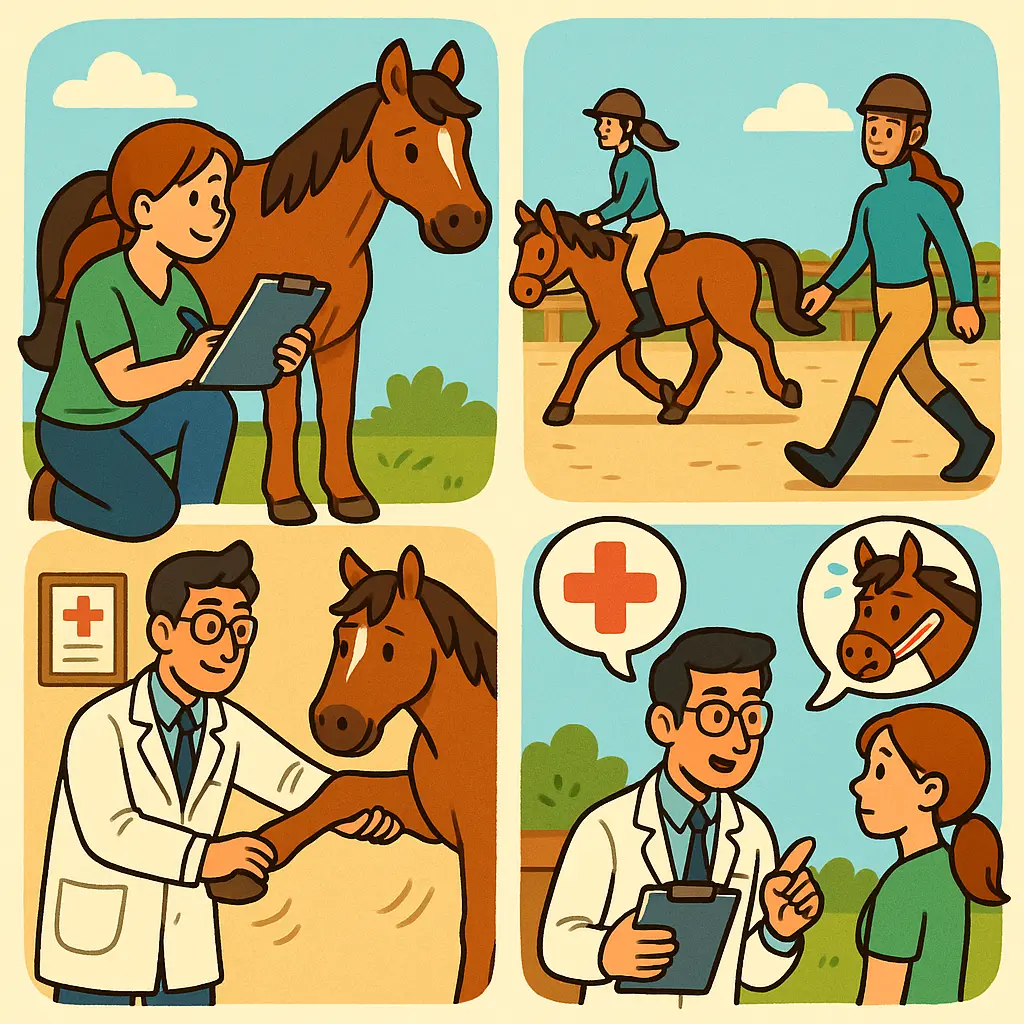
UK seasonal considerations and common mistakes
UK winters bring wet, cold, and mud — conditions that tighten backs, sap topline warmth, and hide gait asymmetry on soft going — so plan assessments on hard and level ground and manage warmth and footing carefully. The biggest mistakes are bypassing legal vet consent, ignoring red flags, and “waiting it out” beyond 48 hours for marked lameness.
Key pitfalls to avoid:
- Treating without vet consent: The Veterinary Surgeons Act 1966/Order 2015 requires express permission before any osteopathy. Your osteopath will usually obtain this via a quick consent form or vet phone call.
- Overlooking red flags: Non-weight-bearing lameness, neurological signs, or pain at rest are veterinary cases, not manual therapy cases. Refer immediately.
- Letting 48 hours pass with marked lameness: Per UK welfare guidance highlighted by MSD and the Horse Health Programme, prolonged or unresponsive lameness should prompt a vet consult within two days.
- Assessing only on soft ground: Muddy fields and deep arenas can mask limb loading issues. Always include straight lines on a firm surface.
- Skipping routine checks: For horses in light work, a six-month review catches creeping asymmetries and helps set training goals.
- Cold backs in damp weather: Use a breathable rug layer during longer yard sessions to keep muscles supple between observations and hands-on testing.
Quick tip: When hacking to or from the assessment area in low light, wear high-visibility rider gear and a properly fitted riding helmet for safety.
Smart kit and product picks
Reliable basics make assessments smoother and aftercare easier. Our team’s favourites:
- Keep coats clean for palpation: A compact set from our grooming collection lifts mud quickly and helps your osteopath see muscle definition clearly.
- Protective legwear for brief hard-surface trots: Choose supportive options from horse boots and bandages when your professional recommends protection.
- Warmth without bulk: Breathable, weatherproof layers from trusted brands like WeatherBeeta keep toplines comfortable between tests.
- Outdoor comfort: For cold, wet days, consider our durable turnout rugs to maintain back comfort while your horse stands during observations.
- Targeted nutrition: Support hoof and soft-tissue health with proven picks in our supplements range, including options from NAF that many UK owners trust.
- Safety-first handling: If you’ll be lunging for dynamic assessment, equip yourself with a certified riding helmet and wear hi-vis gear in low light.
At Just Horse Riders, we hand-pick essentials that stand up to British weather and busy yard life, backed by 13,500+ verified customer reviews.
FAQs
What exactly will be in my horse’s osteopathy report?
Expect your horse’s case history, dynamic gait observations (walk and trot on both reins), and findings from hands-on palpation of the spine, pelvis, TMJ/poll, shoulders, hips, muscles, fascia, joints and hoof balance. You’ll also get a clear plan covering any manual treatment (with prior vet consent), suggested rest or work changes, and collaboration with your vet, farrier, saddle fitter or dentist, as outlined by East Sussex Osteopaths.
Do I legally need my vet’s permission for equine osteopathy in the UK?
Yes. Under the Veterinary Surgeons Act 1966 and Veterinary Surgeons Order 2015, it is illegal for any therapist to treat your horse without veterinary permission. This is reinforced by practices such as Astwood Equine Osteopaths and Nene Valley Osteo, and enforced by the RCVS.
When should I call the vet urgently instead of booking osteopathy?
Immediately call your vet for acute colic, deep wounds or suspected fractures, inability to rise/stand/move, severe diarrhoea, respiratory distress, or prolonged sweating/high temperature, per the MSD Animal Health HUB and Horse Health Programme. Also seek urgent referral for non-weight-bearing lameness or neurological signs.
How many osteopathy sessions will my horse need, and when will I see a change?
Many horses show movement improvements after the first session; straightforward cases often need 1–2 treatments, while complex cases require more. Horses in light work commonly benefit from follow-ups around every six months. Post-session soreness for 1–2 days is normal, according to Astwood Equine Osteopaths and Nene Valley Osteo.
What are the red flags that mean osteopathy should stop immediately?
Non-weight-bearing lameness, incontinence or loss of anal tone, neurological signs (ataxia, head tilt, seizure), rapid deterioration, progressive weakness, unexplained pain not reproduced mechanically, and pain at rest or night pain are all red flags. Pause therapy and contact your vet, as advised by the Animal Osteopathy College.
What if lameness persists after an osteopathy session?
If marked lameness persists or doesn’t respond to first aid, consult your vet within 48 hours. Osteopathy complements veterinary diagnosis and rehabilitation but does not replace it; this 48-hour guidance is highlighted by the MSD Animal Health HUB and Horse Health Programme.
Can osteopathy help with back pain and performance issues?
Yes — with vet approval and provided there are no red flags, osteopathy’s whole-body approach can restore biomechanics that underpin flexible, efficient movement. It works best as part of an integrated plan with your vet, saddle fitter, farrier and dentist.
Ready to support your horse’s next assessment? Keep safe, keep legal, and equip your yard with the right kit so your team can spot and solve issues early.