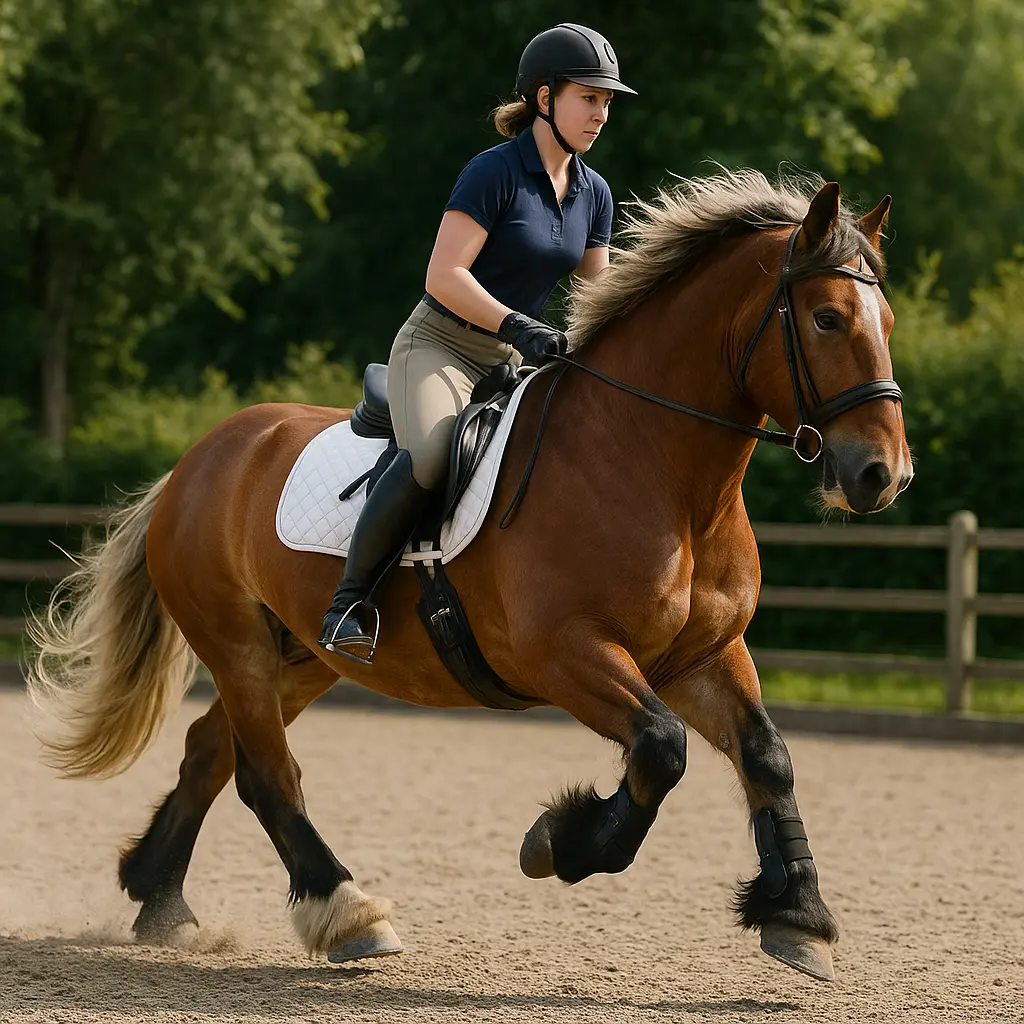
Your cob’s canter can feel like flying one day and a flat, downhill rush the next. If he’s tipping onto his shoulders, you’re not imagining it — he’s on the forehand, and that throws away power, balance and long-term soundness.
Key takeaway: Most horses carry about 60% of their weight on the forehand, but good training redistributes this towards 50/50 so your cob can canter uphill, lighter and sounder.
What “on the forehand” really means
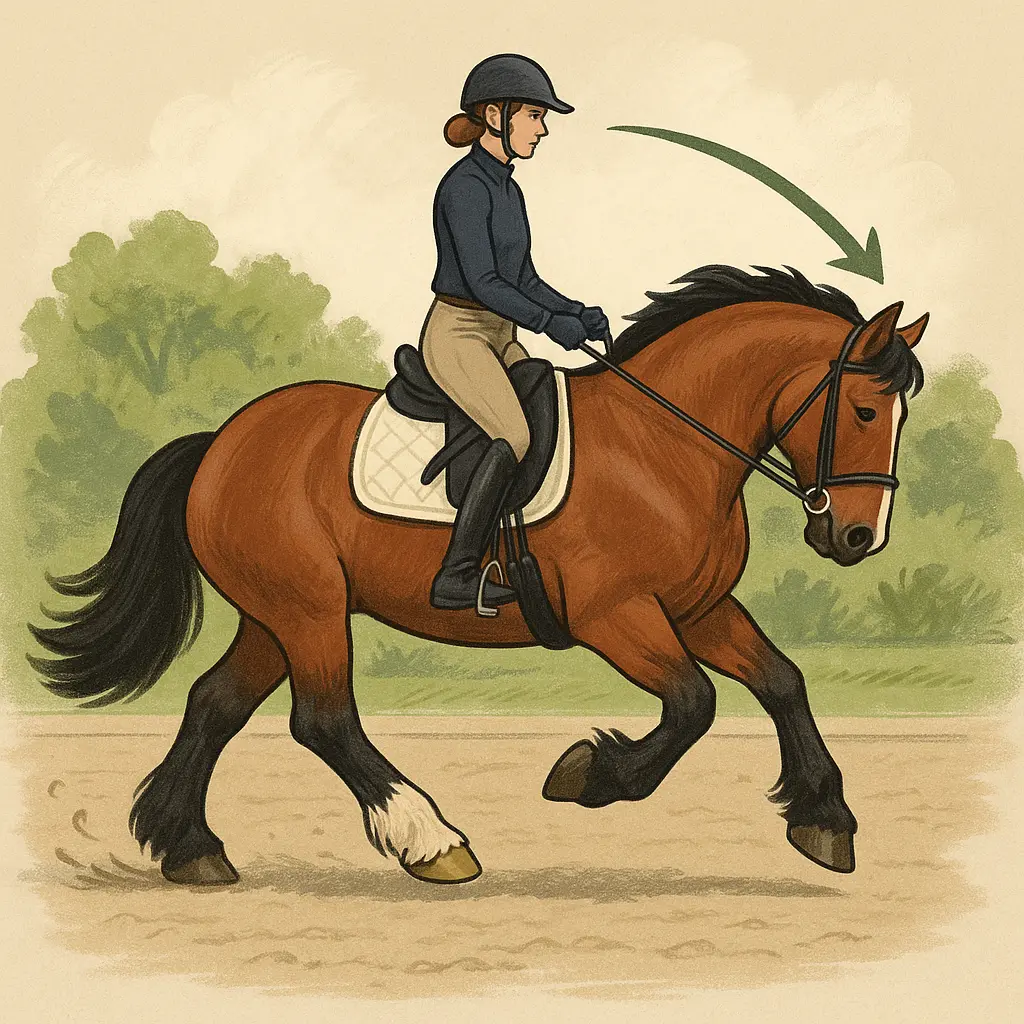
Being on the forehand means your horse is carrying more weight on his front end than his hindquarters — typically around 60% up front, with the head and neck acting like a 10% pendulum that pulls him downhill. That natural balance can and should be trained closer to 50/50 for self-carriage and performance.
When a horse travels on the forehand, the shoulders and front legs take the brunt of the load, the neck drops, and the back often hollows. According to anatomy specialist Gillian Higgins of Horses Inside Out, this “downhill” way of going robs you of power from the hindquarters — the horse’s engine — and increases concussion through the forelimbs, raising the risk of lameness over time (Horses Inside Out).
“Being on the forehand is one of those terms that gets mentioned all the time, but riders often don’t understand what it means or how to fix it... it feels as though he’s tipping onto his nose.” — Horse & Rider UK
Your goal is not to “hold the head up”, but to re-balance the whole horse. Training that combines longitudinal work (transitions, adjustability) with lateral work (suppleness through the neck and back) is proven to lift the forehand and build the thoracic sling muscles that support the front end (Horses Inside Out).
Why it matters for your cob’s canter
Lightening the forehand transforms canter by improving jump, straightness and self-carriage, while reducing long-term concussion on the front legs.
Heavy cobs — especially shorter-coupled types popular in UK showing and hunting — are naturally predisposed to lean on the forehand in canter. That’s why you feel the “downhill” rush and the outside shoulder falling out on circles. Shifting weight rearward lets the hind legs step under, lift the withers, and create an uphill, elastic canter with true three-beat rhythm. It also reduces wear on the front-end structures that absorb impact stride after stride (Horses Inside Out).
For UK riders aiming for affiliated dressage or simply safer winter hacking, this re-balance is a cornerstone of the British Horse Society (BHS) approach to self-carriage and is reinforced by UKCC coaching principles: clear aids, frequent transitions, rider softness, and progressive strengthening.
A 20m-circle test you can ride today
Canter–trot transitions on a 20m circle are a fast, reliable way to test — and improve — balance. Start with one transition per circle and, as he improves, ride one every quarter (3, 6, 9 and 12 o’clock).
Why it works: each well-ridden downward transition rebalances weight back onto the haunches; each upward transition asks the hindquarters to propel, not the shoulders to pull. As Horse & Rider UK explains, you want continuous, soft communication down the reins without allowing him to lean:
“Establish a 20m circle in canter… You need to have continual communication with your horse down the reins. Do this by softly sponging them with your fingers… it creates a more fluid rein pressure, making it harder for him to lean on the bit.”
Ride the pattern like this:
- Begin in active trot, circle 20m, establish rhythm and flexion.
- Ask for canter; ride half a circle maintaining inside flexion with your inside leg at the girth and outside leg guarding the quarters.
- Transition to trot before the canter falls apart; ride a few energetic trot steps, re-balance, then canter again.
- Progress to a transition every quarter of the circle as he finds his balance.
Pro tip: Use light, well-timed half-halts to “rebalance then go”, rather than hanging on. Think quick messages, not constant pressure.
The 4-week plan to lift the forehand
A consistent, four-week block of transitions and lateral work will noticeably lighten most forehand-heavy cobs. Work 4–5 days per week, 25–45 minutes per session, adjusting for fitness.
Week 1 — Switch on the engine
- Warm up in free walk, then marching walk with frequent short halts. Add 6–8 walk–trot transitions on straight lines.
- On a 20m circle, ride trot–canter–trot transitions (3–5 per rein). Keep them frequent enough that balance never “dives”.
- Introduce leg yield at walk from the three-quarter line to the track, then straighten. This starts lateral suppleness.
Week 2 — Build reactivity and straightness
- Ride “10 strides walk, 10 strides canter” on a 20m circle; repeat 3–4 times per rein. This quickly shifts weight to the hindquarters and highlights any leaning.
- Within-gait variations in canter: collect 6 strides, then allow 6 strides, staying in balance. Think “shorter, not slower”.
- Alternate leg yield with walk–trot transitions: leg yield to the second track in walk, trot 6–8 steps, back to walk, straighten.
Week 3 — Add lateral lift and posture
- Introduce shoulder-fore on the long side in trot, 20–30 metres at a time, then ride a balanced canter transition out of it to keep the shoulders up.
- On your 20m circle, add poles or cones at the quarter points to help you ride accurate transitions at 12, 3, 6 and 9 o’clock.
- Keep canter sets short and quality-focused; 3–5 transitions per rein with walk breaks.
Week 4 — Consolidate and test self-carriage
- Ride a figure-of-eight in trot and ask for canter on the new inside leg at the changeover; test if he stays light without you holding him.
- Introduce a few steps of rein-back from halt, then walk on. This encourages hindquarter engagement and respect for the aids.
- Finish sessions with stretchy trot in good balance. A truly light forehand can stretch without falling on the shoulders.
Safety and comfort support: As you increase hindquarter engagement and lateral work, protect legs with protective horse boots and bandages on school surfaces. Many riders also feel more stable and effective in well-fitted kit — try supportive horse riding boots and grippy jodhpurs or breeches for a quiet lower leg that delivers precise aids.
At Just Horse Riders, we recommend reviewing saddle fit and considering reputable brands known for quality pads and numnahs; explore LeMieux for well-regarded options that can help you feel your inside seat bone and ride more accurate canter aids.
Get the aids right: timing, half-halts and rein feel
Time your canter aid as the inside hind lifts, support it with a slight seat push, and recycle any brace with quick half-halts rather than stronger bits.
Many heavy cobs improve dramatically when the rider’s inside leg asks at the precise moment the inside hind is about to leave the ground (use the posting trot rhythm to learn the timing), paired with a small seat “push” to invite liftoff from behind (Dressage Today). Combine this with a soft, elastic contact — especially through the elbows — and prevent leaning by using brief, effective half-halts:
“Nip up” with a quick rein lift to recycle resistance into collection, rather than hanging on the mouth. Use sparingly for maximum effect. — EquestrianCoach.com
UK riders of heavy cobs consistently report that “inside leg to outside rein” with relaxed elbows creates the jump and lift that lightens the shoulders (Horse & Hound Forum). Resist the urge to fix the head; ride the body. If he braces, half-halt, rebalance, and ask again — never pull outward through the circle or allow him to run through the downward transition.
Quick tip: If your cob leans on your hand in canter, imagine you’re “sponging” the rein with your fingers while your core stays tall. That micro-elasticity makes leaning unrewarding without losing connection (Horse & Rider UK).
UK-friendly ways to train year-round
Use 20m circle work and frequent transitions through the darker, wetter months; add hillwork and gradients when ground allows to engage the thoracic sling and lift the shoulders.
Winter in the UK often means limited daylight and slippery going. Prioritise indoor or well-lit arenas for your transition sets, lateral work and 20m-circle patterns. When the ground is safe, incorporate hillwork: walking up engages the hindquarters; carefully walking down recruits the thoracic sling, teaching your horse to hold himself off the forehand (Horses Inside Out).
For outdoor sessions, dress for security and safety. A well-fitted, certified riding helmet and supportive horse riding boots help you stay balanced and effective. If you’re braving drizzle or a cold snap before or after work, a quality rug for your horse keeps muscles warm before and after schooling; explore trusted brands like Weatherbeeta for reliable UK-weather coverage.
Finally, as workload increases, consider joint-care management with your vet or qualified professional. Many UK owners choose targeted support alongside good training — browse our curated joint-care supplements, including well-known options from NAF, and always align with veterinary advice for your horse’s history and workload.
Common mistakes and quick fixes
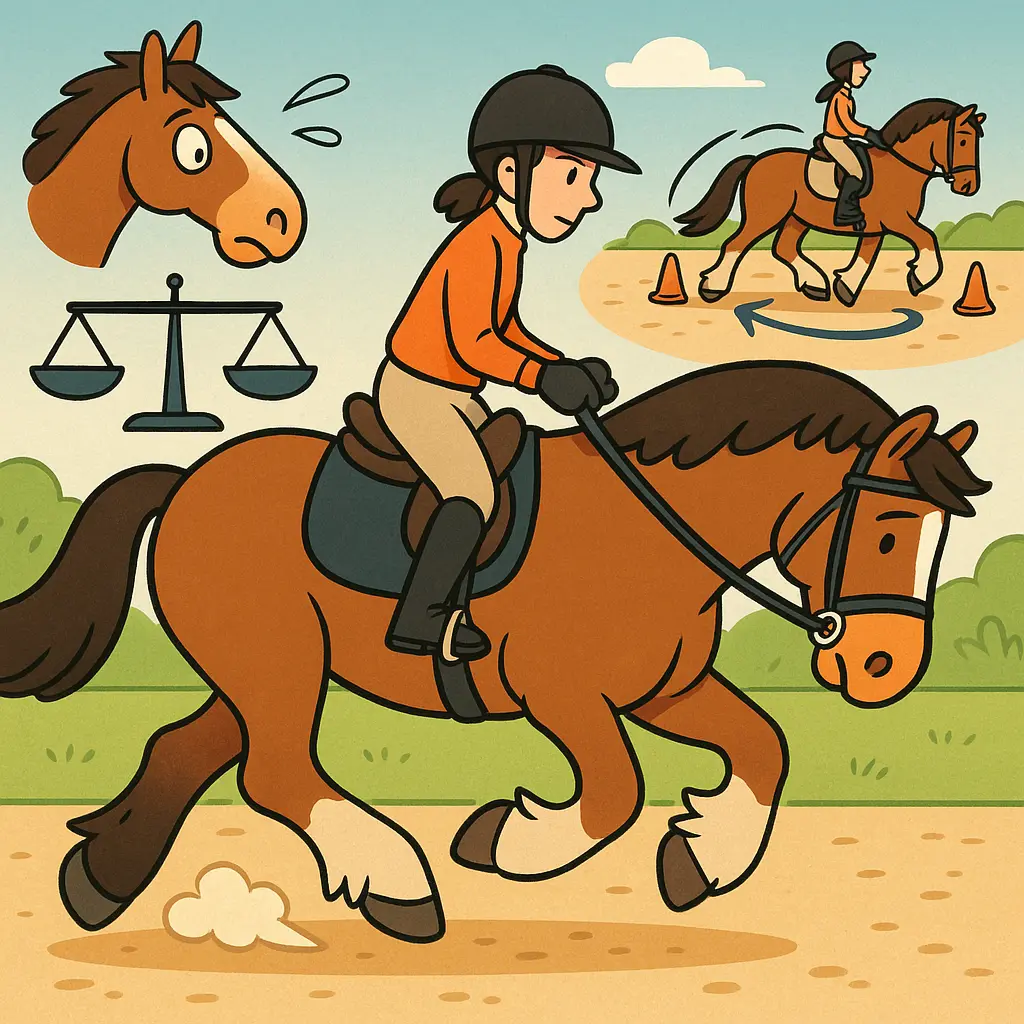
Don’t pull, don’t over-bit, and don’t chase speed; instead, ride frequent, accurate transitions and lateral work that shifts weight back and builds strength.
- Pulled-around circles: If you feel you’re water-skiing on the contact, ride a downward transition, re-establish balance, then strike off again. Accuracy beats endurance when retraining balance.
- Over-bitting to stop leaning: Heavier bits often mask, not fix, the problem. Use quick, effective half-halts and reactivity to the leg; keep the mouth soft and the poll free (EquestrianCoach.com).
- Endless canter with no plan: Short, high-quality canter sets — even 20–30 seconds at a time — with transitions in and out will do more for the forehand than five minutes of flat, downhill canter.
- Neglecting lateral work: Leg yield, shoulder-fore and shoulder-in encourage the inside hind to step under and the shoulders to stay up. Sprinkle these through your warm-up and between canter sets.
- Skipping protection: As you increase engagement, protect limbs appropriately with horse boots and bandages, especially on abrasive or wet school surfaces.
Our customers often report that once they prioritise transitions and rider softness, the canter “pops” into a lighter, more uphill feel within weeks — especially in heavy cobs. If you’re not seeing progress after a month of consistent work, book a session with a qualified BHS instructor to refine your aids and check saddle fit.
FAQs
What does “heavy on the forehand” feel like in canter?
It feels as if your horse is tipping onto his nose, with too much weight on his shoulders and front legs and not enough on the hindquarters — you’ll sense a downhill, bracey canter with reduced jump (Horse & Rider UK).
How do I time the canter aid on a heavy cob?
Ask with your inside leg as the inside hind lifts (use the posting trot rhythm to feel it) and add a subtle seat push for liftoff from behind, rather than letting the outside shoulder fling you outward (Dressage Today).
Which exercises will most quickly lighten the forehand?
Frequent canter–trot transitions on a 20m circle, “10 strides walk/10 strides canter” sets, and within-canter variations (collect six strides, then allow six) build balance and engagement fast. Add leg yield and shoulder-fore to keep the neck and back supple (Horses Inside Out).
Is being on the forehand harmful long-term?
Yes. It increases concussion through the forelimbs and raises lameness risk over time while limiting true collection and self-carriage (Horses Inside Out).
How often should I do transitions?
Frequently within each schooling session. Aim for sets such as “10 strides per gait” or a transition every quarter of a 20m circle, staying just ahead of loss of balance to keep the work quality-driven.
Do lateral exercises help cobs in canter?
Yes. Leg yield and shoulder-in promote suppleness and help the inside hind step under, which lifts the withers and lightens the forehand. Use them between canter sets to maintain posture.
What gear can support this training?
Keep yourself secure and precise with a fitted riding helmet, supportive riding boots and comfortable breeches. Protect your horse’s legs with boots or bandages, and consider quality pads from brands like LeMieux. For UK-weather resilience, explore rugs from Weatherbeeta, and discuss joint-care supplements (such as options from NAF) with your vet.
Put these tools and techniques together and your cob’s canter will go from downhill to delightfully uphill — more power, more balance, and a happier, healthier horse.