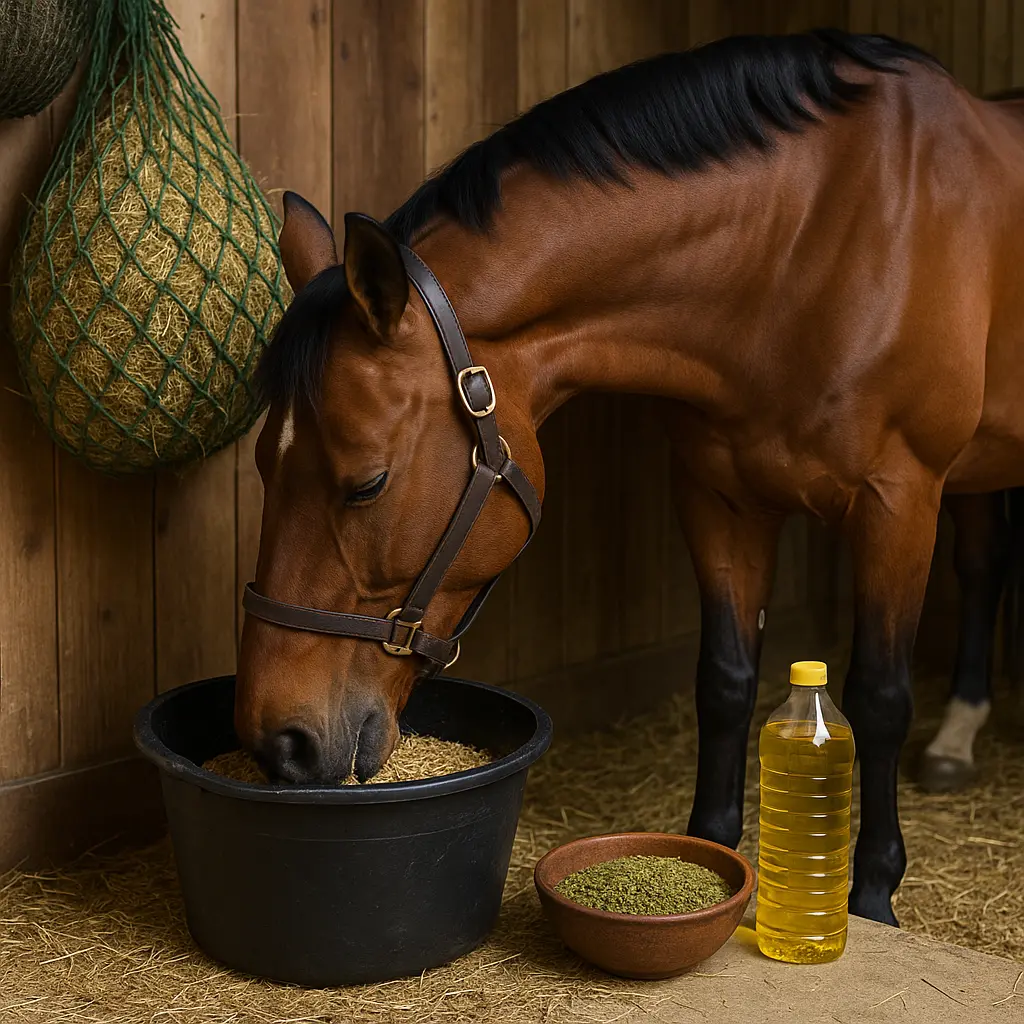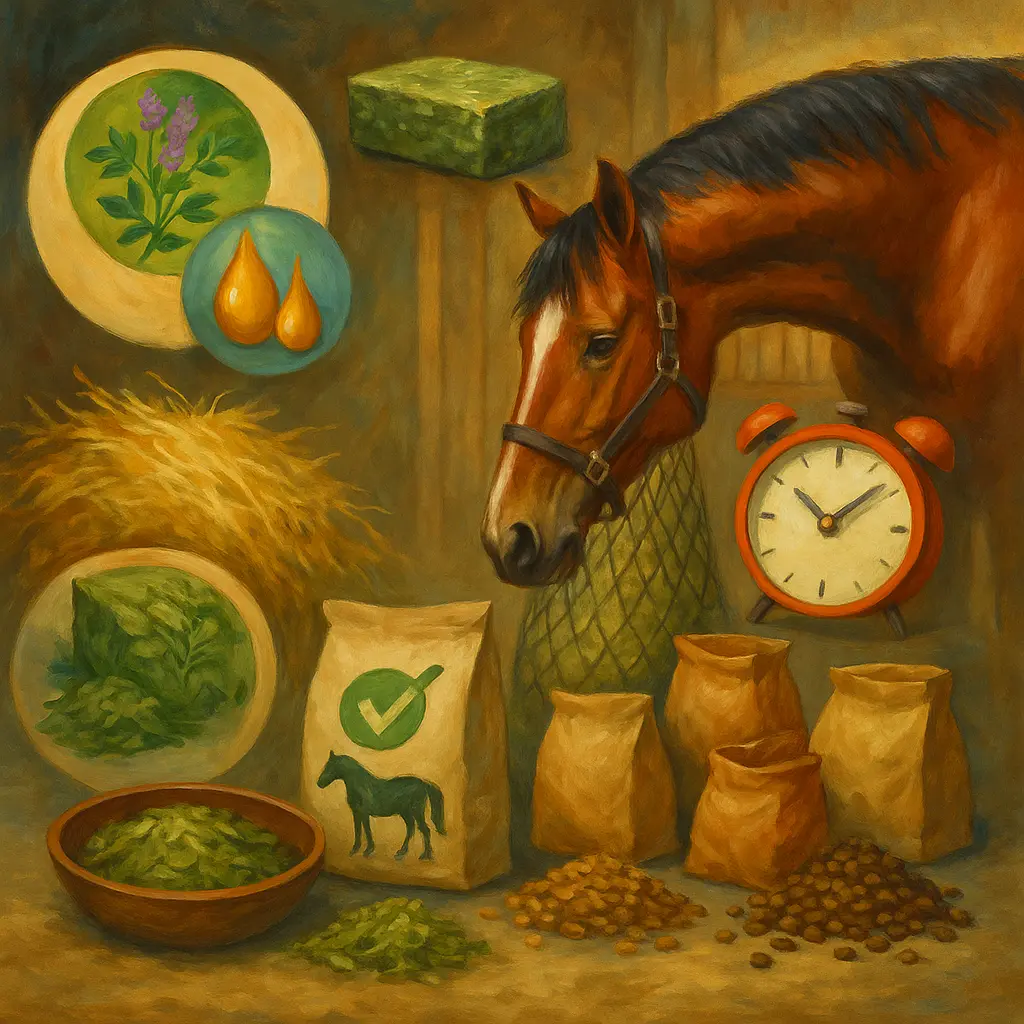
Your horse can gain weight with gastric ulcers — safely and steadily — if you feed for fibre first, keep starch and sugars low, and add calories from oil. Here’s exactly how to do it in the UK, season by season, with example rations and product picks that meet current guidance.
Key takeaway: Base the diet on ad lib forage (minimum 1.5% bodyweight), keep non‑structural carbohydrates below 1g/kg bodyweight per meal, and use high‑fibre, high‑oil, BETA EGUS‑approved feeds to add condition without aggravating ulcers.
The fastest way to help an ulcer-prone horse gain condition
For ulcer-prone horses, the safest and quickest route to weight gain is ad lib forage plus low-starch, high-fibre, high‑oil calories that keep NSC under 1g/kg bodyweight per meal. This protects the stomach while delivering enough energy for condition and topline.
Why it works: forage stimulates saliva and keeps the stomach topped up, physically buffering acid. Replacing cereal starch with digestible fibre and oil adds calories without the acid spikes linked to concentrates. UK guidance from Horse & Hound and the GOV.UK feed labelling rules converge on the same core principles: high fibre, controlled starch/sugar, small frequent meals, and pre‑exercise fibre.
“Starch, such as found in concentrated cereal feeds, is strongly associated with an increased risk of gastric ulcers. Therefore, stick to the high-fibre diet… If additional energy is required then this is best fed through a high-oil diet — and don’t forget to balance with vitamin E.” — Kate Hore, Head Nutritionist at NAF (Horse & Hound)
At Just Horse Riders, we recommend pairing a forage-first approach with targeted digestive support. You’ll find gut-friendly options on our horse supplements collection and vet-guided feeds carrying the BETA EGUS Approval Mark.
How much forage and what type?
Feed a minimum of 1.5% of bodyweight in forage daily; for a 500kg horse without grazing this equals roughly 9kg hay (unsoaked) or 10–12kg haylage. Ad lib access is even better for acid control and steady weight gain.
Hay vs haylage: true fermented haylage can be more acidic and less ideal for some ulcer-prone horses. The most practical approach in UK yards is to analyse your forage and choose either good hay or wrapped “haylage” with hay-like acidity. The SEIB nutrition guidance recommends testing pH and, where necessary, preferring true hay or low‑acid wrapped hay for sensitive horses, especially through damp autumns when UK grass sugars rise (SEIB).
Seasonal note: during wet UK winters and on spring flushes, grass NSC can run higher (reports up to around 14% seasonally). If your horse is ulcer‑prone and a poor-doer, limit fresh grass on these days and prioritise your tested hay/haylage to control sugars while still pushing calories.
Quick tip: Mix forage sources (for example, quality hay plus a small proportion of straw if appropriate) to extend chew time, but don’t rely on straw alone. Always ensure constant fresh water to support fibre fermentation and gut motility.
Set safe starch and sugar limits per meal and per day
Keep non‑structural carbohydrates (starch + sugar) under 1g per kg bodyweight per meal and under 2g per kg bodyweight per day; for a 500kg horse, that’s less than 500g NSC per meal and less than 1kg NSC per day. This aligns with UK GOV guidance for feeds indicated for ulcer‑prone horses.
These figures from Horse & Hound and the GOV.UK labelling criteria are practical guardrails for every bucket you feed. The UK regulation requires ulcer‑indicated feeds to keep starch/sugar below 20% for low/medium energy or below 25% for high/competition feeds — and to be fed at rates that keep meals under 1g/kg BW NSC and days under 2g/kg BW.
How to use it: if a conditioning mash is 14% combined starch + sugar (NSC), your 500kg horse’s maximum single meal to stay under 500g NSC is about 3.5kg (500g ÷ 0.14). Most horses won’t need a bucket that large; split feeds so each meal is comfortably inside your limit.
Choose feeds that build condition without starch
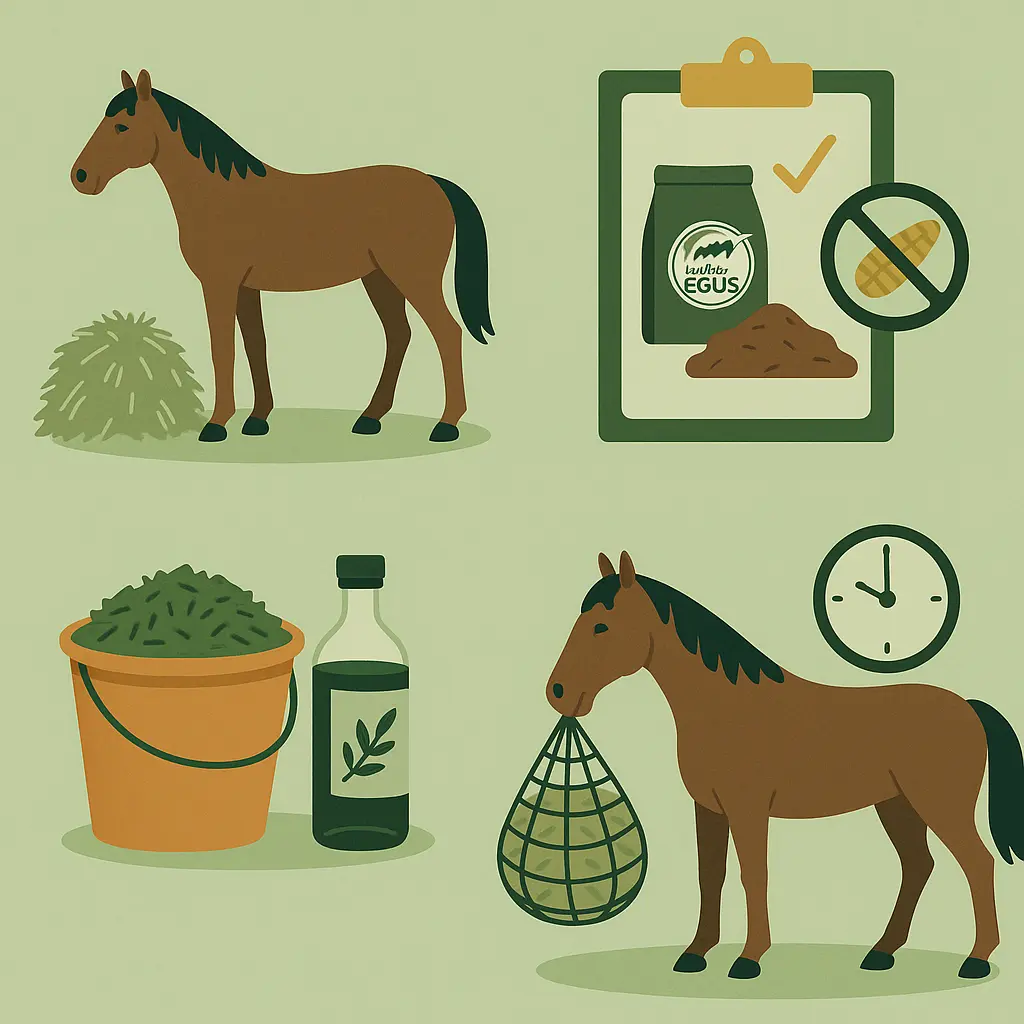
Use high-fibre, high-oil, low‑NSC feeds such as alfalfa-based chaffs and BETA EGUS‑approved cubes/mashes to add calories safely. This builds topline without the fizz or ulcer risk associated with cereals.
- Dengie Alfa‑A Oil — 2% starch, 4.5% sugar; ideal for poor-doers needing slow‑release calories from fibre and oil. A typical 2–2.5kg/day ration costs about £2.65/day (20kg bag RRP £21.19; Horse & Hound).
- Baileys Ease & Excel — 8% starch and 6% sugar (14% NSC), carrying BETA EGUS approval for ulcer‑prone horses (Baileys). A strong choice where more energy density is needed with digestive safety.
- Allen & Page Soothe & Gain — 14% combined starch/sugar, 13.25MJ/kg energy, with 13.5% beta‑glucan fibre to help keep the stomach fuller for longer (Allen & Page).
- Rowen Barbary Solution Mash — around 1% sugar and high oil; a typical 2kg/day ration is approx. £2.10 (20kg RRP £20.96; Horse & Hound).
- Pure Feed Company Condition Mix — fibre and oil‑based steady energy; around £3.15/day at 2kg (15kg RRP £23.62; Horse & Hound).
Alfalfa matters: a 2023 analysis found alfalfa pellets increased clinical success for Equine Gastric Glandular Disease by 47.7 times compared with concentrate rations (SEIB summarising Julliand et al., 2023). Adding short‑chopped alfalfa to every meal is doubly useful: it supplies quality protein and calcium that help buffer acid, and it lengthens chew time.
“Adding short chopped fibre, ideally containing alfalfa, to every meal can be hugely beneficial as the high protein and calcium content in alfalfa is thought to help buffer stomach acid.” — Katie (nutritionist), via Horse & Hound
For fussy feeders or hard‑keeps, try molasses‑free high‑fibre options such as Baileys High Fibre Ultra or Dengie Alfa‑A Molasses Free (around 11.5MJ/kg, ~4.5% sugar). At Just Horse Riders, our team often pairs these with appropriate digestion support from trusted brands like NAF — especially when increasing oil, where extra vitamin E is important (as NAF’s Kate Hore highlights).
Meal timing and pre‑exercise fibre
Feed small, frequent meals and give a handful of chaff or a haynet 20–25 minutes before you ride to reduce acid splash. This simple habit makes ridden work more comfortable for ulcer‑prone horses.
Multiple smaller buckets reduce acid load per meal and match GOV.UK‑mandated advice for ulcer‑indicated feeds to promote little‑and‑often feeding. Pre‑exercise fibre is non‑negotiable:
“It is also advisable to feed a handful of chaff or forage or give a horse a haynet 20–25 mins prior to exercising to help line the horse’s stomach and stop the acid from splashing around while the horse moves.” — Katie (nutritionist), via Horse & Hound
At Just Horse Riders, we see the best results when riders also manage stress around work and travel. Plan warm-ups to avoid fast, jarring work on an empty stomach, and introduce any ration changes over 10–14 days to protect the hindgut.
UK seasonal tweaks: turnout, grass and rugging
In wet UK winters and spring flushes, limit high‑NSC grass, use analysed hay/haylage, and push forage to 10–12kg/day for a 500kg horse when turnout is restricted. This keeps sugars consistent while meeting calorie needs for weight gain.
Consider management that reduces calorie wastage through cold stress and fidgeting. Well‑fitting rugs help poor‑doers conserve energy for condition rather than warmth. Explore our winter‑ready turnout rugs and cosy stable rugs from trusted brands like WeatherBeeta to keep your horse comfortable during cold snaps. On brighter days, a calm hack in traffic-safe kit can support mental wellbeing — kit up with rider hi‑vis for safe roadwork.
Quick tip: in yards where forage gets eaten quickly, use small‑hole nets to extend intake time. If your horse is stressy, additional calm handling, routine turnout, and consistent grooming can help; our grooming range has yard-friendly tools to make this easy.
How to build a daily feeding plan
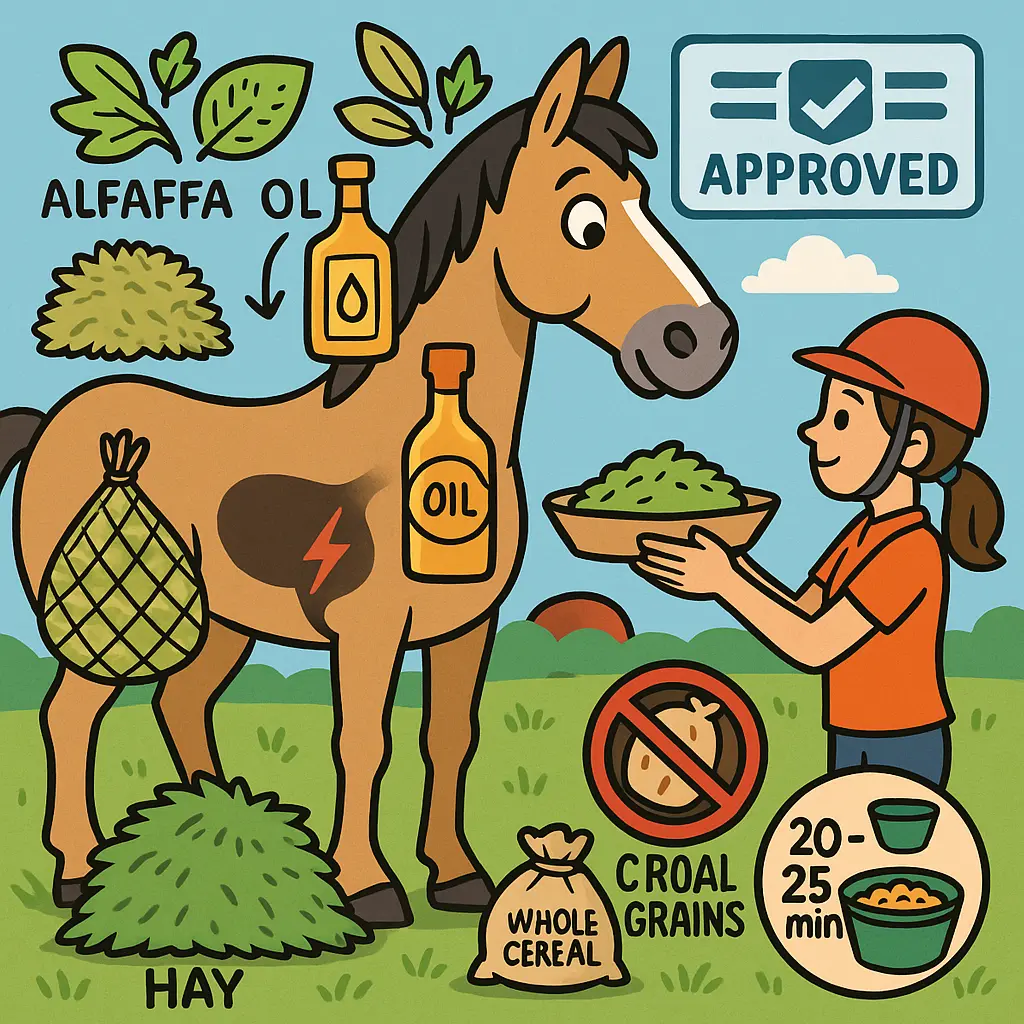
For a 500kg ulcer‑prone poor‑doer, aim for ad lib forage plus 2–3 small buckets of low‑NSC, high‑oil feed, each calculated to keep NSC under 500g. Use alfalfa chaff in every meal and 20–25 minutes pre‑exercise.
Example day plan (adjust to condition and workload):
- Forage: ad lib good hay or low‑acid wrapped hay; minimum 9kg hay or 10–12kg haylage if no grazing (Horse & Hound).
- Breakfast: 1–1.5kg Dengie Alfa‑A Oil plus 0.5–1kg of Baileys Ease & Excel or Allen & Page Soothe & Gain. NSC check: Alfa‑A Oil (low NSC) + 14% NSC cube/mash in small amounts keeps the meal safely under 500g NSC.
- Lunch: Repeat a similar 1–2kg total, or swap in Rowen Barbary Solution Mash for a soaked option (about 1% sugar; great for hydration and fussy eaters).
- Dinner: 1–1.5kg Alfa‑A Oil with a complementary conditioning mix such as Pure Feed Company Condition Mix (fibre/oil based). Keep each bucket small and well under your 500g NSC ceiling.
- Pre‑exercise: double handful of alfalfa chaff or a few minutes on a haynet, 20–25 minutes before you ride.
- Supplements: add appropriate digestive support and vitamin E when feeding higher oil; browse our curated supplements and trusted NAF options.
Pro tip: Calculate NSC per meal. If a feed is 14% NSC, a 1.5kg portion contributes about 210g NSC (1.5 × 0.14 = 0.21kg), comfortably inside the 500g meal limit for a 500kg horse. Build each bucket with that arithmetic to stay compliant with GOV.UK advice.
Common mistakes to avoid
Avoid large cereal meals, riding on an empty stomach, single‑forage rations and acidic forages. These slip‑ups quietly undo your good work.
- Big buckets of cereal-based mix — linked to higher ulcer risk; swap to fibre-and-oil conditioners (Horse & Hound).
- No pre‑exercise fibre — always feed chaff 20–25 minutes before work.
- One‑type forage only — add variety and test hay/haylage, preferring low‑acid options where needed (SEIB).
- Exceeding NSC caps — track starch + sugar per meal and per day; choose BETA EGUS‑approved feeds (e.g., Baileys Ease & Excel) and follow small‑and‑often feeding per GOV.UK labelling.
- Under‑rugging poor‑doers — protect calories for weight gain with appropriate turnout rugs and stable rugs through cold snaps.
At Just Horse Riders, we also suggest keeping a simple fortnightly weight and body condition score log. Small, steady changes tell you the ration is right — and help you catch any drift early.
Conclusion: what to do next
Feed for fibre first, enforce the NSC limits, and use alfalfa and oil for extra calories. If your horse needs more energy without aggravating ulcers, look for the BETA EGUS Approval Mark and build meals that stay under the 1g/kg BW NSC ceiling. For helpful extras, explore gut-friendly options on our supplements page and keep your horse comfortable with well‑fitting turnout and stable rugs from brands like WeatherBeeta. If you’d like personalised product suggestions, our team is here to help.
FAQs
Can alfalfa be used for ulcer-prone horses needing weight?
Yes. Alfalfa is low in starch and its higher protein and calcium help buffer stomach acid. A 2023 analysis reported alfalfa pellets increased clinical success for EGGD by 47.7 times versus concentrate rations (SEIB). Practical picks include Dengie Alfa‑A Oil and alfalfa chaff added to every meal.
Is haylage safe for horses with ulcers?
It can be, but true fermented haylage is often more acidic. Test pH and, if your horse is sensitive, choose hay or wrapped hays with hay‑like acidity (SEIB). In the UK’s damp autumns and winters, analysed forage helps you control sugars while keeping calories up.
How much low‑NSC feed can I give per meal to a 500kg horse?
Keep NSC (starch + sugar) below 500g per meal. For a 14% NSC feed, that’s a maximum of about 3.5kg per meal (500g ÷ 0.14). It’s safer to feed smaller buckets more often (Horse & Hound; GOV.UK).
What if my horse needs more calories but has ulcers?
Use high‑fibre, high‑oil, low‑starch feeds: Dengie Alfa‑A Oil (approx. £2.65/day at 2.5kg), Baileys Ease & Excel (8% starch, 6% sugar; BETA EGUS‑approved), Allen & Page Soothe & Gain (14% combined) or Rowen Barbary Solution Mash (~1% sugar). These add condition without the risks associated with cereal starch.
Should I feed before riding?
Yes. Offer a double handful of chaff or a haynet 20–25 minutes before exercise to line the stomach and reduce acid splash (Horse & Hound).
Are there UK regulations for “ulcer-friendly” feeds?
Yes. GOV.UK requires ulcer‑indicated feeds to meet starch/sugar limits (below 20% for low/medium energy, below 25% for high/competition) and to be fed in a way that keeps meals under 1g/kg BW NSC and days under 2g/kg BW. Packaging must not claim to treat or cure and must advise vet consultation if ulcers are suspected (GOV.UK). The BETA EGUS Approval Mark helps you identify compliant products in the UK.
What else supports comfortable weight gain through winter?
Keep your horse warm, calm and on a routine. Well‑fitting turnout rugs and stable rugs reduce calorie drain in cold snaps, consistent grooming lowers stress, and safe hacks in hi‑vis keep work relaxed. Combine this with ad lib forage and low‑NSC conditioning feeds for the best results.