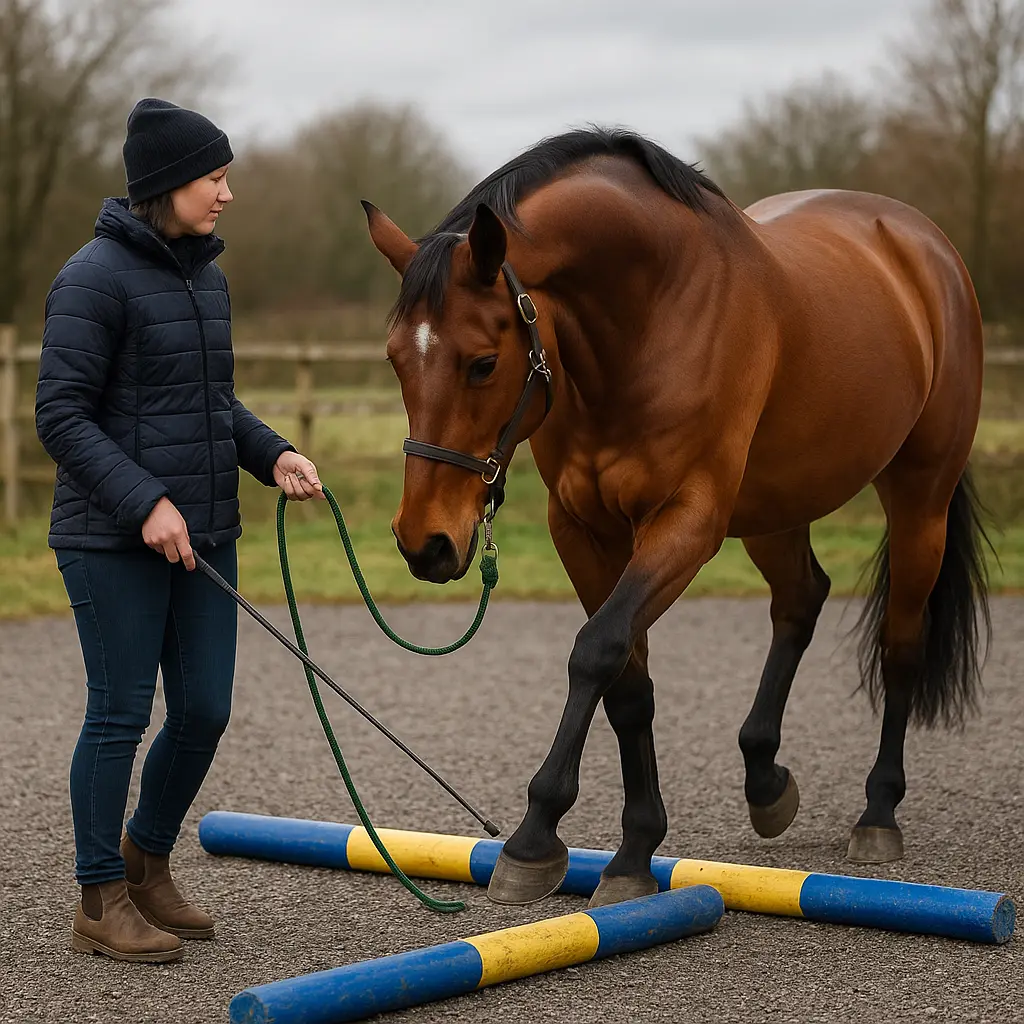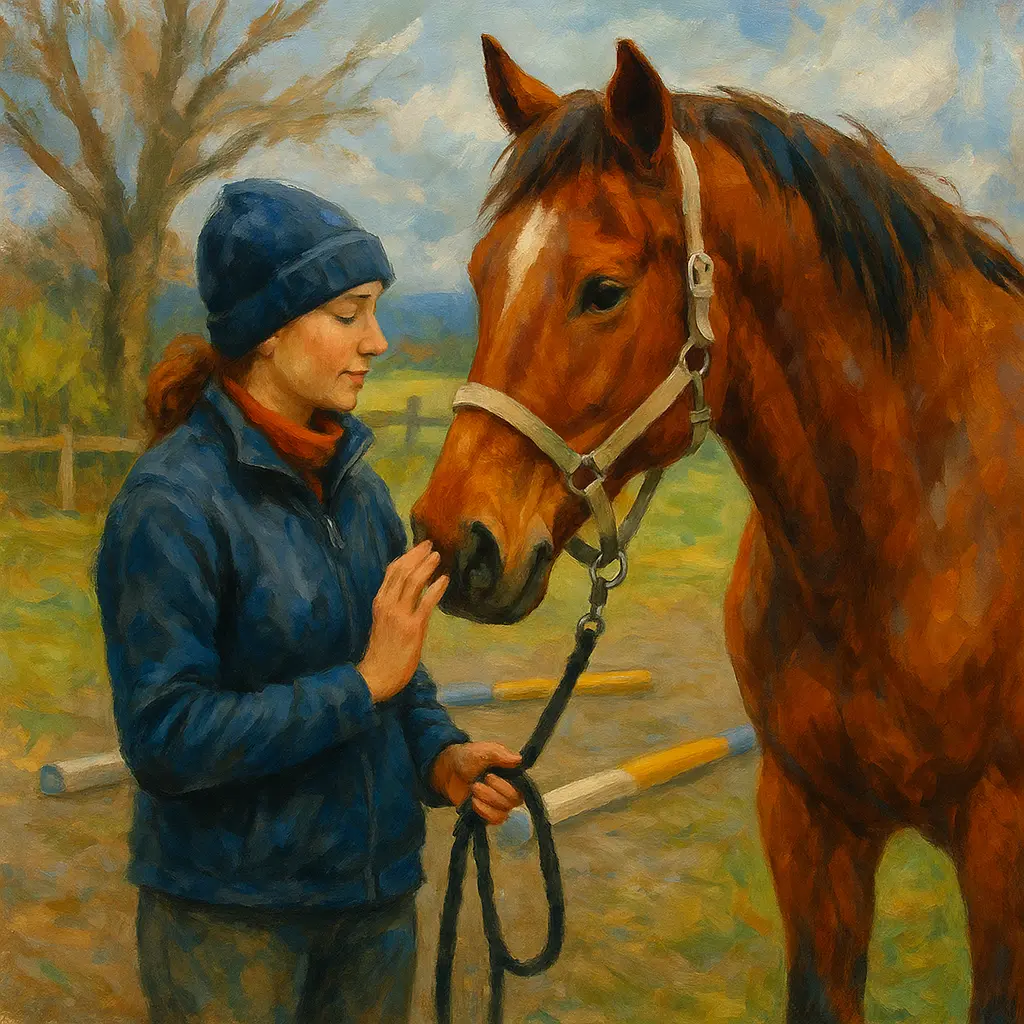
Your horse’s best days aren’t only in the saddle. The quiet minutes you spend grooming, leading, or doing a few poles can transform behaviour, strengthen your bond, and keep them sound and sane through the wettest UK winter.
Key takeaway: Give your horse individual attention every day, and use focused 15–30 minute groundwork sessions to top up wellbeing when turnout or time is tight.
Why non-riding time matters
Daily non-riding contact keeps your horse easy to handle for the vet and farrier and supports calmer, safer behaviour. UK welfare experts at Blue Cross are clear: making time each day for individual attention prevents handling issues that can snowball.
Beyond health checks, consistent on-the-ground interaction builds trust and teaches your horse how to relax in your company. The British Horse Society (BHS) notes that housing systems can limit natural social contact; horses kept in stables or individual paddocks may need extra human interaction to meet their social needs and prevent frustration (BHS guidance). That time doesn’t have to be long or complex — it has to be purposeful. A few well-chosen exercises done calmly and consistently create the “easy to catch, easy to shoe, easy to needle” horse every owner wants.
“It’s important to make time each day to spend with your horse, giving them individual attention and any training they may need. [...] Without regular handling, a vet or farrier visit may be difficult.” — Blue Cross equine welfare experts
How much time is enough?
Plan for daily touchpoints and use 15–30 minute focused sessions on busy or winter days to maintain progress. Short, structured work keeps your horse mentally engaged and physically comfortable even when UK weather limits turnout.
In practice, many owners find a rhythm that looks like this:
- Daily: 10–15 minutes of purposeful handling — catch, groom, pick out feet, lead, and stand quietly.
- 3–5 days per week: 15–30 minutes of groundwork (in-hand work, lunging, poles) when you can’t ride or turnout is restricted (see The Everyday Equestrian).
- As conditions allow: maximise turnout time, ideally 24/7 for suitable companion horses to mirror natural movement and grazing (Blue Cross).
Short sessions sharpen focus — yours and your horse’s — and are easier to fit around dark evenings, school runs, and yard closing times. They also reduce the risk of niggles that crop up when horses stand in due to rain and mud. If you only have a quarter of an hour, use it deliberately and you’ll still move the needle.
Groundwork that builds trust (before you ride — or instead)
Start every session on the ground by encouraging a relaxed walk with the head gently lowered, then build from there. This both checks comfort and creates the softness you’ll want later in contact work.
Ride With Your Mind coach Karin Major advises taking time on the ground to settle your horse and rule out discomfort before asking for more connection:
“Take time on the ground before mounting to encourage your horse to relax and walk with their head down before you get on. Make sure you also have their back, teeth and saddle checked to ensure that they’re not in any discomfort.” — Karin Major, Overdale Equestrian Centre (Your Horse)
Practical 15–30 minute template:
- 2–3 minutes: Catch calmly, halter, and pause for a breath. Note ears, eye softness, and muscle tone — is your horse tight or relaxed?
- 5 minutes: In-hand walk in straight lines and big curves. Reward a soft, swinging walk with the head at or slightly below wither height.
- 5–10 minutes: Add halt-walk transitions, a few steps of rein-back, and gentle lateral yields (forehand/quarters) to check understanding and suppleness.
- 5–10 minutes: Light pole work (three to five poles, wide spacing) or short lunging to settle any excess energy.
Contact matters on the ground, too. Follow the nod of the walk with kind, consistent hands — never see-saw — and keep your hands above mouth level to avoid jabbing the bars. When you progress to ridden work, aim for what dressage rider Jessica Dunn describes:
“You want the horse to relax into the rein, seeking the contact forward without leaning.” — Jessica Dunn (Horse & Hound)
Helpful kit for efficient groundwork:
- A comfortable headcollar and long, soft lead rope for in-hand work.
- A lunge line and well-fitted cavesson for brief lunging sets.
- A simple grooming kit to turn brushing into methodical “body check” time — see our curated grooming essentials for every yard routine.
Quick tip: Ten minutes of lunging before you lead out or school can take the edge off when turnout has been limited by mud or closed fields.
Turnout, housing and social needs on UK yards
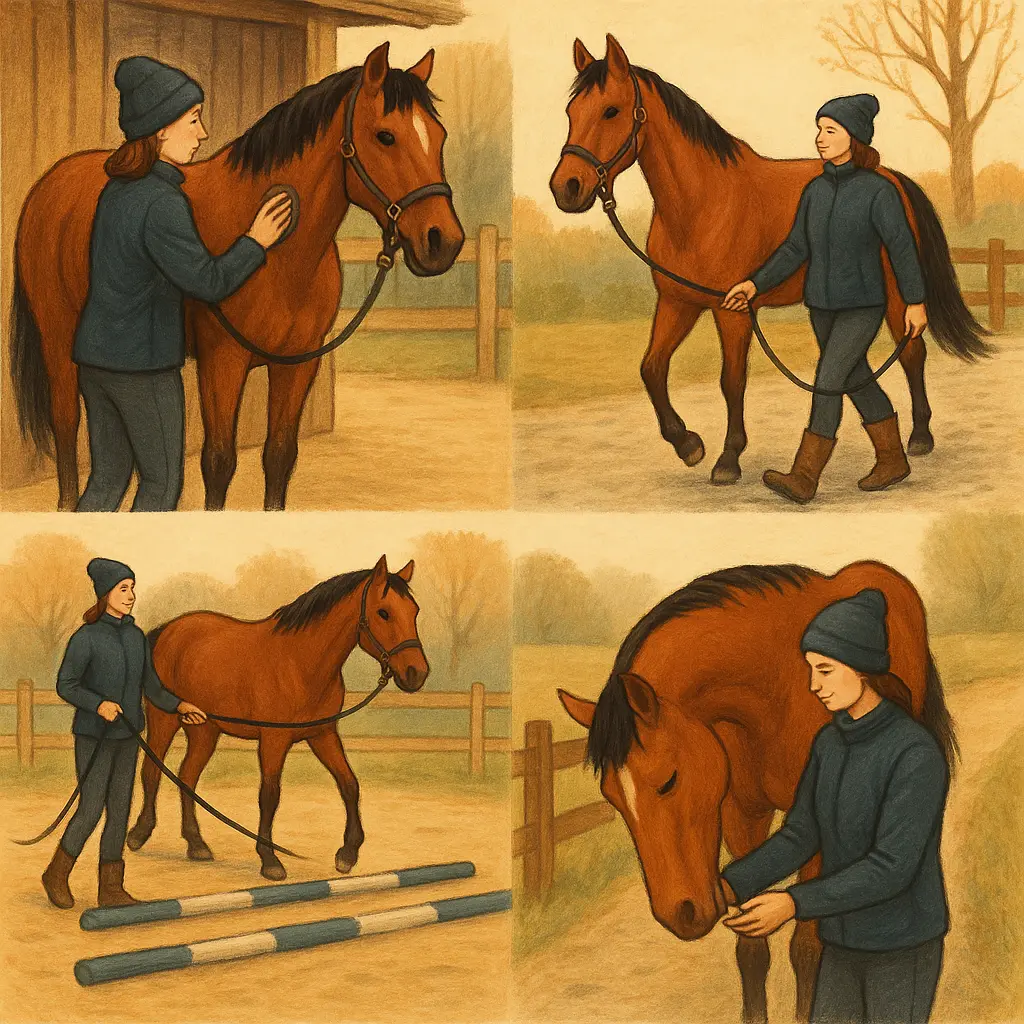
24-hour turnout suits most companions when body condition allows, but stabled or limited-turnout horses need extra owner time to meet social and movement needs. Blue Cross advocates round-the-clock turnout for suitable horses because it mirrors their natural pattern of walking and grazing for much of the day (Blue Cross guidance).
In reality, UK winters bring saturated fields, fragile swards, and yard rules that restrict turnout to protect land. The BHS highlights how different housing systems impact social contact — from full herd turnout to isolation — which means you may need to fill the gap with in-hand exercise and calm companionship (BHS).
What to do when turnout is limited:
- Prioritise daily movement: schedule an in-hand hack up the lane or 20 minutes of arena poles to mimic “grazing miles.”
- Provide enrichment: stable toys and paddock obstacles encourage gentle movement and problem-solving.
- Rug wisely: keep horses comfortable outdoors so they can spend more time moving — browse proven, waterproof winter turnout rugs to match your field routine.
At Just Horse Riders, we recommend observing your horse during turnout: relaxed blinking, sighs, soft chewing, and a pendulum tail often signal contentment; persistent pacing or fence-walking suggests you need to adjust turnout groups or add more human-led exercise.
Winter sessions that work in 15–30 minutes
In UK winters, rotate short, purposeful sessions like lunging, in-hand poles, and brisk led walks to keep energy balanced and joints mobile. Consistency beats duration when the clocks change and arenas are busy (The Everyday Equestrian).
Three reliable formats:
- Settle-and-strengthen: 10 minutes lunging (big circles, frequent transitions), 10 minutes in-hand figures of eight, 5 minutes cool-down walk.
- Poles and posture: 5 minutes warm-up walk, 10 minutes stepping over three to five poles in hand, 5 minutes lateral yields, 5 minutes slow walk to finish.
- Yard-friendly “hack”: 20 minutes led walk around the property or on quiet, traffic-free tracks; finish with 5 minutes of neck and shoulder stretches.
Dress for safety and visibility. A well-fitted hat and hi-vis are smart whether you’re on board or on foot. Explore certified riding helmets for yard and schooling, and layer up with year-round hi-vis for riders so you’re seen in low light.
Pro tip: If your horse is fresh, start with a short lunge set and then switch to in-hand work. You’ll get a sweeter, safer conversation on the ground once the edge is off.
Leading out safely for enrichment
Lead on quiet, traffic-free routes, approach at the shoulder, and never approach from behind for safe daily interactions. British Equestrian coaches emphasise a calm, confident approach and correct positioning to reduce risk (British Equestrian).
Good practice for led exercise:
- Arrive a few minutes early, check the yard plan, and confirm any quirks with staff.
- Approach at the shoulder, halter smoothly, and ask for a step back to create space and attention.
- Choose quiet lanes, bridleways, or farm tracks; avoid roads where possible and follow the Highway Code when you must cross.
- Pair a companion horse with a steady buddy if needed for confidence.
- Use a long rope, gloves, and boots for both of you if the ground is slick; protective horse boots and bandages help prevent knocks during in-hand poles or led hacks.
Make these walks count by mixing surfaces, adding a few pauses to graze (where allowed), and practising a handful of obedient halts. For extra control, a well-fitted cavesson can give you clear, kind communication without hauling on the mouth.
Signs your horse needs more quality contact
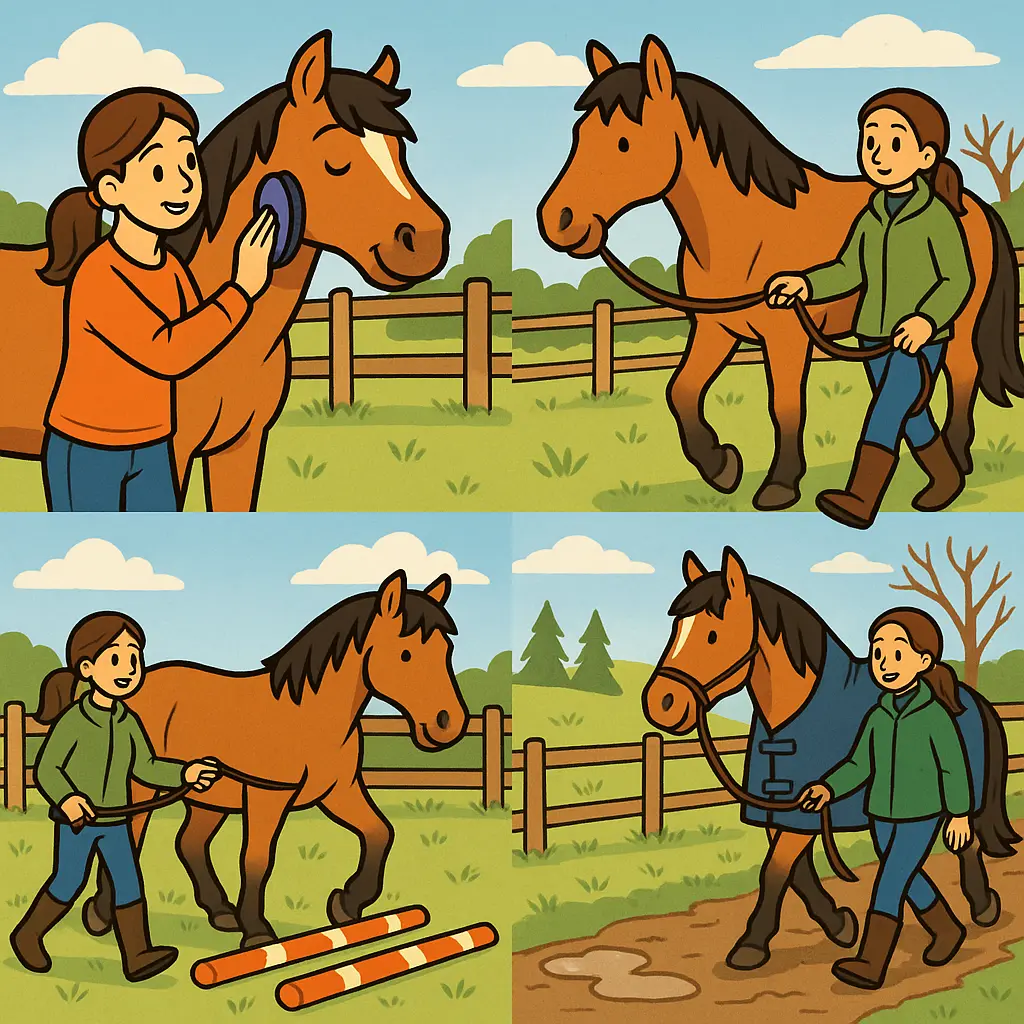
Harder catching, tension during handling, and resistance in training are red flags that your horse needs more (or better) daily interaction. Blue Cross links a lack of regular handling with difficulty during vet or farrier visits — the moment you can least afford a battle.
Watch for:
- Head raised, tight poll, or wide eyes as you approach.
- Fidgeting for the farrier, yanking feet, or leaning on you.
- Bracing against the rein in groundwork, rushing poles, or balking at simple requests.
- Overexcitement after rest days, especially when turnout has been limited by weather.
Course-correct with a week of daily short sessions: 5 minutes of calm catching and grooming, 10 minutes of in-hand walk and transitions, a few stretches, and a quiet finish. If behaviour doesn’t improve, check for physical discomfort — teeth, back, and saddle fit — as coach Karin Major advises (Your Horse).
Your kit for better non-ridden time
The right basics make short sessions safer, clearer, and more enjoyable for both of you. Build a simple, effective set-up that you can grab on busy nights:
- Grooming kit: turn routine brushing into a mindful check-in to spot tension or soreness early — choose yard-ready grooming kits and brushes.
- Lunge line and cavesson: perfect for 10-minute settling sessions before in-hand work.
- Headcollar and long, soft rope: clear communication for halts, yields, and led hacks.
- Poles and simple obstacles: add variety to stables or arenas; combine with high-quality brands like LeMieux training gear for durability.
- Weatherproof layers: comfort outdoors means more movement; proven brands like WeatherBeeta turnout and stable wear handle UK rain and mud.
- Motivation and manners: a pocket of low-sugar horse treats can help reinforce calm halts and polite backing.
- Cold-weather comfort: if stabled more, support joints and overall wellness with appropriate care — browse targeted supplements for recovery and mobility and seek vet advice where needed.
Comfortable rider kit keeps you consistent, too. Pull on warm layers, reliable footwear, and reflective outerwear so nothing stops you getting those precious 15 minutes done.
Putting it all together: a simple weekly plan
Anchor your week with daily touchpoints and rotate two or three short formats to match weather and energy levels. Here’s a straightforward template you can tailor:
- Mon: 20 minutes in-hand walk around the yard; three polite halts; two stretches.
- Tue: 10 minutes lunging, 10 minutes pole work in hand; quick groom.
- Wed: Rest from intensity — 15 minutes of slow graze-in-hand and soft leading.
- Thu: 15 minutes figures of eight, forehand and quarters-yield; 5-minute cool-down walk.
- Fri: Led hack on quiet tracks; practise two road crossings if applicable.
- Sat/Sun: Ride as weather and footing allow — always begin with 5–10 minutes of the same calm groundwork to prime relaxation and trust.
If turnout opens up, ride the wave — keep the daily check-in but shorten the formal sessions. If fields close, double down on consistency and stick to the plan. Over a month, you’ll see softer catching, easier farrier visits, and more “yes” answers to simple requests.
Quick tip: Log your sessions and note behaviour (1–5 for relaxation, 1–5 for responsiveness). Small, steady improvements are easier to spot — and to celebrate — when they’re written down.
Conclusion: small moments, big results
Daily attention and short, smart groundwork sessions underpin a happy, handleable horse — through stormy weeks, busy jobs, and muddy gateways. Set a 15–30 minute timer, pick one clear objective, and enjoy the quiet wins that show up at the next vet visit, schooling session, and hack out.
If you’re stocking your yard kit for better non-ridden time, start with dependable grooming tools, weatherproof turnout rugs, protective horse boots, rider-safe helmets, and all-season hi-vis. Our team at Just Horse Riders is here to help you choose what suits your horse, your yard, and your winter routine.
FAQs
How much non-riding time does my horse need each day?
Make time daily for individual attention and handling. Even 15–30 minutes of focused groundwork on busy days maintains manners and reduces stress for vet and farrier visits, as recommended by Blue Cross and supported by UK coaching practice.
What should I do when winter weather restricts turnout?
Use short, efficient sessions: a 10-minute lunge to settle energy, then 10–15 minutes of in-hand walking, poles, or lateral yields (The Everyday Equestrian). Dress for low light with hi-vis and a certified riding helmet even when on foot.
How do I build trust on the ground?
Begin with relaxation: encourage a soft walk with the head slightly lowered, follow the natural nod with giving hands, and keep hands above mouth level. Check teeth, back, and saddle fit if your horse resists contact (Your Horse), then progress to calm transitions and simple yields.
Is 24/7 turnout always best in the UK?
For suitable companion horses and when body condition allows, yes — it mirrors natural movement and grazing. In wet winters or on fragile land, supplement restricted turnout with daily in-hand exercise and enrichment (Blue Cross; BHS).
What are the signs my horse needs more quality contact time?
Struggling to catch, tension when approached, fidgeting for the farrier, or resistance during simple groundwork are common indicators. Add a week of daily short sessions and reassess; if there’s no improvement, check for discomfort and consult your vet or physio.
Can short daily interactions replace riding?
They can maintain mental and physical wellbeing through leading, poles, stretches, and lunging — particularly for companions — but tailor intensity to your horse’s fitness. When you resume ridden work, keep the same groundwork start to prime relaxation.
What kit do I need for safe, effective groundwork?
A comfortable headcollar, long lead rope, lunge line, and cavesson cover most sessions. Add a basic grooming set, protective boots or bandages, weatherproof turnout rugs, and a pocket of treats for timely rewards. For rider safety in low light, choose hi-vis and a fitted helmet.