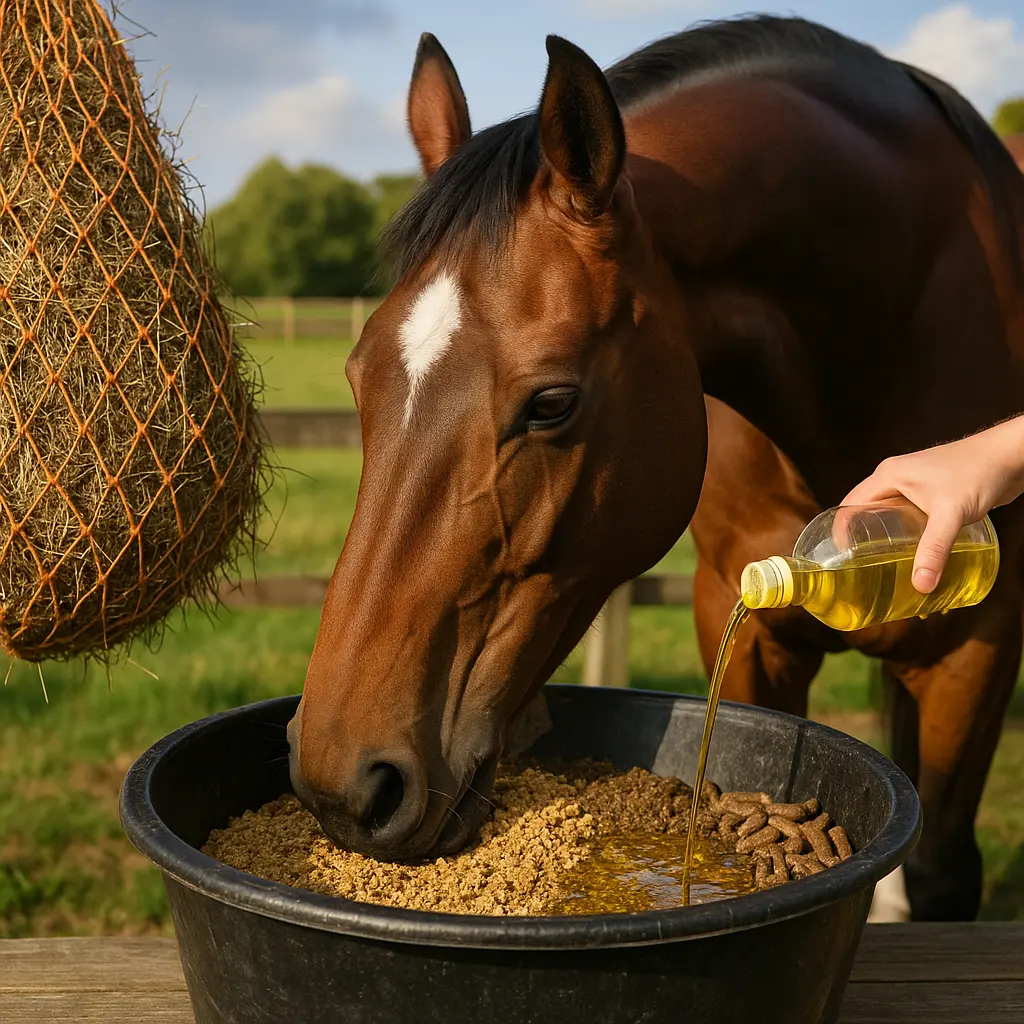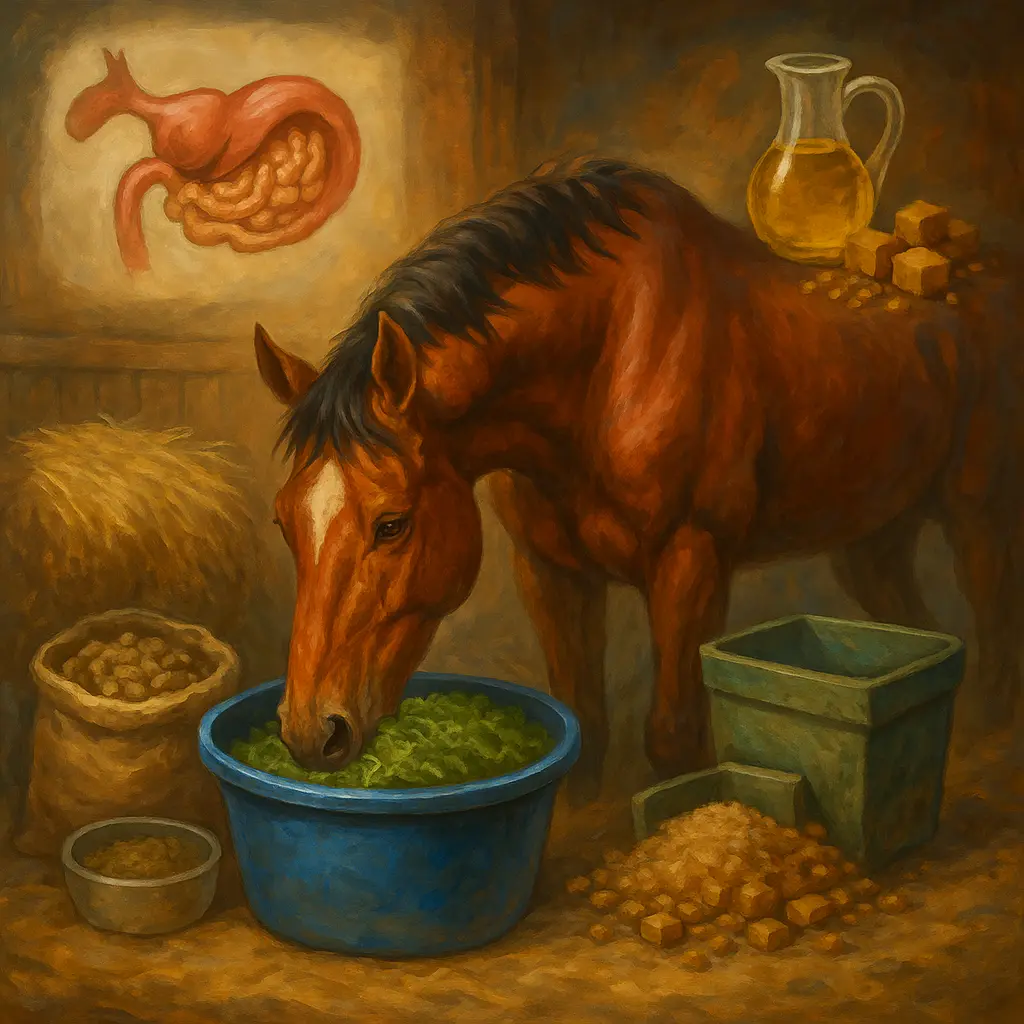
If your ex-race Thoroughbred feels like a firecracker after hard feed, you’re not imagining it. What you feed — and how — directly affects behaviour, especially in sharp, stressy types.
The calmest TBs are built on ad-lib fibre, low starch and added oil — not cereal-heavy mixes.
Why fibre and oil calm excitable Thoroughbreds
Fibre and oil deliver slow-release energy without the sugar/starch spikes that drive fizz.
Fibre is digested in the hindgut and provides steady energy that’s rarely linked to excitability, unlike sugar and starch which act like rocket fuel. High-energy fibres (think unmolassed beet pulp and soybean hulls) and oils supply extra calories for work or weight gain without the behavioural blowback you often see with grains. Oil is especially efficient — it provides roughly 2¼ times the calories of cereals, making it ideal for adding condition to hot TBs without winding them up.
“Choose ‘super-fibre’ concentrate horse feeds rather than starchy grain-based concentrate feeds, as some horses become too excitable when eating moderate to high intakes of starch.” — Clare Macleod, MSc Nutritionist (Your Horse)
In practice, this means shifting calories from cereals to fibre and oil. The result: a horse that holds weight and work better, with a cooler brain for schooling, hacking and competitions.
Build the diet around ad-lib forage
For a hot TB, ad‑lib hay or haylage is the foundation to buffer stomach acid and keep behaviour steady.
Continuous access to forage keeps the gut moving, promotes saliva (a natural antacid), and reduces the gastric discomfort that can make horses anxious, girthy or sharp. If you must limit intake for weight reasons, use small-hole nets or multiple nets and feed little-and-often to avoid long fasting periods.
UK winters add pressure: wet weather and reduced turnout raise the risk of stress and ulcers. The British Horse Society (BHS) emphasises fibre-first rations to mimic grazing and support welfare for stabled horses over winter. Fortunately, fibre also acts like central heating; hindgut fermentation helps keep horses warm, so you can lean on forage rather than “heating” cereal mixes during cold snaps.
Turnout remains essential for mental wellbeing and natural energy release, even if it’s short, daily sessions between showers. When turnout is limited, plan ridden work and in-hand walks to break up stabled time. Good rugging supports comfort without resorting to high-starch feeds — browse our proven winter options in winter turnout rugs and cosy stable rugs to keep your TB comfortable in changeable UK weather.
“Eliminating digestive discomfort needs to be a primary concern whenever you are feeding an excitable horse... Base your horse’s diet around ad-lib fibre, supported by a balanced diet low in sugar and starch, which is also whole cereal and molasses-free.” — Anna Franklin, Equine Nutrition Advisor, Blue Chip (Your Horse)
Swap starch for super‑fibres and oil
Replace molassed, cereal-rich mixes with low‑starch, high‑fibre/oil feeds to stop post-feed fireworks.
Start by removing barley, molassed mixes and sweet feeds. Then build your bucket with super-fibres (e.g., unmolassed sugarbeet pulp or soybean hulls) plus added oil for calories. Many ex-racers do best on a high-oil cube or a soaked, low-starch conditioning feed:
- Allen & Page Soothe & Gain: only 14% combined starch and sugar, yet high in calories (13.25 MJ/kg), making it suitable for ulcer-prone or fizzy horses needing condition. The manufacturer advises avoiding barley or molasses alongside it to prevent intolerance or behavioural issues (Allen & Page).
- Baileys Ease & Excel: a high-fibre, high-oil, low-starch conditioning feed designed for stressy Thoroughbred types out of training (Baileys).
- GWF Fibregest: less than 10% total starch and sugars; use as a non-heating fibre base or topper to add condition without spikes.
“Cubes tend to contain less starch than a mix of a similar nutrient specification so, if your horse is prone to being a bit fizzy, which is fairly typical of Thoroughbreds out of training, feed a cube rather than a mix.” — Baileys Horse Feeds Nutrition Team (Baileys)
Layer in fats such as micronised linseed or soya oil for slow-release calories (remember: oil delivers 2¼x the calories of cereals). Introduce oil gradually over 2–3 weeks and balance vitamin E if you feed higher oil levels.
Quick tip: If a feed bag lists cereals (barley, maize, oats) or molasses high on the ingredient list, it’s likely to heat your horse more than a super-fibre or high-oil cube will.
Conditioning ex-racers without the fizz
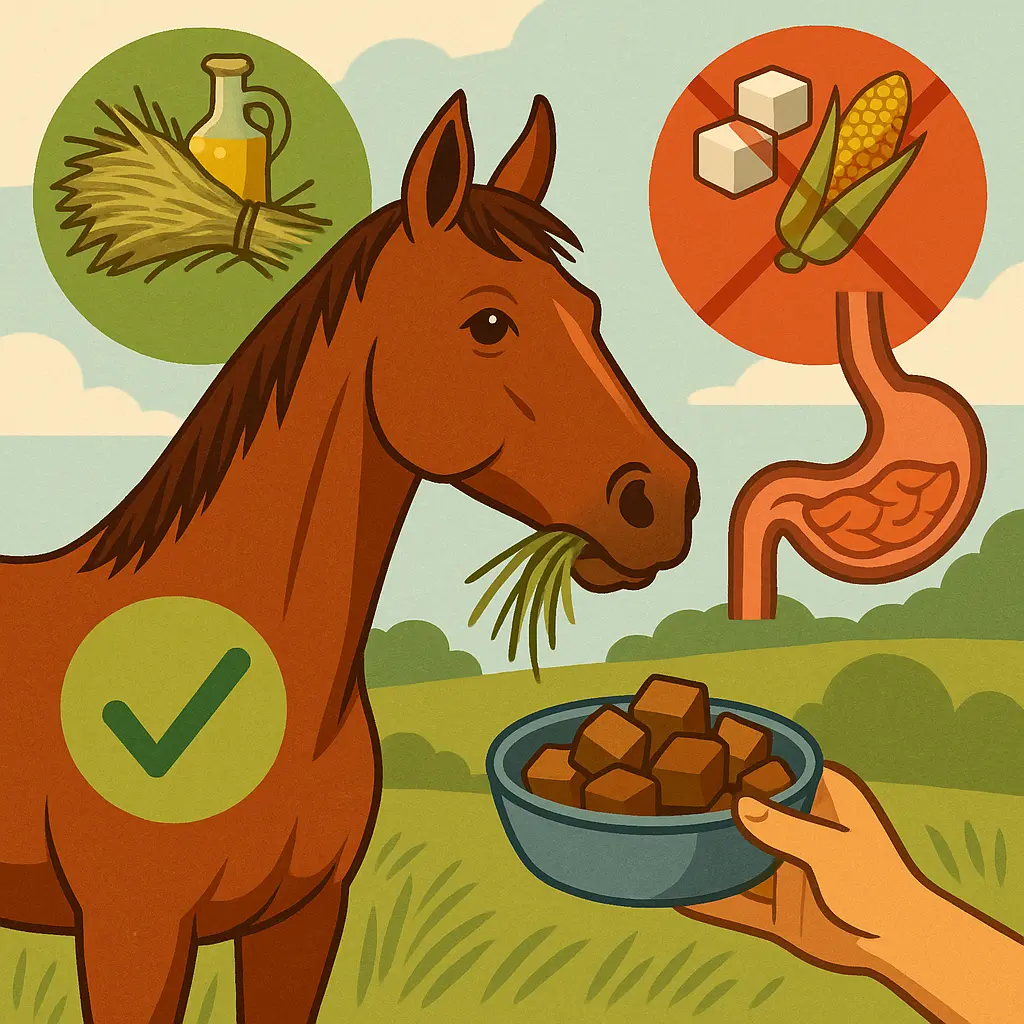
Use high‑oil, low‑starch conditioning cubes or soaked feeds to add weight without lighting the fuse.
Many UK ex-race Thoroughbreds come out of training lean and bright-eyed — and they often stay that way when stabled more over winter. The goal is to increase calories without escalating behaviour.
Feeds like Baileys Ease & Excel or similar conditioning cubes deliver calories via fibre and oil instead of cereals. For ulcer-prone horses, soaked low-starch options such as Soothe & Gain (14% combined starch/sugar) add safe energy and promote better chewing and hydration. Pair your bucket with ad-lib hay/haylage — your most important conditioning tool — and add super-fibres (unmolassed beet pulp) if you need a further lift.
Pro tip: If you choose Soothe & Gain, don’t feed anything with barley or molasses alongside it — the Allen & Page nutrition team explicitly warns this can trigger intolerance or behavioural blips (Allen & Page).
Support the digestive tract with a broad-spectrum balancer or probiotic if feed or management has changed recently. You’ll find proven options in our curated range of horse supplements for digestion and calm, including popular UK brands such as NAF.
Support the gut first, then consider calming supplements
Fix forage and starch first, then add targeted calmers if needed.
Once the base diet is right, some horses benefit from calmers containing magnesium, L‑tryptophan or calming herbs like chamomile. In the UK, reputable calmers typically cost £20–£40 for 1.5–3 kg tubs — a monthly top-up for many horses. Choose products with clearly listed active ingredients and introduce them only after you’ve addressed forage access, starch load and turnout.
Remember: a calmer can’t outrun a hot, cereal-heavy ration. It’s a finishing touch, not a fix. Our customers often find that moving to super-fibres and oil removes most of the fizz, while a targeted calmer simply smooths the edges for competitions or box rest. Explore bestsellers in our supplements collection and filter by “calming” to compare options from leading UK brands such as NAF.
“To get the best results from Soothe & Gain, please make sure that you do not feed any other products that contain barley or molasses, as these ingredients can cause feed intolerance or behavioural problems.” — Allen & Page Nutrition Team (Allen & Page)
UK winter management to keep Thoroughbreds chilled
In cold, wet months, rely on fibre’s ‘central heating’ and turnout to calm energy rather than heating feeds.
As UK temperatures drop and rain sets in, stabling increases and so can stress. Double down on fibre (ad‑lib hay or haylage) and keep meals small and frequent to avoid starch slugs. Hindgut fermentation generates heat, so you can reduce reliance on cereal mixes while staying warm under rugs.
Comfort equals calm. Rug appropriately and adjust weight as weather swings from damp chill to brief mild spells. For outdoor time, pick robust, breathable layers from trusted brands in our WeatherBeeta rug range or explore broader options in turnout rugs. In the stable, choose insulating, well-fitted options from our stable rug collection to keep muscles warm for training the next day.
When hacking on gloomy afternoons, stay safe and visible with our rider and horse hi‑vis favourites. Couple that with consistent routines — turnout, work, forage, then rest — to dial down anxiety in sharp TBs.

How to transition feeds safely
Change feeds over 7–10 days, increasing fibre/oil while cutting starch to protect the gut and behaviour.
Shift a quarter of the ration every 2–3 days until you reach your target bucket. Keep meal sizes modest (ideally under 2 kg per feed for a TB) and feed at least two, preferably three to four, small feeds daily if extra calories are needed. Introduce oils slowly, and soak beet pulp or specialised low-starch feeds exactly as directed for hydration and safety.
Watch for early warning signs of digestive discomfort — girtiness, reluctance to eat, mild colic signs or loose droppings — and pause changes if they appear. If you’re using Soothe & Gain, do not pair with barley or molasses as per the manufacturer’s guidance. Ensure fresh water is always available, especially with soaked rations.
Monitoring progress and when to seek help
Track weight, behaviour, droppings and appetite weekly; involve your vet if you suspect ulcers or sudden behaviour change.
Keep a simple log: body condition score, girth measurements, how the horse feels to ride or handle, appetite, manure consistency, and any signs of stress. Many ex-racers improve within 2–4 weeks of moving to a fibre-and-oil plan, but some need veterinary input — especially if you see repeated girthiness, teeth-grinding, cribbing or intermittent colic. Discuss gastric ulcer risk with your vet and follow welfare guidance from UK bodies like the BHS.
At Just Horse Riders, we recommend pairing nutrition changes with consistent management: daily turnout, clear routines, careful rugging, and steady work. If you’re competing, consider packing a calmer from our supplements range and check your tack fit while you’re at it. A comfortable, dry horse is nearly always a calmer horse.
FAQs
Why does my anxious TB get more excitable after hard feed?
Starchy grains cause blood glucose and insulin spikes that can trigger hyperexcitability. Switch to fibre and oil as your main energy sources first, then reassess behaviour.
Can I feed oil to calm a hot Thoroughbred in UK winter work?
Yes. Oils such as soya or linseed provide slow-release energy and roughly 2¼ times the calories of cereals, helping maintain condition in cold months without adding fizz.
What’s the first feed to cut for a fizzy horse?
Eliminate high-sugar, high-starch concentrates — e.g., sweet feeds, molassed mixes and barley — and replace with super-fibres like unmolassed beet pulp plus a high-oil cube.
Do calming supplements work without diet changes?
No. Calmness starts with ad‑lib forage and a low-starch ration. Magnesium, L‑tryptophan and herbal blends can help only after the base diet and management are corrected.
How much forage for a calm TB at a UK livery yard?
Provide ad‑lib hay or haylage where possible. If you must manage intake, use small-hole nets or multiple nets and avoid long fasting periods to keep the stomach buffered.
Are cubes better than mixes for ex-racers?
Yes. Cubes generally contain less starch than similar-spec mixes, reducing the risk of fizz in Thoroughbreds transitioning to ridden work.
What else can I do in winter to keep my TB chilled?
Maximise forage, maintain turnout, use appropriate rugs, and keep routines steady. For safety on dim hacks, kit out with rider and horse hi‑vis and ensure rugs fit well — browse proven options from WeatherBeeta and our wider turnout rug collection.