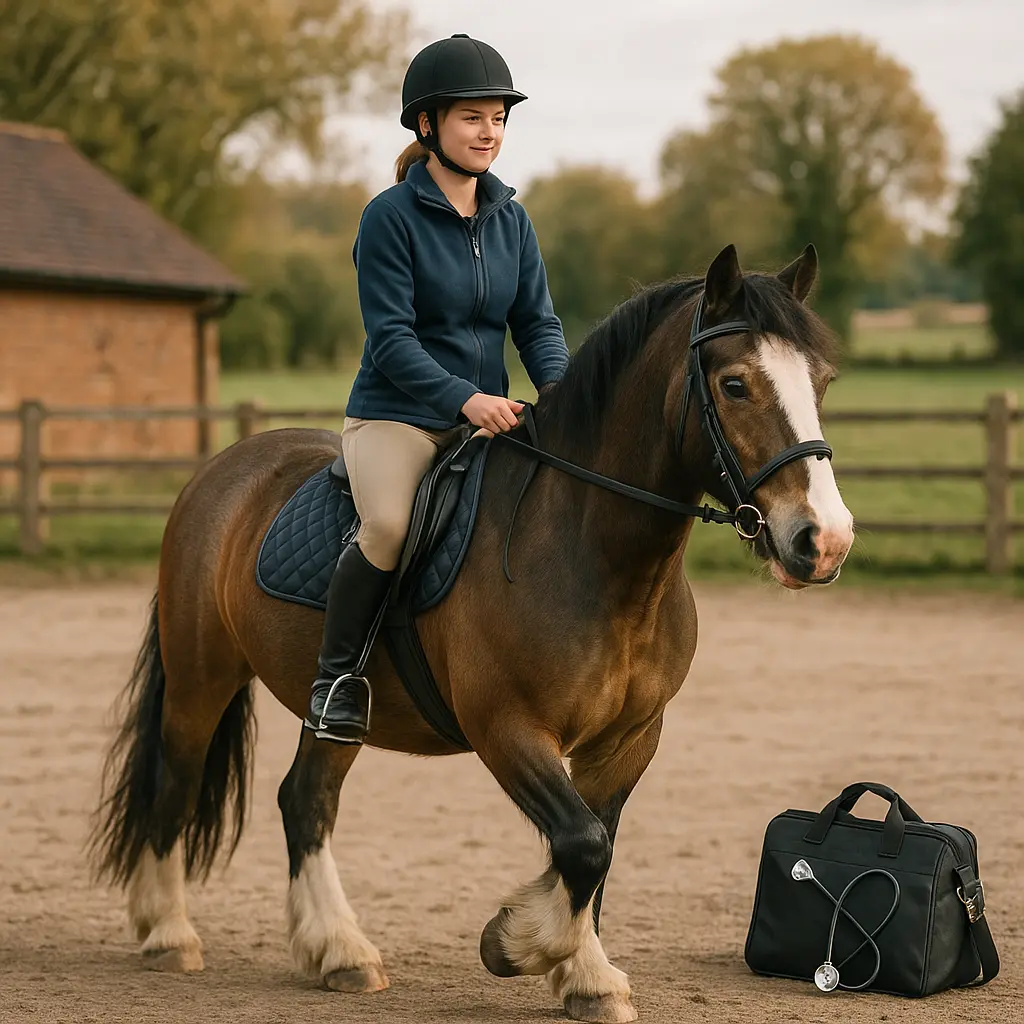
You’ve decided to buy a horse — brilliant. Now let’s make sure you find a safe, suitable partner and avoid the expensive, heart-breaking mistakes that catch out so many first-time buyers.
Key takeaway: For most UK novices, the right first horse is 5+ years old, calm, proven in traffic, and honestly represented — and you should always insist on your own independent pre-purchase vetting before money changes hands.
What makes a good first horse in the UK?
The best first horses are five-years-old and up, with proven hacking and traffic experience, a steady temperament, and no “green” schooling gaps. Novices should prioritise confidence-building types like cobs or heavier crosses over hot-blooded breeds.
Age matters because younger horses lack mileage and consistency. As Horse & Rider UK puts it:
“A sensible and sound older horse is far more likely to help you progress with your riding than a flighty, wobbly youngster. Look for horses five-years-old and up.”
For many new or returning riders, a level-headed cob or cob cross is a superb UK match: they’re generally hardy, sane, and suited to our bridleways, variable weather, and traffic. Avoid adverts using the word “green” — it signals inexperience and unpredictability, often including rushing off or bucking and a need for confident handling, which is unsuitable for novices.
Hacking safely in the UK also means you need a horse that’s comfortable with cars, tractors, cyclists, dogs, and mixed terrain. Ask for videos of the horse alone (not just in company), in open spaces as well as arenas, and passing traffic calmly. For your own safety when trying horses on the road, wear a properly fitted hat and bright kit — our range of riding helmets and hi-vis for riders is designed exactly for this.
Finally, heed the British Horse Society’s welfare-first approach: don’t rush, and be realistic about the cost and care you’ll need to provide. The BHS stresses careful planning and patience:
“Don’t rush — although it’s exciting, try not to buy on impulse, your ideal horse will be worth the wait. Try to work out in detail whether you’ll be able to afford the cost of keeping a horse.” — British Horse Society
How to set a realistic budget for buying and keeping a horse
Beyond the purchase price, expect monthly costs for livery, feed, routine veterinary care, training, and equipment. Budgeting correctly up front prevents rushed, risky choices later.
Start with ongoing costs. UK horse owners commonly commit to full or part livery, farriery, worming, vaccinations, training lessons, and replacement kit through the seasons. Winter adds rugging and higher forage use; summer often adds fly protection. You’ll also want a contingency fund for unexpected vet bills and saddle checks. As the BHS advises, planning how you’ll keep your horse is as important as choosing the horse itself — consider a BHS-approved yard with safe fencing, shelter, and reliable turnout companions.
From a kit perspective, plan for the UK climate. You’ll need season-appropriate rugs for turnout and stabling — explore our durable winter turnout rugs and cosy stable rugs. As temperatures warm, swapping to fly rugs and sheets helps manage midges and sun. For daily care, a well-stocked grooming kit and the right horse boots and bandages for work and travel are essentials, while targeted supplements can support digestion, joints, or hooves where appropriate.
Quick tip: Buying the horse is a one-off payment; keeping the horse is the real, ongoing commitment. Build that monthly figure before you view a single advert — you’ll make better, calmer choices.
How to read horse sale adverts like a pro
Adverts that say “green,” “prefers company when hacking,” “very little mileage,” or use vague pricing such as “low-mid fives” are warning signs of inexperience, solo-hacking issues, or hidden problems. Honest adverts are specific, with clear history, price, and riding footage.
Decode these common phrases quickly:
- “He’s still quite green” — lacks experience, may rush or buck; not for novices.
- “Prefers company when hacking” — likely nappy or reactive alone; you’ll struggle to hack solo.
- “Very little mileage” — needs bringing on; minimal competition or riding experience.
- “She’d excel as a broodmare” — often a hint at riding unsuitability or past injury.
- “Loves a programme/needs all-night turnout” — can mask behavioural management needs (e.g., regular bucking, high sensitivity) that will challenge a novice.
- Vague price (“low-mid fives”) — unnecessary opacity; ask for a clear figure.
Scrutinise photos and videos. Unrealistic scenes (a dog in the saddle, creek crossings for a UK hack horse), poor quality, or a horse already hot and sweaty on arrival are red flags. If a horse is billed as “kid-safe” or “bomb-proof,” insist on video evidence of a genuine child rider at an appropriate level. As the well-known Horse Trader Tricks resource warns, staged photos, exaggerated “100% child safe” claims, or a refusal to sign a bill of sale are classic deception tactics.
Spam-posting the same ad daily across multiple platforms suggests desperation or a problem keeping the horse sold. Likewise, if the seller pressures you with “another buyer is coming this afternoon,” stay calm — good horses sell, but genuine sellers allow proper due diligence.
What to check at the viewing
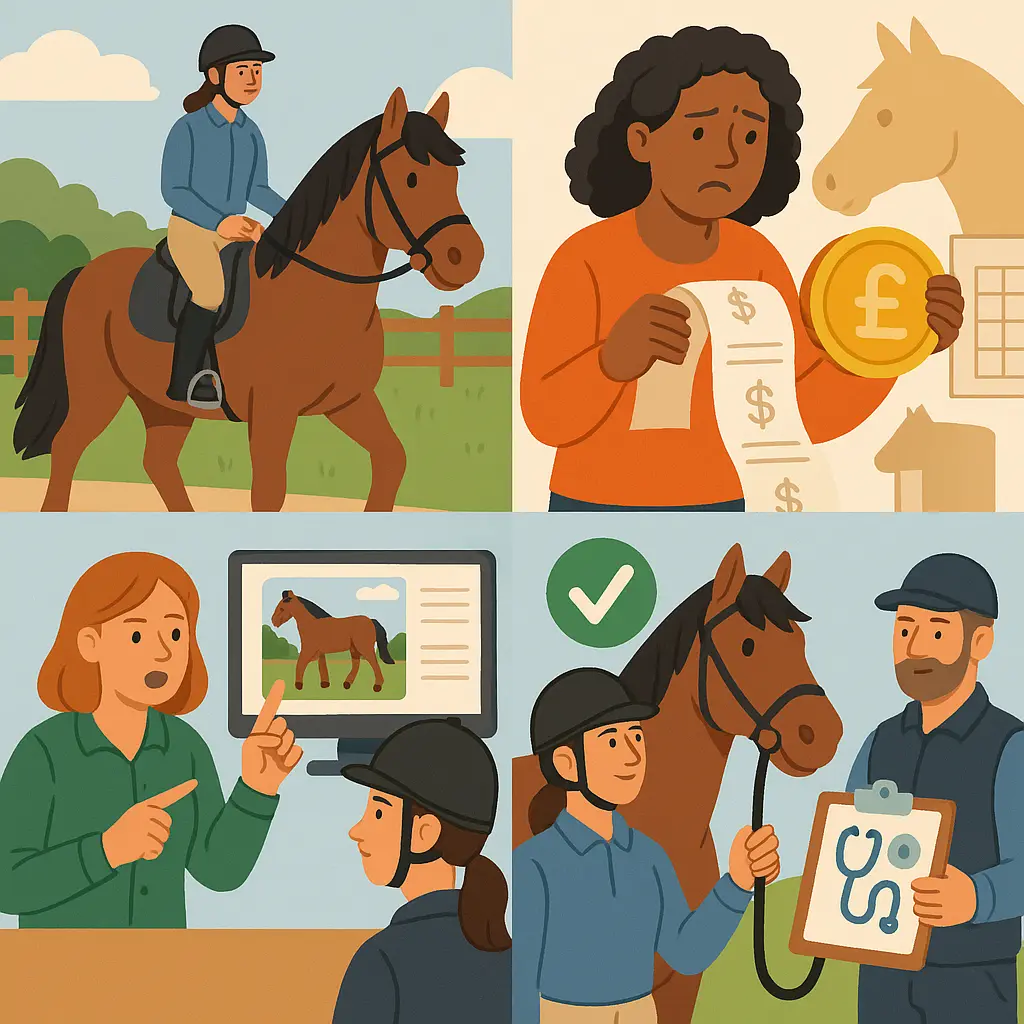
At the viewing, you should see food and water available, watch the horse caught and tacked from scratch, ride it yourself in an arena and out hacking, and then book your own pre-purchase vetting. If any of this is blocked, walk away.
Arrive early, and if possible, unannounced within reason so the horse is not pre-worked; a horse that is already tacked or dripping with sweat before you arrive is a bad sign. The stable should have fresh water and forage in reach. Observe catching from the field, grooming, picking up feet, and tacking up — bring a simple grooming set to handle the horse and assess manners. You want to see the horse stand politely, accept handling, and lead quietly.
Always ask the seller to ride first so you can assess the horse’s way of going and any evasions. Then ride yourself. Test transitions, circles, and a soft contact in the school. Take a short hack — ideally alone and in company — to test traffic sense, napping, and brakes. The Pony Club UK (PCUK) underscores the importance of first-hand assessment:
“Always ride the horse yourself and assess the horse’s temperament... Keep an eye out for any signs of aggression and note how the horse responds to your cues and command.”
If you’re road hacking, prioritise your safety: wear your own properly fitted riding helmet, supportive riding boots, and high-visibility layers from our hi-vis collection. If the horse is advertised as child-safe, have a suitably experienced child rider in correct kit — or at minimum review unedited videos of children riding the horse across paces.
Pro tip: Ask to ride the horse on day two as well. A good first horse rides consistently; a sharp or tired horse that was “perfect” yesterday can reveal training or temperament issues on repeat.
When a seller’s behaviour is a red flag
Pushy tactics, vague pricing, blocked vettings, no rider available, or demands for deposits before viewing are reasons to leave immediately. Trustworthy sellers welcome questions, trials, and an independent vet exam.
Watch for these seller red flags:
- “We need a deposit before you view” — unacceptable; walk away.
- “No need for a vetting” or “Use our vet only” — insist on your own vet and a full exam.
- “We’ll swap you onto this other horse” — bait-and-switch indicates misrepresentation.
- “Another buyer is coming in an hour” — high-pressure sales are not how good matches are made.
- No food or water in the stable, or no one to ride the horse for you first — poor husbandry or risk concealment.
- Daily re-posting of the same ad across platforms — why hasn’t it sold?
Language like “needs all-night turnout,” “loves a programme,” or “best with a quiet routine” can mask behavioural or pain-related issues being managed rather than resolved. If something feels off, it usually is. Prioritise transparency and a signed, clear bill of sale that matches the horse you tried.
Where to find safer horses in the UK
Word-of-mouth via your coach and reputable UK charities (members of the National Equine Welfare Council) often produce safer matches than random online ads. Local networks know a horse’s true history and fit for your goals.
Ask your instructor, yard owner, or farrier first — they can often connect you to genuine private sellers and “schoolmaster” types with verifiable competition, hacking, or riding school records. Consider rehoming: UK equine charities rehome with full assessments and support, which can be ideal for first-time owners who value backup. When you do buy, plan for where the horse will live. Seek BHS-approved livery yards that meet welfare standards for turnout, shelter, and companionship — your horse’s daily environment is as critical as the purchase itself. For weatherproofing in our climate, brands like WeatherBeeta and Shires offer reliable, UK-tested turnout solutions that make winter management far easier.
Your first-horse viewing kit: what to bring
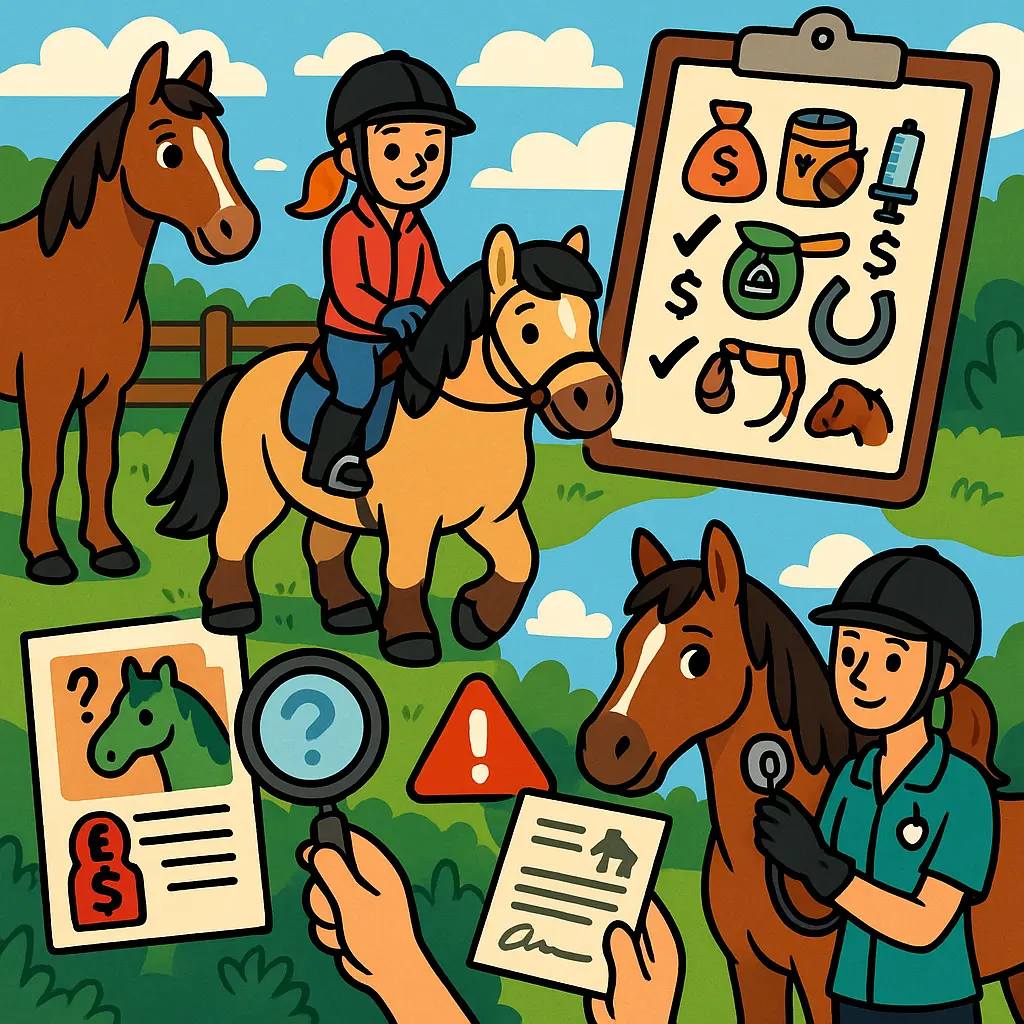
Bring safe riding gear, a basic handling and health checklist, and your phone for unedited videos; then arrange a full, independent vetting if you’re interested. Preparation helps you stay objective.
Your viewing essentials:
- Personal safety kit: a current-standard riding helmet, supportive riding boots, and weather-appropriate clothing (consider grippy, comfy women’s jodhpurs and breeches or children’s jodhpurs for junior riders).
- Hi-vis: if you’ll hack on roads, pack hi-vis layers for you (and request reflective gear for the horse).
- Handling kit: a compact grooming kit lets you check manners, skin, and body condition while you brush and pick up feet.
- Weather readiness: if the horse lives out, note the quality and fit of its rugs; in winter, ask about appropriate turnout rugs and stable warmth.
- Notes and videos: film straight, unedited clips of mounting, transitions, hacking past traffic, and tacking up.
Pro tip: At Just Horse Riders, we recommend you create a simple checklist covering catching, leading, tying, grooming, feet, mounting, transitions in all paces, solo and in-company hacking, and response to basic leg and rein aids. Tick what you see — not what you hope.
Pre-purchase vetting: non-negotiable steps
Always insist on an independent pre-purchase examination and bloodwork; sellers who resist may be medicating to mask lameness or behaviour issues. Use your own vet and get the findings in writing.
A proper vetting protects you from costly surprises. Book your own vet, not the seller’s, for a 2-stage or 5-stage exam depending on your plans. Always allow for blood tests — these can later reveal sedation or pain-relief drugs if concerns arise. If the seller discourages vetting or pressures a fast sale without it, step away immediately. This aligns with widespread expert guidance and is echoed in UK buying advice: a seller blocking a vet check is a severe red flag for hidden problems.
After a satisfactory vetting, request a clear, signed bill of sale with the agreed price, horse’s identity, and any warranties (e.g., “sold as seen and tried” is common, but clarity helps). Keep all videos, messages, and documents. If you plan to compete, ask your vet to comment on suitability for your discipline and workload.
Quick tip: Even if you’re confident after the ride, a calm, clean vetting is your best insurance against heartache. The £££ you spend now can save you thousands later.
Practical shopping steps that keep you safe
The safest path is to shortlist older, proven horses, view with a coach, and test in the school and on the road before booking your own vetting. Slow, methodical steps reduce risk and stress.
Follow this sequence:
- Define your must-haves: age 5+, steady temperament, hacking and traffic-proof, solo and in company, height and weight-carrying suitable to you, and a realistic radius for viewing.
- Shortlist by ad quality: clear price, comprehensive history, unedited videos, no “green” or “very little mileage” disclaimers for novice riders.
- View with support: bring your instructor or an experienced horseperson — two sets of eyes catch more.
- Test thoroughly: observe catching and grooming, see the seller ride, then ride yourself in the school and out hacking; take videos.
- Sleep on it: never decide the same day. Re-visit if keen.
- Book an independent pre-purchase vet exam with bloods.
- Complete a clear bill of sale; arrange appropriate gear (consider proven brands like LeMieux for saddle pads and accessories) and yard setup before collection.
At Just Horse Riders, our customers often tell us that the best decisions came from saying “no” quickly to poor fits, and taking their time when a horse looked right on paper and in person.
Conclusion: your calm, confident path to the right horse
The right first horse is out there: old enough (5+), honest, and proven in the job you want. Decode adverts, test in the school and on the road, insist on your own vetting, and ignore pressure. Equip yourself for UK weather and roads with reliable kit — from turnout rugs to hi-vis — and take the time to make a match you’ll love for years.
FAQs
What does “green” really mean in a horse ad?
“Green” means the horse lacks experience and consistent training; it may rush, nap, or buck and needs confident handling. This is not suitable for most novices, who benefit from horses aged five and up with proven mileage.
Is a horse priced as “low-mid fives” a good bargain?
No. Vague pricing creates confusion and often hides issues. Ask for a specific figure and a clear bill of sale to avoid misunderstandings.
Should I buy a “kid-safe” or “bomb-proof” horse without seeing a child ride?
No. Insist on video evidence of an appropriately skilled child rider, or bring a junior rider for a supervised test ride in suitable safety gear. Overblown claims without proof are a red flag.
What if the seller refuses a pre-purchase vet exam?
Walk away. Sellers who resist vettings or insist you use their vet may be hiding lameness or behaviour issues, sometimes masked by medication. Always use your own independent vet and include bloods.
Why is the same ad posted everywhere, every day?
Daily spam-posting often indicates desperation or a problem that keeps the horse from selling. Treat it as a red flag and investigate thoroughly — or move on.
Are “schoolmaster” horses good for riders returning after years away?
Yes, provided they’re 5+ with a verifiable history in shows and traffic. Test them thoroughly in the school and on hacks, and still arrange an independent vetting.
What should I wear when trying a horse in the UK?
Wear a current-standard riding helmet, supportive riding boots, suitable breeches such as our women’s jodhpurs, and take hi-vis if you’ll be hacking on the road. Dress for the weather and prioritise safety.