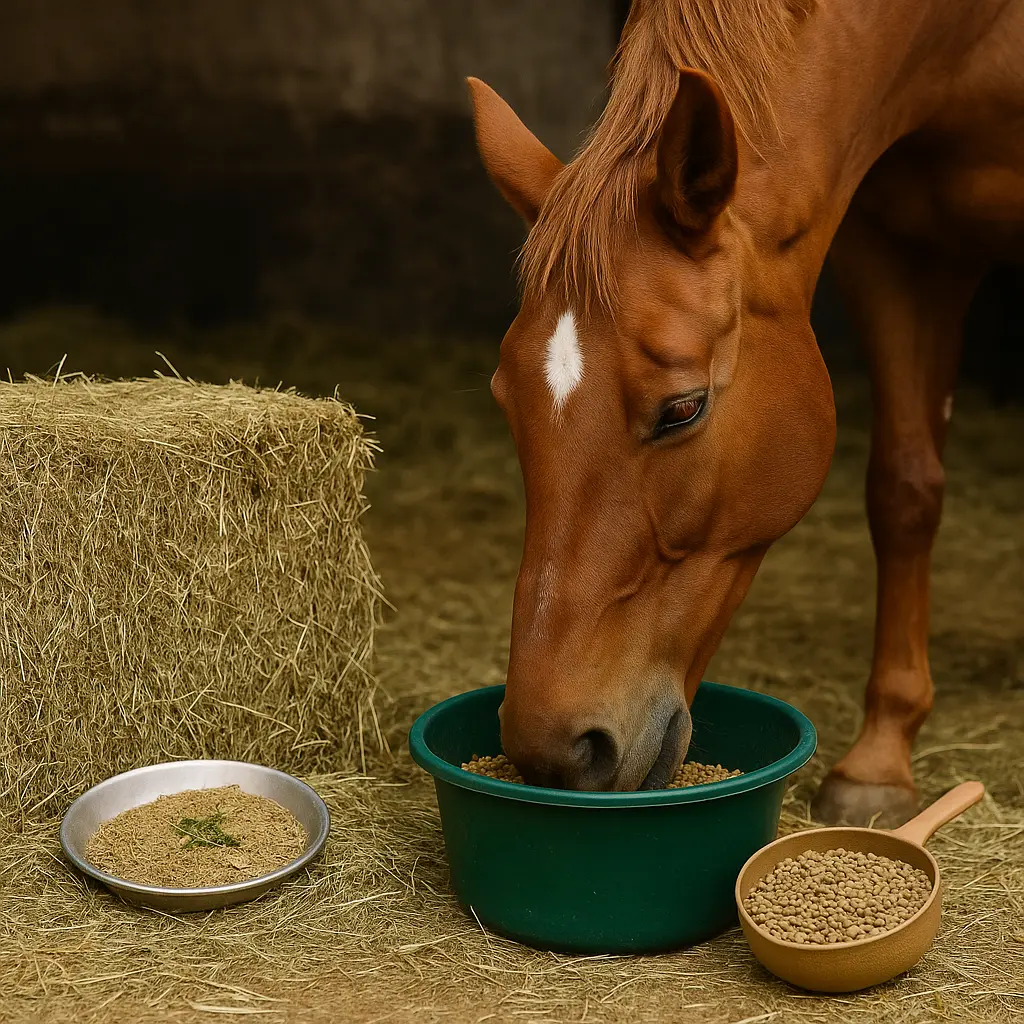
Your horse can be round on grass yet short on essential nutrients. That’s the gap a good feed balancer fills — concentrated vitamins, minerals and amino acids, without piling on calories.
Key takeaway: Feed 100g of balancer per 100kg bodyweight (typically 500g/day for a 500kg horse) alongside plenty of forage; this delivers the vitamins, minerals and amino acids UK forages often lack, without causing weight gain.
What is a feed balancer and why do UK horses need one?
A feed balancer is a small, nutrient-dense pellet that tops up vitamins, minerals and amino acids (like lysine) that forage often lacks, especially copper, zinc, selenium and vitamin E in typical UK hay and grazing. This lets you meet essential nutrition without adding unnecessary calories from bucket feeds.
As Your Horse explains, balancers are “small, nutrient dense feeds designed to provide a concentrated supply of vitamins, minerals and amino acids (quality protein)... forage can easily exceed calorie requirements but may fall short of key nutrients.” UK research confirms the gap: most owners don’t test forage and mature hay is commonly low in protein and key minerals, which is why obesity-prone horses on restricted grass still benefit from a balancer. In a 2023 UK study, 74% of owners reported not analysing forage, leading to preventable nutrient shortfalls (PMC).
In practice, think of the balancer as the “multivitamin and amino acid” that makes a forage-based diet complete. It supports topline muscle (via lysine), hoof quality (copper, zinc), antioxidant status (vitamin E, selenium) and overall wellbeing, without needing big bucket feeds.
How much balancer to feed — and will it add weight?
Feed 100g per 100kg of bodyweight daily, so 500g/day for a typical 500kg horse; at this level, a balancer provides around 6% of a horse in light work’s daily energy, so it will not cause weight gain. This small serving is enough to meet micronutrient needs while adding minimal calories.
This rate is recommended by UK feed specialists including Baileys Horse Feeds and echoed by independent guides (My Senior Horse, Your Horse). Concerned about starch or sugar? The quantities are tiny at proper feeding rates. For example, a balancer with 15% combined starch and sugar fed at 500g/day supplies just 75g total — far less than the 150g you’d get from 3kg of a “low” 5% starch/sugar feed (My Senior Horse).
“If your main aim is to provide essential nutrition without additional calories or starch, to be honest, any balancer will do! Remember not to get hung-up on starch levels; the amount of balancer you feed (typically 100g per 100kg bodyweight) is so low that... the actual amount of starch... is negligible.” — Baileys Horse Feeds
Quick tip: Use a scoop and digital kitchen scales to weigh 500g accurately — “scoop sizes” vary widely between brands.
Start with forage first
Analyse your hay, haylage and grazing if you can; a forage-first plan always beats guessing, because it targets the exact minerals and amino acids your base diet lacks. UK work shows most forages need supplementation and that “choosing a balancer from a position of knowledge” yields better balance (PMC).
In reality, many owners skip testing due to cost or time — the 2023 UK study found 74% don’t analyse forage — so a broad-spectrum balancer is still the smartest safety net (PMC). Mature winter hay is often low in protein (limiting lysine intake) as well as copper, zinc and selenium, meaning topline, hoof horn and antioxidant status are at risk without a balancer. If you are reducing grazing or using soaked hay to manage weight, that nutrient gap widens further, making the balancer even more important.
While you’re building your plan, you can cover the essentials with a quality balancer from our curated range of vitamin and mineral supplements for horses, and add targeted extras later if a forage report highlights specific gaps.
How to choose the right balancer
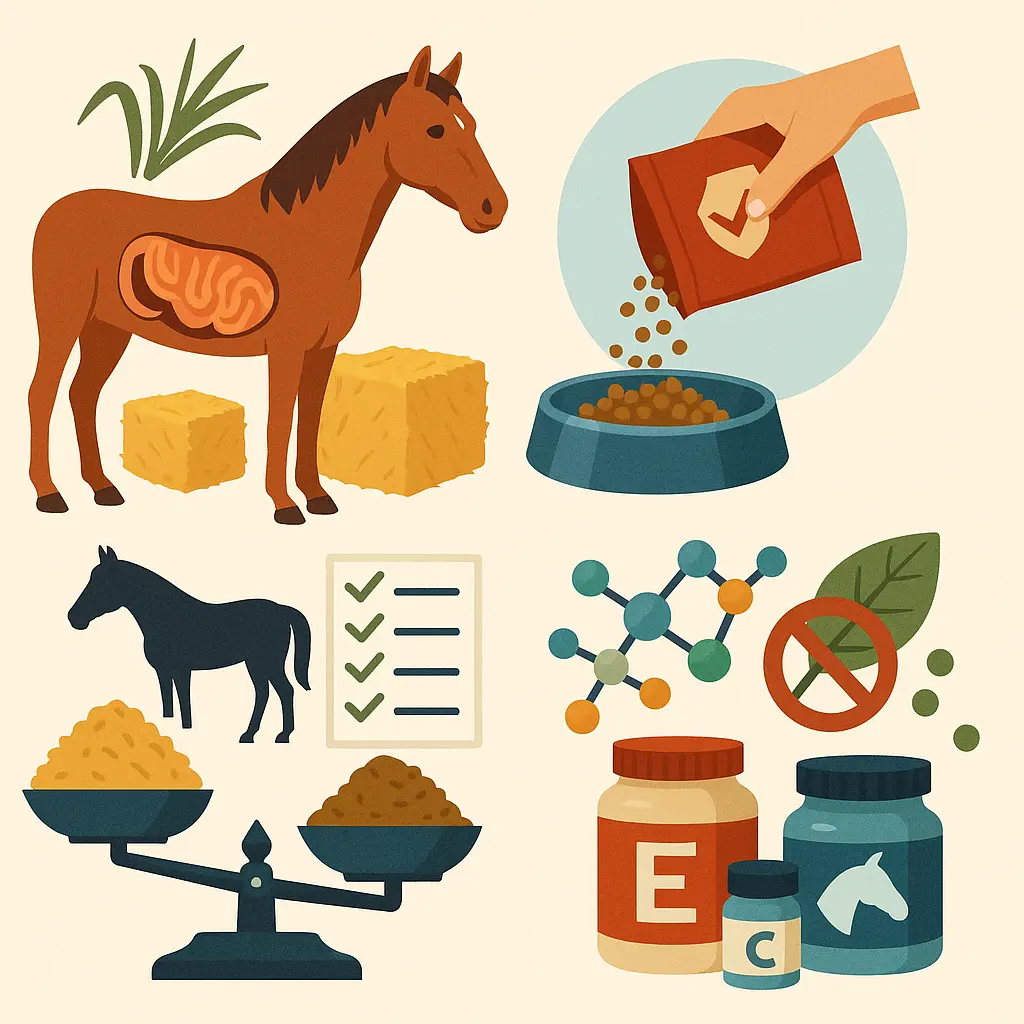
Choose a balancer that’s rich in lysine and vitamin E, keeps sugar and starch low, and — for good-doers on restricted forage — avoids added live yeast to prevent extra calorie extraction from fibre. For stabled horses in winter, consider a balancer or add-on with pre/probiotics to support hindgut health.
Here’s how to match the balancer to your horse:
- Good-doers/laminitis-prone: Prioritise low combined starch and sugar and a strong amino acid profile (lysine first) and vitamin E. At balancer feeding rates, starch content is typically a non-issue, but a low-sugar/starch formula offers reassurance for EMS/PPID and laminitis risks (My Senior Horse; Science Supplements).
- On restricted grass/soaked hay: Pick higher lysine to protect muscle while calories are cut; continue vitamin E/selenium support because soaked hay and limited grazing reduce these antioxidants (Your Horse).
- Winter, increased stabling: Added pre- and probiotics can help with high-forage, lower-movement routines, supporting fibre fermentation consistency.
- Performance/light work: A balancer covers the essentials; add calories separately (e.g., oil or beet) if needed rather than switching to large quantities of compound feed.
Many balancers meet or exceed National Research Council (NRC) minimums, but some fall short — always check the label (Science Supplements). At Just Horse Riders, we rate brands that publish full nutritional specs and make it easy to compare copper, zinc, selenium and vitamin E against NRC guidelines.
If you prefer to build your plan with proven supplement specialists, browse our trusted NAF supplements and balancers for clear labelling and targeted options.
How to feed a balancer day to day
Feed 500g/day for a 500kg horse (100g/100kg bodyweight) year-round alongside ad-lib forage, keep forage at or above 1.5% of bodyweight daily, and mix the balancer with a small amount of low-calorie chaff to slow intake and support gut health. If you also feed a compound nut/mix, reduce the balancer accordingly to avoid doubling up vitamins and minerals.
Work from this simple routine:
- Base diet: Forage first. Don’t let total forage drop below 1.5% bodyweight per day (that’s 7.5kg dry matter for a 500kg horse) to protect gut motility and behaviour; many thrive on more (Baileys Horse Feeds).
- Balancer: 100g per 100kg bodyweight, split into 1–2 feeds. Continue even during weight loss — restricted or soaked forage reduces nutrients further (PMC).
- Bucket bulk: Add a handful or two of low-calorie chaff to extend eating time and keep the hindgut happy (Your Horse).
- When using compound feed: If you halve the recommended amount of a fortified cube/mix, add roughly half the recommended balancer to keep micronutrients on target without excess calories (Baileys Horse Feeds).
- Digestion support: In winter or with management changes, add targeted pre/probiotics if needed. You’ll find proven options in our digestive and vitamin supplement collection.
Pro tip: Weigh hay nets and balancer servings weekly. Small creep-ups in ration size are a common reason weight control plans stall.
A simple UK seasonal plan
Keep your balancer in place year-round and adjust turnout, rugs and workload to the weather; the balancer quietly covers nutrition as your forage and management change. In winter, when horses eat more hay/haylage, the balancer supports topline, hooves and immunity.
Season by season:
- Spring: Rising sugars in grass can drive weight gain. Use the balancer plus grazing muzzles, track systems or time-restricted turnout; avoid switching to big bucket feeds.
- Summer: Good-doers often live on grass and a balancer alone. Add a low-calorie chaff carrier if you want a satisfying bucket feed with minimal calories.
- Autumn: As grass tails off, keep the balancer steady and transition onto hay/haylage gradually over 2–3 weeks. Consider adding probiotics during changeovers.
- Winter: With more stabling and hay/haylage, the balancer tops up low protein (lysine) and key minerals lacking in mature hay. Pair good management with appropriate rugs to maintain condition without excess feed.
If you’re tweaking management for the colder months, team nutrition with the right kit: our curated winter turnout rugs keep horses comfortable in the field, and our range of stable rugs for colder nights helps maintain condition without reaching for extra calories in the bucket. For the midgey months, add protection from our breathable fly rugs and sheets. Prefer tried-and-tested rug brands? Explore the latest WeatherBeeta turnout and stable rugs for reliable fit and durability.

Common mistakes to avoid
The biggest mistakes are skipping forage analysis, underfeeding the balancer, doubling up on fortified feeds, and worrying about starch in tiny servings. Avoid them and your forage-based diet works far harder for your horse.
- Guessing at forage quality: UK hay is variable; untested mature hay is often low in protein and key minerals. Analyse if you can, or use a quality balancer to cover the bases (PMC).
- Underfeeding the balancer: 500g/day for a 500kg horse is the typical target. Half measures mean half the vitamins, minerals and amino acids.
- Doubling up nutrients: Feeding full rations of a fortified mix plus a full balancer can oversupply fat-soluble vitamins and certain minerals. If you feed less than the recommended amount of compound feed, top up with a proportionate amount of balancer.
- Fixating on starch/sugar in balancers: At 500g/day, even 15% combined starch/sugar delivers just 75g — far less than many low-starch compound feeds at typical quantities (My Senior Horse).
- Dropping the balancer during weight loss: Nutrient intake falls further with soaked hay and restricted grazing. Keep the balancer to protect muscle, hooves and immunity.
What to check on the label
Look for a balancer that meets or exceeds NRC minimums for key vitamins and minerals, highlights lysine content, and keeps combined starch and sugar low; at proper feeding rates, starch load is negligible. Not all balancers cover the full requirement, so read specs and compare to the NRC.
Science-led reviews show some products fall short on essential micronutrients — especially copper, zinc, selenium and vitamin E — so choose brands that publish full analyses and declare levels clearly (Science Supplements). If you need help interpreting labels against NRC guidance, our team at Just Horse Riders can talk you through the options and suggest suitable products from our vitamin, mineral and digestive support range.
Quick tip: Check the recommended feeding rate on the bag and make sure the listed nutrient levels are “per daily ration” (not per kg only). If a product provides figures per kg, multiply by 0.5 to estimate the intake from a 500g serving.
FAQs
Do balancers cause weight gain?
No. At 100g/100kg bodyweight (e.g., 500g/day for a 500kg horse), balancers contribute roughly 6% of daily energy for a horse in light work — a negligible amount compared to even “low-calorie” mixes and cubes (Your Horse).
Are “lite” balancers necessary for good-doers?
Not usually. At proper feeding rates, calorie differences between standard and “lite” balancers are minimal. Prioritise lysine and vitamin E, keep starch/sugar modest, and manage calories via forage control and workload (Your Horse).
Can I feed a balancer with a compound feed?
Yes. If you feed less than the recommended amount of a fortified mix/cube, top up with a proportionate amount of balancer. Avoid feeding full rations of both to prevent oversupplying vitamins/minerals (Baileys Horse Feeds).
Is starch in balancers a concern for laminitis-prone horses?
No, not at correct rates. A 15% starch/sugar balancer at 500g/day supplies just 75g total — far less than typical bucket feeds, and usually well tolerated when paired with controlled forage (My Senior Horse).
Should I stop the balancer if my horse needs to lose weight?
Don’t stop it. Weight loss regimes (restricted grazing, soaked hay) lower nutrient intake further; a balancer maintains essential vitamins, minerals and amino acids to protect health during the diet (PMC).
Do all balancers meet nutritional needs?
No. Many meet or exceed NRC minimums, but some don’t, so always check label levels for copper, zinc, selenium and vitamin E. Choose transparent brands and seek advice if unsure (Science Supplements).
What else should I adjust alongside a balancer in winter?
Keep the balancer steady, offer ad-lib hay/haylage, and adjust warmth and turnout rather than adding bucket calories. Well-fitted stable rugs for cold snaps and weatherproof turnout rugs for wet, windy days help maintain condition while your nutrition stays consistent.
At Just Horse Riders, we believe a forage-first diet plus the right balancer is the simplest, safest way to keep UK horses healthy year-round. If you want help choosing, message our team — we’ll happily match a balancer to your horse’s weight, workload and forage.