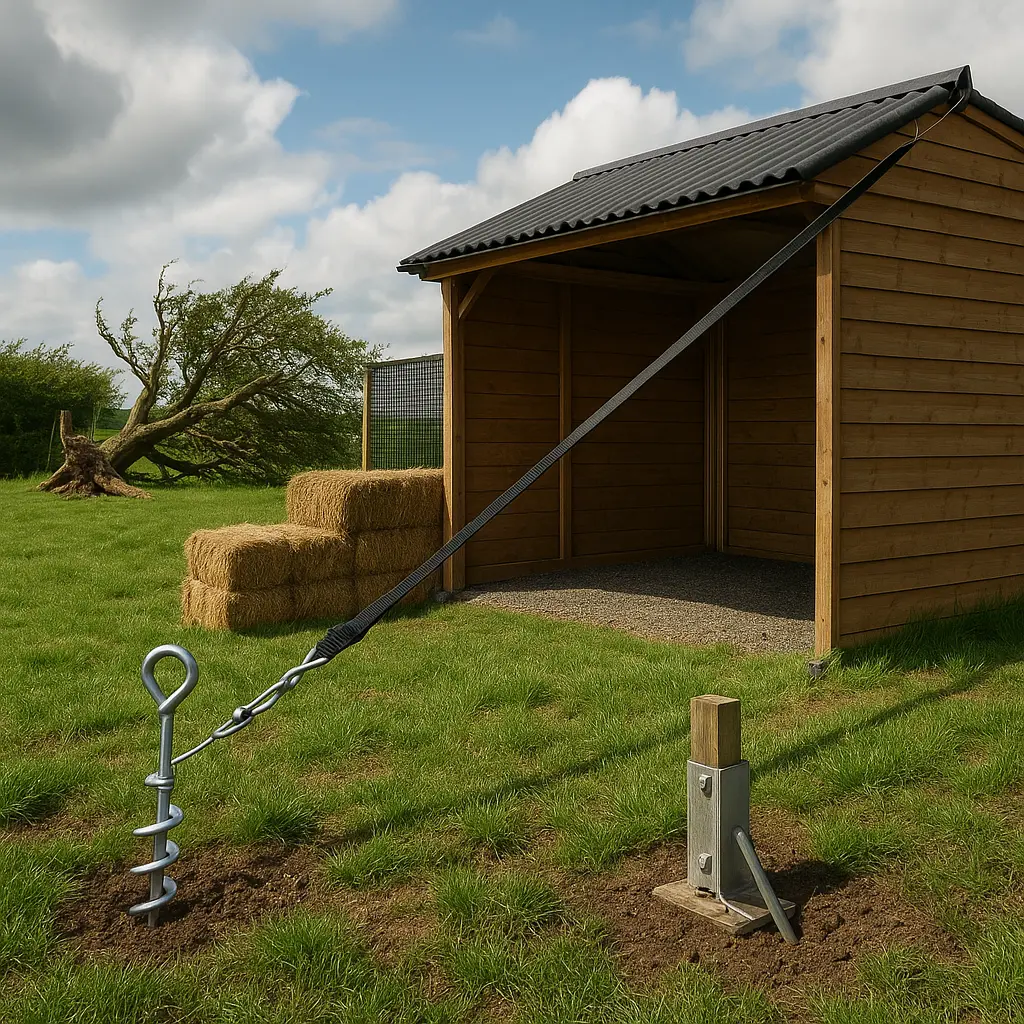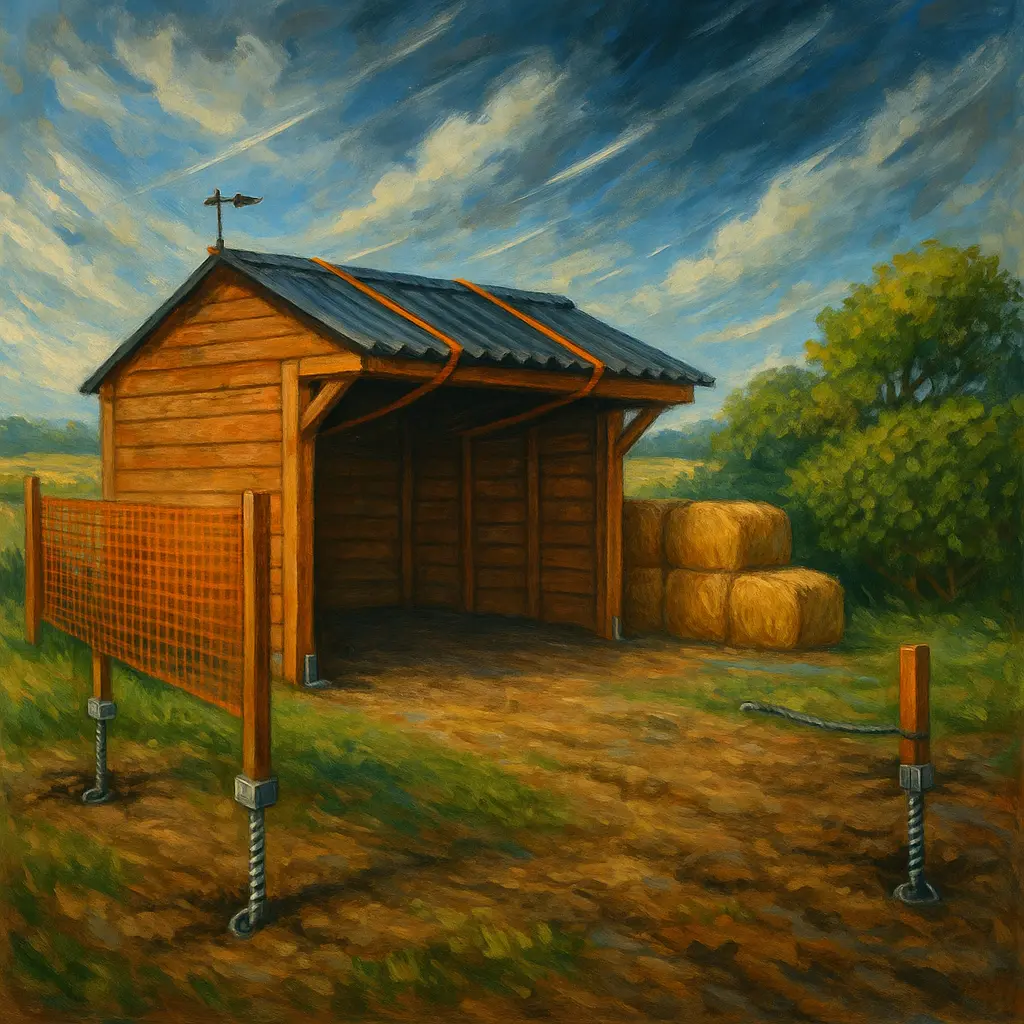
Storms can flip a field shelter like a matchbox, but most losses are avoidable with smart siting and solid anchoring. Get these fundamentals right and your horses stay dry, safe and calm—no matter what the UK weather throws at you.
Key takeaway: Face the shelter’s back to the south‑westerlies, anchor all four corners with screw ground bolts and brackets, add a 50–70% permeable windbreak 2–5x its height upwind, and use weight (metal skids or ballast). Do this and you’ll prevent the vast majority of storm damage.
Why field shelters fail in UK storms
Unsecured field shelters are routinely lifted or overturned by UK high winds, especially on exposed ground. Their broad, flat walls act as sails; wind pressure, horse movement, and soft winter footing combine to shift, twist, or even flip a shelter. Sources like Olson Timber Buildings highlight how quickly a strong gust can turn an unanchored structure, and leading manufacturers stress that shelters must be fastened down to prevent movement or blow-over in storms (Jon William Stables).
High winds are a regular UK reality, and exposed sites make matters worse. The risk spikes in autumn and winter when ground softens, reducing grip for skids or posts. Combine this with a doorway facing the wind and you effectively create a wind tunnel that multiplies uplift and drag. The solution is simple but non‑negotiable: orient for the wind, add an effective windbreak, and anchor every corner into solid ground.
The right orientation for UK winds
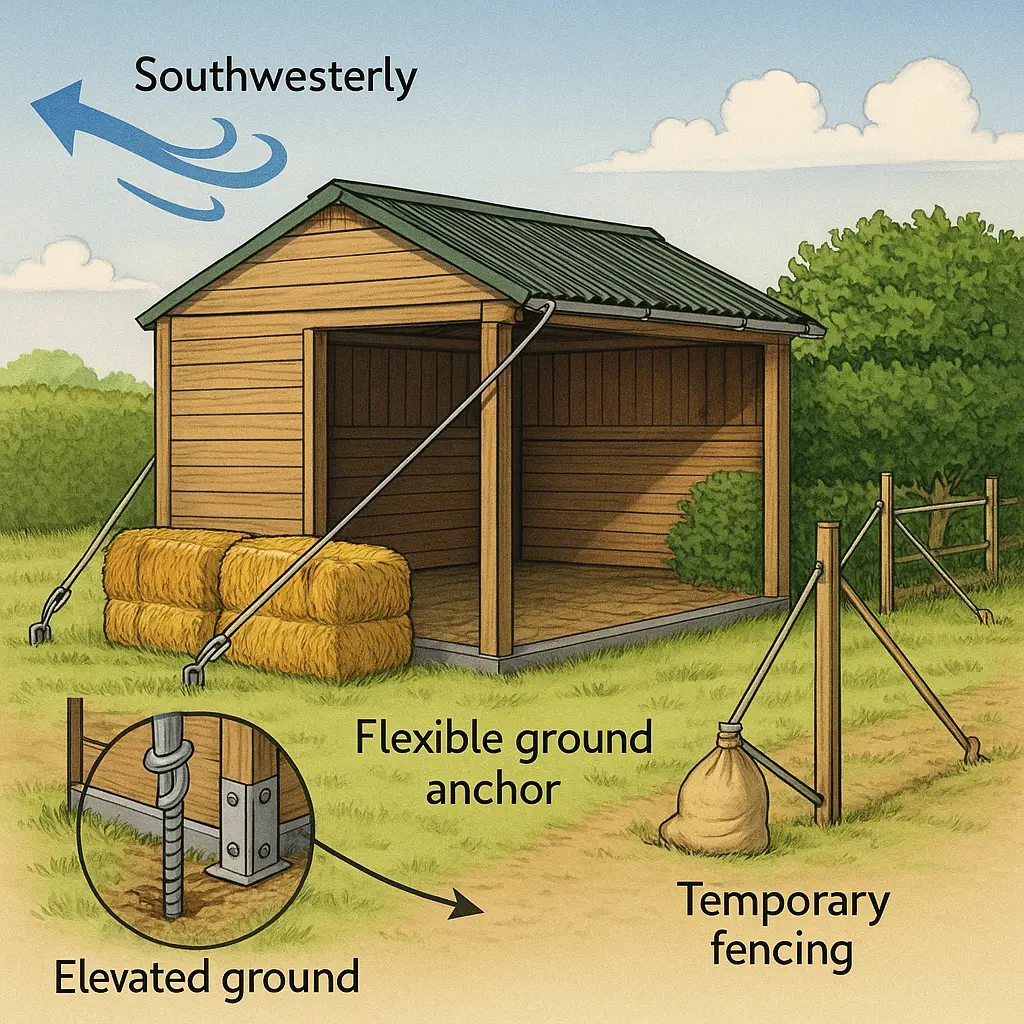
In the UK, face the shelter’s back to the prevailing south‑westerlies and turn the opening away from the wind. This single choice dramatically reduces internal turbulence and uplift.
As Sussex Stables puts it, the best approach is to block the south‑westerlies and maintain airflow:
“The best approach is to position the shelter with its back facing the prevailing wind. In the UK, winds typically come from the southwest… A three-sided shelter should be positioned to block harsh weather while still allowing good airflow.”
Where weather varies, an east‑facing opening is a smart hedge: it avoids westerly storms while letting in morning sun to dry overnight dampness. If you’re unsure of your site’s specific wind pattern, record it for a few weeks using a weather vane or simply stand in the field and face into the wind—note the direction and frequency. Guidance from Finer Stables is clear: local topography can bend wind; measure, don’t assume.
Also plan for sun and workflow. Morning sun on the doorway helps dry bedding and mud; deep shade in the hottest hours keeps summer heat at bay. Keep the shelter well away from gates and fences for easy mucking‑out and free horse movement.
Build‑in shelter from wind: windbreaks that work
The most effective windbreaks are 50–70% permeable and should be placed 2–5 times their own height upwind of the shelter. This reduces wind speed without creating damaging eddies.
Permeable barriers—hedges, post‑and‑mesh screens, or breathable sheeting—slow wind while letting some pass through, preventing the vortexes that solid walls can create. Gardening and landscape shelterbelt research consistently recommends 50–70% permeability and a set‑back of 2–5x the barrier height for the “quiet zone” (Gardeners Snaresbrook).
Practical windbreak options include:
- Existing hedges: Nature’s best 50–70% screen; place the shelter just downwind for a calmer microclimate (Finer Stables).
- Temporary screens: Use mesh netting or windbreak fabric, braced in triangles and ballasted (sandbags, concrete blocks) for storm stability (HB Barricade).
- Wrapped round hay bales: Line them along the windward edges to provide mass and a permeable baffle; excellent as a short‑notice measure (Colt Stables).
Pro tip: Don’t put a solid wall immediately upwind of a shelter—this often accelerates wind over the top and increases suction on the leeward side, inviting uplift.
Anchor it or lose it: best ways to secure a field shelter
Secure all four corners with screw‑type ground anchor bolts and reusable metal brackets; you don’t need concrete, and you can unscrew the system to move the shelter later. This is the fastest, most reliable way to stop rotation, creep, and blow‑over.
Colt Stables recommend flexible ground anchors because the pegs and brackets are reusable and non‑permanent—just unscrew and relocate. Fit metal brackets at each corner, then drive anchor pegs through the bracket holes deep into firm ground. This ties the shelter down and prevents twisting in gusts or when horses rub against the structure.
For exposed sites or amber weather warnings, belt‑and‑braces your setup:
- Ratchet straps over the roof to ground stakes or deadmen anchors.
- Diagonal braces inside the shelter at corners to stiffen frames.
- Metal skids on mobile shelters to add mass and resist rot and racking (Horse Gossip discussion).
Remember, even brand‑new, correctly assembled shelters are not safe without secure tie‑downs; high winds can and do lift them (Horse & Hound Forum). At Just Horse Riders, we recommend fitting anchors the same day your shelter lands on site—don’t wait for the first gale.
Quick tip: If your soil is boggy, increase the number and depth of anchors, and add ballast (e.g., sleepers, concrete blocks) inside the skids to raise the overall weight.
Emergency measures when a storm’s rolling in
If you can’t install ground bolts in time, lash the shelter with ratchet straps and build a perimeter of wrapped round hay bales to add mass and cut wind. This buys crucial stability until you can fit anchors.
Emergency stabilisation that works when a named storm is hours away:
- Run two or three wide ratchet straps over the roof and stake them to solid deadmen or screw‑in anchors.
- Place wrapped round bales tight to the windward and side edges to form a permeable wind baffle and ballast (Colt Stables).
- Move the shelter downwind of a hedge if possible; even a small set‑back reduces gust load (Finer Stables).
- Check for loose sheets, protruding nails, or rattling fixings and address them before winds rise.
Prepare horses too: if rain and windchill are severe, ensure they’re comfortable in appropriate turnout rugs. Many of our customers trust storm‑ready options from WeatherBeeta for reliable waterproofing and breathability. If horses will be stabled during the peak, have clean, dry stable rugs to hand.
For your own safety in low light and driving rain, wear hi‑vis for riders and sturdy, grippy horse riding boots when checking fences and shelters.
Safe recovery: righting a blown‑over shelter
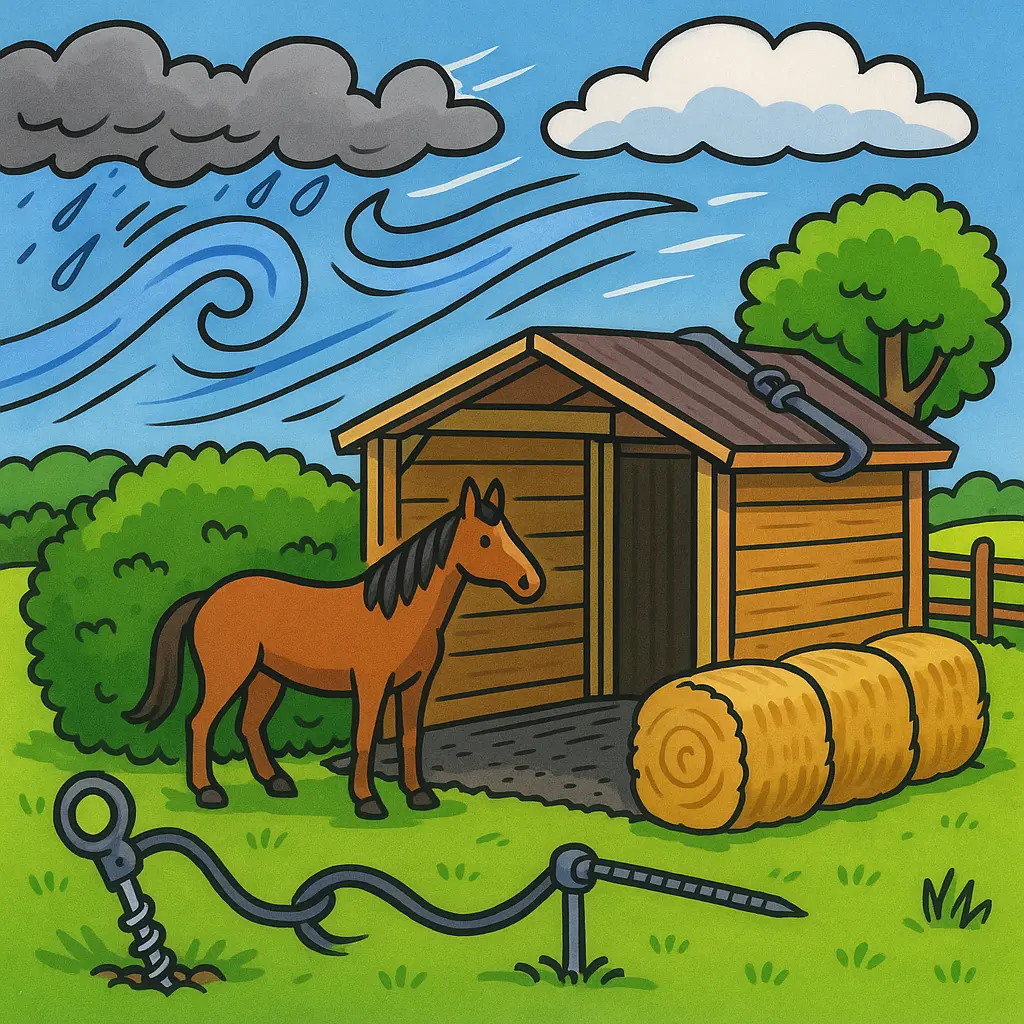
Start by clearing sharp debris from the base and walls; if the frame is compromised, remove the roof and replace damaged beams before re‑roofing and righting the structure. This prevents further tearing and makes the lift safer.
Owners on the Horse & Hound Forum advise a two‑stage approach: first, tidy the “back” of the shelter so nothing snags while rolling or lifting; then, if major uprights or ring beams are broken, strip the roofing, replace the timber, and only then re‑roof to complete the job. Similar guidance appears on the New Rider Forum—prioritise structural integrity before attempting a full righting.
Safety first:
- Keep horses well away and fence off the area.
- Photograph damage for insurance before you move anything.
- Use machinery and experienced help; do not stand under or downwind during the lift.
- Once upright, re‑square, fit diagonal braces, and anchor all four corners immediately.
Choose the ground and keep it sound
Site shelters on well‑drained, slightly elevated ground, avoiding winter wet spots; add a hardcore base or drainage if high ground isn’t available. This protects hooves, comfort, and the shelter’s structure.
UK winters are wet. A shelter in a hollow quickly becomes a mud trap, inviting thrush, lost shoes, and rubs. Sussex Stables and Finer Stables recommend dry, elevated positions, or installing a compacted hardcore pad with drainage to keep the floor firm. If ground is limited, rotate mobile shelters periodically so the footprint can recover and dry out—especially valuable in the UK’s wet climate (Olson Timber Buildings).
Comfort and welfare checks:
- Keep the entrance clear of churn and puddles; add mats or hardcore as needed.
- Position against a hedge where possible to add a natural windbreak (Finer Stables).
- Balance light and shade: morning sun to dry damp, shade for summer heat relief.
- Keep clear access for barrows and vehicles; avoid siting near gates to reduce crowding and damage.
After storms, check legs for knocks from slipping or scrabbling in mud and use appropriate care from our grooming kit selection. To support hooves and overall condition through wet months, explore targeted horse supplements recommended by our team.
Field shelter checklist and timeline
A simple seasonal checklist prevents most losses and keeps horses comfortable year‑round. Use this as your quick, repeatable plan.
Before storm season (late summer/early autumn):
- Record local wind direction for 2–4 weeks with a vane or simple observation.
- Reposition so the back faces SW and the opening is downwind or east‑facing.
- Fit screw‑type ground anchors and metal brackets to all four corners.
- Add a 50–70% permeable windbreak 2–5× its height upwind (hedge or mesh screen).
- Inspect frame joints; add internal diagonal bracing if the shelter flexes.
- Consider metal skids for mobile shelters to add mass and longevity.
48–72 hours before forecast gales:
- Tighten all fixings; secure loose sheets and trim branches near the roofline.
- Lay in emergency straps, stakes, and ballast (sandbags, wrapped bales).
- Move to the lee of a hedge if the site is very exposed and anchors aren’t in yet.
- Prepare horse kit: waterproof, breathable turnout rugs, plus dry stable rugs if stabling during peaks.
- Stage your personal storm kit: hi‑vis and non‑slip riding boots for night checks.
During the storm:
- Avoid unnecessary trips to the field; observe from a safe distance if possible.
- Do not attempt repairs while winds are high.
Immediately after:
- Check horses first; look for cuts, swelling or heat from slips or knocks.
- Inspect and photograph the shelter; clear sharp debris.
- Re‑anchor and re‑brace as required; schedule structural repairs promptly.
Pro tip: Keep a dedicated “shelter kit” in a weatherproof box: straps, spare brackets, anchor pegs, drill/driver, heavy hammer, gloves, and first‑aid items for you and the horses.
Next steps
Act now—before the next yellow warning. Turn the opening away from the wind, fit four ground anchors, add a permeable windbreak set back upwind, and check your drainage. At Just Horse Riders, we can help you kit out your horses for wild weather with proven turnout rugs and supportive supplements, while you sort the anchors and windbreaks.
FAQs
What’s the most cost‑effective way to secure a field shelter if I can’t buy ground bolts right now?
Line wrapped round hay bales around the shelter’s windward and side edges to add mass and create a permeable windbreak. Lash the roof with ratchet straps to stakes as a temporary measure (Colt Stables).
How do I find the prevailing wind direction on my property?
Log wind direction daily for a few weeks using a weather vane or by standing in the field and facing into the wind. Across the UK the prevailing wind is typically south‑westerly, but local landforms can shift it (Finer Stables).
Can I move a mobile field shelter that’s been anchored down?
Yes. With screw‑type ground anchors and reusable brackets, simply unscrew the bolts, relocate the shelter, and re‑fix in the new position. The same pegs and brackets can be reused (Colt Stables).
Which way should the shelter opening face?
Face the opening away from the prevailing wind to cut gusts and rain. In mixed conditions, consider an east‑facing opening to avoid westerly storms while allowing morning sunlight and good airflow (Sussex Stables).
What’s the best ground position for a field shelter?
Choose a well‑drained, slightly elevated site and avoid areas that flood or churn in winter. If you don’t have high ground, install a compacted hardcore base or drainage, and keep clear of gates and fences for safe access (Sussex Stables; Finer Stables).
Is a brand‑new shelter safe from being blown over without anchoring?
No. Even new, properly built shelters can be picked up and overturned in high winds if not secured. Always pin or lash them down—preferably with four ground anchors and, in storms, retaining straps over the roof (Horse & Hound Forum).