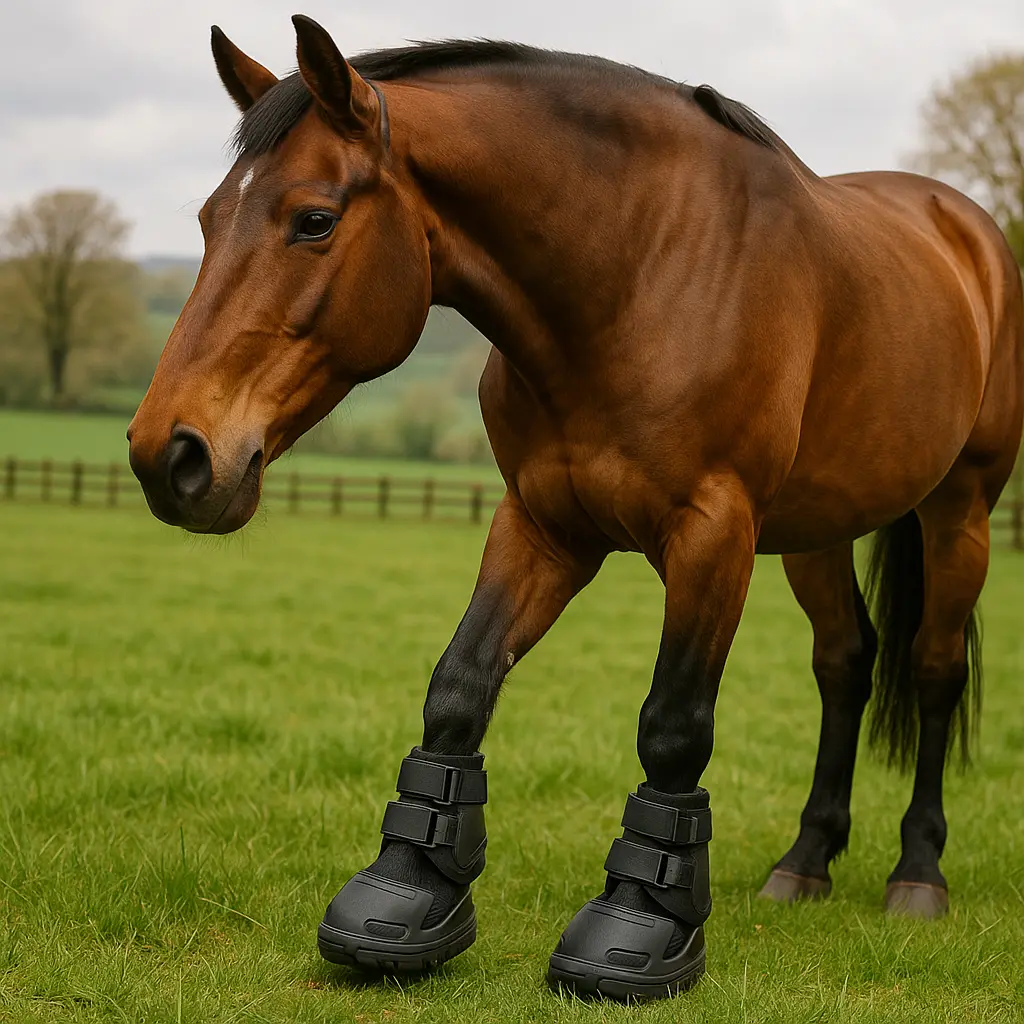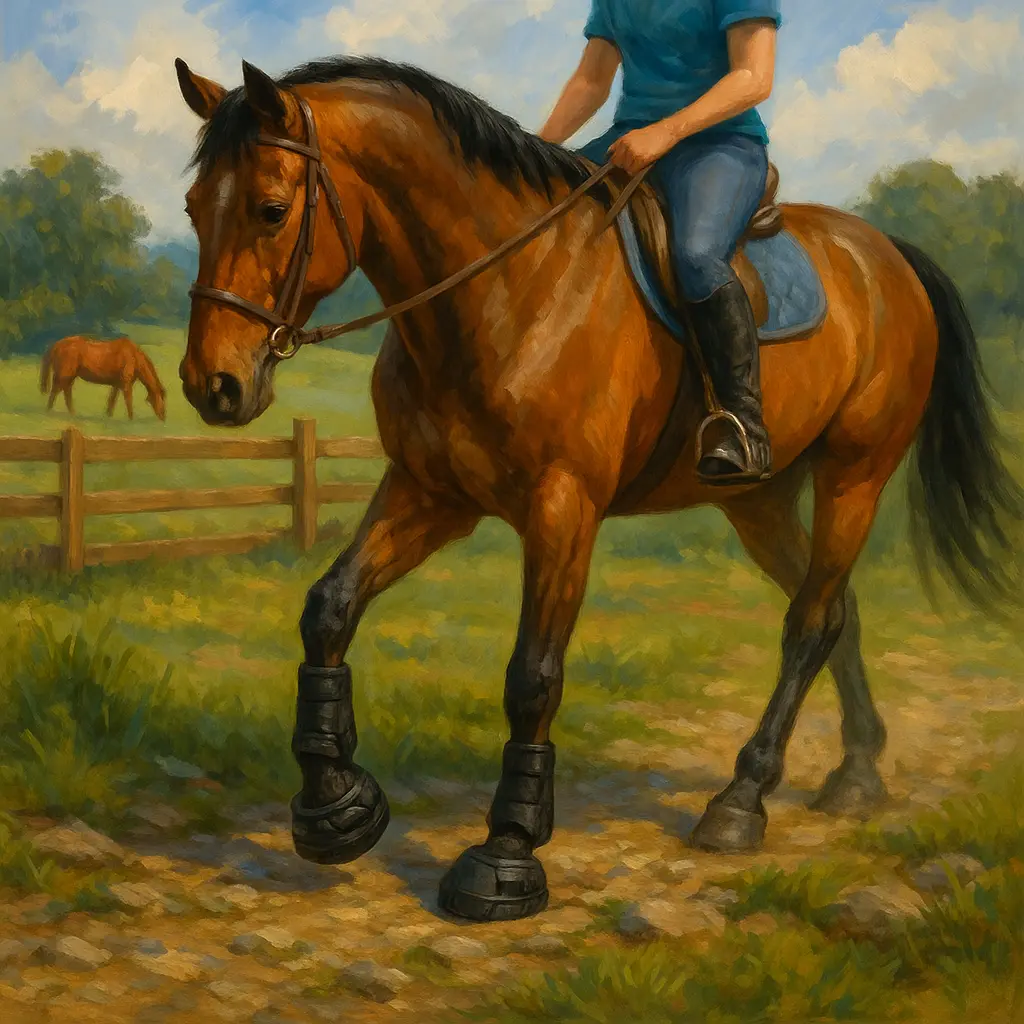
Hoof boots have moved from niche to normal in UK yards, helping horses stay comfortable on our hard summer tracks and wet winter lanes. Whether you’re transitioning from shoes or managing a rehab case, the right pair can be the difference between cautious steps and confident strides.
Key takeaway: For UK horses, hoof boots protect during barefoot transitions, turnout and riding, and are increasingly used in remedial care — but correct fit, regular trimming and rule-checking are essential.
What hoof boots can do for UK horses
Hoof boots protect barefoot or transitioning horses for turnout and ridden work, and they’re increasingly applied for remedial support and recovery. The British Horse Society (BHS) recognises boots as useful across day-to-day hacking, turnout, and rehabilitation, especially when paired with pads for shock absorption.
In practice, UK owners use boots to solve real problems: stinging on flint and stony bridleways, thin soles after shoe removal, seasonal soreness on frozen or rutted ground, and extra cushioning for older horses. For rehab, therapy-style boots with pads help some horses stay mobile and comfortable while the hoof strengthens.
“Whether using traditional steel shoes, composite alternatives or hoof boots, the priority should always be your horse’s welfare and comfort... Talk to your farrier to decide what’s best, considering factors like workload, terrain and hoof health.” — British Horse Society (BHS)
At Just Horse Riders, we recommend planning hoof boots as part of a complete comfort plan — trim cycle, diet, workload and terrain — rather than as a standalone fix. That approach keeps you ahead of rubs, twists and mid-ride boot losses.
Are hoof boots legal in UK competitions?
Hoof boots are allowed in exercise and lunging areas at British Eventing, but they are not permitted during any phase of competition; they’re also banned when mounted or lunging under British Showjumping and in British Dressage tests. These rules are confirmed by Horse & Hound and event guidance compiled by The Saddlery Shop.
Here’s the UK snapshot:
- British Eventing (BE): Allowed in warm-up/exercise and lunging, not allowed in dressage, showjumping or cross-country phases.
- British Showjumping (BS): Not allowed at any time when a horse/pony is mounted or being exercised (including lunging); permitted only in stable and grazing areas.
- British Dressage (BD): Not permitted in competitions or the dressage phase of affiliated eventing.
If you’re competing, that means hoof boots can be brilliant for travelling, schooling, lunging, or keeping your horse happy on the lorry park — but you must remove them before competing. While you’re prepping for show day, you may also want to refresh your kit from our curated competition clothing.
How to choose the right hoof boot style
Choose structured, close-fitting boots for faster, more demanding work if the fit is precise, and opt for less structured styles for transitions, turnout and gentle hacking. Fit quality is the deciding factor: the more you ask of a boot, the more exact the fit must be.
Two broad categories dominate:
- Structured, close-fitting boots: Think “trainers” for hooves — secure, responsive, and excellent for faster work when fitted correctly. Their grip relies on friction between the hoof wall and the boot.
- More forgiving, roomier boots: Great for early transitions, turnout, and slower miles where comfort and easy fitting matter most.
“You should be able to do anything in hoof boots that you can do with metal shoes. But the more you ask of them, the more critical correct fitting becomes.” — Expert advice via Horse & Hound
“This type [structured, close-fitting boots] needs to fit properly, because it’s the friction between hoof and boot that keeps it secure.” — Fitting guidance via Horse & Hound
Open-toe and open-quarter designs (for example, Swift-style models) can help some horses, especially behind, where twisting is more common. Riders have reported twisting with certain standard boots (e.g., Hoof Star) on the Horse & Hound forums, with open-front variants helping in some cases. Always test fit carefully and confirm stability on the surfaces you ride most.
For remedial needs (thin soles, laminitis rehab, or older horses), look for therapy boots that accept pads and provide extra shock absorption. If your horse’s workload or conformation overwhelms boots — for example, sustained fast work or very asymmetrical hooves — discuss composite or traditional shoes with your farrier.
When and how to measure your horse’s hooves
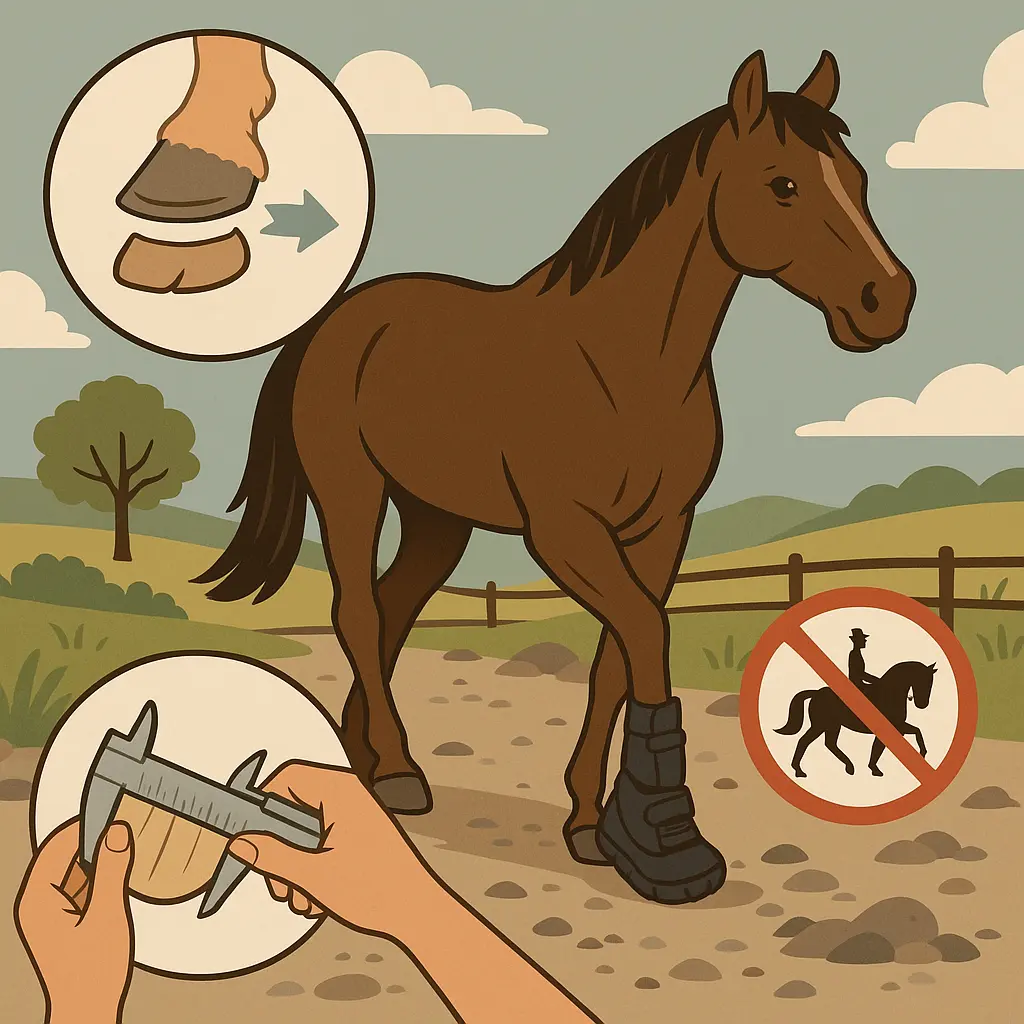
Measure hooves after a fresh trim or within two weeks of one, and record width and length at multiple points in the trim cycle so you can match growth changes to the boot’s sizing window. This simple timing decision prevents distorted fits from long or flared walls.
Follow these steps:
- Book a trim, then measure: Immediately after the trim (or within 14 days), measure the widest point of the hoof (width) and from toe to the back of the bearing surface (length), excluding the heel bulbs.
- Capture mid-cycle change: Measure again mid-cycle (e.g., week 2–3) to see how your horse’s feet “grow into” the boot. This helps you choose between two sizes or decide if you need a slimmer shell.
- Keep hooves clean and level: Stand your horse on a flat surface, pick out feet thoroughly, and photograph each sole with a ruler for repeatable comparisons. A tidy grooming kit makes this easier and more accurate.
- Compare to manufacturer charts: Prioritise shell shape as well as size — round vs oval hooves have different needs.
Quick tip: If your chosen model offers fit kits or printable sizing templates, use them. They save time and postage and reduce the risk of rubs or rotating boots.
Measuring more than once is especially useful if your horse transitions to barefoot, because hoof proportions often change over the first three months. Plan the boot choice and break-in around that evolution.
Trimming schedules and going barefoot in the UK
Most UK barefoot horses need trimming every 3–5 weeks during active seasons, and a three-month transition period is a sensible baseline when introducing hoof boots. While the BHS notes shod horses are typically trimmed or shod every four to six weeks (and some barefoot horses can go longer), many horses booted for regular work do best at tighter 3–5 week cycles to keep fit precise.
Our customers often find that small, regular trims stabilise fit, reduce wall flares, and prevent the “too tight after trim, too loose before trim” problem. The Just Horse Riders trimming guide explains why short cycles often mean happier miles in boots.
Always involve your hoof-care professional. The BHS recommends using a registered farrier (regulated by the Farriers Registration Council, FRC), and we agree — especially when changing from shoes to boots. They’ll help you plan comfort from day one, not “remove and hope.”
Pro tip: Support hoof horn quality from the inside out. Discuss diet with your vet or nutritionist and consider targeted hoof support from our curated supplements for hoof and joint health. Better horn grows better feet — and better feet keep boots secure.
Fitting and field-testing: avoid rubs, twists and lost boots
Break boots in over several short sessions, test at walk then trot on your usual surfaces, and use pastern wraps to prevent wet-weather chafe. UK conditions — rain, mud, wet grass — increase rub risk on heels and pasterns, so plan ahead.
Here’s a field-test routine that works:
- Initial fit on dry footing: Apply boots snugly, check gait in walk and trot. There should be no twisting, no “flip” at the toe, and no gapping at the heels.
- Short rides first: 10–20 minute hacks on varied surfaces (lanes, bridleways, arena) to let the materials settle. Re-check straps and gaiters afterwards.
- Wet test: Ride on wet grass or in light rain to confirm grip and look for rubs. The independent River Earth hoof boot report notes rub risk rises in prolonged wet; consider protective sleeves.
- Scale the ask: Only add faster work or longer routes once you’re 100% happy at slower paces.
If your horse tends to twist behind, open-toe/quarter designs (such as Swift-style models) may help, but you must prove the fit on your horse; experiences vary, as discussed on the Horse & Hound forums. For chafe-prone skin, keep a set of pastern wraps in your tack room — find protective options in our horse boots & bandages collection.
Safety matters for you, too. If you’re testing on lanes at dusk or in poor visibility, wear hi‑vis and a correctly fitted riding helmet. In winter, pair your plan with reliable turnout rugs so your horse isn’t standing wet and cold between fits — comfortable horses stand better and allow more accurate adjustments.
What to use hoof boots for—and when to choose something else
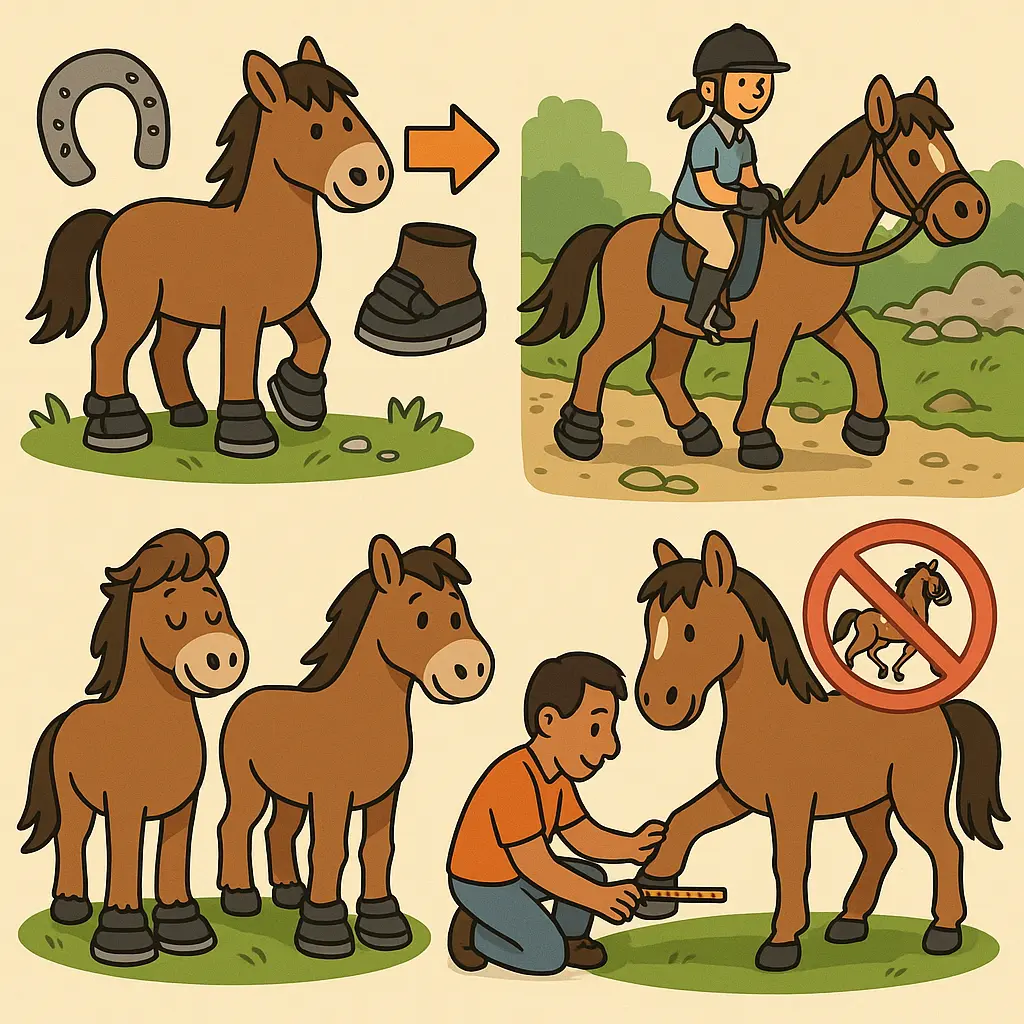
Use hoof boots for barefoot transitions, protection on hard or stony ground, thin soles and rehabilitation with pads; choose composite or traditional shoes when your horse’s workload or conformation overwhelms what boots can reliably manage. That line is different for each horse, but the decision tree is straightforward.
Boots tend to excel when you need flexible protection you can remove after the ride or through rehab. Common wins include:
- Transitioning out of shoes (the first three months especially)
- Hacking on hard lanes/flinty tracks; frozen or rutted winter ground
- Thin soles or seasonal sensitivity
- Rehabilitation with cushioned pads, including laminitis recovery
- Older horses needing shock absorption for comfort
They’re less ideal when the workload is extreme (e.g., frequent fast roadwork or long gallops on abrasive surfaces), the hoof shape is highly asymmetrical and can’t be stabilised with trimming, or rules disallow boots in your discipline. That’s when composite or steel shoes — fitted by your farrier — may be the better welfare choice.
Whatever you choose, the welfare principle from the BHS applies: prioritise your horse’s comfort, then pick the protection that best supports the work, terrain and hoof health.
UK rules and responsibilities: farriers, welfare and law
In the UK, farriers must be registered with the Farriers Registration Council (FRC), and you should consult a registered farrier before changing between shoes, boots or barefoot. The BHS specifically recommends using registered farriers to maintain standards and accountability.
Owners can trim their own horses under current welfare laws, but this comes with serious responsibility: you must meet animal welfare requirements and the National Occupational Standards for competence. There have been ongoing discussions about regulatory changes that could affect who trims and what counts as a “shoe” (for example, some glue-on protections). For context, see the EasyCare summary of UK hoof-trimming laws under review.
Two golden rules protect your horse’s comfort and your wallet:
- Never remove shoes without a comfort plan — schedule trims, choose boots and pads in advance, and be ready to adjust workloads.
- Keep to regular appointments — the BHS cites four to six weeks for shod horses; in our experience many barefoot horses in regular work benefit from three to five weeks, especially while booted.
Finally, remember competition rules: hoof boots are widely restricted in affiliated sport (see Horse & Hound for details), so always check your discipline’s handbook before you load the lorry.
FAQs
Can I use hoof boots in UK competitions?
Yes in some warm-up contexts, no in most competition phases. British Eventing allows boots in exercise/lunging areas only; they must be removed for all competition phases. British Showjumping bans hoof boots when mounted or lunging. British Dressage does not allow them in tests. Always check the latest rules via Horse & Hound and your discipline’s handbook (see also event guidance).
When should I measure for hoof boots?
Measure after a fresh trim or within two weeks, then again mid-cycle to understand how your horse’s feet change as they grow. This prevents ordering a size based on flares or excess length and helps keep the fit secure across the whole trim cycle, per Horse & Hound.
Do open-toe hoof boots reduce twisting on hind hooves?
They can help, but results vary by horse. Some riders report twisting with certain closed-toe models (e.g., Hoof Star) and better stability from open-toe/quarter “Swift-style” designs, especially behind. Test on your horse and confirm stability in your usual conditions; see experiences discussed on the Horse & Hound forums.
How often should a barefoot horse be trimmed?
Plan three to five weeks for most UK barefoot horses in active work, with about three months to transition comfortably into boots. The Just Horse Riders trimming guide explains why short cycles help boot fit, while the BHS notes shod horses typically see the farrier every four to six weeks.
What if boots rub in wet UK weather?
Rubs are more common in prolonged wet, mud and on wet grass. Break boots in slowly, keep the hoof capsule well-trimmed, add pastern wraps for longer or wetter rides, and re-check fit. The independent River Earth report highlights wet-weather chafe; stock up on protective sleeves in our horse boots & bandages collection.
Are hoof boots safe for faster work?
Yes — when they fit precisely. Structured, close-fitting models perform well at speed because they rely on friction between hoof and boot; poor fit invites twists or losses. As the experts note via Horse & Hound, the more you ask, the more critical correct fitting becomes. Build up pace only after thorough walk–trot testing.
Ready to set your horse up for comfortable miles? Map your trim cycle, measure post-trim, choose the right boot style for your workload, and test in the conditions you actually ride. For comfort add-ons and safety essentials, explore pastern wraps and protective bandages, hi‑vis for hacking, and helmets that fit — and if winter weather’s closing in, keep them cosy with reliable turnout rugs.