Thinking about keeping your Thoroughbred barefoot, or tweaking your trim cycle? The right schedule and support can be the difference between rock-crunching strides and sore steps, especially on our stony bridleways and boggy winter hacks.
Key takeaway: Most UK barefoot horses need trimming every 3–6 weeks, with many doing best at 3–5 weeks; plan a three-month transition, manage workload, and use hoof boots on challenging ground for comfort and soundness.
How often should a barefoot horse be trimmed?
Most barefoot horses in the UK need a professional trim every 3–6 weeks, with many domestic horses doing best at 3–5 weeks depending on growth, wear and workload. Shod horses are usually done every 4–6 weeks, but barefoot horses often benefit from slightly shorter intervals to stay balanced and chip-free.
Trim frequency isn’t one-size-fits-all. Growth rate varies with age, health, fitness, diet and season, and wear depends on the surfaces you ride. A Thoroughbred hacking regularly on roads and stony tracks will wear differently to one schooling on a soft arena. Keep a close eye on wall flares, chips at the quarters or toe, and any change in landing pattern (you want a confident, heel-first landing). If you spot imbalances or stretching in the white line, bring the trim date forward.
Neglecting maintenance trims invites problems. Long or unbalanced walls can lead to cracks, white line separation and abscesses; ongoing strain can escalate to lameness or laminitis. Most domestic barefoot hooves tolerate 3–5 weeks between tidy-ups, but listen to your horse and your hoofcare professional—shorten the cycle if you see hoof quality or comfort slipping.
What’s different about a proper barefoot/performance trim?
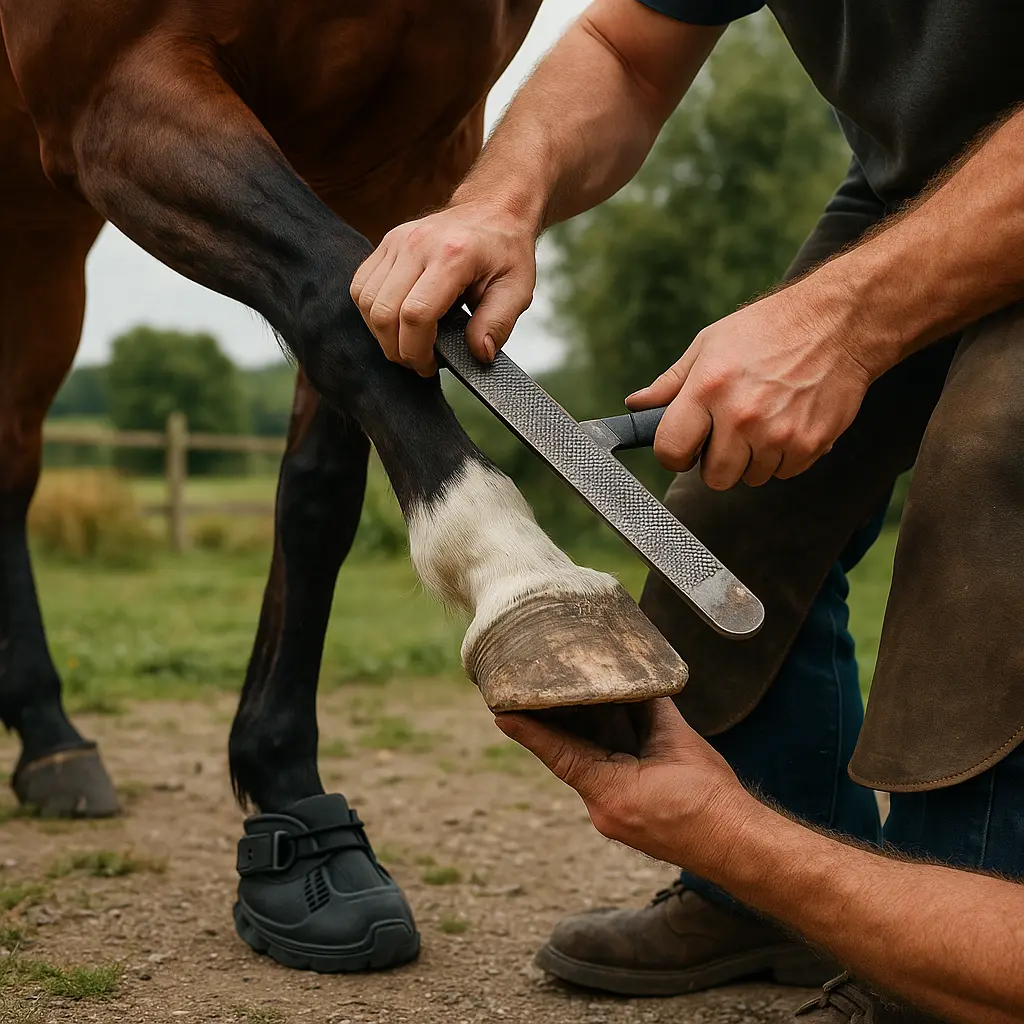
A barefoot performance trim balances the foot, removes only non-essential sole, corrects under-run heels, and adds a bevel or mustang roll to the wall to reduce chipping and encourage a heel-first landing. It goes well beyond a basic pasture trim or a pre-shoe prep.
For a working barefoot horse, the trim must match the individual hoof, the surfaces you ride, and the job your horse does. That means:
- Addressing medial-lateral balance so the foot loads evenly and tracks straight.
- Conserving functional sole and frog while clearing compacted, dead material that can hide problems.
- Correcting under-run or collapsed heels to re-establish a supportive heel base.
- Applying a consistent bevel/mustang roll around the wall to control breakover, protect the wall from chips and reduce levering forces.
“There’s a big difference between a trim suitable for a barefoot horse at rest or to prepare the hoof for a shoe and a barefoot trim for a working horse, which takes into account individual hoof shape and shock absorption, the surface the horse will be ridden on and the nature of the work he does.”
Quick tip: After each trim, watch how your horse lands. A confident, heel-first landing on familiar ground is your best indicator that breakover, sole depth and balance are about right.
Who should trim your barefoot horse in the UK?
Use a Farriers Registration Council (FRC) registered farrier for shoeing or trimming; barefoot trimming is unregulated, so if you work with a non-farrier trimmer, ensure they have recognised qualifications and insurance. Always check the FRC register before booking hoofcare.
Under the Farriers Registration Act, only qualified, registered farriers can prepare a hoof for shoeing in the UK. The British Horse Society (BHS) recommends regulated farriers for trimming and advising on whether your horse should be barefoot or shod, because regulation ensures standards and accountability.
“We recommend using a registered farrier for trimming and shoeing. Registered farriers are regulated by the Farriers Registration Council (FRC), to maintain high standards and accountability. Your farrier will advise on whether your horse needs shoes or can go barefoot.”
Seeking a pro-barefoot approach? Look for farriers or trimmers with additional training in performance barefoot and a track record with Thoroughbreds on UK terrain. Ask for references, discuss their trim principles and how they manage breakover, and confirm they carry appropriate insurance.
“If you want a farrier to trim your barefoot horse, seek out one that is ‘pro-barefoot’, and has advanced their knowledge base in this area... Your chosen hoofcare professional must do no harm, and should work with you to create a sound horse.”
Useful resources: Check farrier credentials via the FRC register, and review BHS guidance on barefoot suitability and care on the BHS hoof care page.
At Just Horse Riders, we recommend building a team approach—your farrier, vet and nutritionist—so trim, diet, workload and surfaces all support the hoof.
How do you plan a successful barefoot transition in the UK?
Allow around three months for a working Thoroughbred to adjust, reduce workload at first, avoid stony tracks, and use hoof boots as needed while you gradually increase time and distance. Manage the process like a fitness programme: steady, consistent, and responsive to your horse’s feedback.
Many horses experience some initial footiness as the hoof adapts. Introduce change thoughtfully:
- Weeks 1–2: Keep hacks short, stick to forgiving surfaces (grass, smooth tarmac at walk), and avoid gravel or stony tracks. No fast trotting on roads.
- Weeks 3–6: Add time and varied surfaces; begin gentle trotting where comfortable; boot on challenging ground to protect the sole.
- Weeks 7–12: Progress towards your normal workload; continue booting on rough going; maintain frequent trims (3–5 weeks) to keep breakover easy.
In the UK, seasonal ground can swing from waterlogged to rock hard within weeks. Plan ahead for winter mud and summer firm ground. On dark evenings and roadwork, prioritise safety with high visibility for you and your horse—see our curated rider hi-vis range—and always ride with a correctly fitted riding helmet.
Pro tip: Keep a simple log of surfaces, distances, and how your horse felt each day. Combine that with photos of the hooves every two weeks. You’ll spot trends early and can adjust trim intervals and boot use before problems develop.
Hoof boots and pads: when and how to use them
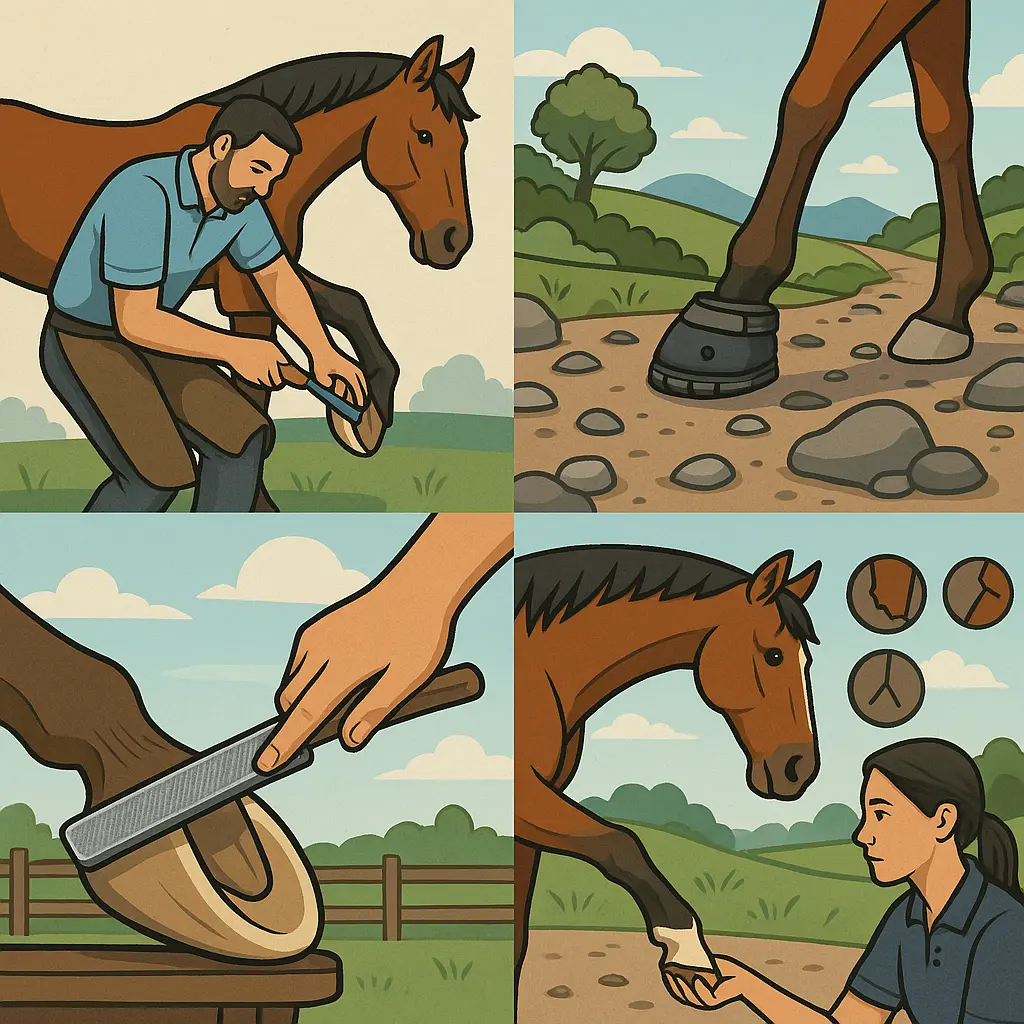
Use well-fitted hoof boots with pads for protection on rough or stony ground and during the transition to barefoot, and to prevent rubs you must match boot shape to your horse’s hoof and keep walls bevelled to reduce leverage. Think of boots as adjustable, removable “trainers” for the hoof.
When to boot:
- On stony or gravel tracks where your horse tests “footy”.
- During wet winters when soles soften and bruise more easily.
- On longer or faster rides as you build mileage in the first 8–12 weeks.
Fit essentials:
- Measure after a fresh trim, noting width and length, and assess hoof shape (round, oval, or narrow Thoroughbred type).
- Maintain a good bevel/mustang roll so the boot isn’t fighting a sharp toe.
- Use appropriate pads to mirror natural caudal (heel) support and dampen concussion.
- Check for flare—boots fit best when walls are straight and the white line is tight.
If you see rubbing, reassess size, add or change pads, and review your trim. Many issues resolve with a better bevel or a different boot pattern. For day-to-day protection of the limbs on tougher hacks, you can also consider supportive leg protection from our horse boots & bandages collection to complement hoof protection strategies.
Quick tip: Break boots in at home. Hand-walk for 10–15 minutes, then inspect for pressure points before heading out for a longer ride.
Daily and weekly hoof care between trims
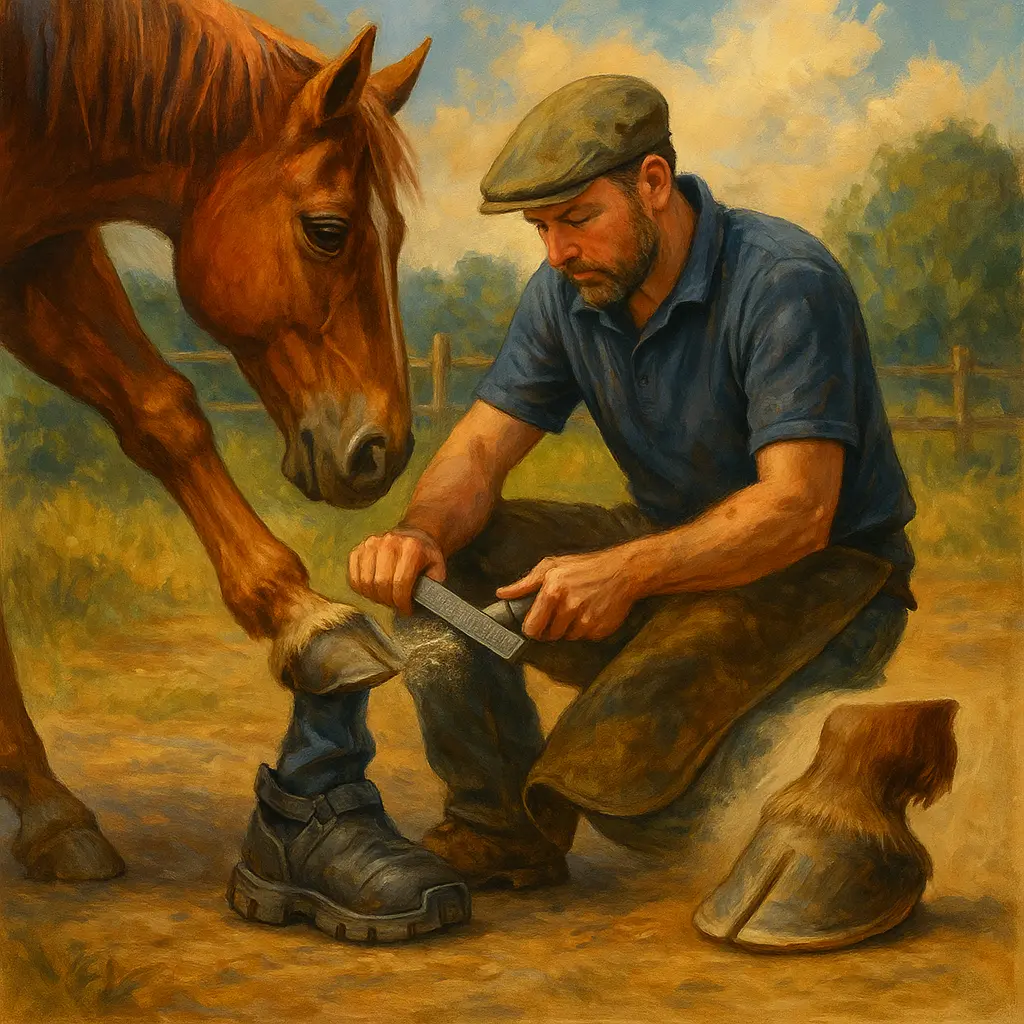
Pick out and check hooves daily, and if you’re trained and confident, tidy small chips with a rasp between professional trims to maintain the bevel and prevent cracks. Routine care reduces the risk of infections and keeps the white line tight.
Daily essentials:
- Pick out and brush the sole and frog; remove compacted mud and stones.
- Inspect for new chips, wall separation, frog thrush, and changes in landing pattern.
- Monitor on different surfaces—watch for hesitation on stoney ground or when turning sharply.
Weekly maintenance:
- Lightly refresh the bevel with a rasp if trained; never thin live sole or over-lower heels.
- Photograph hooves from the front, side, and sole to track balance and flare.
- Review diet and workload: more roadwork can shorten trim cycles; lush spring grass can accelerate growth and soften the white line.
Stock your grooming kit with a sturdy hoof pick and brush. Our grooming collection includes practical options to keep daily care quick and consistent. For inside-out hoof health, consider targeted nutrition such as biotin, methionine and zinc; explore our horse supplements and customer favourites from NAF that support horn quality when paired with good trim and management.
Pro tip: Clean the sole thoroughly before each trim—use the white line as a guide for safe wall rasping at a 45-degree angle, then smooth for a neat edge. If you’re unsure, leave it to your farrier; never guess at the sole or heel.
How does UK weather change your trim cycle?
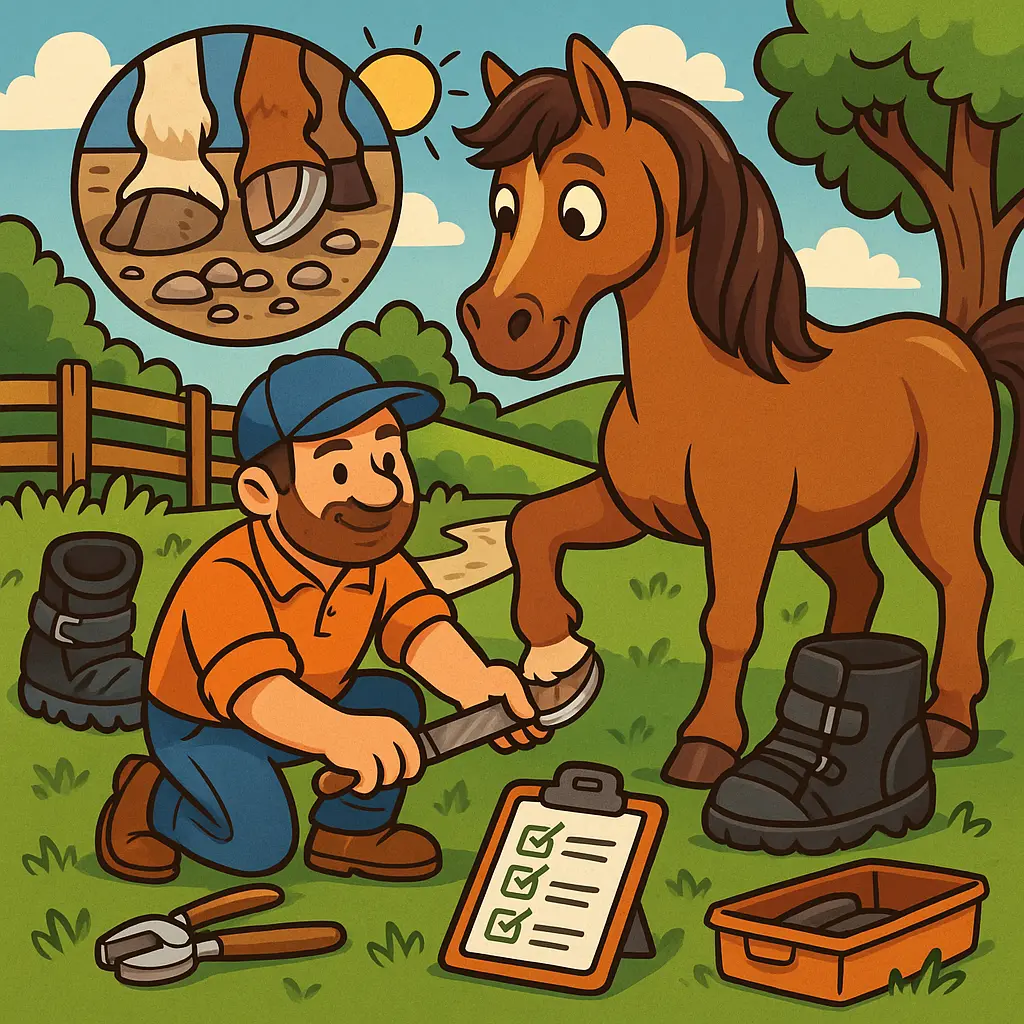
Wet summers and muddy winters often accelerate growth and soften horn, so many barefoot horses need shorter 3–4 week trim cycles then, potentially extending slightly in drier spells. Seasonal management matters as much as the trim itself.
In prolonged wet, hooves swell, soles soften and white lines can loosen, increasing the risk of abscesses and bruising—especially for TB feet on churned-up gateways. In a hot, dry snap, feet can harden and crack if flares are left too long. Adjust your plan:
- Shorten cycles in wet spells to keep the wall tight and the bevel strong.
- Boot for comfort on hard or stony going; add pads if concussion increases.
- Manage turnout to avoid constant bog—use dry standing areas or track systems where possible.
If your horse is living out through driving rain, keep the rest of their management comfortable and safe. We stock durable, weatherproof options in our turnout rugs collection from leading brands to help you maintain consistent work despite the weather. Consistency in movement and trim timing is what makes barefoot thrive.
What are the red flags that your barefoot plan isn’t working?
Persistent soreness, lameness, cracks, abscesses or white line separation mean pause, reduce work and call your farrier or vet. A healthy transition improves steadily; ongoing setbacks signal an underlying issue that needs professional eyes.
Early warnings include toe-first landings, reluctance on gravel, progressive wall flare, deep central sulcus thrush, or sudden chipping between trims. Don’t “push through” discomfort—use boots, review trim frequency, assess diet, and consider whether a period shod (even short-term) would protect the hoof while you address root causes.
“Going barefoot allows your horse’s hooves to function naturally without shoes. It’s not suitable for every horse, and success relies on planning, consistent care and understanding individual needs.”
At Just Horse Riders, we’ve seen many TBs hack happily barefoot on UK tracks with the right plan. But we’re equally supportive if your farrier advises front shoes or a return to full shoeing for comfort and performance—soundness comes first.
Practical kit checklist for UK barefoot success
Here’s a simple, proven kit list to make daily care and hacking more comfortable and safe while you dial in the perfect trim cycle.
- Hoof boots and pads: Sized correctly after a fresh trim; break them in gradually.
- Daily hoof care tools: Hoof pick, stiff brush, and a safe storage pouch from our grooming range.
- Supportive supplements: Biotin-based formulas and hoof health support—browse our supplements and trusted choices from NAF.
- Safety for hacking: A certified riding helmet and bright, reflective hi-vis rider gear for low-light lanes.
- Leg protection: Suitable brushing boots or bandages from our horse boots & bandages collection for challenging terrain.
- Weather-ready turnout: Reliable, waterproof options in our turnout rugs to help you keep to your work routine regardless of rain.
Quick tip: Book the next trim before your farrier leaves. A 3–5 week recurring appointment keeps you ahead of flare and makes each visit quick and tidy.
Conclusion: your barefoot plan in one page
Trim every 3–6 weeks (often 3–5), keep the bevel strong, boot as needed, and build work gradually over three months. Choose a pro-barefoot, FRC-registered farrier, monitor comfort on varied surfaces, and respond early to any soreness or imbalance. With consistent management, many UK Thoroughbreds go barefoot comfortably—even on our mixed, often soggy, sometimes stony ground.
FAQs
How often should a barefoot Thoroughbred be trimmed in the UK?
Every 3–6 weeks, with many domestic horses happiest at 3–5 weeks. Adjust for growth rate, wear from hacks, and terrain; shorten the cycle in wet, muddy periods.
Is barefoot trimming regulated in the UK?
No. Shoeing is regulated under the Farriers Registration Act, but barefoot trimming itself is not. Use an FRC-registered farrier and ensure any trimmer has recognised qualifications and insurance. See BHS guidance here.
Can a shod Thoroughbred go barefoot on UK stony or boggy hacks?
Often yes, with a planned transition of around three months, reduced workload at first, and hoof boots for protection on rough going. Not every horse will suit barefoot; your farrier should advise.
What trim differences matter for barefoot working horses?
A performance barefoot trim includes a balanced bevel/mustang roll, careful sole management, and correcting under-run heels and imbalances to promote heel-first landings—more involved than a pasture or pre-shoe trim.
How do I avoid rubs when using hoof boots?
Fit after a fresh trim, match boot shape to hoof shape, keep a good bevel to reduce leverage, use pads for support, and break boots in gradually. Reassess size and trim if rubbing appears.
What signs indicate a poor barefoot transition?
Footiness on stones, toe-first landings, persistent chips or cracks, white line separation, abscesses, or lameness. Reduce work, boot as needed, and consult your farrier promptly.
Do barefoot horses need more frequent trims than shod?
Often yes. While shod horses typically go 4–6 weeks, many barefoot horses benefit from 3–5 weeks to maintain balance and prevent chipping, especially with variable UK terrain and weather.