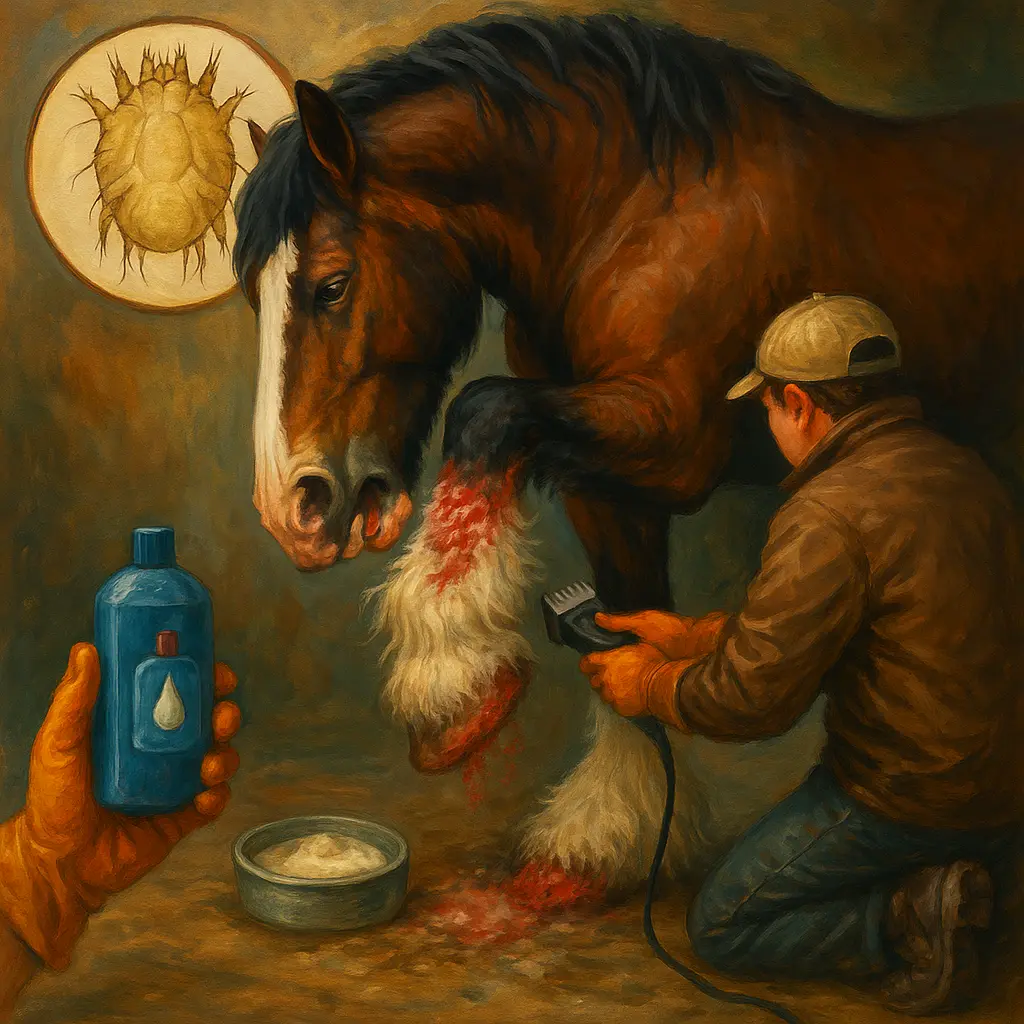
Stamping, biting at the heels, and shredded feathers are classic red flags that your horse has feather mites. Left unchecked, these tiny parasites can trigger painful skin infections and even lameness — especially in UK natives and draughts with heavy feather.
Key takeaway: Chorioptic “feather” mites live on the lower legs and take about three weeks to complete a life cycle, so you must treat the horse and the environment, repeat applications, and involve your vet for off‑label systemic treatments.
What are feather mites in horses?
Feather mites are chorioptic mites (Chorioptes equi) that live on the skin of the lower limbs, most often in horses with heavy feather. They cause intense itching, stamping, rubbing and biting around the pasterns and fetlocks.[1][2][3]
These mites feed on skin debris and thrive in the warm, sheltered conditions under feathers, particularly through damp UK autumn and winter. While any horse can be affected, UK natives and draughts such as Shires and Clydesdales are frequent sufferers. The condition is also known as heel mange.
What are the signs of feather mites?
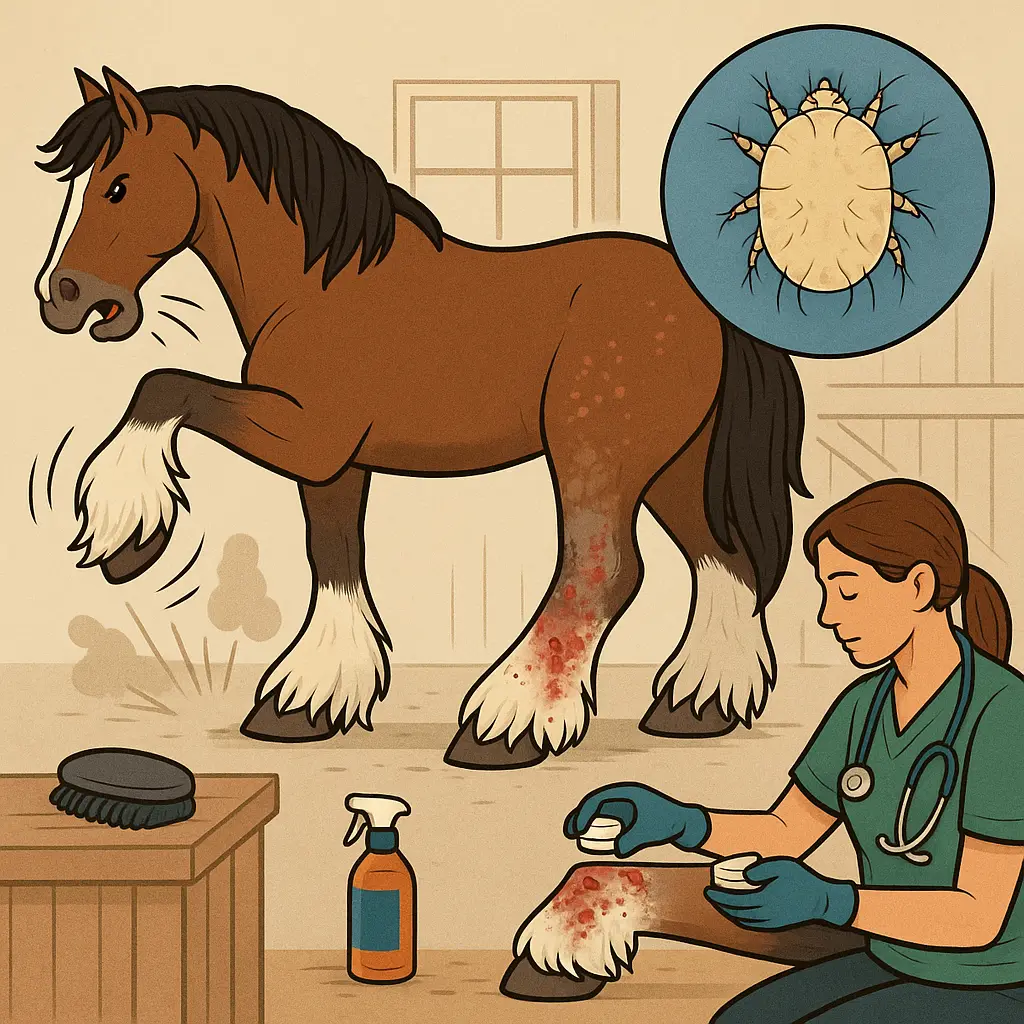
Common signs include red, irritated skin, scabs and crusts, patchy hair loss, and relentless itching; severe cases develop thickened, cracked skin and bleeding sores, and secondary bacterial infections can lead to swelling and lameness.[1][2][3] Horses often stamp, bite at their legs, and rub on fences or stable fronts — particularly at night when mites are most active.
Because the condition is extremely itchy, self‑trauma worsens the skin damage and opens the door to infection. Watch for early hints like heel “dandruff,” sensitivity to touch around the pasterns, and sudden reluctance to stand quietly. Prompt action prevents weeks of discomfort and yard‑wide spread.
How are feather mites diagnosed?
Vets usually diagnose feather mites based on typical signs in a feathered horse; brushings or skin scrapings can be taken for microscopic confirmation when needed. As Galley Hill Equine Clinic notes, “The clinical signs of itchy legs in a horse with feathers is usually enough to make a diagnosis.”[1]
Your vet will assess the severity, check for secondary bacterial infection, and may also consider other itchy-leg culprits (e.g., lice, dermatophilosis/mud fever). If skin is extremely sore, sedation can help with safe clipping and washing.
How long does treatment take?
Treatment must run beyond the three‑week mite life cycle and include repeat applications at 10–14 days to catch newly hatched mites.[3][4][5] Even when your horse looks more comfortable after a few days, stopping early is the most common reason for relapse.
Plan for a minimum of three to four weeks of sustained management: two or three medicated washes spaced 10–14 days apart, environmental cleaning and bedding changes, and vet‑prescribed systemic treatment on a three‑week schedule where indicated. Severe or long‑standing cases often need ongoing maintenance through the wetter months.
What treatments actually work in the UK?
There are no veterinary products licensed specifically for equine mites in the UK; vets use off‑label wormers such as ivermectin, moxidectin or doramectin alongside topical washes and strict environmental control.[3][5] This is prescribed under RCVS guidelines (the prescribing cascade) and should be coordinated by your vet to minimise resistance and ensure safety.
“Currently there are no veterinary products licensed in the UK to treat mites in horses, but vets often recommend a topical antiparasitic application such as Frontline or a product called Dectomax (licensed for sheep and cattle) which has proved very effective... two injections at a three-week interval to begin with.” — World Horse Welfare[5]
Topical support is essential. Regular medicated washes (e.g., tea tree, chlorhexidine, or selenium sulphide) reduce scurf and help expose mites to treatment. Mr O’Brien, a veterinarian quoted by Horse & Hound, advises:
“A mild antiseptic wash (such as a tea tree shampoo) should be used to help remove any serum or scabs and reduce the skin scurf. Your vet may need to sedate the horse for this procedure, as the legs are likely to be very sore.”[3]
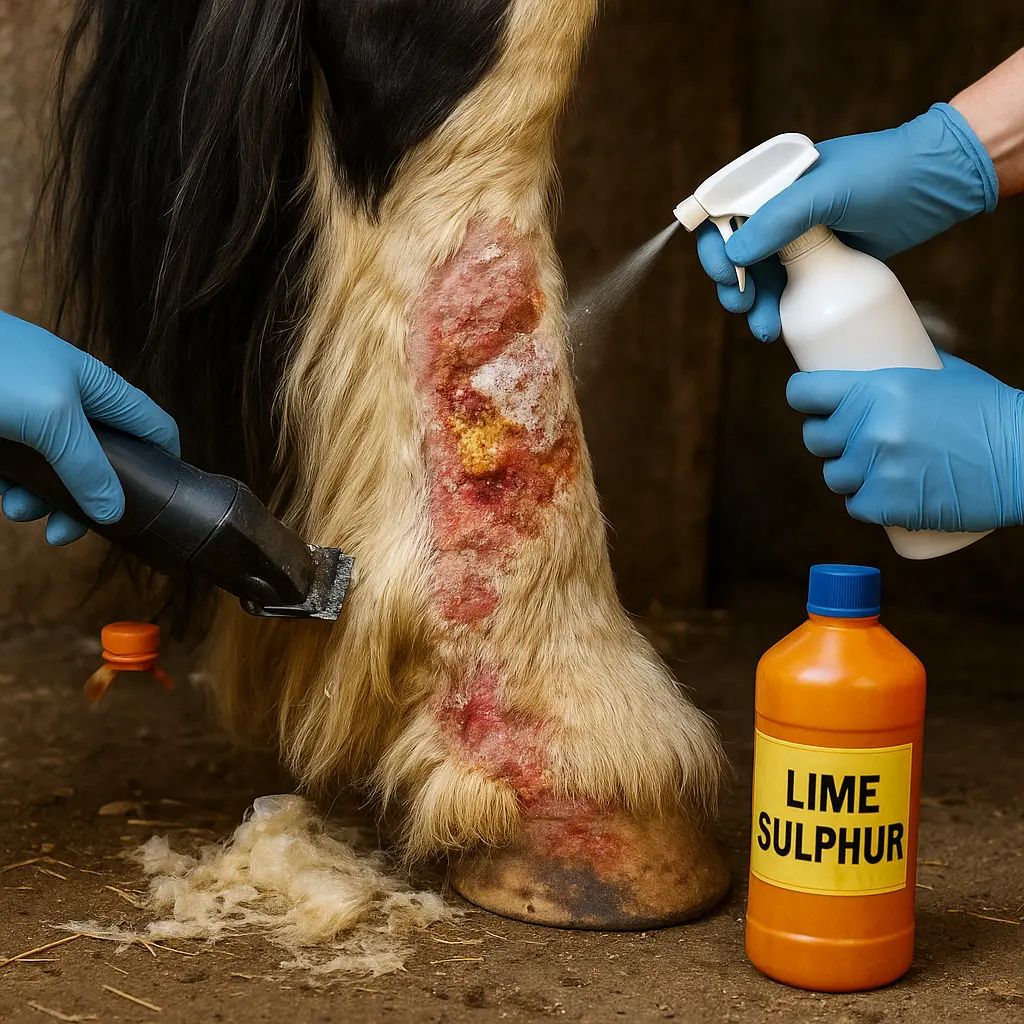
Some vets recommend 5% lime sulphur dips (diluted as directed) weekly for four weeks or flowers of sulphur mixed with pig oil for mild, early cases. When secondary infection is present, your vet may prescribe antibiotic or antimicrobial creams and advise barrier protection.
Step-by-step yard treatment plan
Treat every in‑contact horse at the same time and deep‑clean the environment to stop reinfestation.[2][5][6] Mites can survive on other horses without obvious signs and persist in bedding, especially straw.
- Clip strategically. Clip all four legs to skin level to let treatments reach problem areas. For established cases, repeat monthly until the cycle is broken.[1][3][5]
- Wash thoroughly. Use an antiseptic/medicated shampoo (e.g., tea tree, chlorhexidine or selenium sulphide). Lather to skin, leave on for 10 minutes, then rinse and dry; repeat on days 5 and 10–14. Explore antiseptic shampoos and leg-care tools to make the job quicker and kinder.
- Apply a topical mite-control product. Your vet may advise lime sulphur (no rinse) or a topical antiparasitic. Always follow veterinary directions on dilution and frequency.[3][5]
- Use systemic treatment under veterinary prescription. Oral ivermectin/moxidectin or doramectin injections are commonly used off‑label, typically as two doses three weeks apart to hit the full life cycle.[3][5]
- Switch bedding and disinfect. Replace straw with shavings or a dust‑extracted bed; fully clear out monthly and disinfect stables, rugs and grooming kit. This aligns with BHS welfare‑friendly hygiene in damp UK climates.[1][2]
- Support the skin. Where infection or soreness is present, your vet may prescribe a topical antimicrobial; once calm, a light barrier can help in wet turnout. Consider an anti‑itch supplement to reduce self‑trauma; see our curated range of equine supplements.
- Protect in wet weather. Manage turnout to avoid boggy gateways. A well-fitted winter turnout rug from trusted brands like Weatherbeeta helps keep the body dry so legs are easier to manage. In the stable, a breathable stable rug helps you dry and treat legs without chills.
- Treat the whole yard. Even apparently unaffected horses should be washed and, where your vet recommends, given systemic treatment to avoid a constant re‑seed of mites.[5][6]
- Recheck and repeat. Plan a follow‑up with your vet after the second systemic dose. Continue weekly skin checks and maintenance washes through winter.
Pro tip: Keep a dedicated “mite kit” — scissors/clippers, medicated shampoo, separate sponge, towels, and a labelled bucket — to avoid cross‑contamination.
Clipping feathers: when, why, and how
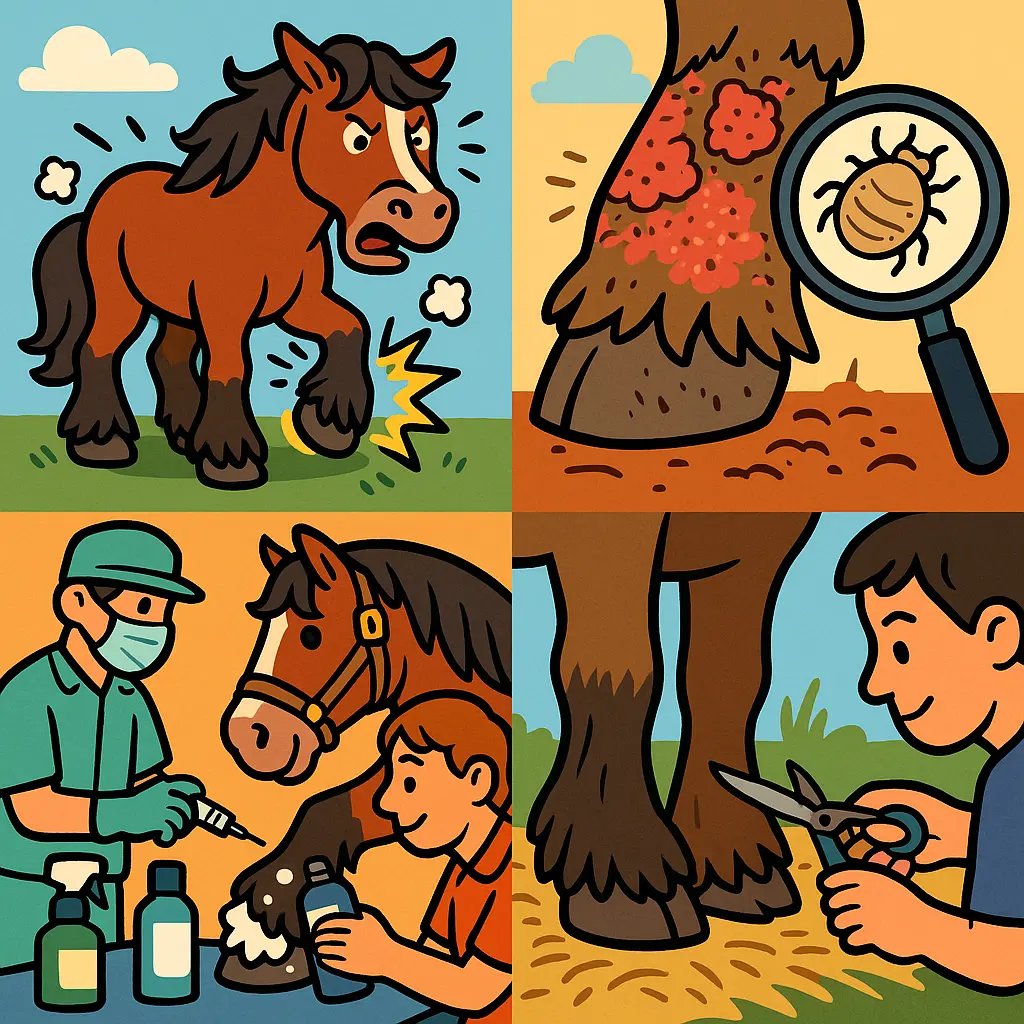
Clipping monthly significantly improves treatment success by exposing the skin so products can reach mites; however, clipped legs are more prone to mud fever in wet UK conditions.[1][3][5] Balance aggressive mite control with sensible turnout and barrier protection.
For established cases or very heavy feathers, clip to the skin on all legs and around the heels and fetlocks. Many vets advise sedation for the first clip in very sore horses to prevent injury and ensure a thorough job. After clipping:
- Wash and gently remove scabs, then dry completely before applying treatments.
- Use a light, breathable barrier when turning out on wet ground and avoid occlusive greases that trap moisture.
- Consider breathable turnout boots and bandages cautiously and only on clean, dry legs — never as a substitute for treatment.
- Manage turnout time and choose the driest paddocks; a well-fitted turnout rug helps keep the rest of the horse dry so legs don’t stay sodden.
Quick tip: Clip and wash on a dry day, then stable overnight on clean shavings to let skin settle before the next turnout.
Prevention and yard management
Prevention hinges on vigilant monitoring, shavings bedding instead of straw, monthly disinfection, and treating new arrivals before they join the herd.[1][2][5][6] In multi‑horse UK settings, yard‑wide protocols are essential to stop the cycle.
- Watch early signs. Stamping, heel biting, or red pastern skin — especially in feathered horses — warrants a same‑week vet consult.
- Choose the right bed. Shavings (e.g., dust‑extracted options) are kinder for mite control than straw, which can harbour mites and moisture.
- Disinfect monthly. Empty stables completely, pressure‑wash, and disinfect; launder stable wraps, grooming kit, and boots.
- Quarantine new arrivals. Wash and check legs, and discuss prophylactic treatment with your vet before turnout with the main herd.
- Seasonal strategy. Plan proactive leg checks and maintenance washes from late autumn through early spring when UK mud and moisture peak.
- Skin health support. Calm itch and support recovery with appropriate supplements; brands like NAF have proven options within our supplements selection.
- Rug wisely. Keep your horse dry and comfortable in wet weather; well‑designed rugs from brands such as Weatherbeeta help you maintain cleaner legs and easier daily checks.
At Just Horse Riders, we recommend building a simple yard SOP: weekly pastern checks, a log of washes/treatments, and a calendar reminder for monthly deep cleans. A little routine beats a lot of firefighting.
FAQs
Can humans catch mites from horses?
Yes. Certain mites such as sarcoptic mange can transmit to humans and cause intensely itchy skin.[2] Wear gloves, wash hands and clothing after handling affected horses, and follow your vet’s biosecurity advice, especially when washing legs or changing bedding.
Do I have to clip feathers to treat mites?
Clipping isn’t always essential in very early, mild cases, but it is strongly recommended for established infestations so treatments can reach the skin.[1][3][5] For heavy feathers (e.g., Shires), monthly clips during treatment greatly improve results.
How long will it take to clear feather mites?
Plan for at least one full mite life cycle (around three weeks) with repeat washes at 10–14 days and, if prescribed, two systemic treatments three weeks apart.[3][4][5] Ongoing maintenance through winter helps prevent reinfestation.
What bedding is best if my horse has mites?
Use shavings or dust‑extracted beds and avoid straw, which can harbour mites and moisture in UK conditions.[1][2] Fully clear out monthly and disinfect the stable, rugs and equipment.
Are supplements useful against feather mites?
Supplements won’t kill mites but can reduce itch and self‑trauma while the main treatments work. Options like Dodson & Horrell Itch Free are commonly used alongside vet‑directed therapies; explore our supplements to support skin.
Why are feathered breeds hit harder?
Feathers provide a warm, sheltered micro‑environment that chorioptic mites love, making natives and draughts (e.g., Clydesdales, Shires) more susceptible.[2][3] Regular clipping and proactive leg care are especially important in these breeds.
Can mites live off the horse in the yard?
Yes. Mites can persist in the environment and on in‑contact horses without obvious signs, and straw bedding is a common reservoir.[2][5][6] Treat the whole yard and disinfect stables and kit to stop the cycle.
If your horse is stamping or sore, don’t wait. Call your vet, plan a three‑week treatment window, and set up your yard for success with the right washes, rugs and routines. For practical kit to make the job easier, browse our grooming essentials, choose weather‑savvy turnout rugs, and support recovery with targeted supplements. We’re here to help you and your horse get comfortable again, fast.