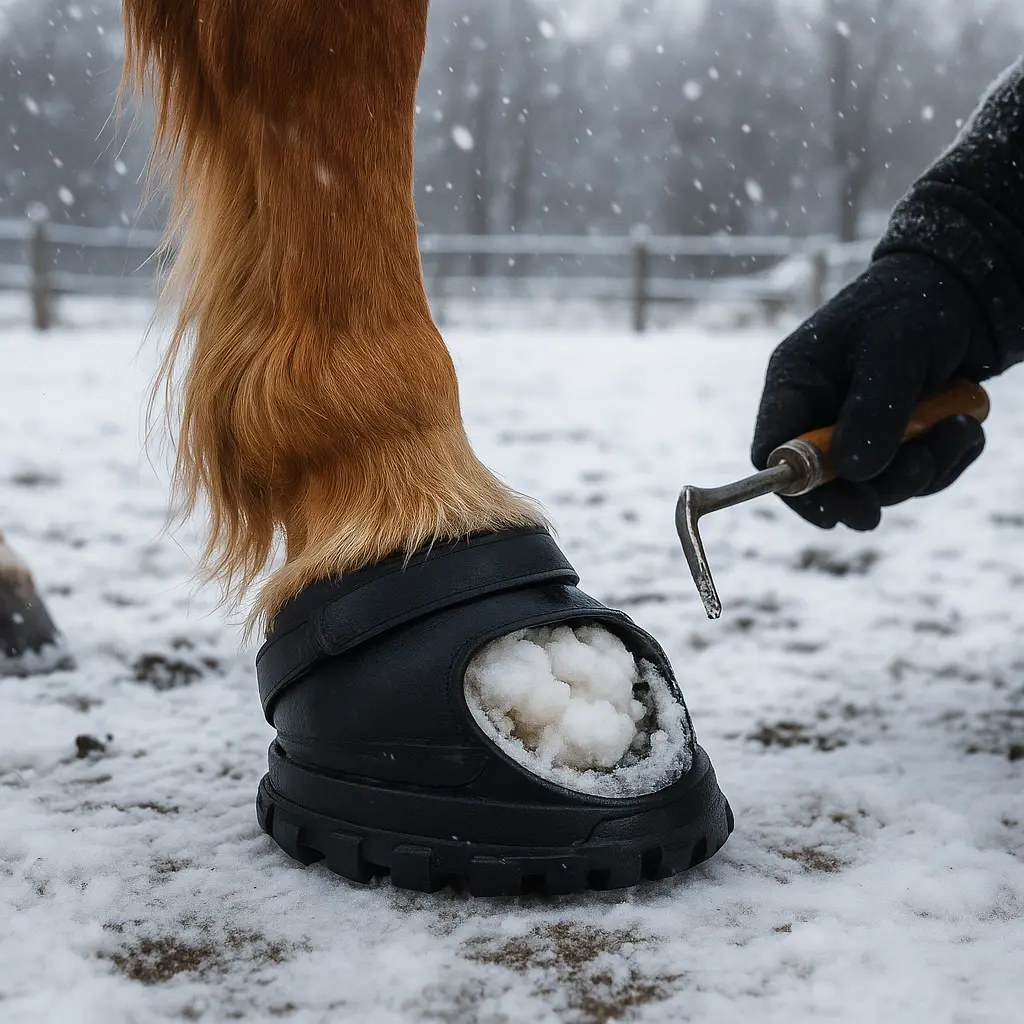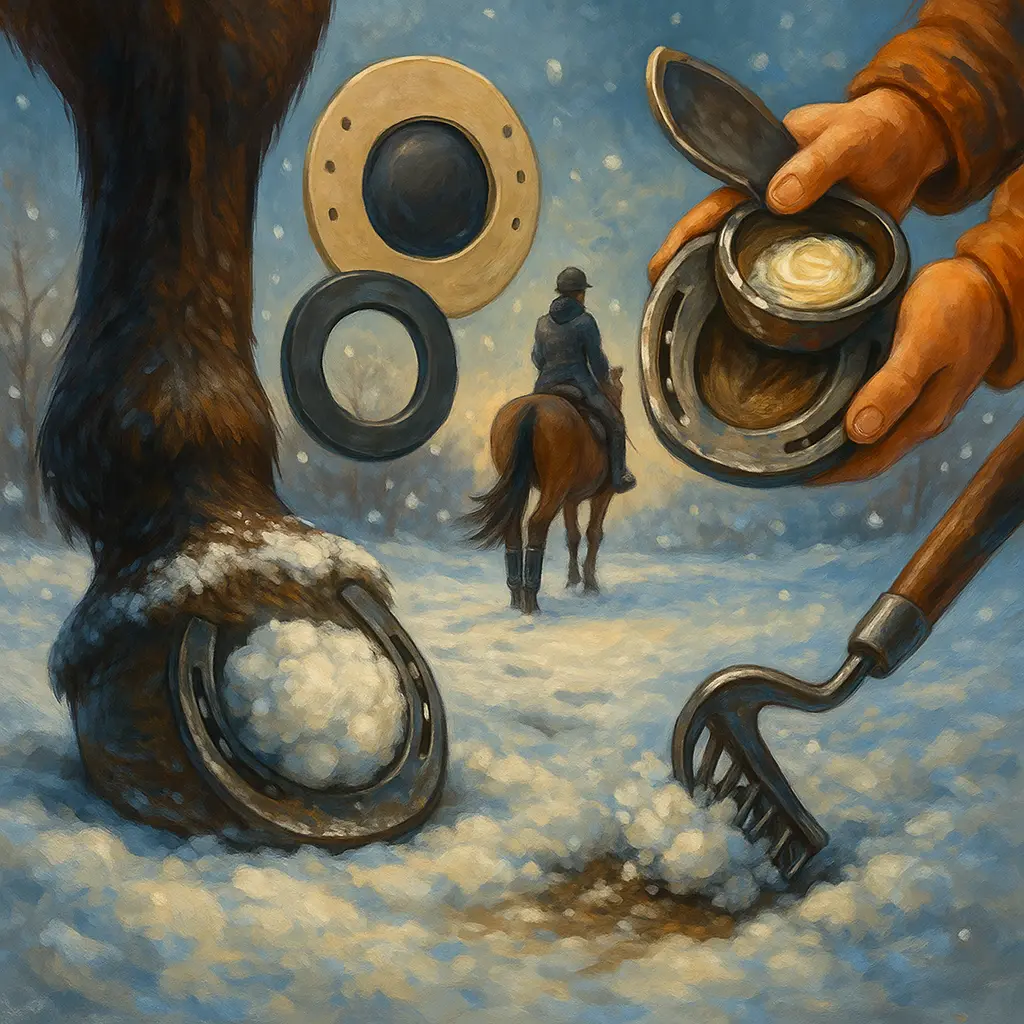
When UK snow turns wet and heavy, your horse’s hooves can quickly pack into rock-hard “ice balls” that make every step unstable. Left unchecked, snowballing bruises soles, strains soft tissues and ramps up the risk of a slip on the yard or lane.
Key takeaway: To stop snowballing, remove shoes if winter work is light, fit anti-snow pads to shod horses, use short-term barriers before turnout or hacks, and clean hooves daily.
What is snowballing and why it matters
Snowballing happens when wet snow meets the cold metal of horseshoes, freezes, and compacts into a solid mass that increases slipping risk and can bruise the sole. In the UK’s typical wet, dense winter snow (November–March), this compaction risk is high, especially on livery yards and bridleways.
According to the British Horse Society (BHS), the combination of cold steel and dense, moist snow is the perfect recipe for rapid build-up inside the shoe. This raises the hoof off the ground—like walking on a stilt—so every stride becomes unstable. Repeated pressure can bruise the sole, and the altered foot balance can strain tendons and ligaments. Bare hooves tend to accumulate smaller, looser snowballs because there’s no cold metal to trigger freezing; they’re still a nuisance but usually easier to remove. Slushier or very dry snow is less likely to compact; it’s the wet stuff that’s the headache in most UK winters.
Should you remove shoes for winter?
Yes—if you’re reducing ridden work, discuss removing shoes with your registered farrier and then monitor how your horse copes. This is a straightforward way to cut snowballing risk because bare hooves don’t freeze snow against metal.
The BHS advises that riders scaling back winter work should consider a barefoot period under farrier guidance:
“If you’re reducing your ridden work over winter, you may want to talk to your farrier about whether having your horse’s shoes removed would be appropriate. Monitor how your horse is coping and if you have any concerns, contact your farrier.” — British Horse Society
In the UK, farriers must be registered under the Farriers Registration Act 1975, so always schedule changes with a qualified professional. If your horse still does light hacking or has thin soles, you may pair short periods of barefoot with well-fitted hoof boots for grip and comfort. If you keep shoes on for performance or training needs, move straight to pads and short-term barriers (below).
Quick tip: If you remove shoes, introduce any hoof boots gradually and check daily for rubs, especially in wet conditions.
Short-term fixes before turnout or rides
Petroleum jelly or hoof oil creates a temporary barrier that helps stop wet snow freezing in the hoof, but it wears off quickly and must be reapplied. This is ideal as a pre-ride or pre-turnout step when snow is forecast.
The BHS confirms this short-lived yet effective tactic:
“Applying petroleum jelly or hoof oil around the inside of the shoe and the sole of the foot helps to create a barrier and may prevent the snow freezing in your horse’s hoof. This will likely only have an effect for a short period as the petroleum jelly or oil will eventually wear off.” — British Horse Society
How to apply a barrier for a hack or turnout:
- Pick out and dry the foot thoroughly (a clean, dry sole works best).
- Rub a thin, even layer of petroleum jelly or hoof oil across the sole, frog and around the shoe’s interior rim.
- Reapply after a couple of hours, or sooner if the horse has gone through slush or gritty tracks.
Do not use caustic substances (for example WD-40 or motor oil). Equus Magazine warns these can irritate skin; stick to petroleum jelly, hoof grease or vegetable-based sprays. If you’re turning out or hacking, fit time into your routine to reapply as needed.
The farrier-fit fix: anti-snow pads for shod horses
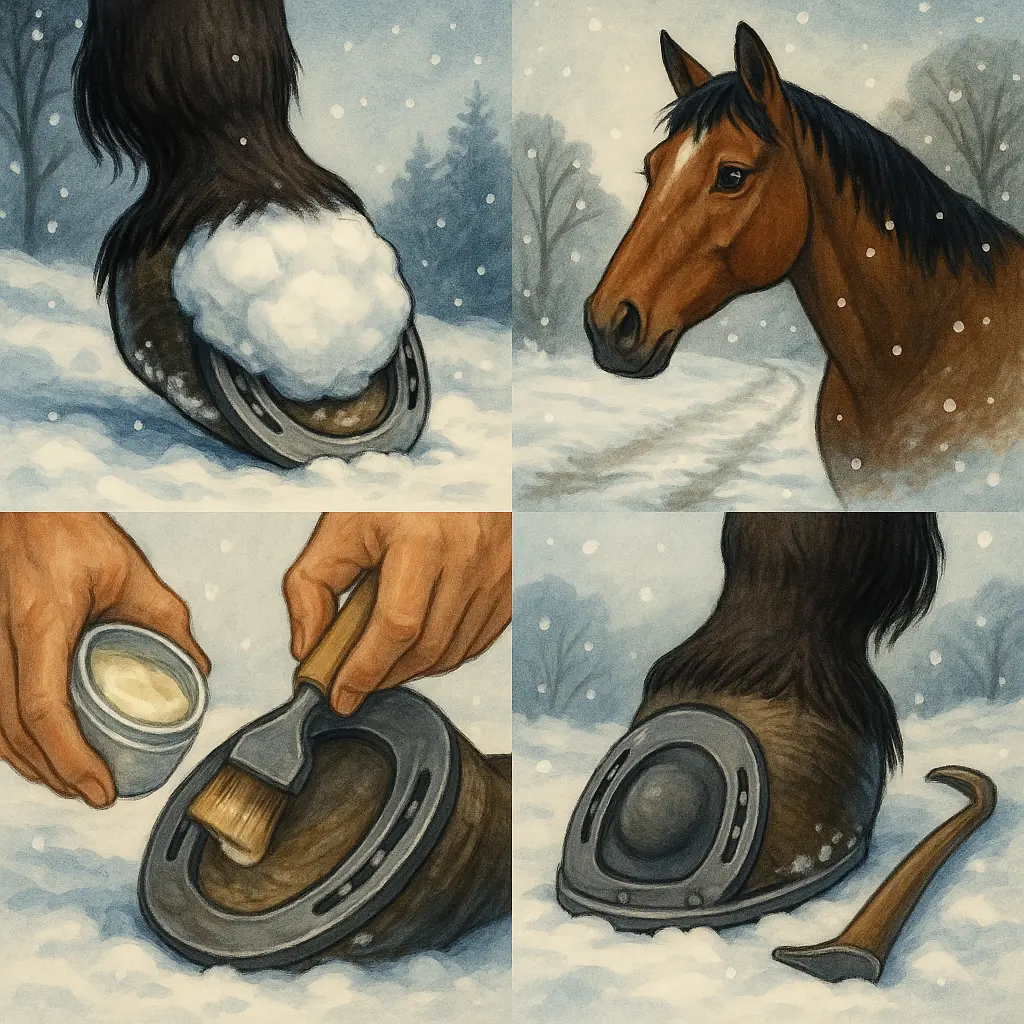
For shod horses, two pad types—full pads with a convex “bubble” and rim/tube pads around the shoe perimeter—are reliable, farrier-fitted solutions that stop snow compacting in the foot. They keep the sole clear so your horse stays level and less likely to slip.
Here’s how they differ:
- Full “bubble” pads: A convex dome sits under the sole. Each step compresses and ejects snow before it can pack. Best for heavy, wet snow and repeated turnout in UK conditions.
- Rim/tube pads: A rubber ring around the shoe’s perimeter flexes to pop snow out while leaving the frog and much of the sole exposed. Lighter and can suit horses that don’t need full sole coverage.
Owners often report excellent results once pads are fitted. One rider summarised their farrier’s approach on the Horse & Hound forum:
“My farrier ended up putting a rubber pad under his shoe between it and his sole and that [works].” — RHM, Horse & Hound Forum
Care note: Pads shift the cleaning job from “often” to “always”. Under-pad spaces can trap mud, manure and bacteria, so lift feet daily and keep them immaculate to reduce the risk of thrush or irritation (Equus Magazine). If your horse is sensitive, ask your farrier about pad material and packing options, and keep up with the shoeing cycle so pads don’t fatigue or trap debris.
Hoof boots for snowy hacks and turnout
Hoof boots over shod feet can add traction and reduce snow packing if they fit correctly and you remove them daily to check for rubs. They’re also useful for barefoot horses that need protection on icy or hard winter ground.
Choose a boot designed to go over shoes if your horse is shod; they’re reinforced around the toe and quarters to prevent wear. Look for tread that grips wet lanes and lightly frozen fields, and always remove boots after exercise or turnout to dry the hoof and check for rubbing or trapped grit. The BHS supports hoof boots for winter management provided the fit is right and checks are routine.
For boot options and brushing/overreach protection in wintry going, explore our horse boots and bandages collection. If you plan to hack on short winter days, add safety layers for yourself too—high-quality riding helmets and hi-vis rider gear make you more visible on grey afternoons.
How to remove ice balls safely
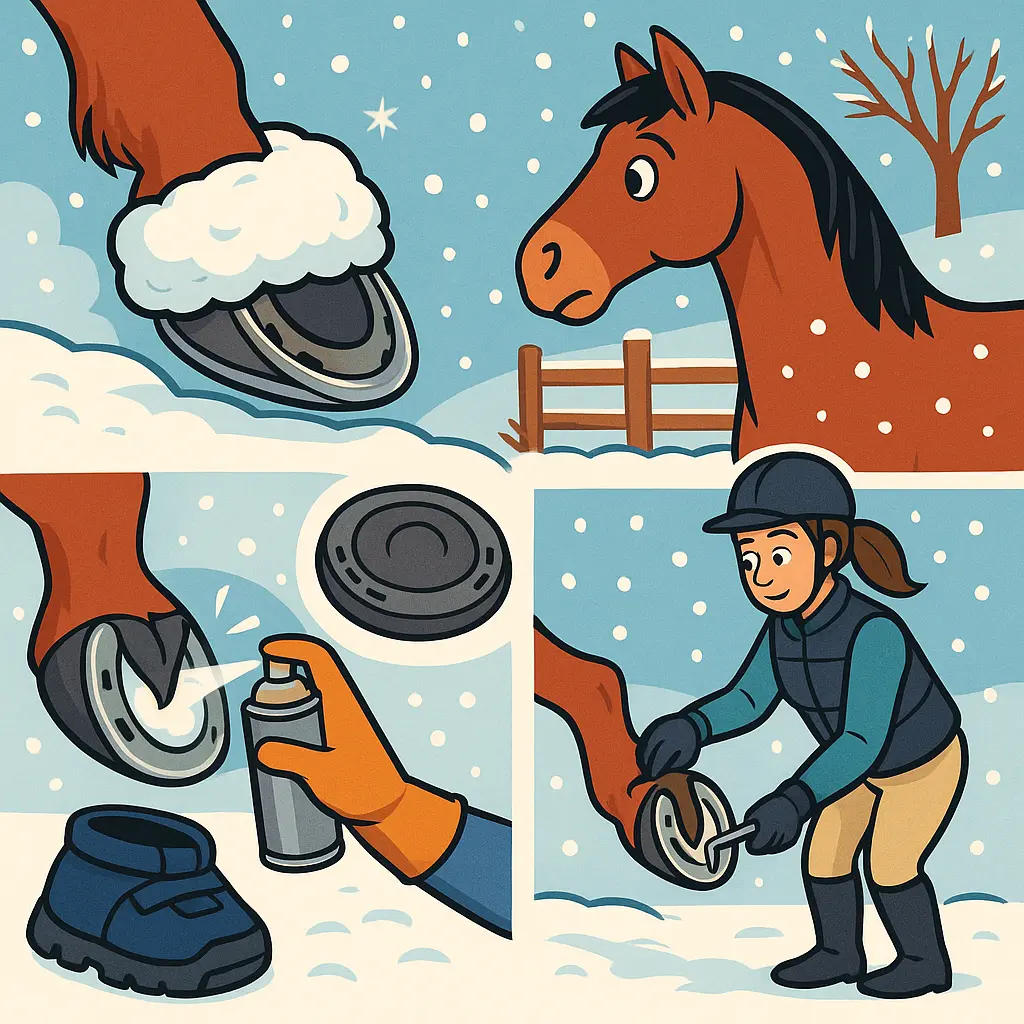
Pick from heel to toe; if snow is stubborn, briefly warm the hoof or tap gently with the hoof pick’s handle—never hammer. This protects the sole and prevents bruising or cracks from heavy blows.
The step-by-step approach recommended by Equus (My New Horse) works well on UK yards:
- Stand your horse on level, non-slip ground.
- Use a sturdy hoof pick to clear from the frog and heel towards the toe—avoid digging sharply into the sole.
- If the ball won’t budge, dip the hoof briefly in warm (not hot) water or hold a warm, damp towel to the underside for a minute.
- Gently tap the ice with the blunt end of your hoof pick to loosen the bond, then pick away safely.
Pro tip: Keep a spare hoof pick in your grooming kit and one by the field gate so you can deal with ice before a horse walks far. You’ll find durable picks and brushes in our grooming collection.
UK winter management to reduce snowballing
Keep hooves cleaner and drier by managing turnout, improving underfoot traction, and using appropriate rugs so wet snow tracks less into the foot. In practice, small yard changes make a big difference during wet spells.
- Keep horses drier overall: A well-fitted winter rug sheds slush before it reaches the hoof and hoof-pastern line. Browse breathable, waterproof turnout rugs for winter and trusted brands such as WeatherBeeta for UK conditions. Stabled horses may benefit from appropriate stable rugs overnight to stay dry and warm between turnouts.
- Plan your riding window: Hack during daylight when surfaces have thawed slightly and you can see icy patches. Carry your phone, wear hi-vis and ensure your helmet is in date.
- Mind the surface: Avoid polished concrete, sheet ice and compacted gateways. Consider temporary matting or improved drainage where horses congregate.
- Warm up and cool down longer: Stiff winter muscles and altered hoof balance from patchy snow need a more gradual routine. Walk the first and last 10 minutes.
At Just Horse Riders, we recommend pre-checking yard routes with a hoof pick in your pocket and keeping a simple “snow plan” on the tack room wall: who rugs, who wears boots, who needs reapplication of petroleum jelly, and when to call the farrier.
When to call your farrier or vet
Contact a registered farrier promptly if snowballs recur despite barriers, or if your shod horse needs pads fitted. Call your vet if you see lameness, heat in the foot, or signs of sole bruising.
Watch for these flags:
- Persistent or fast-forming snowballs in wet conditions
- Shortened, pottery stride, reluctance to move, or frequent slipping
- Heat, digital pulse increase, or tenderness when picking out the sole
- Thrush or odour under pads or boots
A farrier can remove shoes for a winter break, fit rim or full bubble pads correctly, and advise on cycle length and daily care. A vet exam is sensible if bruising, abscess, or soft tissue strain is suspected—especially after a slip on an icy track.
FAQs
Can I remove my horse’s shoes in UK winter to stop snowballing?
Yes—if you’re reducing ridden work, the BHS advises discussing shoe removal with your registered farrier and then monitoring how your horse copes. Bare hooves usually accumulate smaller, easier-to-clear snowballs than shod feet. See the BHS winter hoof care guidance.
What are the best pads for shod horses in snow?
Farrier-fitted rim pads or full “bubble” pads are the go-to choices. Rim pads sit around the shoe perimeter and flex to eject snow; full convex pads cover the sole and actively pop out snow with each step. Clean hooves daily to prevent debris build-up (Equus Magazine).
How do I quickly remove stubborn ice balls?
Pick from heel to toe; if stuck, soften the ice with brief warm water contact or a warm towel, then gently tap with the hoof pick handle—never hammer. Full steps at Equus (My New Horse).
Is Vaseline (petroleum jelly) effective, and how long does it last?
Yes, it’s an effective short-term barrier on the sole and inside the shoe, but it wears off quickly—reapply before and, if needed, during turnout or hacks (BHS).
Are hoof boots safe over shoes for snowy turnout or hacks?
Yes—if they’re designed for shod hooves, fitted correctly and removed daily to check for rubs and trapped debris. For options, see our horse boots and bandages.
Does going barefoot eliminate snowballing completely?
No—bare hooves can still pick up smaller snowballs, but they’re usually looser and easier to remove because there’s no metal to freeze snow against. Daily picking remains essential in wet UK snow.
Can I use WD-40 or motor oil to stop snow sticking?
No. Caustic or petroleum-distillate products can irritate skin. Stick to petroleum jelly, hoof grease or vegetable-based sprays as safer short-term barriers (Equus Magazine).
Ready your winter toolkit: a reliable hoof pick in your grooming kit, suitable hoof protection from our boots and bandages range, and turnout solutions from our curated winter turnout rugs and stable rugs—including favourites from WeatherBeeta. Stay seen and safe with hi-vis and a well-fitted riding helmet on every short winter hack.