You’ve got a destination, a horse who needs to travel, and a trailer ready to roll — but the law and safety standards are non‑negotiable. Getting the legal side and the loading basics right protects your horse, your licence and everyone on the road.
Key takeaway: You can tow a horse trailer in the UK if your licence category and your combined vehicle-and-trailer weights comply with legal and manufacturer limits; safe loading, balance and thorough pre‑journey checks are just as critical as the right paperwork.
Who can legally tow a horse trailer in the UK?
You can tow a horse trailer in the UK if your driving licence covers the combination (typically Category B, B+E or C1+E) and your vehicle and trailer stay within their Maximum Authorised Mass (MAM) limits. Always check your photocard licence categories and the weight plates on both tow vehicle and trailer before you hitch up.
The rules are weight‑based: the category on your licence and what you may tow depends on the plated limits of your car/4x4 and trailer, not guesswork. Check the vehicle’s VIN plate for Gross Vehicle Weight (GVW) and Gross Train Weight (GTW), and the trailer plate for its MAM. GOV.UK guidance and DVSA (formerly VOSA) enforcement both use these plated figures, so they’re the numbers that matter at the roadside and in an accident investigation.
Practical steps:
- Confirm your licence categories on your photocard (B, B+E, C1+E as applicable).
- Read the tow vehicle’s VIN plate to find GVW and GTW (often in the driver’s door shut or under the bonnet).
- Read the trailer’s plate for its MAM and details of brakes.
- Make sure your trailer is braked and compatible with the towbar and electrics fitted to your vehicle.
At Just Horse Riders, we recommend keeping copies (or clear photos) of your plates and insurance details on your phone so you can verify figures quickly if asked.
What weights and limits really matter?
The critical figures are your vehicle’s GVW and GTW, the trailer’s MAM, and your actual loaded weight on the day; every single one must sit within legal and manufacturer limits. If any single limit is exceeded — even by a small margin — you’re no longer legal or safe.
Here’s how to make sense of the jargon you’ll see on plates and documents:
- GVW (Gross Vehicle Weight): The maximum the tow vehicle can weigh fully loaded (fuel, passengers, kit).
- GTW (Gross Train Weight): The maximum combined weight of vehicle plus trailer and load.
- MAM (Maximum Authorised Mass): The maximum the trailer is allowed to weigh when fully loaded.
- Payload: How much weight you can add (horses, tack, water, partitions) without exceeding the MAM.
- Nose weight (or hitch load): The downward force the trailer applies to the towball; must be within both the car and towbar limits.
Quick method to check you’re compliant:
- List everything you’ll carry: horses (use known, recent weights if possible), saddles, water, hay, spare wheel, partitions, etc.
- Add it to the trailer’s unladen weight to confirm you stay at or below the trailer’s MAM.
- Add the tow vehicle’s actual loaded weight (people, dogs, fuel, boot contents) to the actual trailer weight; confirm this total stays at or below the vehicle’s GTW.
- Confirm your nose weight falls within the towbar and vehicle limits (details are usually in the vehicle handbook and towbar plate).
Pro tip: Weight soon creeps up. A full water container, two saddles, grooming kit and a bale of hay can easily add significant kilos to the trailer’s payload — count everything.
How should you load a horse trailer for balance and safety?
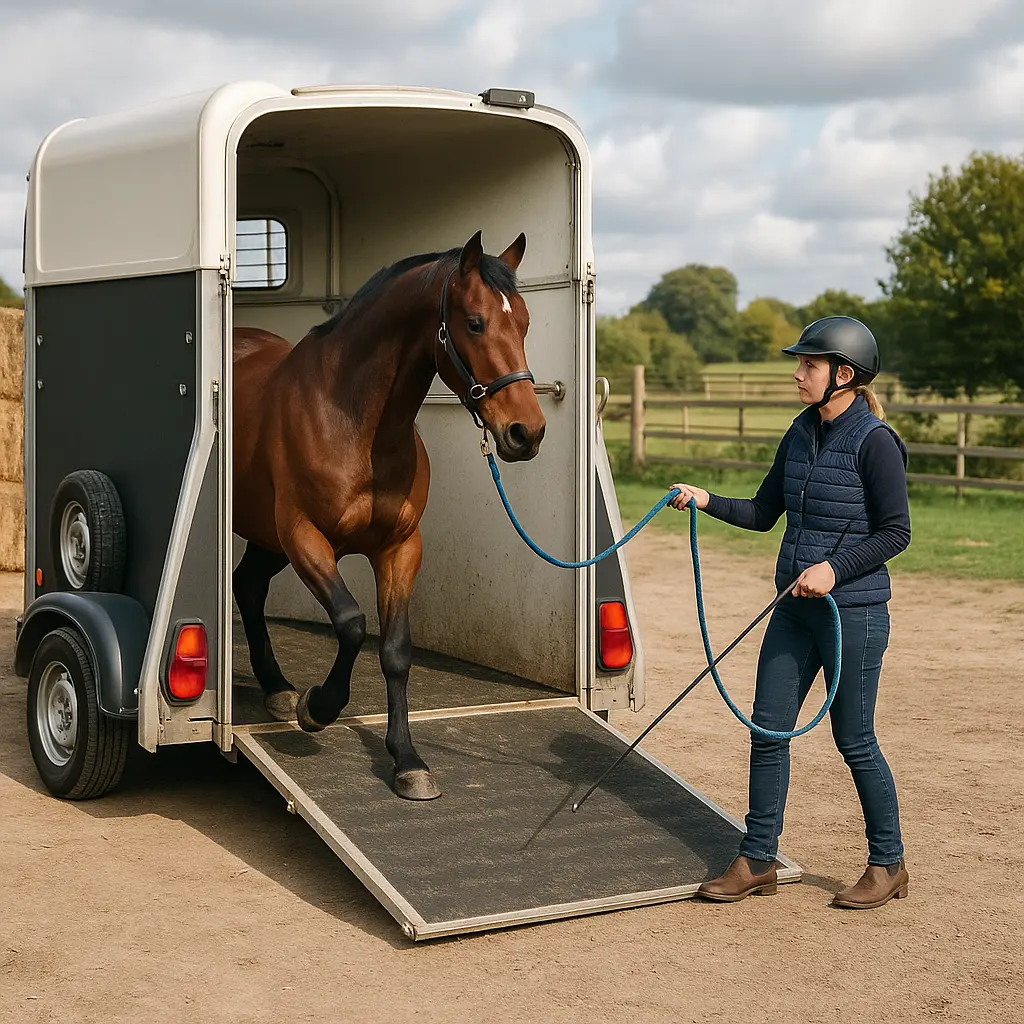
Load on level ground, keep the centre of mass slightly forward of the axle in line with the commonly used “80/20” towing safety principle, and secure partitions and breast bars before the vehicle moves. The goal is a stable trailer with positive nose weight and no loose items.
Start with the basics: park on firm, level ground with the handbrake applied and chock if needed. Lower the ramp fully and keep the angle as shallow as possible — a steep ramp invites slips. Prepare the interior before you fetch your horse: partitions set, breast/breech bars ready, non‑essential items removed, and haynets tied high and short so there’s no entanglement risk.
Balance matters. A tail‑heavy trailer tends to snake; keeping the weight bias forward of the axle helps maintain stable, positive nose weight. Secure all tack and kit so nothing can shift during braking or cornering. Once loaded, fasten breast/breech bars first, then tie up using a breakaway tie or quick‑release knot. Reverse the order when unloading: untie first, then drop the bar.
Quick tip: Reward calm steps with small, high‑value treats to keep loading positive and pressure‑free. Keep a pouch of suitable options to hand from our range of horse treats for training and loading.
What pre‑journey safety checks are non‑negotiable?
Before every journey, check tyres, wheels, lights, brakes, floor and ramp, hitch engagement, breakaway cable, doors/ramps and all latches; a five‑minute routine prevents the vast majority of on‑road problems. DVSA roadside checks focus on exactly these basics.
Use this pre‑departure checklist:
- Tyres and wheels: Inspect pressures (including spare), tread and sidewalls; check for flats, bulges or cracks. Make sure wheel nuts are secure.
- Lights and electrics: Test all lights (brake, tail, indicators, number plate) with the trailer plugged in; confirm the 7‑ or 13‑pin connector is sound and cables aren’t dragging.
- Brakes and handbrake: Confirm the trailer’s overrun brakes operate and release freely; handbrake holds on a slope.
- Hitch and breakaway cable: Ensure the coupling is fully seated and locked; connect the breakaway cable to a designated point on the vehicle (not the towball).
- Floor, ramp and mats: Lift rubber mats and check the floor for rot or corrosion; confirm the ramp hinges and latches operate smoothly and close securely.
- Partitions and bars: Check pins, catches and fasteners; no sharp edges or protrusions.
- Ventilation: Open suitable vents for the weather; avoid drafts directly at the horse’s eyes.
- Loose items: Secure water containers, buckets, bales, tools and kit; nothing should roll or slide.
Finally, run a quick walk‑around with someone pressing the brake pedal so you can confirm brake lights and indicators are working as intended.
How should you drive when towing horses?
Drive smoothly, leave much longer stopping distances, take wider turns at lower speeds and plan well ahead; abrupt inputs are uncomfortable for your horse and can destabilise the trailer. Anticipation and calm, progressive control are your best safety tools.
Defensive driving while towing keeps your horse upright and relaxed. Build in more time so you never feel rushed, and adopt a “no surprises” style: gentle throttle, early braking and deliberate steering. Be mindful of crosswinds on exposed routes and give extra space to cyclists and horse riders you may meet en route. If conditions deteriorate (heavy rain, standing water, high winds), slow down further or postpone where possible.
If you need to stop on the roadside, get both vehicle and trailer as far off the carriageway as you safely can, turn on hazard lights and wear high‑visibility gear while outside the vehicle. Keep a set from our rider hi‑vis collection for roadside safety in the glovebox year‑round.
What should your horse wear for transport?
Protect legs and tail with purpose‑made travel boots or bandages, and use a light rug for warmth in cold weather or a breathable fly sheet in summer — but never let a horse overheat in transit. Comfort and protection matter more than fashion.
Well‑fitted transport boots or bandages safeguard cannon bones, fetlocks, heels and coronets from knocks on ramps and during braking. Explore our horse boots and travel bandages to find the right protection for your horse’s size and temperament. Add a tail guard if your horse steps close to breech bars, and consider a poll guard if they tend to lift their head in low headroom.
Rugging is seasonal: in cold snaps, a lightweight stable or travel rug helps maintain comfort while loading and waiting about; in hot weather, prioritise ventilation and consider a breathable fly rug or sheet to deter insects on arrival, removing or adjusting as needed. If you’re parked on a frosty morning before a winter clinic, it’s handy to have an extra layer from our range of winter‑ready turnout rugs for comfort while standing around — just remember to remove or lighten layers once the horse is in a closed trailer.
For handlers, gloves and a correctly fitted hat add an extra margin of safety around ramps and partitions. Our selection of riding helmets includes options suitable for groundwork as well as riding.
What to pack and how to prepare on show day
Pack documents, water and forage, spares and tools, and all rider kit the day before; a calm, unhurried routine makes loading faster and safer. Preparation saves panicked dashes up the ramp and forgotten essentials at the venue.
Make yourself a short checklist and laminate it for the tack room door. Essentials usually include:
- Documents: Horse passport, venue paperwork, emergency contacts and insurance details.
- Forage and water: Pre‑filled nets, water containers and buckets (don’t rely on the venue).
- Tools and spares: Jack, wheel brace, torch, gloves, duct tape, baler twine, spare fuses and bulbs.
- Welfare kit: First aid basics for horse and human, thermometer, spare headcollar and lead rope.
- Rider kit: Clean show wear, boots, gloves and spares. If you’re competing, double‑check your competition clothing the night before and keep it in a garment bag.
- Grooming and presentation: Brushes, wipes, sponge and a spare towel; our grooming range covers quick‑clean essentials for last‑minute touch‑ups.
Pro tip: Keep an “always on board” box that never leaves the trailer — tools, twine, spare headcollar and basic first aid. Top it up after each trip so you’re never caught short.
If loading is stressful, what can you do?
Break loading into short, positive sessions at home, reward calm tries, and stop well before frustration creeps in; if progress stalls, seek help from a qualified instructor or equine professional. The aim is confidence, not confrontation.
Set aside quiet time when you have no deadline. Start by walking to and from the ramp with rewards for relaxed steps, then build to placing front feet on the ramp, then standing quietly, and only later stepping fully inside. Keep sessions short and successful. Small, frequent wins translate into reliable loading on busy show mornings.
Quick tip: Pair a consistent verbal cue with each step — “walk on”, “stand”, “back” — and keep treats ready as a bridge between steps. You’ll find plenty of horse‑safe options in our treats collection.
The British Horse Society (BHS) offers road safety education and can help you locate qualified coaches; a calm, evidence‑based approach pays off on the ramp and on the road.
FAQs
Do I need a special licence to tow a horse trailer?
Your photocard must show a category that covers your actual combination and plated weights — typically B, B+E or C1+E depending on vehicle and trailer. Always check your licence categories and make sure your GVW, GTW and the trailer’s MAM are all respected.
How do I know if my setup is within weight limits?
Use the vehicle’s VIN plate for GVW/GTW and the trailer’s plate for MAM, then add up the real weights of horses and kit you’re carrying. Your loaded trailer must be at or under its MAM, and your combined actual weight must be at or under the vehicle’s GTW.
What is the “80/20” rule in trailer loading?
It’s a towing safety principle that emphasises keeping most of the load mass forward of the axle to maintain positive nose weight and stability. In practice, avoid tail‑heavy loading and secure everything so weight can’t shift in transit.
What should my horse wear in the trailer?
Use protective transport boots or bandages and a tail guard; add a light rug in cold weather and prioritise ventilation in warm weather. Explore suitable options in our horse transport boots and bandages and turnout rug collections.
How often should I check my trailer?
Run basic safety checks before every trip: tyres, lights, brakes, floor/ramp, hitch and latches. Schedule deeper inspections regularly and address wear or damage promptly — DVSA roadside checks focus on exactly these areas.
What should I carry for roadside safety?
Carry a charged phone, emergency contacts, basic tools and gloves, and hi‑vis for anyone exiting the vehicle. Keep a set from our hi‑visibility range in the cab all year.
How can I make loading less stressful?
Practise without time pressure, reward small steps and stop on a positive note. If you hit a plateau, ask a qualified coach for help and consider simple motivators like small rewards from our treats selection.
Safe, legal transport isn’t complicated once you know which numbers matter and you follow a consistent routine. Prepare the night before, run your checks, protect your horse and yourself, and enjoy the journey — we’re here with the kit and know‑how to help you get there comfortably.