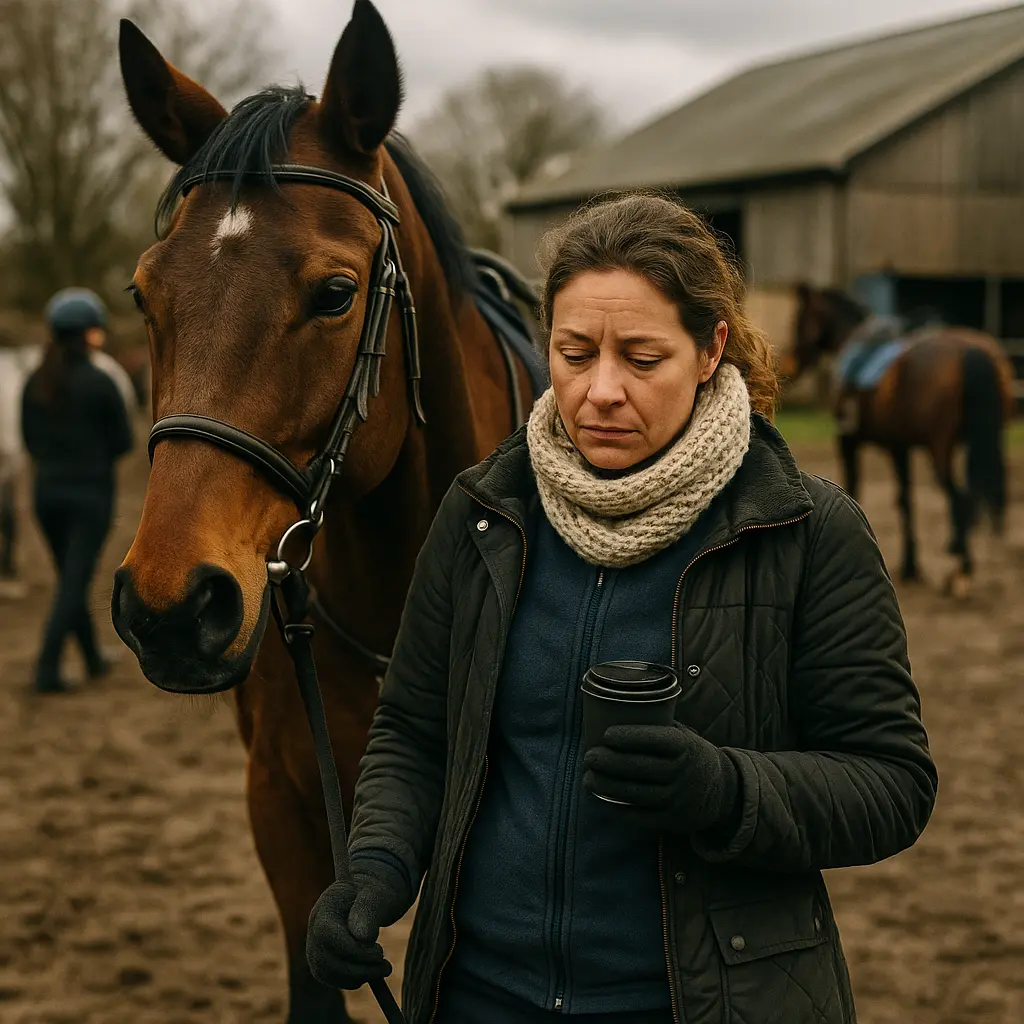
You love your horse, but the long commute, dark evenings and British weather can turn care into a daily dash. The good news: with the right yard setup, routine and kit, you can protect your horse’s welfare and your own headspace — even with a full-time job.
Key takeaway: Horse ownership is absolutely sustainable alongside a long UK commute when you commit to full or part livery, pre-schedule professional support, and run a welfare-first routine that reduces last-minute fire-fighting.
Is horse ownership sustainable with a long UK commute?
Yes — if you restructure care around full or part livery, scheduled services and a welfare-first routine that doesn’t rely on you being on-site twice a day. Many UK owners maintain happy, healthy horses by aligning yard support with their work hours and travel.
Start by choosing a livery or full boarding yard that provides forage, feed, bedding and turnout during your working day, with staff handling routine exercise when needed. This reduces evening pressure and minimises the risk of rushed, sub‑optimal care after a late train or motorway hold-up. Build a weekly plan (detailed below) that bakes in farrier, vet and saddler visits during yard hours, and use off‑horse activities at local centres on your heaviest work days to stay engaged without time-heavy schooling or hacking.
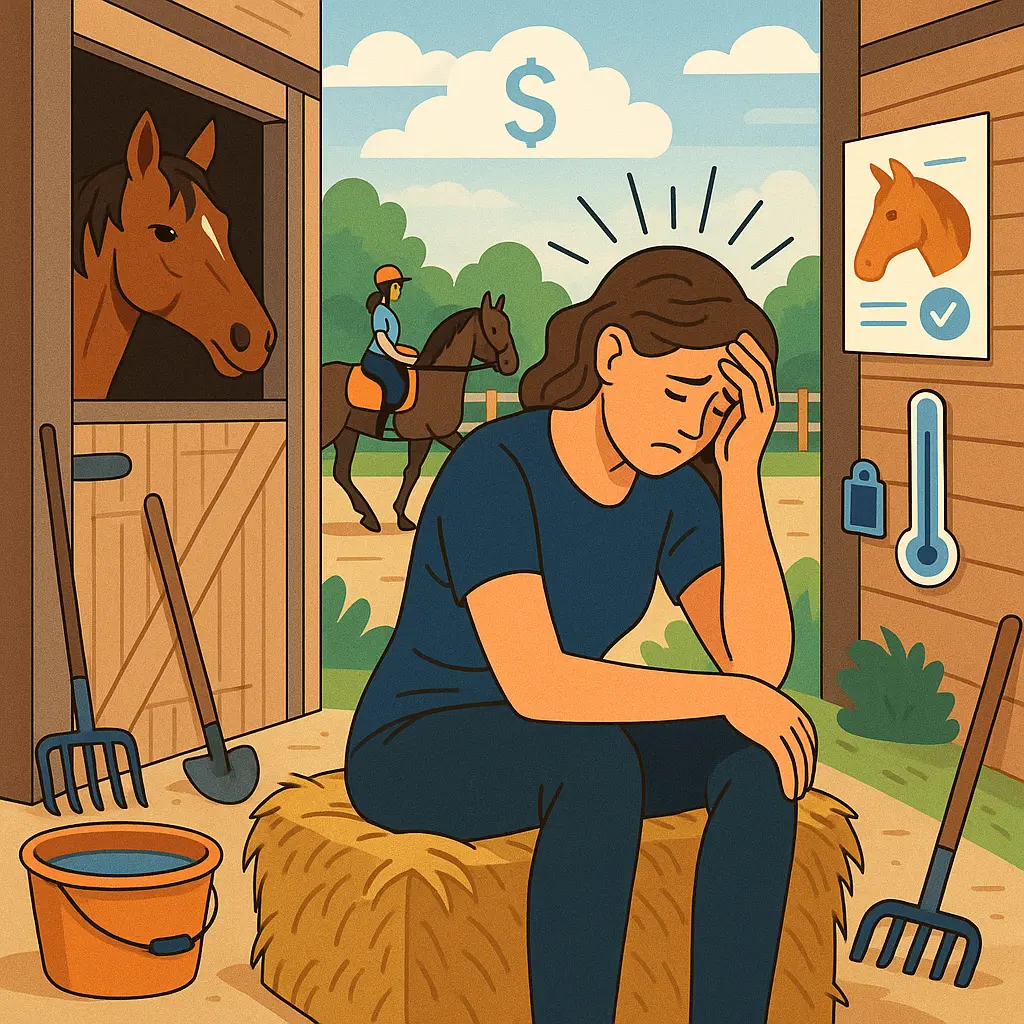
What does burnout look like — and how common is it?
Burnout is common: nearly 47% of equestrians report symptoms including emotional and physical exhaustion, reduced sense of achievement and a jaded view of the sport, which can lead to anxiety and depression.
Warning signs include dragging yourself to the yard, dreading previously enjoyable tasks, getting short-tempered over small setbacks (a pulled shoe, a wet rug), cutting corners on turnout or grooming, and losing confidence. As highlighted in coverage of sport psychology research by Megan Lane, equestrians benefit from tailored support, coping strategies and strong networks:
“It’s vital to identify specific psychological challenges faced by equestrians and develop supportive programs tailored to these needs... Strategies for stress management and the creation of robust support networks...” — insights from Megan Lane’s dissertation (read our summary)
Build in recovery: swap one midweek ride for groundwork or grooming therapy, and use yard staff for a full day’s cover after particularly demanding workdays. Owners who protect one evening a week for non-horse life often stick with the sport longer and with more joy.
Why are riding centres under pressure — and what does it mean for you?
Since 2018, 15% of Britain’s riding schools have closed, costing an estimated 1.5 million lessons per year, largely because of workforce shortages and rising costs.
British Equestrian’s participation data shows a shortfall of coaches, volunteers and even horses limiting capacity, though 61% of centres still express a positive outlook. Many are ring-fencing around 29% of delivery time for off-horse activities to reduce pressure on staff and horsepower. As Mandana Mehran Pour, Head of Participation at British Equestrian, explains:
“Across Britain, riding schools are operating in an increasingly struggling sector... If workforce and horsepower issues could be resolved, many centres could be operating at 100% capacity.” — British Equestrian
What it means for you: book earlier, be flexible, and use those off‑horse options (horse care sessions, stable management classes, equine-assisted learning) on busy weeks. Sector leaders note that using data to plan more strategically is key to resilience:
“By deepening our understanding through data, we’re able to plan more strategically, respond more effectively, better represent the industry and shape a more inclusive, sustainable and resilient future for equestrianism across the UK.” — Horse & Hound reporting on British Equestrian’s approach
What are the non-negotiables of welfare when you’re time-poor?
Avoid 24-hour stabling, ensure constant clean water, feed appropriately for workload, and rug for the actual weather — not the calendar.
UK stakeholders frequently flag 24-hour stabling, underfeeding, inappropriate rugging and lack of water as top management issues. That’s often where time pressure bites, so protect the basics first:
- Turnout and movement: Use paddock rotations or a track system to keep your horse moving even in wet months. If fields are closed, book walker time or in-hand exercise via livery.
- Water and forage: Fit automatic waterers where possible and ensure hay/haylage is pre‑portioned. This eliminates two major welfare slips when you arrive late.
- Rug for the day’s conditions: British weather swings quickly; over‑rugging is as risky as under‑rugging. Feel under the rug at the shoulder and behind the elbow; your horse should be warm, not sweaty or chilled. Keep a small roster of breathable, waterproof turnout rugs for wet days and cosy, well-fitted stable rugs for nights.
- Daily health checks: Livery staff can complete quick once‑overs. Make it easy with a labelled kit and a simple checklist — skin, digital pulses, legs, droppings, appetite, water intake.
At Just Horse Riders, we recommend streamlining your kit so staff and sharers can act fast. A compact, complete grooming kit by the stable door and a few core supplements (as advised by your vet or nutritionist) keep routines tight and consistent on days you can’t be there. The public expects this standard of care too — more than 78% of people in the UK agree horses should have positive interactions and mental well‑being considered alongside physical health in equine sports.
Quick tip: Pre-set seasonal rugs in clearly labelled bags (e.g., “wet and mild”, “dry and cold”) so yard staff can swap without waiting for your say‑so when a cold front or downpour suddenly arrives.
How do you build a livery‑first weekly plan that works with your job?
Choose a yard that aligns staffing with your work hours, delegate daily tasks, and pre‑book vet and farrier visits into the yard diary to reduce emergency dashes.
Work backwards from your commute. If you leave early and get home late two or three days a week, those are livery‑led days for exercise and checks. On your lighter days or weekends, you ride, school or hack.
Use this sample week as a template:
- Mon–Tue (heavy work days): Staff do turnout/bring‑in, feet pick, rug checks and a 30–45‑minute exercise (walker, long‑reining, or hack with a competent rider). You check videos/photos at lunch.
- Wed (moderate day): You do an off‑horse session — in‑hand polework, lunge, or a thorough groom and stretch.
- Thu (heavy day): Staff cover. Pre‑scheduled vet/farrier/saddle checks slotted into the yard rota once a month or as needed.
- Fri–Sat: Your ride days. Plan lessons or schooling and a hack if weather allows. If transporting, use travel boots or bandages from our horse boots & bandages range for safe, efficient load-ups.
- Sun (flex): Light groundwork, hand‑graze, or full rest depending on the week and horse’s workload.
Pro tip: Keep a single, shared digital care plan with your yard that lists feeds, rugs, emergency contacts and “if X then Y” rules. Build in one “owner‑free” evening per week — most riders find this dramatically improves resilience over winter.
What kit genuinely saves you hours in British weather?
Weather‑ready rugs, practical footwear and visible, safe rider kit keep you on schedule through rain, mud and early darkness.
Reliable rugs cut wasted journeys and prevent welfare slips. Invest in breathable waterproof winter turnout rugs and a well-fitted stable layer so staff can adjust instantly to moving fronts. Many of our customers favour proven brands for durability and fit such as WeatherBeeta and LeMieux, and classic yard stalwarts from Shires.
For you, winter‑proof your routine: keep an all‑weather pair of yard or riding boots at the yard and a set at home so you’re never caught out drying kit overnight. High‑quality hi‑vis gear is essential on dark lanes, and a safe, up‑to‑standard riding helmet is non‑negotiable when you’re squeezing a hack into a tight window.
Quick tip: Store a spare pair of gloves, socks and a headtorch in a sealed box at the yard. You save more time than you think by never turning back for forgotten kit.

How do you build a support network and protect your headspace?
Use your yard team, local centres’ off‑horse sessions and peer forums to share the load, and actively programme mental breathers into your week.
With centres under staffing pressure yet 61% still optimistic, many are innovating with off‑horse activities to widen access. That’s your safety valve on heavy work weeks: you still learn, connect and progress, without the time sink of grooming, tack‑up and warm‑up. Combine that with a reliable buddy system at the yard (you swap checks on alternating evenings) and share transport to clinics to cut travel stress.
Social support isn’t a luxury. With nearly 47% of riders experiencing burnout symptoms, schedule connection just like you do farrier visits: a monthly yard coffee, a WhatsApp tips group for weather alerts and rug swaps, and a trusted circle to reality‑check when you’re tempted to overdo it. If stress starts to spiral, lighten the plan for a fortnight — livery‑led exercise, you focus on simple bonding: groom, hand‑graze, hand‑walk.
What roles and budgets make ownership more realistic alongside work?
If you want your career and horse to co‑exist smoothly, yard manager roles often pay £40k–£50k (plus bonuses and sometimes accommodation), and part‑time sanctuary horse‑care roles pay around £4,160–£5,079 annually for 18–20s and 21+ respectively, sometimes with live‑in options.
For some owners, working in the sector offsets costs and embeds daily horse time; for others, a higher‑paying non‑equine role better funds full livery and professional schooling. There’s no single “right” route — the key is realism about time and cashflow. If professional costs feel tight this winter, prioritise welfare and safety spends (feed, vet, farrier, rugs that fit), and hunt quality bargains in our Secret Tack Room clearance to upgrade non‑essentials without compromising care.
Pro tip: Ring‑fence a predictable monthly horse budget that includes livery add‑ons for busy weeks (extra turns‑out/bring‑in, walker time), so you say “yes” early to help and avoid last‑minute premiums.
What can you lock in over the next 30 days?
In four weeks you can secure the right yard services, pre‑book professionals and set a weather‑proof routine that removes daily guesswork.
- Week 1: Audit your yard offering. Confirm turnout policy in wet months, exercise cover, emergency protocols and who makes rug calls. Label and streamline your grooming kit.
- Week 2: Schedule the next two farrier cycles and preventive vet checks at yard times. Prepare your transport kit with travel boots/bandages and a printed checklist.
- Week 3: Build two rug bundles (“wet and mild”, “dry and cold”) and retire anything that rubs or leaks. Replace gaps with dependable turnout or stable rugs.
- Week 4: Set your weekly plan (two staff‑led days, two owner days, one off‑horse learn day). Create a WhatsApp group with your yard buddy for quick welfare updates and weather alerts. Add one small recovery ritual for you (10‑minute stretch while your horse eats).
Quick tip: British cold snaps and downpours often arrive overnight. Check the forecast at lunch, message your yard with any adjustments by 3pm, and avoid evening scrambles.
FAQs
How common is burnout among UK equestrians with full-time jobs?
It’s widespread: almost 47% of equestrians report burnout symptoms such as exhaustion, reduced accomplishment and increased anxiety. Proactively scheduling support and off‑horse days helps keep you in the saddle for the long term.
Can long commutes make horse ownership unsustainable?
Not if you restructure properly. Full or part livery, delegated daily checks, and pre‑booked vet/farrier visits make ownership sustainable even with two‑hour‑plus travel, while preserving high welfare standards.
What welfare red flags should busy owners avoid?
Frequent UK issues include 24‑hour stabling, underfeeding, inappropriate rugging and lack of water. Safeguard turnout/movement, install reliable water access, and adjust rugs to the day’s weather rather than set dates.
How are UK riding centres coping with staff shortages?
Centres are reducing reliance on coaches/horses by dedicating around 29% of delivery time to off‑horse activities, and many remain optimistic about the future. Book early and use these options on your busiest weeks (British Equestrian data).
What kit saves the most time in winter?
Weather‑reliable rugs, a safe riding helmet, dependable yard/riding boots and bright hi‑vis gear. Keep a second set of essentials at the yard and label rug bundles by weather type.
How should I rug for changeable UK weather?
Check your horse, not just the thermometer: feel under the rug for warmth without sweat. Use breathable, waterproof turnout rugs outdoors and well‑fitted stable rugs indoors, and adjust as the weather shifts.
Where can I find mental health support tailored to riders?
Start with your yard network and local centres offering off‑horse learning, and seek peer support via rider forums. Research in equestrian sport psychology recommends bespoke support programmes and robust coping networks — see our summary of Megan Lane’s insights here.
When you plan for the constraints of UK commutes and weather, you remove stress, lift welfare and keep the joy in your horse life. If you’d like help choosing reliable winter kit or building a streamlined routine, our team at Just Horse Riders is here to help.