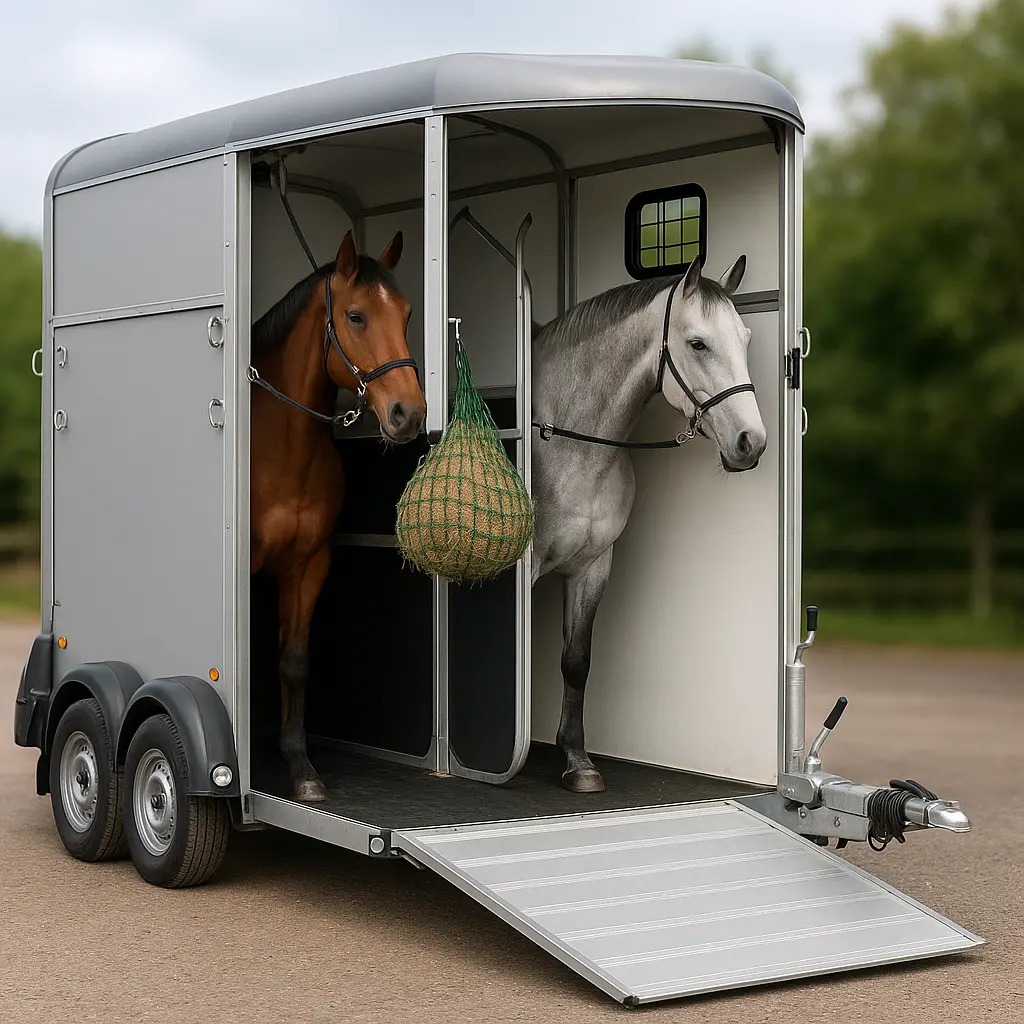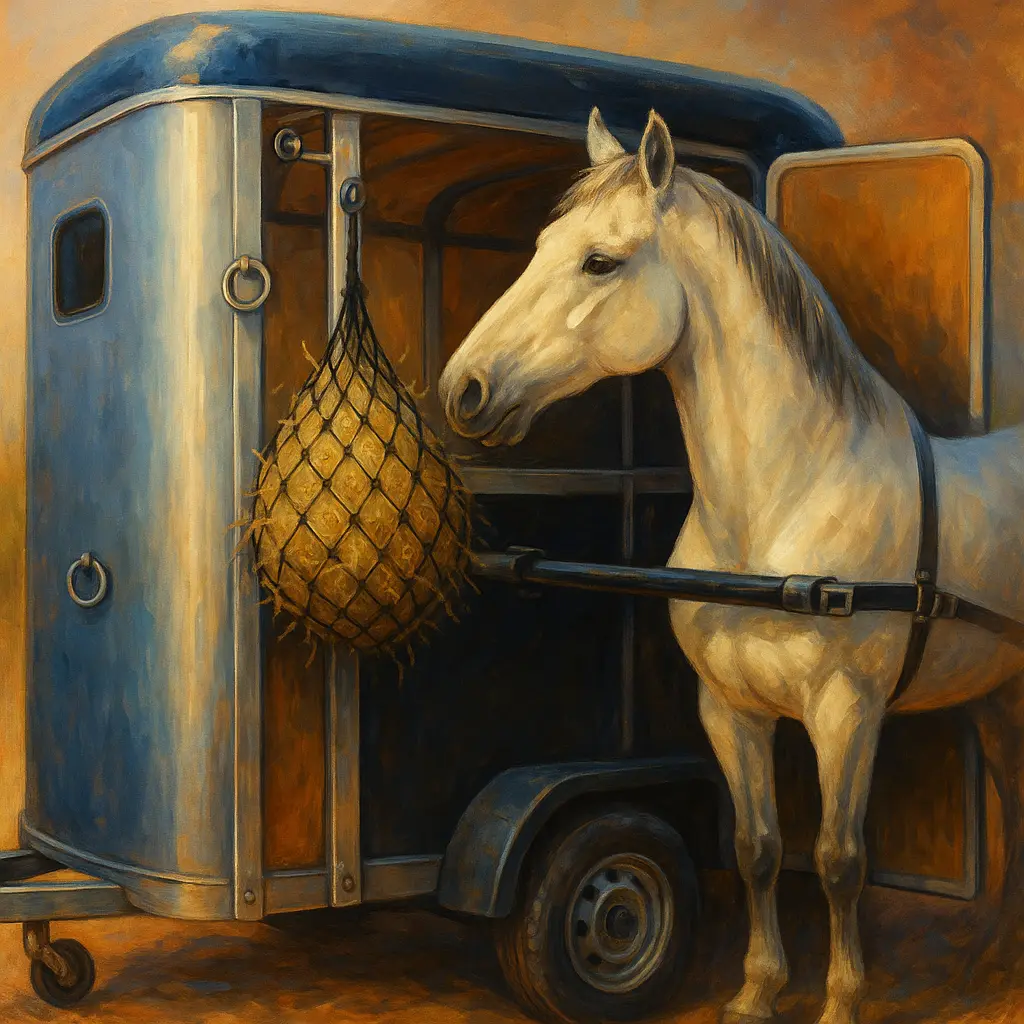
Your HB511 is built to carry big horses comfortably — but a haynet hung too low can undo that good design in seconds. If your tall horse is dragging hay onto the floor or getting tangled, the fix is simple, safe and affordable.
Key takeaway: Hang HB511 haynets at chest height (about 1.2–1.4 m from the floor), align with the breeching bar (1.11–1.32 m), and fit the Ifor Williams sliding hay net ring kit (KX0841, £55.20) on post‑Sept 2012 trailers for precise positioning.
What height should haynet hangers be in an Ifor Williams HB511?
Hang HB511 haynets at chest height — typically 1.2–1.4 m from the floor — aligning with the HB511’s adjustable breeching bar range of 1.11–1.32 m. This keeps hay clear of legs, supports natural head/neck posture, and prevents feed being pulled onto the rubber-matted floor during UK journeys.
The HB511 leaves the factory with two internal hay net rings positioned for general use, but horse height and neck length vary. The quickest way to get it “just right” is to treat chest height as your baseline and adjust slightly up or down to suit your horse’s conformation. For taller horses (up to the HB511’s design limit of 17.2hh), you’ll almost always need the ring set higher than a native pony would. Matching the net to breeching bar height is a practical cue — both aim to keep the horse secure without restricting movement.
Why it matters: low nets invite feet and shoes to catch, encourage horses to yank hay down, and can leave forage sitting in damp on the floor. High enough to stay off the legs, short enough to avoid loops, and positioned forward assists balance in braking/acceleration on UK roads.
Is the HB511 big enough for tall horses and safe haynet placement?
Yes — the Ifor Williams HB511 is designed for two horses up to 17.2hh, with 2.26 m headroom and 1.79 m internal width, so big horses have the space to eat safely from a chest-height haynet.
Inside, the HB511 provides an internal length of 3.52–3.63 m (around 11'6"), and a generous 1.79 m width to reduce crowding and stress compared to narrower models. Headroom of 2.26 m gives tall horses room to lift, lower and flex the neck comfortably while feeding. Adjustable stall length (about 1.67–2.05 m per stall) and an adjustable breeching bar height of 1.11–1.32 m let you fine-tune the stance so the horse isn’t reaching down or back awkwardly for hay. If you’re travelling one horse, removing the full centre partition further increases shoulder space and makes the haynet easier to access without twisting.
Ifor Williams notes the HB511’s extra length and width over the HB506 reduces stress on journeys. Combined with correctly placed haynets, that space helps horses travel more quietly, particularly in stop–start event traffic or on narrow rural lanes.
How do you fix a haynet hanger that’s too low in your HB511?
Fit the Ifor Williams Internal Sliding Hay Net Ring Kit (part KX0841, £55.20) on post‑Sept 2012 HB511s to slide the net ring to the ideal height and position on either side. The kit includes the correct fixings and eyebolts and mounts along the front ramp/inspection door area for flexible placement.
This is the manufacturer-approved way to solve “low net” issues on taller horses. The sliding rail means you can position the ring further forward or higher to suit different horses (or two horses of unequal height) without drilling extra holes or improvising fittings. It’s designed to fit both the left and right sides of post‑2012 HB511 trailers; if you’re unsure of your trailer’s age, check the ID plate or consult your service history before ordering to confirm compatibility. Once installed, set the ring roughly level with the horse’s chest, load, and then make a minor tweak up/down to account for how your horse stands under travel.
Quick tip: Make any adjustments with the trailer on level ground and the ramp supported. If you regularly swap between a 15.2hh and a 17hh, mark your “favourite” rail positions with a paint pen for fast set-up before a show day.
What should you check before hanging the haynet?
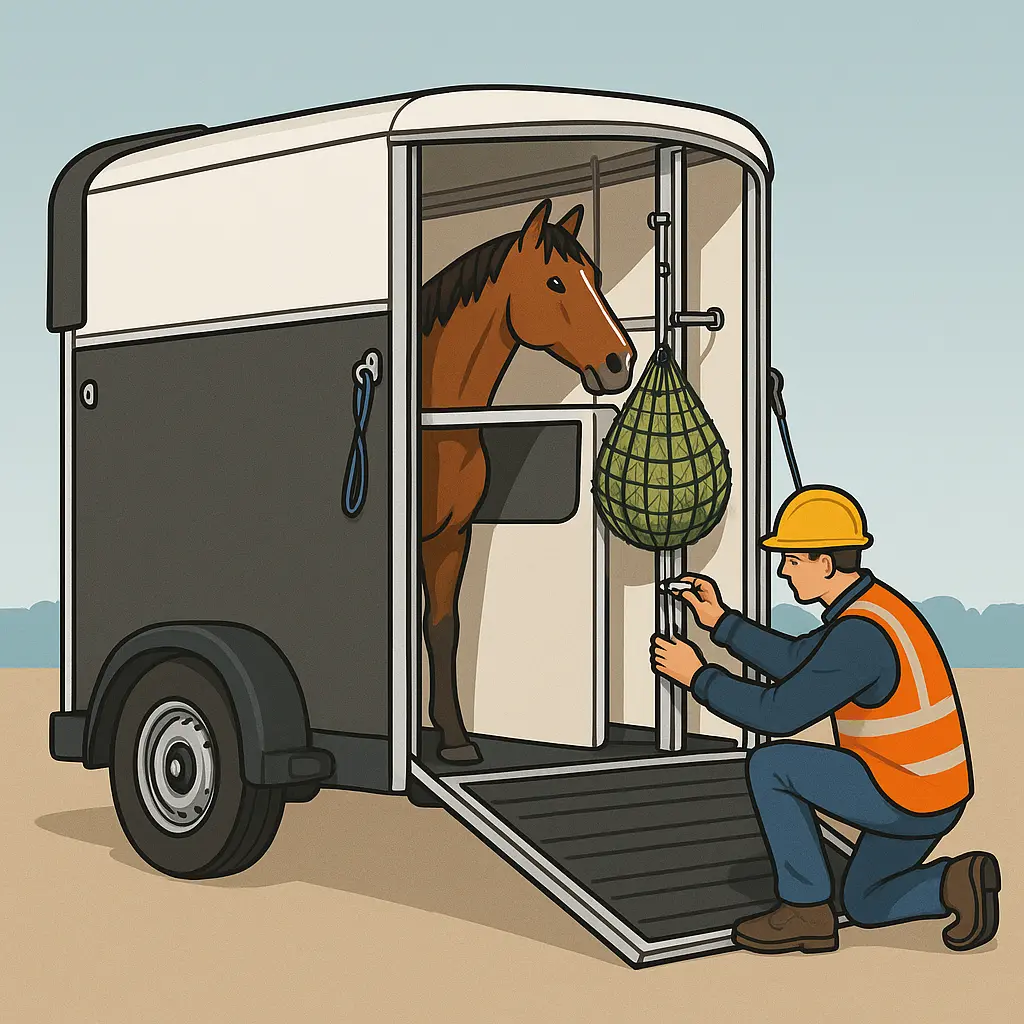
Stabilise the trailer with wheel chocks and prop stands, set the partition/head‑guard as needed, and confirm tie points are sound before you hang any haynet. This prevents movement of the ramp and gives you safe access to set ring height correctly.
Use this pre-haynet routine every time:
- Position the trailer on firm, level footing and apply the handbrake.
- Fit wheel chocks and deploy prop stands so the full‑width, gas‑assisted rear ramp can’t bounce as you work.
- Inspect the two internal hay net rings and surrounding fixings for corrosion or sharp edges; replace or move to the sliding rail (KX0841) if needed.
- Decide on partition use. For two horses, ensure the full centre partition and head‑guard are locked in and stall length set 1.67–2.05 m to suit each horse. For a single horse, remove the partition to maximise space and haynet access.
- Check the eight external tie rings are secure for safe leading, but remember: lead ropes tie outside, haynets tie inside.
- Confirm breeching bar height (1.11–1.32 m) is appropriate for your horse so the net can be aligned at chest height.
For your own safety while loading and adjusting, wear grippy footwear and a hat if your horse is lively. Our customers who lead in busy show car parks rate the added visibility of hi‑vis rider gear and the protection of well‑fitted riding helmets when working around trailers.
How should you position and tie the HB511 haynet?
Tie the haynet short at chest height on the trailer’s ring or sliding rail, using a quick‑release knot, and keep the tail of the net well clear of knees and feet. Never tie a haynet to a lead rope or to anything that can drop in height.
The goal is a compact, accessible net that stays put even as the horse shifts in braking or on roundabouts. Position the ring forward so the horse reaches slightly ahead, not down between the forelegs. Tie directly to the ring or rail, keep the knot neat and easy to release, and check for any stretch once the horse has taken a few mouthfuls. If you’re carrying two horses, mirror the positions so each horse has similar access and balance points. After 5–10 minutes of travel, a quick check during a safe stop helps you confirm the net hasn’t loosened or dropped.
Pro tip: Protect legs for travel. Correctly fitted travel boots or bandages reduce the risk if a horse paws at a net. Explore our selection of horse travel boots and bandages to match your horse’s size and the conditions you’re travelling in.
How do UK weather and roads affect haynet height and care?
In UK autumn and winter, hang haynets high enough to keep forage clear of wet, muddy floors and clean rubber matting after every trip to prevent bacterial growth. Higher, shorter nets also help reduce stress in stop–start traffic by stopping hay from being dragged underfoot.
British weather rarely plays fair on show day. Rain and mud cling to boots, tails and mats; if hay is pulled down, it wicks moisture and grime fast. The HB511’s aluminium floor with rubber matting offers grip, but only if it’s clean and dry underfoot — keep the haynet up and the floor clear. After each journey, sweep, rinse and dry the matting so spilt hay doesn’t ferment between events. If your trailer lives outside, a full cover keeps interior fixtures — including haynet rings — free from winter damp.
On the road, the HB511’s specification (13‑pin EU lighting, DATATAG security, 165R13C tyres) is tuned for UK lanes and motorways. Pair that with sensible net placement to stop horses grabbing and dropping hay as you crawl into event traffic. Ahead of colder fixtures, rug appropriately for the waiting game: quality winter turnout rugs from trusted brands help maintain comfort when loading and standing around before and after travel. And for relaxed loading, a pocket of favourite horse treats can be the difference between a smooth ramp walk and a standoff.
What do the HB511’s dimensions and payload mean for hay and horses?
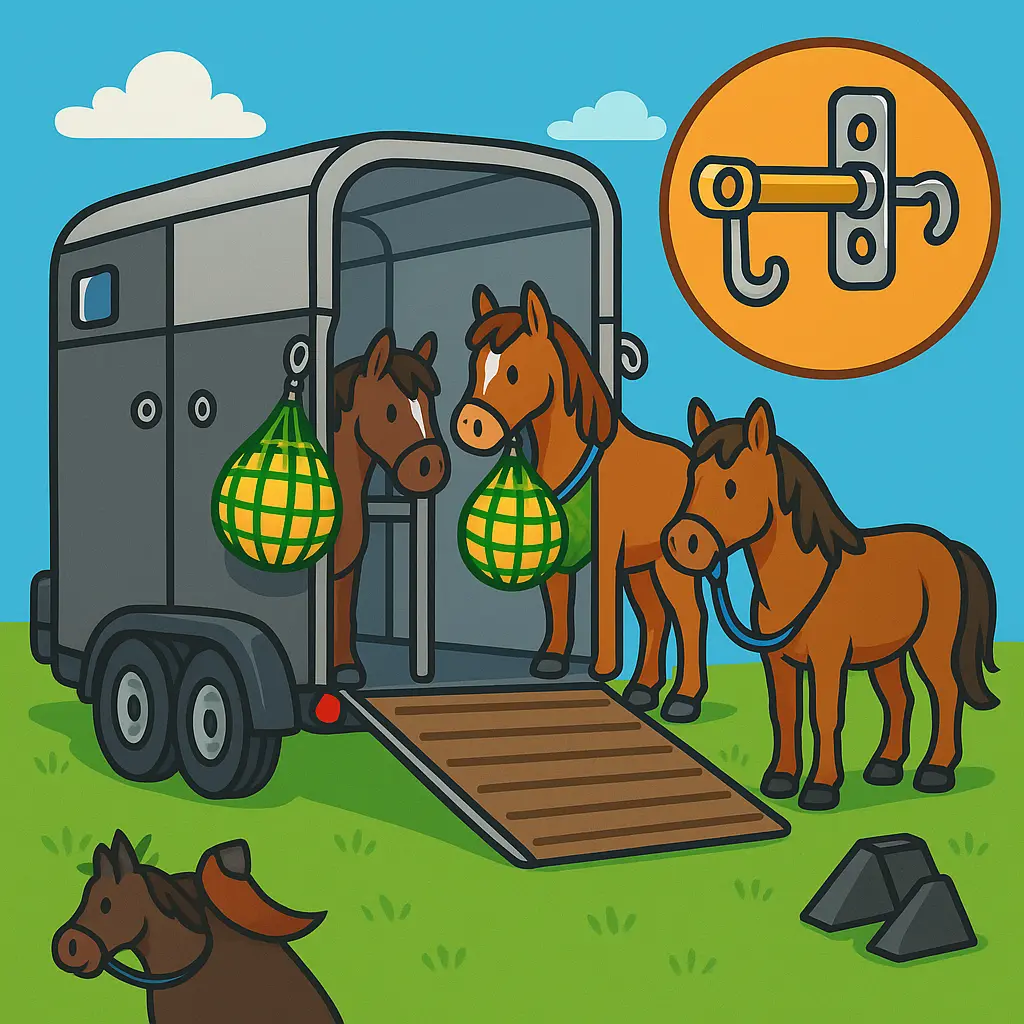
The HB511’s unladen weight is 950–1000 kg with a 2700 kg gross weight, giving a payload up to 1700–1750 kg — enough for two 850 kg horses plus kit, so haynets won’t tip you over limits but must still be positioned safely.
Inside, you’re working with approximately 3.52–3.63 m internal length, 1.79 m width and 2.26 m headroom. That space lets you set stall lengths (about 1.67–2.05 m) so each horse stands square with the chest aligned to the haynet. Hay itself is light relative to horses, but travel weight adds up: water, tack, rugs and people count toward your payload too. Keep heavy items over the axle line, secure everything, and use the internal haynet rings (or sliding kit) rather than improvising with non-structural points.
Overall dimensions (around 4.65–4.67 m long, 2.22–2.27 m wide, 2.75 m high) also matter at home: plan storage space to fully open ramps and doors so you can set and adjust haynet positions safely out of the wind and rain.
How do you keep your haynet setup safe season after season?
Rinse and dry the rubber matting after each trip, inspect rings and rail fixings regularly, and use a full cover in winter to protect hardware from UK damp. Organise spares in stowage nets so you’re never tempted to tie a net to the wrong point.
Build a quick end‑of‑journey routine: untie and remove nets, sweep hay and droppings, hose and hang mats to dry if needed, then check for frayed net cords and worn eyebolts. A light smear of anti‑corrosion spray on ring fixings after winter washes keeps them turning freely. Keep spare nets, ropes and gloves tidy with stowage nets or bags so you can reach the right kit fast on dark mornings. For scrubbing and stain removal after muddy outings, browse our time‑saving grooming and cleaning essentials. And if you’re kitting out a new trailer, it’s worth a look in our clearance (Secret Tack Room) for great-value travel basics.
At Just Horse Riders, we recommend treating haynet setup as part of your pre‑travel safety check — the same way you’d check tyre pressures, 13‑pin lights and hitch security. It’s a small habit that pays off in quiet, confident travellers.
Conclusion
Set your HB511 haynets to chest height (roughly 1.2–1.4 m), align with the breeching bar, and add the KX0841 sliding rail on post‑Sept 2012 trailers to fine‑tune position for each horse. Stabilise the trailer, tie short with a quick‑release knot, and keep floors clean — the result is safer feeding and calmer journeys in all UK conditions.
FAQs
What height should haynet hangers be in an Ifor Williams HB511?
Chest height, typically 1.2–1.4 m from the floor, works for most horses. Use the HB511’s breeching bar range (1.11–1.32 m) as a guide and fine‑tune with the Internal Sliding Hay Net Ring Kit (KX0841) on post‑2012 trailers.
Is the HB511 suitable for two 17hh horses who pull haynets low?
Yes. The HB511 is designed for two horses up to 17.2hh with 1.79 m width and 2.26 m headroom. Fit the sliding haynet kit to set higher ring positions so tall horses can eat safely without dropping hay to the floor.
How do I fix a haynet hanger that’s too low in my HB511?
Install the Ifor Williams Internal Sliding Hay Net Ring Kit (KX0841, £55.20). It fits both sides on post‑Sept 2012 HB511s and lets you slide the ring along the front ramp/inspection door area to the perfect spot.
Does the HB511 have enough tie points for safe haynet use?
Yes. There are two internal haynet rings as standard and eight external tie rings. Use internal rings for haynets and external rings for lead ropes when loading/unloading.
Can I add sliding haynet rails to an older HB511?
The KX0841 kit is specified for post‑Sept 2012 models. Check your trailer’s build date; if it’s earlier, consult a qualified trailer technician about safe alternatives.
What’s the HB511 payload and does hay weight matter?
The HB511 offers up to 1700–1750 kg payload (unladen 950–1000 kg, gross 2700 kg). Two 850 kg horses fit within that, but remember to count tack, water and people. Hay weight is small, but still secure nets correctly at chest height to avoid floor hazards.
Should I change partition settings for a single horse?
Yes. Remove the centre partition for a single horse to maximise balance and access to the haynet. If carrying two, keep the full centre division and head‑guard in place and adjust stall length to 1.67–2.05 m to suit each horse.