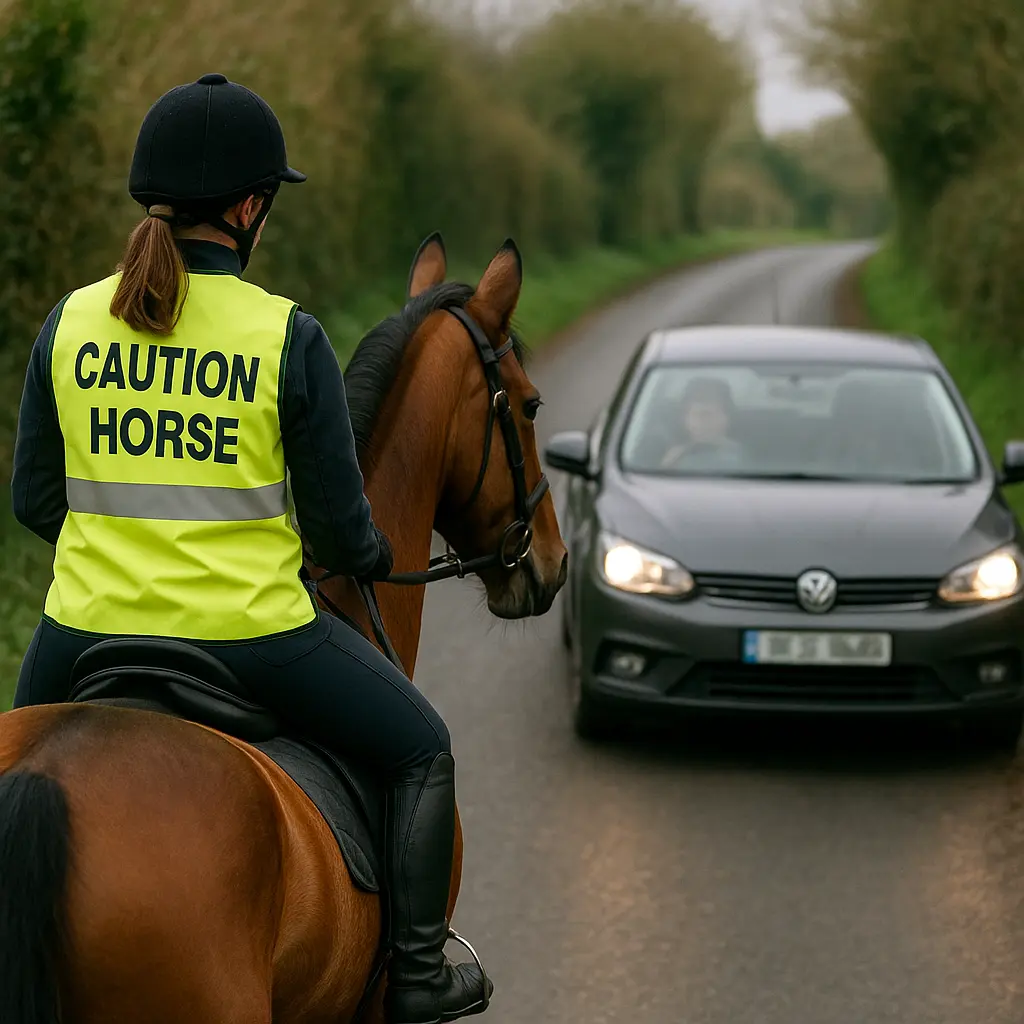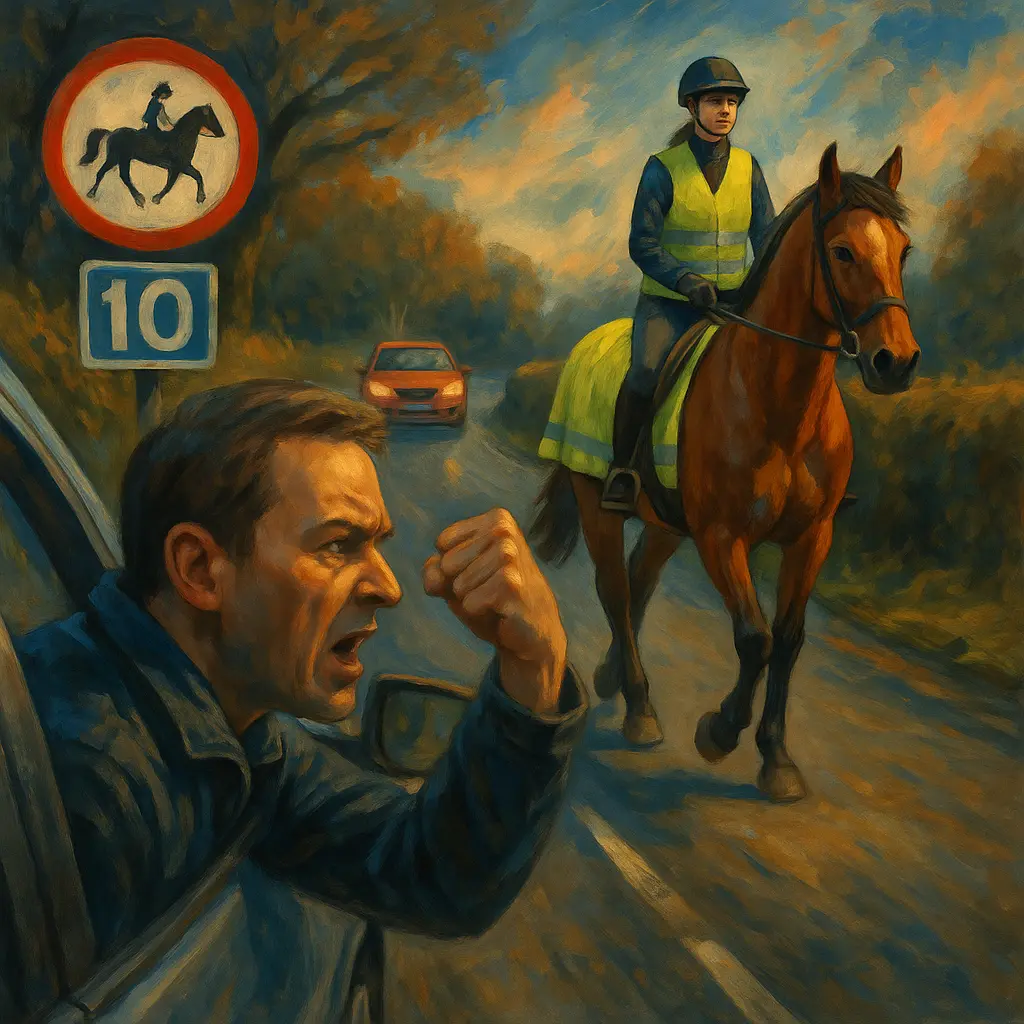
UK roads are still claiming equine lives. In 2024 alone, the British Horse Society (BHS) recorded 3,118 road incidents involving horses — 58 horses were killed, 97 injured and 80 people were hurt — with most incidents triggered by drivers passing too fast or too close.
Key takeaway: Drivers must pass horses at no more than 10mph and give at least 2 metres — and you can dramatically cut risk by using hi-vis, planning your routes and reporting every near miss to the BHS Horse i app.
The 2024 picture in numbers
In 2024, BHS data shows 3,118 equine-related road incidents in the UK, with 58 horses killed, 97 injured and 80 people injured; 81% happened because drivers passed too quickly or too closely. Incidents fell 8% from 2023 (3,383 to 3,118), but dangerous passing remains the dominant cause.
These figures underline a decade-long problem. Since November 2010, BHS has logged 18,683 road incidents, 697 horse deaths, 1,625 horse injuries, 47 human deaths and 1,782 human injuries. That’s why the BHS continues to push its Dead Slow campaign and to stress what the Highway Code requires of drivers.
“While we have seen a small reduction in the number of horse fatalities over the last year, which is positive, it is clear that a significant number of drivers are still unaware of the guidance in the Highway Code.” — Alan Hiscox, Director of Safety, BHS (Road Safety GB)
Road rage and abuse are also rising: a third (33%) of equestrians experienced it in 2024, up 43% on 2023. For many riders, that means choosing hacks based on time of day, traffic levels, and visibility, not just mileage or footing.
What the Highway Code demands of drivers
The Highway Code (Rule 215) is explicit: drivers must pass horses at no more than 10mph and leave at least 2 metres, with horses recognised in the Hierarchy of Road Users as vulnerable.
These rules were strengthened on 29 January 2022, yet driver awareness remains worryingly low — only around 10% of motorists know about the changes, according to BHS reporting. The BHS’s UK-wide Dead Slow campaign reinforces exactly what safe passing looks like, including in unique UK contexts such as feral and semi-feral ponies on Exmoor, Dartmoor and the New Forest.
“Horses are still being killed and injured on our roads, riders continue to be seriously injured and too many drivers underestimate the importance of driving carefully around horses.” — Alan Hiscox, Director of Safety, BHS (BHS)
Until awareness catches up, riders must assume not all drivers know the rule — and ride accordingly, with highly visible kit, clear hand signals and assertive road positioning where appropriate.
Your immediate road-safety checklist
Wear hi-vis, communicate clearly and plan low-traffic routes to cut your risk on UK roads today. Here’s a concise, proven checklist built around current BHS guidance and Highway Code best practice.
- Be seen early and clearly. At minimum, wear a hi-vis vest or jacket and fit hi-vis to your horse. Choose fluorescent/reflective combinations to cover both daytime and low light. Our curated hi-vis rider gear makes it easy to kit up fast.
- Use an exercise/quarter sheet with reflective strips in low light or wet weather. For winter hacks, opt for waterproof, reflective designs; explore winter turnout rugs with reflective strips or branded options like WeatherBeeta reflective rugs.
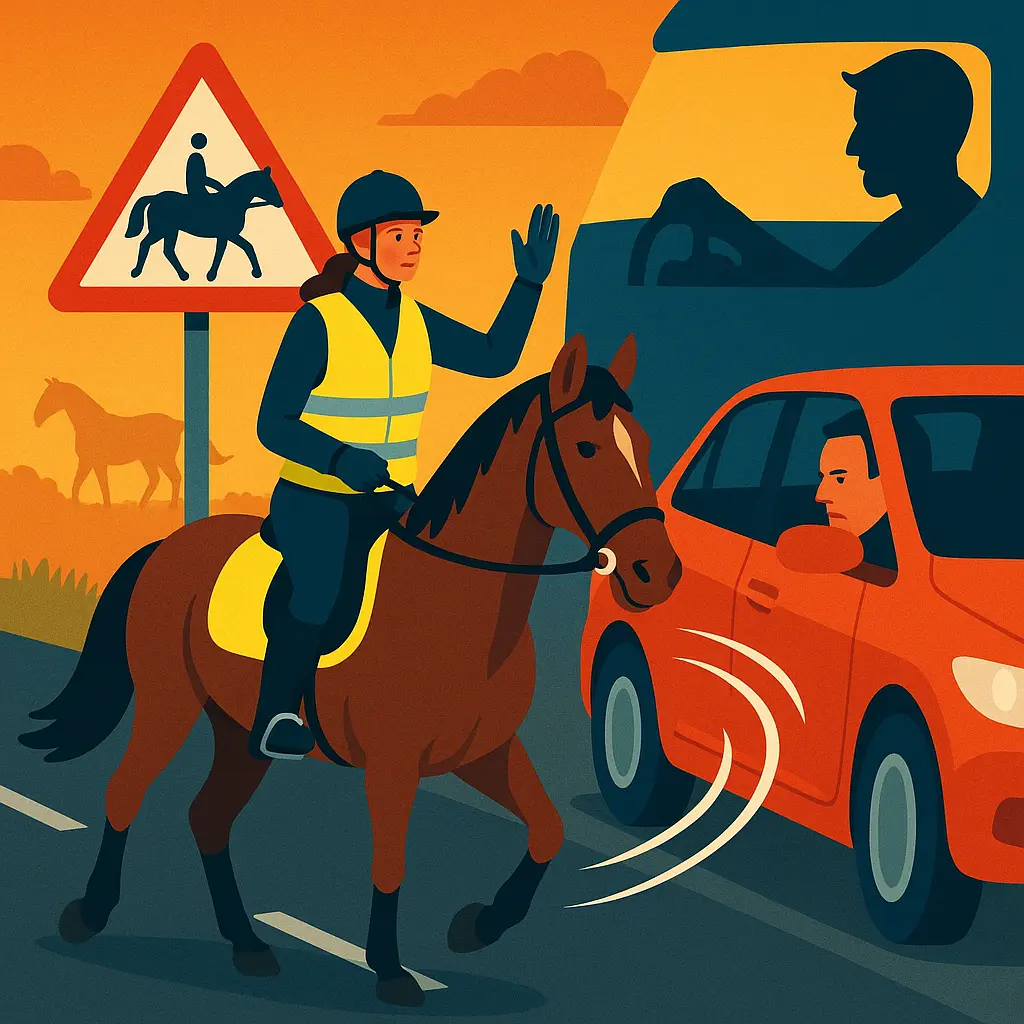
- Signal your needs. Raise a hand, palm out, to ask drivers to slow to around 10mph; use clear, confident gestures and eye contact where safe.
- Plan your route and timing. Avoid peak rush hour, school-run windows and known pinch points. Favour wider lanes, good sightlines and verges you can step onto if needed.
- Ride in single file on narrower roads and keep a steady, predictable line. On bends and brows, take a safer road position that maximises your visibility without drifting into the centre unnecessarily.
- Head-to-toe protective kit. Wear a properly fitted, current-standard riding helmet, and choose grippy riding boots and comfortable, reinforced breeches for security in the saddle.
- Protect your horse’s legs. Boots can help against brush or debris strikes on verges; consider leg protection for hacking suited to your horse and footing.
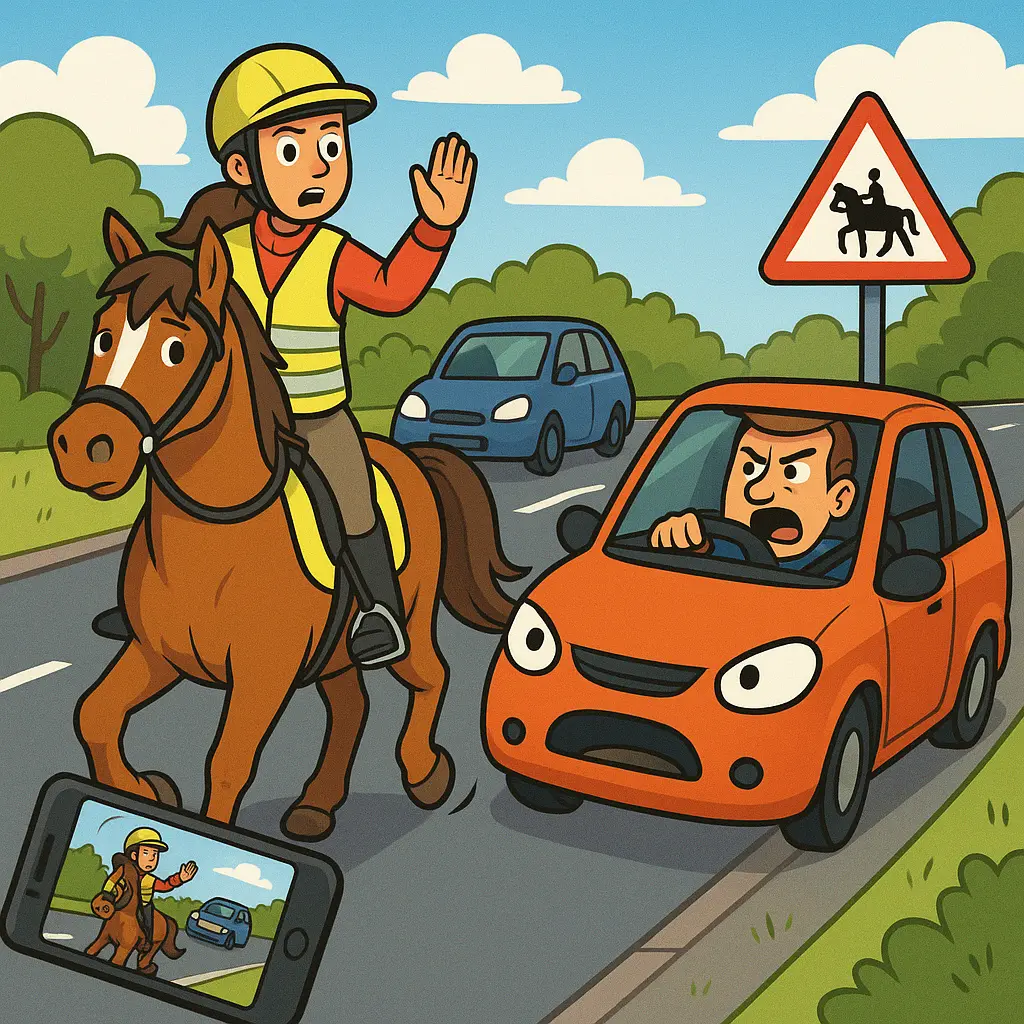
- Stay alert and tech-smart. Keep your phone accessible for emergencies, ideally in a secure mount or zipped pocket. If you capture an incident on a helmet or phone camera, you can later submit it to police and the BHS; don’t handle devices while riding.
- Use your voice. A friendly thank-you wave or “thank you” is a powerful tool for building goodwill with local drivers.
Quick tip: Clean, high-contrast hi-vis is far more effective than faded kit. Refresh your hi-vis if it’s dulled or dirty — especially after a muddy winter.
Why and how to report every incident
Report all incidents and near misses via the BHS Horse i app and submit any video to the police, because reports build enforceable evidence, identify hotspots and drive real change.
The BHS asks riders to log every incident — not just collisions, but close passes, road rage, near misses, and any event that made your horse react or could have led to injury. These reports feed the national database used to brief MPs, police forces and road safety partnerships across England, Scotland and Wales, and to target education campaigns.
For enforcement, submit footage directly to your local police via their website portals; many forces have streamlined online reporting for dashcam and helmet-cam video. Then add the same event to the BHS Horse i app to ensure it’s counted in the statistics that influence policy and infrastructure.
“Far too many lives have been lost over the last 10 years and we are working hard to drastically reduce the number of incidents that take place across the UK.” — Alan Hiscox, Director of Safety, BHS (BHS)
Why bother if no one was hurt? Because every near miss paints a picture: exact locations, times, and behaviours that help councils and police prioritise interventions. The small 8% fall in incident numbers from 2023 to 2024 is encouraging, but the death toll proves there’s more to do — and data is how we do it.
Build your road confidence with training
Complete the BHS Ride Safe Award to sharpen your road craft, hazard awareness and decision-making for real-world hacking.
Recognised in the Highway Code, Ride Safe provides structured training in signalling, road positioning, understanding horse behaviour in traffic and what to do when things go wrong. Even seasoned riders benefit: rehearsing “what if” scenarios reduces reaction time when the unexpected happens.
At Just Horse Riders, we recommend preparing like an athlete for roadwork:
- Practise your hand signals and voice cues at home so they’re second nature under pressure.
- Desensitise gradually: start with quiet lanes and build up to busier environments in short, positive sessions.
- Fit-for-purpose kit: a snug, certified helmet, secure footwear and non-slip reins improve confidence when it matters.
- Add visual aids: hi-vis hat silks and breastplates make movement more visible to drivers at distance.
Quick tip: Log your training rides and any near misses in the Horse i app. Patterns in your own data can help you refine routes and timings for safer future hacks.
“It’s encouraging to see that this strategy represents an initial step towards a more structured, government-led approach to safety. However, while equestrians are mentioned, they do remain largely overlooked.” — Alan Hiscox, Director of Safety, BHS (Horse & Hound)
Seasonal and rural lane risks in the UK
Short days, frequent rain and fog in UK autumn/winter amplify close-pass risks, so increase visibility and choose safer times and routes when daylight is limited.
Winter brings glare at low sun, wet mirrors reducing driver visibility and more mud on verges. On narrow rural lanes, bends, high hedges and blind summits compress traffic and reduce reaction time — exactly where 81% of incidents (too fast/too close passing) are most likely to happen.
Make winter hacks work for you:
- Shift your hack window to mid-morning or early afternoon to maximise light.
- Use layered hi-vis for you and your horse so you stay visible from all angles, even under rugs.
- Fit reflective exercise sheets or waterproof rugs with clear, bright piping for a larger visual “signature” in drizzle and dusk. Browse practical options in our turnout rugs and brand selections like WeatherBeeta.
- Expect feral/semi-feral ponies on the moors and New Forest; drivers may not. The BHS Dead Slow guidance applies here: slow to a crawl, pass wide, and never sound the horn.
- After heavy rain, assume reduced braking distances for vehicles and plan additional space and time at junctions and crossings.
Pro tip: Clean reflective strips regularly — a fast wipe with a damp cloth after each hack keeps them shining brightly in headlights.
How Just Horse Riders can help
We stock proven hi-vis and road-safe essentials so you can kit up quickly and ride with confidence. From visibility to protection and comfort, here are rider- and horse-first picks for safer hacks:
- Stand-out visibility: tried-and-tested hi-vis rider gear for jackets, vests, hat silks and bands to make you unmistakable in all conditions.
- Weather-ready rugs: reflective, waterproof options in our turnout rugs collection, plus proven performance from WeatherBeeta for all-season hacks.
- Head protection done right: a range of certified riding helmets to suit your fit and budget.
- Secure in the stirrup: horse riding boots with reliable grip and all-day comfort.
- Comfort that works: women’s breeches designed to move with you, reduce rubs and help maintain a stable seat on the road.
- Horse leg care: boots and bandages for hacking protection against brush, grit and minor knocks.
Our team lives and breathes UK hacking. If you’re unsure which hi-vis to layer, what rug weight suits your route to the bridleway, or which helmet standard you need for Ride Safe, we’re here to help.
FAQs
What causes most horse road incidents in the UK?
In 2024, 81% of incidents logged by the BHS happened because drivers passed too quickly or too closely to horses. This is why clear hand signals, assertive road positioning and hi-vis are non-negotiables on UK roads.
How should drivers legally pass horses on UK roads?
The Highway Code requires drivers to pass at no more than 10mph and leave at least 2 metres of space. Horses are classed as vulnerable road users within the Code’s Hierarchy, so the onus is on drivers to take extra care.
Is road rage towards riders getting worse?
Yes. In 2024, 33% of equestrians reported experiencing road rage or abuse — a 43% increase from 2023. Log every incident or near miss in the BHS Horse i app so hotspots and trends can be addressed.
Has the 2022 Highway Code update reduced incidents?
There’s been slight progress: reported incidents dropped 8% from 2023 to 2024. However, with 58 horses killed in 2024 and only about 10% of drivers aware of the changes, continued education and enforcement are essential.
How do I report a near miss if no one was hurt?
Record it in the BHS Horse i app — include time, location, what happened and any vehicle details — and submit any video directly to your local police via their website. Your report adds to national data used for policing and policy change.
What hand signals help drivers slow down?
Raise one hand, palm facing the oncoming driver, to indicate “slow” and make eye contact where safe. Pair this with steady road positioning and hi-vis so your intent is unmistakable.
What should I wear for winter road hacks?
Layer hi-vis on you and your horse, add reflective exercise or turnout rugs in dim or wet conditions, and ensure you’re in a certified helmet with secure, grippy footwear. Keep reflective elements clean and visible to maximise their effect.
For deeper background and ongoing updates, see BHS coverage and analysis via Road Safety GB, BHS news (2023–2024 updates; first year post–Highway Code change) and broader policy context in Horse & Hound.