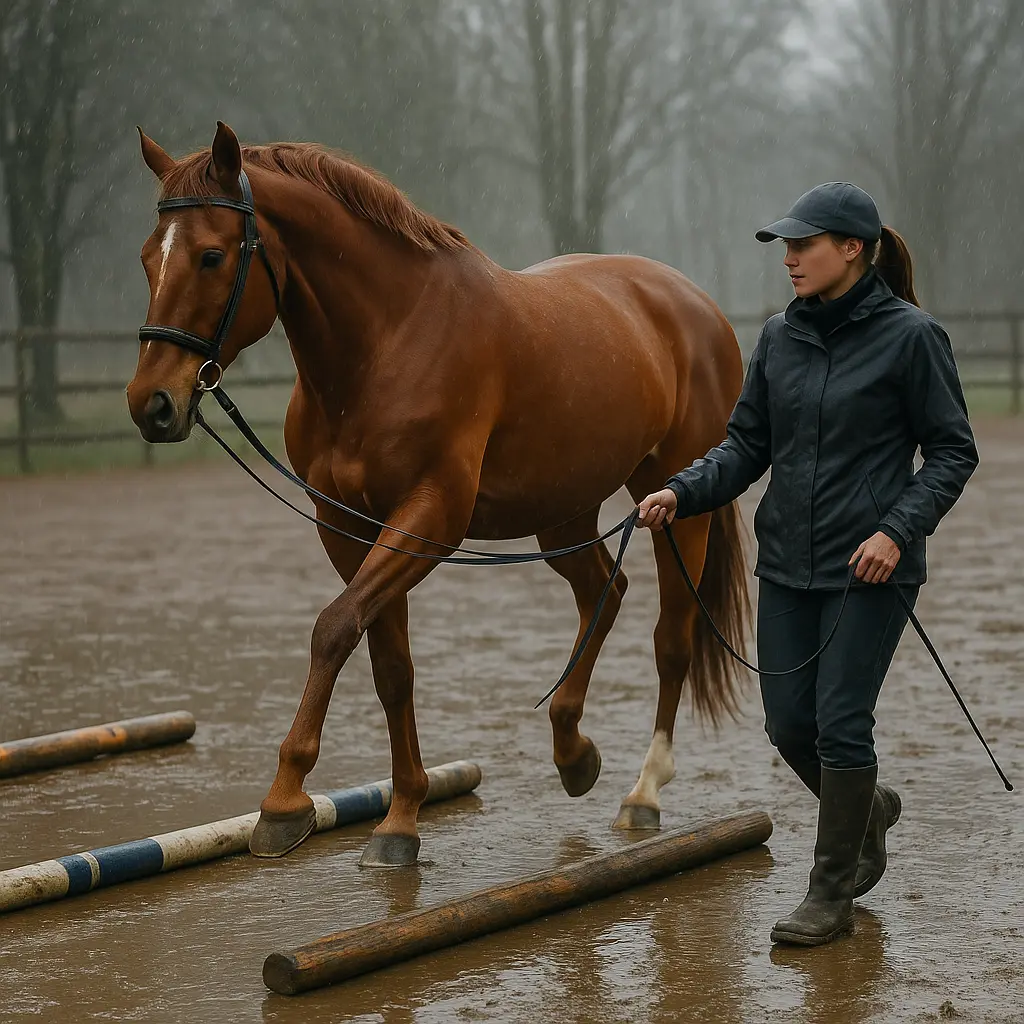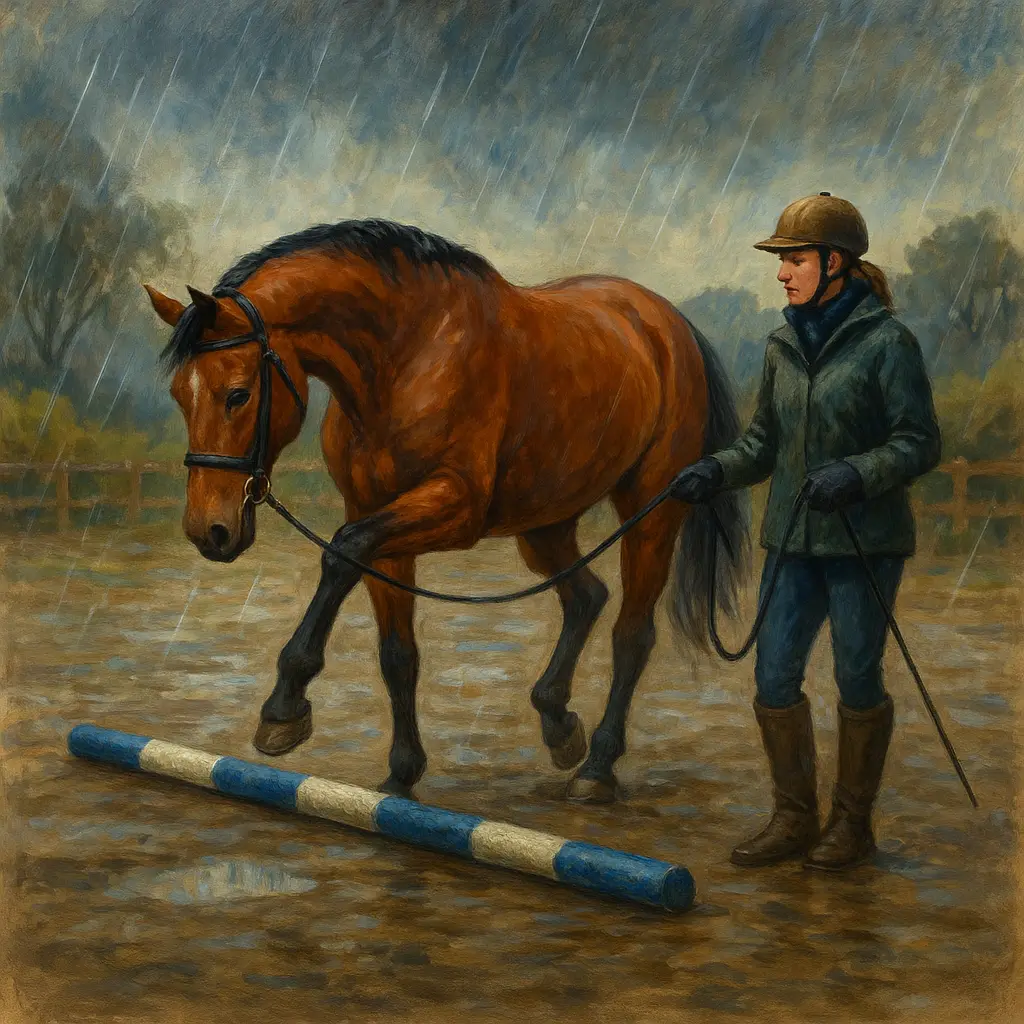
Storms, sideways rain and frozen arenas don’t have to derail your horse’s progress. With a smart winter plan, you can keep fitness, suppleness and focus ticking along safely until the weather clears.
Key takeaway: When storms cancel riding, switch to longer winter warm-ups and short, consistent groundwork — especially walk-based pole work and transitions — to maintain strength, suppleness and confidence without risking slick footing.
When storms cancel your ride, do this today
Switch to walk-based groundwork with halts, back-ups and stretching, because it maintains fitness safely when the ground is slick. Add a few ground poles at the walk for focus and proprioception without speed.
Rain and blown-out arenas are a reality of UK winters. On wet or greasy surfaces, faster gaits and tight turns add unnecessary risk; the safer alternative is deliberate walk work. In-hand sessions with correct posture — think clear halts, straight rein backs and gentle lateral flexions — keep joints moving, core muscles engaged and the mind on you. If your yard has a strip of firm footing, lay down a few poles and step through in walk, letting the horse lower the neck and take a longer step. This is exactly the sort of day where “little and often” wins.
Use the extra time under cover to groom and mobilise. Thorough currying and massage-style grooming support circulation and relaxation before you start. Our customers often combine bad-weather days with a deeper tidy-up using tools from our grooming range and finish with a few treat-led carrot stretches to release the topline.
20-minute sessions that actually maintain fitness
Yes — 20 minutes of consistent in-hand conditioning, lunging or pole work on most days is enough to maintain baseline fitness until normal work resumes. The principle is “little and often,” not total rest.
Even on the worst weather days, a focused 20-minute session adds up over a week. Aim for:
- 5 minutes: Active in-hand walk with changes of bend, large circles and a few quality halts.
- 8 minutes: Transitions on the lunge (walk–trot–walk), prioritising rhythm, balance and prompt reactions; protect legs with appropriate boots from our horse boots and bandages selection.
- 5 minutes: Walk-over poles in hand, encouraging a long, low frame and deliberate foot placement.
- 2 minutes: Cool-down walk and a couple of slow baited stretches.
Rotate this with a pure groundwork day (rein back, carrot stretches, ribcage bends, thoracic lifts and gentle tail pulls) in a stable aisle or firm yard. Over a fortnight of bad weather, you’ll see the difference in posture, attention and ease once you’re back under saddle.
Quick tip: Keep a “storm kit” by the door — headcollar, lunge line, two poles, hoof pick, and a few low-value treats from our treats collection — so you can pivot fast when the forecast turns.
Use transitions: your winter superpower
Transitions build strength, attention and balance without needing large spaces, making them one of the most valuable winter training tools.
Frequent, correct transitions accumulate strength in the hindquarters and improve self-carriage, even at the walk. Mix walk–halt–walk; add a few steps of rein back to re-engage; then progress to walk–trot and trot–walk on the lunge or in-hand long reining if you have a safe, non-slip surface. This format keeps the brain busy and the body warm without long stretches of faster work on questionable footing.
“Suppleness is your foundation in winter. If the horse feels loose and relaxed, everything else becomes easier.” — Pauliina Swindells, via Horslyx guidance (read more)
At Just Horse Riders, we recommend counting out even beats and rewarding each prompt, straight transition with a soft voice or a scratch — clarity and calm repetition are your allies when the weather curtails bigger schooling plans.
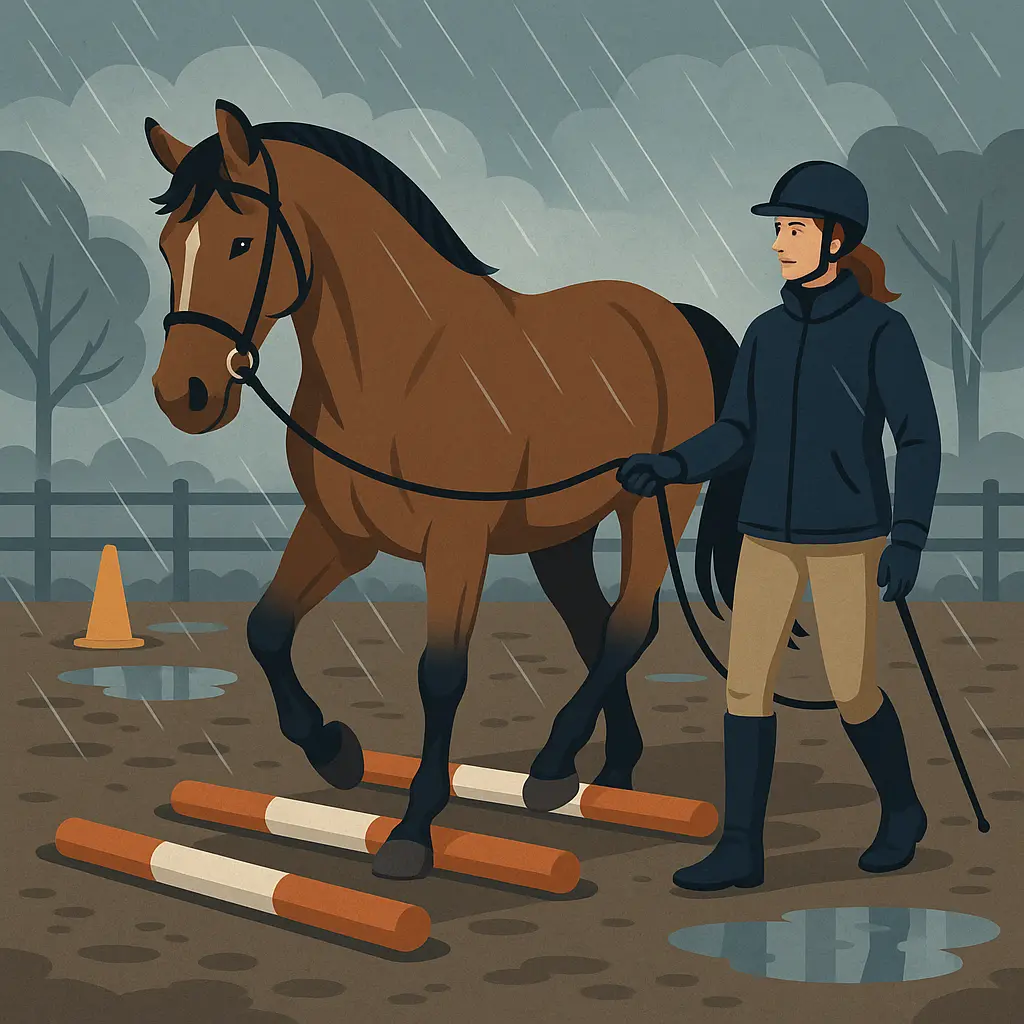
Safe challenge on slick footing: walk pole work
Use ground poles at the walk to challenge proprioception and core strength while avoiding speed on slick ground. Keep it slow, straight and methodical.
When the surface isn’t secure enough for trot or canter, poles become your best low-risk “gym equipment.” Try:
- Single pole “mindful steps” — step over, halt, rein back two steps, step forward and stand again.
- Three to four poles in a straight line — walk through with a relaxed neck, then repeat on a shallow serpentine to change bend.
- Fan poles — lead (or ride in walk if safe) through the wider arc first, then shorten the steps slightly by taking a line nearer the centre.
Keep repetitions short and purposeful. If you’re riding in walk only, use a neck-lowering stretch between efforts. Boots or bandages protect fetlocks and cannons if you tap poles; explore options in our horse boots and bandages collection.
Warm up longer in winter
In cold weather, extend your warm-up well beyond the usual 5–10 minutes; take significantly longer with progressive walk work, circles and transitions before asking for more.
Muscles and connective tissues are less elastic in low temperatures. A longer, layered warm-up improves comfort and reduces the chance of strains. Begin with purposeful in-hand or ridden walk on a long rein, add large circles and shallow loops, then sprinkle in lots of easy transitions before you think about any collected work. This approach matches British Eventing guidance that winter warm-ups should be notably longer, not just “a quick 5–10 minutes.” Signs you’re there: a swinging back, freer shoulder, longer stride and a softer chew on the bit.
Pro tip: If your arena is frozen and only safe for walk, keep it that way — don’t be tempted into trot. You can still achieve a productive session at the walk with poles, lateral positioning and frequent, precise transitions.
Indoor, stable and yard options that work
When ground is frozen or waterlogged, lunging, long reining, in-hand pole work and targeted stretching keep your horse supple and engaged without ridden work.
If you have access to an indoor school, make it your low-impact headquarters for transitions, poles and long reining. No indoor? A stable aisle or covered yard is enough for:
- Rein back with correct diagonal steps and a light pelvic tilt.
- Thoracic lifts (gentle pressure behind the girth line to raise the back).
- Ribcage bends and neck extensions (carrot stretches to shoulder, hip and between the knees).
- Leg lifts and slow tail pulls for balance awareness.
Many UK livery yards limit winter turnout; in those cases, a mechanical horsewalker is a useful tool for steady, low-impact movement on days you can’t ride or lead out. Riding schools also commonly modify lesson timing, intensity and content in poor weather — a sensible welfare-first model to mirror in your own plan.
For stabled days, combine grooming with mobilising stretches for a double win on comfort and connection. A clean, comfortable horse warmed by a good groom generally offers better posture and focus once you begin. For warm, dry rest after work, consider appropriately weighted stable rugs.
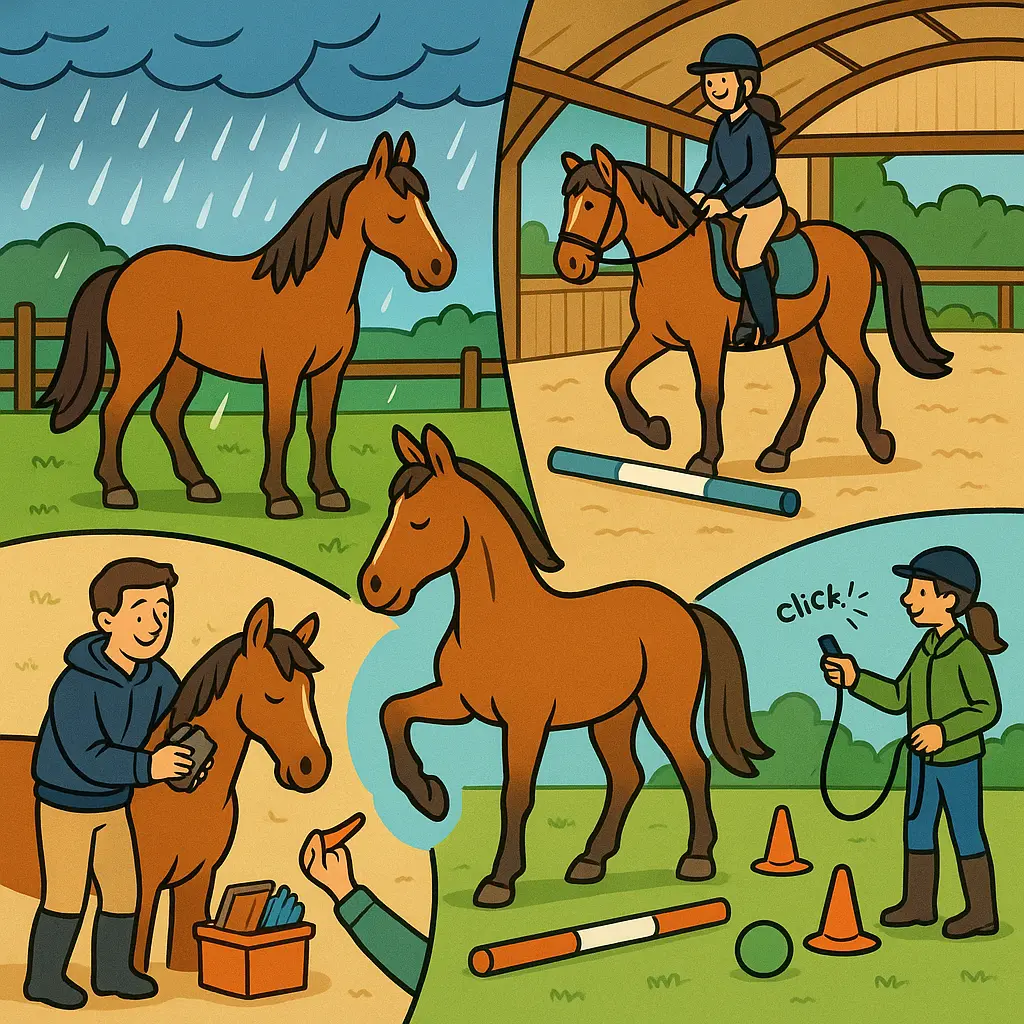
Plan UK winter routes and resources now
Pre-plan rain-proof routes, indoor arena access and horsewalker options before winter hits; you’ll train more consistently when the forecast turns foul.
Scout your area for firm tracks, lightly cambered lanes and sheltered bridleways that drain well; ask yard mates for those “hidden dry” options that only locals know. Keep roadwork slow and visible on gloomy afternoons with proper hi-vis for riders, pair it with a well-fitted riding helmet and supportive horse riding boots for your own grip and safety. If you must hack over boggy ground, limit it to once weekly to protect your horse’s legs and shoes, and prioritise a firmer route the rest of the time.
Book indoor arenas ahead of weather bombs and pencil in alternatives (e.g., long reining or pole patterns you can do in a yard). If your yard or a nearby facility has a horsewalker, arrange access early — winter slots go quickly.
Quick tip: Throughout the winter, note which fields, lanes and arenas hold up best after heavy rain or a frost. Build a “go-to” list on your phone with conditions, daylight and travel time so decisions are easy on stormy days.
Kit that makes storm‑proof training easier
The right kit keeps you safe, your horse comfortable and your sessions productive when the weather turns against you.
- Weather-ready rugs: Waterproof, breathable turnout rugs for sodden days; cosy stable rugs post-work to maintain warmth as temperatures drop.
- Leg protection: Brushing and overreach boots from our horse boots and bandages collection for lunging, pole work and horsewalker use.
- Visibility and rider safety: Stay seen in low light with hi‑vis and protect your head with certified riding helmets.
- Grooming and massage: Use our grooming tools to warm muscles and support relaxation before groundwork.
- Training motivation: Low-sugar rewards from our treats selection make carrot stretches, clicker work and desensitisation sessions more engaging.
At Just Horse Riders, we hand-pick winter essentials that endure UK conditions, from durable rug brands to protective boots that stand up to daily pole work. If you’re unsure which weight rug suits your horse on a cold, wet day, our team can help you narrow it down quickly based on clip, condition and stable routine.
Conclusion: keep the momentum when the weather won’t play
Bad weather doesn’t mean lost training. Shift to walk-first sessions, lean on transitions and poles, and extend your warm-up. Mix in stretching, desensitisation and grooming on stabled days and plan routes and resources before the next storm. With a consistent “little and often” rhythm, your horse stays fit, supple and confident — ready to pick up right where you left off when the sun returns.
FAQs
Is it safe to ride in heavy rain?
Yes — riding in rain can be valuable real-world training, helping horses accept wet footing and unexpected conditions they might meet at competitions. The caveat is safety: if the ground is slick, skip faster work and stick to walk-based training and simple pole patterns. For roadwork in downpours or low light, wear proper hi‑vis and a well-fitted riding helmet.
How much exercise does my horse need when I can’t ride?
Any movement is better than none. Even 20 minutes of consistent in-hand conditioning, lunging or pole work — done most days — maintains fitness. Think “little and often”: two to three short groundwork or lunge sessions midweek and a longer indoor-school session at the weekend if available.
Can groundwork really maintain my horse’s fitness?
Absolutely. In-hand pole work, lunging with transitions, carrot stretches and correctly ridden rein back maintain mobility, core strength and attention. Transition work in particular builds strength, balance and focus without needing big schooling spaces.
What’s the safest way to warm up in winter?
Take significantly longer than the usual 5–10 minutes used in warm weather. Start with active walk, add large figures and gentle lateral positioning, then progressive transitions before any collected work. Watch for a swinging back and longer stride before you ask for more.
Should I use a mechanical horsewalker in winter?
Yes, when turnout is limited and hacking is unsafe, a horsewalker provides useful low-impact, consistent movement. Use protective boots from our horse boots and bandages collection and keep sessions steady rather than fast.
Can I do meaningful training in the yard or stable?
Definitely. You can practice rein back, pelvic tilts, thoracic lifts, leg lifts, tail pulls and baited stretches in a stable aisle. Add simple desensitisation (new objects and sounds introduced calmly) and clicker-style behaviours, rewarding with small treats from our treats range.
What if a cool spell suddenly turns hot — how should I adjust work?
The British Horse Society highlights that when temperatures jump (e.g., 15°C to 25°C), horses need time to adapt; full acclimatisation to heat takes a minimum of two weeks of regular daily exercise. In a sudden warm spell, reduce intensity, ride earlier or later in the day, extend cool-downs and build back up gradually.