Irish horses are rightly prized in British yards, but getting one home takes more than booking a ferry. The smoothest, safest import starts with the right route, compliant paperwork, and a welfare-first travel plan.
Key takeaway: Choose the route that keeps the journey short, the paperwork clean, and the horse comfortable — and book a professional equine transporter who runs that route week in, week out.
Should you go via Northern Ireland or direct to Great Britain?
For most buyers, a direct Ireland–Great Britain ferry with an approved equine transporter is the simplest choice; a Northern Ireland landbridge can work well if you need a stopover with a compliant yard in NI. The right option is the one that minimises total journey time and border steps for your horse while meeting all legal checks.
Direct routes typically reduce handling and avoid an extra border. If your horse is close to a port with live animal facilities (for example, Dublin or Rosslare on the Irish side, and major GB ports that accept live equidae), a single sea crossing with short road legs is often kinder and more predictable. The Northern Ireland landbridge can make sense when a trusted transporter is based in NI or when the horse benefits from a rest at a layover yard there — but it adds another regulatory environment to observe and potentially one more inspection point. Whichever you choose, book a transporter that runs your chosen route regularly and confirms which ports accept live horses and how inspections are handled.
Quick tip: If you’re buying for competition and timing matters, ask transporters for their last four weeks of crossing patterns so you can see which routes are running reliably in current weather.
What paperwork do you need from Ireland into the UK?
You need a valid equine passport and microchip, the correct export health certification from Ireland, UK import pre-notification, and a licensed transporter with the right authorisations and journey plan. The exact documents vary by horse status and route, but the principle is the same: prove identity and health, pre-notify the move, and meet transport law.
At a minimum, expect to organise the following with your seller and transporter:
- Horse identification: current passport with registered microchip and accurate ownership details.
- Health certification: an Export Health Certificate issued in Ireland by an official veterinarian (your transporter or agent will usually coordinate this).
- Import pre-notification: the move must be pre-notified in the UK system before arrival; your agent/transporter typically completes this step.
- Transport compliance: transporter authorisation, driver/attendant competence certification, vehicle approval for equidae, and a journey log for long journeys where required.
- Border arrangements: confirmation that your chosen port(s) accept live horses and instructions for any inspection or document checks.
If you route via Northern Ireland, you must also meet the Ireland–NI movement rules at the point of entry to NI, then follow the correct process from NI to Great Britain. Your transporter should set this up and advise whether any extra stops or checks are needed. The golden rule is simple: every border you cross adds a set of rules — get each one right on paper before a wheel turns.
Pro tip: Build a single, shared digital folder for scans of the passport ID page, vaccination pages, test results (if any), the health certificate, transporter documents, and ferry bookings so everyone involved can access the same file set at a glance.
How do the routes compare on time, cost and risk?
Direct ferries usually involve fewer border steps and less waiting; the Northern Ireland landbridge can add an extra control point and potential layover, which can extend the overall journey. Your horse’s welfare is the decisive factor — the route with the cleanest run and least handling is usually your best bet.
Consider the whole door-to-door picture:
- Road miles vs sea hours: A longer drive to a smoother, shorter crossing can be better than a short drive to a slower or weather-prone sailing.
- Port capacity: Larger ports that regularly handle live equidae tend to run more predictably and offer clearer inspection procedures.
- Season and weather: Autumn gales and winter storms increase the risk of cancellations; spring/summer heat requires excellent ventilation and crossing times that avoid peak afternoon temperatures.
- Layovers: Planned rest at a professional, compliant yard can be beneficial on multi-stage trips; unplanned delays at ports are not. Book the crossing, not just the day.
- Hidden costs: Extra borders can mean extra paperwork handling, more driver hours, and stall fees; ask for a line-item quotation so you can compare routes fairly.
At Just Horse Riders, we recommend you benchmark three quotes from transporters who regularly run each candidate route, asking each to specify total time from collection to delivery, not just sailing time. The quickest, cleanest plan on paper usually translates to the calmest horse on arrival.
What welfare standards must the journey meet?
Legally and ethically, the horse must be fit to travel, carried in a suitable vehicle, and offered appropriate rest, feed, and water throughout the journey. Welfare overrides speed — a slightly longer, calmer plan is better than a rushed one that compromises care.
Build your travel plan around the horse, not the timetable:
- Fitness to travel: No signs of illness, lameness, late-term pregnancy, fever, or open wounds. Consult your vet if in doubt.
- Ventilation and footing: Vehicles should be well-ventilated with non-slip flooring and deep, dust-reduced bedding.
- Forage and water: Provide familiar forage, and plan regular opportunities for water; many horses drink better from a familiar bucket.
- Head position: Allow the horse to lower its head periodically to clear airways and reduce the risk of shipping fever.
- Handling: Load and travel in calm, well-fitted gear. Avoid tight rugs and ill-fitting boots that can rub when the horse is warm.
Practical kit makes a difference. Use soft, well-fitted travel protection such as transport boots or bandages, and adjust layers to the season — a breathable fly rug in warm, midgey weather or a light stable rug for cooler night crossings. If your horse will disembark into wet, windy conditions, keep a cosy winter turnout rug ready in the receiving vehicle. For brands known for travel-friendly fabrics and fit, browse WeatherBeeta rugs and LeMieux travel essentials.
Quick tip: Pack a small welfare kit within reach — thermometer, electrolyte sachets, spare headcollar/lead rope, salt block, soaked hay in sealed bags, a charged torch, and paper copies of all documents.
Which ports and facilities should you use?
Only use routes that accept live equidae and confirm Border Control Post or inspection arrangements with your transporter before booking. Not every sailing or terminal handles horses, and procedures can differ by operator and time of day.
Your transporter should advise on the best pairing of ports for your pick-up and delivery postcodes. Ask the following:
- Does this sailing accept live horses on the date and time I need?
- Where are documents checked and by whom? Is there a booking reference that links to the pre-notification?
- What happens if the sailing is delayed or diverted? Is there priority loading for live animals?
- Where can the horse rest if there’s a long wait at the port?
If your plan includes a planned rest in Northern Ireland, make sure the yard is set up for professional stopovers and that its registration status is in order (see the next section on EEN). Well-chosen facilities reduce risk; improvised stopovers increase it.
What changes in Northern Ireland from 1 February 2026?
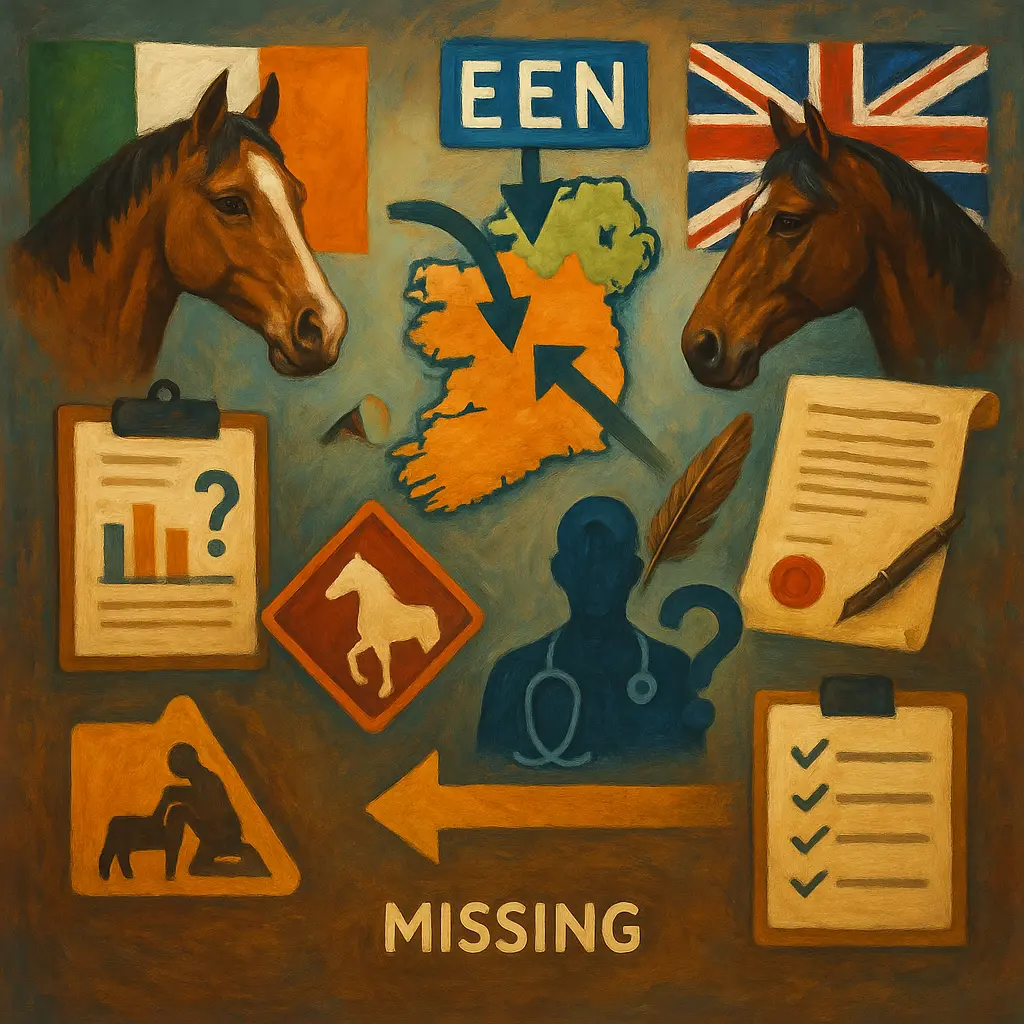
From 1 February 2026, premises in Northern Ireland that keep horses must hold an Equine Establishment Number (EEN). If your landbridge plan includes a layover at an NI yard, ensure that premises has its EEN before your horse arrives.
The EEN is an administrative requirement for NI-based premises where equines are kept. For buyers using a Northern Ireland stopover, this means one extra check on your planning list: confirm the yard’s EEN and keep a note of it with your journey documents. This NI registration does not replace any UK import requirement you must meet when your horse subsequently enters Great Britain; it sits alongside them. Professional transporters who regularly operate via NI will factor this into their booking paperwork.
Quick tip: Add a simple line to your transporter brief — “Please confirm the layover yard’s EEN (if NI) and the port inspection arrangements for my date/time” — and ask for this confirmation in writing.
How to choose a reputable equine transporter
Use a licensed equine transporter with current authorisations, competent staff, suitable vehicles, and recent experience on your chosen route. The right team prevents problems; the wrong one creates them.
Shortlist transporters who can provide, on request:
- Company authorisation and driver/attendant competence certification for transporting horses.
- Vehicle approval for equidae and a clear biosecurity routine between loads.
- Evidence of regular runs on your route in the past three months.
- A written itinerary that names collection, layovers, ports, sailing times, and anticipated arrival.
- Insurance details (public liability and care, custody, and control).
- A single named point of contact for live updates on the day.
Ask how they manage heat, cold, and ferry delays, and what they carry on board for water and forage. Calm, specific answers are a good sign. For loading and unloading, wear grippy, supportive footwear such as our range of riding yard boots and add hi-vis if you’ll be near vehicles at dawn or dusk.
Pre-travel checklist: kit, comfort and aftercare
Prepare early by checking the passport, vetting fitness to travel, packing the right kit, and planning a quiet decompression period on arrival. A well-prepared horse loads better, travels calmer, and settles faster at the new yard.
- Paperwork pack: passport, health certificate, transporter documents, ferry bookings, insurance, and contact numbers — plus printed copies in a clear wallet.
- Horse prep: practise loading calmly; introduce travel boots and a tail guard at home; feed as normal with ad-lib forage.
- Travel kit: well-fitted travel boots or bandages, a breathable layer (choose fly protection for warm conditions or a light stable rug for cooler nights), spare headcollar and lead rope, and a labelled water bucket.
- Welfare kit: electrolytes and any regular supplements, thermometer, first-aid basics, and a small grooming kit. Explore our curated supplements, including trusted options from NAF, and top up on grooming essentials.
- Arrival plan: bed down a quiet box, offer water and forage, check rectal temperature, and keep the first ride or lunge very light after a good night’s rest.
- Positive reinforcement: keep some favourite treats for loading and arrival to reinforce calm behaviour.
Pro tip: If your new horse is prone to midges or sensitive skin, pack a soft fly hood and a breathable LeMieux fly rug so you can protect them straight off the lorry in warm weather — especially at coastal yards.
Costs, timings and planning tips
Budget for the purchase, vetting, transport fee, paperwork handling, any inspections or layover costs, and insurance. Book early around bank holidays and peak weather windows, and always have a “plan B” crossing in case of sea conditions.
Work through these planning cues:
- Quotes: get three like-for-like quotes that show route, sailing(s), expected total hours door to door, and what’s included.
- Season: strong autumn/winter winds can disrupt sailings; summer heat demands cooler travel times and top-tier ventilation.
- Insurance: confirm cover for the horse in transit and any excesses for delays or cancellations.
- Contingency: ask your transporter how they handle diversions and whether an overnight rest is available if conditions deteriorate.
- Yard readiness: prepare a secure stable, forage, water, and quiet turnout options; have a clean turnout rug or stable rug ready based on forecast temperatures.
- Clearance deals: kit out economically by checking our Secret Tack Room clearance for travel-friendly bargains from brands like Shires and WeatherBeeta.
At Just Horse Riders, we find the most stress-free moves happen when buyers book the transporter before the vetting, share dates early, and keep comms in one WhatsApp group that includes the seller, transporter, and receiving yard.
FAQs
Can I tow the horse myself from Ireland to Great Britain?
You can, but most buyers use a professional equine transporter because cross-border movements require health certification, pre-notification, and familiarity with port procedures. A pro team reduces the risk of delays and ensures the horse’s care on board.
Do horses from Ireland have to quarantine when they arrive in Great Britain?
There is no routine quarantine for healthy horses arriving with the correct documents, but you should always plan a quiet decompression period at home, monitor temperature for a few days, and isolate new arrivals from the main herd as a sensible biosecurity measure.
What if the ferry is delayed or cancelled on the day?
Professional transporters plan for this with flexible bookings, contingency rest stops, and extra forage and water. Ask in advance how your transporter handles delays and whether they can arrange an overnight if conditions turn unsafe.
What should my horse wear for the crossing?
Well-fitted travel boots or bandages, a tail guard, and a breathable layer appropriate to the weather are standard. Avoid heavy rugs that can cause overheating; switch to a turnout rug or stable rug on arrival based on the temperature.
Do I need to register anything in the UK after my horse arrives?
Keep the passport accessible at the yard and update ownership details as required. Your transporter or agent should confirm if any follow-up notifications are needed based on your horse’s status.
Is the Northern Ireland landbridge more complicated than a direct route?
It can be, because it introduces another border environment and potentially a layover yard — which from 1 February 2026 must have an Equine Establishment Number (EEN). That said, experienced NI-based transporters run landbridge routes smoothly every week; choose the option that keeps the journey kind and the paperwork clean.
What signs of travel stress should I watch for after arrival?
Reluctance to drink, dullness, elevated temperature, nasal discharge, cough, or colic signs warrant prompt veterinary advice. Keep the first 48 hours low-key, offer plenty of water and forage, and consider supportive supplements as advised by your vet.
Bringing an Irish horse home should be exciting, not exhausting. Pick the route that genuinely shortens the day for the horse, book a transporter who knows that run blindfold, and prepare your kit and paperwork with the same care you’d pack for a big show. If you need travel-friendly rugs, boots, or calming, hydration, and recovery support, our team at Just Horse Riders is here to help you choose the right gear for the journey and the season.