Box rest is one of the hardest parts of equine care: you’re juggling healing, behaviour, and biosecurity while planning a safe return to turnout. Get that transition wrong and you risk re‑injury, colic, or months of lost rehab time.
Key takeaway: After box rest, turnout happens only with vet sign‑off, and you must reintroduce movement in stages — starting with controlled in‑hand walking or a small, fenced pen well away from the herd.
When is turnout safe after box rest?
Turnout is safe only once your vet approves it, and most horses should start with short in‑hand walks or a small, fenced pen rather than full herd access. For laminitis, horses typically need a minimum of three weeks’ complete box rest before any turnout is considered, and only if the condition has fully stabilised (Gil Riley, Equine Vet).
Different injuries demand different timelines. After colic surgery, controlled movement is essential to prevent herniation and help fluid drain along the incision, so vets often recommend several short walks daily to pick grass rather than immediate field turnout. For soft‑tissue injuries such as tendons, check ligaments or suspensories, the first “turnout” is actually structured walking on a hard, level surface — not a free run with the herd.
In UK yards, the British Horse Society (BHS) supports phased reintroduction to the outside environment, often via a small paddock or yard space to avoid slips on slick grass and overexcitement in big, poached fields — especially in wet autumn and winter. Always confirm the plan with your vet (ideally BEVA‑registered) so the specifics match your horse’s diagnosis and your yard’s footing and weather.
How to reintroduce movement safely
For tendon, check ligament or suspensory rehab, start with 10 minutes’ in‑hand walking twice daily on a hard, flat surface, building to 30 minutes twice daily over 6–8 weeks to promote orderly collagen repair (Gil Riley). Post‑colic surgery, use several short hand‑grazing walks per day to aid healing and reduce fluid accumulation along the incision.
Sticking to a surface you can control — the yard, a firm track, or a well‑rolled arena — reduces the risk of sudden twists and slips that undermine healing. Keep sessions calm and consistent. If legs fill because of restricted movement, combine this walking programme with correctly applied stable bandages and regular monitoring (more on bandaging below).
Handler safety matters too. Wear supportive, grippy footwear and a hat if your horse is fresh. Our customers often use sturdy horse riding boots and add hi‑vis for roadside walks in low winter light.
Pro tip: Keep a simple diary of time walked, surfaces used, and how the limbs felt before and after (cool, warm, filling). It helps your vet and farrier fine‑tune progress.
Biosecurity and yard management during recovery
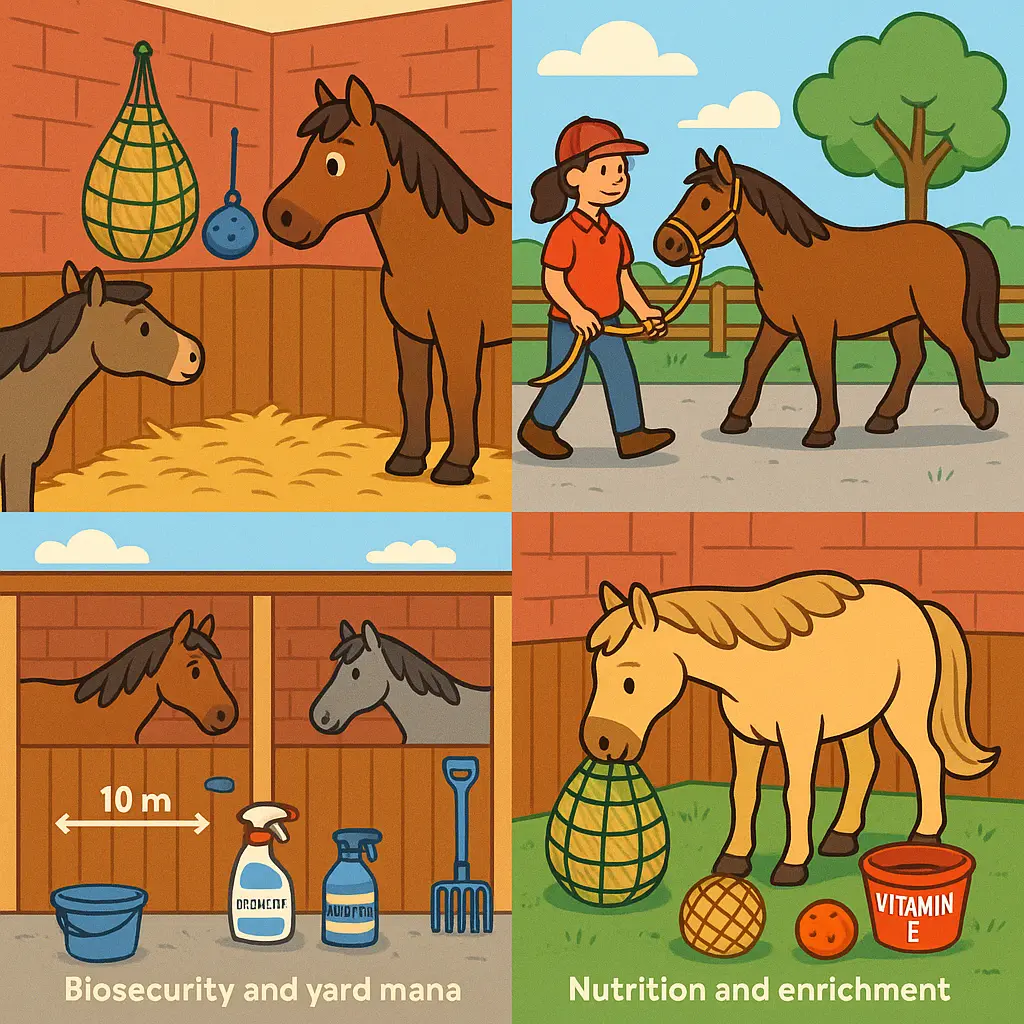
Keep a horse on box rest at least 10 metres from others and use separate, disinfected equipment to cut infection risk in busy UK livery settings (Blue Cross). Illnesses can spread quickly when stables share tools or horses touch nose‑to‑nose over partitions.
Set up a simple biosecurity routine: designated headcollar and leadrope, your own bucket and grooming kit, and a daily disinfectant wipe‑down of frequently touched items. If your vet approves small‑pen turnout, site it away from communal gateways to reduce stress, contact, and cross‑contamination. This spacing also prevents bullying from field mates trying to interact over the fence.
Feeding on box rest and early turnout
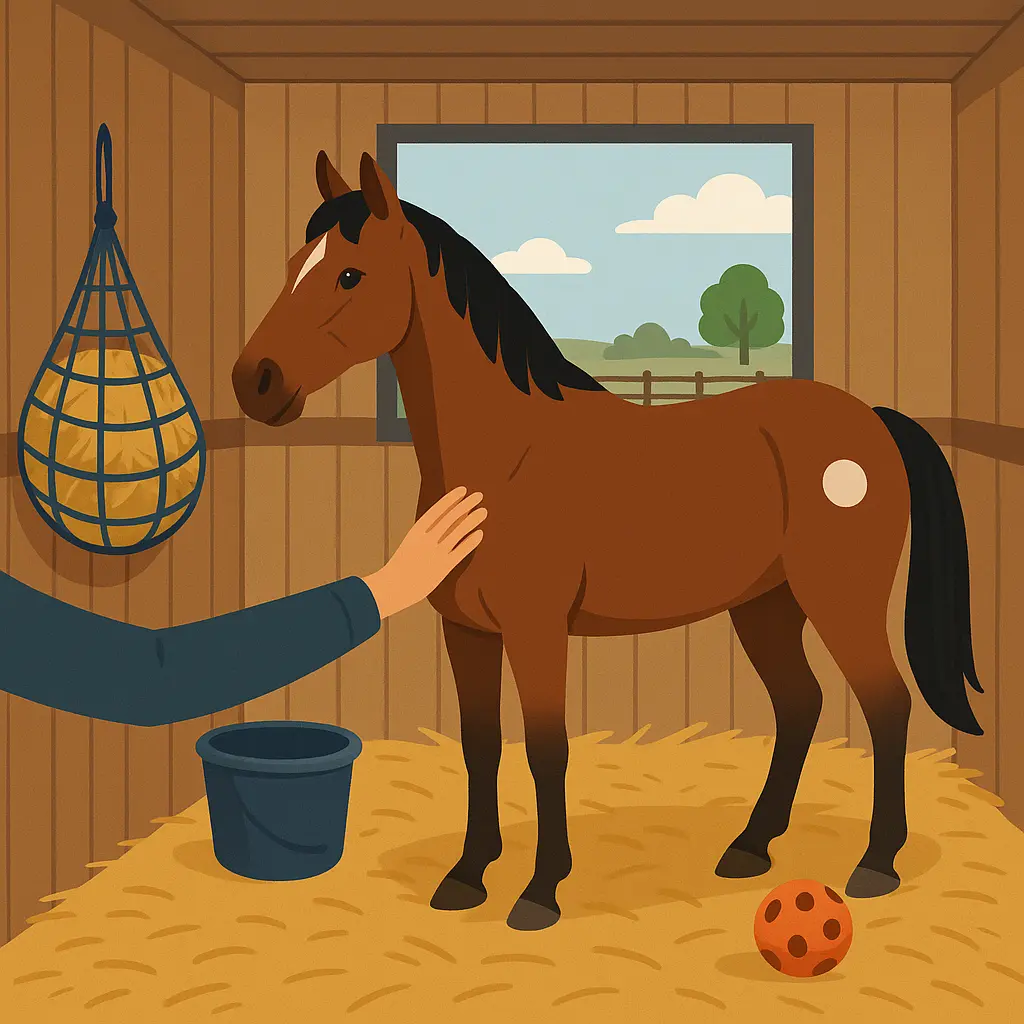
Feed moderate‑protein hay under 10% and avoid high‑protein alfalfa (often over 15%) to prevent excessive urination; after surgery, skip grain concentrates for the first 10–14 days to support recovery (Horse & Hound; Dengie). For many box‑rested horses, low water‑soluble carbohydrate (WSC) soaked hay is ideal to manage calories while maintaining gut motility.
Veterinary nutrition guidance emphasises precision: weigh forage, soak if needed, and split into multiple small offerings through the day to mimic natural browsing and curb boredom. Consider a vitamin E top‑up when fresh forage is limited to support muscle and immune function; shop suitable options in our supplements range including trusted brands like NAF.
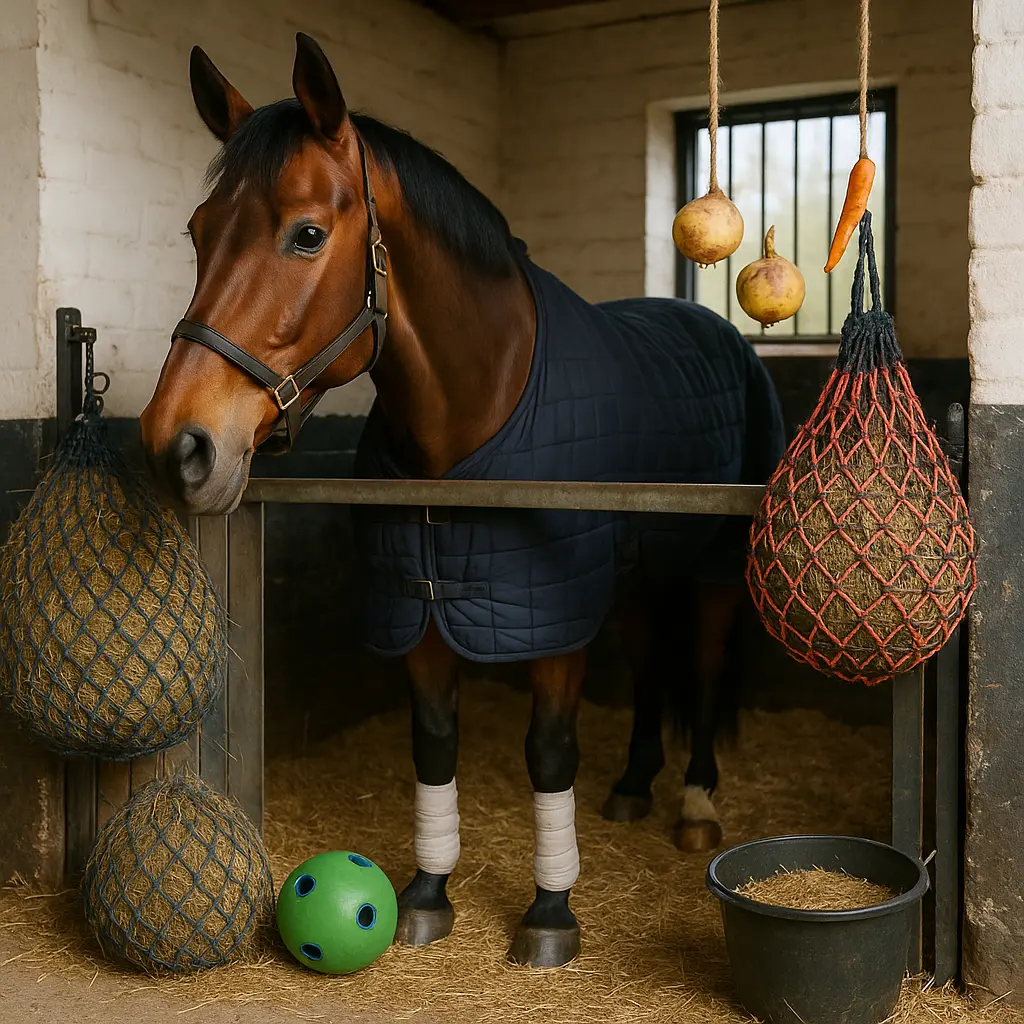
Quick tip: Use small‑holed nets or slow feeders to extend eating time without adding calories — this protects gut health and helps keep stress behaviours at bay. If your vet allows, a little straw chaff can add low‑calorie chew time, supporting winter gut motility when movement is restricted (impaction risk rises when activity drops).
“Accurate weight estimation, careful energy management and thoughtful forage preparation are key to avoiding complications... using nutrition as a tool to preserve wellbeing, reduce stress and promote healing.” — Edward Busuttil, MRCVS, via Horse & Hound
Managing behaviour and mental health
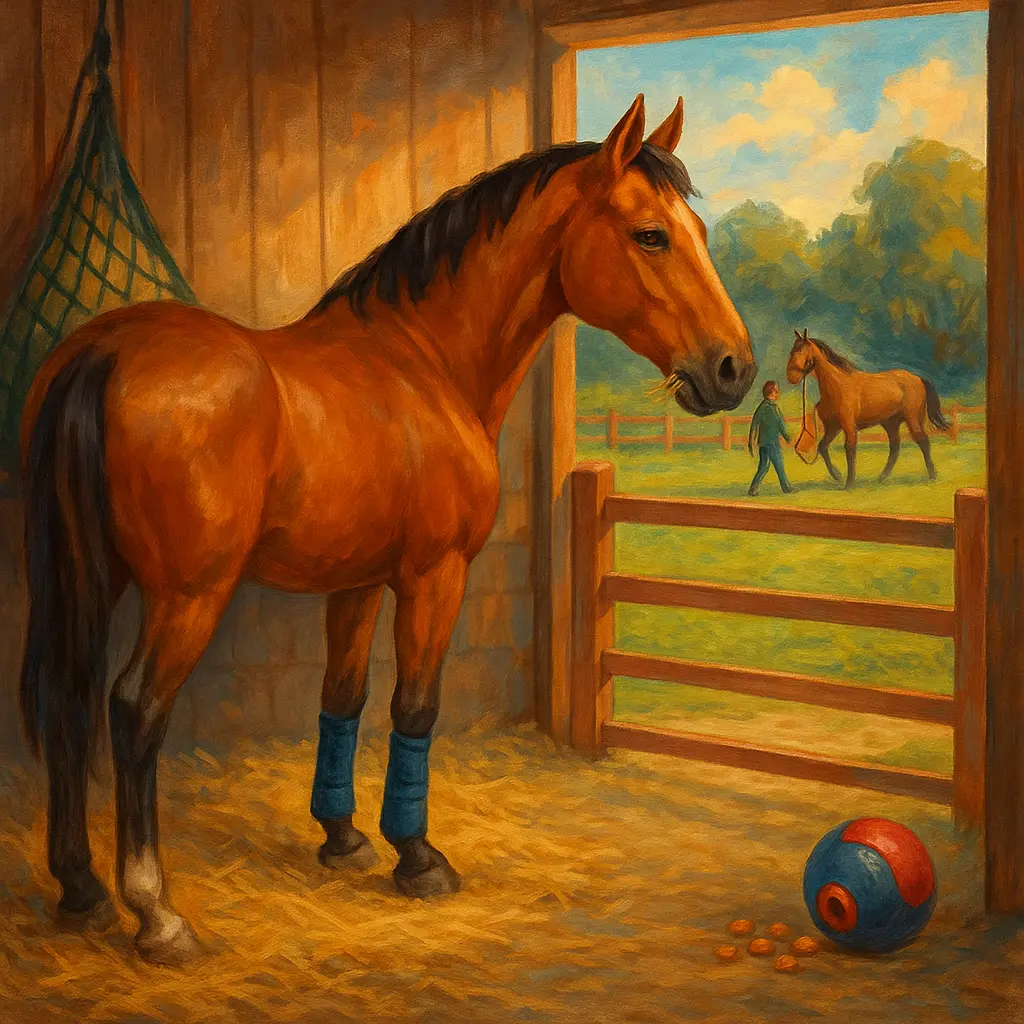
Provide structured enrichment and, if vet‑approved, brief hand‑grazing or small‑pen access to prevent frustration that risks re‑injury. Bored horses weave, crib, or bar‑walk; busy mouths and minds stay calmer.
Rotate enrichment safely: two or three small hay nets at varying heights (kept within safe ranges to avoid strain), a bowl with a handful of chopped chaff to “forage”, or a swede/hanging root veg to mimic browsing. Snack balls filled with low‑calorie pellets can occupy stabled horses without spiking energy. Explore boredom busters in our gifts and stable toys and top up low‑sugar rewards from our treats collection for calm in‑hand sessions.
“Speak with your vet to see if your horse can be turned out for short periods, taken for walks to graze in hand or have access to a small paddock or outside yard.” — Justine Harrison, CEBC ABTC‑AAB, via BHS
For horses that come out of the stable “on springs”, plan your first walks at quieter yard times. Wear a hat, gloves, and grippy boots, and choose a non‑slip surface. If you’ll step onto lanes, add hi‑vis layers for winter dusk and dawn, and keep sessions short and positive.
Early turnout setup: pens, rugs and footing
Start with a small fenced pen or yard, sited away from the herd and gateways, and rug appropriately for UK weather to prevent chills or slips in wet conditions. The BHS and vets favour small, supervised spaces first, because full herd turnout risks overexertion, slips on slick grass, and bullying.
Pick a firm, even area with good drainage; deep mud encourages strains and hoof infections, while frosty grass can be treacherous. If your horse will stand out for short periods, choose a field‑safe rug that won’t overheat during light movement. Browse reliable, weatherproof options in our turnout rugs selection, including popular WeatherBeeta designs. For stabled time, layer appropriately with our stable rugs to maintain comfort without creating excess sweat that may irritate healing skin or bandage areas.
In summer rehabs, consider lighter coverage or targeted protection like a breathable fly rug if flies aggravate wounds or scars. Always remove rugs daily to check the body for heat, swelling, or rubs.
Pro tip: Build your pen with solid, visible fencing and no low rails that invite limb entrapment. If your horse is prone to overdoing it, place a hay net at one end to “anchor” them to browse calmly while outdoors.
Daily monitoring and red flags
Check legs and body twice daily for heat, swelling, new bumps, or lameness, log temperature–pulse–respiration (TPR), and call your vet if droppings reduce — a key impaction colic risk on low movement. Post‑surgical horses also need close inspection of the incision line for fluid build‑up or changes.
Restricted movement often causes stocking‑up; correctly applied stable bandages can help when used consistently and re‑applied twice daily with even pressure (Cliffe Equine). Combine them with controlled walking on flat, firm surfaces to stimulate circulation. Find supportive wraps and pads in our horse boots & bandages collection.
Reduce infection spread by taking your own temperature readings and using dedicated grooming tools. A tidy routine makes issues obvious sooner; a basic yard kit from our grooming range helps keep checks fast and consistent.
Essential kit checklist for box rest and first turnout
Set yourself up with the right tools and your horse’s recovery stays calmer and safer. Here’s what to prioritise and typical UK price ranges you can budget for.
- Stable bandages and pads (£15–£40 per set): manage overnight limb filling; re‑apply twice daily. See our boots & bandages.
- Slow‑feeder hay nets/small‑holed nets (£10–£25): extend low‑calorie forage time and protect gut health.
- Turnout rugs (£50–£150): weather protection for short, supervised pen time in damp UK conditions. Explore our turnout rugs.
- Stable rugs (£50–£120): maintain comfort in the stable without overheating. Browse stable rugs.
- Vitamin E and recovery support (£20–£40): compensate for reduced fresh forage; shop our supplements including NAF.
- Enrichment toys/snack balls (£15–£35): safe mental stimulation without excessive movement; see our gifts and boredom busters.
- Handler safety: supportive riding boots and, for winter roadsides, hi‑vis.
- Budget‑savvy backups: check our Secret Tack Room clearance for spares you won’t mind getting muddy in a rehab pen.
“Box rest, in association with walking out, gives structures the space to repair through the laying down of collagen fibres (or in the case of fractures, bone).” — Gil Riley, Equine Vet, via Gil Riley Equine Vets
At Just Horse Riders, we recommend agreeing a written week‑by‑week plan with your vet, then using your kit list to make each step easy to follow — the fewer decisions you need to make daily, the lower the stress for you and your horse.
Conclusion: make the first steps out the safest ones
Post‑box‑rest turnout isn’t a date on the calendar — it’s a phased programme your vet signs off, blending controlled walking, careful feeding, strict biosecurity, and calm enrichment. Start with in‑hand work or a small pen, keep your distance from the herd, and monitor like a pro. With the right routine and the right kit, you’ll protect months of healing in those precious first days back outside.
Need help choosing bandages, rugs or recovery supplements? Our team is here to help — explore supportive bandages, weather‑ready turnout rugs, and targeted supplements to keep rehab on track.
FAQs
How soon after box rest can I turn my horse out with the herd?
Not immediately. Get vet approval first, then start with short in‑hand walks or a small fenced pen to control movement and monitor healing. Full herd turnout risks overexertion, slips, and bullying that can undo progress (Gil Riley; BHS).
Is a fenced‑off pen safer than herd turnout right after box rest?
Yes. A small pen or yard gives essential exposure to the outside without herd pressure, aligning with BHS and veterinary guidance, and reduces infection risk when placed at least 10 metres from other horses (Blue Cross).
What are the first signs that early turnout or walking is going wrong?
Heat or swelling in limbs, new lumps, lameness, wound changes, behavioural stress (weaving, box‑walking), or fewer droppings (impaction risk). Stop, cool the legs if advised by your vet, and call the practice for guidance.
How should I structure controlled walking for a tendon or suspensory injury?
Begin with 10 minutes twice daily on a hard, flat surface and build to 30 minutes twice daily over 6–8 weeks, maintaining calm, straight lines and good footing (Gil Riley).
What should I feed on box rest to avoid weight gain and colic?
Use moderate‑protein hay (under 10%), often soaked to reduce WSC, split into multiple small feeds via slow nets. Avoid high‑protein alfalfa (over 15%) if it drives excess urination, and skip grain concentrates for 10–14 days post‑surgery (Horse & Hound; Dengie).
Should I bandage my horse’s legs during and after box rest?
Often yes, if swelling occurs. Apply stable bandages correctly with even pressure and re‑apply twice daily, then combine with controlled walking; remove bandages for checks and for monitored pen turnout to assess progress (Cliffe Equine).
My horse has had laminitis — when can we graze?
Only after your vet confirms stability; laminitis cases generally need at least three weeks’ complete box rest before any turnout. Start with brief, controlled hand‑grazing or a small pen and use low‑WSC forage in the stable to minimise relapse risk (Gil Riley).