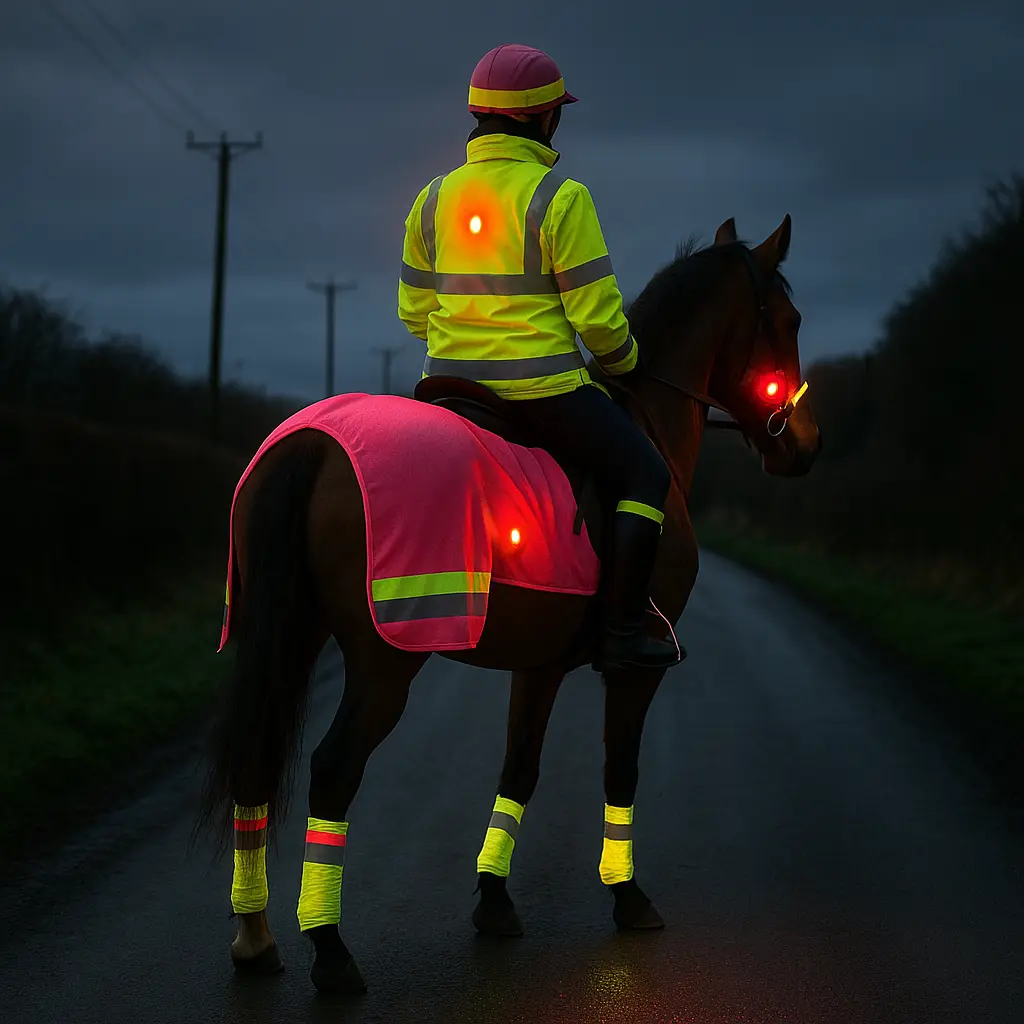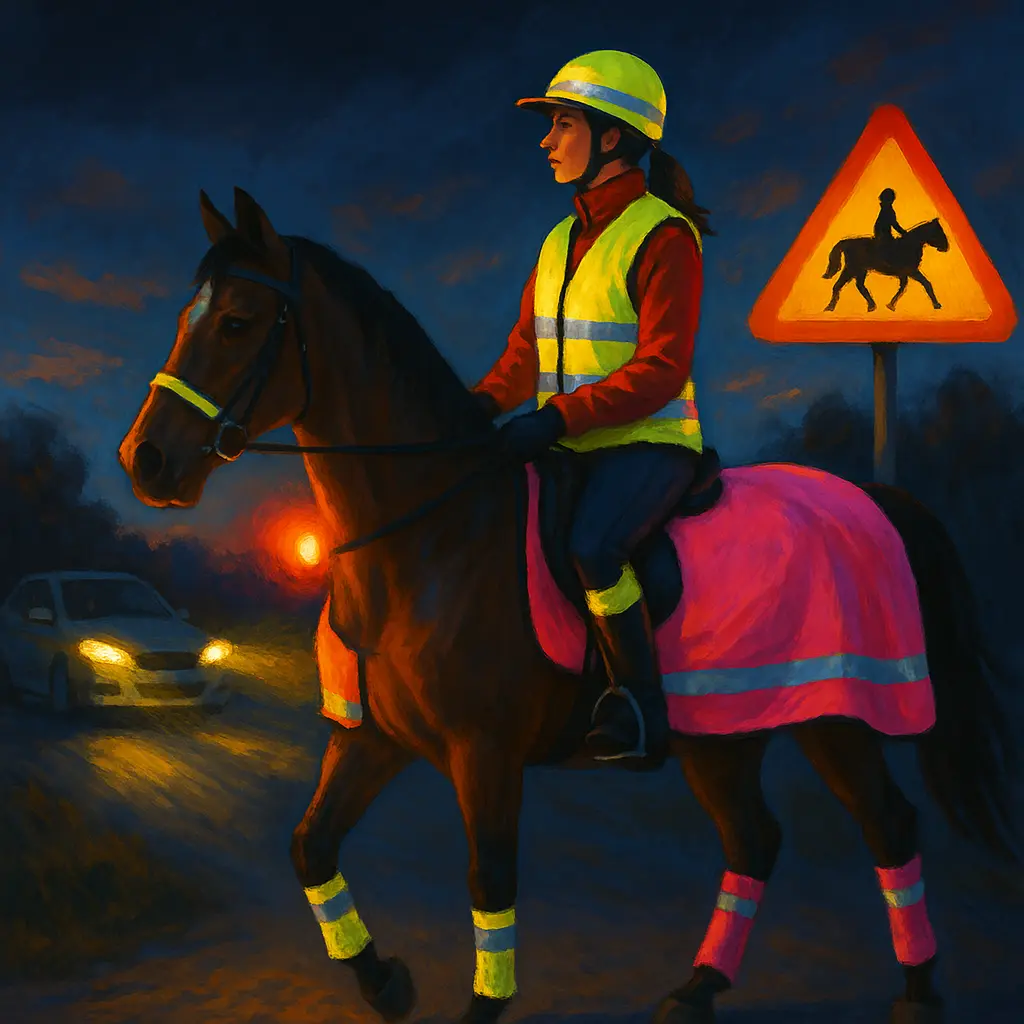
On busy UK roads and shaded bridleways, being seen early is everything. The right hi‑vis colours and placement can turn a near-miss into a safe pass — and the data backs it up.
Key takeaway: Mix contrasting hi‑vis colours across both rider and horse, combine fluorescent, reflective and LED elements, and choose certified kit — this maximises your visibility in all UK light conditions.
Why hi-vis matters on UK roads
Hi‑vis gives drivers up to 3 extra seconds to react to you, and aircrew can spot hi‑vis half a mile sooner than non‑hi‑vis clothing. Those seconds and metres are lifesaving on narrow lanes and faster A‑roads.
The British Horse Society (BHS) reports that hi‑vis can provide motorists an additional three seconds of reaction time — enough for a driver at 30 mph to cover more than 40 metres more safely. Ministry of Defence research has similarly shown helicopter pilots detect hi‑vis from much farther away — up to half a mile earlier than non‑hi‑vis — highlighting the profound difference high‑visibility makes in search, rescue, and general detection scenarios.
While hi‑vis isn’t a criminal legal requirement, it is part of the Highway Code guidance for riders. Ignoring it can count against you in civil negligence claims after an incident because courts look at what’s reasonable in the circumstances. The updated Highway Code hierarchy now explicitly prioritises vulnerable road users, including horse riders; drivers should slow to under 10 mph and give at least 2 metres when overtaking horses.
At a bare minimum, the BHS recommends a reflective vest for the rider and reflective boots or wraps for the horse so both are clearly defined from different angles.
What colours make you most visible?
The most visible approach is to wear mixed, contrasting hi‑vis colours across rider and horse that stand out against your local environment. In the UK, orange and pink cut through autumn browns; yellow and pink often stand out better in summer crops and greenery.
Colour works because it contrasts with your background. One all‑yellow outfit may blend into oilseed rape or bright summer hedging, while pink or orange can pop against that same scene. Conversely, in autumn when leaves and hedgerows brown off, yellow may be less distinct than orange or pink. This is why the best strategy is to combine colours:
- Autumn and early winter: Strong orange and pink often beat yellow against brown leaves and muddy verges.
- Late spring and summer: Yellow and pink together give excellent contrast against lush greenery and flowering crops.
- Mixed terrain or variable weather: Alternate colours across items — for example, a pink rider tabard with yellow horse leg bands — to stay highly visible whichever backdrop you ride through.
Quick tip: Spread colour across height and width. A bright tabard at chest height plus contrasting leg bands on your horse improves detection from distance and from oblique angles on twisty lanes.
Fluorescent vs reflective vs LEDs: when to use each
Fluorescent fabric is for daylight, reflective strips are for low light and darkness, and LEDs boost visibility especially at dawn, dusk, and in dull or changing conditions. For maximum safety, combine all three.
Fluorescent materials convert UV light into visible light, making them appear brighter in daylight — perfect for sunny rides and even overcast daytime. Reflective elements, typically silver or white tape, bounce light straight back to its source, so they only truly “switch on” when headlights or torches hit them. LEDs actively emit light, extending your visibility window into those risky in‑between times when fluorescent loses punch but you don’t yet have full headlight beams on you (or you’re on shaded bridleways).
“Riders should wear lights wherever possible. LEDs are an effective way to boost visibility, especially in dull or fading light.” — British Horse Society (via Transport Research Laboratory), reported by Horse & Hound
Layer your materials and tech:
- Start with a fluorescent tabard or jacket (daylight visibility).
- Add broad reflective panels on rider and horse (headlights/night visibility).
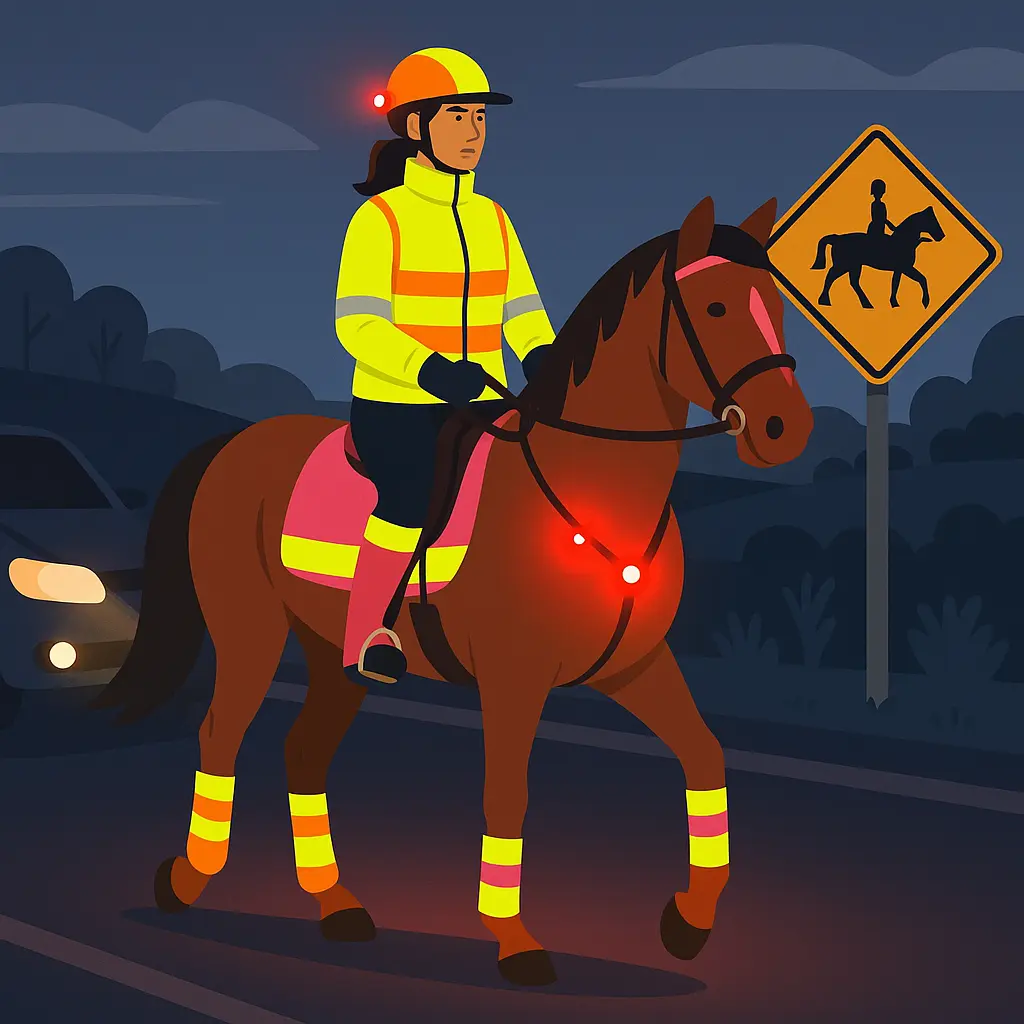
- Clip on LED beacons to shoulders, breastplates, or stirrup leathers to “light” your width and motion.
Pro tip: Choose steady‑burn LEDs for a clear outline and add a slow pulse setting for extra attention on long, straight roads. Ensure any lighted products carry appropriate CE/UKCA conformity marking.
How much hi-vis is "enough" for UK riding?
At minimum, wear a hi‑vis vest/tabard and fit reflective leg bands on your horse; add more coverage and lights at dawn, dusk, in poor weather, or on faster roads. UK courts assess “reasonableness” for the conditions.
The BHS baseline is clear: rider hi‑vis on the torso, and reflective lower‑limb visibility on the horse. Beyond that, build up for the situation — more coverage and lighting in winter’s short days, fog, rain, woodland shade, or when you expect higher traffic speeds.
“What the law or courts would be looking at is what is reasonable in the circumstances. If you were hacking out at dusk or dawn it could be argued that you should be wearing more hi-vis than in the middle of the day.” — Rebecca Stojak, Equine Solicitor, Head of Equine Law Team at Geldards LLP, via Your Horse
Remember, the Highway Code advises riders to wear light‑coloured or fluorescent kit in daylight and reflective kit at night or in poor visibility. While you won’t be fined for skipping hi‑vis, a breach can be referenced in negligence claims after an accident. Pair your visibility with foundation safety kit too — a properly fitted helmet is non‑negotiable for any roadwork. Explore certified options in our riding helmets collection.
Quick tip: If you and your horse part company, hi‑vis on the horse helps drivers and searchers spot and avoid them quickly. Tail guards, exercise sheets with reflective panels, and leg bands are especially effective.
Where to place hi-vis and lights on rider and horse
Place hi‑vis and LEDs on the shoulders, chest/back, flanks, and lower limbs to show your full width and movement from all angles. Cover both rider and horse for 360‑degree visibility.
Think about how drivers see you: from ahead on a bend, from behind in a hedge‑lined lane, or half‑obscured by parked cars. You want a recognisable, moving outline in every scenario:
- Rider torso: A fluorescent/reflective tabard or jacket on the chest and back defines your core shape.
- Shoulders and head: Reflective shoulder bands and a hat band help drivers judge height and width. LED clips on shoulder straps emphasise your outer edges.
- Horse legs: Reflective or LED leg bands turn every stride into a visibility signal; movement draws the human eye.
- Horse flanks and quarters: An exercise sheet or quarter sheet with large reflective panels increases your side‑on signature.
- Tail: A bright tail guard with reflective strips adds a high, centred marker that cars pick up quickly.
- Front profile: Add a breastplate/neck strap with reflective tape or a small white LED to indicate your approach on twisty lanes.
For leg protection that also boosts visibility, browse horse boots and reflective bandages/wraps. Combining protection and hi‑vis helps you standardise your hacking routine so nothing is forgotten.
Pro tip: Stagger colours. For example, pink on the rider’s torso and yellow on the horse’s legs gives a wide, high‑contrast profile that’s hard to miss.
Buying hi-vis that actually meets UK standards
Choose garments certified to EN 17353:2020 for leisure riders or EN ISO 20471:2013 for professional use; EN1150/BSEN1150 are also accepted for non‑professional kit. Accessories such as armbands and leg bands should meet EN13356, and hi‑vis clothing is Category II PPE for people only.
Not all “neon” is created equal. Certified hi‑vis has been tested for brightness, reflectivity, and performance in real‑world conditions. Look for clear labelling, CE/UKCA marks, and a standard reference on the garment or its packaging:
- EN 17353:2020 — high‑visibility for medium‑risk situations, ideal for leisure riding.
- EN ISO 20471:2013 — high‑visibility clothing for professional use in higher‑risk areas (e.g. road workers).
- EN1150 or BSEN1150 — recognised for non‑professional hi‑vis garments.
- EN13356 — for accessories such as detachable belts, armbands, and leg bands.
“To ensure your high-vis wardrobe is effective, look out for BSI approved standards BSEN1150 or EN1150. This is the main standard that ensures you’ll be clearly seen.” — Horse & Rider Magazine
Hi‑vis garments are classified as Category II Personal Protective Equipment, so they carry defined testing and labelling requirements. Note that the PPE directive applies to people, not animals — so exercise sheets and other horse‑worn items sit outside clothing PPE rules, even though reflective accessories like leg bands should still meet EN13356. For easy, certified choices, explore our curated rider hi‑vis collection, including pieces from trusted brands such as Shires that focus on practical visibility for UK hacking.
Seasonal hi-vis strategies for UK riders
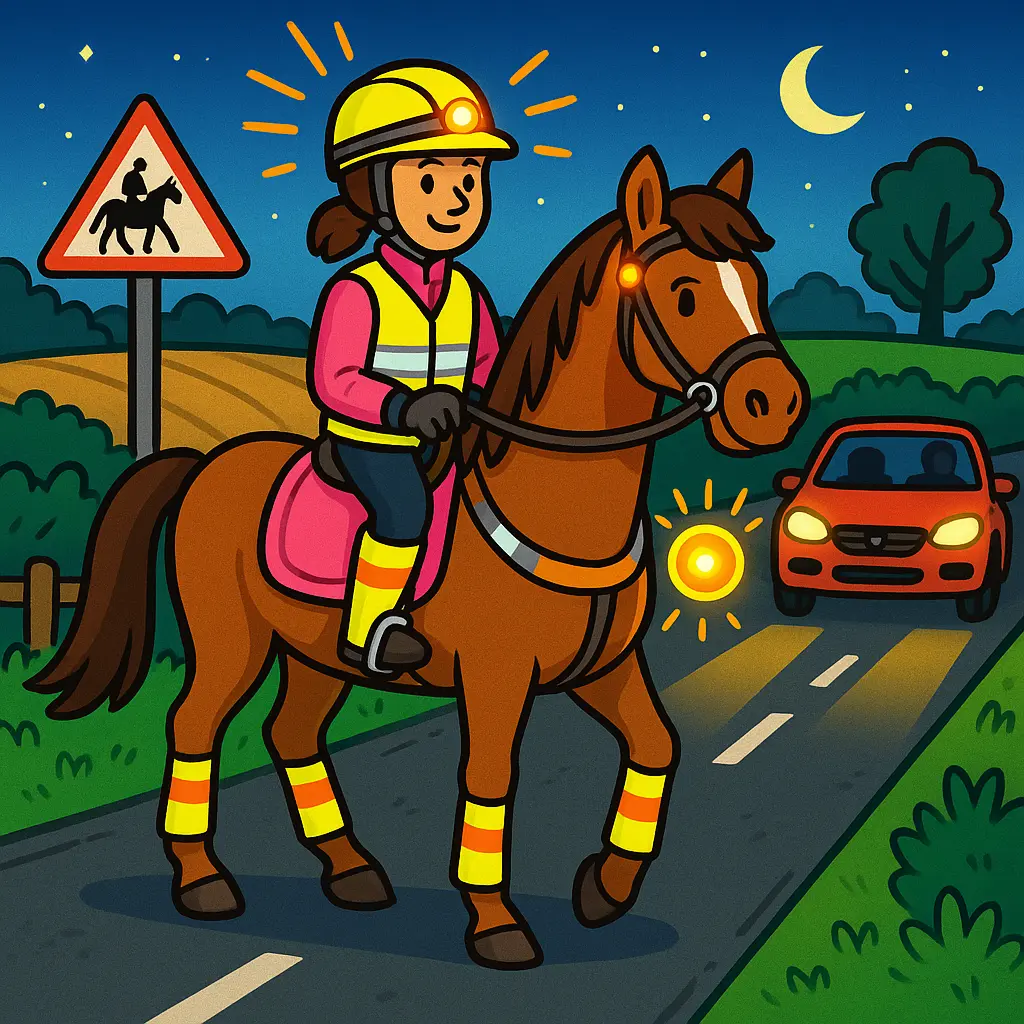
Increase coverage and add LEDs in winter’s short, dim days; rotate contrasting colours through spring and summer to avoid blending with crops and greenery; and always adapt to your terrain.
UK seasons and landscapes change the visibility game. Use this quick framework to stay ahead:
- Winter (limited daylight): Wear a fluorescent/reflective jacket or tabard plus a reflective exercise sheet; add LED shoulder and leg lights. Expect to meet poor light even at midday during heavy overcast.
- Autumn (leaf fall, brown hedges): Orange and pink stand out well; add reflective tail guards and leg bands to make motion obvious at a distance.
- Spring and Summer (green hedges, flowering crops): Yellow paired with pink cuts through both lush hedgerows and yellow crops like rapeseed. Expect strong sun and deep shade on lanes — fluorescent for sun, reflective panels for shaded patches.
- Woodland and bridleways (patchy light): Combine bold fluorescent colour with wide reflective panels; LEDs help you “ping” out from shadowy backgrounds.
- Open fields and moorland: Wind and distance matter — bigger reflective surfaces (sheets, wide bands) and LEDs give an unmistakable silhouette.
Pro tip: Keep a small rotation of colourways (e.g. pink and yellow tabards) ready on your tack hook. Choose the combo that contrasts most with what you see out the window before you ride.
A practical kit list that covers every angle
Start with a fluorescent/reflective tabard for you, reflective leg bands for your horse, and LED lights for shoulders/legs; then add hat bands, breastplates, and an exercise sheet for 360‑degree coverage.
At Just Horse Riders, we recommend building a simple, repeatable system so nothing gets missed on a busy yard day. Use this checklist to cover the key visibility zones:
- Rider torso: Certified tabard or jacket (fluorescent + reflective) — see our rider hi‑vis range.
- Rider head/shoulders: Reflective hat band and shoulder bands; clip‑on LEDs for width.
- Horse legs: Reflective/LED bands or boots for front and hind limbs — explore horse boots and reflective wraps.
- Horse flanks/quarters: Reflective exercise or quarter sheet for side‑on visibility.
- Tail: Fluorescent tail guard with broad reflective strips.
- Front profile: Reflective breastplate/neck strap; optional small white LED to signal approach on bends.
- Footing for the rider: Grippy, supportive footwear for roadwork and mounting from verges — see our horse riding boots.
- Budget‑savvy backups: Keep a spare tabard and leg bands in the lorry or tack room — check our Secret Tack Room clearance for deals.
Quick tip: Pack your LEDs and spare batteries inside your hacking waistcoat so they’re always with you. Make “lights on” part of your pre‑ride habit any time the sky looks changeable.
Finally, remember that visibility is only one element of a safe and enjoyable hack. Pair your hi‑vis with well‑fitting, season‑appropriate clothing for comfort and control on longer road sections; our hi‑vis collection integrates easily with breeches and outerwear so you’re not choosing between safety and practicality.
FAQs
Is wearing hi-vis legally required for horse riders in the UK?
No. There’s no specific law mandating hi‑vis for riders, so you won’t be fined for not wearing it. However, it is part of the Highway Code guidance, and ignoring it can be cited in civil negligence claims after an accident.
What colour hi-vis is best for winter riding?
Use colours that contrast with your environment. In autumn and early winter when vegetation browns, orange and pink often stand out better than yellow. Combine colours across rider and horse for the best multi‑terrain visibility.
How much hi-vis should I wear?
The BHS minimum is a hi‑vis vest/tabard for the rider and reflective leg bands for the horse. Add more coverage and LEDs at dawn/dusk, in poor weather, or on busier, faster roads — the legal test is what’s “reasonable” for the conditions.
What’s the difference between fluorescent and reflective hi-vis?
Fluorescent materials shine brightest in daylight by converting UV light, while reflective materials bounce light back to the source (e.g. car headlights) and work best at night or in poor visibility. Use both together for round‑the‑clock visibility.
Do LEDs really make a difference?
Yes. BHS‑commissioned Transport Research Laboratory work shows lights make riders more visible, especially in dull or changing light. Position LEDs on shoulders and legs to show your width and movement.
Which standards should I look for when buying hi-vis?
For leisure riders, look for EN 17353:2020; for professional‑grade gear, EN ISO 20471:2013. EN1150/BSEN1150 are also recognised for non‑professional garments. Accessories like armbands/leg bands should meet EN13356, and LEDs should carry CE/UKCA marking.
Do hi-vis accessories for my horse need to be certified?
Horse‑worn items aren’t covered by clothing PPE rules, but detachable accessories (armbands, belts, leg bands) should meet EN13356 and be permanently marked. Choosing certified accessories ensures proven reflectivity.
With the right colour mix, certified kit, and smart placement, you dramatically increase how early drivers spot you — giving everyone time and space to pass safely. Build your go‑to setup from our carefully selected hi‑vis essentials and enjoy safer hacks all year round.