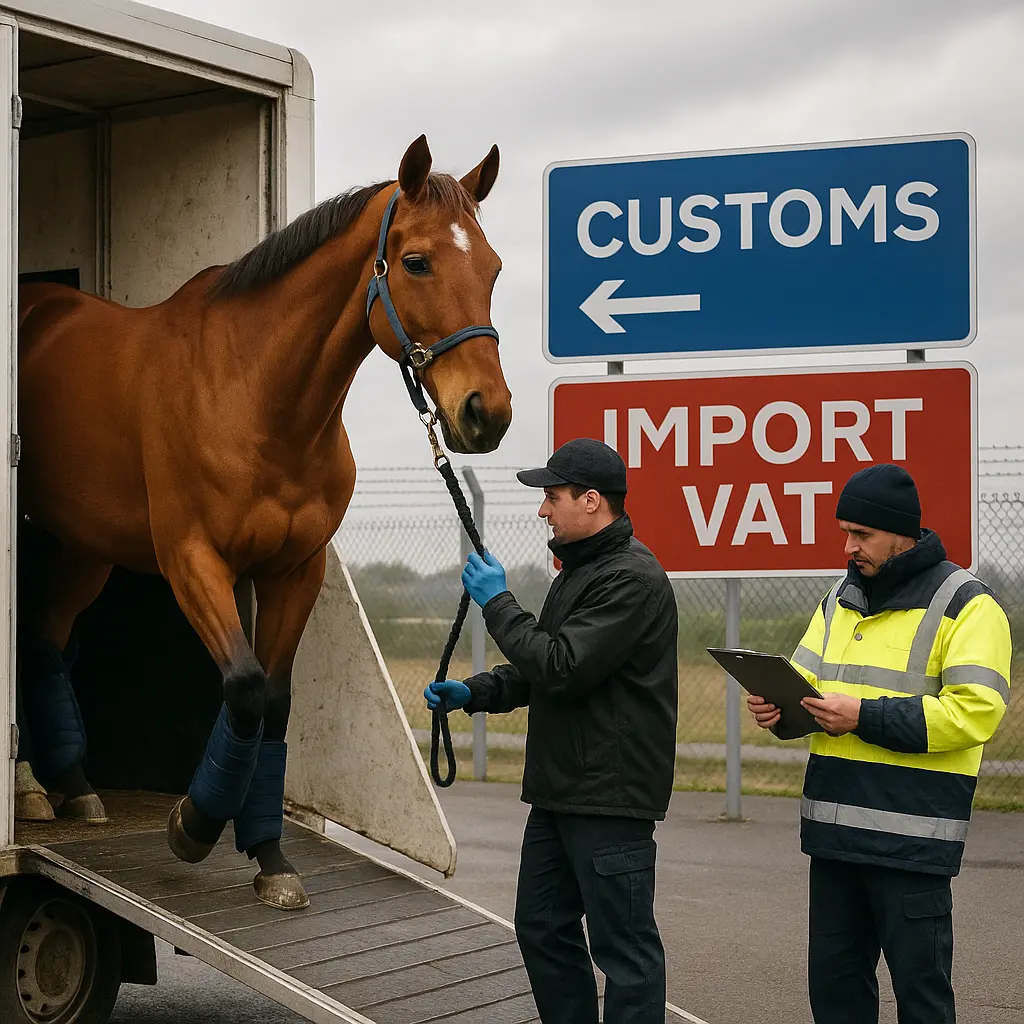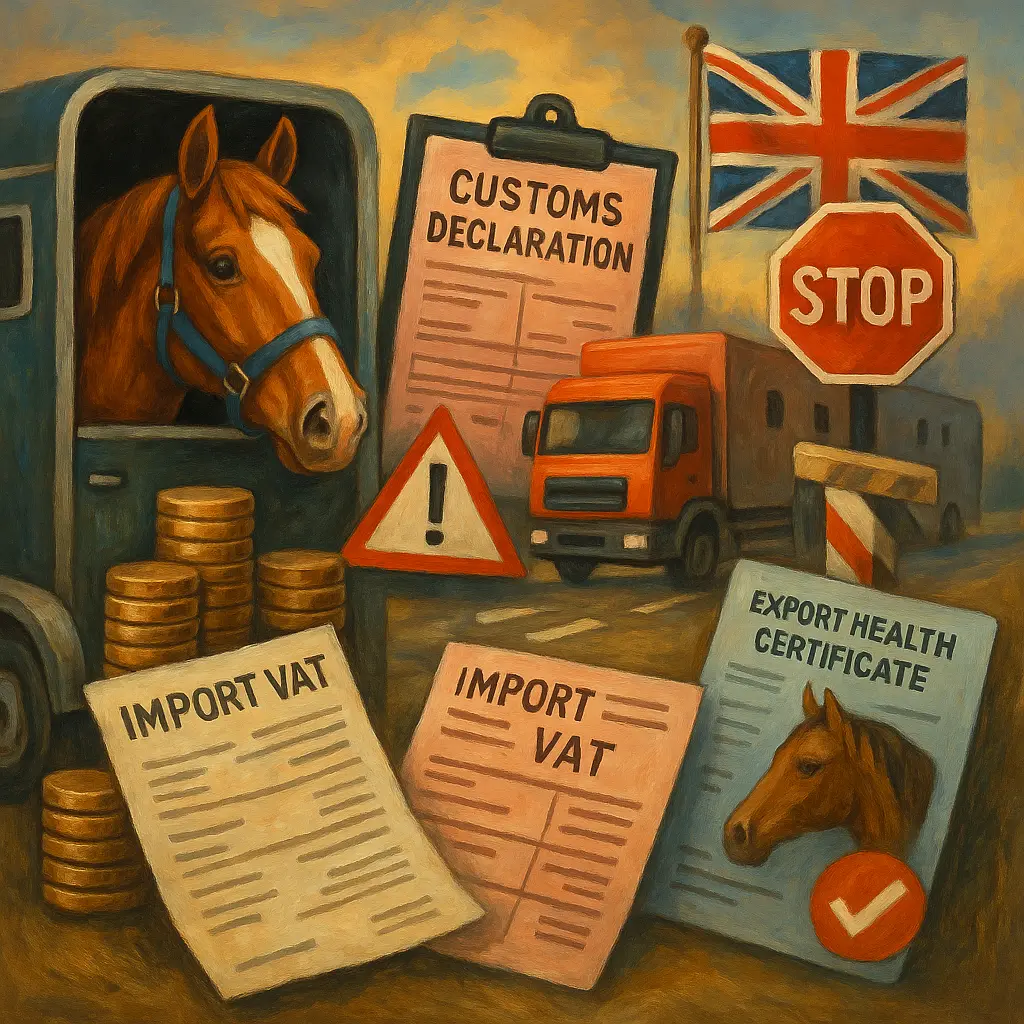
Buying a horse from Europe now comes with more forms, more fees and a very different VAT position than before Brexit. If you plan ahead, you can still import safely and cost-effectively — but you need the right numbers and paperwork from day one.
Key takeaway: Since 1 January 2021, UK importers pay 20% import VAT on the horse’s value and dealers can no longer use the VAT margin scheme (except in Northern Ireland), with total extra costs of around £2,000–£4,000 on top of the purchase price.
What has changed post-Brexit?
From 1 January 2021, UK buyers must pay 20% import VAT on horses from the EU and UK-based dealers can’t use the VAT margin scheme for EU purchases (Northern Ireland excepted). Customs duty is 0% for pure bred horses but can be 10% for some geldings bred outside the UK/EU.
This is the single biggest shift affecting prices and cashflow. HMRC now requires VAT on the horse’s customs value (purchase price plus freight and insurance) when you import, with postponed VAT accounting available for VAT-registered businesses so you declare and reclaim on your next VAT return rather than paying at the border. According to Hazlewoods, the VAT margin scheme used by many UK dealers pre‑Brexit has effectively been withdrawn for EU horses (except in Northern Ireland under the Protocol), forcing VAT to be charged on the full selling price.
On tariffs, the UK Global Tariff is 0% for pure bred horses (HS 0101 2100), but the British Horseracing Authority notes some geldings bred outside the UK/EU may attract 10% duty on the horse’s value plus freight. Beyond tax, British Equestrian details new paperwork and control-point checks that add time and cost to every movement.
How much will importing a horse really cost in 2026?
Allow an extra £2,000–£4,000 for transport and paperwork, plus 20% import VAT on the horse’s value (including freight/insurance), with duty usually 0% for EU-bred purebreds.
Typical post‑Brexit one‑way costs reported by British Equestrian and UK shippers include:
- Export Health Certificate (official vet, 33 pages): ~£200 (pre‑Brexit health papers were ~£70)
- Equine blood tests (within 90 days): ~£100
- Ferry/Eurotunnel: ~£450 return (shipper cost base)
- ATA Carnet (if temporary movement): ~£800 per year
- Professional shipper fees: ~£250
- Border Control Post charges: ~£114–£325
The big ticket remains VAT. As James Cowper Kreston explains, import VAT is 20% on the customs value (horse price + freight/insurance). So, importing a £50,000 horse with £1,000 freight/insurance attracts around £10,200 VAT. If you’re VAT‑registered, you can use postponed VAT accounting (declare in box 1, reclaim in box 4) to avoid a cash hit at the border; if you’re not registered, you pay at entry.
Real‑world totals for private buyers commonly land near £2,000–£4,000 for the logistics and paperwork line items alone, before VAT and vetting. This is why many UK buyers now negotiate harder on purchase price to offset the 20% VAT — something Irish sellers have increasingly reported.
Dealers and professionals: your VAT position explained
Dealers must account for VAT on the full UK selling price of an imported EU horse; the margin scheme no longer applies in Great Britain, so profits are squeezed unless sale prices rise.
Pre‑Brexit, a dealer buying for £15,000 and selling at £20,000 might have accounted for VAT only on the £5,000 margin (~£833). Now, VAT is due on the full £20,000 (~£3,333), cutting profit from ~£4,167 to ~£1,667 before transport, insurance and agents’ fees, as set out by Hazlewoods.
“Post‑Brexit, dealers have to account for VAT on the full sale price of £20,000, increasing the VAT to £3,333.33, leaving the dealer with a profit of only £1,667 before other costs… there is little left to make it worthwhile.” — Tim Warren CBE, Warren Eventing
“The margin scheme has effectively been withdrawn for UK businesses (with the exception of Northern Ireland) buying horses from the EU. The consequence will be that either prices of imported horses increase significantly, or dealers absorb the extra VAT cost and suffer reduced profits.” — Hazlewoods equine tax specialists
If you overpaid under the margin scheme since 1 January 2021, Hazlewoods advises filing a protective claim with HMRC for the difference between VAT on the full price and VAT on the margin. Northern Ireland businesses remain able to use the margin scheme under the Protocol rules — a key competitive nuance in UK trade.
Paperwork and timelines: what you need before the lorry rolls
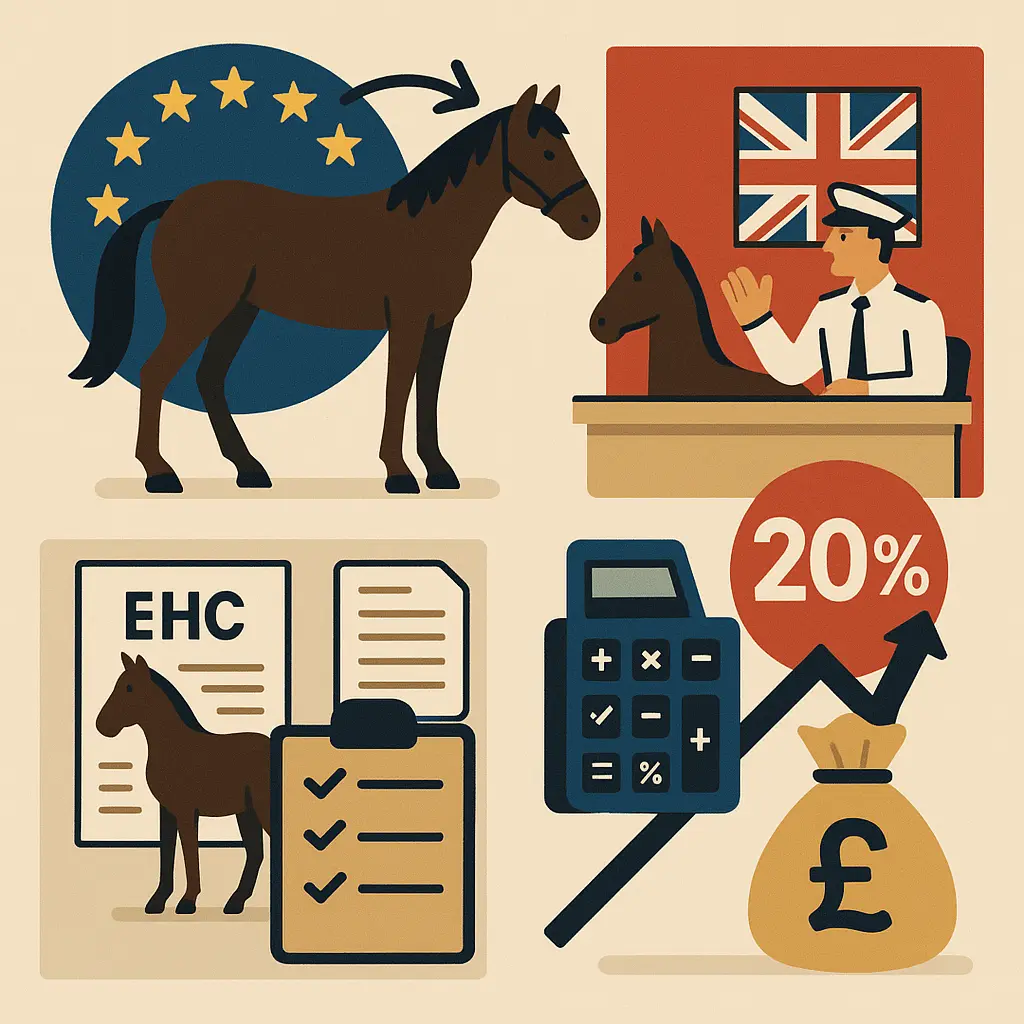
You need a UK EORI, a full import declaration, an Export Health Certificate, blood tests within 90 days, TRACES pre‑notification and to arrive via a designated Border Control Post; register the horse’s passport with a UK PIO within 30 days of arrival.
Plan your administrative timeline as carefully as your training schedule:
- EORI: Get a GB EORI number (format GB + your VAT number + 000 if registered) before you import.
- Import declaration: Submit a full import entry via HMRC (or use an agent). VAT‑registered businesses can opt for postponed VAT accounting on their next return.
- Health certification: Arrange the Export Health Certificate (33 pages, completed by an Official Veterinarian) and required blood tests (typically within 90 days).
- Pre‑notification: Submit documents in advance via TRACES and book your arrival time with a designated live‑animal Border Control Post.
- Entry route: From 1 March 2022, returned/imported horses must use designated BCPs; avoid non‑designated routes.
- Passport: Once back in Britain, register a foreign passport with a UK Passport Issuing Organisation (PIO) within 30 days as per GOV.UK requirements.
For racehorses and bloodstock, HMRC allows simplified value declarations using insured value as a guide, and average values for docket‑system sales at Tattersalls, Doncaster and Ascot; see the HMRC Imports Manual and engage the Bloodstock Helpdesk if you’re unsure.
Quick tip: Book your Official Veterinarian and shipper early for autumn and early winter moves — wet weather and holiday peaks fill calendars fast, and Border Control Posts can book up at short notice.
Route, welfare and winter planning
Always route through a designated live-animal Border Control Post and plan for UK autumn–winter conditions with stabling, quarantine space and suitable rugs from day one.
Welfare starts with the route and ends with the first 72 hours on British soil. Confirm your shipper’s paperwork, timings and contingency plans for delays at the BCP. On arrival (especially October to March), have a dry stable ready and turnout options on hold until you’ve completed checks and the horse has settled. In our climate, even clipped or lightly rugged imports may need immediate coverage: most horses are comfortable in a 200–300g rug once temperatures drop near 5°C with wind and rain.
At Just Horse Riders, we recommend:
- A weatherproof layering plan with reliable winter turnout rugs for wet fields and breathable stable rugs to keep muscles warm in draughty barns.
- Protective travel gear — quality travel boots and bandages reduce knocks during ferry or Eurotunnel loading.
- Post‑journey care — a thoughtful grooming routine and appropriate electrolytes or gut-support supplements can help recovery after long transport. Always consult your vet if you spot any signs of travel stress.
Pro tip: Add hi‑vis to your yard routine in darker months — riders escorting new arrivals on hand‑walks will appreciate high‑visibility gear around lorry parks and lanes.
Temporary imports for competition
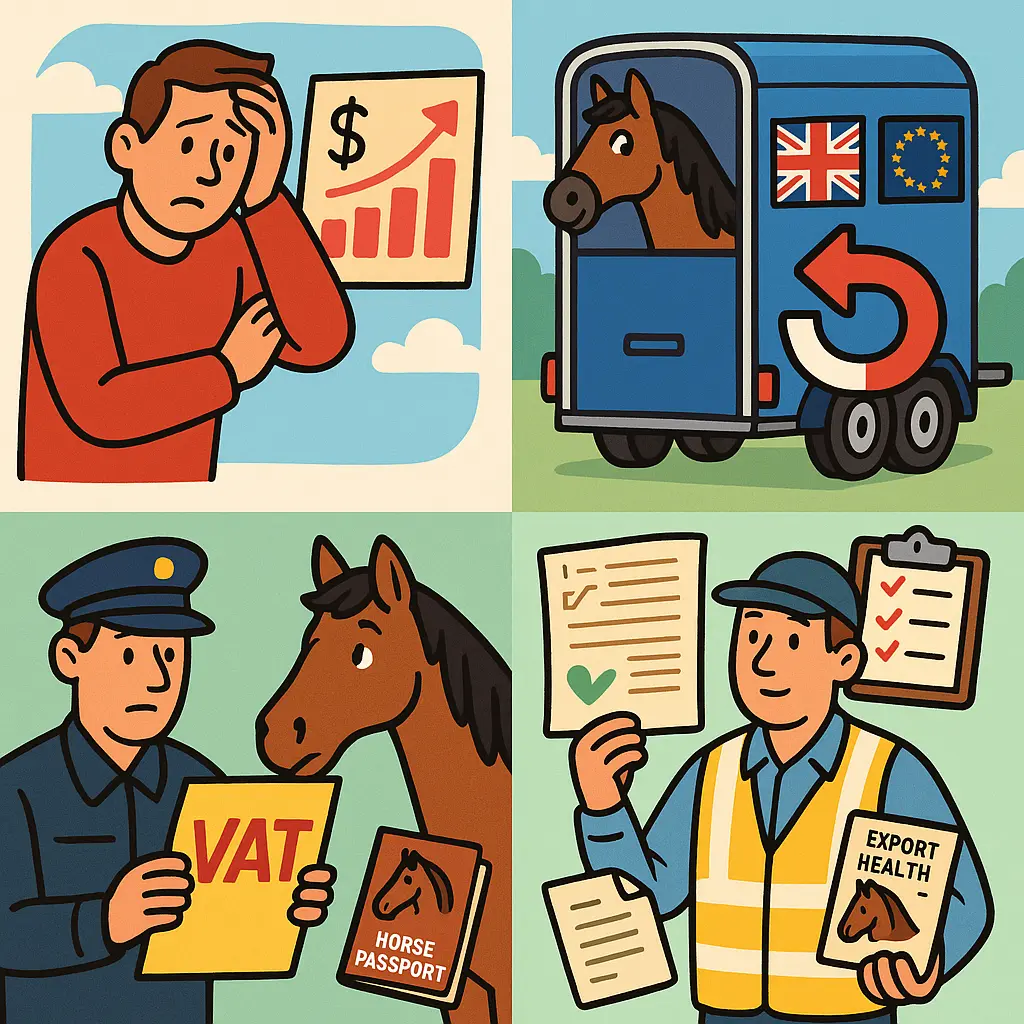
You can temporarily import a horse VAT‑free for up to 24 months using an ATA Carnet, provided it’s re‑exported at the end of the visit.
For competitions, demos or training camps, an ATA Carnet streamlines customs both ways. Expect around £800 per year for the Carnet itself, plus the standard health certification and BCP checks. You’ll still need an EORI, pre‑notification and to use designated routes, but the VAT position is simpler as long as the horse leaves the UK again within the permitted window. See this UK‑EU overview from ASD Group for key points.
If you convert a temporary import to a permanent purchase, you must switch to a full import declaration and settle import VAT (plus any duty) at that point, using the original purchase paperwork to support the customs value.
Smart budgeting and buying strategies
Get written quotes for every leg, use postponed VAT accounting if you’re registered, and build 20% VAT into your offer price to avoid nasty surprises.
Start with a simple spreadsheet: purchase price, freight/insurance, BCP, EHC, blood tests, shipper fees, and VAT. Ask your shipper to itemise waiting time, overnight stabling and change‑of‑route costs — then add a 10–15% buffer for delays. If you’re VAT‑registered, confirm postponed VAT accounting is enabled on your Government Gateway before the horse moves.
For dealers, revisit your pricing model. The numbers are stark:
- Pre‑Brexit example: Buy £15,000 → Sell £20,000 → VAT on £5,000 margin ≈ £833 → Profit ≈ £4,167 before other costs.
- Post‑Brexit example: Buy £15,000 → Sell £20,000 → VAT on £20,000 ≈ £3,333 → Profit ≈ £1,667 before other costs.
That squeeze is real across Ireland–UK trade:
“Sellers of horses in Ireland are going to be ‘squeezed’ by some UK buyers due to the 20% VAT rate now applicable to horses imported into Britain post‑Brexit.” — The Irish Field
Negotiation tip: When you present your offer, show the VAT impact line-by-line — many European sellers understand the post‑Brexit friction and will work with serious buyers who can complete swiftly with the correct paperwork.
Quick tip: Moving late autumn? Book an extra rug and boots set so you always have a dry spare. Our team can advise on fit and warmth across leading lines from WeatherBeeta, Shires and LeMieux — and we stock riding helmets for safe first hacks while your new arrival settles.
FAQs
How much VAT will I pay importing a £50,000 horse from the EU?
Import VAT is 20% on the customs value: the purchase price plus freight/insurance. On a £50,000 horse with £1,000 freight, expect around £10,200 VAT. VAT‑registered businesses can use postponed VAT accounting (declare in box 1 and reclaim in box 4 on the next return); non‑registered importers pay at the border. Source: James Cowper Kreston.
Is there customs duty on EU‑bred purebred horses?
For EU‑bred purebreds, the UK Global Tariff is 0% (HS 0101 2100). Some geldings bred outside the UK/EU may attract 10% duty on the horse’s value plus freight. Source: British Horseracing Authority.
What extra costs should I budget for beyond VAT?
Plan around £2,000–£4,000 for paperwork and logistics: Export Health Certificate (~£200), blood tests (~£100), shipper fees (~£250), ferry/Eurotunnel (~£450 return), ATA Carnet for temporary moves (~£800/year) and Border Control Post charges (~£114–£325). Source: British Equestrian.
Can I still use the VAT margin scheme for EU horse imports?
No — the margin scheme has been withdrawn in Great Britain for EU horses since 1 January 2021. Northern Ireland remains an exception. If you’ve overpaid VAT under the margin scheme since then, file a protective claim with HMRC. Source: Hazlewoods.
What paperwork do I need for a competition horse?
A GB EORI, import declaration, Export Health Certificate, required blood tests, TRACES pre‑notification, and arrival via a designated Border Control Post; then register the passport with a UK PIO within 30 days. Source: GOV.UK.
How long can a horse stay in the UK on a temporary import?
Up to 24 months VAT‑free, provided it’s re‑exported, typically using an ATA Carnet for simplified customs both ways. Source: ASD Group.
What kit should I have ready for a winter arrival?
At minimum, a 200–300g turnout rug, a warm stable rug, protective travel boots, and a basic grooming and recovery plan; consider supplements and hi‑vis for early hand‑walks in low light.