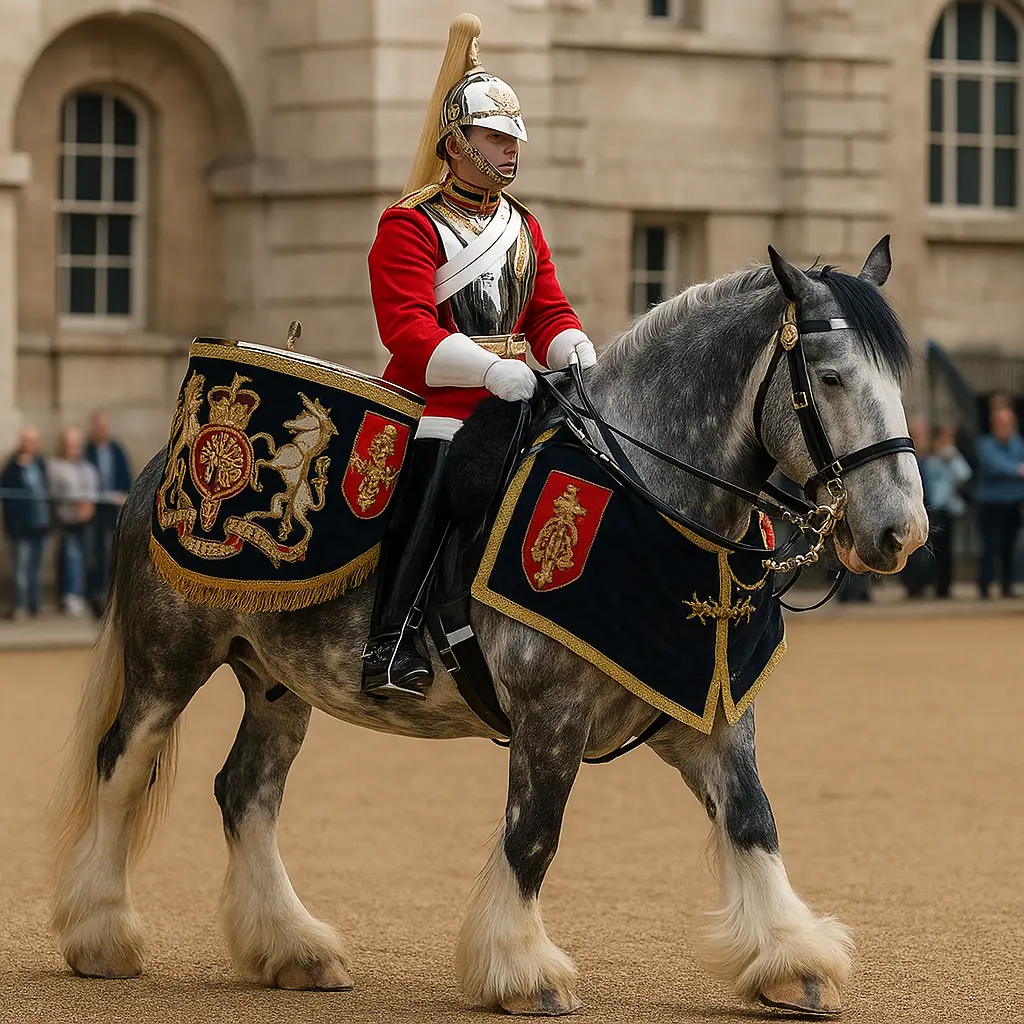
The King’s Life Guard clip-clopping down Whitehall at 11:00 is a quintessential London moment — Mondays, Wednesdays and Fridays in full ceremony, with shorter inspections on Tuesdays, Thursdays and Saturdays at 11:00, and Sundays at 10:00. Behind the polished harness and centuries-old drill is a modern welfare system that every UK horse owner can learn from.
UK law puts your horse’s welfare above tradition, competition and convenience. Whether you’re hacking in winter rain, showing at the weekend, or managing a horse on parade, the rules — and the responsibilities — are the same.
Key takeaway: In the UK, horse welfare is a legal duty that always outranks tradition, competition and convenience.
Your legal duty of care
Under the Animal Welfare Act 2006 (and the Scottish equivalent), you have a legal duty of care to meet your horse’s needs for environment, diet, normal behaviour, housing and protection from pain and injury. Failure to meet these needs can be an offence even if obvious suffering hasn’t yet occurred.
The British Horse Society’s Code of Practice summarises this duty clearly for owners and keepers at home and at events, echoing the “five freedoms” principle that governs all equine care across England, Scotland and Wales. In practice, that means suitable turnout or stabling, an appropriate diet and water, companionship or social contact, safe handling and transport, and proactive veterinary care and pain prevention. See the BHS guidance here: BHS Code of Practice.
Sanctions for cruelty or failing to meet welfare needs are significant. According to the national welfare protocol referenced by British Equestrian, courts can impose fines up to £20,000, up to 12 months’ imprisonment, and bans on owning or keeping animals. For details, consult the BEF policy: Equine Ethics and Welfare Policy.
“Equine welfare must not be subordinated to commercial or competitive influences. In all situations, all members are committed to promoting the highest levels of education, training, and welfare.” — British Equestrian Federation
Quick tip: Build welfare checks into your daily routine — water topped up, rugs appropriate to temperature, feet checked, and a simple note of appetite, droppings and demeanour. Small consistencies prevent big problems.
Who is responsible on the day?
At events, overall responsibility for a horse rests with the person in charge on the day, alongside the owner/keeper and organisers who share a joint duty under welfare legislation. You must be identified on the entry with up-to-date emergency contact details.
The BHS is explicit: organisers have a role, but the owner or keeper carries prime responsibility for the horse’s welfare throughout the show or rally. Make sure your entry details are correct, your horse’s passport is to hand, and any special needs (medication, travel routine, stallion status) are clearly noted on paperwork and to your team.
Stallion-specific rules commonly include fitting stallion discs on both sides of the bridle, leading only with a bit and reins or a 2.5m+ lead rope, and strict handling to avoid risk to others. If safety is compromised, organisers may disqualify or remove horse and handler in line with welfare policies.
Pro tip: Add your vet’s number and yard contact to a laminated card on your lorry dashboard. In a crisis, clarity speeds care.
When to stop riding or competing
You must not ride or compete any horse that is lame, injured, exhausted or affected by abnormal sensitisation or desensitisation; welfare trumps entry fees, points and prize money.
The British Equestrian policy is crystal clear: welfare may not be sacrificed to competitive or commercial aims. Watch for head-nodding lameness, reluctance to move forward, irregular rhythm, shortness behind, swelling or heat in limbs, dullness after travel, excessive respiratory effort, or signs of heat stress (high temperature, rapid breathing, depression). If in doubt, stop, cool and assess — and seek veterinary advice.
Abnormal practices to mask, sensitise or desensitise body parts are prohibited. Cooling provisions (shade, water, air flow), appropriate warm-up times, and safe ground conditions are non-negotiable. If organisers cannot provide a predictable, safe environment, withdraw.
“No horse should be ill-treated in any way on the showground… Under the provisions of the Welfare Acts there is a degree of joint responsibility with organisers, but nevertheless the owner or keeper of an animal has prime responsibility for its welfare.” — British Horse Society
Support your cooling plan with kit that works: sweat-scrapers, plentiful water, shade, and a breathable rug if flies are harassing post-exercise. For lightweight coverage, see our range of fly rugs and sheets for hot weather.
What the Household Cavalry gets right
The Household Cavalry Mounted Regiment (HCMR) keeps ceremony running with strict routines, trained horses and scheduled welfare breaks — and tradition never overrides welfare policy.
From the Changing of the Guard on Horse Guards Parade to state occasions, HCMR horses are on public duty daily: full ceremonies on Mondays, Wednesdays and Fridays at 11:00; shorter inspections on Tuesdays, Thursdays and Saturdays at 11:00; and Sundays at 10:00 (Changing Guard timings). Their systems emphasise predictability: controlled exposure to crowds and traffic, disciplined handling, and carefully staged work-to-rest cycles. In winter’s cold and wet, sentry routines are shortened to reduce standing time, and horses get twice-yearly countryside “holidays” to decompress and graze away from the capital.
Even the famous drum horses — traditionally Clydesdale crosses with abundant feather, mane and tail — undergo about 18 months of training to carry the massive silver kettledrums through parades. Historically, they’ve appeared in black, iron grey, blue roan, piebald and skewbald coats, but colour has always been secondary to temperament and training for safety and welfare (ceremonial horse background).
What can you borrow for your horse? Plan your day to the minute, acclimatise to new environments in small steps, and build rest and recovery into your schedule. The best “parades” — whether a local show or a London spectacle — are boringly predictable for the horse.
A practical welfare checklist for show days
Prepare fitness, plan travel, manage environment, and build cooling and recovery into your day; then carry the right kit to act fast if conditions change.
At Just Horse Riders, we recommend using this simple framework:
- Fitness and health: Only enter classes your horse is fit and schooled for; if travel is long, reduce class numbers. Never compete a horse showing lameness, injury, exhaustion or abnormal behaviour. Consider supportive, legal nutrition from our supplements for joint health and recovery (never to mask issues).
- Travel safety: Protect limbs in the lorry with robust travel boots or bandages; explore our horse boots and bandages for supportive options. Load calmly, allow extra time, ventilate well and carry water.
- Weather-ready rugs: For cold, wet UK days, pack a waterproof layer from our turnout rug collection. For stabled downtime between classes, a cosy layer from our stable rugs helps prevent chills if the weather turns.
- Heat and flies: In hot spells, plan shade, regular rinses and airflow. Use breathable coverage like our fly sheets for post-exercise to reduce pest stress while cooling.
- Cooling and recovery: Bring buckets, spare water, sweat scrapers and towels. Hand-walk to aid circulation, then allow quiet time to eat and drink.
- First aid and grooming: A stocked equine first aid kit plus a tidy grooming set saves time when it matters. See our curated grooming essentials that slot neatly into the lorry.
- Rider safety and comfort: Wear a certified hat from our riding helmets collection and weather-appropriate clothing; for ring-ready outfits browse women’s competition clothing and supportive women’s jodhpurs and breeches. For early starts or dull light, add hi-vis for riders.
Brand picks our customers love: storm-proof value from Gallop Equestrian rugs, lightweight tech from LeMieux, British staples from Shires, waterproof reliability from WeatherBeeta, and tried-and-tested support from NAF supplements.
Pro tip: Pack a “weather pivot” bag: spare rug, spare numnah, fly spray, a lightweight sheet, and a dry cooler. UK weather loves a plot twist.
Stallions and safeguarding others
Stallions must be clearly identified, controlled with a bit and reins or a 2.5m+ lead rope, and handled so they pose no risk to others; organisers may remove any horse that compromises safety.
Note the horse’s stallion status on entries, display discs on both sides of the bridle, and never tie up unattended in busy areas. Use experienced handlers, plan routes to rings away from pony collecting rings, and space lorry parking if possible. Keep a calm, consistent routine — predictability lowers arousal and keeps everyone safe.
Quick tip: Fit a neckstrap for an extra holding point on the move, and keep a clear bubble in crowded gateways.
Weather, ground and when to withdraw
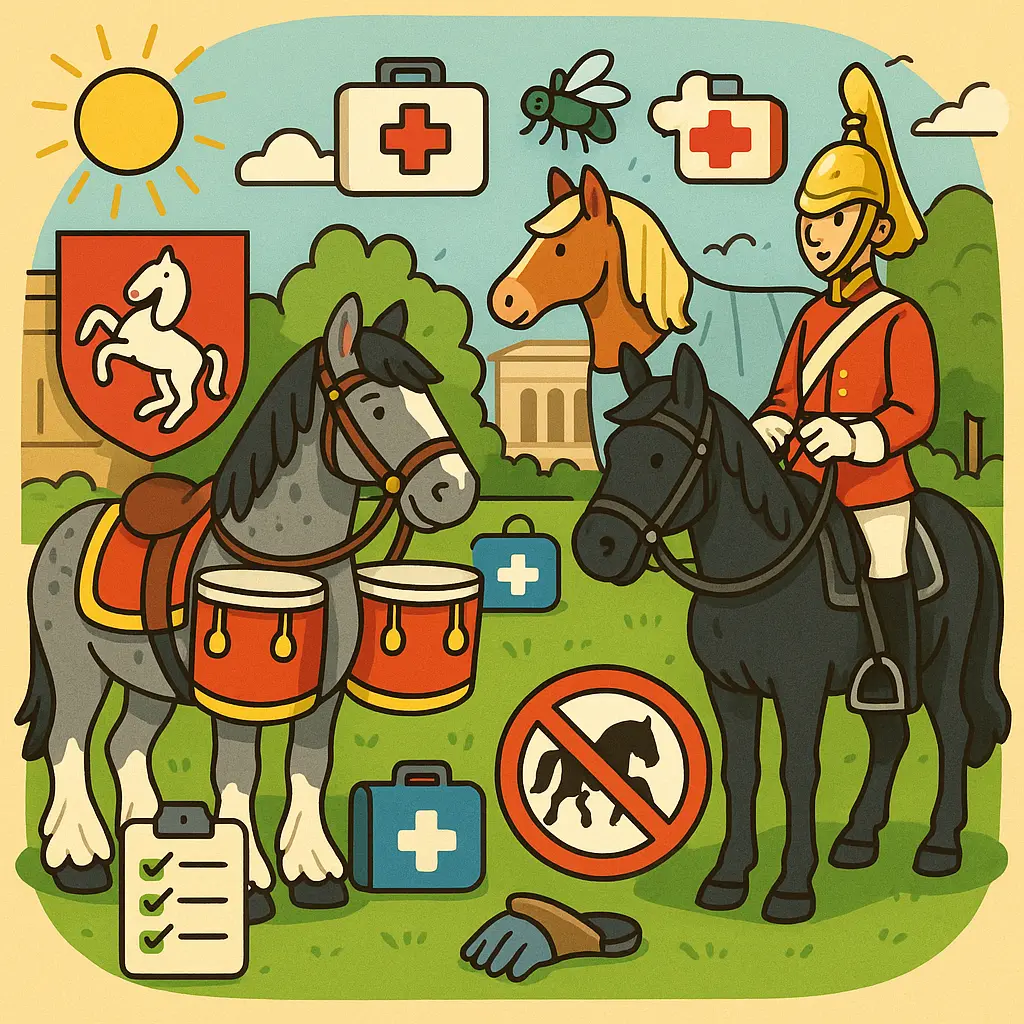
If ground or weather compromises safety or cooling, postpone or withdraw — welfare comes before schedules.
British Equestrian’s policy requires that competitions do not take place if welfare is at risk from extreme conditions. In the UK that can mean saturated or frozen ground, heat spikes, high winds, or relentless rain. Build a simple decision tree: Is the surface safe? Can I cool my horse effectively? Is shade and water available? If any answer is “no”, step away.
For cold, wet days, bring a waterproof top layer and consider a quarter-sheet for warm-up. Our winter turnout rugs and dependable liners help maintain comfort between classes, while a breathable stable rug keeps muscles warm if stabled on site. On heatwave days, arrive early, park in shade, shorten warm-ups, avoid peak heat classes, and use rinsing plus airflow to cool rapidly.
Pro tip: In changeable weather, swap long static waits for short, frequent leg-stretches to keep muscles warm without overheating.
Reporting and resolving concerns
Raise welfare concerns immediately with show officials; if urgent or unresolved, contact the Police, RSPCA or your Local Authority for enforcement.
The British Equestrian Federation notes it cooperates with relevant authorities to ensure equine wellbeing. If you see lameness being ignored, abusive handling, or dangerous practices (such as illegal sensitisation), discretely alert the secretary, steward or veterinary officer with clear, factual observations. If a horse is in immediate danger, escalate to the Police or RSPCA on site. Document times, locations and what you saw — not opinions — to support swift action. Refer to policy guidance here: BEF Equine Ethics and Welfare Policy.
Remember, the aim is to protect horses and educate people, not to shame. Calm, prompt reporting saves lives and careers.
Conclusion
From Horse Guards Parade to your local showground, the standard is the same: welfare first, always. Plan like the Cavalry — predictable routines, trained responses, clear lines of responsibility — and back your plan with the right kit for British weather and busy days. If conditions or your horse say “not today”, that’s good horsemanship and it’s the law.
Need to upgrade your welfare toolkit before the next outing? Explore weather-ready turnout rugs, breathable fly sheets, protective boots and bandages, and proven supplements trusted by UK riders.
FAQs
What legal duty do UK horse keepers have?
Under the Animal Welfare Act 2006 (and Scottish equivalent), you have a legal duty of care to provide a suitable environment, diet, ability to exhibit normal behaviour, appropriate housing, and protection from pain, injury and disease. Failing to meet these needs can be an offence even if no obvious suffering is present. See the BHS Code of Practice.
Can tradition or ceremony override welfare rules?
No. British Equestrian’s policy states welfare must never be subordinated to competitive, commercial or traditional influences. That applies to ceremonial units and private owners alike. Read the policy: BEF Equine Ethics and Welfare.
Who is responsible for my horse at an event?
The person in charge on the day carries overall responsibility, alongside the owner/keeper and organisers who share joint duty under the Welfare Acts. Ensure your entry lists the correct owner/keeper and emergency contacts. Guidance: BHS Code of Practice.
When must I withdraw my horse?
Withdraw immediately if your horse is lame, injured, exhausted, distressed, or affected by abnormal sensitisation/desensitisation. Also withdraw if the ground or weather makes safe performance or effective cooling impossible. Welfare takes precedence over entries and fees.
What penalties apply for welfare breaches?
Courts can impose fines up to £20,000, up to 12 months’ imprisonment and bans from owning/keeping animals. Events may also disqualify competitors for welfare violations. See BEF-linked protocol here: Equine Ethics and Welfare Policy.
How do the Household Cavalry manage welfare on parade?
Through rigorous training, predictable routines, shortened winter sentry periods in severe weather, and regular countryside breaks away from London crowds. Even iconic drum horses receive around 18 months’ training before parading. Learn more: Changing Guard and ceremonial horse background.
What kit should I prioritise for welfare at events?
Pack protective travel boots or bandages, weather-appropriate turnout rugs and fly sheets, a stocked first aid kit, plentiful water, and a certified riding helmet for you. Add legal supplements to support joints and recovery without masking issues.