UK weather turns on a sixpence — and your plans with it. Whether you’re schooling at home, travelling to a show or managing a busy livery yard, understanding what Met Office warnings actually mean for you and your horse keeps everyone safer and saves wasted journeys.
Key takeaway: Yellow warnings usually mean “go, with mitigations”; amber means “review and possibly cancel”; red heat warnings for racing mean “abandon and do not travel through the affected area”. Your day-to-day care should flex too: stable in thunderstorms, risk assess heat from 28°C, and guarantee winter shelter and water.
Met Office warnings: what they mean for your rides and events
Yellow warnings allow events to proceed with a published mitigation plan; amber triggers a joint review and possible cancellation; red heat warnings covering a racecourse mandate abandonment and ban trainers from travelling horses through the area. These protocols align welfare and safety across UK equestrian sport.
British Dressage (BD) uses the Met Office colour system to decide if and how competitions run. Under a yellow warning, venues must prepare and communicate a mitigation strategy and keep conditions under close review. An amber warning triggers consultation with BD; if risks can’t be adequately reduced, events are cancelled with as much notice as possible. Horse & Hound reports this structured approach enables consistent, proactive decisions.
“By having a more formal framework, based on the red, amber, and yellow warnings provided by the Met Office, this allows us sufficient time to consult with the venue, and either reschedule if necessary or put mitigations in place to ensure it is safe to go ahead.” — BD spokesperson, via Horse & Hound
In racing, the line is firmer in extreme heat. Under the British Horseracing Authority’s hot weather policy, a red Met Office heat warning that includes the racecourse requires immediate abandonment, and trainers must not travel horses through the red-alert region en route (BHA Hot Weather Policy).
Across Pony Club activity, 28°C is the key trigger for a formal heat risk assessment that considers horses, riders, supporters and officials, with measures such as altered timetables, extra water and shade, or postponement where needed (Pony Club Hot Weather Guidance).
Thunderstorms: turnout, stabling and lightning safety
Stable horses in a well-grounded building during lightning storms; if turnout is unavoidable, remove access to isolated trees, wire fences and water, and avoid exposing shod horses in open fields. This significantly reduces strike and step-voltage risks.
Horses can panic and herd under trees or along fence lines in thunder, increasing strike risk; metal shoes add a further conduction hazard. The British Horse Society recommends stabling in a grounded building (ideally with a lightning rod) when thunderstorms are forecast, and making fields safer by fencing off lone trees, streams and wire boundaries (Horse & Hound/BHS guidance).
“If you have access to well-grounded stabling, we would advise keeping an eye on the weather forecast and stabling your horse if there is a threat of a lightning storm.” — Gemma Stanford, Head of Welfare, BHS, via Horse & Hound
If you must turn out, split groups into safer paddocks away from risk features and remove buckets/tubs from under trees. Check stable earthing and gutters in autumn, and consider a professional assessment for a lightning protection system before storm season. While you wait out the weather, keep horses calm with routine handling and enrichment.
For wet, windy conditions that don’t reach lightning risk, keep horses comfortable outdoors with waterproof winter turnout rugs that protect against driving rain while maintaining breathability.
Heat and humidity: how to keep horses safe above 28°C
At 28°C and above you should complete a heat risk assessment, adjust work to cooler parts of the day, and provide copious water; racing under a red heat warning is abandoned and horses must not travel through the affected area. A 500kg horse can need 50–70 litres of water per day in hot weather, more with exercise.
Heat and humidity blunt a horse’s ability to cool by sweating, especially in southern UK spells. The Pony Club’s guidance requires risk assessment from 28°C, with options including earlier/shorter sessions, more shade, and extra cooling infrastructure (Pony Club).
Hydration is non-negotiable. The British Horse Society advises that a 500kg horse typically drinks 50–70 litres per day in hot conditions, and more with work. Offer frequent access to cool, clean water at home and away; travelling horses should be offered water at least every 4.5 hours, and venues should provide water at the yard, unsaddling area, pull-up, horse walks and winner’s enclosure with rapid refills between races (BHS; BHA policy).
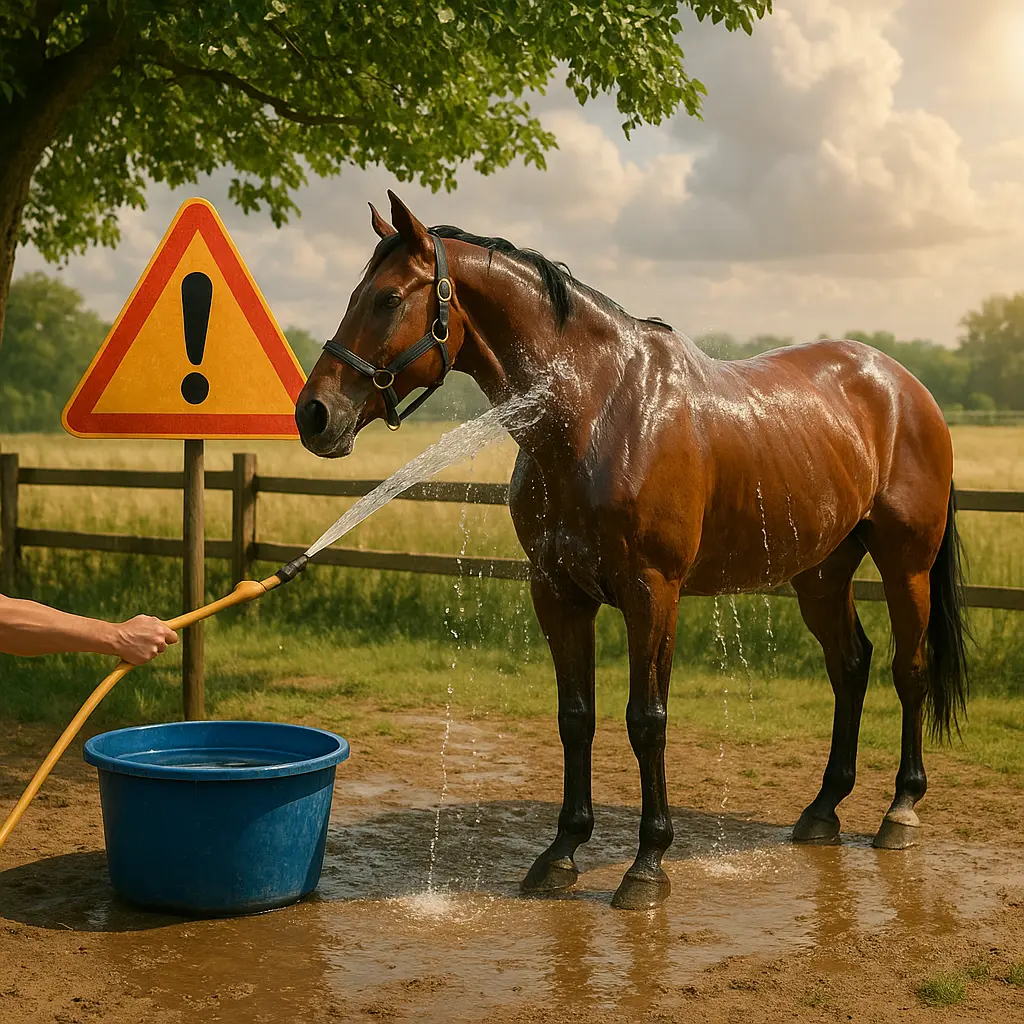
Post-exercise, cool promptly and continuously. Walk in shade and hose repeatedly for 15 minutes or more; scrape only if it speeds up the next cooling cycle rather than delaying it. Watch for heat illness signs such as unsteadiness, collapse, or abnormal breathing — then move immediately to shade, douse with water and call your vet to prevent complications such as kidney or liver damage or laminitis (RSPCA).
Light, reflective layers can help. Use breathable fly rugs and masks to provide shade and insect protection without trapping heat, and consider a lightweight cooler for short recovery periods after early-morning or evening rides.
Pro tip: Plan your hot-weather kit the way racecourses do — multiple water points, plentiful hoses and dedicated refillers. Keep electrolytes in your horse care supplements kit for horses working or travelling in heat (check with your vet for individual dosing).
Cold snaps, ice and snow: legal shelter and hydration
UK law requires horses kept outdoors in winter to have constant access to shelter; if none is available, you must move or stable them. Keep troughs ice‑free and plan transport with snow contingencies such as extra bedding and checks for shivering or lethargy.
Winter storms bring wind chill, sleet and prolonged wet. The government’s extreme weather guidance is clear: outdoor-kept horses must always have shelter; where that’s not possible during a storm, bring them into stables or alternative housing (GOV.UK). Ensure stable roofs, doors and ventilation are sound before the season starts, and check field shelters for safe footing and secure fixings.
Water is a winter welfare risk. Keep troughs and buckets ice-free to maintain intake; heated troughs or insulating wraps can help reduce daily breaking of ice in persistent freezes. For transport in snow, build in extra time and pack spare bedding and rugs; monitor horses for shivering or lethargy and postpone if conditions risk prolonged stands or diversions (GOV.UK).
Rug wise, thin-coated or unacclimatised horses often need additional protection in cold, wet snaps — especially when clipped or elderly — while ensuring good ventilation to avoid respiratory issues (Horse Vet Hampshire). Choose appropriate weights of stable rugs indoors and robust, breathable waterproofs outdoors according to your horse’s condition and the actual forecast, rather than the calendar.
Quick tip: Place water sources away from prevailing wind and add non-slip mats at stable doors to prevent ice-related falls for both horses and handlers.
Heavy rain, mud and flooding: when to postpone turnout or travel
Cancel or postpone activity if emergency access is compromised; British Eventing halts competition if an ambulance cannot reach all areas. Close flooded or unstable turnout until it drains and footing is safe.
The UK’s autumn–winter pattern includes sustained rain and localised flooding. For competitions, medical access is a hard stop: if ambulances or rapid response vehicles can’t move safely around the site, British Eventing rules require the event to stop (British Eventing), aligning with the British Horse Society’s welfare-first approach.
At home, prepare flood plans early. Move field furniture, hay and bedding to higher ground and identify alternative turnout or stabling before water rises (SEIB flood advice). Rope off boggy gateways, repair drains, and use temporary surfaces on high-traffic paths to reduce slips and tendon strains. When rain is heavy but not hazardous, waterproof, breathable turnout rugs help maintain comfort while allowing sweat to evaporate.
After muddy spells, thorough, gentle de-mudding protects skin and tack; keep a well-stocked grooming kit by the wash-down area so you can rinse, scrape and dry briskly before stabling.
What to wear and pack for extreme-weather riding
Use high-visibility PPE and a properly fitted helmet for you, and weather-appropriate rugs and cooling gear for your horse. Pack water, shade, and first-aid items so you can adapt instantly as conditions change.
For riders: visibility and head protection are non-negotiables in poor light, rain or fog. Choose certified, well-fitting riding helmets and layer up with hi-vis clothing and accessories for roadwork or low-contrast days. Waterproof outer layers and grippy gloves help maintain control in showers and gusts.
For horses: match layers to the day’s risk. In summer heat, prioritise airflow and shade (fly rugs, fly masks, coolers for recovery); in cold rain and wind, reach for breathable waterproofs outside and appropriate indoor layers. Keep spare numnahs, a sweat scraper, and a clean towel for rapid drying or cooling cycles.
Show and travel kit list:
- Ample water (separate supply from towing vehicle) and multiple buckets
- Electrolytes and salt in your supplements kit (vet-advised for work/travel in heat)
- Shade options (awnings, pop-up shelters) and a thermometer/hygrometer
- Hoses, sponges and scrapers for rapid cooling or wash-downs
- Spare rugs suited to the forecast: a lightweight cooler and a waterproof layer
- First-aid supplies for horse and rider, and charged phones with venue/emergency contacts
At Just Horse Riders, we recommend doing a five-minute “weather check” before you load: confirm the latest Met Office warning level, re-check the venue’s mitigation plan, and top up water and shade provisions accordingly.
Competition day: a simple decision framework
Decide using three inputs: the Met Office warning colour, the venue’s published mitigation plan, and your horse’s welfare status. If any one fails, delay, modify, or cancel.
Use this quick pathway before you travel:
- Check the current Met Office warning for your route and the venue. Yellow: expect mitigations; amber: prepare for changes or cancellation; red heat (racing): do not go — meetings are abandoned and horses must not transit through the red zone (BHA policy).
- Read the organiser’s mitigation plan (water points, timetable changes, shaded lorry park, medical access). Under BD rules, yellow requires a plan; amber triggers joint review and possible cancellation (BD via Horse & Hound).
- Assess your horse. In heat from 28°C, complete or request a formal risk assessment (Pony Club standard), check hydration, travel time and shade at the destination (Pony Club).
- Confirm emergency access. If an ambulance cannot reach all areas, the event should stop (British Eventing rule) — and you should not travel in until resolved (British Eventing).
- Make the welfare call. If any control is insufficient, postpone. The global standard is clear:
“Events must not prejudice horse welfare: competitions must not take place in extreme weather conditions that may compromise welfare or safety of the horse.” — FEI Code of Conduct
When conditions allow you to proceed, pack the mitigations you control: water, shade, cooling gear, and appropriate rugs from home. For hot days, a breathable fly rug; for showery spells, a dependable waterproof.
FAQs
Yes — find quick answers to the most common UK weather-and-welfare questions below.
Should events proceed under a yellow Met Office warning?
Yes, provided the venue has a clear mitigation strategy and communicates it to competitors. British Dressage requires organisers to plan and monitor conditions under yellow warnings so activity can continue safely (BD via Horse & Hound). Expect measures such as timetable tweaks, extra water points and shaded areas.
What if an amber warning is issued for an event?
An amber warning triggers a joint review between the organiser and the governing body. If mitigations can adequately control the risks, the event may proceed; if not, it should be cancelled with as much notice as possible (BD via Horse & Hound). Always check emails and the organiser’s social channels before leaving.
Is it safe to leave horses out in thunderstorms?
No. The BHS advises stabling in a well-grounded building (ideally with a lightning rod) during a thunderstorm. If turnout is unavoidable, make fields safer by fencing off isolated trees, streams and wire fences, and be mindful that steel shoes increase conduction risk (Horse & Hound/BHS).
What temperature triggers event cancellation?
At 28°C, Pony Club activity requires a heat risk assessment and mitigations across horses, riders and officials (Pony Club). In racing, a red Met Office heat warning that covers a racecourse mandates abandonment and prohibits trainers from travelling horses through the red zone (BHA).
How much shelter do horses need in UK winter storms?
Horses kept outside must have constant access to shelter. If that’s not available during extreme weather, you must move or stable them to comply with welfare law (GOV.UK). Check field shelters are safe, dry and accessible before storms hit.
When should you rug horses in bad weather?
Rug decisions depend on the individual. Thin‑coated, clipped, elderly or unacclimatised horses often need extra protection in cold, wet weather, while ensuring good ventilation to avoid respiratory problems (Horse Vet Hampshire). Outdoors, choose breathable waterproofs; indoors, use appropriate stable rugs matched to temperature and body condition.
How much water will my horse need in hot weather, and how often should I offer it when travelling?
In hot conditions a 500kg horse may drink 50–70 litres per day, with needs rising if exercising (BHS). When travelling in the heat, offer water at least every 4.5 hours and ensure easy access to multiple water points at your destination (BHA policy).
Whatever the forecast throws at you, planning beats panic. Build your yard and show-day checklists now, keep an eye on the Met Office warnings, and equip yourself and your horse with the right layers and kit — from breathable summer protection like fly rugs to storm-ready turnout rugs. If you’re ever unsure, put welfare first and wait for better weather.