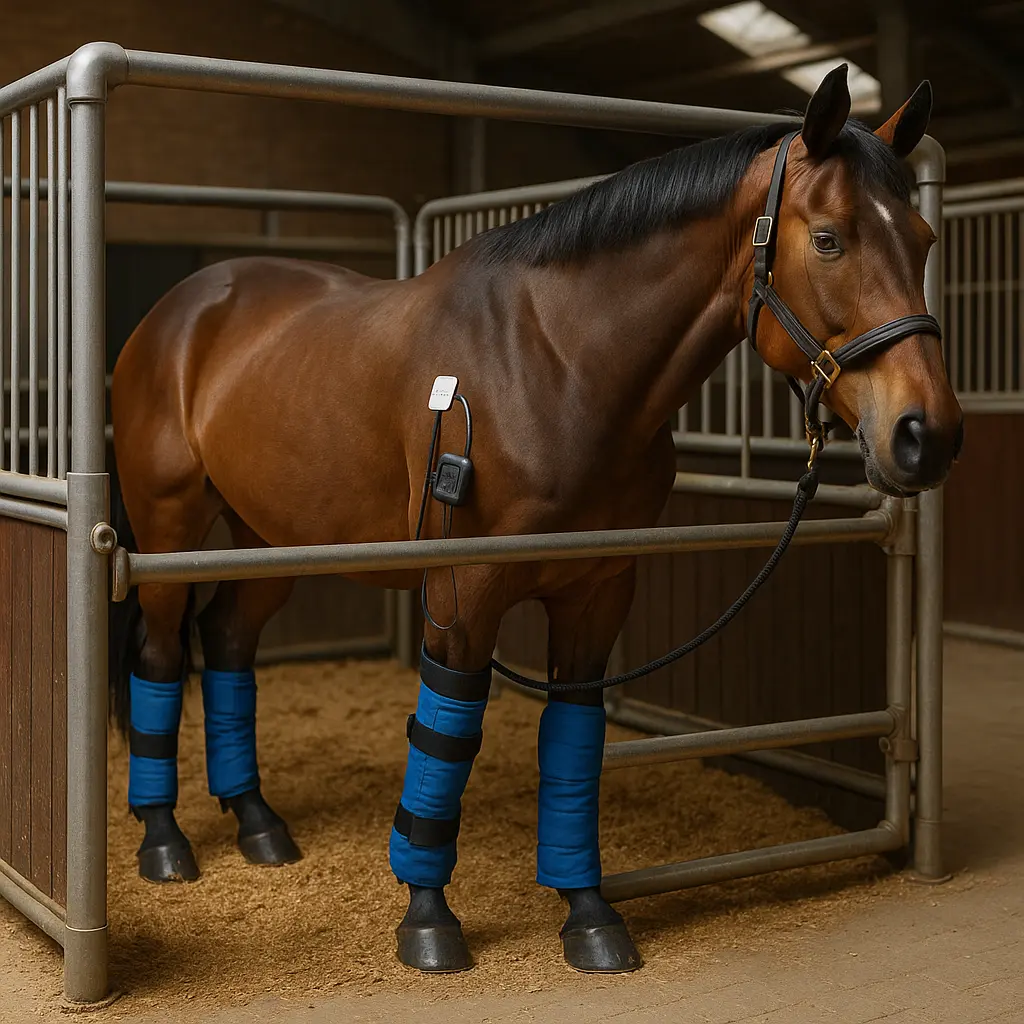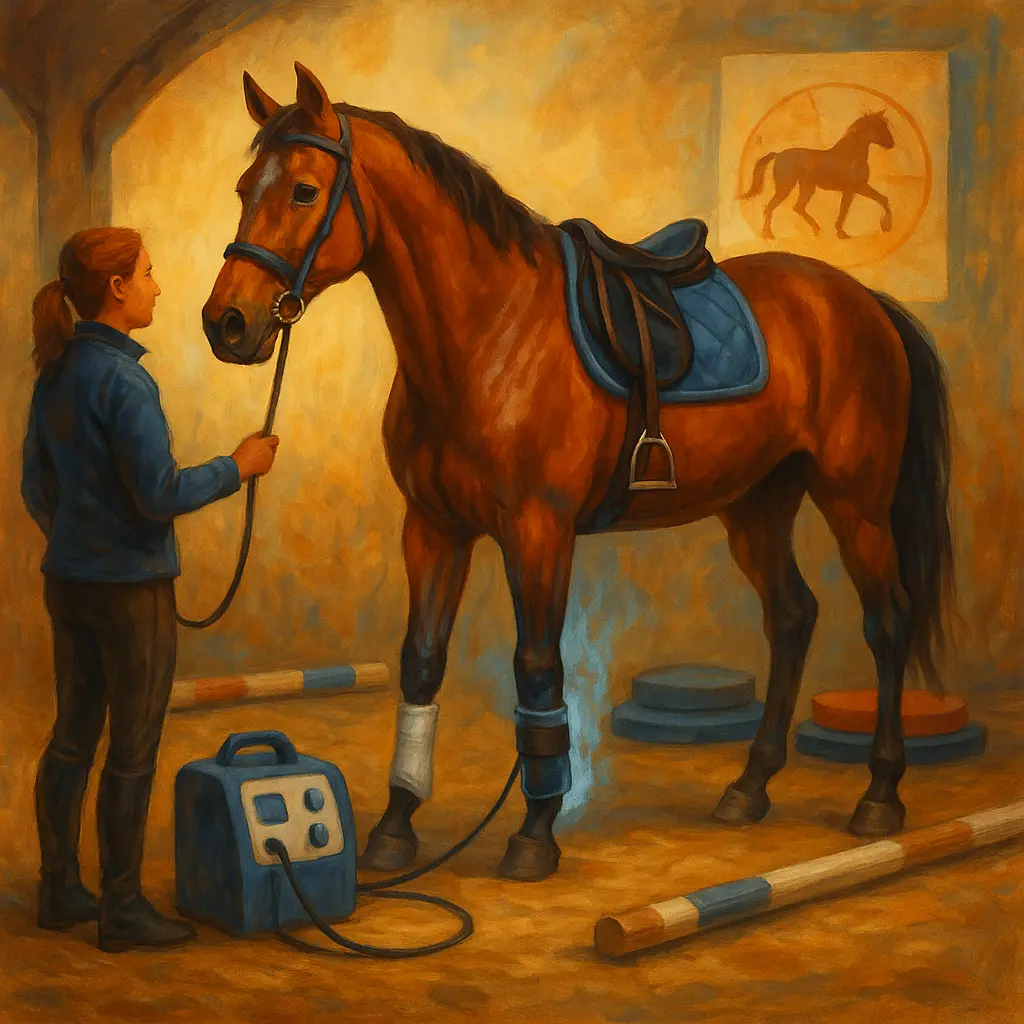
If your horse has become tricky to ride on a circle, resistant in transitions, or just not “right” behind after training on soft winter ground, proximal suspensory desmitis (PSD) should be on your radar. Caught early and managed with a clear plan, many PSD cases can return to work safely.
Key takeaway: Forelimb PSD often responds to 3–6 months of rest and controlled exercise with around 90% returning to function, while hindlimb PSD is commonly degenerative and frequently needs surgery for the best outcome (about 78% back to full athleticism).
What is proximal suspensory desmitis (PSD)?
PSD is injury to the top (proximal) part of the suspensory ligament; in hindlimbs it often shows as one- or two-sided lameness or just rideability problems, while forelimb cases more often show clearer lameness and have a better prognosis. In sports horses, hindlimb PSD is common and can be subtle to detect without targeted assessment and imaging.
PSD involves pain and dysfunction at the origin of the suspensory ligament. In the hindlimb this structure sits deep against the cannon bone and is influenced by footing, conformation, shoeing and workload. UK eventers and jumpers are particularly vulnerable when schooling or competing on wet, soft ground in autumn and winter, where the hind limbs work hard to push off and stabilise. Prognosis differs by limb: forelimb PSD generally does well with conservative care, whereas hindlimb PSD often requires more aggressive management to avoid chronic lameness.
Early signs: how PSD actually presents
Poor rideability without obvious lameness is a red flag for hindlimb PSD; expect shortened cranial (forward) stride, resistance on the outside rein, and worse performance on the outside circle on soft ground. Lameness can be one-sided, two-sided, or absent at a straight-line trot, so circle work and palpation are crucial.
Practical clues include reluctance to sit behind in downward transitions, inconsistent canter leads, tail swishing, or a hollow frame under saddle. Because these signs overlap with hock or back pain, use in-hand assessment on a soft surface, flexion tests, and targeted palpation before asking your vet to image the suspensory. Many hindlimb cases only “show up” when you circle, particularly on a deeper arena. In our experience, riders often report “he just won’t bend that way today” weeks before any clear head nod is seen.
Quick tip: Keep a simple diary of surfaces, schooling intensity and behaviour changes. Patterns that worsen on deep or wet going are a common PSD signature in UK conditions.
Best treatments: rest, surgery, and what works
Acute forelimb PSD usually responds well to rest and controlled exercise over 3–6 months (around 90% return to function), but hindlimb PSD is often degenerative and rest with or without shockwave is frequently disappointing; surgery has the best evidence, with about 78% of suitable hindlimb cases returning to full athletic function.
For hindlimb PSD, many vets recommend surgical options (such as fasciotomy and neurectomy in properly selected cases) once diagnosis is confirmed and if conservative care fails to progress. As summarised by a Horse & Rider Magazine veterinary contributor:
“Hindlimb PSD is usually a degenerative injury and the response to rest alone or combined with shockwave therapy is often disappointing. Surgery usually achieves the best results.” — Horse & Rider
Forelimb PSD, particularly when newly diagnosed, commonly improves with a minimum of three months’ box rest plus controlled walking and a graded return to work. Hindlimb cases need a more nuanced plan and a realistic timeline to avoid relapse. As equine rehabilitation specialist Johnson notes:
“We need to balance mitigating pain and rebuilding strategies to optimally return to athleticism.” — EquiManagement
At Just Horse Riders, we recommend you and your BEVA-registered vet agree a treatment direction early. If your hind PSD case is suitable for surgery, planned rehab can begin as soon as your clinician advises, with structured check-ins to guide the next steps.
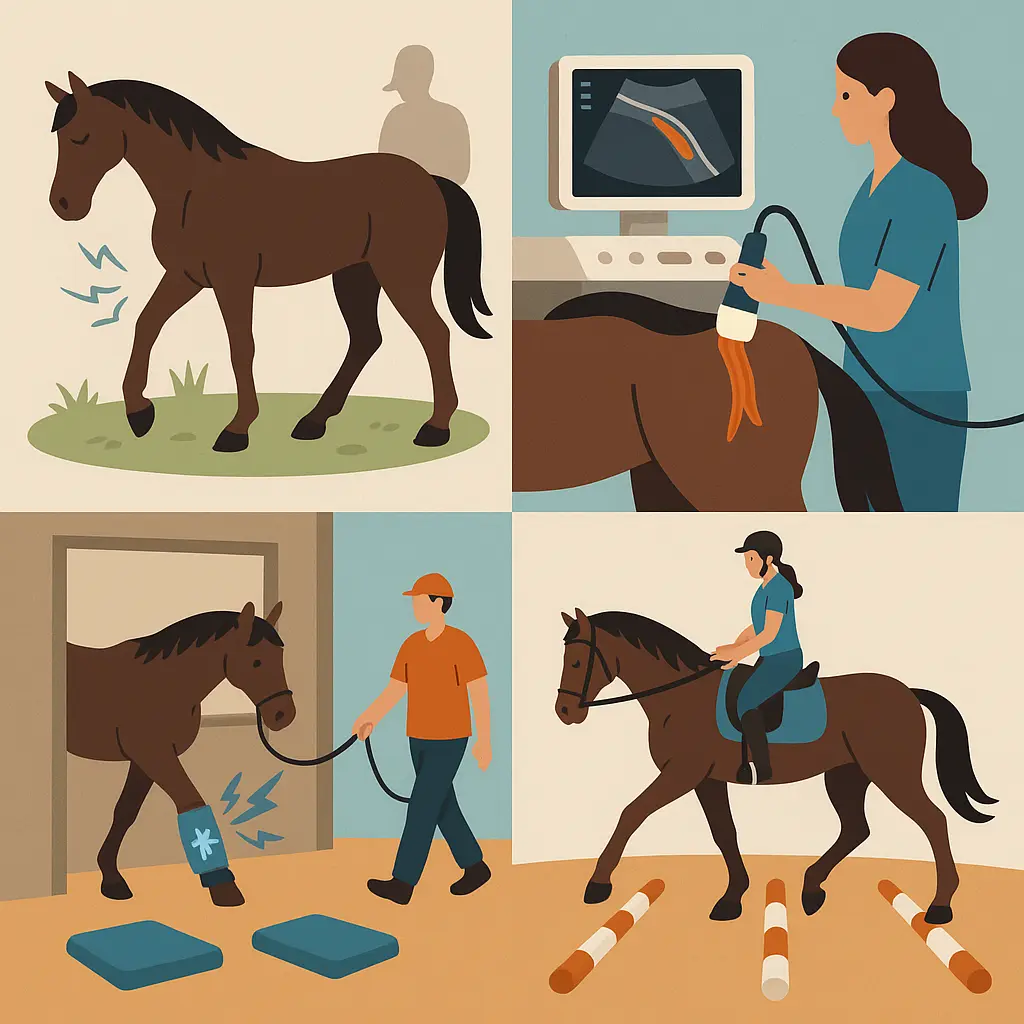
Your step-by-step rehabilitation plan
Rehab for PSD runs in three phases: Phase 1 focuses on pain modulation and rest (typically 2–6 months), Phase 2 rebuilds strength and coordination, and Phase 3 returns the horse to discipline-specific work with careful load management.
There is no one-size-fits-all timetable, but you can anchor your plan to clinical grade and limb:
- Grade 1–2 lameness: Often progress to Phase 2 by 2–3 months if signs settle and imaging supports it.
- Grade 3–4 or significant branch injury: Expect 4–6 months in Phase 1 alone before rebuilding, with 1–3 months before any meaningful activity for branch involvement.
Phase 1 (Pain modulation and protection, 2–6 months):
- Box rest with controlled exercise. Weeks 0–4: confine to the stable with 5–10 minutes of calm hand-walking 2–3 times daily. Weeks 5–8: increase to 10–15 minutes, 3 times daily, as advised by your vet.
- Icing and anti-inflammatory strategies. Apply cold therapy to the hind suspensory using crushed ice in water or ice boots in regular sessions, particularly after any exercise or flare-ups.
- TENS, medication and shockwave if prescribed. Your vet may add ESWT (shockwave) especially for chronic fibres to encourage healing.
Phase 2 (Rebuild tissue capacity and coordination):
- Progress controlled walking, introduce straight-line trot only when signed off. After 1–3 months of rest, some horses benefit from water treadmill walking (reduced limb loading), followed by under-saddle trot building gradually to 10 minutes over 8–10 weeks before any canter.
- Use therapeutic tools such as balance pads, core activation, ground poles, surface changes and carefully applied resistance bands to restore proprioception and strength.
Phase 3 (Return to sport):
- Layer in discipline-specific drills and planned aerobic/anaerobic efforts, interspersed with lighter days to avoid overload.
- Operate an “easy-hard-easy” rhythm to protect soft tissue while keeping bone conditioned.
Two core principles underpin every step:
“There is no one size fits all... When rehabilitating a proximal suspensory, we need to consider the value of planned increases and decreases in workload and loading for bone versus soft tissue to avoid reinjury.” — EquiManagement
“There is no ‘cookbook’ recipe for rehabilitation of suspensory branch injuries... A significant commitment from the owner, trainer and rider is necessary for successful outcomes.” — FVMA
Pro tip: In wet UK winters, behaviour management matters. Quiet hand-walking twice daily is often safer in hi-vis if you use yard tracks or lanes — consider high-visibility rider gear for low-light sessions.
Shoeing and surface management that protects the ligament
Balanced trimming and shoeing that ease breakover and reduce suspensory load are essential; widen the toe, narrow the heel bearing surface, and bias support to the affected side if unilateral, while avoiding deep, wet going that strains the hind limb.
Work closely with a farrier who complies with the Farriery Registration Act (FRA). Hoof balance influences suspensory forces with every step; even small mediolateral imbalances can perpetuate pain. For unilateral hind PSD, your vet–farrier team may recommend a wider web on the affected side and a narrowed heel bearing surface to reduce peak loading. Schedule shorter shoeing intervals during rehab to maintain optimum angles and breakover.
Surface choice is an unsung hero. Avoid deep arenas and slick fields, particularly in autumn and winter. Use firm, consistent footing for hand-walking and early trot work. If your yard footing is variable, plan sessions in the most predictable arena and save varied surfaces for later proprioceptive work in Phase 2 under veterinary guidance.
Kit that makes PSD rehab safer and easier
Support boots for controlled exercise, ice therapy boots for Phase 1, and balance pads or poles for Phase 2 make day-to-day rehab safer and more effective, while weather-appropriate rugs help you manage turnout and box rest in UK conditions.
Our customers often ask which kit genuinely helps without overcomplicating things. Start with the essentials:
- Support during controlled work: Use well-fitted brushing or tendon boots during hand-walking and early trot to minimise knocks. Explore our curated horse boots and bandages for suspensory-friendly options.
- Cold therapy made simple: Ice boots or ice-water wraps save time and deliver consistent cooling in Phase 1.
- Rebuild tools for Phase 2: Balance pads and ground poles help re-educate proprioception and core stability; see training aids from leading brands like LeMieux.
- Weather management: For box rest and limited turnout in rain, choose reliable rugs. Check our winter turnout rugs and brand staples like WeatherBeeta to keep backs dry and muscles warm between sessions, and consider stable rugs for box rest when the temperature drops.
- Adjunct therapies: Your vet may recommend shockwave therapy; plan appointments and keep a simple log of session dates, settings and responses.
- Nutrition support: While no supplement replaces rest and rehab, targeted nutrition can support overall soft tissue health; browse supplements for tendon and ligament support and discuss options with your vet or nutritionist.
At Just Horse Riders, we recommend simplicity first: protect, cool, rebuild — then condition for sport. Add tools only if they make sessions safer or more consistent.
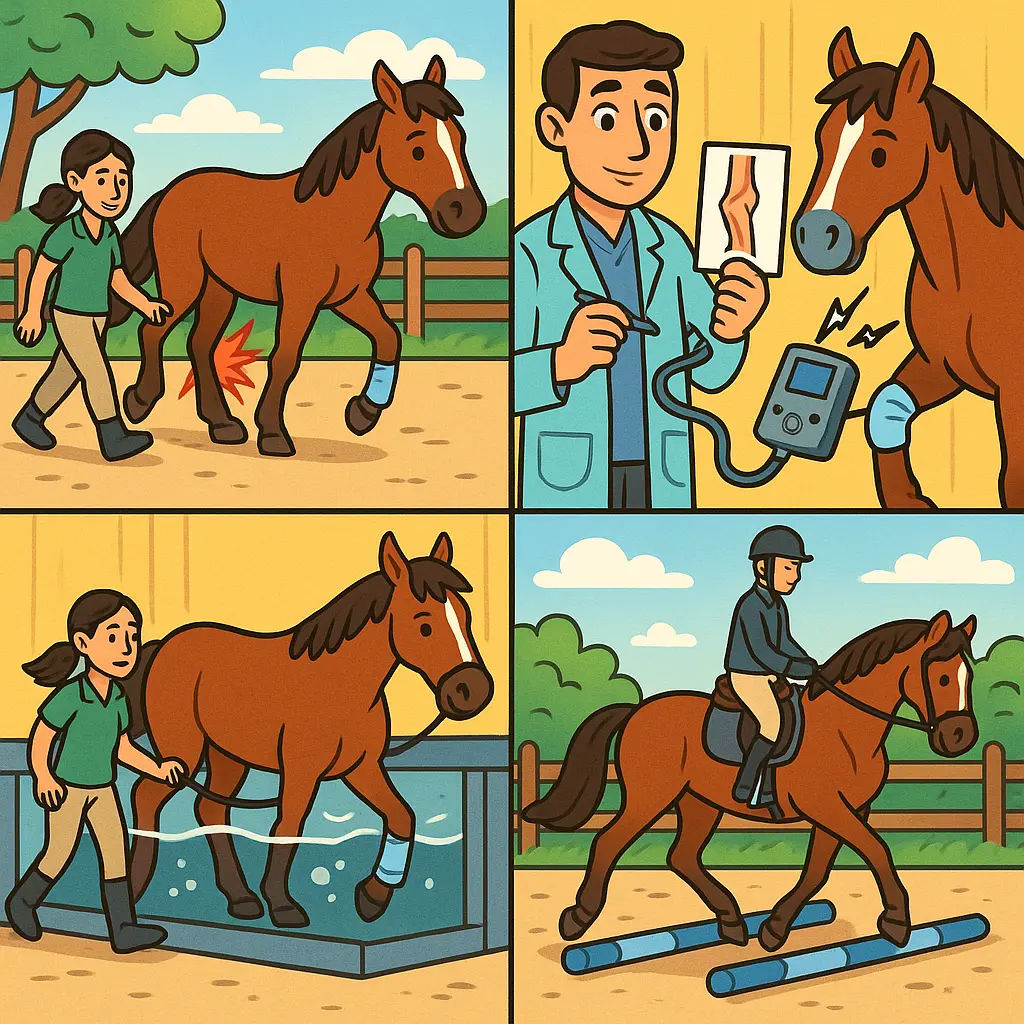
How long will rehab take? Realistic timelines
New forelimb PSD needs a minimum of three months of rest and controlled exercise before ridden work, while hindlimb PSD can require up to six months in Phase 1 alone; under-saddle trot then builds to 10 minutes over 8–10 weeks before any canter.
Use the following as a practical guide (your vet’s imaging and response-to-load will dictate exact pacing):
- Weeks 0–4: Box rest; 5–10 minutes hand-walking 2–3 times daily; cold therapy after walks.
- Weeks 5–8: Increase to 10–15 minutes walking 3 times daily; consider introducing water treadmill walking if available and approved.
- Months 3–4: Begin straight-line trot sets under saddle (e.g., start at 1–2 minutes, building to 10 minutes across 8–10 weeks), maintaining rest days between stimulus days.
- Months 5–6: Introduce canter only after sustaining 10 minutes of trot without reaction; start with short, straight canters on good footing.
The grade of injury changes everything. Mild Grade 1–2 may move to Phase 2 in 2–3 months, while Grade 3–4 or significant branch injury can demand 4–6 months of Phase 1 alone. Hindlimb PSD carries a more guarded prognosis without adjuncts such as shockwave or surgery; discuss surgical candidacy early to avoid losing time.
When to call the vet and build your team
Call your BEVA-registered vet at the first sign of PSD-type rideability issues, then involve a FRA-compliant farrier and qualified physio to align shoeing, surfaces and exercises; imaging confirms PSD and guides the plan.
Because hind PSD so often masquerades as back or hock pain, early diagnostics matter. Your vet will use gait assessment on circles, palpation, flexion tests and imaging to confirm the lesion and its severity. From there, work as a team: vet sets the medical plan (and surgery if indicated), farrier reduces suspensory load via shoeing changes, and physio builds proprioception and core strength at the right time. The British Horse Society (BHS) directory is a helpful place to find qualified professionals if you’re starting from scratch, and BEVA’s “Find a Vet” ensures you’re working with recognised clinicians.
Quick tip: Agree written “go/no-go” criteria for each rehab milestone (e.g., “no heat or reaction 24 hours post-walk before increasing by 5 minutes”). This keeps everyone honest and protects your horse from well-meant but risky enthusiasm.
Conclusion: bring your horse back stronger
PSD rehab succeeds when you match the treatment to the limb and grade, manage load precisely, and commit to months of measured, consistent work. For forelimbs, rest and controlled exercise often suffice; for hindlimbs, surgery plus structured rehab delivers the best return to sport. Equip yourself with the right team, sensible footing, and a few practical tools, and you’ll stack the odds in your horse’s favour.
FAQs
Is poor behaviour under saddle without clear lameness a sign of hind PSD?
Yes. Hindlimb PSD commonly presents as rideability problems without obvious straight-line lameness. Look for a shortened cranial stride, reluctance on the outside circle (especially on soft going), and resistance in transitions. Ask your vet to assess on a soft surface and palpate the suspensory region.
Is rest alone enough for hindlimb PSD?
Often not. Hindlimb PSD is commonly degenerative, and rest with or without shockwave can be disappointing. Surgery typically provides the best outcomes, with about 78% of suitable cases returning to full athletic function. Discuss candidacy with your vet early.
How long before I can ride again after PSD?
For new forelimb PSD, plan for a minimum of three months of box rest and controlled walking before beginning ridden work. Hindlimb PSD varies more: some horses spend up to six months in Phase 1 before rebuilding. Trot work should build gradually to 10 minutes over 8–10 weeks before canter.
What surfaces are safest during rehab?
Firm, consistent footing is best in early phases. Avoid deep, wet arenas or rutted fields that increase hindlimb strain. Save varied surfaces and polework for Phase 2 under guidance, once pain is controlled and early capacity is restored.
Can light work help during rehab?
Yes — controlled hand-walking (e.g., 10–20 minutes daily, progressing as advised) supports circulation, tissue alignment and behaviour. Avoid “just a little canter” or sharp turns until your vet signs off your next step to prevent reinjury.
Do boots prevent suspensory injuries?
Boots don’t prevent PSD, but they protect against knocks and add confidence during controlled exercise. Choose well-fitted boots from our horse boots and bandages range and prioritise footing and load management for real protection.
What yard kit is most useful for UK winters during rehab?
Reliable rugs and safe walking gear. Use turnout rugs or stable rugs to keep muscles warm and dry, plus hi-vis for hand-walking on gloomy days. Balance pads and poles from brands like LeMieux are invaluable in Phase 2.