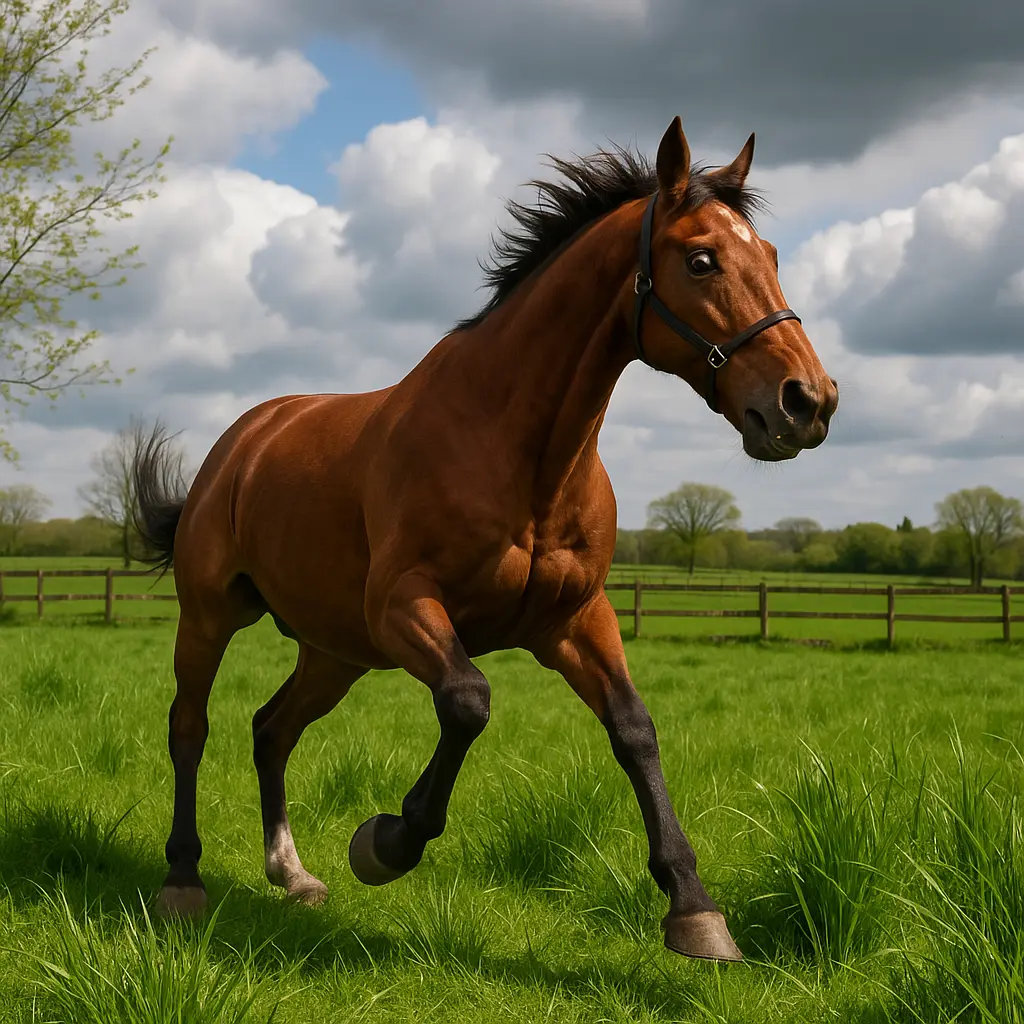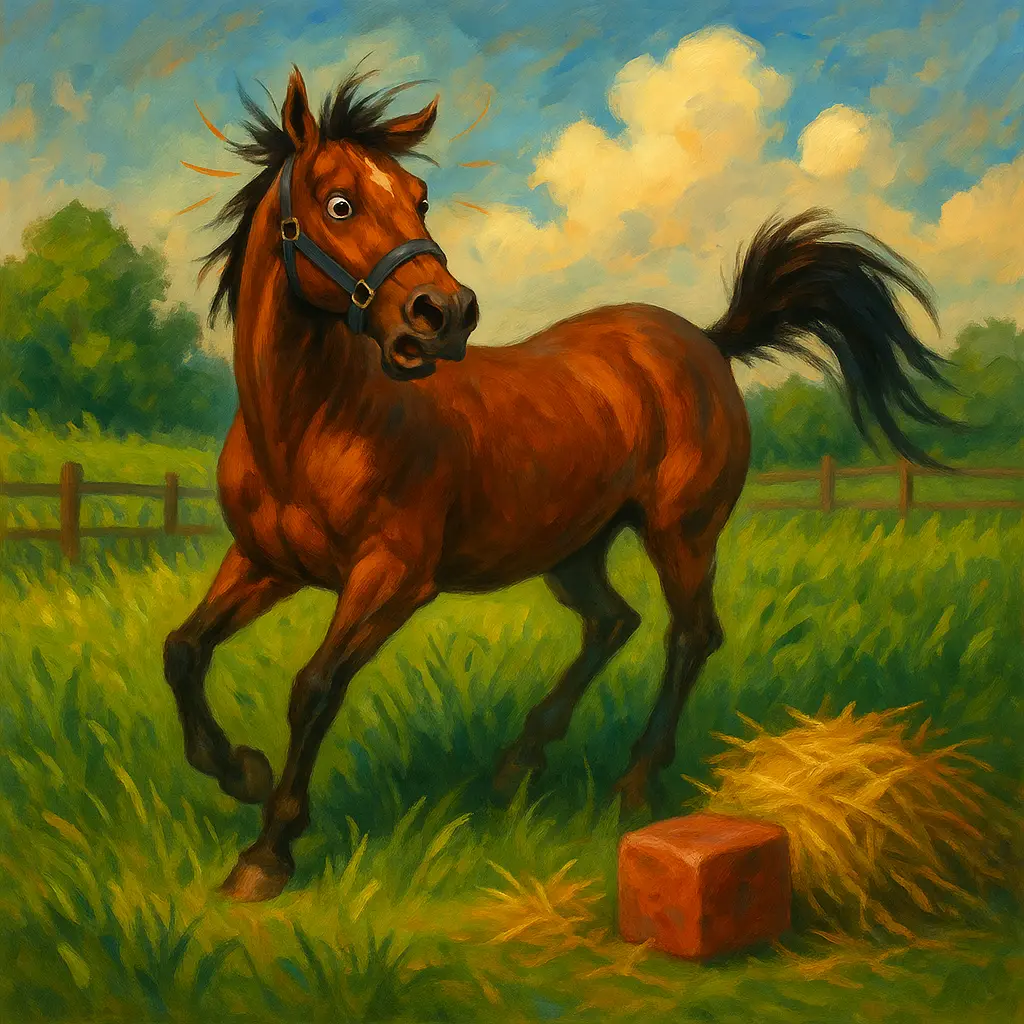
Your rock-steady horse turning sharp, spooky or tense after turnout is a classic UK spring problem — and the grass is often to blame. The good news: once you know what’s happening in the pasture, you can act quickly and calm things down.
Key takeaway: Fast-growing UK spring grass is high in potassium and low in sodium, which can lower magnesium (hypomagnesemia) and flip behaviour from calm to reactive; rule out emergencies like equine grass sickness (EGS), then manage grass intake, add salt, and support with magnesium.
What spring grass does to behaviour
Young, fast-growing UK spring grass is high in potassium and low in sodium, which can drive hypomagnesemia and turn calm horses spooky, tense and over‑reactive. This is the same physiological pathway behind “grass tetany” seen in ruminants and can affect horses during lush growth or after dry spells followed by rain.
Equine nutritionists consistently flag this pattern: when grass is lush, normally quiet horses can become anxious, hyper-reactive and “on the muscle”. As FeedXL experts put it:
“During times of the year when pasture is young, lush, very green and growing quickly... normally quiet, calm horses can become ‘spooky’, behave erratically... this becomes clear that another underlying problem exists.”
The mechanism is twofold. First, high potassium interferes with magnesium balance; second, spring grass often provides too little sodium. Together they can lead to nervousness, twitching, footiness, head-flicking and muscle tightness — the classic “grass-affected” picture described by Calm Healthy Horses and FeedXL. UK agronomy specialists also warn that dry springs can concentrate potassium and trigger the same signs:
“In a dry spring... the grass contains excessive levels of potassium that then induces hypomagnesemia (Grass Tetany) symptoms in horses... impacting his entire physiology [and] negatively affected his behaviour.”
Grass effects vs serious disease
Grass-induced excitability is common, but sudden colic, drooling or no gut sounds point to equine grass sickness and need an emergency vet visit. British Horse Society guidance is clear: EGS can appear suddenly and is frequently fatal within 48 hours in acute cases.
The BHS describes acute EGS as a rapid-onset disease that causes severe colic signs, difficulty swallowing, drooling and often requires euthanasia within two days. Chronic EGS (about a third of cases) tends to show progressive weight loss, mild colic, a tucked-up abdomen and dysphagia over time; some horses can survive with intensive nursing (Grass Sickness).
By contrast, gastric ulcers often sit behind recurrent mild colic and behavioural changes. In one study, 83% of horses with recurrent mild colic had ulcers — especially where high-grain diets and stress are involved (Mad Barn). Ulcer clues include picky eating, girthiness, poor appetite and “stretching to wee” postures without passing much urine.
The BHS’s welfare advice is simple and important:
“If you’re concerned about your horse, contact your vet.”
Use this fast triage: spookiness with twitching and tight muscles on lush grass suggests magnesium and sodium imbalance; severe, rapidly worsening signs (no gut sounds, drooling, green nasal discharge) are EGS red flags; recurrent mild colic and girthiness suggest ulcers; hindquarter pain and disuniting may indicate sacro‑iliac (SI) issues — arrange a veterinary work‑up if in doubt.
Signs your horse is “grass-affected” this UK spring
Grass-affected horses show spookiness plus physical signs like muscle tightness, twitching, footiness and hyper-reactivity on lush pasture. You’ll often see a cluster of these changes during or after flushes of growth, or after dry spells that leave grass short but potassium‑rich.
- Behaviour: sudden spookiness, hyper-alertness, over-reactions, unpredictable or aggressive moments
- Movement: footiness on hard ground, short striding, stiffness, staggering in more severe deficiency
- Muscles: tight topline, twitching, tremors, cramping, reluctance to canter or frequent disuniting
- Head/neck: head-flicking, ear/neck sensitivity, difficulty relaxing the poll
- General: elevated startle response, poor focus under saddle, “hot” on the aids
Quick tip: palpate along the neck and quarters after turnout. Tight, reactive muscles plus fresh growth outside the stable door point strongly to grass effects. If you need help spotting subtle changes, routine body checks with good grooming tools for muscle palpation can make patterns easier to see.
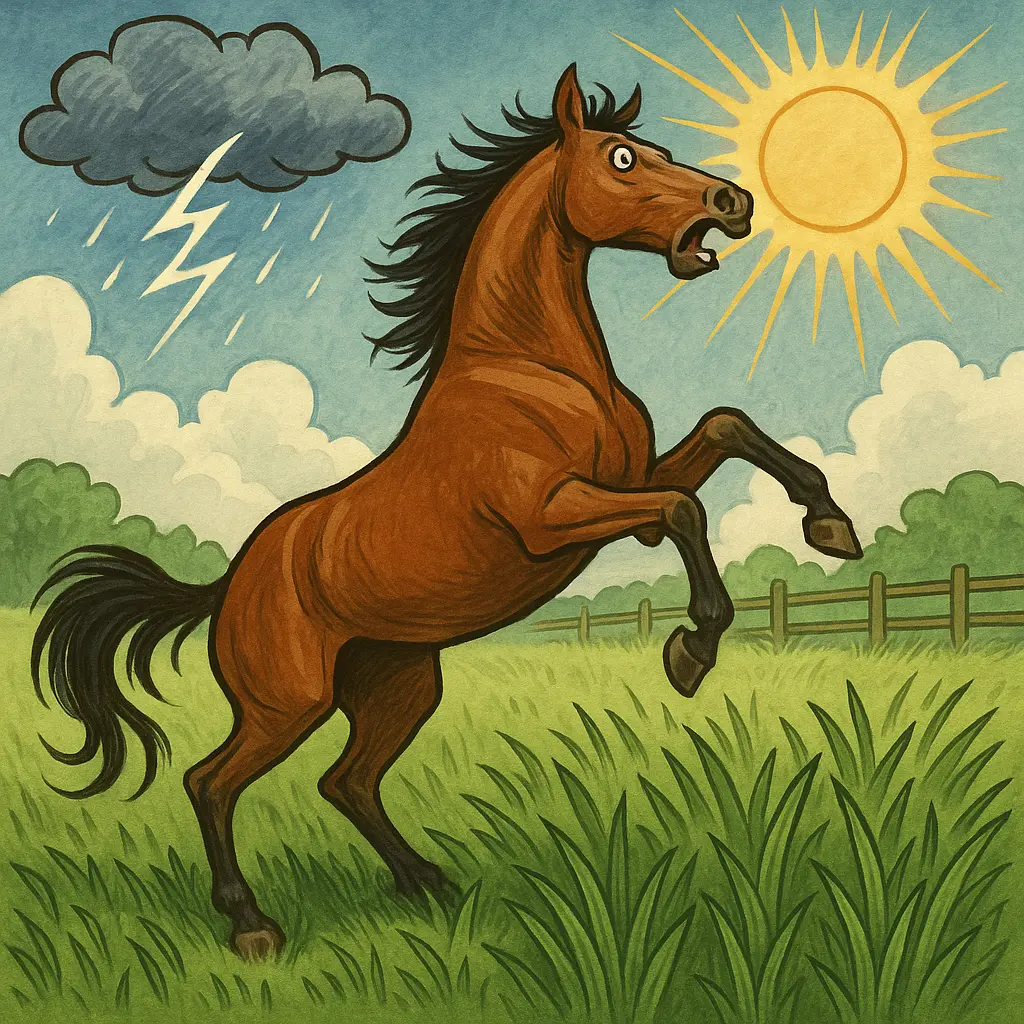
Practical steps to calm behaviour on lush pasture
Reduce grass intake, add salt, and provide short‑term magnesium support while the pasture dries to steady behaviour. Then adjust turnout to stop the problem returning with the next growth flush.
Follow this action plan:
- Reduce access to lush grass. Use shorter turnout windows on fast-growth days, bring in at midday, and feed plain grass hay before turnout to slow intake. On livery yards where you can’t strip‑graze, a well‑packed haynet before and after turnout takes the edge off appetite.
- Test urine pH. Use simple pH strips; aim for around 7.0–7.5. Persistently high pH goes hand‑in‑hand with high potassium intake; respond by limiting grass and increasing hay, then reassess.
- Add plain salt daily. UK spring pasture is typically low in sodium; topping up with salt or a salt lick supports nerve and muscle function. Pair ad‑lib access to fresh water with salt intake to protect hydration.
- Support magnesium. Short‑term magnesium supplementation can help restore calm while the sward matures; choose reputable products and review need as the grass dries.
- Avoid lucerne/alfalfa when horses are sharp. Lucerne can exacerbate excitability in grass‑affected horses during spring flushes; stick to plain grass hay as the forage base.
- Ride safe while you fix the forage. Swap schooling for calm hacks, keep sessions short and positive, and protect yourself with a current‑standard riding helmet.
- Keep them comfortable outside. In wet, chilly spells that follow growth flushes, a lightweight rug helps reduce stress while you control turnout; browse breathable spring options in our turnout rugs collection.
At Just Horse Riders, we recommend building your “spring toolkit” early so you can act the day behaviour changes. Stock up on electrolytes, salt and magnesium supplements for the season, then review and reduce once the grass matures and behaviour normalises.
Pro tip: If your horse feels “body tight”, incorporate in-hand grazing breaks, carrot stretches, and light walk work before you ask for focus under saddle; add protective horse boots and bandages for fresh, playful turnout days.
How much grass is too much?
On good UK pasture, horses will easily consume 2–3% of bodyweight in dry matter and graze 16–20 hours a day, so unrestricted turnout often means overconsumption. CAFRE notes that on limited-turnout yards, horses may still exceed their needs on high-quality swards — fuelling excitability and weight gain.
For a 500 kg horse, 2–3% of bodyweight equals 10–15 kg of dry matter daily; on lush spring grass with high moisture, that can mean many kilos more “as-fed” — and it happens fast when grazing time is unlimited. Practical ways to keep intake (and potassium) in check:
- Time-restrict turnout during rapid growth; bring in before grazing appetite peaks.
- Create “lawns and roughs” in paddocks so horses spend time foraging lower-yield areas, not gorging the richest leaf tips.
- Pre‑feed hay to slow the initial grass binge, then turn out.
- Consider a track system or subdivide fields to control bite size, especially after rain following a dry spell.
- Use steady exercise and mental enrichment on in‑days to keep stress low while you manage grass.
For changeable UK spring weather, hard‑wearing rugs from trusted brands make controlled turnout easier to manage; see our latest WeatherBeeta range for breathable layers that suit drizzle-to-downpour days.
When to call the vet immediately
Call your vet immediately if you see sudden colic with no gut sounds, excessive drooling, trembling, or rapid deterioration — these are red flags for acute EGS. The BHS emphasises that acute EGS is often fatal within two days and warrants urgent veterinary assessment on first suspicion.
Differentiate the big three quickly:
- Acute EGS: sudden severe colic, little to no gut sounds, drooping eyelids, drooling, possible green fluid from the nose. Emergency — remove from grass and call the vet now (BHS).
- Chronic EGS: gradual weight loss, mild intermittent colic, tucked‑up abdomen, trouble swallowing (some can recover with intensive nursing — see the Grass Sickness charity for care guidance).
- Ulcers: recurrent mild colic, picky eating, girthiness, stretching to urinate, dull performance; book a gastroscope if signs persist (Mad Barn).
Also watch for the “grass tetany” picture: nervousness, staggering, muscle twitching or sudden aggression on high-potassium pasture, especially after dry spells; call your vet and start management (reduce grass, add salt, consider magnesium) while awaiting advice (FeedXL; Lordington Park Agronomy).
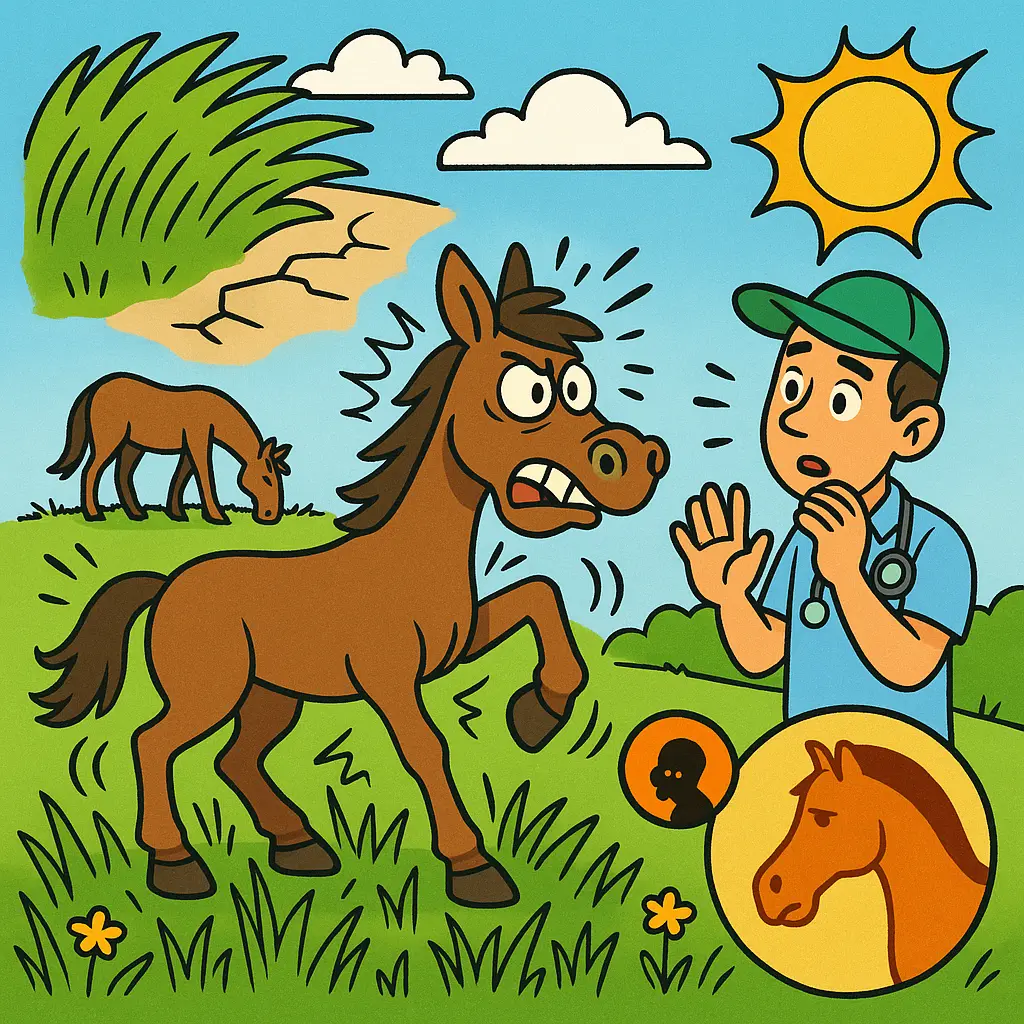
Bottom line: in UK spring, assume the pasture plays a role when behaviour flips. Act early — restrict lush grazing, add salt, support magnesium, then reassess weekly as the grass matures. For calm, safer riding while you reset the diet, keep a well‑fitted helmet on your head and essentials like magnesium and electrolytes in the feed room.
FAQs
Why does my normally calm horse get spooky on spring grass?
Lush, high‑potassium grass lowers magnesium and provides too little sodium, disrupting nerve and muscle function and making horses spooky, tense and over‑reactive. This “grass‑affected” state mirrors grass tetany mechanisms and often appears during rapid growth or after dry spells followed by rain (FeedXL; Lordington Park Agronomy).
How do I tell grass sickness from ulcers?
EGS shows acute red flags: severe colic with little/no gut sounds, drooling, possible green nasal fluid, trembling and rapid decline — call the vet immediately (BHS). Ulcers cause recurrent mild colic, picky eating, girthiness and “stretching to wee”; they need veterinary diagnosis (gastroscopy) and management (Mad Barn).
What urine pH should I aim for when my horse is grass-affected?
A practical target is about pH 7.0–7.5. If urine pH runs higher, reduce lush grass intake (limit turnout, add hay), provide salt and reassess as the pasture dries.
Should I avoid lucerne/alfalfa when my horse is sharp on grass?
Yes. During spring flushes, lucerne/alfalfa can exacerbate excitability in grass‑affected horses. Use plain grass hay as the forage base while you stabilise behaviour.
Can a dry UK spring be as risky as lush growth?
Yes. Dry springs can stunt growth but concentrate potassium in short grass, triggering the same hypomagnesemia signs (spookiness, twitching, aggression) when horses overgraze (Lordington Park Agronomy).
What’s the simplest first step when my horse suddenly gets sharp?
Bring them off lush grass, feed plain hay, add salt, and plan shorter turnouts for a week while you introduce magnesium support. Ride conservatively with a well‑fitted helmet until behaviour settles; call your vet if you see any EGS red flags.